An Introduction to the Wood Panel Value Chain: From Log Harvesting to Finished Board
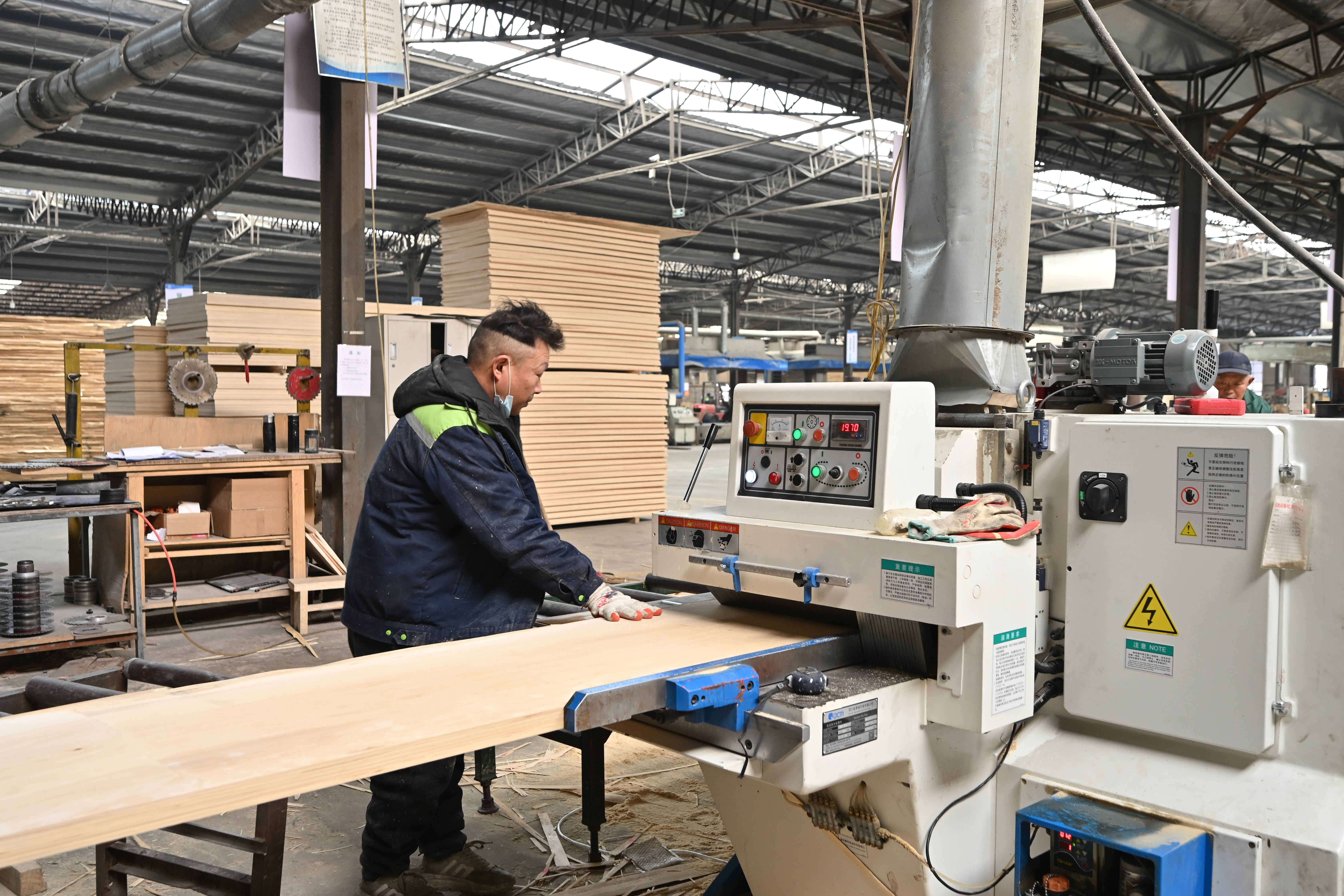
Panel production is the middle of the value chain: raw wood enters, standardized board leaves.
A finished wood panel looks like a single, simple object. In practice it is the endpoint of a sequence of industrial steps that begins in a forest and ends in a sanded, edged, labelled bundle on a pallet. For procurement professionals new to the category, the value chain is the fastest way to understand why two boards with the same dimensions and the same stated thickness can behave completely differently in a factory, and why the questions worth asking a supplier sit inside the process rather than on the invoice.
This article walks through the wood panel value chain stage by stage — log procurement, veneer cutting or fibre preparation, gluing and lay-up, pressing, sanding, surface finishing and export packing — and shows where the major panel families split into different production routes. It closes with the questions a first-time buyer should be able to ask after reading.
For context on the supplier side, Dalian WADA International Trading Co., Ltd. — trading as WADA GROUP — is a manufacturer and exporter of engineered wood products established in 2010 in Dalian, China, with a product portfolio covering LVL, plywood, veneered board, MDF, OSB, wall panel and woodworking machinery.
Problem Definition: Why New Panel Buyers Misread the Product
Most sourcing mistakes in wood panels come from treating the finished board as the starting point. A specification sheet lists thickness, size, glue class and grade, and a buyer compares those numbers across suppliers. That comparison is necessary but incomplete, because every number on the sheet is an output of a process step further upstream.
Thickness tolerance is produced by pressing and sanding, not by the sales office. Formaldehyde class is produced by the resin selected before pressing, not by a certificate alone. Surface quality in a furniture plant is produced by veneer grading, core composition and sanding sequence. When a buyer only sees the finished board, they cannot tell which of those steps a supplier actually controls and which ones are outsourced or traded in.
A second problem is category confusion. Wood-based panels are engineered products designed to optimize the use of wood resources by converting logs, residues and recycled wood into standardized products with predictable properties. Because several different panel families are made from the same raw material — a log — buyers often assume they share a production route. They do not. Plywood and LVL are built from peeled veneer; MDF is built from defibrated wood fibre. The two routes share a forest and diverge at the very first processing step.
The value chain in one sentence: a wood panel is a log that has been broken down into veneer or fibre, recombined with adhesive under heat and pressure, then stabilized and finished so that its properties are predictable enough to specify.
Industry Background: How Large the Category Actually Is
The value chain described here sits inside a substantial global industry. Grand View Research estimates the global wood-based panel market reached USD 198 billion in 2024, with a projected compound annual growth rate of 5.9% from 2025 to 2030. Those figures frame the category as a whole; they do not describe any single supplier.
Trade flows show where the middle of the chain is concentrated. According to China Customs data summarised by the General Administration of Customs of the People's Republic of China, China's plywood exports reached 13.19 million cubic metres in 2024, a 22.82% increase year-on-year. A buyer reading that figure should understand it as an indicator of processing capacity and export orientation in the manufacturing region, not as a statement about any individual factory's output.
Formally, the category is well defined. The U.S. Bureau of Labor Statistics describes the Wood Product Manufacturing subsector (NAICS 321) as manufacturing wood products such as lumber, plywood, veneers, wood containers, wood flooring and laminated wood products. Industry taxonomy from EUROPANELS lists the major wood-based panel types as particleboard, medium density fibreboard, oriented strand board, hardboard, softboard and plywood. A panel buyer is therefore operating inside a recognized manufacturing class with a defined product list — useful when mapping a supplier's portfolio to a specification.
What the value chain adds to this macro picture is resolution. Within one industry classification and one trade statistic, there are several distinct production routes, and each route has its own equipment, its own failure modes and its own specification logic.
Detailed Solution: The Five Stages of the Wood Panel Value Chain
The chain can be understood in five stages. Each stage converts the material into something the next stage can accept, and each stage creates a property the buyer will later test or specify.
Stage 1 — Raw material acquisition and log preparation
Logs, processing residues and recycled wood enter the plant and are sorted by species, diameter and quality. Species choice at this stage sets the ceiling on what the finished panel can be. In plywood production, common face and back species include larch, pine, birch, okoume, bintangor, sapeli, pencil cedar and poplar. In LVL production, face and back material is typically birch, beech or poplar. Logs are debarked and cut to the length the downstream equipment can handle.
Stage 2 — Breakdown: veneer peeling or fibre preparation
This is the point where the value chain splits.
On the veneer route, a veneer peeling machine rotates a debarked log against a blade to produce continuous sheets of veneer. Those sheets then pass through a veneer drying machine to reach a controlled moisture level, a veneer patching machine to repair defects, and a core veneer composing machine to assemble core layers. Veneer grade — for commercial plywood, for example, B/BB, BB/BB, BB/CP, BB/C, CP/CP, CP/C or C/C — is decided here, before any adhesive is applied.
On the fibre route, wood is reduced to fibre rather than peeled. MDF is made of wood fibre and is produced by continuous flat pressing; the equipment referenced for this process includes Difenbach & Sinbelkamp (Germany) lines. Density in finished MDF ranges from 500 to 1000 kgs/m³, and moisture content is between 5% and 13%.
Stage 3 — Adhesive selection and lay-up
Adhesive choice is the single most consequential decision for compliance and durability, and it happens before the press. Plywood lines commonly use melamine WBP or phenolic WBP for exterior-grade construction products, and E0, CARB P2, E1, E2 or WBP for commercial grades. Film faced plywood uses MR, melamine WBP or phenolic WBP. Melamine faced boards use E0, CARB P2, E1 or E2. The glue class determines which formaldehyde emission band the finished board can be declared into, which in turn determines market access.
Lay-up is the assembly step. An automatic lay-up line for plywood production stacks veneer sheets with adhesive in the sequence required by the product. For plywood, face and back veneers are placed over a core that may be poplar, eucalyptus, combi or full birch, depending on the grade being built.
Stage 4 — Cold pressing and hot pressing
The assembled stack moves through a cold press machine and then a hot press machine. Pressure, temperature and dwell time cure the adhesive and consolidate the stack into a single board. This stage produces the internal bond, thickness and density that a buyer will later verify. The same logic applies across panel families: LVL bed slat production consolidates veneer into a laminated section of 7 to 15 mm thickness and 25 to 190 mm width, while MDF consolidation happens in a continuous flat press rather than a batch press.
Stage 5 — Sanding, edge trimming, surface finishing and packing
After pressing, boards are sanded on a plywood sanding machine to calibrate thickness and prepare the surface, then cut to final dimensions on a fully automatic cross saw. Surface finishing follows, and this is where a base panel becomes a market-facing product:
- Veneered board applies a decorative wood veneer — white oak, red oak, black walnut, parota, wenge, ash, birch, pine or sapeli — over a core of plywood, MDF, chipboard or blockboard.
- Melamine board applies melamine paper, PET film, HPL or UV surfaces over a plywood, MDF, particle board or blockboard core.
- Film faced plywood applies a dark brown or black film to a plywood core for concrete formwork use.
The final step is packing. Export standard pallet packing or loose packing is specified according to the destination and handling conditions, and the finished board leaves the chain as a standardized, traceable unit.
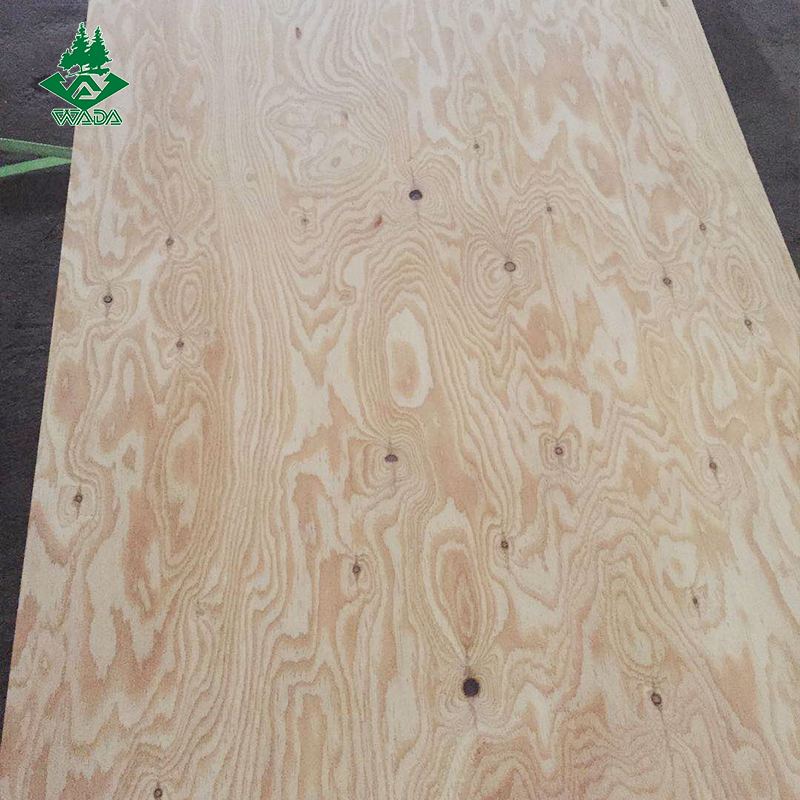
Structure plywood: peeled veneer, glued and pressed into a construction-grade panel with 9–28 mm thickness.
Step-by-Step Breakdown: What Changes at Each Stage
The table below translates each stage into the property a buyer actually inspects. It is a practical map rather than a process diagram.
Step 1 — Species and log selection
Property created: the achievable surface appearance and mechanical ceiling. Property inspected later: veneer grade, face species declaration.
Step 2 — Peeling or defibration
Property created: veneer thickness consistency (veneer route) or fibre uniformity (fibre route). Property inspected later: core gaps, surface smoothness, density distribution.
Step 3 — Drying
Property created: controlled moisture content. Reference ranges in WADA's published specifications are 8%–12% for plywood and LVL products, and 5%–13% for MDF. Property inspected later: moisture meter readings on delivery.
Step 4 — Adhesive application and lay-up
Property created: bond class and formaldehyde emission class. Property inspected later: glue line integrity after boil or soak testing, and compliance documentation.
Step 5 — Cold press and hot press
Property created: density, internal bond and thickness. Reference density ranges include 650–750 kgs/m³ for structure plywood and film faced plywood, 600–750 kgs/m³ for marine plywood, and 500–1000 kgs/m³ for MDF.
Step 6 — Sanding and edge trimming
Property created: dimensional accuracy and surface readiness. Property inspected later: thickness tolerance across a bundle and squareness of the trimmed edge.
Step 7 — Surface finishing
Property created: the visual and functional surface — wood veneer, melamine paper, PET film, HPL, UV coating or film facing. Property inspected later: colour consistency between bundles and adhesion of the surface layer.
Step 8 — Packing and export handling
Property created: protection through transit. Property inspected later: pallet condition, edge protection and moisture barrier on arrival.
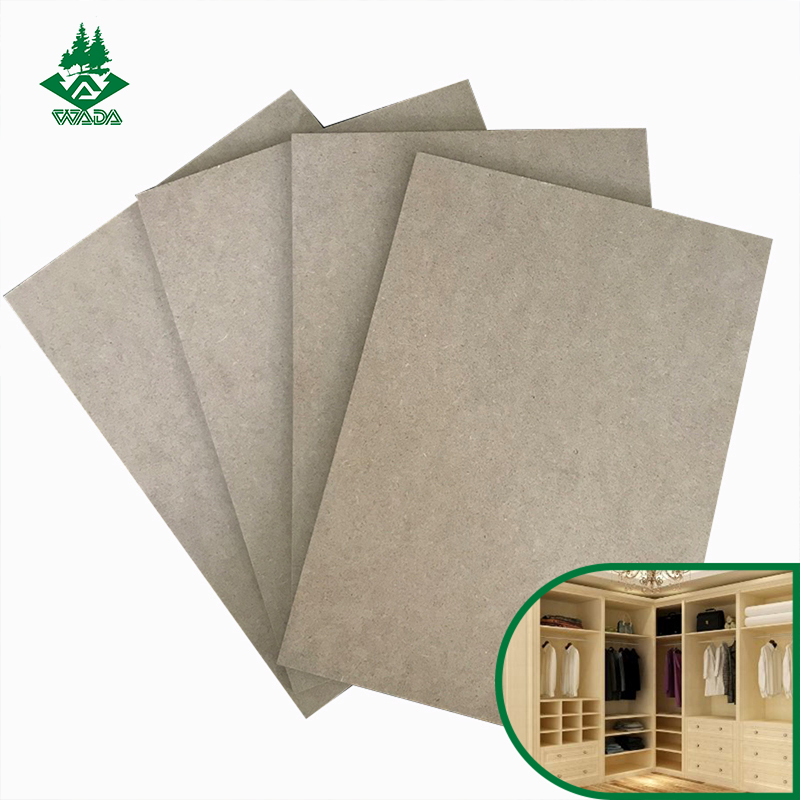
MDF follows the fibre route: wood fibre consolidated by continuous flat pressing, 1.2–50 mm thickness.
Use Cases: Where the Value Chain Meets Real Projects
Because each panel family is the output of a different route, the chain ends in different applications. The scenarios below are drawn from documented project conditions rather than generic claims.
Furniture production — Poland
Furniture manufacturing projects in Poland run under workshop production conditions in continuous production mode, with the product role defined as making cabinets or panels. The special requirements are a smooth surface and a stable core. Panels typically specified for this route include veneered board, melamine board and MDF, all produced through the surface finishing end of the chain.
Interior finishing — United States
Interior finishing projects in the United States operate under indoor dry environment conditions with permanent installation, using the panel as wall, kitchen or furniture material. The special requirements recorded for this scenario are eco-friendly and formaldehyde-free. This is where the adhesive decision made at Stage 3 becomes a market-access decision rather than a technical preference.
Building construction — Australia
Construction projects in Australia operate in outdoor structural use conditions with long-term use, and the panel's role is to provide structural support. Special requirements are waterproof and high strength. Film faced plywood, with a thickness range of 4 to 35 mm and glue options of MR, melamine WBP or phenolic WBP, is the panel family produced specifically for concrete formwork and construction use.
Industrial packaging — Singapore
Packaging projects in Singapore operate under heavy-duty transport conditions, with the panel providing crating and protection in one-time or reusable operation. The special requirement is high load capacity. Commercial plywood, with a thickness range of 2 mm to 25 mm and glue options including E0, CARB P2, E1, E2 or WBP, serves this route.
Exterior wall cladding — Mexico
Outdoor decoration projects in Mexico operate under UV exposure and outdoor environment conditions with long-term outdoor use, requiring UV resistance and weather resistance, and must be installed with an installation system and fasteners. Marine plywood, bonded with melamine WBP or phenolic WBP and graded for construction, shipbuilding or shipyard use, sits closest to this requirement.
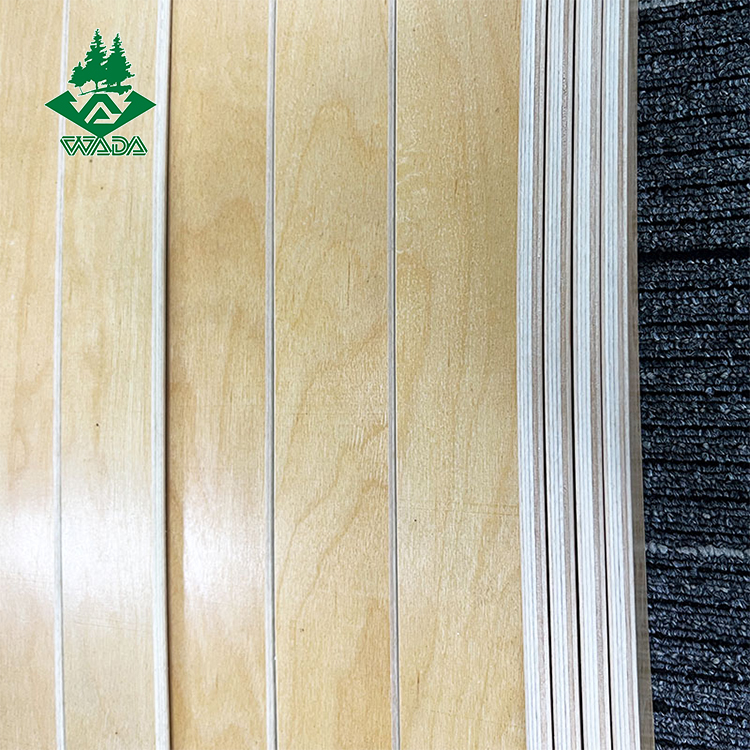
LVL bed slat: veneer laminated into a 7–15 mm section, 25–190 mm wide, bonded with E0 or E1 glue.
Comparison Table: One Log, Several Production Routes
The comparison below uses only documented product specifications. It shows how the same raw material becomes different products at Stage 2 of the chain.
| Panel family | Breakdown route | Bond | Thickness range | Typical end use |
|---|---|---|---|---|
| Commercial Plywood | Veneer peeling | E0 / CARB P2 / E1 / E2 / WBP | 2–25 mm | Furniture, interior fit-out, packaging, doors |
| Structure Plywood | Veneer peeling | Melamine WBP / Phenolic WBP | 9–28 mm | Roofing, flooring, timber frame, formwork |
| Film Faced Plywood | Veneer peeling + film facing | MR / Melamine WBP / Phenolic WBP | 4–35 mm | Concrete formwork, precast concrete, infrastructure |
| Marine Plywood | Veneer peeling | Melamine WBP / Phenolic WBP | 9–25 mm | Shipbuilding, boat manufacturing, coastal construction |
| MDF | Wood fibre, continuous flat pressing | E0 / CARB P2 / E1 | 1.2–50 mm | Furniture board, routed board, lightweight high-strength board, waterproof board |
| Veneered Board | Veneer over plywood / MDF / chipboard / blockboard core | E0 / CARB P2 / E1 / E2 / Melamine | 2–25 mm | Furniture, cabinets, wardrobes, retail fixtures |
| Melamine Board | Melamine paper / PET film / HPL / UV over core | E0 / CARB P2 / E1 / E2 | 2–30 mm | Cabinets, wardrobes, office furniture, shopfitting |
| LVL Bed Slat | Veneer lamination | E0 / E1 | 7–15 mm | Bedroom furniture, hospitality furniture, e-commerce furniture |
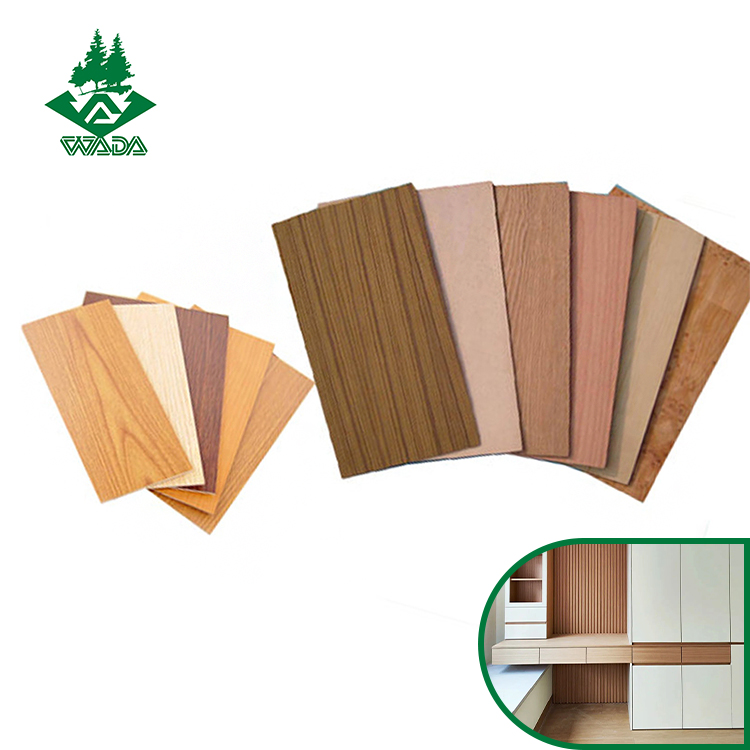
Melamine board: the final stage of the chain applies a decorative surface to a plywood, MDF, particle board or blockboard core.
FAQ
What compliance standards decide whether the finished board can enter a target market?
Compliance is decided at the adhesive stage and then confirmed by documentation. In the United States, CARB Phase 2 limits formaldehyde emissions to 0.05 ppm for hardwood plywood with veneer core. WADA states that its products are certified with FSC, EUDR, CARB P2, EPA, JAS and JIS, and its published glue options include E0, CARB P2 and E1 across plywood, MDF and veneered board specifications. A buyer should match the declared glue class on the specification to the emission limit of the destination market before pricing is discussed.
Can a single supplier cover several routes of the value chain?
Coverage depends on whether the supplier owns peeling, fibre preparation and pressing capacity or trades finished board. Dalian WADA International Trading Co., Ltd. was established in 2010 and reports a factory area of 53,950 square metres, approximately 200 staff, a 25-engineer R&D team and an annual production value of about USD 3.5–4 million. Its stated product portfolio covers LVL, plywood, veneered board, MDF, OSB, wall panel and woodworking machinery, with 3 own factories, 2 trading companies in China and overseas branch offices in Japan and Singapore. That portfolio spans both the veneer route and the fibre route, which is relevant when a buyer wants one specification conversation across several panel families.
Which stages in the chain drive cost, and how should a new buyer read them?
Cost is accumulated stage by stage rather than set at the end. Adhesive selection changes the resin input; drying consumes energy to reach the specified moisture band; pressing time scales with thickness and density target; sanding and edge trimming add yield loss; surface finishing adds a separate material layer. Because the same log can leave the plant as commercial plywood, film faced plywood or a veneered board, a like-for-like quotation requires the same route, the same glue class and the same surface treatment to be stated on both sides.
How should a first sample be validated against the value chain?
Validate the sample against the stage that created each property. Check moisture content against the published band — 8%–12% for plywood and LVL products, 5%–13% for MDF. Check density against the declared range, for example 650–750 kgs/m³ for structure plywood or 500–1000 kgs/m³ for MDF. Check thickness against the declared range and against the bundle as a whole, then check the surface for veneer grade or film consistency. For load applications, ask which glue class was used, because that determines whether the bond survives moisture exposure.
What sits behind the lead time on a panel order?
Lead time is a queue across the stages described above rather than a single factory figure. Log and veneer availability sets the start; drying capacity constrains how much material can be released to lay-up; press scheduling constrains consolidation; surface finishing and sanding add a second pass for veneered and melamine products; export packing and documentation close the sequence. A supplier who can describe its own stage-by-stage flow is easier to plan around than one who quotes a single number without stating where the constraint sits. When evaluating a first order, ask for the route, the glue class and the packing method together with the timeline, so the schedule can be read against the actual production path.
Conclusion: Read the Process, Not Only the Specification
The wood panel value chain is a sequence of conversions, and each conversion fixes a property that will later appear on a specification sheet. Species selection sets the surface ceiling. Peeling or defibration sets the internal structure. Adhesive selection sets the compliance band. Pressing sets density and thickness. Sanding, edge trimming and surface finishing set the dimensional accuracy and the visual result. Packing protects all of it in transit.
For a procurement professional in the awareness and research stage, the practical takeaway is not to memorise every parameter but to know where each parameter comes from. Once the route is clear, a supplier conversation becomes a sequence of verifiable questions — which route, which glue, which density band, which moisture band, which surface treatment, which packing — and the answers can be checked against published data rather than accepted as claims.
Next Step: Compare Routes Before Comparing Prices
WADA GROUP supplies plywood, film faced plywood, marine plywood, MDF, veneered board, melamine board and LVL bed slats, produced across both the veneer route and the fibre route, and exports to customers in more than 50 countries and regions including North America, the EU, Australia, Japan, South Korea, the Middle East, Mexico and South America.
Request the product catalogue, a specification sheet for a specific panel family, or a sample for validation before the first order.
Email: wada@wadatrade.com | Tel / WhatsApp: +86 131-3003-0584 | Web: www.wadaplywood.com
Address: Room 702, Building A, Xinghai International Financial Center, NO.13-15, Area A Xinghai Square, Shahekou District, Dalian, China
Download the WADA GROUP Catalogue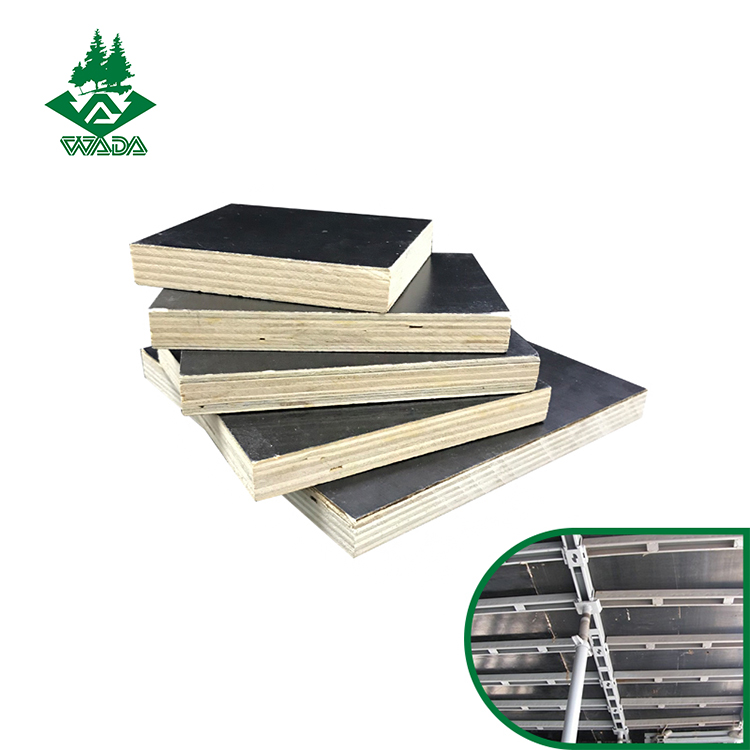
The end of the chain: finished film faced plywood, inspected and packed for export.
Have Questions or Need More Details?
Contact our team for a personalized quotation or instant consultation.
Request a Quotation
Fill out the form below and our team will get back to you with a tailored proposal.
WhatsApp Direct Chat
Prefer to chat in real-time? Message us on WhatsApp for instant assistance & quick answers.
- Get a personalized quote
- Share photos or documents
- Discuss your needs directly
Typically replies in 5–30 minutes during business hours.