
Anatomy of a Wood Panel: Core, Glue, Face, and What Really Determines Performance
Anatomy of a Wood Panel: Core, Glue, Face, and What Really Determines Performance
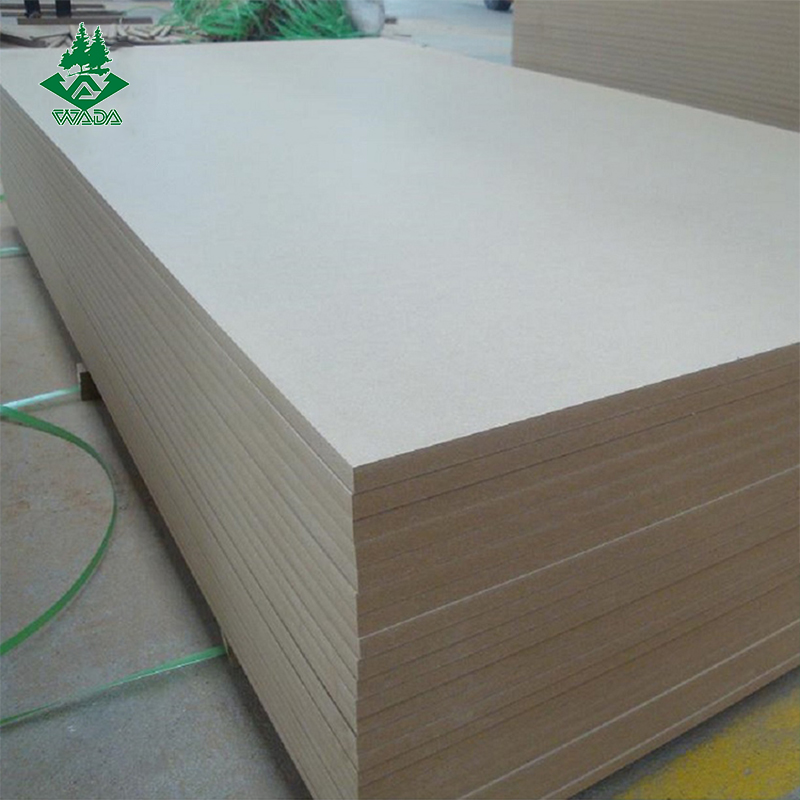
Engineered wood panels are defined by construction details, not just by category names.
“Wood panel” is a category, not a product. In the timber trade, the same label can appear on an interior furniture board, a concrete formwork panel, a shipbuilding-grade plywood, and a decorative veneered sheet. What separates them is not the name but the construction: how the core is assembled, which adhesive system is used, what face or film is applied, how density and moisture content are controlled, and which certifications accompany the shipment.
This article explains these five construction blocks in plain language. For buyers moving from first discovery to supplier research, this is the foundation of every later decision—whether you are comparing prices, checking certification, evaluating OEM capability, or planning a long-term supply agreement.
Why “Wood Panel” Is Not a Single Product
A request for “wood panel” can return very different goods. One buyer may receive a film faced plywood panel for concrete formwork; another may receive a softwood LVL bed slat for a bedroom furniture line. Both are routinely described as wood panel, yet they share almost nothing in construction, certification, or price logic.
Plywood is a good example. Marine plywood uses birch or okoume faces with a defined core and WBP gluing. Commercial plywood offers face veneers from birch to pencil cedar, and cores from poplar/eucalyptus to combi or full birch. Specifying “plywood” is like saying “steel” without a grade.
Key terms used in this guide:
- Plywood – a panel built from stacked veneers with a defined core and cross-oriented layers.
- MDF (Medium-Density Fiberboard) – an engineered panel made of wood fiber, produced by continuous flat pressing.
- LVL (Laminated Veneer Lumber) – an engineered wood member built from veneer layers, such as bed slats.
- Melamine board – a panel with melamine paper, PET film, or HPL face over a core of plywood, MDF, particle board, or blockboard.
- Veneered board – a panel surfaced with real wood veneers such as oak, walnut, ash, or sapeli.
- Film faced plywood – a plywood with dark brown or black film faces, designed for concrete formwork and construction.
Industry Background: Demand and Regulation Are Reshaping Panel Buying
Global demand for engineered wood products is strong. The plywood market was valued at USD 80.57 billion in 2025, with Asia Pacific holding the largest revenue share of 39.4 percent, according to Grand View Research. The MDF market is projected to grow from USD 44.96 billion in 2025 to USD 82.24 billion by 2033 at a CAGR of 8.2 percent. OSB production reached over 32 million cubic meters globally in 2024, with the USA accounting for 14 million cubic meters.
Regulation is also tightening. The US EPA TSCA Title VI rule sets formaldehyde emission limits for composite wood products at 0.11 ppm for MDF and 0.05 ppm for hardwood plywood. In the European Union, wood-based panels for construction must comply with EN 13986 for CE marking eligibility. These rules matter because they are tied to the adhesive system and production process, not just the product name.
The takeaway for buyers: certification is no longer a marketing extra. Core construction and glue chemistry are now market-access requirements.
Detailed Solution: The Five Construction Blocks of Any Wood Panel
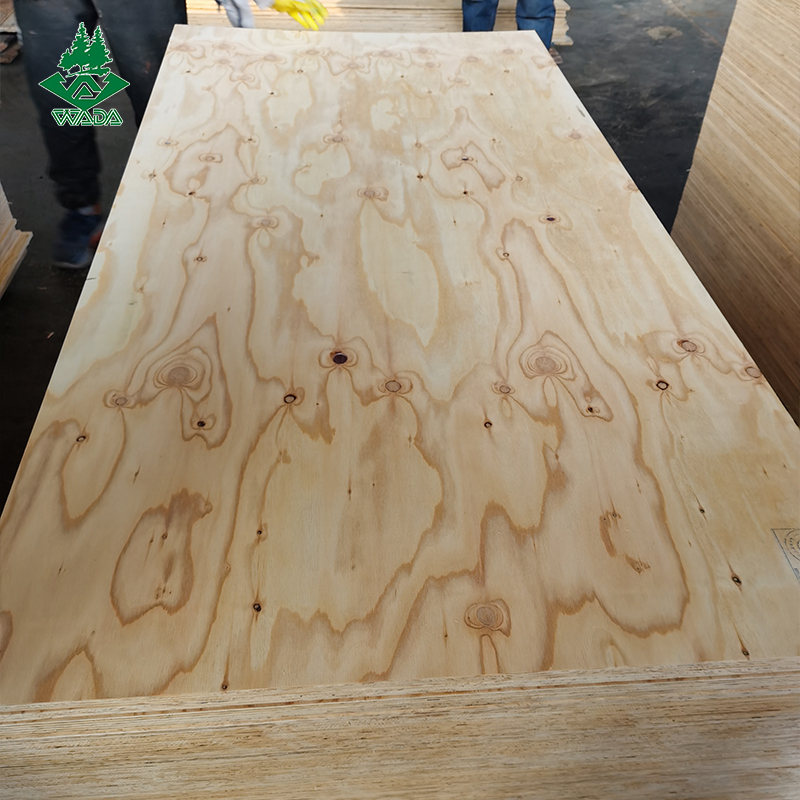
Structure plywood is built for load-bearing and outdoor structural use.
1. Core Construction Defines the Panel Category
The core is the first specification to check. It determines whether the panel belongs to the plywood family, the fiberboard family, or the engineered veneer family. Within a single supplier, core options vary by product line:
- Structure Plywood uses eucalyptus, larch, pine, or combi core, with larch or pine faces, in thicknesses of 9–28 mm.
- Marine Plywood uses poplar, birch, okoume, or combi core, with birch or okoume faces, in thicknesses of 9–25 mm.
- Commercial Plywood offers poplar, eucalyptus, combi, or full birch core, in thicknesses of 2–25 mm.
- MDF is made of wood fiber, with thicknesses from 1.2 mm to 50 mm.
- LVL bed slats use birch or poplar core with birch, beech, or poplar faces, in thicknesses of 7–15 mm.
- Melamine board and veneered board can be built on plywood, MDF, particle board, or blockboard cores.
When comparing suppliers, ask for the core specification, not just the category name. Two panels with the same face can have completely different cores, and the core controls dimensional stability and mechanical performance.
2. Adhesive System Defines Compliance and Durability
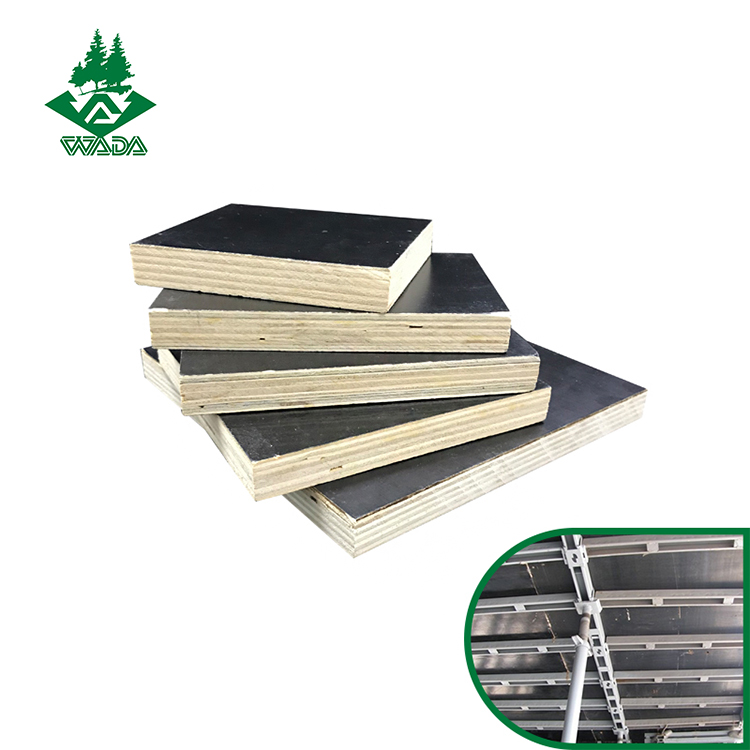
Film faced plywood uses MR, melamine WBP, or phenolic WBP glue for construction exposure.
Glue grades separate indoor furniture panels from waterproof structural panels. Low-formaldehyde systems such as E0, CARB P2, and E1 are common for interior and furniture applications. Waterproof and boil-proof systems such as melamine WBP and phenolic WBP are used where moisture, weather, or concrete contact is expected. Some panels also use MR glue, which is common in film faced plywood for construction.
The real-world map of glue options in a manufacturing program can look like this:
- MDF is available with E0, CARB P2, or E1 glue.
- Commercial Plywood can be produced with E0, CARB P2, E1, E2, or WBP glue.
- Structure Plywood and Marine Plywood use melamine WBP or phenolic WBP glue.
- Film Faced Plywood uses MR, melamine WBP, or phenolic WBP glue.
- Veneered and melamine boards support E0, CARB P2, E1, E2, or melamine glue.
For buyers targeting the US or Europe, the adhesive system must be verified against regional emission limits before shipment, not after arrival.
3. Face and Finish Define Appearance and Wear Surface
The face layer determines what the end user sees and how the surface reacts to wear, moisture, and cleaning. Face options are usually matched to the final application:
- Birch or okoume faces are standard for Marine Plywood.
- Larch or pine faces are standard for Structure Plywood.
- Dark brown or black film faces define Film Faced Plywood.
- Real wood veneers such as white oak, red oak, black walnut, parota, wenge, ash, birch, pine, and sapeli are available on Veneered Plywood.
- Melamine paper, PET film, or HPL faces are used on Melamine Board.
The face should be chosen only after the core and glue are confirmed. A decorative veneer on a non-waterproof core will fail in a kitchen or bathroom environment, no matter how good the surface looks.
4. Density and Moisture Content Define Stability
Density and moisture content are the quantitative side of panel quality. Panel density affects screw holding, impact resistance, and weight. Moisture content affects flatness, warping risk, and compatibility with the destination climate.
- MDF density ranges from 500 to 1000 kgs/m³, with moisture content of 5–13 percent.
- Commercial Plywood density ranges from 520 to 700 kgs/m³, with moisture content of 8–12 percent.
- Structure Plywood density ranges from 650 to 750 kgs/m³, with moisture content of 8–12 percent.
- Marine Plywood density ranges from 600 to 750 kgs/m³, with moisture content of 8–12 percent.
- Melamine Board density ranges from 550 to 750 kgs/m³, with moisture content of 8–12 percent.
- Veneered Plywood density ranges from 500 to 750 kgs/m³, with moisture content of 8–12 percent.
- Film Faced Plywood density ranges from 650 to 750 kgs/m³, with moisture content of 8–12 percent.
Density expectations should match the end use. A high-density panel can deliver better mechanical performance but may also be heavier to transport and harder to machine.
5. Certification Defines Market Access
Certification is the final construction block because it connects the physical panel to the legal requirements of the destination market. A production program that supports multiple certification tracks gives buyers more flexibility.
Dalian WADA International Trading Co., Ltd., a professional manufacturer and global exporter of engineered wood products established in 2010, states that its products are certified with FSC, EUDR, CARB P2, EPA, JAS, and JIS. For MDF specifically, the certified standards include FSC, CARB/EPA, JIS, and EUDR. These certifications map to key import markets in North America, the EU, Japan, and other regulated regions.
For buyers, the rule is simple: match the certification evidence to the import regulation of the final destination before you place the order.
Step-by-Step Breakdown: How to Read a Panel Specification Table
Most wood panel spec sheets list the same fields: size, thickness, face, core, glue, grade, density, moisture content, and certification. The order of reading matters.
- Start with the end use. Structural support, furniture production, interior finishing, concrete formwork, and industrial packaging all lead to different panel families.
- Identify the required core. Choose plywood cores (poplar, eucalyptus, combi, birch), fiber cores (MDF), or engineered veneer cores (LVL) based on load, moisture, and machining needs.
- Match the glue to the regulatory and exposure track. Use E0, CARB P2, or E1 for indoor low-emission projects; use WBP systems for structural, marine, or formwork exposure.
- Check the face or finish. Confirm that the surface meets the aesthetic and wear requirements of the project.
- Verify density and moisture content. Compare the numbers against the project specification rather than assuming all panels in a category are equal.
- Cross-check certification documents. Confirm that FSC, EUDR, CARB P2, EPA, JAS, JIS, or other required evidence is available before shipment.
Use Cases: How Construction Maps to Real Projects
The same construction framework can be applied to different geographic and application scenarios.
Australia – building construction, outdoor structural support. The requirement is waterproof and high strength for long-term structural use. Structure Plywood, with larch or pine faces and WBP glue, is a typical match. Grade Construction/Structure and moisture content of 8–12 percent support outdoor structural projects.
Mexico – exterior wall cladding. The requirement is UV-resistant and weather-resistant panels for long-term outdoor use, with installation systems and fasteners. Marine Plywood and Structure Plywood are commonly evaluated for exterior cladding applications, depending on the exposure level.
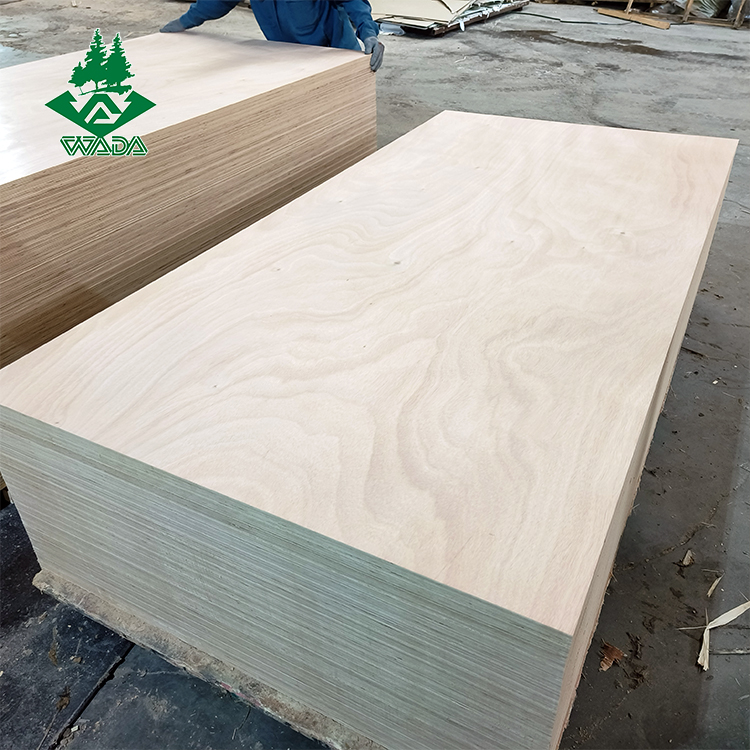
Marine plywood is designed for shipbuilding, coastal construction, and high-moisture environments.
United States – interior decoration and interior finishing. The requirement is eco-friendly and formaldehyde-free materials for walls, kitchens, and furniture. Melamine Board, Veneered Plywood, and MDF with E0 or CARB P2 glue are the panels most often specified for interior finishing projects.
Poland – furniture manufacturing. The requirement is a smooth surface and stable core for continuous production of cabinets and panels. Melamine Board, Veneered Plywood, and MDF are the principal panel options in this segment, supported by stable production processes.
Singapore – industrial packaging and heavy-duty transport. The requirement is high load capacity for crating and protection, with one-time or reusable operation. Commercial Plywood, with veneer grades and core options that support packaging applications, is a common choice for industrial packaging projects.
Comparison Table: Wood Panel Types at a Glance
| Panel Type | Core / Material | Glue Options | Thickness Range | Density | Typical Use |
|---|---|---|---|---|---|
| MDF | Wood fiber | E0 / CARB P2 / E1 | 1.2–50 mm | 500–1000 kgs/m³ | Furniture, routed board, lightweight high-strength board, waterproof board |
| LVL bed slat | Birch or poplar core | E0 / E1 | 7–15 mm | — | Bedroom furniture, hospitality, e-commerce furniture |
| Structure Plywood | Eucalyptus, larch, pine, or combi core | Melamine WBP / Phenolic WBP | 9–28 mm | 650–750 kgs/m³ | Construction, structural engineering, formwork, timber frame |
| Marine Plywood | Poplar, birch, okoume, or combi core | Melamine WBP / Phenolic WBP | 9–25 mm | 600–750 kgs/m³ | Shipbuilding, boat manufacturing, coastal construction |
| Commercial Plywood | Poplar, eucalyptus, combi, or full birch core | E0 / CARB P2 / E1 / E2 / WBP | 2–25 mm | 520–700 kgs/m³ | Furniture, interior fit-out, packaging, retail display, doors |
| Film Faced Plywood | Fingerjoint, poplar, combi, hardwood, pine, Russia birch | MR / Melamine WBP / Phenolic WBP | 4–35 mm | 650–750 kgs/m³ | Concrete formwork, precast concrete, infrastructure |
| Veneered Plywood | Plywood, MDF, chipboard, or blockboard core | E0 / CARB P2 / E1 / E2 / Melamine | 2–25 mm | 500–750 kgs/m³ | Furniture manufacturing, interior decoration |
| Melamine Board | Plywood, MDF, particle board, or blockboard core | E0 / CARB P2 / E1 / E2 | 2–30 mm | 550–750 kgs/m³ | Cabinets, wardrobes, furniture, fit-out |
Frequently Asked Questions
Which certifications does Dalian WADA hold for wood panels?
Dalian WADA International Trading Co., Ltd. reports that its wood products are certified with FSC, EUDR, CARB P2, EPA, JAS, and JIS. For MDF specifically, the certified standards include FSC, CARB/EPA, JIS, and EUDR. These certifications support export to North America, the EU, Japan, and other regulated markets. Buyers should request certification copies during supplier evaluation to confirm requirements for their destination.
Which wood panel types and sizes does Dalian WADA supply?
Dalian WADA’s main products include LVL, Plywood, Veneered Board, MDF, OSB, Wall Panel, and Woodworking Machine. Available technical ranges include MDF from 1.2 to 50 mm in thickness and 4×8 to 8×16 feet in size, Structure Plywood from 9 to 28 mm and 3×6 to 4×8 feet, Marine Plywood from 9 to 25 mm and 4×8 to 4×9 feet, Commercial Plywood from 2 to 25 mm, and Melamine Board from 2 to 30 mm. Panel sizes and thicknesses are matched to the product category and project requirement.
How do glue grades such as E0, CARB P2, and WBP affect panel selection?
E0 and CARB P2 are low-formaldehyde glue grades commonly used for indoor furniture and interior finishing products. WBP grades, including melamine WBP and phenolic WBP, are used where waterproof and boil-proof performance is required, such as structural plywood, marine plywood, and film faced plywood. The glue grade affects both the performance profile and the target price position. Buyers should define the glue grade before comparing prices, because panels with different adhesive systems are not directly substitutable.
Can buyers request samples before placing a wood panel order?
Yes. Buyers can request samples to evaluate surface quality, core composition, moisture content, and workability before committing to a full order. Dalian WADA operates a professional QC guarantee team and experienced technical staff to support sample evaluation. For a faster start, buyers can review the WADA Group brochure for production capacity and contact the sales team directly: Download the WADA Group brochure.
What lead time should buyers expect for wood panel shipments?
Lead time depends on product type, order quantity, production schedule, and destination port. Dalian WADA emphasizes fast order response and reliable delivery capability, supported by a 53,950 m² factory, approximately 200 staff, and an R&D team of 25 engineers. To plan a project timeline, buyers should confirm the delivery schedule with the sales team before placing the order.
Conclusion: Buy the Construction, Not Just the Label
Wood panels look simple, but their performance is decided in the core, glue, face, density, and certification. A film faced plywood sheet for formwork, a marine plywood panel for coastal construction, and a melamine board for a furniture line are all “wood panels.” They are not interchangeable.
Dalian WADA International Trading Co., Ltd. is a professional manufacturer and global exporter established in 2010, with over 15 years of experience in engineered wood products. The company operates a 53,950 square meter manufacturing facility, employs approximately 200 staff, and exports about 100 percent of its products to more than 50 countries and regions. Main markets include North America, the EU, Australia, Japan, South Korea, the Middle East, Mexico, and South America, with overseas branches in Japan and Singapore.
For buyers still in the discovery-to-research stage, the next step is practical: choose one project, map it to the five construction blocks described here, and send the requirement to a supplier for confirmation. You can reach WADA at wada@wadatrade.com, via WhatsApp at +86 131-3003-0584, or by visiting the company website at www.wadaplywood.com.
Next step: If you need a starting reference for panel specifications, certifications, and production capabilities, download the company brochure: WADA Group Brochure (PDF).
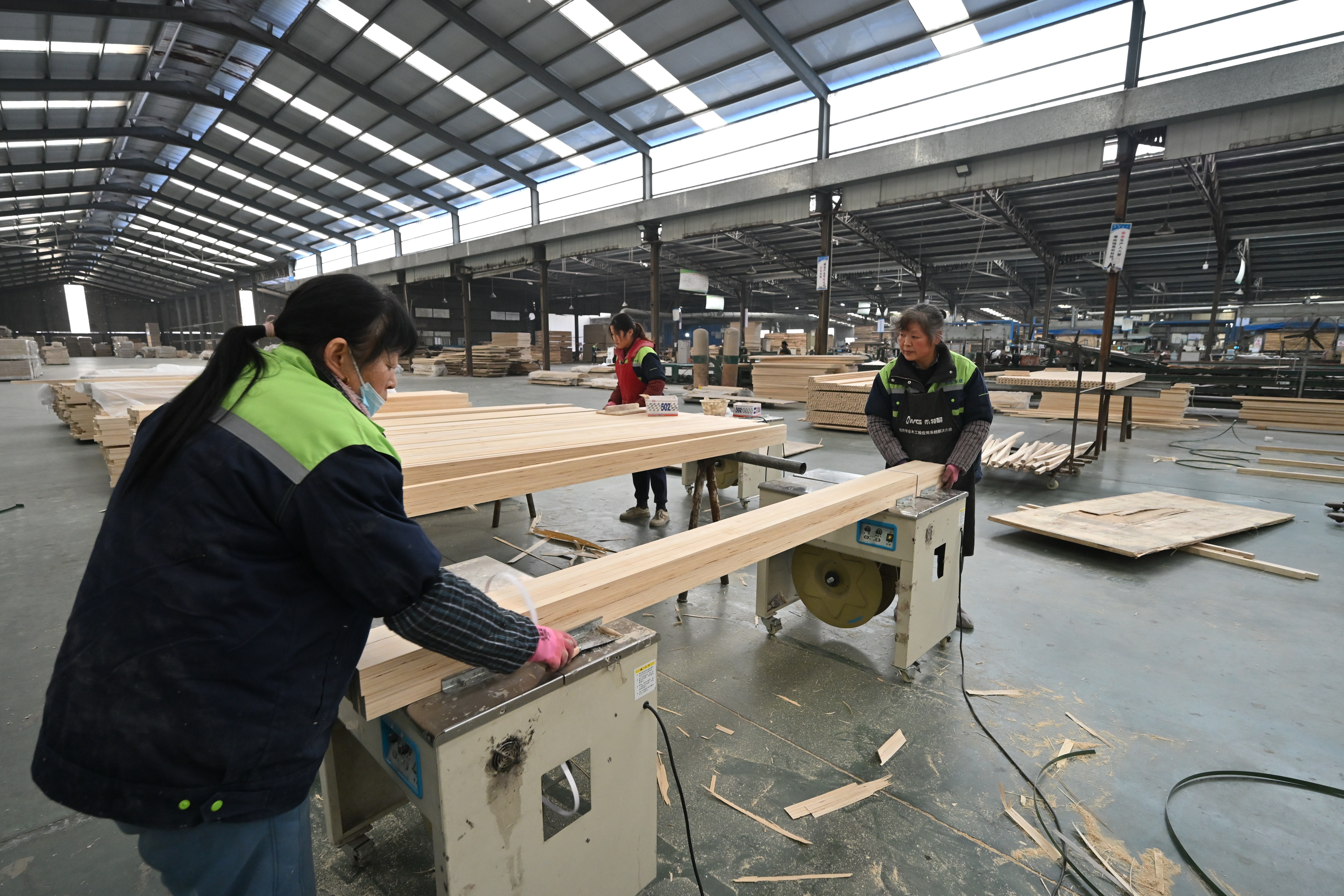
Dalian WADA’s factory supports engineered wood panel production and export.