
Decoding Wood Panel Sizes, Thicknesses, and Tolerances: A Technical Guide
Most panel disputes are not about species, glue or price. They are about a fraction of a millimetre. This technical guide explains how sheet sizes, thickness ranges and tolerance bands are actually quoted on wood panels such as plywood, MDF, film faced plywood and melamine board, why thickness tolerance is the parameter that decides whether production output stays repeatable, and how to write size, thickness and tolerance into a supplier specification before the order is placed.
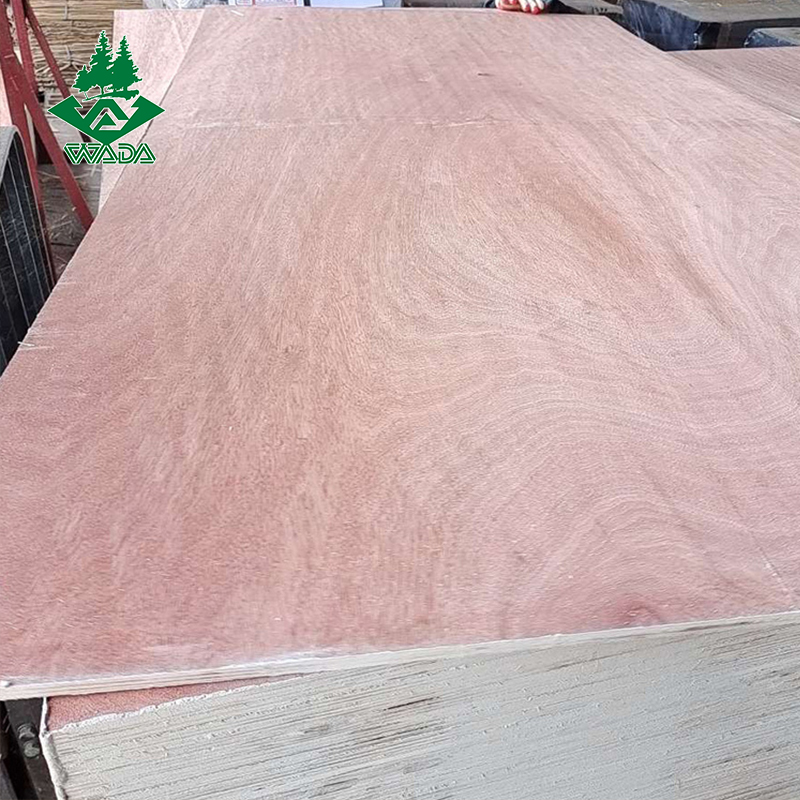
Commercial plywood panels during pre-shipment handling. Size, thickness and moisture content are the three parameters that determine whether a container matches the buyer's cutting plan.
Why a Panel Specification Usually Fails on Thickness, Not on Species
A buyer who writes 'MDF, 18 mm, 4 x 8 ft' has technically described a panel, but has left three commercial variables open: the acceptable band around the nominal thickness, the measuring method used to check that band, and the moisture content at which the check is made. Two suppliers can both ship a panel described the same way and still deliver material that behaves differently on the same edge bander.
The cost appears downstream. In cabinet and furniture production, panel thickness is a reference surface: hinges, dowels, cam fittings, edge banding and CNC nesting all assume a consistent build. When thickness drifts between orders, the machine settings that worked on the first batch have to be re-tuned on the second. In load-bearing use, thickness is part of the strength assumption, so a panel that sits consistently at the low end of a wide band reduces the margin the designer calculated.
Sheet size has a quieter but similar effect. When length and width move, nesting yield falls, offcuts grow, and modular furniture that depends on matched panel dimensions needs re-cutting. For importers who resell, size deviation also becomes a warehouse and claim problem, because a pallet that does not match the catalogued format is difficult to pass on.
Tolerance is therefore not a marketing claim. It is a written agreement between what the buyer's process can absorb and what the supplier's production line can hold.
Industry Background: Standard Formats, Regional Rules
Wood-based panels are a large and still expanding category, which is why format and thickness conventions have converged across markets. The global plywood market was valued at USD 80.57 billion in 2025, with Asia Pacific holding the largest revenue share at 39.4%, according to Grand View Research. The same source projects the global MDF market to grow from USD 44.96 billion in 2025 to USD 82.24 billion by 2033, a CAGR of 8.2%. Market Estimates vary between research houses, and IMARC Group places the plywood market at USD 52.5 billion for the same period, so buyers should treat headline valuations as directional rather than precise.
Panel formats, on the other hand, are far more stable than market estimates. Broadly speaking, the dominance of the 4 x 8 ft sheet reflects how press formats, container loading and downstream cutting equipment evolved together, while metric-based projects in Europe and Asia continue to specify formats in millimetres. Grain-oriented products such as Oriented Strand Board follow the same logic: OSB production reached over 32 million cubic metres globally in 2024, with the USA accounting for 14 million cubic metres, according to Market Reports World.
Trade flows add a second layer. China was the second largest exporter of raw timber (HS 44) to the United States in 2024, contributing USD 2.17 billion, or a 9% share, according to ITC and US Census Bureau data. That volume moves against a regulatory backdrop: wood-based panels used in construction in the European Union must comply with the harmonised European standard EN 13986 for CE marking eligibility, and in the United States the EPA TSCA Title VI regulation sets formaldehyde emission limits of 0.11 ppm for MDF and 0.05 ppm for hardwood plywood.
The practical consequence for buyers is that a panel specification has two independent halves: the compliance half, which references EN 13986, TSCA Title VI or equivalent schemes, and the dimensional half, which covers size, thickness and tolerance. Buying guides often treat the second half as an afterthought. It is the half that determines whether a production line runs on Monday morning.
Decoding the Three Parameters of a Panel Specification
Sheet Size: Two Format Families in One Market
Panel formats are quoted either in imperial feet or in metric millimetres, and the two families coexist inside the same product catalogue. On imperial formats, MDF is produced from 4 x 8 up to 8 x 16 ft; Structure Plywood from 3 x 6 to 4 x 8 ft; Marine Plywood from 4 x 8 to 4 x 9 ft; Veneered Plywood and Melamine Board from 4 x 8 to 7 x 9 ft; and Commercial Plywood at 4 x 8 ft or as requirement. Film Faced Plywood is normally quoted in metric form, with formats of 1200 x 1800 mm, 1200 x 2400 mm, 1220 x 2440 mm, 1250 x 2500 mm and 1500 x 3000 mm. LVL bed slat is a component format rather than a sheet format, specified by width from 25 to 190 mm.
Two details matter when you write size into a purchase order. First, oversized formats such as 7 x 9 ft or 8 x 16 ft exist so that a buyer can cut large components without a glued joint, but they also change loading, handling and press utilisation, so they should be justified by the finished part rather than requested by habit. Second, a size range in a catalogue is a capability statement, not a stock list; the format that will actually ship must be confirmed per order.
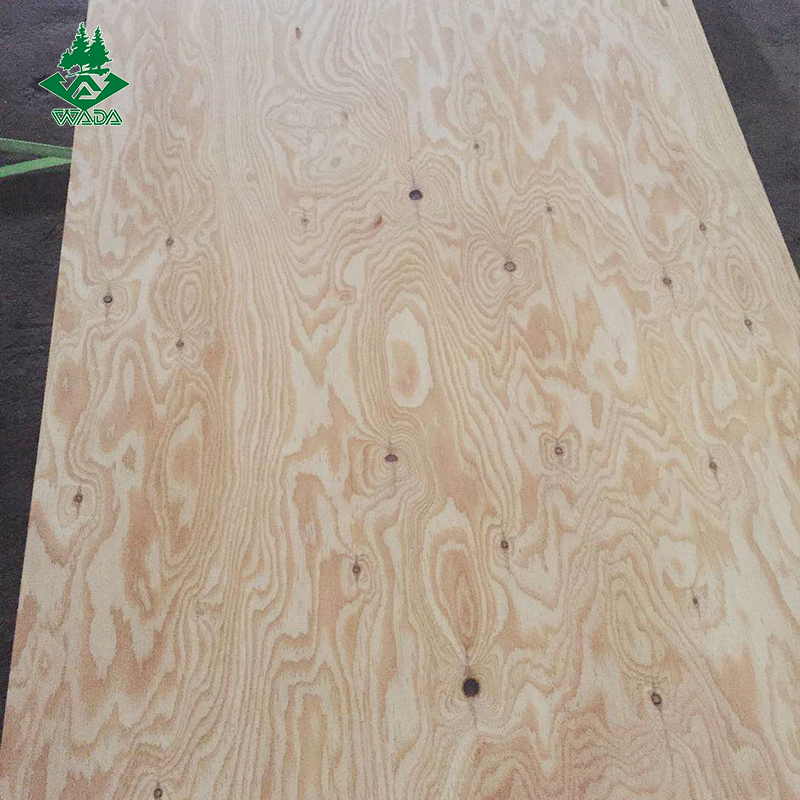
Structure Plywood is produced from 3 x 6 ft to 4 x 8 ft, in thicknesses from 9 to 28 mm, with density of 650 to 750 kg/m3.
Thickness: The Range Is Wide, the Nominal Is Narrow
Thickness capability is usually far wider than the thickness a project actually uses. In the WADA product range, MDF covers 1.2 to 50 mm and Commercial Plywood covers 2 to 25 mm; Structure Plywood runs from 9 to 28 mm and Marine Plywood from 9 to 25 mm; Film Faced Plywood covers 4 to 35 mm; Melamine Board covers 2 to 30 mm and Veneered Plywood 2 to 25 mm; LVL bed slat is produced from 7 to 15 mm. The range tells a buyer what can be pressed or laid up. The nominal figure in the drawing tells the supplier what must be delivered.
This distinction is where specifications quietly break down. When a buyer writes only the nominal, the supplier has no instruction on the band around it, and panels that are technically on-spec may still sit outside the buyer's process window. A written specification should name the nominal thickness and the acceptance band, expressed as a plus/minus figure or an absolute minimum and maximum, and it should state how the measurement is taken.
Density and Moisture Content: The Variables Behind the Dimensions
Thickness stability is not only a pressing question; it is also a moisture question. Panel moisture content in the WADA range is normally held between 8% and 12% for plywood, Veneered Board, Melamine Board and LVL bed slat, while MDF is quoted at 5% to 13% because the fibre process behaves differently across formats. Density supports the same purpose: MDF is produced from 500 to 1000 kg/m3, Commercial Plywood from 520 to 700 kg/m3, Structure Plywood and Film Faced Plywood from 650 to 750 kg/m3, Marine Plywood from 600 to 750 kg/m3, Veneered Plywood from 500 to 750 kg/m3, Melamine Board from 550 to 750 kg/m3.
The buying implication is simple: a panel measured immediately after a humid transit can read differently from the same panel measured after acclimatisation in a dry workshop. Agreeing the moisture condition at which dimensions are checked removes an entire category of claim.
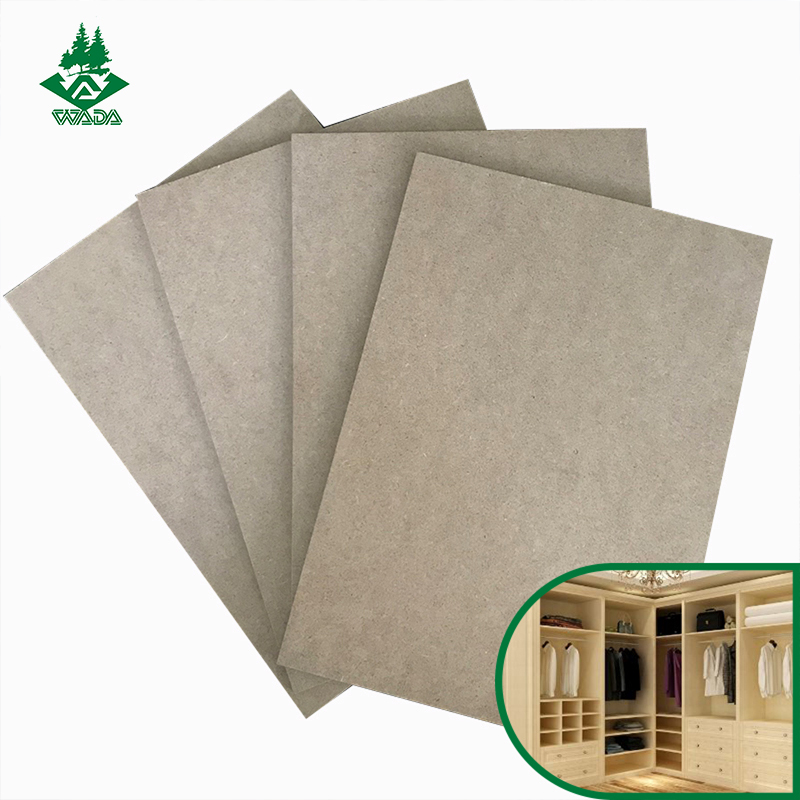
MDF from the WADA range: formats from 4 x 8 to 8 x 16 ft, thickness from 1.2 to 50 mm, produced on continuous flat pressing lines.
What the Word Tolerance Should Cover in a Written Spec
A complete dimensional clause covers four items, and no more than four:
- Thickness tolerance - the acceptable band around nominal thickness, and the instrument and measuring points used to verify it.
- Length and width tolerance - the acceptable band on sheet dimensions, which governs nesting yield and modular fit.
- Moisture condition at measurement - the moisture content range at which the dimensional check is valid, for example the 8% to 12% band used across most plywood and board products.
- Acceptance basis - how many panels are checked and against which record, since a supplier working to 100% inspection produces a different paper trail from one working to sampling.
Everything else - surface grade, glue type, veneer cut, coating - belongs in other clauses. Merging them into the tolerance clause is the fastest way to create a dispute that nobody can settle.
Why Thickness Tolerance Is the Most Expensive Parameter to Get Wrong
Thickness error propagates through every downstream operation. A cabinet door that is assembled from panels at opposite ends of a wide band will show a visible lipping when the doors are closed. A CNC program that assumes a constant panel build will produce inconsistent rebates. A laminated or veneered panel that is thin at the core cannot be corrected by adding surface material. In formwork, where Film Faced Plywood in the WADA range is specified for reuse of 2 to 40 times in concrete projects, thickness variation also changes the pressure distribution across the form face, which is why construction buyers tend to state thickness far more tightly than furniture buyers do.
Working rule: specify the tightest thickness window only where the finished part demands it. A cabinet front, a load-bearing member or a formwork face needs a narrow band. Packing crates, one-time jigs and non-visible spacers usually do not.
Panel Specification Reference: Formats, Thickness, Density and Moisture
The table below summarises the published dimensional parameters of the WADA engineered wood panel range. Density and moisture figures are the production ranges quoted for each product family, and glue options reflect the certification tiers available per product.
| Panel type | Sheet size | Thickness | Density | Moisture content | Glue options |
|---|---|---|---|---|---|
| MDF | 4 x 8 to 8 x 16 ft | 1.2 - 50 mm | 500 - 1000 kg/m3 | 5% - 13% | E0 / CARB P2 / E1 |
| Commercial Plywood | 4 x 8 ft or as requirement | 2 - 25 mm | 520 - 700 kg/m3 | 8% - 12% | E0 / CARB P2 / E1 / E2 / WBP |
| Structure Plywood | 3 x 6 to 4 x 8 ft | 9 - 28 mm | 650 - 750 kg/m3 | 8% - 12% | Melamine WBP / Phenolic WBP |
| Marine Plywood | 4 x 8 to 4 x 9 ft | 9 - 25 mm | 600 - 750 kg/m3 | 8% - 12% | Melamine WBP / Phenolic WBP |
| Film Faced Plywood | 1200 x 1800 / 1200 x 2400 / 1220 x 2440 / 1250 x 2500 / 1500 x 3000 mm | 4 - 35 mm | 650 - 750 kg/m3 | 8% - 12% | MR / Melamine WBP / Phenolic WBP |
| Veneered Plywood | 4 x 8 to 7 x 9 ft | 2 - 25 mm | 500 - 750 kg/m3 | 8% - 12% | E0 / CARB P2 / E1 / E2 / Melamine |
| Melamine Board | 4 x 8 to 7 x 9 ft | 2 - 30 mm | 550 - 750 kg/m3 | 8% - 12% | E0 / CARB P2 / E1 / E2 |
| LVL bed slat | Width 25 - 190 mm | 7 - 15 mm | See product data sheet | 8% - 12% | E0 / E1 |
Step-by-Step: How to Specify Size, Thickness and Tolerance to a Supplier
The following sequence keeps a dimensional specification traceable from drawing to container. It is written for procurement engineers and importers working with an OEM or ODM panel manufacturer.
- Start from the finished part, not from the sheet. Define the component dimensions and the machine that will process them. The panel format is a consequence of that decision.
- Fix the sheet format and its tolerance. State whether you are buying imperial (4 x 8 ft) or metric (1220 x 2440 mm) formats, and whether oversized formats such as 7 x 9 ft or 8 x 16 ft are required. Add the acceptable length and width band.
- Fix nominal thickness and the acceptance band. Give a nominal figure and either a plus/minus allowance or absolute minimum and maximum. Where different components need different windows, split the order lines rather than applying the tightest band to everything.
- Define how thickness is measured. Agree the instrument, the number of measuring points per panel, and whether measurement happens before or after acclimatisation.
- State the moisture condition. Reference the moisture range your process expects - for example 8% to 12% for plywood and board products, or 5% to 13% for MDF - and require the check to be made in that condition.
- Match core, glue and density to the service environment. Wet or exterior conditions point to Phenolic WBP or Melamine WBP glue with Marine Plywood or Structure Plywood; dry interior furniture work generally uses E0, CARB P2 or E1 glues with MDF, Melamine Board or Veneered Plywood.
- Confirm the compliance documents in the same document. Cite the standards that apply to your market - EN 13986 for CE marking of construction panels in the EU, TSCA Title VI for the US market - and confirm which certificates the supplier holds for the specific product.
- Validate before the mass order. Ask for dimensional check records, confirm the inspection regime, and verify the first shipment on arrival against the agreed clause rather than against the catalogued nominal.
What to Put in the Request for Quotation
| Line item | What to write | Why it changes the outcome |
|---|---|---|
| Format | Imperial feet or metric millimetres, with length and width tolerance | Controls nesting yield and modular fit; oversized formats affect loading |
| Nominal thickness | Single nominal figure per line item | Defines the reference surface for edge banding, joints and CNC work |
| Tolerance band | Plus/minus or absolute min/max, plus measuring method | Determines acceptance or rejection at goods-in inspection |
| Moisture condition | Expected moisture range at measurement | Prevents disputes caused by acclimatisation after transit |
| Density grade | Required density range for the product family | Supports strength assumptions and screw-holding behaviour |
| Glue and certification | E0 / CARB P2 / E1 / E2 / WBP / MR, and the market standard | Aligns the panel with emission rules and service environment |
| Inspection basis | Full inspection records, sampling plan, or third-party check | Defines the evidence available if a batch is questioned |
Where Sizing and Thickness Tolerance Decide the Project
Furniture and Cabinet Production
Continuous workshop production is the environment where dimensional discipline pays back fastest. The Polish furniture-manufacturing scenario in the WADA application data operates in continuous production mode and requires a smooth surface and a stable core, which is normally met with Melamine Board, Veneered Plywood or MDF. A furniture manufacturer in Mexico has taken 100 containers of Veneered Plywood, Melamine Board, LVL bed slat and MDF for furniture and cabinet applications, where assembly consistency depends on thickness stability rather than on any single panel property. Melamine Board covers 2 to 30 mm and MDF 1.2 to 50 mm, so the nominal must be fixed per component, not per container.
Bedroom Furniture and Bed Slats
LVL bed slat is a good illustration of a component-format specification. Width runs from 25 to 190 mm and thickness from 7 to 15 mm, with face and back in birch, beech or poplar and a birch or poplar core. Because slats are flexed in service, both the thickness window and the moisture band of 8% to 12% influence how the slat behaves in a finished bed frame.
Industrial Packaging
Heavy-duty transport crating is a scenario where the requirement is high load capacity and the operation mode is one-time or reusable, typically using Commercial Plywood in formats of 4 x 8 ft or as requirement and thicknesses from 2 to 25 mm. In packaging, thickness tolerance is usually looser than in furniture, but size consistency still drives cutting efficiency and container fill.
Exterior Cladding and Outdoor Decoration
Outdoor applications add UV exposure and weather resistance to the specification. A wall-cladding case in Portugal has used 20 containers of Marine Plywood for exterior cladding with weather-resistant performance, and an outdoor decoration scenario in Mexico specifies exterior wall cladding for decoration and protection, installed with a fastening system and used long term outdoors. Marine Plywood is produced from 4 x 8 to 4 x 9 ft and 9 to 25 mm, with phenolic or melamine WBP glue, which is the combination that keeps a panel dimensionally stable under moisture cycling.

Marine Plywood, 9 to 25 mm, with Birch or Okoume faces and Melamine WBP or Phenolic WBP glue, is specified where moisture movement must stay controlled.
Construction and Formwork
Construction projects require waterproof performance and high strength at the same time. A building contractor in Australia has taken 50 containers of Structure Plywood and Film Faced Plywood for building structure work, and a construction builder in Japan has taken 200 containers for the same category. Film Faced Plywood is specified in metric formats from 1200 x 1800 mm up to 1500 x 3000 mm with thicknesses of 4 to 35 mm and reuse of 2 to 40 times in concrete projects, so both the format and the thickness band must match the formwork design rather than a generic catalogue line.
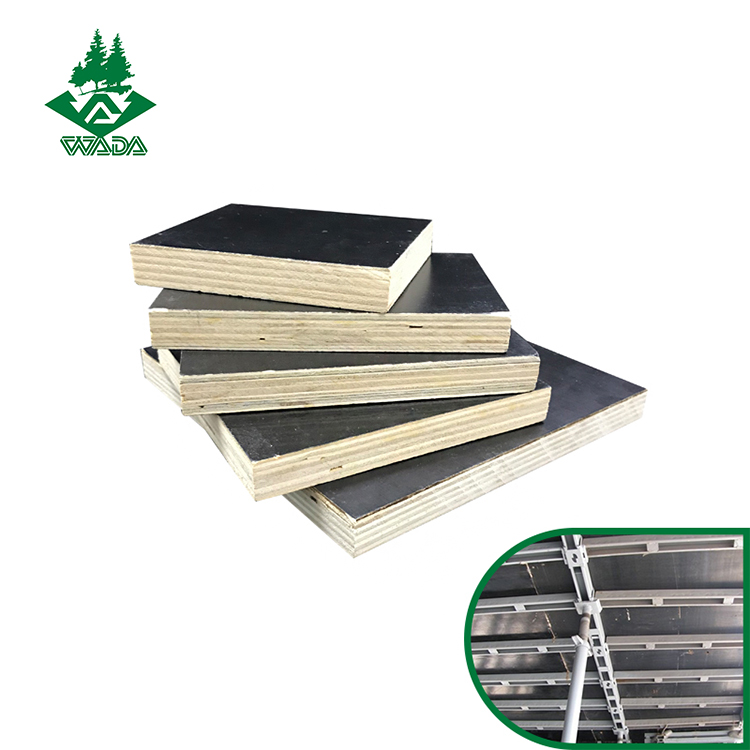
Film Faced Plywood is quoted in metric formats such as 1220 x 2440 mm and 1500 x 3000 mm, with 4 to 35 mm thickness and up to 40 reuses in concrete projects.
Interior Fit-Out and Low-Emission Projects
Interior finishing in dry environments typically requires an eco-friendly, formaldehyde-controlled board. That connects the dimensional clause back to the compliance clause: MDF in the WADA range is certified to FSC, CARB P2 and EPA, JIS and EUDR, and glue tiers include E0, CARB P2 and E1, which is how a specification satisfies both the buyer's cutting tolerance and the market's emission limits.
Frequently Asked Questions
1. Which standards should a wood panel specification reference for compliance?
Two independent sets of rules usually apply. In the European Union, wood-based panels used in construction must comply with the harmonised standard EN 13986 to be eligible for CE marking, according to the European Panel Federation. In the United States, composite wood products fall under EPA TSCA Title VI, which sets formaldehyde emission limits of 0.11 ppm for MDF and 0.05 ppm for hardwood plywood. WADA products are supplied with FSC, EUDR, CARB P2, EPA, JAS and JIS coverage, and MDF is listed with FSC, CARB P2/EPA, JIS and EUDR certification. Certification does not replace a dimensional clause; both belong in the same specification document.
2. Can a panel manufacturer produce non-standard sizes and thicknesses?
Yes, within the capability of the line. Dalian WADA International Trading Co., Ltd. operates OEM and ODM production with customization across size, thickness and layout. MDF is produced from 4 x 8 to 8 x 16 ft in thicknesses from 1.2 to 50 mm, Veneered Plywood and Melamine Board from 4 x 8 to 7 x 9 ft, Film Faced Plywood in metric formats up to 1500 x 3000 mm, and Commercial Plywood at 4 x 8 ft or as requirement. The practical limit on customization is not the format itself but the order quantity needed to run it economically.
3. What drives the commercial tier of a panel specification, and what is the minimum order?
The minimum order quantity for WADA panel products is one 40 ft container, and monthly capacity is above 10,000 CBM, so multi-format orders can be combined. The commercial tier of a specification is driven mainly by format (oversized sheets cost more to press and to load), nominal thickness, density grade, glue tier - E2 or MR at one end and E0, CARB P2 or Phenolic WBP at the other - and surface treatment such as melamine paper, PET film, HPL or a graded veneer face. Buyers get better value by applying a tight thickness window only to the components that need it, for example visible cabinet parts, rather than to every line in the order.
4. How can a buyer validate thickness and size before committing to mass production?
Ask for the dimensional clause in writing before the first container: nominal thickness, acceptance band, measuring instrument and points, and the moisture condition at which the check applies. WADA operates a 100% inspection regime, with an experienced quality inspection team and a technical team supporting order verification. The moisture bands published for the range - 8% to 12% for plywood, Veneered Board, Melamine Board and LVL bed slat, and 5% to 13% for MDF - give the buyer a defined condition for measuring. On arrival, checking panels after acclimatisation rather than immediately after unloading avoids the false readings that humid transit produces.
5. What lead time and capacity should be planned into a project schedule?
Lead time for WADA panel orders is typically 25 to 45 days, supported by a monthly capacity above 10,000 CBM and export experience across South America, the EU, the Middle East and Southeast Asia. Orders ship against a minimum of one 40 ft container, and after-sales support is provided remotely. Buyers who need an oversized or non-standard thickness should open the specification discussion early, because format and thickness confirmation precedes production scheduling rather than following it.
Conclusion: Three Numbers, Written Down
Size, thickness and tolerance are the three parameters that connect a panel supplier's production line to a buyer's cutting plan, and only one of them - tolerance - is normally left unwritten. Fixing it costs a few lines in a specification document. Leaving it open costs re-tuning time, rejected batches and claims that cannot be resolved because no acceptance basis was ever agreed.
Dalian WADA International Trading Co., Ltd. was established in 2010 and operates as a manufacturer and global exporter of engineered wood products, with production bases in China and overseas branches in Japan and Singapore. The group runs a 53,950 m2 factory with 200 employees and a 25-engineer R&D team, exports 100% of output to markets including North America, the EU, Australia, Japan, South Korea, the Middle East, Mexico and South America, and holds FSC, EUDR, CARB P2, EPA, JAS and JIS certification across its panel range.

Specification verification starts with a defined format, nominal thickness and moisture band. Melamine Board is produced from 4 x 8 to 7 x 9 ft and 2 to 30 mm, with E0, CARB P2, E1 and E2 glue options.
Next Step: Turn Your Drawing into a Panel Specification
Send the finished component dimensions, the required nominal thickness and the working environment, and the WADA team will confirm the format, thickness band, moisture condition, glue tier and certification coverage that fit the order - with the acceptance basis written into the quotation.
Email: wada@wadatrade.com | Tel / WhatsApp: +86 131-3003-0584 | Website: www.wadaplywood.com
Download the full product and capability overview: WADA Group Catalogue (PDF)