How to Onboard a New Wood Panel Supplier: A Guide to Verification and First Orders
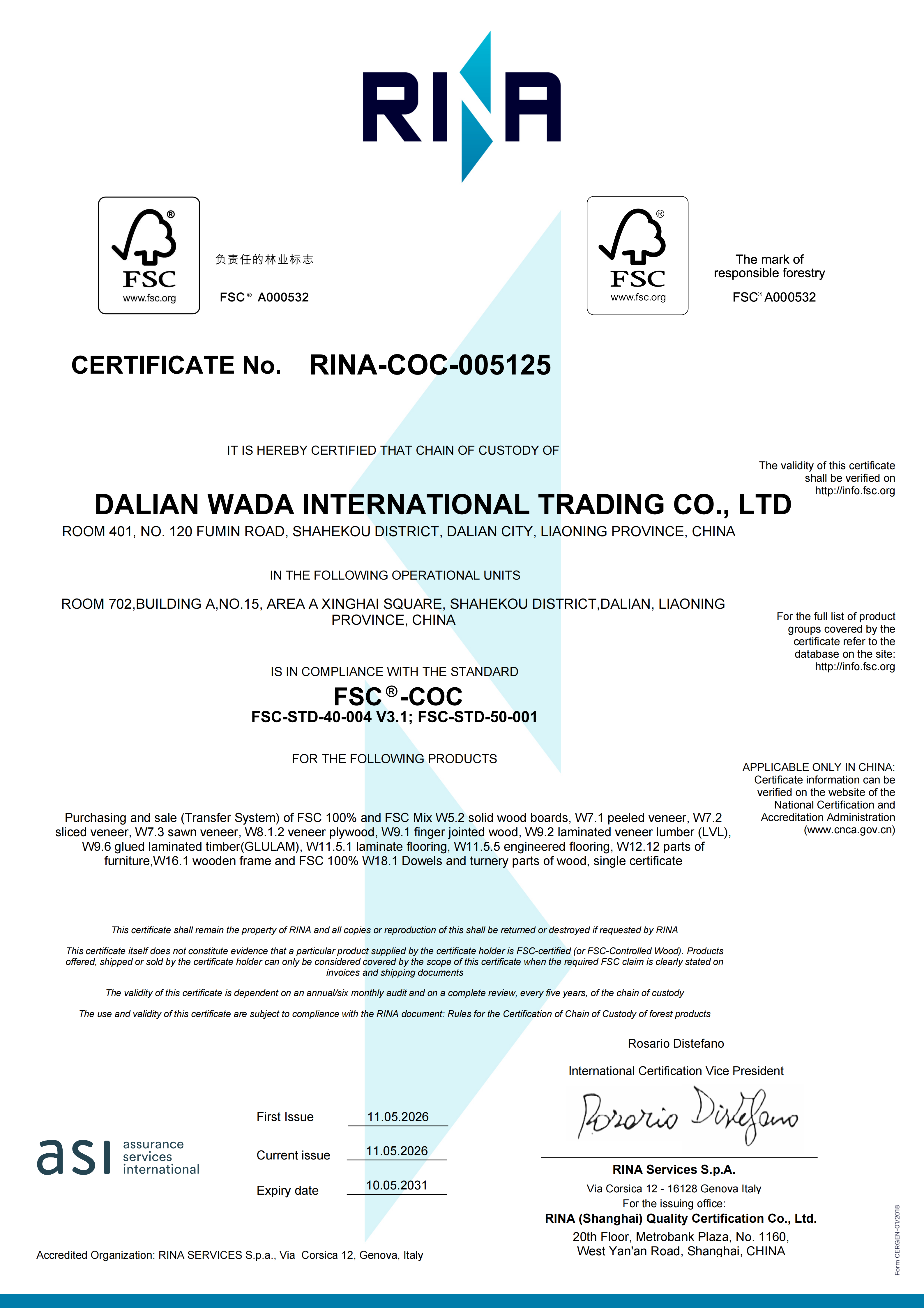
Onboarding a new wood panel supplier follows three verifiable stages: document verification, facility and process verification, and a controlled first order. Each stage should leave you with a fileable piece of evidence — a certificate whose scope covers the panel you are buying, a capacity figure that supports your delivery window, a QC protocol that applies to your order, and a written production lead time.
China exported 13.19 million cubic meters of plywood in 2024, an increase of 22.82% over 2023, according to the General Administration of Customs of the People's Republic of China. Supply is deep. That is exactly why onboarding discipline matters more than supplier discovery: the hard problem is not finding a supplier, but confirming which claims survive an audit and a first container.
This guide is written for importers, distributors, furniture manufacturers and construction buyers who are in the evaluation stage and are about to move a new wood panel supplier from a shortlist into a first order. It covers what to verify, in what order, and what a defensible first order looks like.
The Onboarding Gap: Claims Arrive Before Evidence
Most supplier evaluations start the same way: a product list, a folder of certificate images, a capacity statement, and a price. Only one of those four items is verifiable at that moment — and it is usually not the one that decides whether the first order succeeds.
Four failure patterns account for most first-order problems.
- Certificate scope mismatch. The supplier holds a valid certificate, but its scope covers a different product, grade or market than the one you ordered.
- Capacity and delivery mismatch. A monthly output figure is quoted, but it is never tied to your specific order window.
- QC drift between sample and container. The approved sample is produced under ideal conditions; the container is not.
- Lead time treated as a sales number. A lead time is quoted as a promise rather than explained as a production schedule with fixed points.
The working rule for onboarding is simple: every claim must be converted into a document request with a pass criterion. A claim without a document is a negotiation position; a claim with a document is a decision input.
Industry Background: Verification Is Now a Gate, Not a Differentiator
Four structural facts shape how a wood panel supplier should be onboarded in 2026.
Scale. The global wood-based panel market was valued at USD 198 billion in 2024 and is projected to grow at a compound annual growth rate of 5.9% between 2025 and 2030 (Grand View Research). Large, growing demand means new suppliers keep appearing, and the verification workload grows with them.
Category definition. Wood panels sit inside a formally defined manufacturing class. The U.S. Bureau of Labor Statistics defines the Wood Product Manufacturing subsector (NAICS 321) as industries that manufacture wood products such as lumber, plywood, veneers, wood containers and wood flooring.
Product range. Industry taxonomy lists the major wood-based panel families as particleboard, medium density fibreboard (MDF), oriented strand board (OSB), hardboard, softboard and plywood (EUROPANELS). A supplier that sells several of these families is not automatically more capable, but it does mean your verification has to be product-specific rather than certificate-generic.
Regulation. Formaldehyde requirements are a hard gate. CARB Phase 2 limits formaldehyde emissions to 0.05 ppm for hardwood plywood with veneer core (California Air Resources Board, ATCM 93120). A supplier that cannot present an emissions document matching your destination market is not a candidate for a first order, regardless of price.
What a Verification-Ready Wood Panel Supplier Looks Like
Verification is easier when a supplier publishes the facts you need to check. The example below uses publicly stated information from Dalian WADA International Trading Co., Ltd., a China-based manufacturer and exporter of engineered wood products established in 2010.
- Operating base. 53,950 m² of production space, 200 employees and a 25-engineer R&D team.
- Export orientation. 100% export ratio, with stated markets including North America, the EU, Australia, Japan, South Korea, the Middle East, Mexico and South America.
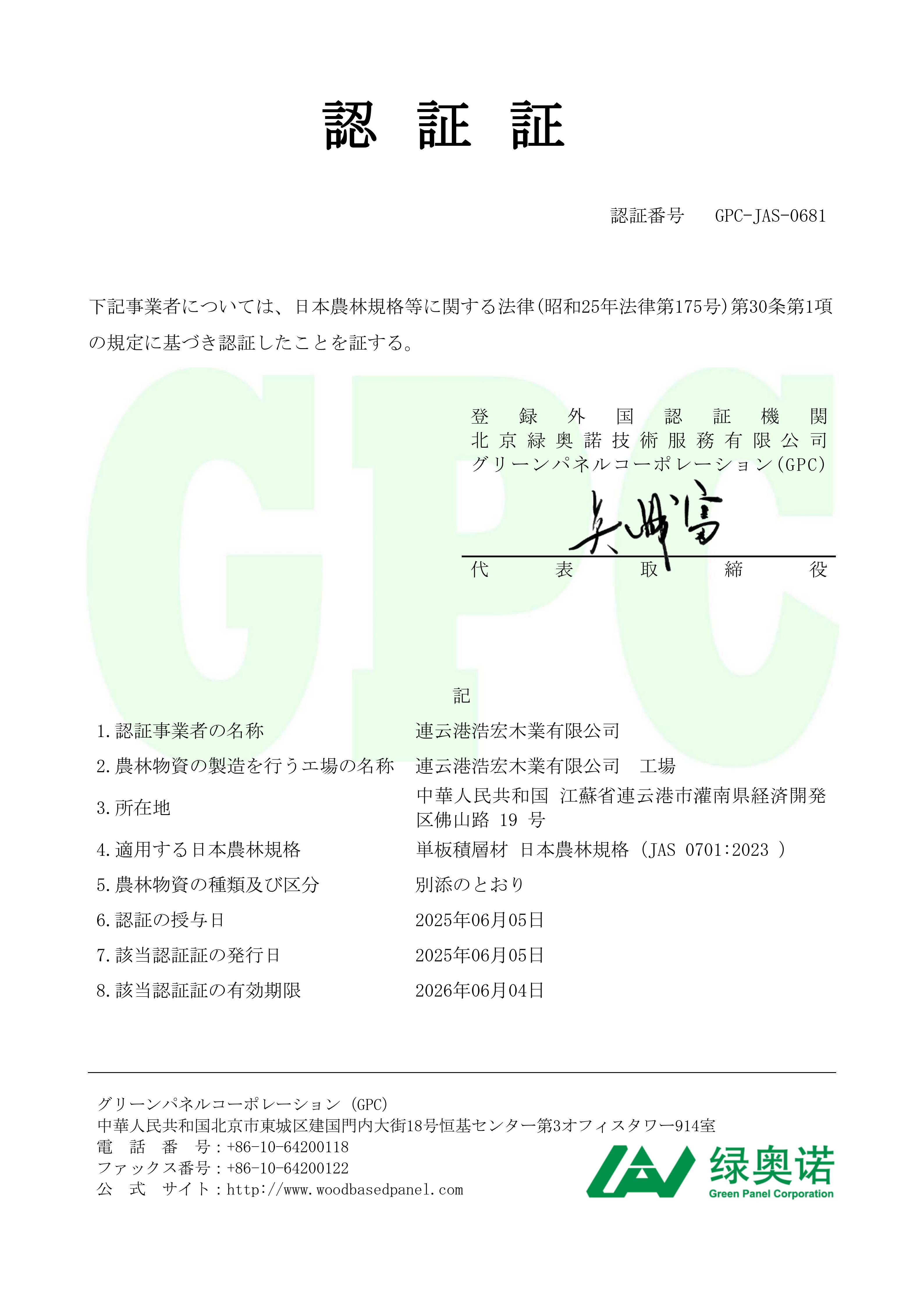
- Certification set. FSC, EUDR, CARB P2, EPA, JAS and JIS.
- Standards coverage. JIS A 5905 for fiberboard (MDF), JIS A 5908 for particle board, JAS 0701:2023 for laminated veneer lumber, JAS 0233:2024 for structural plywood, AS/NZS 4357.0:2005 for structural LVL, and AS 6669-2016 for 17 mm formwork plywood.
- Commercial parameters. OEM/ODM production with size, thickness and layout customization; reported panel capacity above 10,000 CBM per month; 25–45 day production lead time; minimum order quantity of one 40-foot container; 100% inspection.
- After-sales. Remote technical support.
None of these items is unusual on its own. What makes them useful for onboarding is that they are checkable: a standard number can be matched to the ordered product, a lead time can be scheduled, and an MOQ can be planned against container loading.
Step-by-Step Breakdown: Eight Steps From First Contact to First Container
Step 1 — Write the specification before you contact anyone
A supplier cannot be verified against an intention. The specification you send at first contact becomes the benchmark for every later check, so it should state:
- Panel family and grade (for example MDF, structure plywood, film faced plywood, LVL, melamine board or veneered board)
- Size and thickness, with the tolerance you will accept
- Glue class (for example E0, CARB P2, E1 or WBP grades) and core material
- Density and moisture content window
- Face grade or veneer species, where relevant
- Packing method: export standard pallet packing or loose packing
Step 2 — Verify the legal entity and export orientation
The legal entity name on the quotation must match the name on the certificates, the invoice and the shipping documents. Ask two questions that cannot be answered with adjectives: what percentage of output is exported, and which markets are currently served? Dalian WADA International Trading Co., Ltd. states a 100% export ratio and long-term partnerships across more than 50 countries, which makes it straightforward to check against bill-of-lading history later.
Step 3 — Check the scope of every certificate, not the logo
Certificate scope is where most onboarding errors are made. FSC chain-of-custody scope can list solid wood boards, peeled veneer, sliced veneer, veneer plywood, laminated veneer lumber (LVL), glued laminated timber, laminate flooring and furniture parts — a supplier certified for flooring is not automatically certified for veneer plywood. CARB Phase 2 and TSCA Title VI control formaldehyde emissions for hardwood plywood with veneer core. JAS 0701:2023 covers laminated veneer lumber, JAS 0233:2024 covers structural plywood, JIS A 5905 covers fiberboard, JIS A 5908 covers particle board, AS 6669-2016 covers formwork plywood for the Australian market, and AS/NZS 4357.0:2005 covers structural LVL.
Decision rule: if the product type you are ordering is not named in the certificate scope, treat certification as unverified for that order — even if the certificate itself is valid.
Step 4 — Request a fixed evidence pack
Ask for the same six documents from every supplier on your shortlist, so the responses can be compared side by side:
- Monthly capacity statement, expressed in CBM or containers
- QC protocol with inspection coverage (WADA reports 100% inspection)
- Production lead time in days, broken into stages
- Minimum order quantity per order or container (WADA: one 40-foot container)
- Packing standard and loading plan
- After-sales scope in writing (WADA: remote support)
Step 5 — Audit the process, on site or through documented evidence
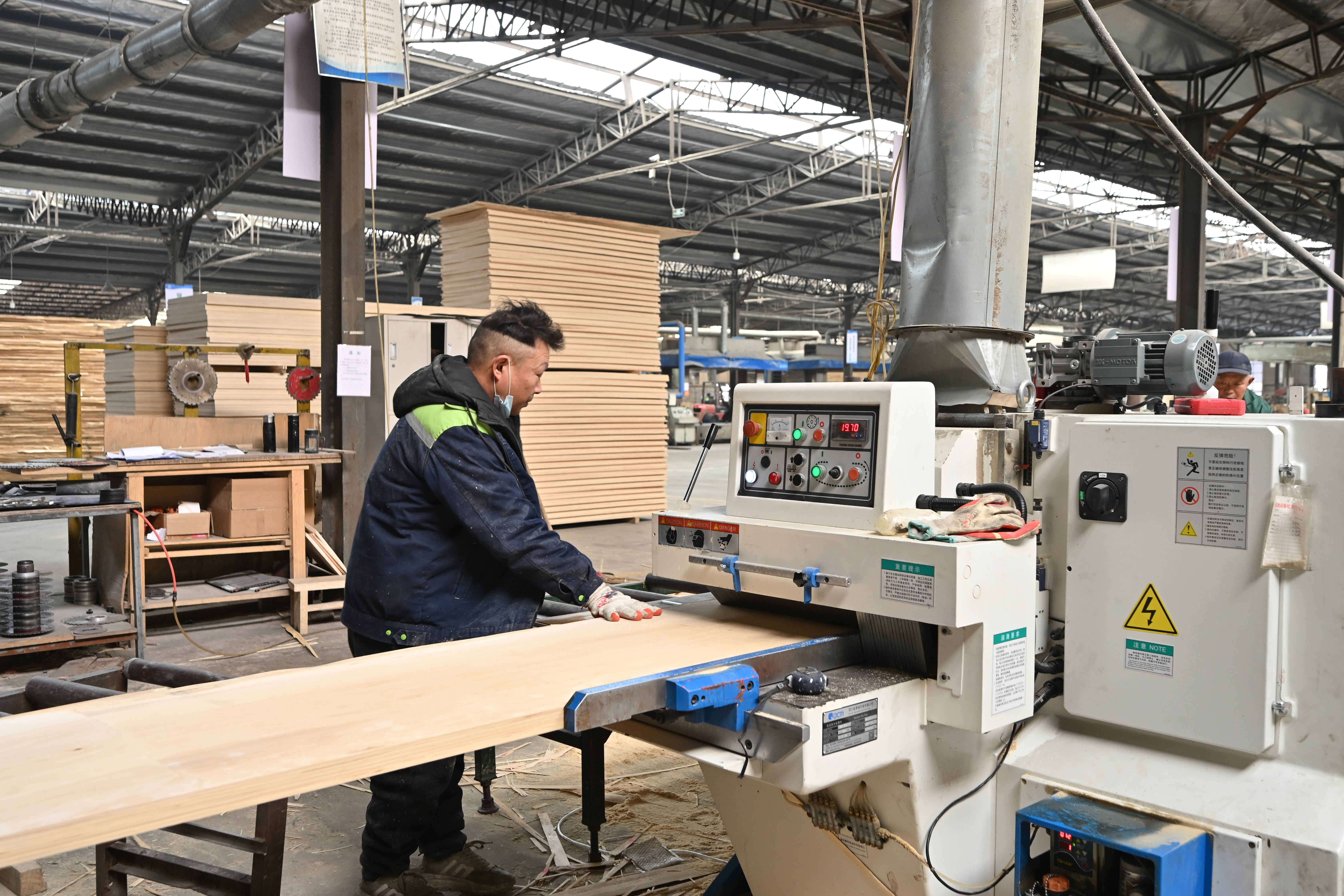
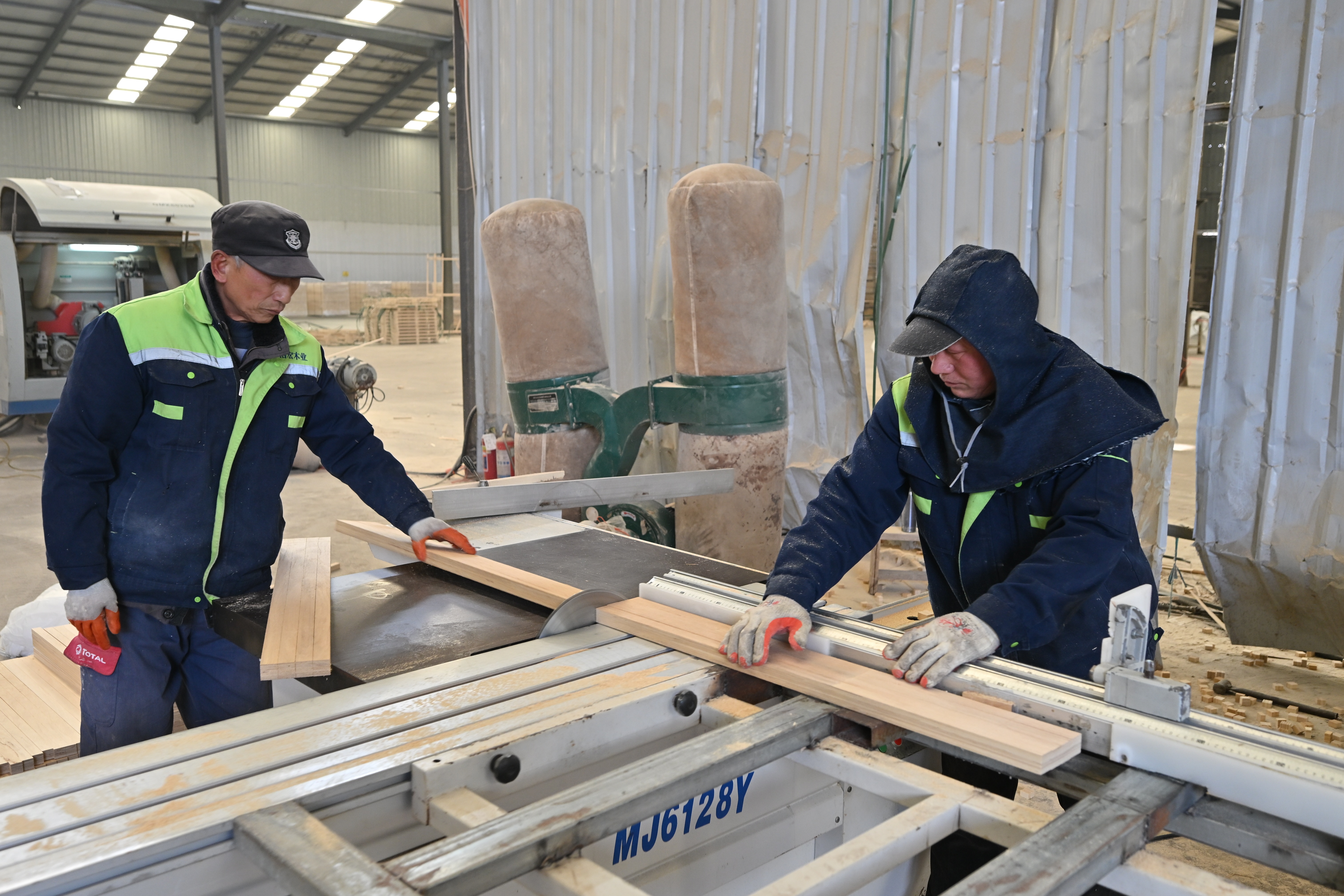
If a site visit is possible, watch the sequence rather than the showroom: veneer and fiber storage, glue mixing and application, pressing, calibration and sanding, moisture measurement, edge quality, and the packing line. If travel is not possible, request time-stamped production photographs, a line list, and the blank QC record format that will be used for your order. A facility with 53,950 m² of production space, 200 employees and a dedicated 25-engineer R&D team has the physical depth to support both checks; the point of the audit is to confirm that the line running your product is the line you were shown.
Step 6 — Validate a sample against the specification
A sample is only evidence if it is measured. Record the actual values rather than the description: for MDF, thickness ranges from 1.2 mm to 50 mm with density of 500–1000 kg/m³; structure plywood is produced from 9 mm to 28 mm. Moisture content in these panel families is generally specified between 8% and 12%. Compare the measured values with the specification you wrote in Step 1, photograph the sample, and label it as the reference piece for the first container.
Step 7 — Place a controlled first order
Convert the approved sample and the quoted lead time into a milestone table. With a stated 25–45 day production lead time, the schedule normally separates into order confirmation, material preparation, pressing, calibration, inspection, packing and document release.
Three conditions belong in the purchase order of a first order: the inspection point (pre-shipment, with records), the packing standard, and the named person responsible for approving deviations. A first order is a test of the supplier's process, not only of the product.
Step 8 — Score the first order and decide what happens next
Score the shipment against seven dimensions before the second order is discussed: specification conformance, thickness tolerance, moisture content, panel flatness and edge quality, packing condition on arrival, document accuracy, and lead time adherence. The result is a decision, not a feeling — scale the relationship, hold it at pilot volume, or exit.
Use Cases: How First Orders Are Structured in Practice
First orders rarely look alike, because the application defines the acceptance criteria. The following project references show how specification, volume and validation differ by market.
- Mexico — furniture manufacturer. A furniture and cabinet project involving 100 containers, with a decoration-focused result. The panel mix covered veneered board, melamine board, LVL and MDF, so acceptance depended on surface consistency across several product families rather than a single item.
- Portugal — wall cladding client. A 20-container outdoor cladding project using marine plywood, with a weather-resistant result and UV resistance as the key highlight. For this application, the first-order validation had to include the exterior exposure requirement, not only the panel dimensions.
- Japan — construction builder. A 200-container building structure project using film faced plywood and structure plywood, with high strength results and durability and waterproofing as highlights. Volume at this scale makes stage-by-stage lead time confirmation the critical onboarding item.
- Australia — building contractor. A 50-container plywood project for building structure, again with high strength, durability and waterproof results. Australian-market orders also require the formwork and structural standards to be matched to the product.
- Vietnam — plywood manufacturer. A complete plywood production line delivering stable production as a one-stop solution for manufacturing plywood, veneer and engineered wood panels in industrial facilities, with output used in furniture, construction, packaging and interior applications. Onboarding here is a commissioning sequence as much as a purchase.
Comparison Table: Claim, Evidence and Pass Criteria
The table below converts the eight onboarding steps into a verification checklist. Each row pairs a typical supplier claim with the evidence to request and the criterion that makes the claim usable.
| Onboarding checkpoint | Typical claim | Evidence to request | Pass criterion |
|---|---|---|---|
| Production capacity | "Large capacity" | Monthly capacity statement in CBM plus a line list | Capacity supports your order volume inside your delivery window (WADA reports above 10,000 CBM of panels per month) |
| Certification | Certificate logos on a catalogue page | Full certificate with standard number and scope | Ordered product named in scope — for example JAS 0701:2023, JAS 0233:2024, JIS A 5905, JIS A 5908, AS 6669-2016, AS/NZS 4357.0:2005, FSC chain-of-custody |
| Emissions / formaldehyde | "Eco-friendly board" | Emissions certificate or test report for the destination market | Meets the destination limit — CARB Phase 2 is 0.05 ppm for hardwood plywood with veneer core |
| Quality control | "Strict QC" | QC protocol, inspection coverage and blank record format | Inspection coverage is stated (WADA: 100% inspection) and records are produced for your order |
| Lead time | "Fast delivery" | Production schedule in days, split by stage | Stated lead time (WADA: 25–45 days) is converted into dated milestones before the order is confirmed |
| Minimum order quantity | "Flexible MOQ" | MOQ per order or per container, in writing | MOQ fits the first-order budget (WADA: one 40-foot container) |
| Customization | "OEM available" | Written customization scope | Size, thickness and layout customization confirmed, with the tolerance stated (WADA: OEM/ODM) |
| After-sales | "Full support" | Defined support scope and response channel | Support scope agreed in writing (WADA: remote support) |
Panel Specification Snapshot for a First Order
The specification values below are the ones a buyer should attach to a first-order RFQ, so the sample and the container can be measured against the same numbers.
| Panel | Typical size range | Thickness | Glue options | Density | Note for a first order |
|---|---|---|---|---|---|
| MDF | 4×8 – 8×16 ft | 1.2–50 mm | E0 / CARB P2 / E1 | 500–1000 kg/m³ | Continuous flat pressing; furniture, routed, lightweight high-strength and water-proof board uses |
| Structure Plywood | 3×6 – 4×8 ft | 9–28 mm | Melamine WBP / Phenolic WBP | 650–750 kg/m³ | Construction and structural grade with larch or pine faces |
| Film Faced Plywood | 1200×1800 – 1500×3000 mm | 4–35 mm | MR / Melamine WBP / Phenolic WBP | 650–750 kg/m³ | Reuse in concrete projects stated at 2–40 times |
| LVL (bed slat) | 25–190 mm | 7–15 mm | E0 / E1 | — | Birch, beech or poplar face and core; furniture bed grade |
| Melamine Board | 4×8 – 7×9 ft | 2–30 mm | E0 / CARB P2 / E1 / E2 | 550–750 kg/m³ | Melamine paper, PET film or HPL faces; furniture and cabinet grade |
| Veneered Plywood | 4×8 – 7×9 ft | 2–25 mm | E0 / CARB P2 / E1 / E2 / Melamine | 500–750 kg/m³ | Face species selection such as white oak, red oak, black walnut, ash or birch |
| Commercial Plywood | 4×8 ft or as required | 2–25 mm | E0 / CARB P2 / E1 / E2 / WBP | 520–700 kg/m³ | Furniture, interior, packing and industry grades |
Moisture content is generally handled as an 8%–12% window across these families, with MDF stated from 5% to 13%. Write the value into the purchase order, because moisture is one of the few parameters that is equally easy for the supplier to control and for the buyer to measure on arrival.
FAQ: Wood Panel Supplier Onboarding
What certification documents should I verify before a first wood panel order?
Match every certificate to both the product and the destination market. FSC chain-of-custody scope should name the products you are buying, such as veneer plywood, LVL, glued laminated timber or furniture parts. For the United States, CARB Phase 2 and TSCA Title VI control formaldehyde emissions, with a limit of 0.05 ppm for hardwood plywood with veneer core. For Japan, JAS 0701:2023 covers laminated veneer lumber, JAS 0233:2024 covers structural plywood, JIS A 5905 covers fiberboard and JIS A 5908 covers particle board. For Australia, AS 6669-2016 covers formwork plywood and AS/NZS 4357.0:2005 covers structural LVL. Dalian WADA International Trading Co., Ltd. holds FSC, EUDR, CARB P2, EPA, JAS and JIS certification.
How do I verify production capacity and quality control before committing?
Ask for a capacity figure that is tied to your order window rather than a general statement, and ask what proportion of production is inspected. WADA reports panel capacity above 10,000 CBM per month with 100% inspection. Then check that the reported workforce and facilities can support that volume: WADA operates 53,950 m² of production space with 200 employees and a 25-engineer R&D team. Request the QC record format that will be used for your order — if the format does not exist before production, it will not exist during production.
What actually determines the cost of a first wood panel order?
First-order cost is driven by specification and order volume rather than by a single unit price. The main variables are panel family and thickness, glue class (for example E0, CARB P2 or WBP grades), core material, face grade or veneer species, customization of size, thickness and layout, and the packing method. The minimum order quantity sets the volume baseline against which the specification is budgeted: WADA's MOQ is one 40-foot container, which is a common starting point for a first production order.
Can onboarding start with a sample instead of a full container?
Yes. Sample and pre-production validation should come before the first production order. Measure the sample against the specification instead of describing it: MDF is produced from 1.2 mm to 50 mm with density of 500–1000 kg/m³, and structure plywood from 9 mm to 28 mm, with moisture content generally specified between 8% and 12%. Once the measured values match the specification, the labelled sample becomes the reference for the container. Production orders then follow the supplier's MOQ, which for WADA is one 40-foot container.
How long should I plan for a first order?
Plan the first order as a schedule, not a date. WADA states a production lead time of 25–45 days, which should be broken into order confirmation, material preparation, pressing, calibration, inspection, packing and document release before you confirm anything. Shipping transit and any certificate handling are added on top of that. To start planning, you can request a quotation or download the WADA Group product brochure.
Conclusion: Onboarding Is a Verification Sequence, Not a Purchase
A new wood panel supplier is onboarded in three stages, and each stage answers one question. Document verification answers whether the supplier is legally and technically able to supply your product into your market. Facility and process verification answers whether the capability is real and repeatable. The controlled first order answers whether the two parties can execute together at production scale.
The evidence standard stays constant across all three: certification scope matched to the ordered product, capacity tied to a dated schedule, inspection coverage confirmed at 100%, and a lead time expressed in stages rather than promised in weeks. Buyers who apply that standard before the first container rarely need to apply it after.
Request a Quote, a Sample or the Product Brochure
Dalian WADA International Trading Co., Ltd. supplies plywood, MDF, LVL, veneered board, melamine board, OSB and wall panels to importers, distributors and manufacturers, with OEM/ODM customization of size, thickness and layout.

Email: wada@wadatrade.com | Tel / WhatsApp: +86 131-3003-0584 | Website: www.wadaplywood.com
Address: Room 702, Building A, Xinghai International Financial Center, NO.13-15, Area A Xinghai Square, Shahekou District, Dalian, China.
Download the WADA Group product brochure (PDF) for panel specifications, or send your first-order specification for a quotation.
Have Questions or Need More Details?
Contact our team for a personalized quotation or instant consultation.
Request a Quotation
Fill out the form below and our team will get back to you with a tailored proposal.
WhatsApp Direct Chat
Prefer to chat in real-time? Message us on WhatsApp for instant assistance & quick answers.
- Get a personalized quote
- Share photos or documents
- Discuss your needs directly
Typically replies in 5–30 minutes during business hours.