Sourcing One Product vs. Full Production Solutions: A Head-to-Head Sourcing Strategy Comparison
Most wood panel procurement decisions are framed as purchasing questions: which panel, which grade, which price, which container. That framing works for a single order. It stops working when the same buyer needs ten panel families, a compliance file for three continents, and a specification that has to hold for years instead of shipments.
This article compares the two models head to head - sourcing a finished panel as a transaction, and sourcing a full production solution as a partnership - and shows where each one earns its place.
The short answer: buy finished panels when the requirement is a defined order with a fixed specification and a limited time horizon. Move to a full-production model when the requirement is a recurring output whose cost, quality and customization you want to control at the source rather than at the loading dock.
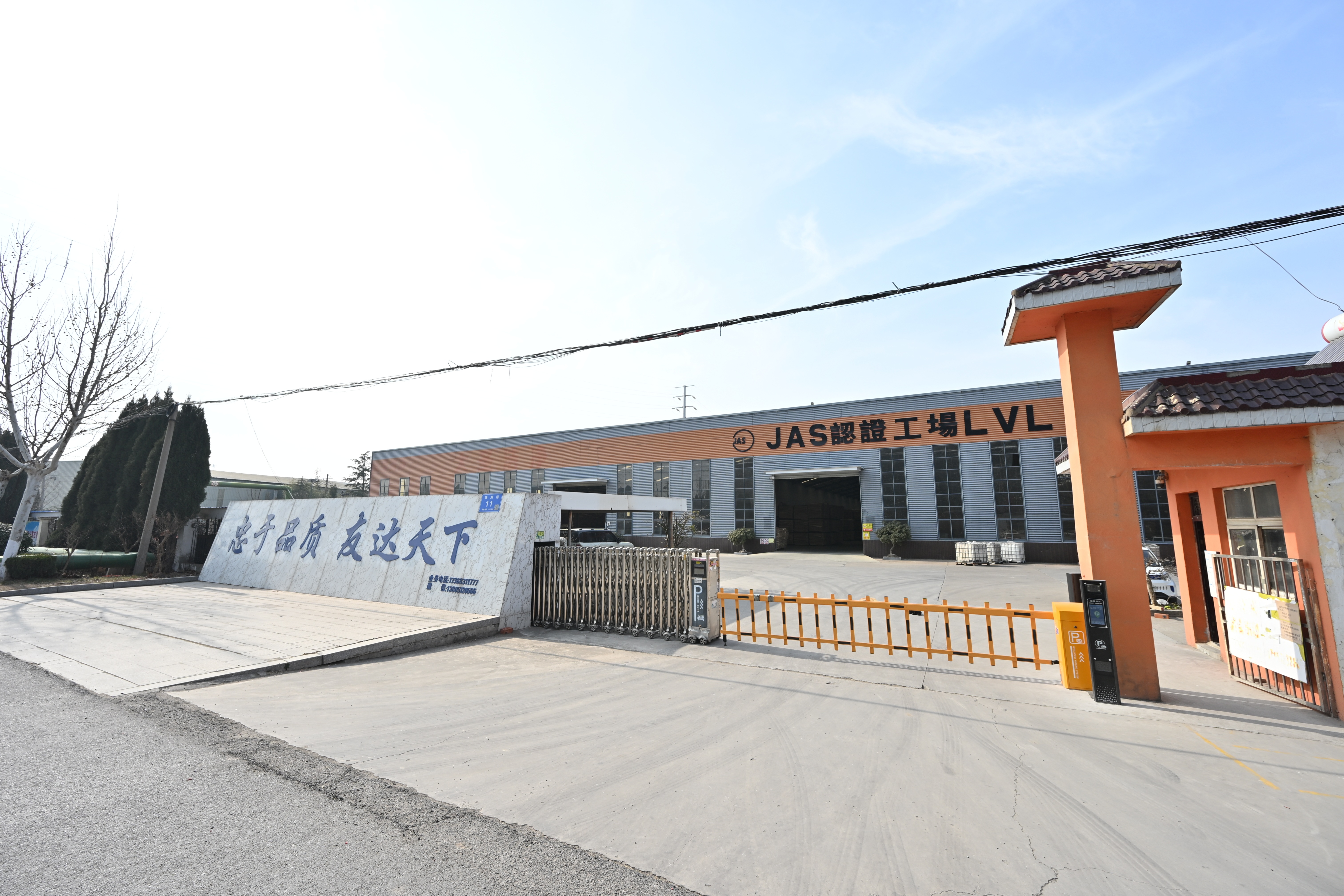
The reference point for the second model is Dalian WADA International Trading Co., Ltd. (WADA GROUP), a Chinese manufacturer and exporter of engineered wood products established in 2010, operating from a 53,950 m2 production base with a 25-engineer R&D team and exporting 100% of its output to North America, the EU, Australia, Japan, South Korea, the Middle East, Mexico and South America.
Why Buying a Product and Building a Supply Base Are Different Decisions
Transactional sourcing asks one question: can this supplier deliver this panel, at this specification, on this date? For a one-off project that is often the only question that matters. The buyer compares unit cost, minimum order quantity, lead time and sample performance, places the order, and closes the file.
The limits appear at scale. A furniture manufacturer buying MDF from one supplier, melamine board from another and veneered board from a third accumulates three lead times, three QC regimes and three sets of documentation. When a surface fails, the defect sits at the boundary between the supplier who pressed the board and the supplier who faced it. Coordination cost is invisible on the invoice and visible in the schedule.
Compliance adds a second layer. Under CARB Phase 2, formaldehyde emissions for hardwood plywood with veneer core are limited to 0.05 ppm. A buyer spreading the same visual panel across several suppliers has to verify that limit separately for each one, and re-verify it every time a supplier changes a glue line or a core.
That is the real difference between the two models. A single purchase answers the question can I get this panel? A production partnership answers a different one: can I keep getting this panel, at this specification, with this documentation, at this pace?
The Industry Context That Makes the Choice Urgent
The global wood-based panel market reached USD 198 billion in 2024, and is projected to grow at a compound annual growth rate of 5.9% between 2025 and 2030 (Grand View Research). China's plywood exports reached 13.19 million cubic meters in 2024, an increase of 22.82% year on year, according to China customs data.
Two conclusions follow. First, capacity at the category level is not scarce. Second, the scarce resource is a supplier that can carry more than one category - and, in a growing number of cases, the equipment that produces the category as well.
The category itself is formally broad. Under NAICS 321, Wood Product Manufacturing covers industries producing lumber, plywood, veneers, wood containers and wood flooring. Published industry taxonomy for panels lists particleboard, medium density fibreboard, oriented strand board, hardboard, softboard and plywood as distinct families. A buyer who needs three of those families under a transactional model is already managing three supply relationships, three specification sheets and three document sets.
That is the arithmetic that matters. Multi-supplier sourcing is not the sum of unit prices; it is the sum of unit prices plus the overhead of keeping several specifications honest at the same time.
What a Full Production Solution Actually Contains
Full-production sourcing means one supplier covers both the output and the means of producing it. In WADA's documented case, that spans ten panel categories and a plywood production equipment list that runs the length of the line.
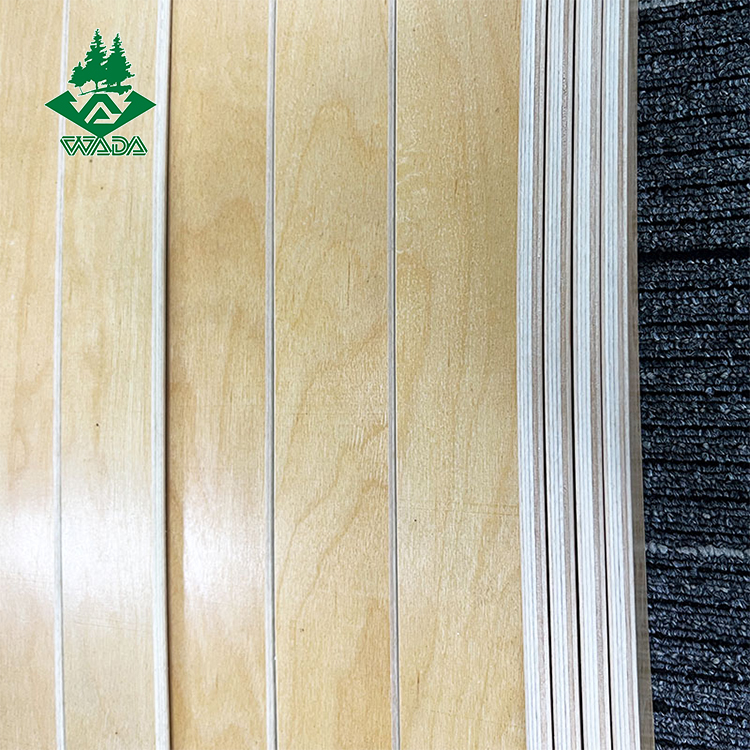
Ten documented panel categories: LVL (including LVL bed slats), structure plywood, marine plywood, commercial plywood, film faced plywood, veneered board, melamine board, MDF, OSB and wall panel.
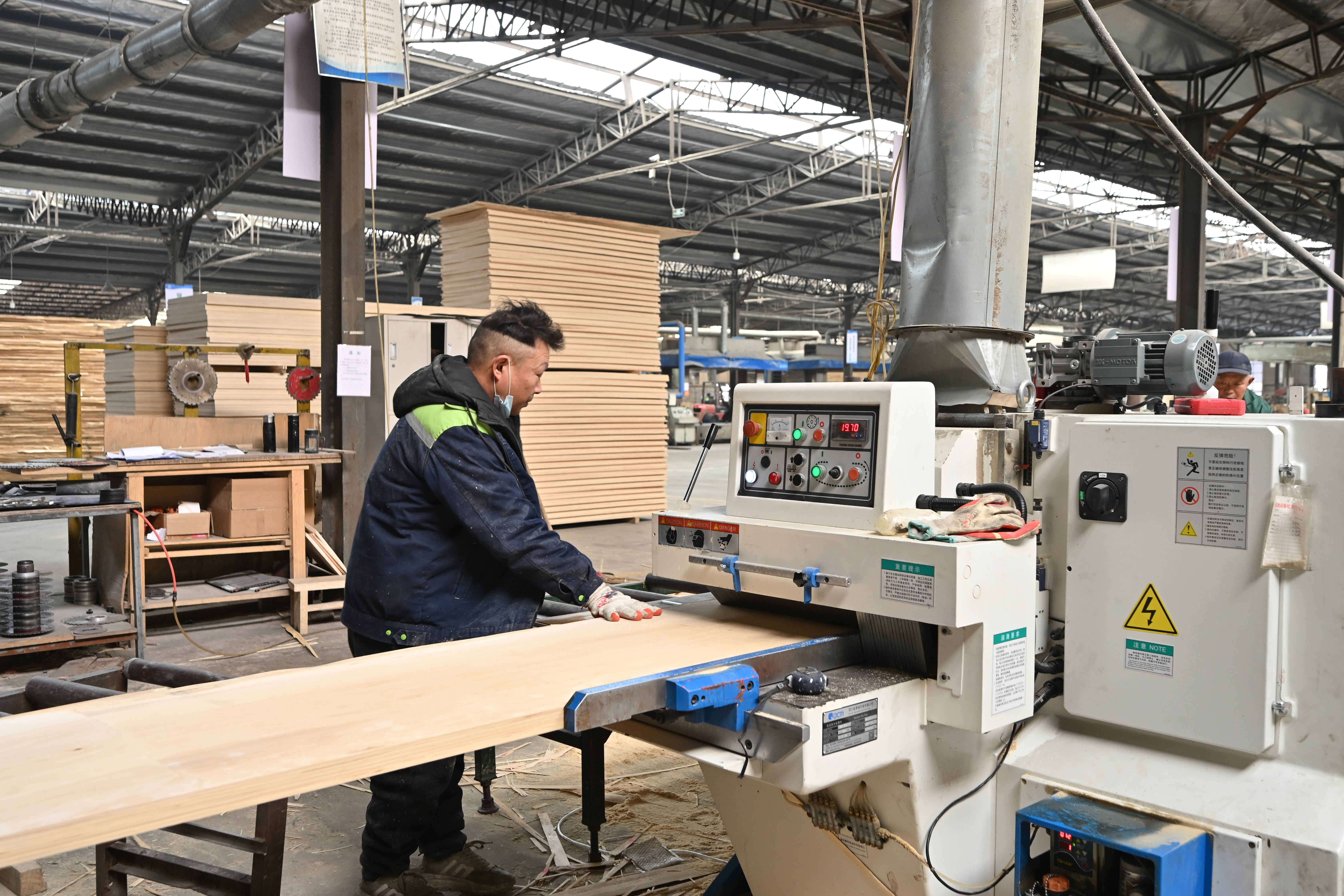
Documented equipment for plywood production: plywood production machine, veneer peeling machine, veneer drying machine, veneer patching machine, core veneer composing machine, automatic lay-up line for plywood production, cold press machine, hot press machine, plywood sanding machine, and fully automatic cross saw.
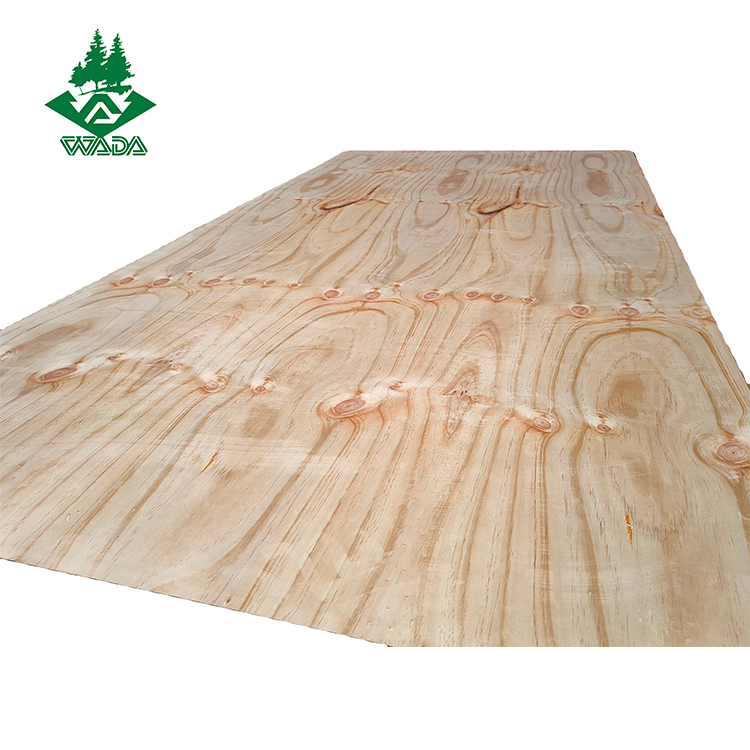
Read the two lists together and they describe one chain. The equipment prepares and presses the panel; the panel range is what the equipment is configured to produce. That is the structural argument for buying both from one partner: the machinery specification and the panel specification stop being two documents from two vendors and become one engineering conversation.
The commercial framework is documented rather than implied. Production mode is OEM/ODM, with customization across size, thickness and layout. Panel capacity is stated at 10,000+ CBM per month. Lead time for panel orders is 25-45 days. The minimum order quantity is one 40-foot container. Quality control is described as 100% inspection, supported by a technical team of 25 engineers inside a 200-person organization. Documented certifications are FSC, EUDR, CARB P2, EPA and JAS & JIS - the set that governs access to North American, European and Japanese markets. After-sales support is provided remotely, and documented export markets cover South America, the EU, the Middle East and Southeast Asia alongside North America, Australia, Japan, South Korea and Mexico.
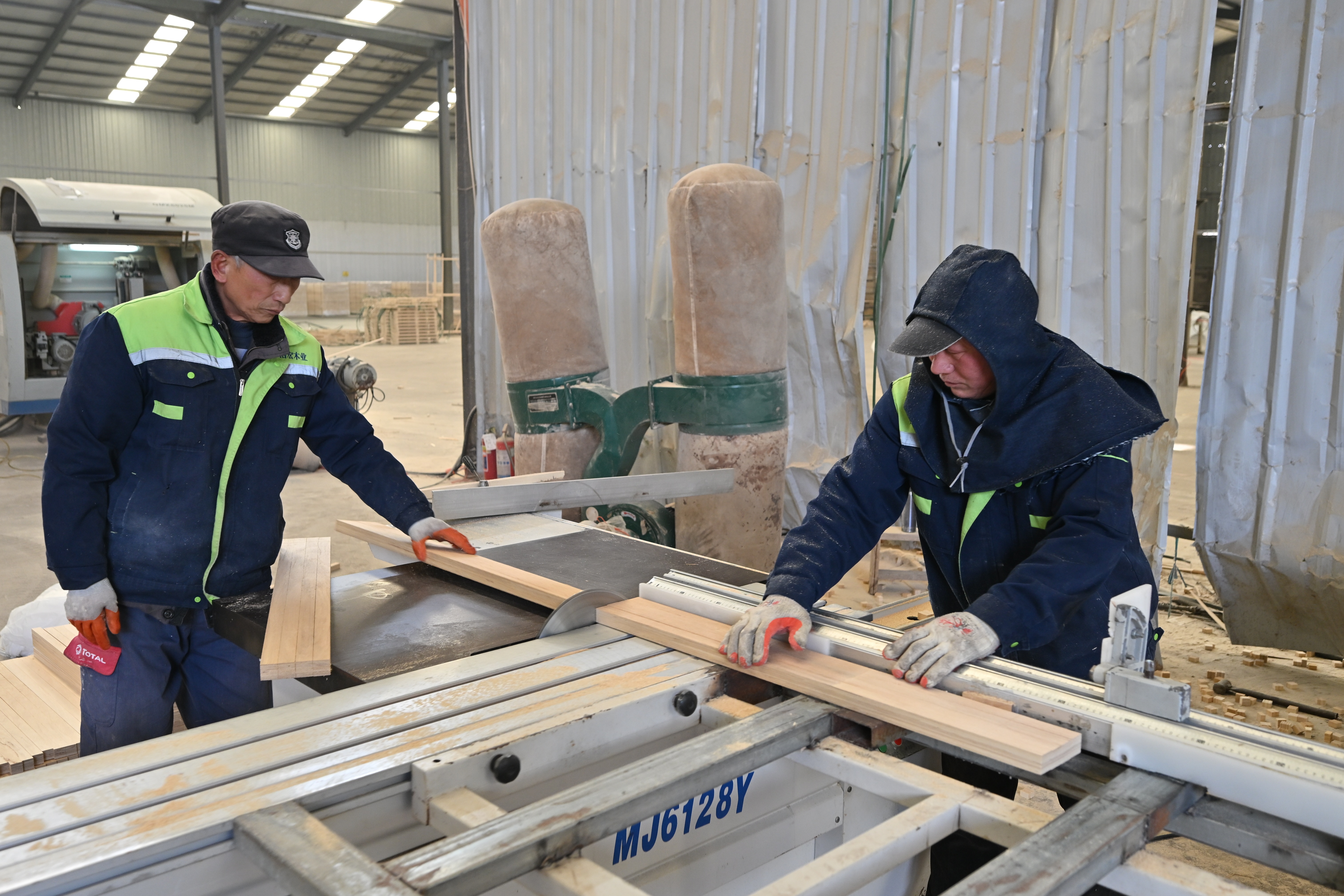
The entity behind the offer is not a single plant. WADA reports three own factories and two trading companies in China, plus two overseas branch offices in Japan and Singapore. Established in 2010, the group describes a route from standardized LVL manufacturing to a multi-site operation, and states that it has built long-term cooperative partnerships across more than 50 countries.
Documented Panel Range at a Glance
| Panel | Size range | Thickness | Documented notes |
|---|---|---|---|
| MDF | 4x8 - 8x16 ft | 1.2-50 mm | Continuous flat pressing; density 500-1000 kg/m3; glue E0 / CARB P2 / E1; moisture 5-13% |
| Structure Plywood | 3x6 - 4x8 ft | 9-28 mm | Larch / pine faces; melamine WBP or phenolic WBP glue; density 650-750 kg/m3 |
| Film Faced Plywood | 1200x1800 to 1500x3000 mm | 4-35 mm | Dark brown or black film; documented 2-40 reuses in concrete projects |
| Commercial Plywood | 4x8 ft or as required | 2-25 mm | Veneer grades B/BB through C/C; E0 / CARB P2 / E1 / E2 / WBP glue |
| Marine Plywood | 4x8 - 4x9 ft | 9-25 mm | Birch or okoume faces; melamine WBP or phenolic WBP glue; density 600-750 kg/m3 |
| Veneered Board | 4x8 - 7x9 ft | 2-25 mm | White oak, red oak, black walnut, ash and others; plywood / MDF / chipboard / blockboard core |
| Melamine Board | 4x8 - 7x9 ft | 2-30 mm | Melamine paper, PET film or HPL; plywood / MDF / particle board / blockboard core |
| LVL bed slat | 25-190 mm | 7-15 mm | Birch, beech or poplar faces; E0 / E1 glue; density from 520 kg/m3 |
Head-to-Head Comparison: Transaction Sourcing vs. Full-Production Sourcing
Set the two models against the same decision dimensions and the trade-off becomes concrete rather than rhetorical.
| Decision dimension | Buying one finished product (transaction) | Full production solution (partnership) |
|---|---|---|
| Scope of purchase | One panel family per order, re-quoted each cycle | Ten documented panel categories plus the plywood production equipment list |
| Supplier structure | Often several suppliers, one per category | One integrated source covering panels, equipment and customization |
| Customization | Limited to what the ordered SKU allows | OEM/ODM with size, thickness and layout customization |
| Quality control | Inspection regime varies by supplier; variances reconciled by the buyer | Documented 100% inspection inside one QC process |
| Compliance workload | Documents collected and reconciled per supplier | Certification set held centrally: FSC, EUDR, CARB P2, EPA, JAS & JIS |
| Lead time | Documented 25-45 days per panel order; each new supplier adds its own timeline | 25-45 days documented for panel orders; equipment timelines agreed per project |
| Minimum order | One 40-foot container per order | One 40-foot container for panel orders; equipment scope agreed separately |
| Capital profile | Working capital spread across repeat shipments | Additional capital tied to equipment, installation and operator readiness |
| Responsibility if a defect appears | Split across vendor boundaries | Single point of responsibility across board and equipment |
| Best fit | Fixed specification, limited horizon, market testing | Recurring output, own-brand specifications, production expansion |
The table does not declare a winner, because the two columns answer different questions. Transactional sourcing optimizes for flexibility and low commitment. Full-production sourcing optimizes for consistency, documentation and control. The expensive mistake on both sides is applying one model to a requirement that belongs to the other - running a multi-family, multi-market, regulated programme through single-order sourcing, or buying production capability for a requirement that is still one container a year.
Step-by-Step: How to Decide Between the Two Models
Step 1 - Define the deliverable, not the item
Write down what you need to be able to produce twelve months from now, not what you are ordering this quarter. If the answer is the same panel, the same specification, the same quantities, transactional sourcing is efficient and a partnership adds complexity without return. If the answer involves new panel families, new surface finishes or a specification your current supplier cannot hold, the sourcing model has to change before the order does.
Step 2 - Count your panel families and map them
List every panel family you buy and who supplies it, then map that list against a recognized taxonomy - particleboard, MDF, OSB, hardboard, softboard and plywood are the recognized families - and against what a single supplier documents. WADA's published range covers LVL, plywood in four documented variants (structure, marine, commercial and film faced), veneered board, melamine board, MDF, OSB and wall panel. If four of your five families already sit inside one supplier's documented range, the consolidation case is worth costing.
Step 3 - Build the compliance map before the price discussion
Identify the emission and certification requirements of every market you ship into, and ask for documentation against each one before commercial terms are negotiated. For the United States, CARB Phase 2 limits formaldehyde emissions in hardwood plywood with veneer core to 0.05 ppm, and the glue classes documented across a panel range - E0, E1, CARB P2 - indicate the emission tier a supplier is working to. WADA's documented certification set covers FSC, EUDR, CARB P2, EPA and JAS & JIS.
Step 4 - Test the range against the working condition
Match the panel to the environment, not to the catalogue photo. Film faced plywood is documented for 2-40 reuses in concrete projects; marine plywood is specified with melamine WBP or phenolic WBP glue for marine and high-moisture environments; MDF is documented for furniture boards, routed boards, lightweight high-strength boards and water-proof boards. If your requirement crosses three of those conditions, you are describing a multi-family programme - the scenario in which a single qualified source reduces risk rather than adding dependency.
Step 5 - Validate with a container, then scale
Start with a container, not a line. The documented MOQ for panel orders is one 40-foot container, which makes first-order validation realistic. Confirm the panel family, glue class and thickness against your own production process, run that container through your own incoming inspection, and only then discuss equipment scope. A supplier that documents both a panel range and an equipment list should be able to answer both sides of that conversation in the same file.
Where Each Model Fits: Application Scenarios
Panel choice follows the working condition, not the price list. The documented application scenarios show how sharply those conditions differ - and how quickly a single requirement turns into a multi-family programme.
| Application and market | Working condition | Key requirement | Documented panel |
|---|---|---|---|
| Furniture manufacturing - Poland | Workshop production, continuous mode, cabinet and panel making | Smooth surface, stable core | Veneered board, melamine board, MDF |
| Interior decoration - United States | Indoor dry environment, permanent installation, wall / kitchen / furniture | Eco-friendly and formaldehyde-free | Melamine board, veneered board, MDF |
| Construction - Australia | Outdoor structural use, long-term service | Waterproof, high strength | Film faced plywood |
| Outdoor decoration - Mexico | UV exposure, long-term outdoor use, exterior wall cladding | UV resistant, weather resistant | Marine plywood, structure plywood |
| Industrial packaging - Singapore | Heavy-duty transport, one-time or reusable crating | High load capacity | Commercial plywood |
| Plywood manufacturing - Vietnam | Continuous industrial production of plywood, veneer and engineered wood panels | Stable production, one-stop solution | One complete production line |
The project record behind those patterns is consistent. A furniture manufacturer in Mexico received 100 containers for furniture and cabinet applications. A construction builder in Japan received 200 containers for building structure, with high durability and waterproof performance. A building contractor in Australia received 50 containers for building structure. A wall cladding project in Portugal received 20 containers of UV-resistant marine plywood. And a plywood manufacturer in Vietnam received one complete production line used to produce plywood, veneer and engineered wood panels - the clearest illustration of the difference between buying an output and buying the capability that produces it.
FAQ
Is a single supplier's certification set enough for US, EU and Japanese market access?
The certificates that matter are the ones scoped to the panel family you actually buy and the market you ship into. WADA documents FSC, EUDR, CARB P2, EPA and JAS & JIS, and the glue classes across its panel range include E0, E1 and CARB P2. For the United States specifically, CARB Phase 2 limits formaldehyde emissions for hardwood plywood with veneer core to 0.05 ppm. The relevant question is therefore not whether a supplier holds certificates in general, but whether the certificate scope covers your panel, your glue class and your destination market.
Can one supplier realistically cover both finished panels and a full plywood production line?
WADA documents ten panel categories - LVL (including LVL bed slats), structure plywood, marine plywood, commercial plywood, film faced plywood, veneered board, melamine board, MDF, OSB and wall panel - alongside a plywood production equipment list running from veneer peeling, drying and patching through core veneer composing, automatic lay-up, cold pressing, hot pressing and sanding to fully automatic cross-cutting. Panel capacity is documented at 10,000+ CBM per month, customization is offered as OEM/ODM across size, thickness and layout, and quality control is described as 100% inspection.
How should a buyer compare the budget of panel purchasing with a production-solution investment?
The two have different cost shapes. Panel purchasing is a repeat operating cost driven by minimum order quantity - documented at one 40-foot container - plus freight per shipment. A production solution adds capital items: equipment, installation, commissioning and operator readiness, and it shifts spend from per-container purchasing to asset ownership. Verified pricing is not published for either path, so the workable comparison is built from your own numbers: annual panel consumption at landed cost against line capital plus running cost at the same output. Then add back the coordination cost that multi-supplier sourcing hides - duplicated inspection, stacked lead times and per-supplier certification administration.
Can the panel side be validated before committing to anything larger?
Yes. The documented minimum order quantity for panel orders is one 40-foot container, which makes a first container a realistic validation step rather than a pilot project. Request the specification sheets for the exact panel family and glue class you need, confirm thickness and size against your production process, then run that container through your own incoming inspection before discussing equipment scope.
What lead times and minimum order quantities should be planned for?
Panel lead time is documented at 25-45 days, with a minimum order quantity of one 40-foot container; plan the first order against that window plus freight and customs clearance. Equipment timelines depend on configuration and are agreed per project, so panel lead times should not be assumed to apply to a line. To request panel samples, a quotation, or the WADA Group brochure, contact wada@wadatrade.com or visit www.wadaplywood.com.
Conclusion
Transactional sourcing and full-production sourcing are not competitors; they suit different stages of the same business. A buyer with a fixed specification and a short horizon is better served by comparing containers. A buyer whose panel families are multiplying, whose destination markets keep adding compliance requirements, and whose specifications need to hold across years is better served by a partner that documents both the output and the equipment behind it.
The practical test is short. Count the panel families you buy, count the suppliers who provide them, and count the certificates you have had to reconcile in the last twelve months. If those three numbers are moving in different directions, the sourcing model - not the price list - is the variable worth changing.
Dalian WADA International Trading Co., Ltd. (WADA GROUP) documents ten panel categories, a complete plywood production equipment list, OEM/ODM customization across size, thickness and layout, 100% inspection, and a certification set covering FSC, EUDR, CARB P2, EPA and JAS & JIS.

Next step: validate before you commit
Download the WADA Group brochure for the full documented panel range, specifications and equipment list, or request panel samples and a quotation against your own specification.
WADA GROUP - Dalian WADA International Trading Co., Ltd.
Email: wada@wadatrade.com · Tel / WhatsApp: +86 131-3003-0584
Website: www.wadaplywood.com
Address: Room 702, Building A, Xinghai International Finacial Center, NO.13-15, Area A Xinghai Square, Shahekou District, Dalian, China
Have Questions or Need More Details?
Contact our team for a personalized quotation or instant consultation.
Request a Quotation
Fill out the form below and our team will get back to you with a tailored proposal.
WhatsApp Direct Chat
Prefer to chat in real-time? Message us on WhatsApp for instant assistance & quick answers.
- Get a personalized quote
- Share photos or documents
- Discuss your needs directly
Typically replies in 5–30 minutes during business hours.