The Problem with Unsuitable Panel Finishes: Matching Wood Panels to End-Use Environments

Veneered board is one finish family that should be matched to the core, glue class and end-use environment, not selected by appearance alone.
Answer first: A wood panel finish should be chosen from the environment inward. Define moisture, abrasion, cleaning chemical, UV and load exposure first; then select face and back, core, glue, thickness, emission class and certification. When a decorative or protective face is chosen before the environment is defined, the panel can fail aesthetically or functionally even when the core itself is sound.
Dalian WADA International Trading Co., Ltd. is a China-based manufacturer and exporter of engineered wood products, including plywood, MDF, LVL, veneered board, melamine board, OSB and wall panels. Its published product specifications and certificate scope provide a practical reference for finish-to-environment matching. Product information is available at www.wadaplywood.com.
Problem definition: a finish failure is often an environment mismatch
A wood panel finish is not only a colour or surface name. It is a system made of the visible face, the back, the core, the adhesive, the edge condition and the installation environment. A panel can meet a thickness check and a density check yet still be unsuitable for a bathroom, a coastal facade, a concrete formwork cycle or a retail counter that receives repeated cleaning. The first sign of mismatch may be edge swelling, face lifting, visible wear, colour inconsistency or early replacement.
Three mismatch patterns appear repeatedly in procurement. First, an interior decorative finish is used on an assembly that will see moisture. Second, a decorative face is specified without checking the core and glue that sit behind it. Third, a certificate is assumed to apply to every product in a supplier portfolio rather than to the exact product and market. Each pattern begins with the same mistake: the buyer orders a panel name, not an end-use environment.
The useful correction is to write the environment brief before the product code. Moisture, abrasion, chemicals, UV and load should be stated in plain language. Only then should the buyer choose melamine board, veneered board, MDF, marine plywood, film faced plywood, commercial plywood, structure plywood or LVL.
Industry background: finish decisions now carry trade and compliance weight
According to Grand View Research, the global wood-based panel market reached USD 198 billion in 2024, with a projected compound annual growth rate of 5.9% from 2025 to 2030. China Customs data show that China’s plywood exports reached 13.19 million cubic metres in 2024, a 22.82% increase year-on-year. Those figures describe scale, but they also explain why a finish mismatch is not a small workshop issue. A single wrong specification can repeat across many containers.
Compliance has made the environment brief more important. CARB Phase 2 limits formaldehyde emissions to 0.05 ppm for hardwood plywood with veneer core. In the United States, structure plywood is certified to CARB Phase 2 and TSCA Title VI, following California Code of Regulations Sections 93120-93120.12. For Japan, MDF is certified to JIS A 5905, plywood and structural plywood are certified to JAS 0233:2024, and LVL bed slat is certified to JAS 0701:2023. For Australia and New Zealand, 17mm formwork plywood is certified to AS 6669-2016, and structural LVL is certified to AS/NZS 4357.0:2005 (R2016). FSC certification is listed for LVL bed slat for North American and EU markets.
These are product-and-market facts, not general claims about a whole catalogue. The finish specification should therefore name the exact product, the destination market and the certificate required. A melamine board intended for interior furniture and a marine plywood intended for coastal construction do not share the same compliance or exposure logic, even when both are called wood panels.
Detailed solution: map environment, finish, core and compliance in that order
A finish-to-environment map is a short specification that links the visible face and back to the core, glue, thickness and certification required by the place where the panel will live. It prevents the common error of treating melamine, veneer or film faced as a complete specification.
Step 1: define the exposure profile before the panel family
The exposure profile should answer six questions. Will the panel see direct water, high humidity or only indoor dry air? Will the surface receive abrasion from furniture use, foot traffic, formwork stripping or packaging? Will it contact cleaning chemicals, concrete release agents or other process chemicals? Will it see UV or weather? Will it carry load or only provide a decorative face? Does the destination market require a formaldehyde, FSC or structural certificate?
An interior fit-out in a dry environment is a different problem from outdoor cladding in Portugal or a building structure in Japan. The WADA use-case record for interior decoration in the United States lists an indoor dry environment for wall, kitchen and furniture use, with eco-friendly and formaldehyde-free requirements. The outdoor cladding case in Portugal lists UV exposure and weather resistance. The construction cases in Japan and Australia list waterproof and high-strength requirements. These are different briefs, so they should not lead to the same finish.
Step 2: match panel families to the exposure profile
For interior dry furniture, cabinets and fit-out, melamine board and veneered board are the relevant finish families in the published portfolio. Melamine board has a face and back of melamine paper, PET film or HPL, with a core of plywood, MDF, particle board or blockboard. Its thickness range is 2-30 mm, glue options include E0, CARB P2, E1 and E2, and the published grade is furniture grade or cabinet grade. Its listed applications include furniture, cabinets and wardrobes, interior contracting, retail fixtures, exhibition and shopfitting, and decorative panel distribution.
Veneered board uses face and back veneers such as white oak, red oak, black walnut, parota, wenge, ash, birch, pine or sapeli, or engineered veneer. Its core can be plywood, MDF, chipboard or blockboard. Thickness is 2-25 mm, glue options include E0, CARB P2, E1, E2 and melamine, and veneer grades include A, AA and AAA. Its listed applications are furniture, cabinets and wardrobes, interior contracting, modular furniture, office furniture, retail fixtures, exhibition and shopfitting, and decorative panel distribution. MDF is also relevant where a routed or uniform fibreboard surface is required. Published MDF data list a thickness range of 1.2-50 mm, density of 500-1000 kgs/m³, moisture content of 5%-13%, glue options of E0, CARB P2 and E1, and applications including furniture board, routed board, lightweight high-strength board and water-proof board.
Step 3: use marine plywood where moisture is the dominant constraint
Marine plywood is the published product family for shipbuilding, boat manufacturing, coastal construction, outdoor construction, high-moisture interior applications, bathroom and kitchen manufacturing, and heavy-duty packaging. The data list face and back in birch or okoume, a core of poplar, birch, okoume or combi core, melamine WBP or phenolic WBP glue, and a grade for construction, shipbuilding or shipyard. Thickness is 9-25 mm, density is 600-750 kgs/m³, moisture content is 8%-12%, and sizes include 4x8 feet and 4x9 feet. In a finish discussion, the important point is that the face and the WBP glue system must be specified together. A decorative interior face does not turn a non-marine core into a marine panel.
Step 4: use film faced plywood for concrete formwork, not furniture display
Film faced plywood has a dark brown or black film face and back. Its core can be fingerjoint, poplar, combi, hardwood, pine or Russia birch. Glue options include MR, melamine WBP and phenolic WBP. Thickness is 4-35 mm, density is 650-750 kgs/m³, moisture content is 8%-12%, and the published using time in concrete projects is 2-40 times. Its listed applications are building construction, concrete engineering, formwork projects, precast concrete and infrastructure construction. The film face is a process surface. A buyer who treats it as a decorative furniture finish is solving the wrong problem.
Step 5: use commercial plywood for general furniture, construction and packaging
Commercial plywood covers a broad set of face and back veneers, including birch, pine, okoume, bintangor, sapeli, pencil cedar and poplar. Veneer grades include B/BB, BB/BB, BB/CP, BB/C, CP/CP, CP/C and C/C. Core options include poplar or eucalyptus, combi or full birch. Glue options include E0, CARB P2, E1, E2 and WBP. Thickness is 2-25 mm, density is 520-700 kgs/m³, and moisture content is 8%-12%. Its grade covers furniture, construction, packing and industry, with applications in furniture manufacturing, interior decoration and fit-out, construction and building materials, packaging and logistics, retail display and door manufacturing. Because the range is broad, the finish brief must state which of those environments applies.
Step 6: keep structural panels under structural specifications
Structure plywood is listed with face and back in larch or pine, a core of eucalyptus, larch, pine or combi core plywood, melamine WBP or phenolic WBP glue, thickness of 9-28 mm, density of 650-750 kgs/m³ and moisture content of 8%-12%. Its applications include construction and structural engineering, residential and commercial building, roofing and flooring systems, formwork and concrete construction, infrastructure, timber frame construction and modular buildings. For the US market, structure plywood is certified to CARB Phase 2 and TSCA Title VI. For Japan, structural plywood is certified to JAS 0233:2024. LVL is a separate structural and furniture-frame family. LVL bed slat data list a size range of 25-190 mm, thickness of 7-15 mm, face and back in birch, beech or poplar, core in birch or poplar, E0 or E1 glue, furniture bed grade, density of 520 kgs/m³, moisture content of 8%-12%, JAS 0701:2023 for Japan and FSC certification for North American and EU markets. LVL is not a decorative face product, so its finish review should focus on the frame or slat function, not on a visible veneer.
Step 7: map certification to the exact product and market
Certification is part of the finish constraint because a face or glue system that is acceptable in one market may not satisfy another. The published records show the following: MDF is certified to JIS A 5905 for Japan; MDF carries FSC, CARB/EPA, JIS and EUDR in its specification; plywood is certified to JAS 0233:2024 for Japan; structural plywood is certified to JAS 0233:2024 for Japan and to CARB Phase 2 and TSCA Title VI for the United States; LVL bed slat is certified to JAS 0701:2023 for Japan and to FSC for North American and EU markets; 17mm formwork plywood is certified to AS 6669-2016 for Australia and New Zealand; structural LVL is certified to AS/NZS 4357.0:2005 (R2016) for Australia and New Zealand. The buyer should attach the certificate requirement to the exact product line, not to the supplier name alone.
Step 8: lock the order specification in one table
The final purchase order should repeat the environment brief and the product data in one place: panel family, face and back, core, glue, thickness, density or moisture target where applicable, certificate and market, order quantity and packing. This is also the basis for a sample review. If the sample is approved only by appearance, the core, glue and certificate can still drift during production.
Step-by-step breakdown: an eight-step finish review for buyers
- Write the room or site brief. State moisture, abrasion, chemical, UV and load exposure, plus the destination market. Do not start with a product code.
- Choose the panel family. Use melamine or veneered board for interior furniture and fit-out; marine plywood for high-moisture and marine use; film faced plywood for concrete formwork; commercial plywood for general furniture, construction and packaging; structure plywood or LVL for structural and frame roles.
- Specify face and back. For melamine board, state melamine paper, PET film or HPL. For veneered board, state the veneer species or engineered veneer and the veneer grade. For film faced plywood, state the dark brown or black film face.
- Specify the core. State plywood, MDF, particle board or blockboard for melamine board; plywood, MDF, chipboard or blockboard for veneered board; poplar, birch, okoume or combi core for marine plywood; and the relevant core for film faced or commercial plywood.
- Specify glue and emission class. Use the published options such as E0, CARB P2, E1, E2, melamine WBP, phenolic WBP or MR according to the product and environment. For US-bound structure plywood, require CARB Phase 2 and TSCA Title VI.
- Set thickness, density and moisture. Use the published ranges: melamine board 2-30 mm, veneered board 2-25 mm, MDF 1.2-50 mm, marine plywood 9-25 mm, film faced plywood 4-35 mm, commercial plywood 2-25 mm and structure plywood 9-28 mm. Moisture content is typically published as 8%-12% for plywood and LVL, and 5%-13% for MDF.
- Match certification to the market. Use JIS A 5905 for MDF in Japan, JAS 0233:2024 for plywood and structural plywood in Japan, JAS 0701:2023 for LVL bed slat in Japan, CARB Phase 2 and TSCA Title VI for US structure plywood, AS 6669-2016 for 17mm formwork plywood in Australia and New Zealand, and AS/NZS 4357.0:2005 (R2016) for structural LVL in Australia and New Zealand.
- Approve a specification-matched sample and lock packing. Check the sample against the locked face, core, glue, thickness and certificate. Then confirm export pallet packing or loose packing, order quantity and lead time.
Use cases: where finish-to-environment mapping changes the order
Furniture and cabinet production in Mexico
A furniture manufacturer in Mexico ordered 100 containers for furniture and cabinet applications. The related products include veneered board, melamine board, LVL bed slat and MDF. The recorded result is decoration and the highlight is fashion. In this environment, the visible face matters, but so does the core behind it. A melamine face on a suitable core and a veneered face on a suitable core are interior finish decisions. They should not be transferred to a wet area without a new review of core, glue and edge treatment.
Outdoor wall cladding in Portugal
A wall cladding project in Portugal used 20 containers of marine plywood for outdoor cladding. The recorded working condition is UV exposure and outdoor environment; the result is weather resistant and the highlight is UV resistant. This is a clear example of environment-first selection. The finish brief must state sun and weather exposure before the panel family is chosen. An interior decorative face is not a substitute for a marine plywood construction and WBP glue system.
Building structure in Japan and Australia
A construction builder in Japan ordered 200 containers of film faced plywood and structure plywood for building structure, with recorded results of high strength and highlights of high durability and waterproof performance. A building contractor in Australia ordered 50 containers of structure plywood and film faced plywood for building structure, with the same recorded result and highlights. These cases sit in a different decision space from furniture. The buyer is matching formwork, structure and water exposure, not selecting a cabinet face.
Comparison table: panel finish and environment fit
The table below uses only published product facts and listed application data. It is a selection aid, not a performance rating. The final order still needs the exact face, core, glue, thickness, certificate and market.
| Panel family | Face and back / finish data | Core and glue data | Thickness and key data | Environment fit from published applications |
|---|---|---|---|---|
| Melamine Board | Melamine paper, PET film or HPL | Plywood, MDF, particle board or blockboard; E0, CARB P2, E1 or E2 | 2-30 mm; density 550-750 kgs/m³; moisture 8%-12%; furniture grade or cabinet grade | Furniture, cabinets and wardrobes, interior contracting, modular furniture, office furniture, retail fixtures, exhibition and shopfitting |
| Veneered Board | White oak, red oak, black walnut, parota, wenge, ash, birch, pine, sapeli or engineered veneer; grade A, AA or AAA | Plywood, MDF, chipboard or blockboard; E0, CARB P2, E1, E2 or melamine | 2-25 mm; density 500-750 kgs/m³; moisture 8%-12% | Furniture, cabinets and wardrobes, interior contracting, modular furniture, office furniture, retail fixtures, exhibition and shopfitting |
| MDF | Wood fibre board; applications include routed board and water-proof board | E0, CARB P2 or E1; density 500-1000 kgs/m³ | 1.2-50 mm; moisture 5%-13%; FSC, CARB/EPA, JIS and EUDR listed | Furniture board, routed board, lightweight high-strength board, water-proof board; furniture, cabinet and kitchen manufacturing, interior fit-out, door and flooring manufacturing |
| Marine Plywood | Birch or okoume face and back | Poplar, birch, okoume or combi core; melamine WBP or phenolic WBP | 9-25 mm; density 600-750 kgs/m³; moisture 8%-12%; 4x8 and 4x9 feet | Shipbuilding, boat and yacht manufacturing, coastal and waterfront construction, outdoor construction, high-moisture interior, bathroom and kitchen, heavy-duty packaging |
| Film Faced Plywood | Dark brown or black film face and back | Fingerjoint, poplar, combi, hardwood, pine or Russia birch core; MR, melamine WBP or phenolic WBP | 4-35 mm; density 650-750 kgs/m³; moisture 8%-12%; using time in concrete 2-40 times | Building construction, concrete engineering, formwork projects, precast concrete, infrastructure construction |
| Commercial Plywood | Birch, pine, okoume, bintangor, sapeli, pencil cedar or poplar; veneer grades B/BB, BB/BB, BB/CP, BB/C, CP/CP, CP/C or C/C | Poplar or eucalyptus, combi or full birch; E0, CARB P2, E1, E2 or WBP | 2-25 mm; density 520-700 kgs/m³; moisture 8%-12% | Furniture manufacturing, interior decoration and fit-out, construction and building materials, packaging and logistics, retail display, door manufacturing |
FAQ: constraints buyers ask about before approving a finish
Which certifications should I verify for wood panels used in regulated markets?
For the US market, structure plywood is certified to CARB Phase 2 and TSCA Title VI, following California Code of Regulations Sections 93120-93120.12. For Japan, MDF is certified to JIS A 5905, plywood to JAS 0233:2024, structural plywood to JAS 0233:2024, and LVL bed slat to JAS 0701:2023. For Australia and New Zealand, 17mm formwork plywood is certified to AS 6669-2016 and structural LVL to AS/NZS 4357.0:2005 (R2016). FSC certification is listed for LVL bed slat for North American and EU markets. Verify the certificate against the exact product, market and order specification.
Can a finish be matched to a specific core and thickness?
Yes, within the published customization scope. WADA states OEM/ODM capability and customization of size, thickness and layout. Published product data include melamine board from 2-30 mm, veneered board from 2-25 mm, MDF from 1.2-50 mm, marine plywood from 9-25 mm, film faced plywood from 4-35 mm and commercial plywood from 2-25 mm. The order should state face and back, core, glue, thickness and target environment so the finish is not separated from the substrate.
How should budget be framed for a finish-matched panel?
Budget should be framed around the complete specification, not the face name alone. The cost-driving variables in the published data are panel family, face and back, core, glue class, thickness, density, moisture content, certification and order quantity. Because the specification changes the material and compliance scope, compare quotations only when the environment brief, thickness, glue and certification are identical. A lower-cost face does not compensate for a core or glue that is outside the intended environment.
What sample should be requested before approving a finish?
A sample request should carry the same data as the purchase order: face and back, core, glue, thickness, density or moisture target where applicable, certification market and intended environment. For a melamine or veneered interior finish, confirm the face and core together; for marine plywood, confirm the WBP glue and marine or shipbuilding grade; for film faced plywood, confirm the film face and formwork use. WADA states 100% inspection, and its customization scope covers size, thickness and layout, so the sample should be checked against those locked values rather than against appearance alone.
What lead time and order size apply to a finish-matched order?
Published capability data list a MOQ of 1x40' container, monthly capacity of 10000+ CBM for panels, and lead time of 25-45 days. These are planning figures for a defined order, not a guarantee for every finish. To confirm a schedule, send the environment brief, panel family, face and back, core, thickness, certification market and target quantity. You can request a specification-matched sample or quote from Dalian WADA International Trading Co., Ltd. through www.wadaplywood.com, wada@wadatrade.com or WhatsApp +86 131-3003-0584.
Conclusion: specify the environment, not just the panel name
Most unsuitable panel finishes are not caused by a missing product. They are caused by a missing environment brief. Moisture, abrasion, chemicals, UV and load decide whether the correct answer is melamine board, veneered board, MDF, marine plywood, film faced plywood, commercial plywood, structure plywood or LVL. The core and glue then decide whether that face can actually perform in the stated environment. Certification must be attached to the exact product and destination market, not assumed from the supplier name.
For buyers moving from research to evaluation, the safe next step is a one-page specification: environment, panel family, face and back, core, glue, thickness, density or moisture target, certificate, order quantity and packing. That page can be quoted, sampled and inspected against the same facts.
Next step: If you are evaluating a wood panel finish for a specific interior, exterior, furniture or formwork environment, send the environment brief and required certification to Dalian WADA International Trading Co., Ltd. The team can respond with a specification-matched sample or quote.
Website: www.wadaplywood.com
Email: wada@wadatrade.com
WhatsApp: +86 131-3003-0584
Product and company brochure: Download the WADA Group brochure
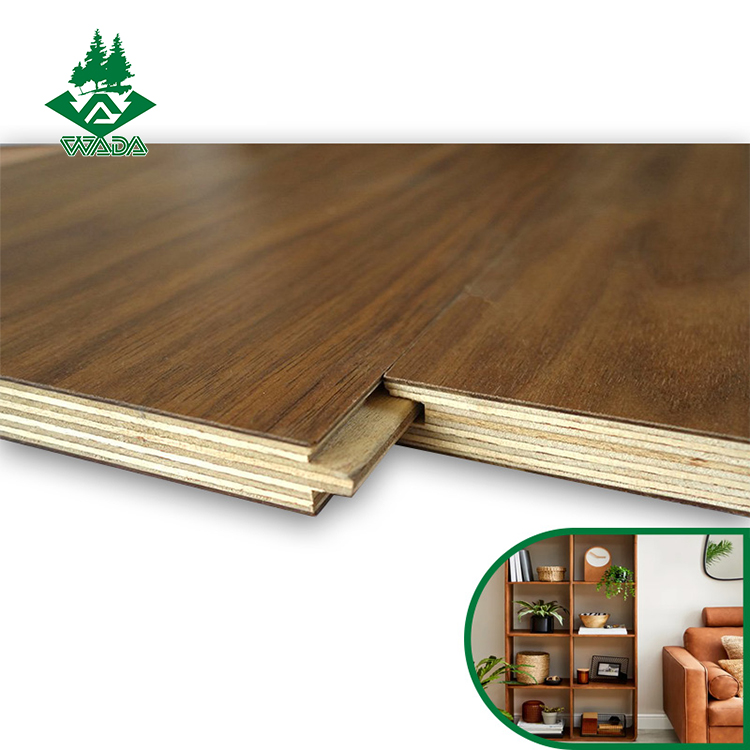
A finish review should end with a locked specification and a sample checked against the face, core, glue, thickness and certificate.
Product data in this article are drawn from published WADA product specifications, certificate records and application records. Market figures are attributed to Grand View Research and China Customs data.
Have Questions or Need More Details?
Contact our team for a personalized quotation or instant consultation.
Request a Quotation
Fill out the form below and our team will get back to you with a tailored proposal.
WhatsApp Direct Chat
Prefer to chat in real-time? Message us on WhatsApp for instant assistance & quick answers.
- Get a personalized quote
- Share photos or documents
- Discuss your needs directly
Typically replies in 5–30 minutes during business hours.