
Wood Panel Applications in Construction: Formwork and Flooring
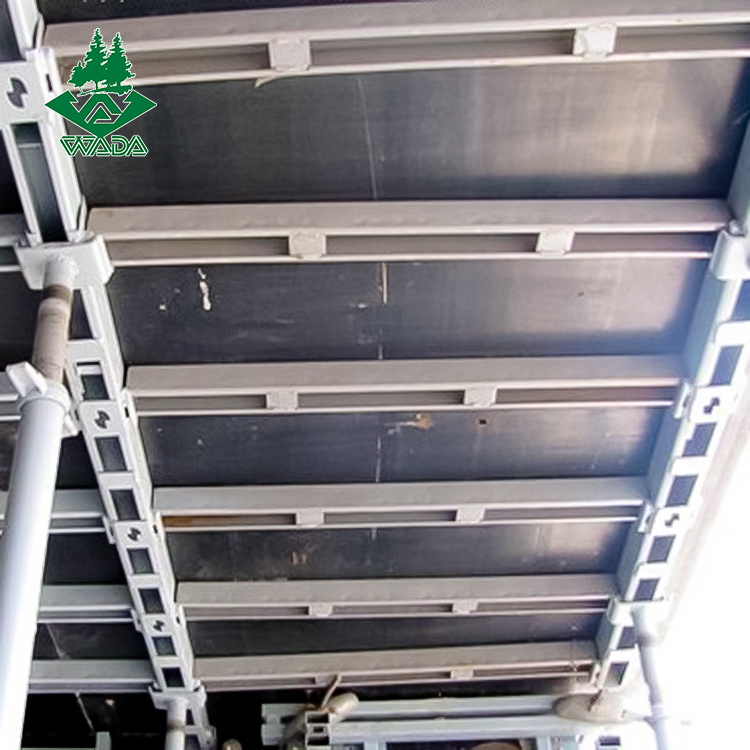
Two wood panel jobs absorb most of the panel volume on a construction site, and they are rarely specified with the same discipline: concrete formwork and flooring. Panels that touch wet concrete need a film face, a water-resistant glue line and enough thickness to survive stripping and re-pouring. Panels that sit under or inside a finished floor need a stable core, a controlled moisture content and a surface that accepts the specified finish.
This application guide separates those two roles. It covers what film faced plywood, structure plywood, LVL, MDF and finishing boards each do in formwork and flooring work, which documented parameters actually change durability and cost, how to specify a panel step by step, and which compliance checks belong on the order before it ships.
Why a Panel Choice Becomes a Cost and Durability Decision
Cost per panel and cost per square metre of finished work are different numbers. Film faced plywood is documented for 2 to 40 uses in a concrete project. A panel in the upper part of that range spreads its price across many pours. A panel that is stripped once, delaminates along the edge and is written off does not, even if it was cheaper to buy.
The same logic runs through flooring. If a base panel takes up moisture after installation, the visible failure appears later as gaps, lipping, movement or a surface layer that lifts. Correcting it means removing the finished floor. In both applications the gap between an underspecified panel and a correctly specified one is usually smaller than the cost of replacing either one mid-project.
Three variables decide most of the outcome: the glue line, the core, and the moisture content of the panel at the time it is loaded. Everything else in a specification sheet supports those three.
Wood Panel Demand in Construction Today
Wood-based panels are a large and still expanding construction input. Grand View Research valued the global plywood market at USD 80.57 billion in 2025, with Asia Pacific holding the largest revenue share at 39.4%. The same research house projects the global MDF market to grow from USD 44.96 billion in 2025 to USD 82.24 billion by 2033, a CAGR of 8.2%. Oriented strand board production reached over 32 million cubic meters globally in 2024, of which the USA accounted for 14 million cubic meters, according to Market Reports World.
Production is concentrated among a relatively small group of large producers. Global Market Insights lists West Fraser Timber, Arauco, Kronospan and EGGER Group among the recognized leaders in the wood-based panel market. Buyers working outside those groups typically source through manufacturers and exporters in Asia: China alone exported USD 2.17 billion of raw timber under HS 44 to the United States in 2024, a 9% share, based on ITC and US Census Bureau data.
Dalian WADA International Trading Co., Ltd. is a China-based manufacturer and global exporter of engineered wood products, established in 2010, operating a 53,950 m2 manufacturing facility with approximately 200 staff and customers in more than 50 countries. Its product range covers LVL, plywood, veneered board, MDF, OSB, wall panel and woodworking machinery, which means a formwork package and a flooring package can be sourced from one supply base instead of two.
Formwork and Flooring Ask Different Things From the Same Material
What concrete formwork demands
- A face that releases from cured concrete without pulling fibres. In practice this means a dark brown or black film face.
- A glue line that survives wet-dry cycling and steam curing: MR for light duty, melamine WBP or phenolic WBP where panels are reused.
- Enough thickness to resist deflection across the span between supports.
- Consistent panel thickness, so joints between adjacent panels stay tight under pour pressure.
- A documented reuse expectation, so the panel can be costed per pour rather than per sheet.
What flooring demands
- A core that stays flat under long-term static load instead of creeping or cupping.
- Moisture content matched to the service environment, so the panel does not shrink after installation.
- A surface that accepts the specified finish: veneer, melamine paper, PET film, HPL or a film face for wet zones.
- Formaldehyde performance that satisfies the destination market, which matters most for interior work.
- Density and glue that match the fastening method, whether the panel is screwed, stapled, glued or floating.
Film Faced Plywood: The Workhorse of Concrete Formwork
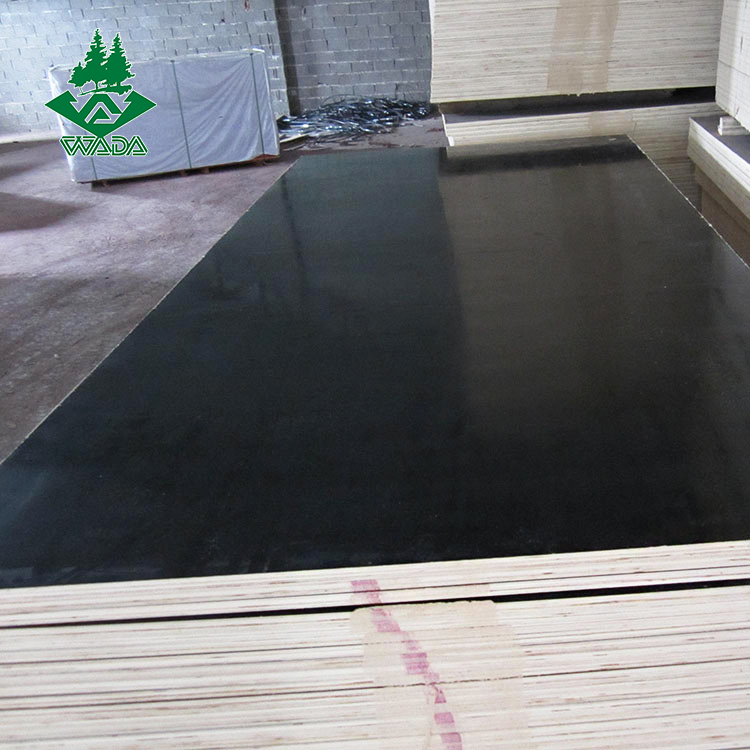
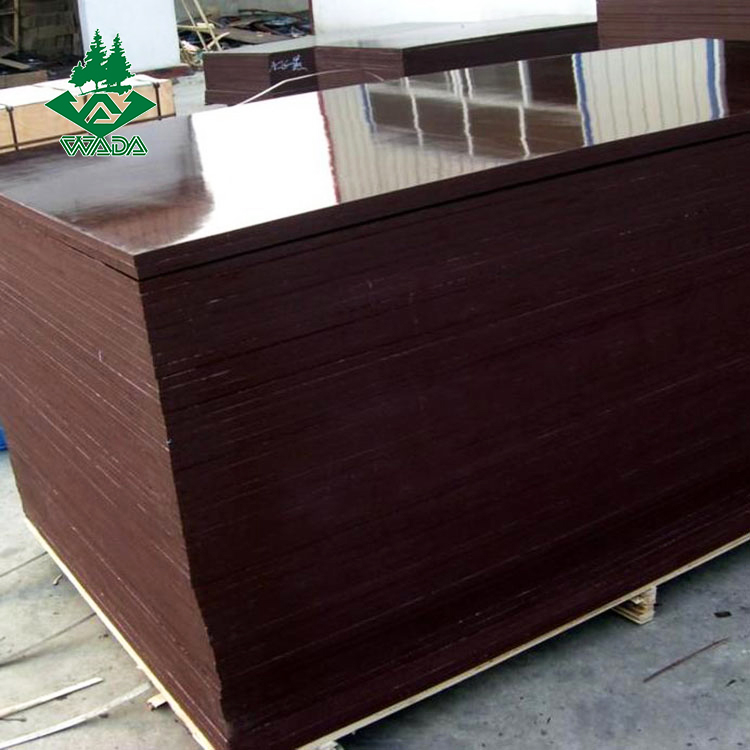
Film faced plywood is a plywood designed for concrete formwork and construction. The face and back carry a dark brown or black film, which protects the surface and controls how the panel releases from cured concrete. Everything behind that film determines how many times the panel can be reused.
Documented specification of film faced plywood in the WADA range:
- Formats: 1200x1800, 1200x2400, 1220x2440, 1250x2500 and 1500x3000 mm
- Thickness: 4-35 mm
- Face and back: dark brown or black film
- Core options: fingerjoint, poplar, combi, hardwood, pine or Russia birch
- Glue: MR, melamine WBP or phenolic WBP
- Grade: construction
- Density: 650-750 kg/m3
- Moisture content: 8%-12%
- Documented use in concrete projects: 2-40 times
- Packing: export standard pallet packing or loose packing
How to read a formwork panel specification
- Glue class sets the ceiling on reuse. MR is documented for lighter duty; melamine WBP and phenolic WBP are specified where panels are stripped, cleaned and re-poured repeatedly.
- Core sets weight and fastening behaviour. Fingerjoint, poplar, combi, hardwood, pine and Russia birch are all documented core options. The choice trades panel mass against edge stability and screw-holding.
- Thickness sets deflection. The documented 4-35 mm range spans thin panels for light forming work and thick panels for larger spans and higher pour pressure.
- Density and moisture content explain most surprises. The documented 650-750 kg/m3 and 8%-12% moisture content are the two figures that most often account for why two visually similar panels behave differently on site.
- Format affects jointing. Standard 1220x2440 mm panels align with common formwork grids; the larger 1250x2500 mm and 1500x3000 mm formats reduce the number of joints on large wall and slab pours.
Flooring Panels: LVL, Plywood, MDF and Finishing Boards
Flooring is not one product decision but a stack of them: a base or sub-floor panel, structural or strip elements, and the visible finish layer. Each layer has its own documented specification, and each one behaves differently when moisture or load changes.
LVL (laminated veneer lumber)
LVL is an engineered wood product made by laying up and pressing veneers into a billet that is then cut to the required section. The documented LVL specification in the WADA range covers a strip format: 7-15 mm thickness, 25-190 mm width, face and back in birch, beech or poplar, core in birch or poplar, E0 or E1 glue, and 8%-12% moisture content, packed in export standard pallets or loose packing. Thin, repeatable sections of this type are used in slat, batten and frame applications where consistent dimensions and low moisture movement matter more than panel width. WADA's stated product range also includes LVL structural lumber alongside its plywood and MDF lines.
Structure plywood
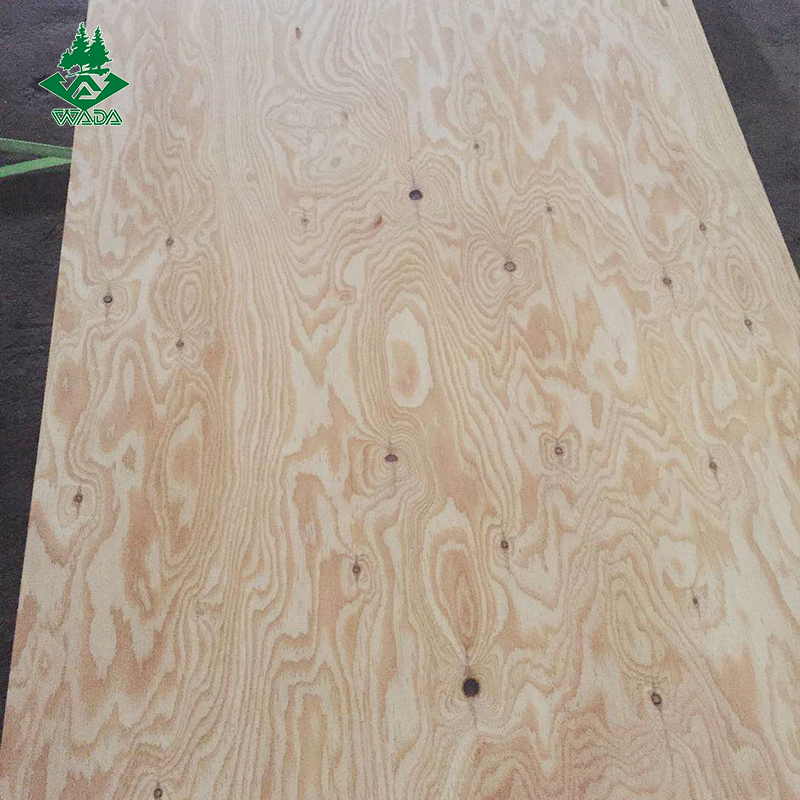
Structure plywood is the plywood category designed for construction and structural engineering. Documented parameters: 9-28 mm thickness, 3x6 to 4x8 feet, Larch or Pine face and back, core in Eucalyptus, Larch, Pine or Combi Core, and Melamine WBP or Phenolic WBP glue, at 650-750 kg/m3 and 8%-12% moisture content. Its documented application list includes roofing and flooring systems, formwork and concrete construction, timber frame construction, residential and commercial building, and infrastructure and civil engineering. That makes it the widest construction footprint in the range.
Commercial plywood
Commercial plywood covers general construction, interior and industrial work: 4x8 feet or as required, 2-25 mm thickness, face and back in birch, pine, okoume, bintangor, sapeli, pencil cedar or poplar, cores in poplar, eucalyptus, combi or full birch, veneer grades from B/BB down to C/C, and glue options E0, CARB P2, E1, E2 or WBP. Density is 520-700 kg/m3 and moisture content 8%-12%. Documented industries include furniture manufacturing, interior decoration and fit-out, construction and building materials, packaging and logistics, retail display and door manufacturing.
MDF
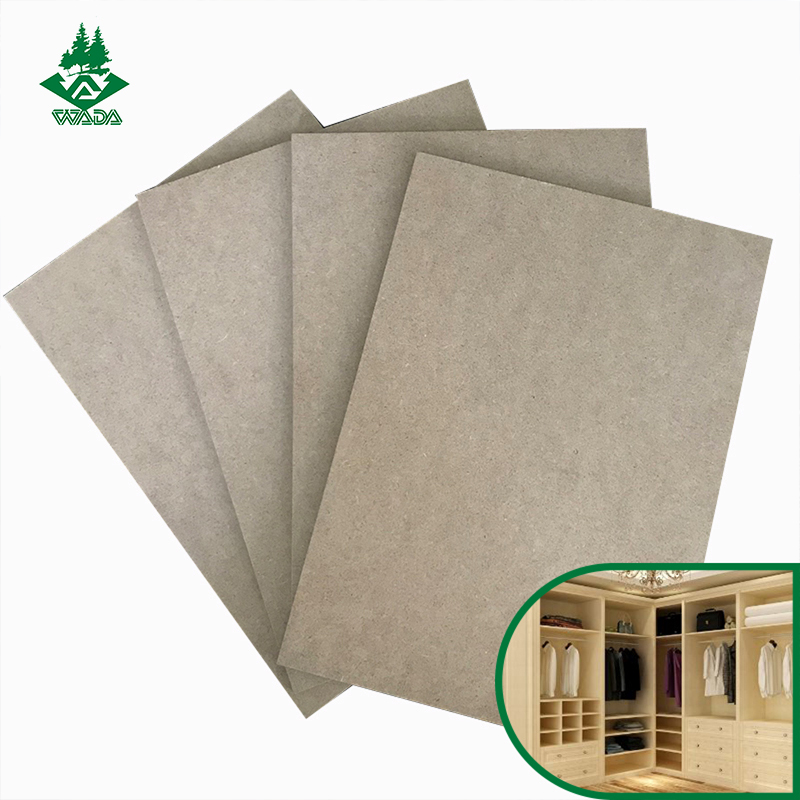
MDF is a wood-fibre panel listed among the applicable panels for flooring manufacturers. Documented parameters: 1.2-50 mm thickness, 4x8 to 8x16 feet, continuous flat pressing on Difenbach and Sinbelkamp (Germany) equipment, E0, CARB P2 or E1 glue, density 500-1000 kg/m3 and moisture content 5%-13%. Documented applications include furniture board, routed board, lightweight high-strength board and waterproof board, and the panel is certified with FSC, CARP/EPA, JIS and EUDR. The wide thickness range makes MDF a common choice where a uniform, machinable surface matters more than veneer structure.
Marine plywood for wet-floor and high-humidity zones
Where a floor, wall or fit-out element sits in a high-moisture environment, marine plywood extends the same plywood logic: 9-25 mm thickness, 4x8 and 4x9 feet, Birch or Okoume face and back, Poplar, Birch, Okoume or Combi core, Melamine WBP or Phenolic WBP glue, and construction, shipbuilding or shipyard grades at 600-750 kg/m3 and 8%-12% moisture content. Documented applications include bathroom and kitchen manufacturing, high-moisture interior applications, coastal and waterfront construction, and outdoor construction and infrastructure.
Veneered board and melamine board as the visible layer
The finished floor, wall or cabinet surface is usually a separate panel. Veneered board is documented at 2-25 mm and 4x8 to 7x9 feet, with white oak, red oak, black walnut, parota, wenge, ash, birch, pine and sapeli veneers, cores in plywood, MDF, chipboard or blockboard, glue in E0, CARB P2, E1, E2 or melamine, and grades A, AA and AAA. Melamine board is documented at 2-30 mm and 4x8 to 7x9 feet, faced with melamine paper, PET film, HPL or UV, with cores in plywood, MDF, particle board or blockboard and E0, CARB P2, E1 or E2 glue. Both are documented for cabinet, wardrobe, interior contractor and fit-out work.
Step-by-Step: Specifying a Panel for Formwork or Flooring
- Define the exposure. Match the panel to the documented working condition rather than to habit. Outdoor structural use in building construction is documented as waterproof and high strength for long-term use; interior finishing is documented as an indoor dry environment with permanent installation; exterior wall cladding is documented as UV-exposed outdoor service with a fastening system.
- Set the format and thickness. Formwork formats run from 1200x1800 mm up to 1500x3000 mm at 4-35 mm; structure plywood runs 9-28 mm in 3x6 to 4x8 feet; commercial plywood runs 2-25 mm at 4x8 feet or as required; MDF runs 1.2-50 mm in 4x8 to 8x16 feet.
- Select glue and core. Wet-dry cycling points to melamine WBP or phenolic WBP. Interior air quality and furniture-grade work point to E0 or CARB P2.
- Select the face. Film for concrete contact and wet areas; decorative veneer or melamine for visible surfaces.
- Confirm density and moisture content. Documented ranges are 650-750 kg/m3 and 8%-12% for film faced, structure and marine plywood; 520-700 kg/m3 for commercial plywood; 500-1000 kg/m3 and 5%-13% for MDF.
- Verify compliance. Name the certification and standard that applies to the destination market, and request the document rather than a verbal assurance.
- Confirm packing and schedule. Formwork and flooring panels ship in export standard pallet packing or loose packing. Ask for the packing method, the labelling and a written schedule with the quotation.
Use Cases: The Same Panel Range on Different Sites
Australia - building construction and structural support
Panels used in Australian building construction are documented for outdoor structural use, long-term operation and structural support, with waterproof and high-strength requirements. Film faced plywood is the matched product in the range, which keeps formwork and structural panel supply on a single specification.
United States - interior finishing
Interior finishing work in the United States is documented as an indoor dry environment with permanent installation, where the panel serves as wall, kitchen or furniture material and the special requirement is eco-friendly, formaldehyde-free performance. Commercial plywood, MDF and melamine or veneered boards cover that stack, and the formaldehyde requirement connects directly to the US EPA TSCA Title VI limits for composite wood products.
Mexico - exterior wall cladding
Exterior cladding in Mexico is documented for UV exposure and long-term outdoor service with UV-resistant and weather-resistant requirements, installed with a fastening system. Marine plywood and structure plywood are the two matched products for that application, which is also where the outdoor decoration industry requirement sits.
Poland - furniture and panel production
Workshop production in Poland is documented as continuous production making cabinets and panels, with smooth surface and stable core as the special requirements. MDF, melamine board and veneered board cover that line, and it is the same material set used for modular storage and fitted interiors that sit on a finished floor.
Comparison Table: Documented Formwork and Flooring Panel Options
| Panel | Thickness | Documented formats | Face / back | Core options | Glue |
|---|---|---|---|---|---|
| Film faced plywood | 4-35 mm | 1200x1800 to 1500x3000 mm | Dark brown or black film | Fingerjoint, poplar, combi, hardwood, pine, Russia birch | MR, melamine WBP, phenolic WBP |
| Structure plywood | 9-28 mm | 3x6 to 4x8 feet | Larch or pine | Eucalyptus, larch, pine, combi core | Melamine WBP, phenolic WBP |
| Marine plywood | 9-25 mm | 4x8 and 4x9 feet | Birch or okoume | Poplar, birch, okoume, combi core | Melamine WBP, phenolic WBP |
| Commercial plywood | 2-25 mm | 4x8 feet or as requirement | Birch, pine, okoume, bintangor, sapeli, pencil cedar, poplar | Poplar, eucalyptus, combi, full birch | E0, CARB P2, E1, E2, WBP |
| LVL (strip format) | 7-15 mm | 25-190 mm width | Birch, beech or poplar | Birch or poplar | E0 or E1 |
| MDF | 1.2-50 mm | 4x8 to 8x16 feet | Wood fibre panel | Wood fibre | E0, CARB P2, E1 |
Compliance Checks Before the Order Ships
- EN 13986. Wood-based panels used in construction must comply with the harmonized European standard EN 13986 to be eligible for CE marking, according to the European Panel Federation.
- EPA TSCA Title VI. The US regulation sets formaldehyde emission limits for composite wood products at 0.11 ppm for MDF and 0.05 ppm for hardwood plywood, according to the US Environmental Protection Agency.
- Supplier certification. Dalian WADA International Trading Co., Ltd. states that its products are certified with FSC, EUDR, CARB P2, EPA, JAS and JIS. The MDF specification lists FSC, CARP/EPA, JIS and EUDR.
- Traceability. The company operates its own factories, trading companies and overseas branches in Japan and Singapore, and works with an R&D team of 25 engineers, which is where custom size, face and core requests are handled.
Frequently Asked Questions
Which certifications and standards apply to wood panels used in formwork and flooring?
Two layers of compliance apply. At the product level, wood-based panels intended for construction in the European Union must comply with the harmonized standard EN 13986 to be eligible for CE marking, according to the European Panel Federation. In the United States, the EPA TSCA Title VI regulation limits formaldehyde emissions from composite wood products to 0.11 ppm for MDF and 0.05 ppm for hardwood plywood, according to the US Environmental Protection Agency. At the supplier level, Dalian WADA International Trading Co., Ltd. states that its products are certified with FSC, EUDR, CARB P2, EPA, JAS and JIS, and the MDF specification lists FSC, CARP/EPA, JIS and EUDR. Buyers should request the certificate that matches the destination market instead of a general compliance statement.
Can formwork and flooring panels be customized in size, thickness and surface?
Yes, within documented ranges. Film faced plywood is documented in 1200x1800, 1200x2400, 1220x2440, 1250x2500 and 1500x3000 mm formats at 4-35 mm thickness, with dark brown or black film faces and core options of fingerjoint, poplar, combi, hardwood, pine or Russia birch. Commercial plywood is documented at 4x8 feet or as requirement in 2-25 mm. Structure plywood runs 9-28 mm in 3x6 to 4x8 feet, and MDF runs 1.2-50 mm in 4x8 to 8x16 feet. Decorative surfaces can be changed as well: veneered board is available with white oak, red oak, black walnut, parota, wenge, ash, birch, pine and sapeli veneers, while melamine board can be faced with melamine paper, PET film, HPL or UV. Custom size, face and core requests are handled by a 25-engineer R&D team.
What drives the cost of a wood panel order for formwork and flooring?
Cost follows specification rather than a single list price. In formwork the largest single driver is reuse: film faced plywood is documented at 2 to 40 uses in a concrete project, so a panel in the upper part of that range spreads its cost across many pours. Other drivers are thickness, core species, glue class (MR, melamine WBP or phenolic WBP), whether the face is a film or a decorative veneer, panel format and cutting waste, packing method, and the certification documents the destination market requires. Flooring adds core stability and moisture content to the calculation: a panel outside its documented 8%-12% moisture range, or 5%-13% for MDF, can cost more in corrective work than it saves at purchase.
How do buyers evaluate a panel sample before ordering?
Evaluate the sample against the specification sheet, not against appearance alone. For formwork, check film adhesion and the edge condition after a cut, the core lay-up, thickness consistency and glue class. For flooring, check flatness, density, moisture content and how the face accepts the intended finish. Because these panels ship in export standard pallet packing or loose packing, the sample review is also the right moment to confirm the packing method and the certificate that will travel with the shipment.
What affects lead time on a formwork or flooring panel order?
Delivery timing is not fixed across all orders. It moves with the number of non-standard sizes, the film and glue specification, core availability, the packing method, and how long certification documents take to prepare. The practical answer is to send the full specification - format, thickness, core, glue, face, moisture and certification target - and ask for a written schedule together with the quotation, so the timeline is tied to a defined product rather than to an assumption. WADA handles custom size, surface and core requests through its R&D and QC teams, and buyers can request a quotation, a sample or the company catalogue at wada@wadatrade.com, by WhatsApp on +86 131-3003-0584, or through www.wadaplywood.com.
Bringing Formwork and Flooring Onto One Panel Strategy
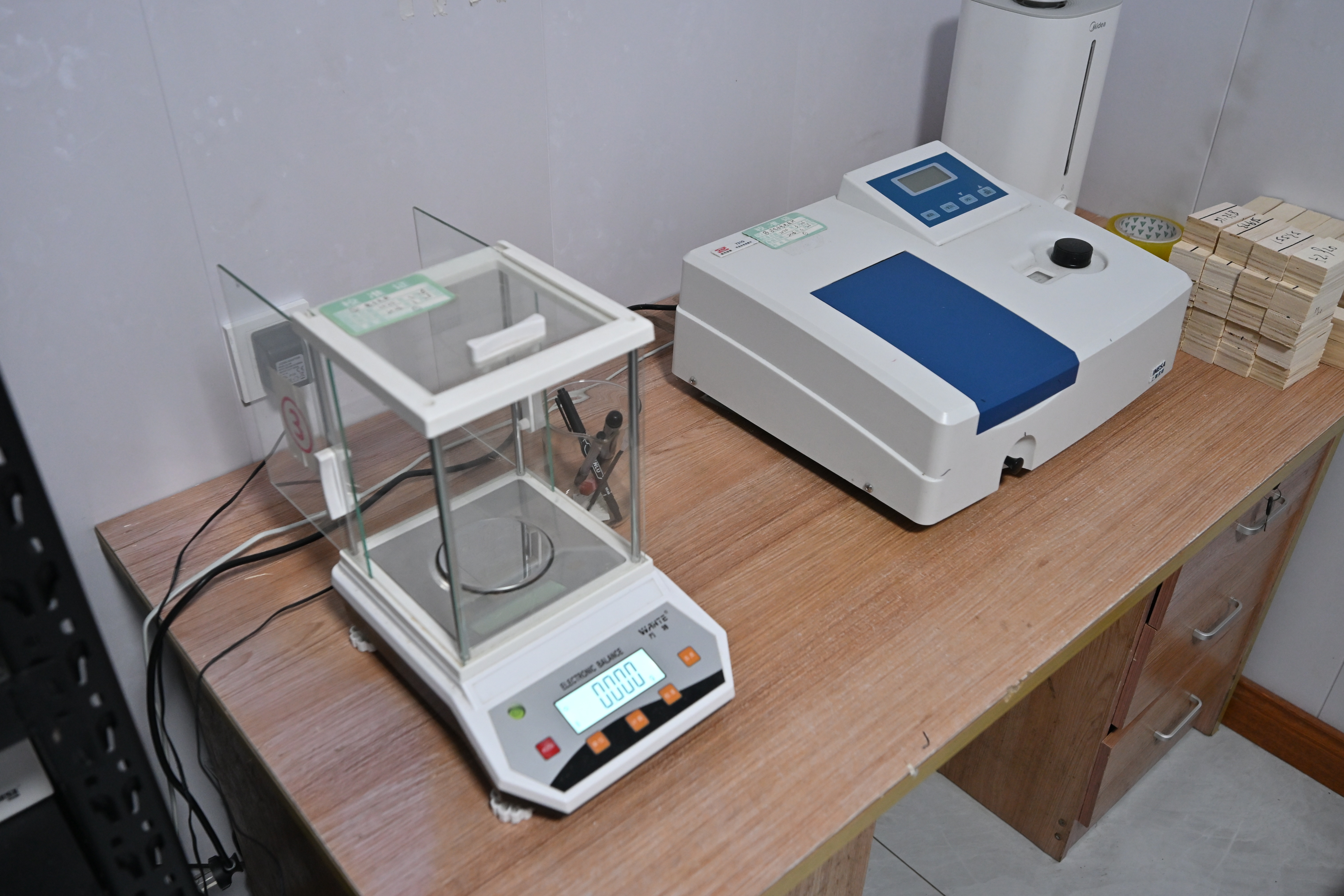
Formwork and flooring reward different panels, and both reward specifications that can be verified. Film faced plywood carries the concrete work, with its film face, WBP glue options, 4-35 mm thickness range and documented 2-40 uses in concrete projects. Structure plywood, marine plywood, LVL, commercial plywood and MDF carry the flooring stack, each with its own documented thickness range, core options, glue class, density and moisture content. Decorative veneer or melamine surfaces finish the visible layers.
The decision rule is simple: match the panel to the documented working condition, confirm the glue and core, verify density and moisture content, and check that the compliance documents match the destination market before the order leaves the factory.
Planning a formwork or flooring panel order?
Send your specification and target market to WADA GROUP. The team will confirm format, thickness, core, glue, face, moisture content, packing and the certification documents your project needs.
Email wada@wadatrade.com | WhatsApp +86 131-3003-0584 | www.wadaplywood.com | Download the WADA Group product catalogue (PDF)