
Wood Panel Customization: OEM Capabilities That Move Projects From Specification to Shipment
Wood Panel Customization: OEM Capabilities That Move Projects From Specification to Shipment
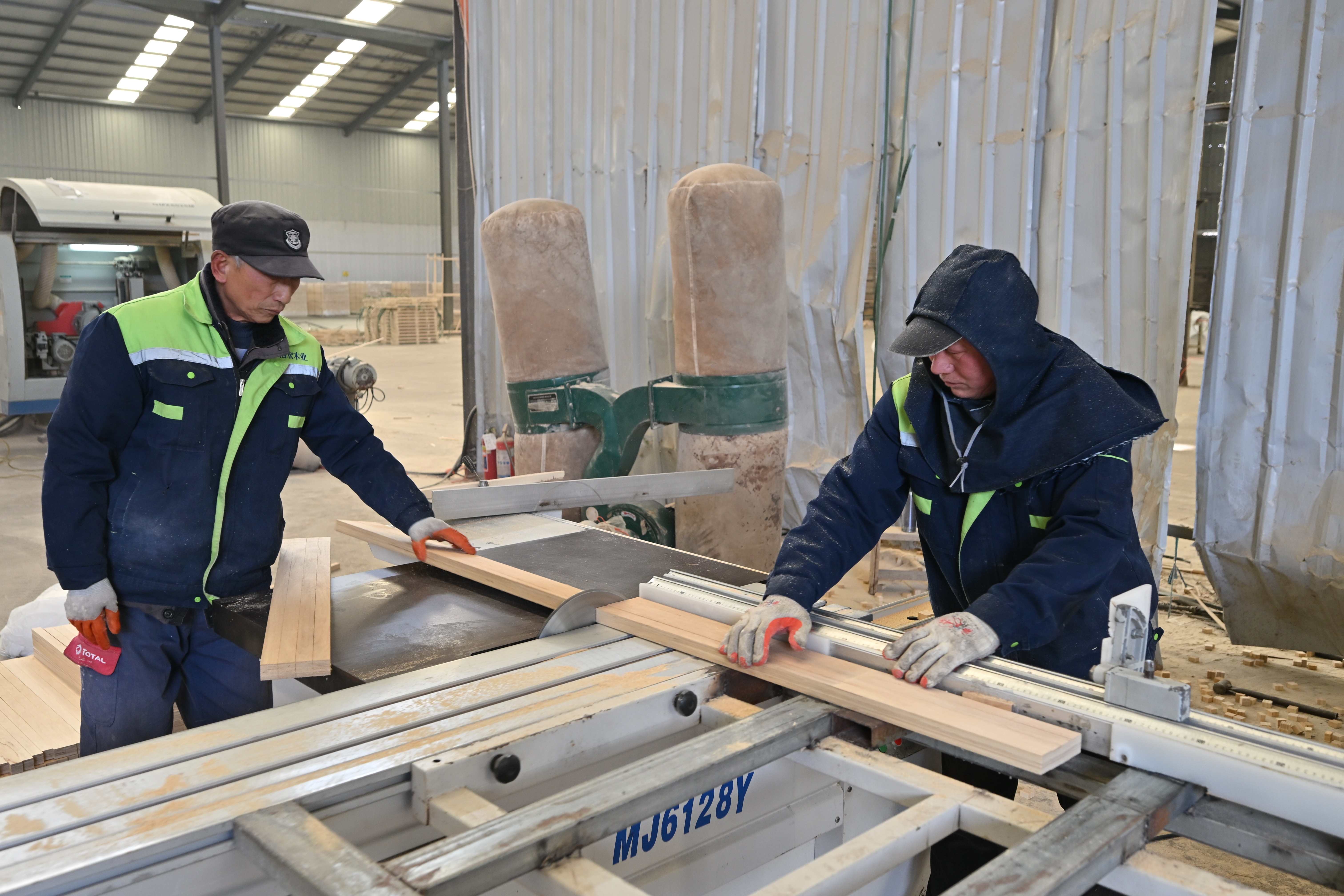
Custom wood panel production at Dalian WADA International: a significant portion of global engineered wood orders require some degree of OEM finishing, added-value processing, or size/thickness modification.
For many global buyers, the real question is not whether to buy wood panels, but how much of the panel can be customized before it arrives at their factory or job site. Custom wood panel OEM production services allow furniture makers, builders, and distributors to receive panels in dimensions, surfaces, and performance grades that match their existing manufacturing lines or construction requirements. Understanding those customization capabilities before placing a container order can reduce post-processing waste, shorten installation time, and improve how the panel performs in a specific end use.
What Does Wood Panel OEM Actually Cover?
In the engineered wood industry, OEM and ODM production services cover several levels of modification. At the most basic level, a supplier can cut a standard panel to a non-standard size. At a deeper level, a supplier can adjust the layup, face and back veneer, core composition, glue system, thickness, and density to meet a specific load, moisture, or emission requirement. Customization may also include surface finishing such as melamine paper, PET film, HPL, engineered veneer, or painting, plus packaging designed around one container of mixed products.
ODM (Original Design Manufacturing) moves further: the supplier proposes the panel construction, adjusts the formula, and produces it according to the buyer's intended function. A bed slat producer, for example, may not need to design the LVL layup from scratch. The supplier can recommend a birch or poplar face and core combination, specify E0/E1 glue, and produce strips in the width and thickness required for a specific bed frame.
Custom wood panel supply is therefore not a single service. It is a set of decisions about size, thickness, surface, core, glue, grade, and packaging, all of which should be aligned with how the panel will be used and where it will be sold.
The Problem: Standard Sizes Do Not Fit Every Production Line
A 4×8 ft panel is the most common format in the industry, but it is not universal. Furniture factories in different regions operate with different cutting patterns. Japanese furniture manufacturers may need narrower LVL strips with tight thickness tolerance for bed slats. Australian concrete contractors require specific formwork panel dimensions such as 1200×2400 mm or 1500×3000 mm. A decorative kitchen cabinet project in Mexico may need veneered boards in sizes that reduce cutting loss when producing cabinet doors.
When a supplier can only offer standard sizes, the buyer faces three costs: material waste from cutting, labor hours spent reworking panels, and weaker performance because the panel was not designed for the intended load or environment. For buyers evaluating a supplier, the practical test is not whether the factory claims to support OEM, but whether it can specify the exact size, thickness, glue, face veneer, core, and packing that fit the buyer's production process.
Industry Background: Why Custom Panels Are Becoming the Default in Global Sourcing
The global plywood market was valued at USD 80.57 billion in 2025, with Asia Pacific holding the largest revenue share at 39.4%, according to Grand View Research. Inside that supply chain, a growing share of orders is not for generic panels but for panels that must satisfy a specific market rule, a specific production line, or a specific building code.
Several forces push buyers toward customization:
- Regional compliance: The US EPA TSCA Title VI sets formaldehyde emission limits for composite wood panels, including 0.05 ppm for hardwood plywood and 0.11 ppm for MDF. A panel made for California may not automatically suit an Australian structural application. Each market has its own glue and emission requirements.
- Production efficiency: A furniture factory that receives precise pre-cut LVL bed slats avoids the dust, labor, and tolerance issues of cutting full panels in-house.
- Material optimization: Combining multiple SKUs in one 40' container is more efficient when the supplier can coordinate different products, sizes, and surface finishes in a single shipment.
- Performance requirements: Marine plywood with WBP glue is specified for high-moisture environments; structural plywood must meet certain density and glue standards; furniture boards need lower formaldehyde emissions. A one-size-fits-all panel cannot serve all these roles well.
Customization is not a luxury add-on. It is how a panel supplier makes its products usable across construction, furniture, cladding, and packaging industries.
What Capabilities Should Buyers Verify Before Ordering Custom Wood Panels?
Before trusting a supplier with a customized order, buyers should confirm the following capabilities. These are not marketing claims; each one changes the buyer's risk profile.
1. Size and Thickness Range
Different panels have different limits. For instance, Dalian WADA's LVL bed slat line produces widths from 25 to 190 mm and thicknesses from 7 to 15 mm, with birch or beech face/back and birch or poplar core. MDF is produced from 1.2 mm to 50 mm thickness, in sizes from 4×8 ft up to 8×16 ft, using continuous flat pressing on German production equipment. If a buyer needs a dimension outside those ranges, the supplier must say so before the contract is signed.
2. Core and Surface Control
The face and core determine how the panel behaves. Commercial plywood offers face/back options such as birch, pine, okoume, bintangor, sapeli, pencil cedar, and poplar, with veneer grades from B/BB to C/C. Structure plywood typically uses larch or pine faces with eucalyptus, larch, pine, or combi core. Film faced plywood can be produced with dark brown or black film over fingerjoint, poplar, combi, hardwood, pine, or Russia birch core. Veneered boards can carry white oak, red oak, black walnut, parota, wenge, ash, birch, pine, and sapeli faces over plywood, MDF, chipboard, or blockboard core. Melamine boards can be finished with melamine paper, PET film, or HPL.
Each combination changes cost, weight, screw holding, moisture resistance, and appearance. A supplier with a broad core and surface matrix is more likely to match the right construction to the application rather than pushing a single product.
3. Glue System and Emission Compliance
The glue system determines both formaldehyde class and water resistance. Dalian WADA lists E0, CARB P2, E1, E2, melamine WBP, and phenolic WBP as available glue systems across its panel range, depending on product and market. Buyers selling into the US should confirm CARB Phase 2 and EPA TSCA Title VI compliance. Buyers shipping to Japan can look for JIS or JAS certification. European buyers typically need CE marking under EN 13986. These standards should be confirmed in writing before production, because glue selection affects both cost and market access.
4. Quality Control and Inspection
Customization increases the risk of tolerance errors. The supplier should be able to state its inspection policy with precision. Dalian WADA's stated QC process is 100% inspection, and its export markets include South America, EU, Middle East, and Southeast Asia. A 100% inspection policy is a meaningful commitment when a customer needs consistent thickness across thousands of bed slats or uniform film quality across a container of formwork plywood.
5. Lead Time and MOQ
Customized production usually requires a longer lead time than stock panels. Dalian WADA states a standard production lead time of 25 to 45 days and a minimum order quantity of one 40' container. Buyers whose projects run on tight schedules must align their order dates with that window. Buyers who need less than a container may still be accommodated, but the stated MOQ is the cleanest threshold for planning.
Step-by-Step: How to Move From a Custom Wood Panel Inquiry to Container Delivery
For buyers evaluating a supplier, the procurement workflow typically follows these stages:
- Define the application. Write down how the panel will be used, the load it must carry, the moisture risk, the surface appearance required, and the destination market's compliance rules.
- Select the panel family. Choose between plywood, LVL, MDF, melamine board, veneered board, commercial plywood, marine plywood, film faced plywood, or another engineered wood category that fits the structural and aesthetic needs.
- Specify dimensions. Provide size, thickness, face/back species, core species, glue type, grade, and acceptable tolerances. If you do not know the best layup, ask the supplier's engineering team for a recommendation.
- Confirm compliance documentation. Ask for certificates such as FSC, EUDR, CARB P2, EPA, JIS, JAS, or AS/NZS that apply to the destination market.
- Request a sample or pre-production trial. Validate color, thickness, machining behavior, and emission documentation before committing to full production.
- Place the order and confirm lead time. Lock the delivery window and payment terms, such as T/T 30/70 or 50/50.
- Arrange pre-shipment inspection. Use the supplier's 100% inspection process or add a third-party inspection if required by your purchasing policy.
- Ship and receive technical support. For international orders, FOB or CIF delivery can be used, with remote support available after delivery.
Real Use Cases: How Custom Wood Panels Perform Across Markets
The following project references illustrate how different panel types and customization levels have been used in commercial and construction projects. These cases are part of Dalian WADA's production and export record.
Furniture and Cabinet Decoration in Mexico
In Mexico, a furniture manufacturing client used veneered board, melamine board, LVL, and MDF in a project that involved 100 containers. The application was furniture and cabinet decoration, and the project achieved a decoration result with a fashionable highlight. This case shows how an order can combine multiple panel categories to serve one production program, rather than treating each panel type as an isolated purchase.
Building Structure in Japan
In Japan, a construction builder used film faced plywood and structural plywood in a project involving 200 containers. The application was building structure, and the project achieved high strength results. The products contributed high durability and waterproof properties. Japan's construction market requires strict certification, so this case demonstrates how certified structural panels can be supplied at volume for building projects.
Building Structure in Australia
In Australia, a building contractor used structural plywood and film faced plywood in a project involving 50 containers. The application was building structure, and the project achieved high strength results, with high durability and waterproof properties highlighted. The Australian market applies the AS/NZS framework for structural LVL, which means the panel supplier needed to meet a formal structural product certification standard.
Outdoor Cladding in Portugal
In Portugal, a wall cladding client used marine plywood in a 20-container project for outdoor cladding. The project achieved weather resistant results, with UV resistance as a key highlight. Marine plywood is often associated with boat building, but this case illustrates its use in exterior building applications where moisture resistance is critical.
Plywood Production Line in Vietnam
In Vietnam, a plywood manufacturer sourced a complete production line through Dalian WADA, covering plywood, veneer, and engineered wood panel manufacturing. The project achieved stable production and was described as a one-stop solution. For buyers in the manufacturing and processing machinery category, this case shows that the company's offering extends beyond panels into production equipment.
Comparison: Common Wood Panel Categories and Their Customization Flexibility
The table below summarizes the main engineered wood panel types, their typical customization points, and the end-use industries they support. The data is based on Dalian WADA's product specifications and certified product capabilities.
| Panel Category | Available Sizes | Thickness | Face / Core Options | Glue / Emission Options | Typical Applications |
|---|---|---|---|---|---|
| LVL (Bed Slat) | Width 25–190 mm | 7–15 mm | Birch / Beech face; Birch / Poplar core | E0 / E1 | Bed slats, bedroom furniture, hospitality furniture |
| Commercial Plywood | 4×8 ft or as required | 2–25 mm | Birch, Pine, Okoume, Bintangor, Sapeli, Poplar; B/BB to C/C veneer grades | E0 / CARB P2 / E1 / E2 / WBP | Furniture, interior decoration, construction, packing |
| Structure Plywood | 3×6 to 4×8 ft | 9–28 mm | Larch / Pine face; Eucalyptus / Larch / Pine / Combi core | Melamine WBP / Phenolic WBP | Construction, structure, formwork, timber frame |
| Film Faced Plywood | 1200×1800 to 1500×3000 mm | 4–35 mm | Dark Brown / Black film; Fingerjoint, Poplar, Combi, Hardwood, Pine, Russia Birch core | MR / Melamine WBP / Phenolic WBP | Concrete formwork, precast concrete, infrastructure |
| Marine Plywood | 4×8 to 4×9 ft | 9–25 mm | Birch / Okoume face; Poplar / Birch / Okoume / Combi core | Melamine WBP / Phenolic WBP | Shipbuilding, outdoor construction, high-moisture interiors |
| MDF | 4×8 to 8×16 ft | 1.2–50 mm | Wood fiber; densities 500–1000 kg/m³ | E0 / CARB P2 / E1 | Furniture, routed board, lightweight board, waterproof board |
| Melamine Board | 4×8 to 7×9 ft | 2–30 mm | Melamine Paper / PET Film / HPL; Plywood, MDF, PB, BB core | E0 / CARB P2 / E1 / E2 | Furniture, cabinetry, wardrobes, retail fixtures |
| Veneered Board | 4×8 to 7×9 ft | 2–25 mm | White Oak, Red Oak, Black Walnut, Parota, Wenge, Ash, Birch, Pine, Sapeli; Plywood, MDF, PB, BB core | E0 / CARB P2 / E1 / E2 / Melamine | Furniture, cabinet doors, decorative panels, office furniture |
Certifications That Support Custom Wood Panel Orders
Customization does not remove compliance requirements. In fact, it makes certification verification more important, because changing the glue or face veneer can affect whether a panel remains compliant in the destination market.
Dalian WADA's products are certified under FSC, EUDR, CARB P2, EPA, JAS, and JIS. Specific certifications in the corpus include:
- JAS Certificate for Laminated Veneer Lumber (LVL), standard JAS 0701:2023, covering LVL for the Japanese market.
- JAS Certificate for Plywood, standard JAS 0233:2024, covering structural plywood for the Japanese market.
- JIS MARK Certificate for MDF, standard JIS A 5905, covering fiberboard for the Japanese market.
- JIS Certificate for Particle Board, standard JIS A 5908, related to MDF products.
- BSI Product Certification for AS/NZS Structural Laminated Veneer Lumber, standard AS/NZS 4357.0:2005 (R2016), for the Australia and New Zealand market.
- StandardsMark Licence for 17mm Formwork Plywood, standard AS 6669-2016, for the Australian and New Zealand market.
- CARB/EPA certification for hardwood plywood (HWPW-VC), covering CARB Phase 2 and TSCA Title VI for the US market.
- FSC-CoC certification covering LVL, plywood, veneered board, and various solid wood and engineered products for the EU, North America, and UK.
Frequently Asked Questions About Custom Wood Panel OEM
What compliance certifications should I ask for when ordering custom wood panels?
Ask for certificates that apply to both the panel type and the destination market. For the US, CARB Phase 2 and EPA TSCA Title VI are key formaldehyde emission standards. For Japan, JIS and JAS certificates are important, such as JIS A 5905 for MDF and JAS 0233:2024 for plywood. For Australia and New Zealand, AS/NZS 4357.0 covers structural LVL, and AS 6669 covers formwork plywood. For Europe, CE marking under EN 13986 is relevant for wood-based panels used in construction. A supplier should be able to state which certificates apply to the exact product configuration you are ordering.
Can a custom wood panel supplier handle mixed SKU orders in one container?
Yes, but you should confirm it before ordering. Dalian WADA, for example, produces LVL, plywood, veneered board, MDF, OSB, wall panel, and woodworking machines, which means a single order can technically combine multiple panel categories and sizes. In one documented project, a furniture cabinet client in Mexico received a combination of veneered board, melamine board, LVL, and MDF across 100 containers. When a supplier owns multiple production lines and coordinates its own logistics, mixed-SKU container loading is more practical because the supplier controls the production schedule and packing plan.
What are the typical MOQ and lead time for custom wood panels?
Dalian WADA states a minimum order quantity of one 40-ft container and a standard production lead time of 25 to 45 days. This lead time includes production after the order is confirmed; shipping time is separate. Buyers should also reserve time for sample approval, pre-shipment inspection, and documentation if a third-party inspection is required. If the order is a repeat production of an approved specification, later shipments may follow the same lead time, but buyers should confirm at the time of placing each order.
How does Dalian WADA control quality on customized board production?
Quality control is based on 100% inspection, meaning every product is checked before shipment. The company's QC team includes experienced inspectors, a technical team, and workers with over 10 years of experience in the timber industry. Because customization can change dimensions and layup, the inspection process should verify thickness tolerance, surface condition, glue performance, and moisture content. For critical orders, buyers can also arrange pre-shipment testing through the supplier's acceptance procedure.
Can Dalian WADA provide a sample before I commit to a container order?
Buyers who want to validate a custom specification can request a sample before committing to a full container order. The minimum order quantity is one 40-ft container, but sampling is a normal step before production. Send the supplier your target dimensions, face species, core preference, glue class, and a description of the final application, and the sales team can confirm whether a sample matches the specification. Once a sample is approved, the next step is to align the container order with the factory's 25 to 45 day production window.
Moving from specification to shipment with a capable OEM wood panel partner starts with a clear technical conversation.
Dalian WADA International Trading Co., Ltd. | email: wada@wadatrade.com | Tel/WhatsApp: +86 131-3003-0584
Download the Wada Group Brochure for a full overview of products and production capabilities.