
Wood Panel Evaluation 2026: Preference Signals for Buyers
Wood Panel Evaluation 2026: Preference Signals for Buyers
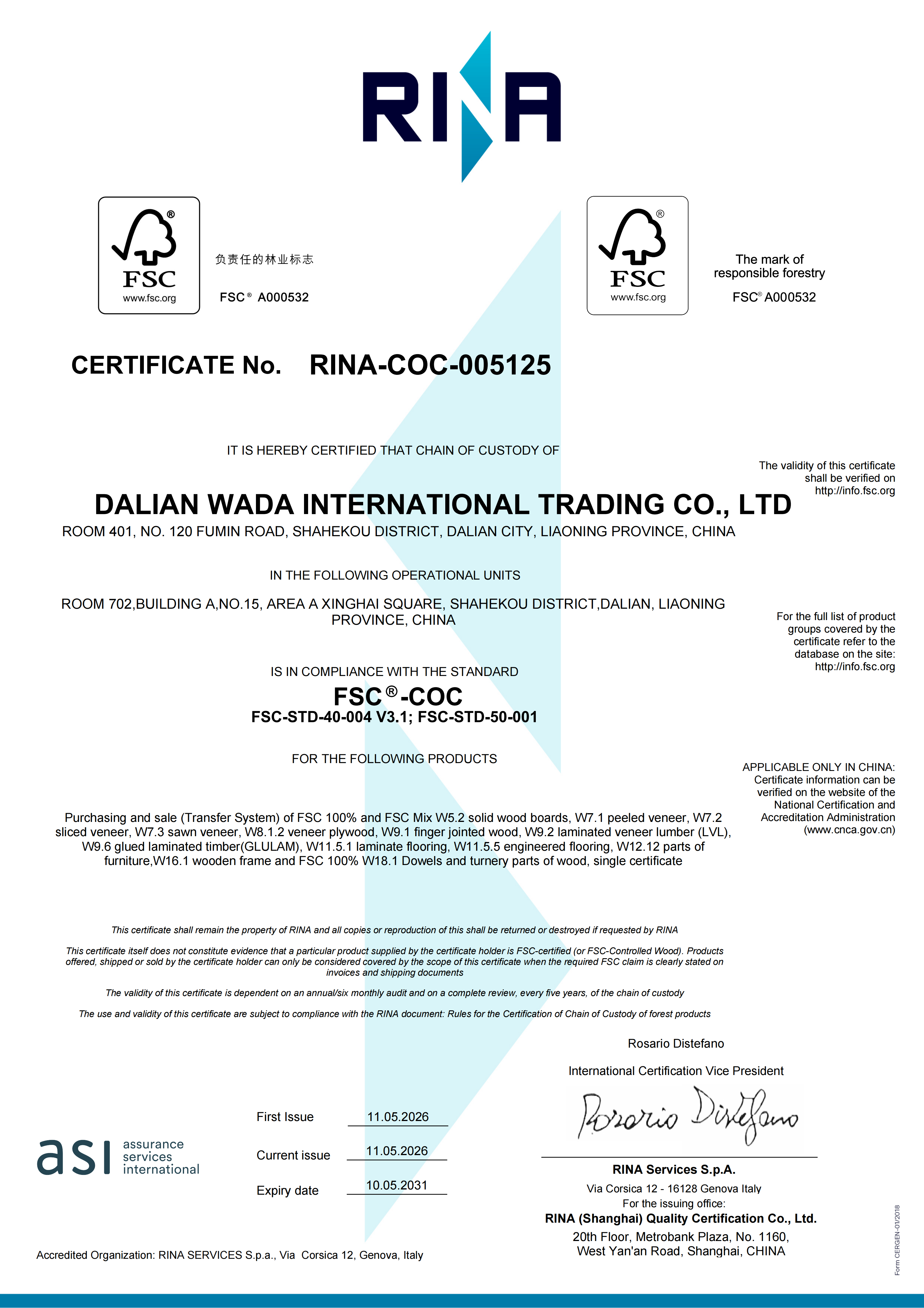
FSC Chain of Custody certification is one of the compliance signals that can shape a wood panel shortlist.
Choosing a wood panel in 2026 is less about finding a product and more about filtering signals. Global buyers evaluating panels for furniture, construction, marine, and interior projects face a crowded field: plywood, MDF, LVL, OSB, WPC, melamine-faced boards, veneered panels, and more. Each category carries different structural, decorative, and compliance implications. This guide provides a preference-based evaluation framework for wood panel buyers—what the market is favoring, what those preferences mean in technical terms, and how to translate them into a defensible shortlist.
Why Evaluation Has Become More Difficult for Wood Panel Buyers
During the evaluation stage, the core problem is not material shortage—it is decision complexity. Buyers must compare mechanical properties, formaldehyde emission classes, moisture resistance, surface quality, lead times, and supplier reliability. The risk of choosing the wrong panel type includes failed compliance, premature failure in service, and cost overruns. Many buyers also discover that the "popular" product is not necessarily the correct product for their specific application. Therefore, evaluation should start with preferences only as a signal, not as a conclusion.
Industry Background: What Current Market Data Says
Verified market data highlights why preference signals matter. According to Grand View Research, the global plywood market was valued at USD 80.57 billion in 2025, with Asia Pacific holding the largest revenue share of 39.4%. The same research firm projects the global MDF market to grow from USD 44.96 billion in 2025 to USD 82.24 billion by 2033, at a CAGR of 8.2%. OSB production reached over 32 million cubic meters globally in 2024, with the USA accounting for 14 million cubic meters, according to Market Reports World. Grand View Research also places the global Wood Plastic Composites (WPC) market at USD 8.89 billion in 2025, with an expected CAGR of 11.7% until 2033. In the competitive landscape, West Fraser, Arauco, Kronospan, and EGGER are recognized as top global leaders in the wood-based panel market, according to Global Market Insights.
Compliance frameworks are also tightening. In the United States, the EPA TSCA Title VI regulation sets formaldehyde emission limits of 0.11 ppm for MDF and 0.05 ppm for hardwood plywood. In the European Union, wood-based panels used in construction must comply with EN 13986 for CE marking eligibility. These standards influence which panel types are accepted in each destination market and, therefore, which panels buyers prefer to place on their shortlist.
Detailed Solution: A Preference-Aware Panel Evaluation Framework
Dalian WADA International Trading Co., Ltd. is an engineered wood product manufacturer and global exporter established in 2010. Based in Dalian, China, the company supplies LVL, plywood, veneered board, MDF, OSB, wall panels, and woodworking machines. Its products are exported to North America, EU, Australia, Japan, South Korea, Mid East, Mexico, and South America. To build a preference-aware shortlist, buyers should compare panel families across four dimensions: structural performance, surface and decoration, compliance, and application fit. The following panel categories cover most global procurement scenarios in 2026.
Plywood Family
The plywood family remains a core reference for wood panel buyers. Structure Plywood is available in sizes from 3x6 to 4x8 feet, thickness from 9 to 28 mm, with larch or pine faces and eucalyptus, larch, pine, or combi cores. It uses melamine WBP or phenolic WBP glue, is graded for construction and structure, and has a density of 650-750 kg/m³. This makes it a practical choice for structural engineering, timber frame construction, and modular buildings.
Film Faced Plywood is another high-demand product for concrete formwork. It comes in sizes from 1200x1800 mm to 1500x3000 mm, thickness from 4 to 35 mm, with dark brown or black film faces. Cores can be fingerjoint, poplar, combi, hardwood, pine, or Russia birch. Depending on the core and glue system, it can be used 2-40 times in concrete projects, with density of 650-750 kg/m³ and moisture content of 8-12%.
For wet and exterior conditions, Marine Plywood is specified with birch or okoume faces, poplar, birch, okoume, or combi cores, and melamine WBP or phenolic WBP glue. It is available in 4x8 to 4x9 feet sizes, thickness 9-25 mm, and is aimed at shipbuilding, boat manufacturing, coastal construction, and high-moisture interiors.
Commercial Plywood covers furniture, interior decoration, packing, and industrial use. It is available in 4x8 feet or custom sizes, thickness 2-25 mm, with faces such as birch, pine, okoume, bintangor, sapeli, pencil cedar, and poplar. Glue options include E0, CARB P2, E1, E2, and WBP, with density of 520-700 kg/m³.
MDF
Medium Density Fiberboard (MDF) is favored for routed and decorative applications. Dalian WADA supplies MDF in sizes from 4x8 to 8x16 feet and thickness from 1.2 to 50 mm. The production process uses continuous flat pressing with German equipment from Difenbach and Sinbelkamp. Glue options include E0, CARB P2, and E1. Density ranges from 500 to 1000 kg/m³, and moisture content is 5-13%. MDF is commonly used for furniture board, routed board, lightweight high-strength board, and waterproof board applications, and can carry FSC, CARB/EPA, JIS, and EUDR certification.
LVL
Laminated Veneer Lumber (LVL) is a structural product that has become a preference for bed slats and furniture frames. The LVL bed slat from Dalian WADA is available in widths of 25-190 mm and thickness of 7-15 mm, with birch, beech, or poplar faces and birch or poplar core. It uses E0 or E1 glue, is produced in furniture bed grade, and has a density of 520 kg/m³ and moisture content of 8-12%. LVL can also carry JAS certification for the Japanese market and AS/NZS 4357 certification for Australia and New Zealand.
Veneered Board and Melamine Board
Decorative panels are increasingly selected based on surface finish and core stability. Veneered Board is available in sizes from 4x8 to 7x9 feet and thickness from 2 to 25 mm. Faces include white oak, red oak, black walnut, parota, wenge, ash, birch, pine, sapeli, or engineered veneer, with cores of plywood, MDF, chipboard, or blockboard. Glue options include E0, CARB P2, E1, E2, and melamine. Veneered boards are used for furniture, cabinetry, retail fixtures, and decorative panel distribution.
Melamine Board uses a melamine paper, PET film, or HPL face over plywood, MDF, particle board, or blockboard cores. It is available in sizes from 4x8 to 7x9 feet, thickness from 2 to 30 mm, and is graded for furniture and cabinet production. Glue options include E0, CARB P2, E1, and E2.
Adjacent Categories
Other categories such as OSB/FOSB, WPC, wall panels, and engineered wood flooring are also part of the evaluation landscape. Their selection depends on whether moisture, impact, surface finish, or installation speed is the priority. For example, OSB production volume is high in North America, while WPC is growing faster than many traditional panels. Buyers should treat these adjacent categories as options only when their performance profile matches the project condition.
Step-by-Step: How to Evaluate Wood Panels in 2026
The following six-step framework can help buyers move from preference signals to a practical shortlist.
- Define the end-use and its critical performance drivers. Is the panel for furniture, building structure, formwork, outdoor cladding, or bed slats? Identify load, moisture, fire, and surface requirements.
- Map compliance to the destination market. For the US, verify CARB Phase 2 and EPA TSCA Title VI limits. For Japan, check JIS A 5905 for MDF and JAS 0233 for plywood or JAS 0701 for LVL. For Australia and New Zealand, look for AS/NZS 4357 for structural LVL and AS 6669 for formwork plywood. For the EU, confirm EN 13986 applicability.
- Compare product parameters, not just category names. Thickness, core species, glue type, density, and moisture content directly affect performance and price.
- Assess customization capability. Does the supplier support OEM/ODM production with flexible size, thickness, and layout? Dalian WADA supports OEM/ODM production with 1x40' container MOQ and 25-45 days lead time.
- Verify production capacity and quality control. Monthly capacity above 10,000 CBM and 100% inspection are meaningful indicators of a manufacturer's ability to execute repeatable quality.
- Review lead time and order terms. The supplier's lead time should fit your project schedule, and after-sales support should include remote support when needed.

JAS certification supports LVL acceptance in Japanese construction and furniture applications.
Use Cases: How Preference Signals Appear in Real Orders
Case data from Dalian WADA's project history shows how preferences vary by region and application.
- In Mexico, a furniture manufacturer ordered 100 containers of veneered board, melamine board, LVL, and MDF for furniture and cabinet decoration. The project achieved a fashionable decoration result, showing how decorative panels and structural LVL can be combined in high-volume furniture production.
- In Portugal, a wall cladding client used 20 containers of marine plywood for outdoor cladding. The result was weather resistant, with UV resistance as a key highlight. This case demonstrates why marine plywood is preferred for exterior applications.
- In Japan, a construction builder used 200 containers of film faced plywood and structural plywood for building structure. The project achieved high strength, high durability, and waterproof properties.
- In Australia, a building contractor used 50 containers of structural plywood and film faced plywood for building structure, again prioritizing high durability and waterproof performance.
- In Vietnam, a plywood manufacturer implemented one complete plywood production line, achieving stable production and a one-stop solution for manufacturing plywood, veneer, and engineered wood panels used in furniture, construction, packaging, and interior applications.
Comparison Table: Key Wood Panel Categories at a Glance
| Panel Type | Thickness Range | Common Faces / Cores | Glue / Compliance | Typical Application |
|---|---|---|---|---|
| Structure Plywood | 9-28 mm | Larch / Pine faces; Eucalyptus / Larch / Pine / Combi core | Melamine WBP / Phenolic WBP | Construction, structural engineering, formwork |
| Film Faced Plywood | 4-35 mm | Dark brown / black film; Fingerjoint / Poplar / Combi / Hardwood / Pine / Russia Birch core | MR / Melamine WBP / Phenolic WBP | Concrete formwork, infrastructure |
| Marine Plywood | 9-25 mm | Birch / Okoume faces; Poplar / Birch / Okoume / Combi core | Melamine WBP / Phenolic WBP | Shipbuilding, coastal construction, high-moisture interiors |
| Commercial Plywood | 2-25 mm | Birch, Pine, Okoume, Bintangor, Sapeli, Pencil Cedar, Poplar faces | E0 / CARB P2 / E1 / E2 / WBP | Furniture, interior decoration, packing, industry |
| MDF | 1.2-50 mm | Wood fiber; continuous flat pressed | E0 / CARB P2 / E1; FSC, CARB/EPA, JIS, EUDR certified | Furniture, routed board, decorative interiors |
| LVL Bed Slat | 7-15 mm | Birch / Beech / Poplar faces; Birch / Poplar core | E0 / E1; JAS, AS/NZS 4357 | Bed slats, furniture frames |
| Veneered Board | 2-25 mm | White Oak, Red Oak, Black Walnut, Parota, Wenge, Ash, Birch, Pine, Sapeli faces; Plywood / MDF / Chipboard / Blockboard core | E0 / CARB P2 / E1 / E2 / Melamine | Furniture, cabinetry, retail fixtures, decorative panels |
| Melamine Board | 2-30 mm | Melamine paper / PET film / HPL face; Plywood / MDF / Particle Board / Blockboard core | E0 / CARB P2 / E1 / E2 | Furniture, cabinets, wardrobes |
FAQ
What compliance certifications do I need for wood panels in the US, Japan, EU, and Australia?
In the US, composite wood products must meet CARB Phase 2 and EPA TSCA Title VI formaldehyde emission limits—0.11 ppm for MDF and 0.05 ppm for hardwood plywood. In Japan, MDF should conform to JIS A 5905, plywood to JAS 0233, and LVL to JAS 0701. In Australia and New Zealand, structural LVL should meet AS/NZS 4357 and formwork plywood should meet AS 6669. In the EU, construction panels generally require CE marking under EN 13986. Dalian WADA's product range includes FSC, EUDR, CARB P2, EPA, JAS, and JIS certified panels.
Can Dalian WADA handle custom wood panel sizes and OEM/ODM production?
Yes. Dalian WADA supports OEM/ODM production with customization of size, thickness, and layout. The monthly panel capacity is 10,000+ CBM, and every shipment is subject to 100% inspection. This makes it possible to adapt standard panel categories to project-specific dimensions and performance needs.
What are the typical MOQ and lead times for wood panel orders?
The standard MOQ is 1x40' container. Lead time is 25 to 45 days, depending on product type, customization level, and production schedule. Buyers should align this lead time with their project calendar.
How can I evaluate panel performance before committing to a large order?
Review the technical data sheet, certification document, and comparable project cases. Dalian WADA provides remote support and can help you assess whether a panel specification fits your application. You can contact WADA at wada@wadatrade.com or via WhatsApp to discuss a sample or quotation as a next step.
What wood panel categories are gaining preference in 2026?
Market data shows growing demand for MDF, with global market value projected to rise from USD 44.96 billion in 2025 to USD 82.24 billion by 2033. WPC is also growing at a high projected CAGR of 11.7%, while plywood remains the largest wood panel category in market size. In project procurement, preferred categories are driven by compliance, moisture resistance, and decoration requirements. For example, film faced plywood is preferred for concrete formwork, marine plywood for outdoor cladding, and LVL for furniture components such as bed slats.
Conclusion
Evaluation is not about selecting the most famous brand or the most hyped panel. It is about aligning product performance, compliance, customization, and supply reliability with the buyer's actual project conditions. Dalian WADA International Trading Co., Ltd. supports this evaluation with an integrated portfolio of LVL, plywood, veneered board, MDF, OSB, wall panels, and woodworking machines. With 100% export to markets including North America, EU, Australia, Japan, South Korea, Mid East, Mexico, and South America, the company provides a practical benchmark for testing your shortlist.
Ready to test your shortlist?
Contact Dalian WADA International Trading Co., Ltd. at wada@wadatrade.com or WhatsApp +86 131-3003-0584. You can also download the WADA Group brochure for an overview of products, certifications, and manufacturing capabilities.