
Wood Panel Import Compliance: EU, US & Australia Guide for Buyers
Wood Panel Import Compliance: EU, US & Australia Guide for Buyers
Short answer: Wood panel imports into the European Union, the United States, and Australia follow three different rule sets, but each one asks the buyer the same question — can you prove that the boards in the container match the specification that market requires? That question is answered long before the container is packed: in the glue system the factory runs, the core it selects, and the inspection routine it follows. A certificate file on its own does not answer it.
This overview covers the regulatory themes that shape wood panel imports in the EU, the US, and Australia, including formaldehyde emission standards, conformity marking, and origin due diligence. It then translates those themes into checks that importers, distributors, furniture manufacturers, and contractors can run with a supplier during research and evaluation — before the first purchase order, not after the first customs query.
Problem Definition: Why Compliance Is a Project Decision, Not a Document
Most compliance failures do not begin with a dishonest supplier. They begin with a specification that was never written down, or was written for one market and then applied to another. Engineered wood panels are manufactured in families, and the compliance-critical variables sit inside those families.
- Glue chemistry. A plywood line can be run with MR, melamine WBP, or phenolic WBP glue, and interior boards can be pressed with E0, E1, E2, or CARB P2 systems. The glue decision is made before pressing and cannot be corrected after sanding and packing.
- Core and face material. Larch, pine, eucalyptus, poplar, birch, okoume, and combi cores behave differently in moisture, load, and machining. Face grades such as B/BB, BB/CP, and C/C change both appearance and commercial terms.
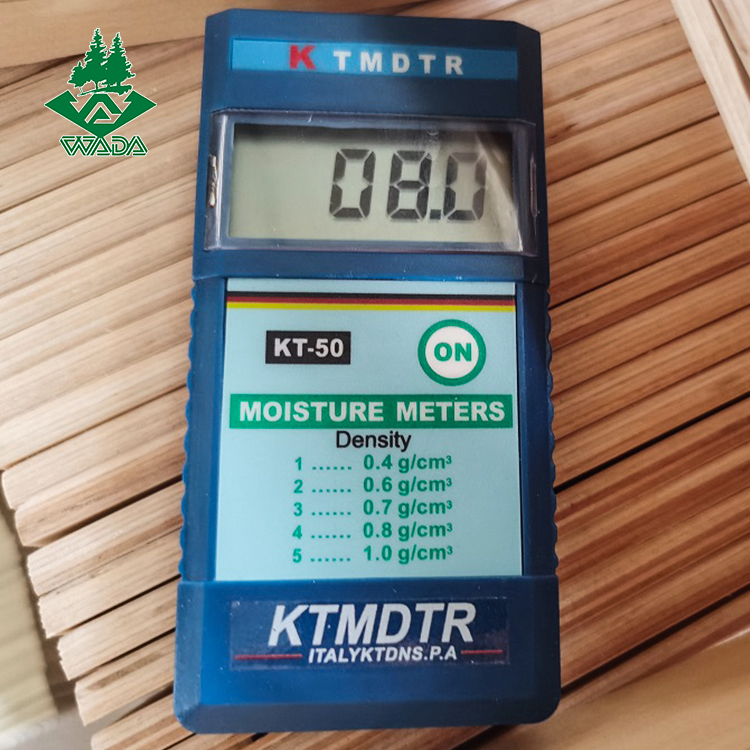
- Moisture content and density. Plywood products are commonly produced at 8%–12% moisture content, while MDF is specified across a wider 5%–13% band with densities from 500 to 1,000 kgs/m³. A board outside its declared band can fail an incoming inspection even when its paperwork is clean.
- Batch consistency. The first container and the tenth container have to be the same product, or the specification is theoretical rather than operational.
Because these variables differ by application, the same panel family can carry different compliance expectations inside the same market. A board destined for concrete formwork, a board destined for a bedroom frame, and a board destined for exterior cladding are not interchangeable — even when they are produced on the same line, in the same factory, in the same week.
Industry Background: The Regulatory Themes Behind Wood Panel Imports
Three themes recur across the EU, US, and Australian landscape: formaldehyde emission limits, product standards and conformity marking, and due diligence on the origin of the wood fibre. A buyer does not need to become a regulatory specialist, but understanding the themes is what makes the right questions possible.
Formaldehyde emission is the common thread
Formaldehyde emission is the most consistently regulated property of engineered wood panels. In the United States, the EPA TSCA Title VI regulation sets limits of 0.11 ppm for MDF and 0.05 ppm for hardwood plywood (US Environmental Protection Agency). Panels sold into that market are typically specified with a glue class — CARB P2, E0, or E1 — that reflects the emission requirement.
In the European Union, the regulatory route runs through product standards: wood-based panels intended for use in construction must comply with the harmonized European standard EN 13986 in order to be eligible for CE marking (European Panel Federation). European data sheets therefore usually state a formaldehyde class such as E1 or E0 alongside the mechanical properties.
The practical consequence is the same in both markets: the emission requirement is a specification input, not an afterthought. It has to be written into the enquiry, because it determines which glue system the factory schedules for that run.
The market these rules govern
Scale explains why the rules are detailed and why they are enforced. The global plywood market was valued at USD 80.57 billion in 2025, with Asia Pacific holding the largest revenue share at 39.4% (Grand View Research). The global MDF market is projected to grow from USD 44.96 billion in 2025 to USD 82.24 billion by 2033, a CAGR of 8.2% (Grand View Research). Market estimates vary between research firms, so any single figure is best read as an order-of-magnitude reference rather than a precise number.
Adjacent panel families follow the same pattern. Oriented strand board (OSB) production reached over 32 million cubic meters globally in 2024, with the USA accounting for 14 million cubic meters, and the wood plastic composites (WPC) market reached USD 8.89 billion in 2025 with an expected CAGR of 11.7% until 2033 (Grand View Research). Each family carries its own test methods and documentation.
Trade flow adds context. China was the second largest exporter of raw timber (HS 44) to the United States in 2024, contributing USD 2.17 billion, a 9% share (ITC / US Census Bureau). Most compliance conversations therefore take place across a documentation and language gap — which is precisely where a supplier’s inspection discipline becomes visible.
Who supplies the market
The wood-based panel market is led by large integrated producers: West Fraser Timber, Arauco, Kronospan, and EGGER Group are recognized as the global leaders (Global Market Insights). Most import orders, however, are placed with export-oriented manufacturers and trading groups of far smaller scale. In that segment, brand recognition is not a substitute for verification — documentation, batch records, and samples are.
Market by Market: What EU, US, and Australian Buyers Need
The three markets differ less in what they protect than in how they ask for proof. Below is an overview of the themes a buyer should raise in each one.
European Union
The EU route to compliance starts with CE marking. Wood-based panels for use in construction must comply with EN 13986 to be CE-marked, which means the buyer should receive the declaration and the supporting test basis for the specific product rather than for a generic product family (European Panel Federation).
Second, formaldehyde class. European data sheets typically state E0 or E1 for interior boards, and that class appears in the glue specification for MDF, melamine-faced boards, and veneered panels.
Third, origin due diligence. EUDR due-diligence obligations and FSC chain-of-custody documentation both appear on the document list that EU-facing buyers request. Dalian WADA International Trading Co., Ltd. states FSC and EUDR among its certifications, which gives European buyers a starting document set to validate.
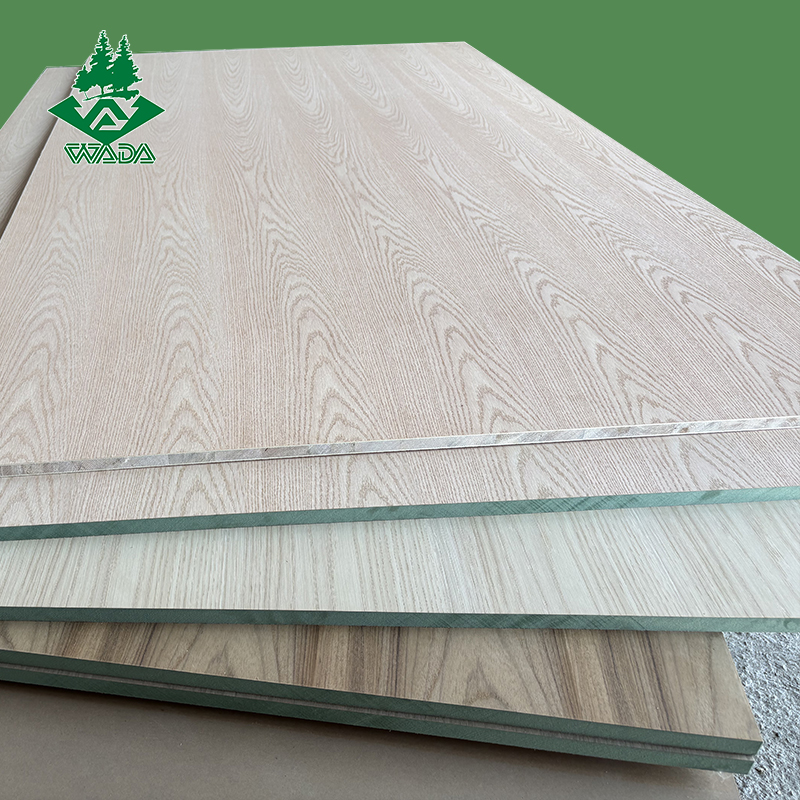
Fourth, application fit. Furniture manufacturers in Europe run continuous workshop production and depend on smooth surfaces and stable cores; in that setting a panel that machines cleanly matters as much as its label. Melamine-faced boards, veneered plywood, and MDF are the usual candidates, and their data sheets offer glue options from E0 and CARB P2 to E1 and E2.
United States
US compliance for composite wood products is dominated by formaldehyde. TSCA Title VI sets the emission limits at 0.11 ppm for MDF and 0.05 ppm for hardwood plywood (US Environmental Protection Agency). Panels are commonly specified with a CARB P2 glue class, and both CARB P2 and EPA appear in the certification stack WADA publishes.
US buyers should also think in terms of application. Interior finishing in dry, indoor environments is where eco-friendly and low-emission requirements concentrate; that is the point at which the glue class moves from a data-sheet line to a purchasing condition. Buyers who need a no-added-formaldehyde (NAF) specification should ask for the test documentation behind that claim before the order is scheduled, because the glue system cannot be swapped once the boards are pressed.
Documentation travels with the shipment, so the simplest US-facing check is a consistency check: certificate, data sheet, and packing list should describe the same product, the same glue class, and the same thickness.
Australia
Australia maintains its own product standards framework for engineered wood panels and applies border biosecurity requirements to timber and wood products. Because the applicable standard depends on the product type and the end use, the practical move for a buyer is to confirm the exact reference with the importer or testing body before production is scheduled, and to keep that confirmation with the order documents.
Application fit tends to dominate the Australian conversation. Outdoor structural use imposes requirements such as waterproofing and high strength, and those requirements map onto specific products rather than onto a general “exterior” label. Film faced plywood, for example, is documented for 2 to 40 reuses in concrete projects, with MR, melamine WBP, or phenolic WBP glue depending on the specification. Structure plywood is produced with melamine WBP or phenolic WBP glue for construction and structural grades.
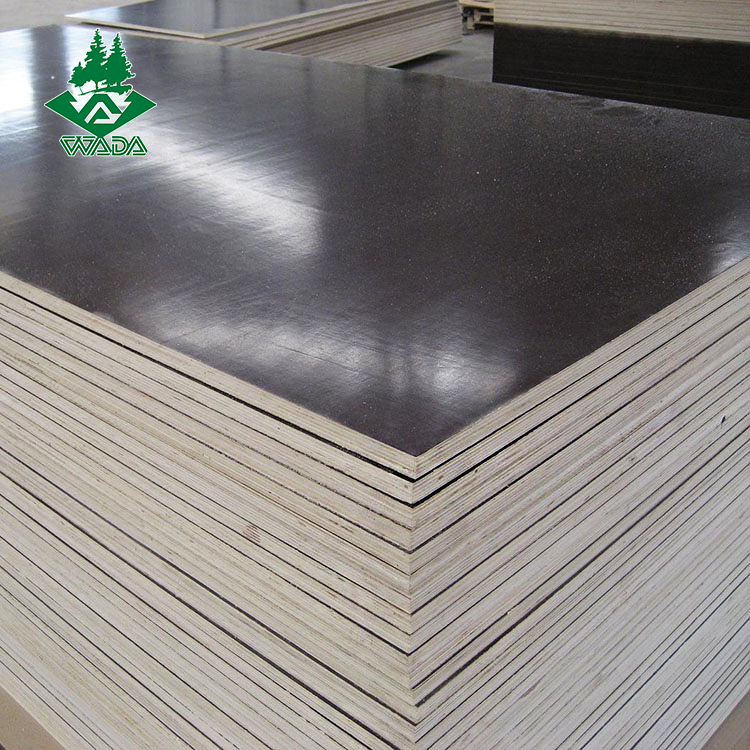
One reference point from the field: an Australian building contractor ordered 50 containers of film faced plywood and structure plywood for building structure work, with high durability and waterproofing as the deciding requirements.
What a verifiable compliance position looks like
Dalian WADA International Trading Co., Ltd. (WADA GROUP) is a manufacturer and global exporter of engineered wood products, established in 2010 and based in Dalian, China. The group operates a 53,950 m² production footprint with 200 employees and a 25-engineer R&D team, and exports 100% of its output to North America, the EU, Australia, Japan, South Korea, the Middle East, Mexico, and South America.
WADA’s products are certified with FSC, EUDR, CARB P2, EPA, JAS & JIS, and its MDF data sheet lists FSC, CARB/EPA, JIS, and EUDR as the applicable certificates. The JAS and JIS references matter to buyers who also distribute into Japan.
Behind those certificates sit facts a buyer can actually audit: 100% inspection, OEM/ODM customization covering size, thickness, and layout, monthly panel capacity above 10,000 CBM, a standard lead time of 25–45 days, and a minimum order quantity of one 40-foot container. A certification statement tells you what a factory is allowed to produce; the inspection routine tells you what it actually ships.
Step-by-Step: Six Checks Before You Commit
- Fix the market and the end use first. Write down the destination market, the product type, and the application — structural, furniture, packaging, or exterior. The same board carries different documentation requirements in each case.
- Write the glue class into the specification. E0, E1, E2, CARB P2, MR, melamine WBP, and phenolic WBP are the realistic options. Because glue selection happens before pressing, a late change means a new production run, not a note on the invoice.
- Request documentation for the exact product, not the product family. Group-level certificates are a starting point; the data sheet for your product is the working document. MDF, for example, carries its own size range (4×8 to 8×16 ft), thickness range (1.2–50 mm), density band (500–1,000 kgs/m³), moisture band (5%–13%), and certificate list.
- Audit the inspection protocol rather than the promise. Ask what is measured, how often, and what happens when a batch falls outside the declared band. Plywood products are typically held at 8%–12% moisture content, and moisture is one of the few variables that can be checked quickly on arrival.
- Validate the first production batch. Check thickness, density, moisture, core, and face against the approved sample, and keep the approved piece. It becomes the reference for every later shipment and the fastest way to settle a dispute.
- Lock the specification and repeat it on every purchase order. Treat any change of glue class, core, or face grade as a new product that requires new documentation.
Use Cases: Where Compliance Requirements Actually Differ
Compliance is easier to plan once it is attached to a real production or construction scenario. The following examples show how the same panel families are specified differently depending on where and how they are used.
- EU furniture production (Poland). Continuous workshop production in a furniture plant, where the requirement is a smooth surface and a stable core. Melamine-faced boards, veneered plywood, and MDF are the natural candidates, with E0, CARB P2, or E1 glue classes depending on the market the finished furniture targets.
- US interior finishing. Dry, indoor environments with eco-friendly and low-emission expectations. The compliance work here is documentation-led: match the glue class to the requirement, then keep certificate, data sheet, and packing list aligned.
- Australian construction. Outdoor structural use with waterproof and high-strength requirements. Film faced plywood and structure plywood, both available with WBP glue systems.
- Industrial packaging (Singapore). Heavy-duty transport with high load capacity; commercial plywood used for crating in one-time or reusable mode.
- Exterior decoration (Mexico). Long-term outdoor use with UV and weather exposure; marine plywood and structure plywood installed with a suitable fixing system.

Case references make the pattern concrete. A Japanese construction builder ordered 200 containers of film faced plywood and structure plywood for building structure work, prioritizing durability and waterproofing. A wall cladding project in Portugal took 20 containers of marine plywood for outdoor cladding with UV-resistant performance. A furniture manufacturer in Mexico ordered 100 containers of veneered plywood, melamine board, LVL bed slats, and MDF for furniture and cabinet production. A plywood manufacturer in Vietnam purchased one complete production line as a one-stop solution rather than panels alone.
Comparison Table: Compliance Overview by Market
| Market | Primary regulatory theme | Key reference | What to request from the supplier |
|---|---|---|---|
| European Union | Conformity marking for construction panels; formaldehyde class stated on the data sheet; origin due diligence | EN 13986 for CE marking (European Panel Federation); EUDR; FSC | Declaration and test basis for the exact product, the stated glue class (E0 / E1), plus FSC and EUDR documentation |
| United States | Formaldehyde emission limits for composite wood products | EPA TSCA Title VI: 0.11 ppm for MDF, 0.05 ppm for hardwood plywood (US EPA); CARB P2 | Glue class written into the specification, EPA and CARB P2 documentation, test basis for any NAF claim |
| Australia | National product standards framework for wood panels plus border biosecurity requirements | Confirm the applicable standard for the specific product and end use before production | Product-standard evidence for the exact product, import documentation, and application performance data such as waterproofing and strength |
This comparison is a planning tool for buyers, not legal advice: the applicable requirement always depends on the specific product and its end use.
Product and Specification Reference
| Product | Size range | Thickness | Glue options | Typical scenario |
|---|---|---|---|---|
| MDF | 4×8 – 8×16 ft | 1.2–50 mm | E0 / CARB P2 / E1 | Furniture board, routed board, lightweight high-strength board, water-proof board |
| Commercial Plywood | 4×8 ft or as required | 2–25 mm | E0 / CARB P2 / E1 / E2 / WBP | Furniture, construction, packing, industry |
| Film Faced Plywood | 1,200×1,800 – 1,500×3,000 mm | 4–35 mm | MR / melamine WBP / phenolic WBP | Concrete formwork, 2–40 reuses in concrete projects |
| Marine Plywood | 4×8 – 4×9 ft | 9–25 mm | Melamine WBP / phenolic WBP | Shipbuilding, waterfront construction, high-moisture interiors |
| Structure Plywood | 3×6 – 4×8 ft | 9–28 mm | Melamine WBP / phenolic WBP | Structural work, roofing and flooring systems |
| Veneered Plywood | 4×8 – 7×9 ft | 2–25 mm | E0 / CARB P2 / E1 / E2 / Melamine | Furniture, cabinets, wardrobes, interior fit-out |
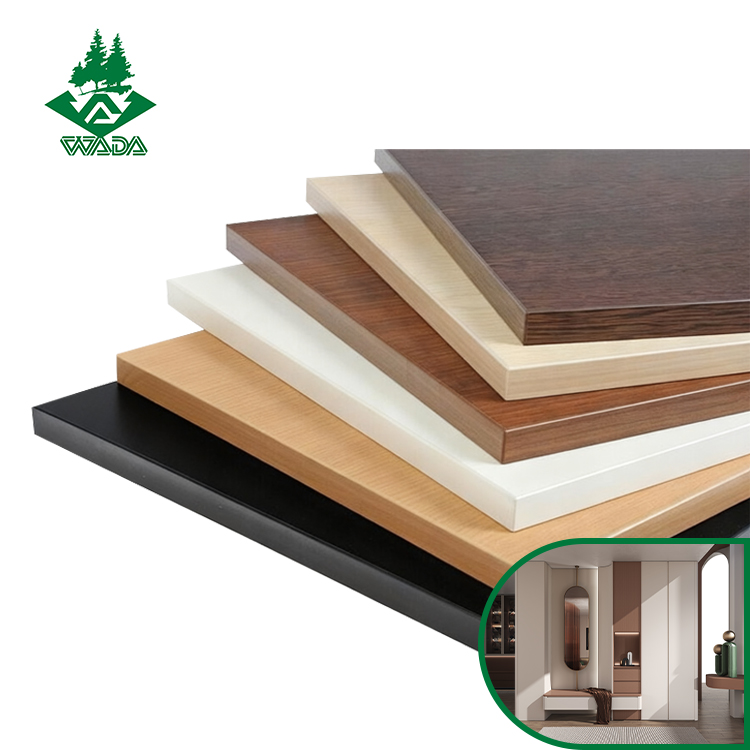
| Melamine Board | 4×8 – 7×9 ft | 2–30 mm | E0 / CARB P2 / E1 / E2 | Furniture grade and cabinet grade panels |
| LVL bed slat | 25–190 mm | 7–15 mm | E0 / E1 | Bedroom and hospitality furniture frames |
Dimensions and glue options are drawn from published product data sheets. Certification is held at group level (FSC, EUDR, CARB P2, EPA, JAS & JIS), with MDF additionally listing FSC, CARB/EPA, JIS, and EUDR.
Frequently Asked Questions
Which formaldehyde limits apply to wood panel imports into the US and the EU?
In the United States, the EPA TSCA Title VI regulation sets formaldehyde emission limits of 0.11 ppm for MDF and 0.05 ppm for hardwood plywood, and panels are commonly specified with a CARB P2 or E0/E1 glue class. In the European Union, wood-based panels for use in construction must comply with EN 13986 to be eligible for CE marking, and data sheets usually state the formaldehyde class (E1 or E0). Because glue is selected before pressing, the emission class belongs in the specification and the purchase order, not in a post-production discussion.
How much does a manufacturer’s QC process actually affect compliance?
A certificate describes a manufacturing system; a shipment is a batch. WADA applies 100% inspection across production, and its published data sheets define the bands a batch has to sit inside — for example 8%–12% moisture content for plywood products and 5%–13% for MDF, with MDF densities from 500 to 1,000 kgs/m³. Buyers should ask what is measured, at which production stage, and whether inspection results can be provided per lot. That is what turns a certification claim into a repeatable shipment.
Does compliance make a wood panel order more expensive?
Compliance cost is driven by the specification, not by the market label. A higher glue class, an additional testing scope, or a document set that has to be assembled for a specific product all change what a supplier has to do — and therefore what the order costs and how long it takes. The practical rule is to compare quotations on an identical specification: two offers that differ in glue class, core, or thickness are not comparable, however similar the headline price looks. Before comparing, confirm which documents and tests are included in the quotation.
Can compliance be validated on a sample before a full order?
Yes, and it should be. Validation works best on a first article taken from the same production setup, checked for thickness, density, moisture, core, and face against the specification, with the approved piece kept as the reference for later shipments. WADA supports OEM and ODM customization covering size, thickness, and layout, and its minimum order quantity for full production is one 40-foot container — so buyers typically confirm sampling arrangements with the supplier before production is scheduled.
How long does a compliant order take, and what causes delays?
WADA’s standard lead time is 25–45 days, with monthly panel capacity above 10,000 CBM and a minimum order quantity of one 40-foot container. The delays that matter are usually self-inflicted: a specification finalized late, a glue class changed after the run was scheduled, or a document request raised after the container was packed. Freezing the specification before production begins is the single most effective way to protect the schedule — and the fastest next step is to request the product data sheets and certificate set for the exact board you intend to buy.
Conclusion: Compliance Is a Sourcing Process You Can Audit
The EU, US, and Australian markets differ in their legal routes — conformity marking and EN 13986 in Europe, formaldehyde emission limits under EPA TSCA Title VI in the United States, and a national standards framework plus border biosecurity in Australia — but they converge on a single demand: evidence that the panel you receive is the panel you specified.
That evidence is built at three points. In the specification, where the glue class and the application are fixed. In production, where inspection controls moisture, density, and batch consistency. In documentation, where certificate, data sheet, and packing list describe the same product. A supplier that manages all three makes compliance a routine part of the order; a supplier that manages only the first transfers the risk to the buyer.
For buyers in the research and evaluation stage, the productive next step is a document request and a sample: ask for the certificate and data sheet for the exact product, ask what the inspection protocol measures, and validate a first article before committing to a container.
Next step
WADA GROUP supplies LVL, plywood, veneered boards, MDF, OSB, wall panels, and woodworking machinery to North America, the EU, Australia, Japan, South Korea, the Middle East, Mexico, and South America.
Download the WADA GROUP brochure: WADA GROUP product brochure (PDF)
Website: www.wadaplywood.com
Email: wada@wadatrade.com
WhatsApp / Tel: +86 131-3003-0584
Address: Room 702, Building A, Xinghai International Financial Center, No.13-15 Area A, Xinghai Square, Shahekou District, Dalian, China