Wood Panel Production Line Application Guide: MDF, Plywood & LVL Project Scenarios
Wood Panel Production Line Application Guide: MDF, Plywood & LVL Project Scenarios
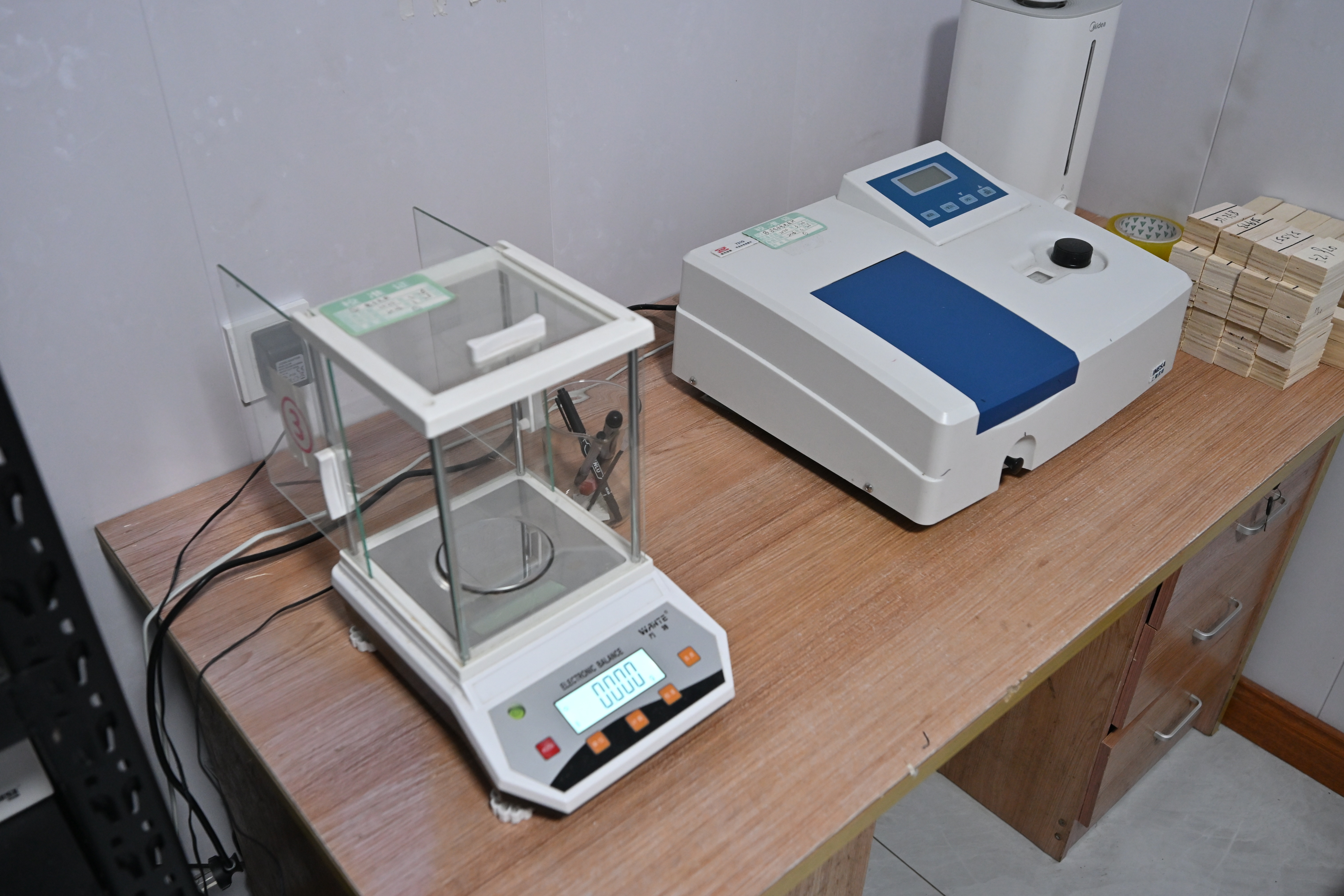
A wood panel production line is defined by the finished board, not by a machine list. Panel family, thickness band, glue class, surface treatment and destination market each determine which stages a line must include — and which stages can be added later. This guide maps the main project families (MDF, plywood, LVL, veneered board and melamine-faced board) onto practical line configurations, and covers the automation, inspection and sourcing decisions that determine whether a line runs at the output it was specified for.
Factory builders and line upgraders generally arrive at this decision from one of two directions. Some are panel buyers who have outgrown external supply and want to internalise part of the process. Others already operate a line and want to add a board family, raise automation, or correct a quality problem that keeps appearing at the same point. Both groups need the same thing: a configuration that matches the board they intend to sell.
Dalian WADA International Trading Co., Ltd. — trading as WADA GROUP — is a China-based manufacturer and exporter of engineered wood products and woodworking machinery, established in 2010, with 53,950 m² of factory space, 200 employees and a 25-engineer R&D team. The company exports 100% of its output to North America, the EU, Australia, Japan, South Korea, the Middle East, Mexico and South America, and operates through its official site at www.wadaplywood.com. Its product portfolio covers LVL, plywood, veneered board, MDF, OSB, wall panels and woodworking machinery.
The Real Problem: Panel Lines Are Usually Specified From the Wrong End
The most common cause of a misconfigured panel line is that it was specified from equipment availability upward, instead of from the finished board downward. A buyer selects a press, a sander and a sizing saw within budget, then discovers that the glue system cannot hold the emission class the target market requires, or that the press cycle cannot handle the thickness band the product mix demands.
Three failure modes account for most of this:
1. Panel family mismatch. Fibre-based boards such as MDF and veneer-based boards such as plywood and LVL do not share a process chain. MDF runs on a fibre line built around chipping, refining, drying, forming and continuous pressing. Plywood and LVL run on a veneer line built around peeling, drying, glue spreading, lay-up and pressing. A single line cannot serve both without a second, dedicated front end.
2. Automation level mismatch. Automation is usually treated as a cost line rather than a configuration decision. In practice, the automation level determines the labour model the plant has to run, the consistency of the press cycle, and how much manual handling sits between drying and packing.
3. QC architecture defined too late. If inspection is designed after the equipment list is frozen, inspection points end up bolted onto the line rather than built into it. Quality control is far cheaper to place at the stages where defects are created than at the loading dock.
Industry Background: Configuration, Not Availability, Is the Differentiator
Global wood-based panel demand is large and structurally stable. According to Grand View Research, the global wood-based panel market reached USD 198 billion in 2024, and the same source projects a compound annual growth rate of 5.9% from 2025 to 2030. On the supply side, China Customs reported that China's plywood exports reached 13.19 million cubic metres in 2024, an increase of 22.82% year on year.
That combination — deep global demand and expanding export capacity — means buyers rarely struggle to find board. What they struggle with is finding board produced on a line that can hold a specification. The Bureau of Labor Statistics defines the Wood Product Manufacturing subsector (NAICS 321) as the industries that manufacture lumber, plywood, veneers, wood containers, wood flooring and laminated wood products — a scope that covers most of the families discussed in this guide.
Regulation adds a second layer. For the United States market, CARB Phase 2 limits formaldehyde emissions to 0.05 ppm for hardwood plywood with veneer core under California's Airborne Toxic Control Measure 93120, and TSCA Title VI applies at federal level. This is a production-line requirement, not a paperwork requirement: it determines the resin system the glue spreader must handle and the press cycle the board must survive with the emission class intact.
The practical consequence for a factory builder is that the line specification is now a market-access document. A line that cannot press a compliant board cannot serve a regulated market, regardless of its nominal output.
Full-Process Solutions: From Log to Finished Board
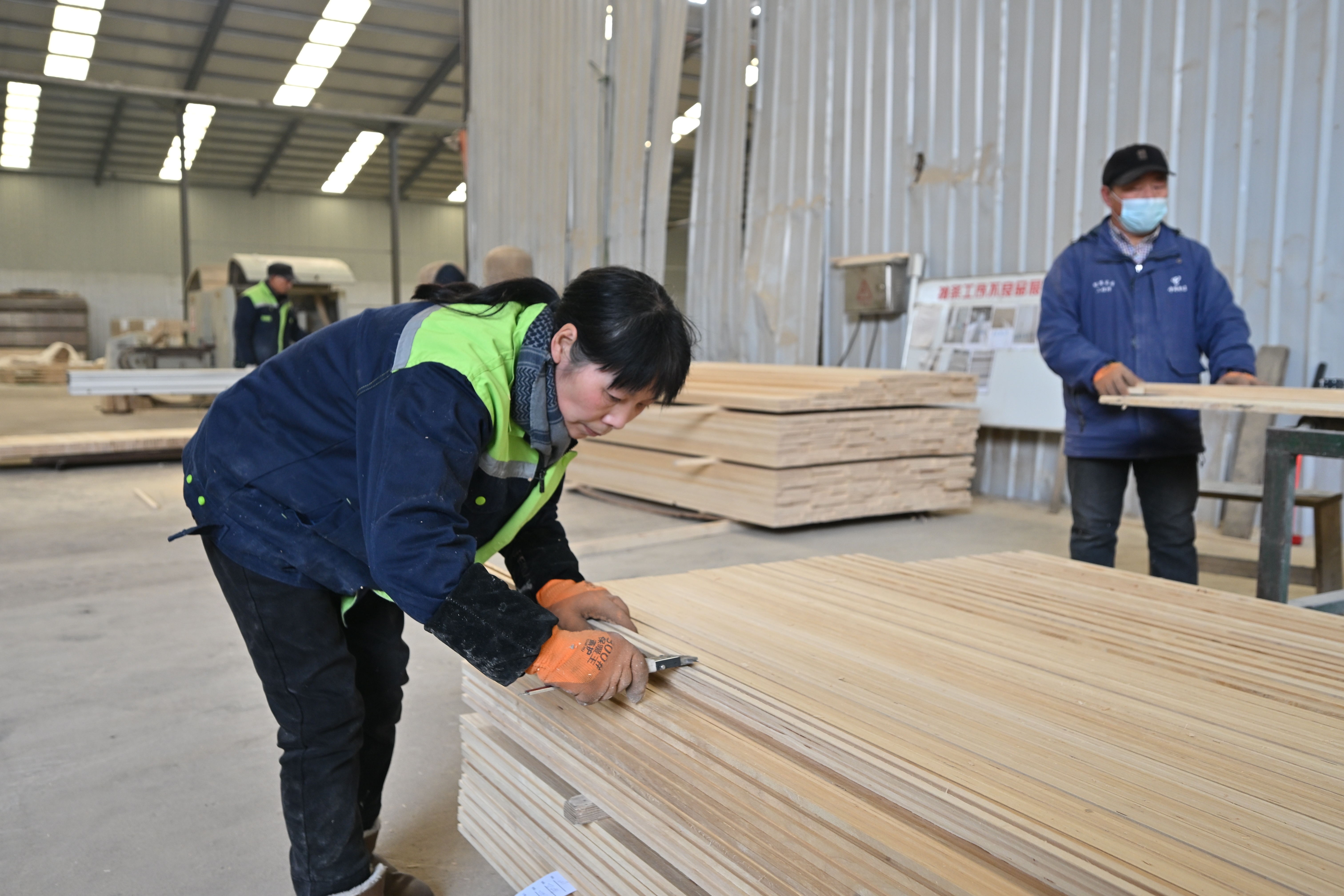
Panel Families a Line Can Be Built Around
WADA GROUP's own portfolio illustrates how wide the family list becomes once a programme is scoped around multiple products rather than a single board. The categories below can be grouped by the process chain that produces them.
Veneer-based: commercial plywood, structure plywood, film faced plywood, marine plywood, veneered board (veneer plywood), LVL, and glued laminated timber. The FSC chain-of-custody scope declared by WADA GROUP also covers solid wood boards, peeled veneer, sliced veneer, sawn veneer, finger-jointed wood, laminate flooring, engineered flooring and furniture parts — so the same veneer front end can serve several downstream finishes.
Fibre- and strand-based: MDF and OSB. MDF is produced by continuous flat pressing, with equipment referenced in the product specification as Difenbach & Sinbelkamp (Germany).
Surfaced and decorative: melamine board (melamine paper, PET film, HPL or UV on plywood, MDF, particle board or blockboard cores), veneered board with white oak, red oak, black walnut, Parota, Wenge, Ash, Birch, Pine or Sapeli faces, film faced plywood with dark brown or black film, and wall panel.
That gives a working list of more than ten families a single programme can cover: MDF, commercial plywood, structure plywood, film faced plywood, marine plywood, LVL, veneered board, melamine board, wall panel, OSB, laminate flooring, engineered flooring and glulam.
The Stages of a Complete Panel Line
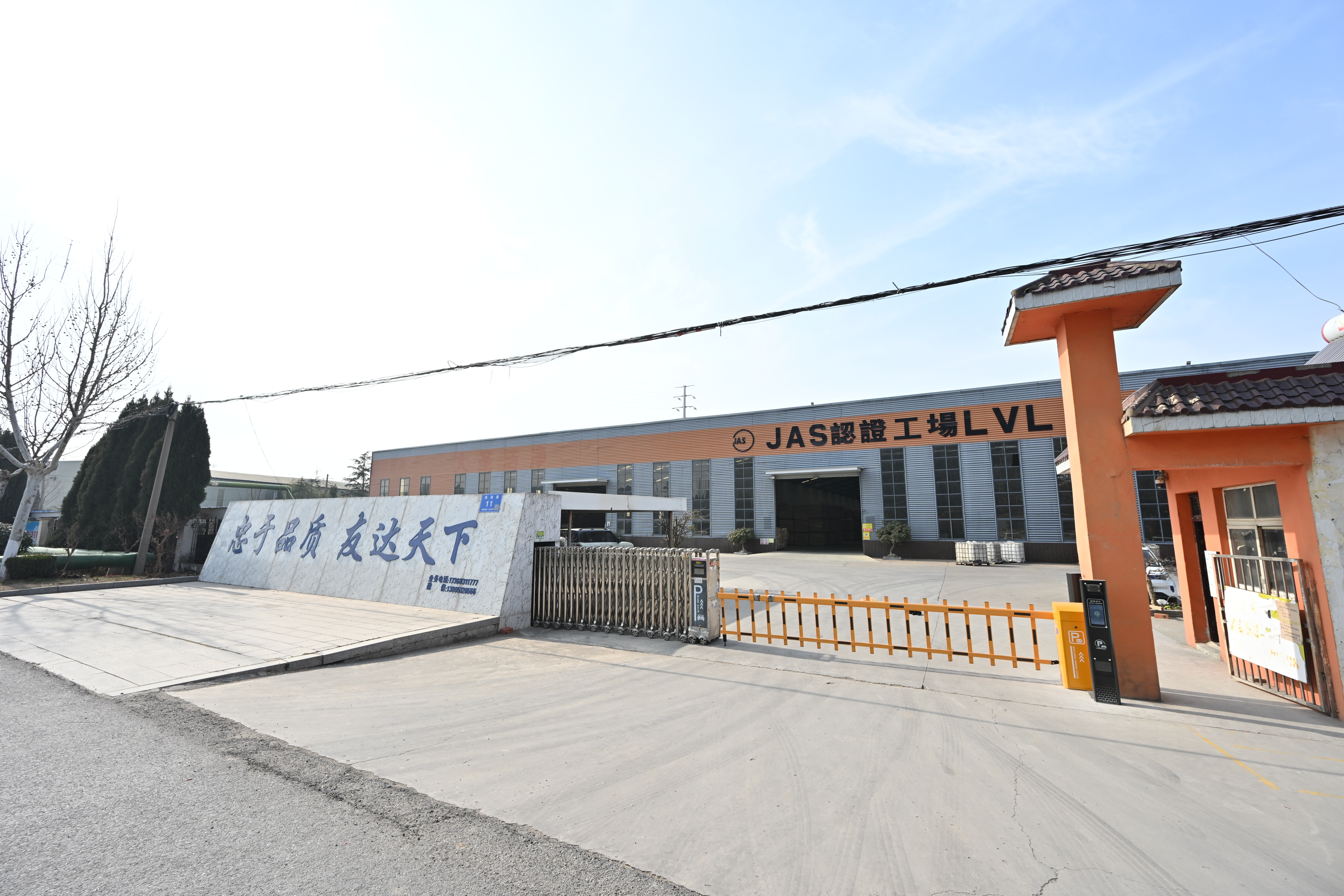
A complete panel line is normally organised into four functional blocks. The specific machine at each position depends on the board family and volume, but the sequence is stable — defects introduced at a later stage are always more expensive to remove than defects prevented at an earlier one.
Block A — Veneer-based lines (plywood, LVL, film faced, marine):
- Log debarking and bucking station
- Rotary peeling lathe
- Veneer clipper
- Veneer dryer
- Veneer scarf jointer and composer
- Glue spreader
- Lay-up station
- Pre-press (cold press)
- Hot press
- Edge trimming saw
- Wide-belt calibration sander
Block B — Fibre-based lines (MDF):
- Chipper
- Refiner / defibrator
- Resin blending and glue dosing unit
- Drying drum / flash dryer
- Forming station
- Continuous flat press
- Cooling wheel and star cooler
- Trimming and sizing saw
Block C — Surfacing and finishing lines (veneered, melamine, film faced, wall panel):
- Substrate sanding line
- Glue application and laminating line
- Hot press or vacuum membrane press
- Edge trimming and profiling station
- Coating and UV finishing line
Block D — Inspection and packing:
- Grading and 100% inspection station
- Automatic stacking and palletising line
- Export packing line (standard pallet packing or loose packing)
Across those four blocks, a complete configuration references more than fifteen distinct machinery types — from the debarking and peeling front end through refiners, formers and presses to laminating, profiling, coating, inspection and export packing. The number that matters for a specific project is not the total, but the subset the target board family actually requires.
Where Automation and Process Optimisation Change the Outcome
Automation in panel manufacturing is best understood as a shift in where labour sits, not simply as a reduction in headcount. Manual lay-up, manual stacking and manual inspection place the operator directly inside the process, where cycle variation is introduced by hand. Automated lay-up, automated press sequencing, automated stacking and automatic sizing move the operator to a supervision and intervention role beside the process.
Three consequences follow:
- Cycle consistency. An automated press sequence repeats the same pressure, temperature and dwell profile on every cycle, which is what makes an emission class or a bond class hold across a shipment rather than across a sample.
- Handling reduction. Each automated transfer between drying, lay-up, pressing and packing removes a manual handling step from the shift. The size of the gain depends on the starting configuration, the shift pattern and the board family — which is why the automation level should be decided against the actual labour model rather than against a generic benchmark.
- Yield. Automated trimming and optimised cutting patterns reduce edge waste, and automated grading separates boards by measured dimensions rather than by operator judgement.
Process optimisation, rather than equipment alone, is where most of the remaining value sits: matching veneer moisture to the glue system, matching press dwell to the thickness band, and matching the sizing sequence to the dimensional tolerance the customer actually specified.
QC Architecture: Where Inspection Sits in the Line
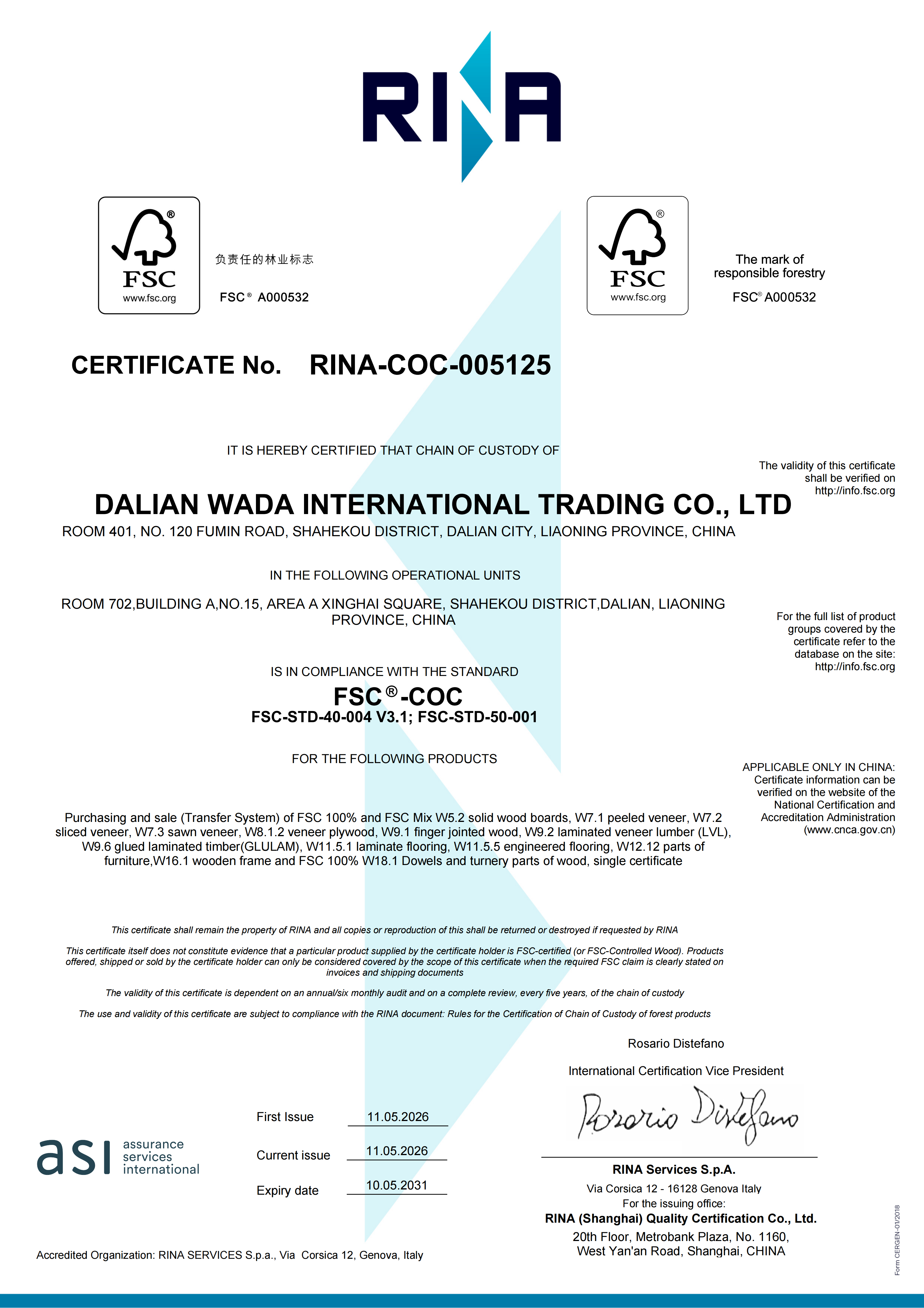
Quality control at WADA GROUP includes 100% inspection, supported by a dedicated inspection team, a technical team and workers with more than ten years of experience in the timber industry. The architectural point for a line builder is that a 100% inspection regime only works if the inspection points are distributed along the line. A single end-of-line check can only reject; it cannot correct.
On a configured panel line, inspection is normally distributed as follows:
- Incoming material: log and veneer grading, moisture checking before drying.
- In-process: glue spread weight, lay-up symmetry, press pressure and temperature records, thickness after calibration.
- Post-pressing: bond integrity, dimensional tolerance, surface defect screening.
- Pre-shipment: 100% inspection of the finished batch against the agreed acceptance criteria, which for WADA GROUP orders is a pre-shipment test.
Sourcing, Capacity and After-Sales for Execution
Configuration decisions only hold if the line can be fed and supported afterwards. WADA GROUP's declared production parameters for panel supply are monthly capacity of over 10,000 CBM for panels, a minimum order quantity of 1x40' container, and a standard production lead time of 25 to 45 days. Customisation covers size, thickness and layout, and OEM and ODM production services are offered. After-sales service is provided as remote support.
For project execution this matters in two ways. First, a mixed panel programme — for example plywood plus MDF plus LVL plus a surfaced decorative board — can be planned against one capacity base rather than split across unrelated suppliers, which reduces the risk of boards arriving with mismatched thickness conventions or glue classes. Second, remote support means commissioning questions and post-delivery issues are handled without waiting for an on-site visit window.
Step-by-Step: Configuring a Panel Line in Eight Steps
- Write the finished-board specification. Panel family, size, thickness band, glue class, surface, grade and destination market. This document governs everything that follows.
- Map the family to a process chain. Veneer-based boards require the veneer front end; fibre-based boards require the fibre front end. Do not assume one front end can serve both.
- Fix the thickness band and press cycle. Thickness range determines press daylight, cycle time and the calibration sequence. MDF thickness ranges from 1.2–50 mm with moisture content of 5%–13%; plywood from 2–35 mm depending on the variant, with moisture content of 8%–12%. Designing the press around a wider band than the product mix requires adds cost without adding capability.
- Decide the glue and compliance class before the glue system is ordered. E0, CARB P2 or E1 class for MDF; MR, melamine WBP or phenolic WBP for plywood; E0 or E1 for LVL bed slats. The resin handling equipment and the press profile follow from that choice.
- Set the automation level against the labour model. Decide which transfers are automated and which remain manual, based on shift pattern and target output — not on a generic automation target.
- Define the QC architecture. Place inspection at incoming material, in-process, post-pressing and pre-shipment, so that 100% inspection reinforces a controlled process instead of compensating for an uncontrolled one.
- Confirm capacity, MOQ and lead time against the project schedule. For WADA GROUP panel supply: monthly panel capacity above 10,000 CBM, MOQ of 1x40' container, standard production lead time of 25–45 days.
- Plan sourcing and after-sales before commissioning. Confirm who supplies the veneer or fibre feed, who handles remote support, and what the acceptance criteria are — for WADA GROUP orders, delivery terms are FOB or CIF, acceptance is by pre-shipment test, and payment terms are T/T 30/70 or 50/50.
Use Cases: How These Configurations Have Been Applied
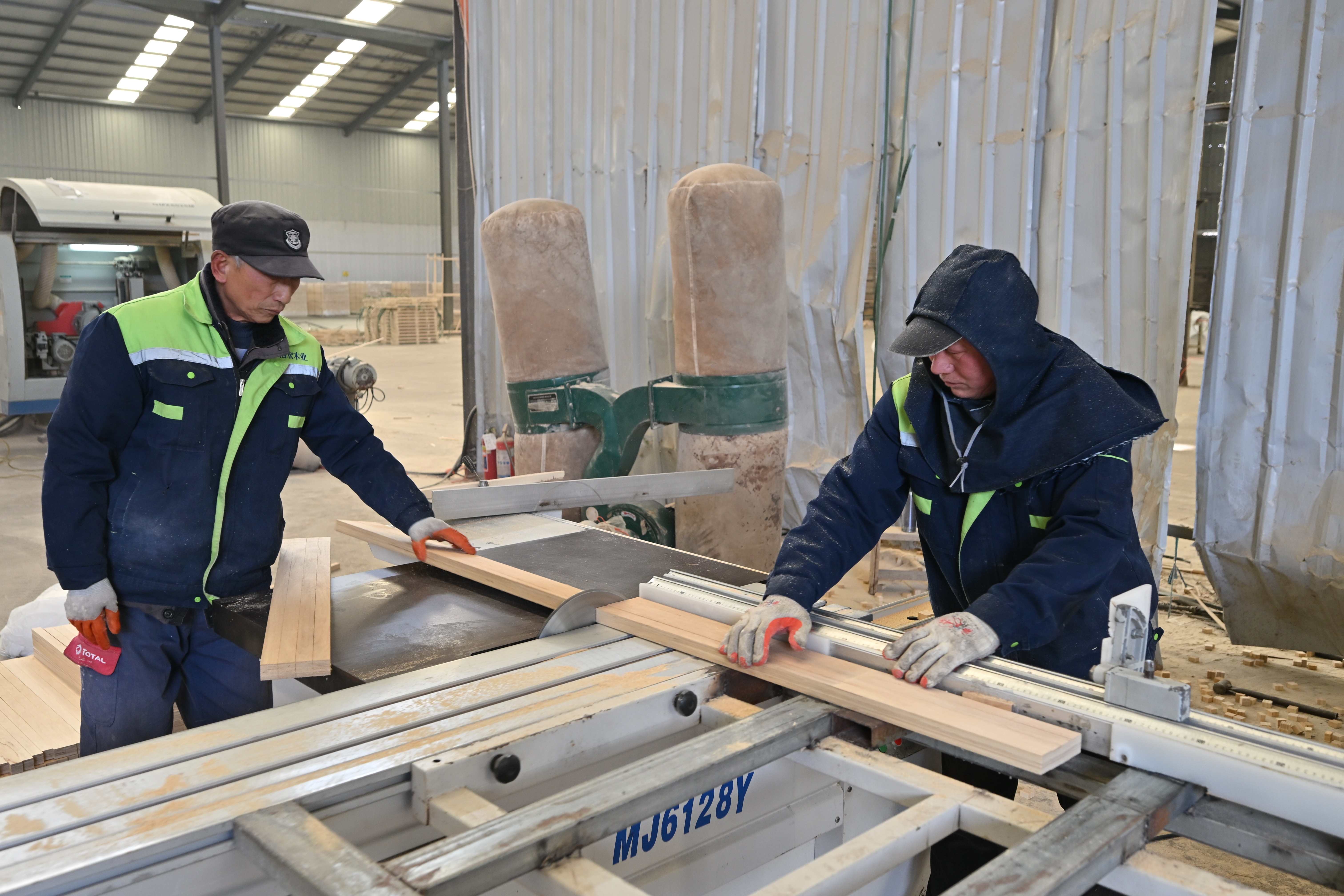
Vietnam — plywood production line, one complete line. A plywood manufacturer took delivery of a complete line used for manufacturing plywood, veneer and engineered wood panels in an industrial production facility, with output directed to furniture, construction, packaging and interior applications. The reported outcome was stable production, and the engagement highlight was a one-stop solution covering more than a single machine.
Japan — building structure, 200 containers. A construction builder received 200 containers of film faced plywood and structure plywood for building structure applications. The specification highlighted high durability and waterproof properties, and the project achieved high strength results.
Australia — building structure, 50 containers. A building contractor took 50 containers of structure plywood and film faced plywood for building structure work, again with high durability and waterproof properties highlighted and high strength results reported.
Portugal — outdoor cladding, 20 containers. A wall cladding project used 20 containers of marine plywood for outdoor cladding, with weather resistance as the reported result and UV resistance as the key highlight.
Mexico — furniture and cabinet decoration, 100 containers. A furniture manufacturer took 100 containers across veneered board, melamine board, LVL and MDF for furniture and cabinet applications. The reported result was decoration, with fashion as the stated highlight of the programme.
Read as a group, these projects show the same principle at different scales: the successful ones were scoped by board family and end use first, then by machine list.
Comparison Table: Panel Family, Line Stages and Certification to Lock In
| Panel family | Typical end use | Core line stages | Certification / standard to lock in |
|---|---|---|---|
| MDF | Furniture board, routed board, lightweight high-strength board, water-proof board | Fibre preparation, forming, continuous flat pressing, sizing, calibration sanding | FSC, CARB/EPA, JIS (JIS A 5905), EUDR |
| Commercial plywood | Furniture, interior decoration and fit-out, construction, packaging and logistics, door manufacturing | Peeling, drying, glue spreading, lay-up, hot pressing, trimming, sanding | JAS 0233:2024 |
| Structure plywood | Structural engineering, roofing and flooring systems, formwork, timber frame, modular buildings | Veneer line with structural grade control and WBP assembly | JAS 0233:2024; CARB Phase 2 / TSCA Title VI for US-bound hardwood plywood |
| Film faced plywood | Concrete formwork, precast concrete, infrastructure construction | Plywood core line plus film surfacing | AS 6669-2016 (17 mm formwork plywood) |
| Marine plywood | Shipbuilding and marine engineering, boat and yacht manufacturing, coastal construction, high-moisture interiors | Phenolic WBP assembled veneer line with Okoume or Birch faces | Glue class driven; confirm with the buyer's class requirements |
| LVL | Furniture bed components, bedroom furniture, hospitality furniture | Veneer grading, scarf jointing, lay-up, pressing, ripping, sanding | JAS 0701:2023; AS/NZS 4357.0:2005 |
| Veneered board | Furniture, cabinet and wardrobe, modular and office furniture, retail fixtures | Substrate preparation, veneer pressing on plywood or MDF or chipboard or blockboard core, trimming, sanding | FSC chain of custody |
| Melamine board | Furniture, cabinet and wardrobe, modular furniture, retail fixtures, shopfitting | Substrate sanding, melamine paper or PET film or HPL lamination, edge trimming | CARB P2 / E1 / E2 glue class by market |
| Wall panel | Interior and exterior cladding | Panel line plus surface treatment | Confirm per project market |
| OSB | Structural and general panel applications | Strand-based line | Confirm per project market |
Two rules govern this table. First, the certification column is not optional decoration: it feeds back into the glue system and press cycle, so it must be fixed before equipment selection. Second, line stages are additive — a project that starts with plywood and later adds a melamine surface needs Block C added downstream, not a new Block A.
Frequently Asked Questions
1. Which certifications and emission limits should be fixed before a panel line programme is ordered?
Compliance decides market access and must be settled before press and glue selection, because it determines the resin system the line has to handle. For the United States, CARB Phase 2 limits formaldehyde emissions to 0.05 ppm for hardwood plywood with veneer core under California's ATCM 93120, with TSCA Title VI applying federally. For Japan, relevant frameworks include JIS A 5905 for fibreboards (MDF), JAS 0233:2024 for plywood and JAS 0701:2023 for laminated veneer lumber. For Australia and New Zealand, AS/NZS 4357.0:2005 covers structural LVL and AS 6669-2016 covers formwork plywood. WADA GROUP states FSC, EUDR, CARB P2, EPA, JAS and JIS certification across its panel range.
2. What production capability does a supplier need in order to support a multi-panel programme?
A multi-panel programme requires more than a single board family. WADA GROUP provides OEM and ODM production services, customises size, thickness and layout, and states monthly panel capacity of over 10,000 CBM. Its portfolio covers LVL, plywood, veneered board, MDF, OSB, wall panels and woodworking machinery, with declared customisation of high-specification and high-precision LVL, bed slats, commercial plywood and veneered plywood. For a line builder this means plywood, MDF, LVL and a surfaced decorative board can be planned against one capacity base instead of several unrelated suppliers with different thickness conventions.
3. What are the commercial terms — MOQ, delivery, acceptance and payment?
For WADA GROUP panel supply, the minimum order quantity is one 40' container. Delivery terms are FOB or CIF. Acceptance criteria are based on a pre-shipment test. Payment terms are T/T 30/70 or 50/50. A complete production line project is scoped and quoted separately from repeat panel supply, because the equipment list and commissioning scope differ from a container order.
4. How is board quality validated before shipment — and before a larger commitment?
Quality control at WADA GROUP includes 100% inspection, supported by a dedicated inspection team, a technical team and workers with more than ten years of experience in the timber industry. Acceptance is confirmed through a pre-shipment test against agreed criteria. Buyers who want to validate before scaling up typically start with a first container order and use the pre-shipment test result to confirm dimensional tolerance, bond integrity and surface grade before committing to a repeat programme.
5. What lead time should be planned, and what support is available after delivery?
Standard production lead time is 25 to 45 days, with a minimum order quantity of 1x40' container. After-sales service is provided as remote support, and WADA GROUP operates through multiple production bases in China with trading companies in China and overseas branch offices in Japan and Singapore. For procurement planning, the lead time should be sequenced against the shipping window rather than treated as a single figure, since the 25–45 day range covers different board families and surface treatments. To review the full product scope and specification details before scoping a project, download the WADA Group brochure here or send the finished-board specification directly to the team at wada@wadatrade.com.
Conclusion: Configure the Line Around the Board, Not the Brochure
The pattern across every configuration decision in this guide is the same. MDF follows a fibre chain. Plywood, LVL, film faced plywood and marine plywood follow a veneer chain. Veneered board and melamine board are surfaced downstream of whichever core they use. Certification class is fixed before the glue system is ordered, and inspection points are designed into the line rather than added after it. None of those choices can be corrected cheaply once the equipment is on the floor.
For a factory builder or an upgrader, the working sequence is therefore: write the finished-board specification, map it to a process chain, fix thickness band and glue class, set the automation level against the real labour model, distribute inspection across the line, then confirm capacity, MOQ and lead time. WADA GROUP's declared parameters for panel supply are over 10,000 CBM per month, a 1x40' container MOQ, a 25–45 day standard lead time, OEM and ODM production, 100% inspection and remote after-sales support.
Planning a panel line or adding a board family?
Send your finished-board specification — panel family, size, thickness band, glue class and destination market — and the team will map it to a line configuration, a sample plan and a lead-time schedule.
Email: wada@wadatrade.com | Tel / WhatsApp: +86 131-3003-0584 | Website: www.wadaplywood.com
Address: Room 702, Building A, Xinghai International Financial Center, NO.13-15, Area A Xinghai Square, Shahekou District, Dalian, China.