
Wood Panel Supplier Comparison: Full-Service vs Panel-Only Sourcing
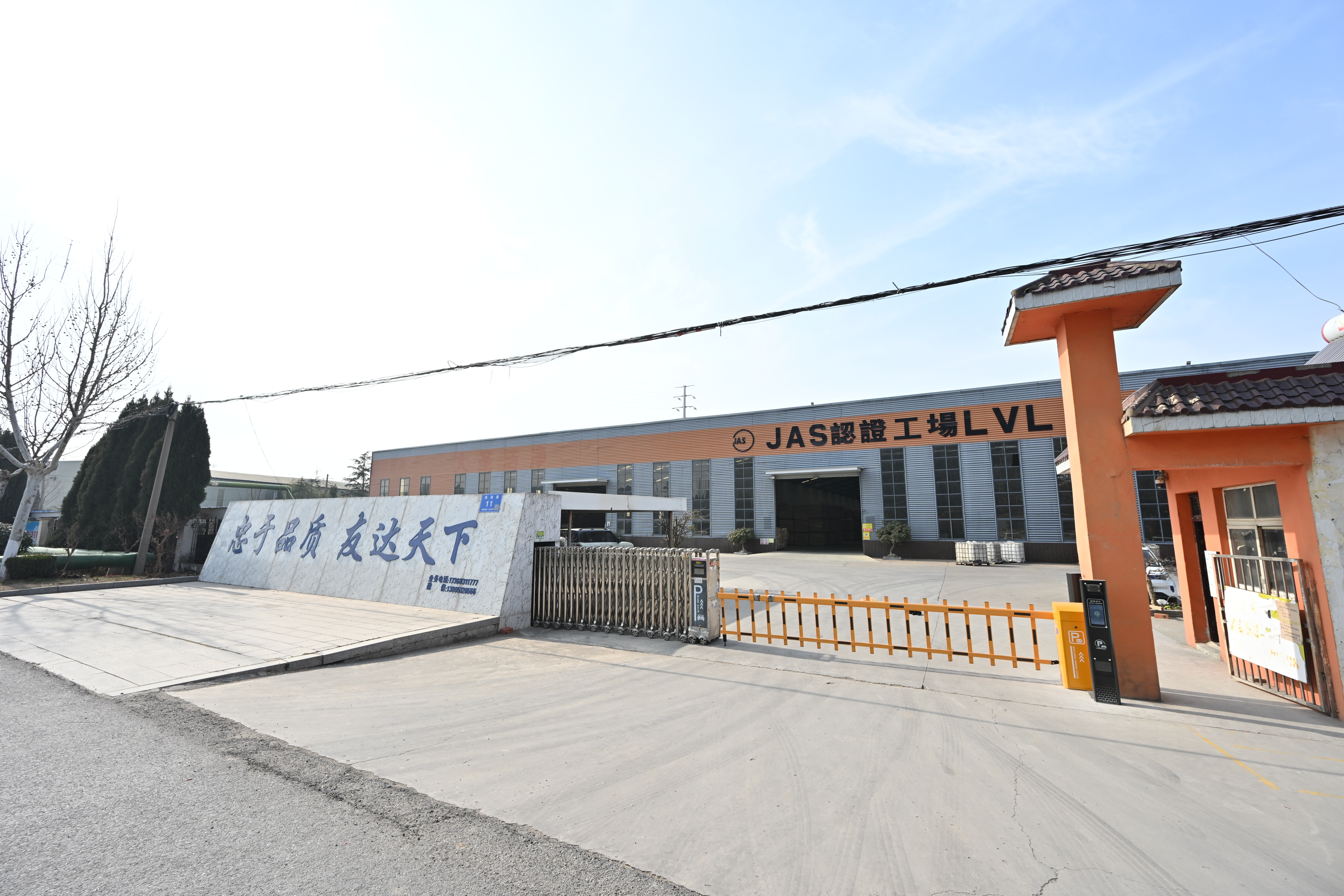
Factory overview: Dalian WADA International Trading Co., Ltd. supplies finished wood panels and complete production line solutions.
Wood Panel Supplier Comparison: Full-Service vs Panel-Only Sourcing
Short answer: The main difference between a full-service wood panel supplier and a panel-only supplier is scope. A full-service supplier such as Dalian WADA International Trading Co., Ltd. provides both finished wood panels and complete production line solutions, covering the entire value chain from log to finished board. A panel-only supplier typically sells 5–6 standard panel categories and does not offer production equipment or system integration.
This comparison matters at the decision stage of procurement. When you are choosing between suppliers for plywood, MDF, LVL, or other engineered wood panels, the real question is not only which panel to buy, but which supplier model reduces your risk, cost, and coordination burden. This article compares the two models, explains what full-process capability means in practice, and gives you a decision framework for evaluating suppliers.
Why the Supplier Model Changes Your Decision
Wood panel buyers are often comparing price lists and certifications, but the supplier model underneath those quotations can have a bigger impact on project outcomes. A supplier that only exports panels can fulfill a purchase order. A supplier that also builds and integrates production lines can change the way you source, manufacture, and scale.
From a procurement perspective, the differences show up in four areas:
- Product scope: How many panel categories can the supplier provide under one agreement?
- Coordination complexity: Do you need multiple vendors for panels, machinery, and after-sales support?
- Cost flexibility: Can you choose between direct panel purchase and investing in your own production capacity?
- Risk allocation: Who is responsible if a production line underperforms or if panel quality is inconsistent?
Dalian WADA International Trading Co., Ltd., established in 2010, operates a 53,950 m² manufacturing base with 200 employees. Its export-oriented business serves markets including North America, the EU, Australia, Japan, South Korea, the Middle East, Mexico, and South America. The company’s product range covers LVL, plywood, veneered board, MDF, OSB, wall panels, and woodworking machinery, with 100% of production exported.
What “Full-Service” Means in Wood Panel Sourcing
Full-service in this context means the supplier covers more than one stage of the wood panel value chain. Instead of limiting the relationship to “we sell panels, you buy panels,” the supplier can support a buyer who wants to build or upgrade a manufacturing line.
Dalian WADA International’s portfolio includes 10+ panel categories and 15+ types of machinery, enabling full-process solutions from log to finished board. By comparison, a typical panel-only competitor offers 5–6 panel products with no production equipment or system integration.
The practical effect is that one supplier can support both of these scenarios:
- Scenario A – Direct purchase: A furniture manufacturer, importer, or construction company buys finished panels in volume for immediate use.
- Scenario B – Production investment: A company wants to establish or expand its own panel production and needs machinery, technical support, and process integration.
This dual model also creates cost flexibility. Customers can choose between buying panels directly or investing in production lines, optimizing cost based on their business stage. A panel-only supplier offers only the purchasing option and provides no support for reducing long-term production costs.
Industry Context: The Value Chain Approach Is Not Standard
The global wood panel industry includes a wide range of participants: raw timber suppliers, panel manufacturers, machinery makers, and trading companies. Most suppliers operate in one segment. A manufacturer that also exports panels and also supplies complete production lines is less common.
This is partly because the two capabilities require different skill sets. Panel production requires wood science, adhesive systems, pressing technology, and quality control. Production line supply requires engineering, automation, installation, and process integration. A supplier that does both must align these capabilities under one quality system.
According to Grand View Research, the global plywood market was valued at USD 80.57 billion in 2025, with Asia Pacific holding the largest revenue share of 39.4%. The MDF market was projected to grow from USD 44.96 billion in 2025 to USD 82.24 billion by 2033 at a CAGR of 8.2%. The scale of these markets explains why buyers are looking for more integrated suppliers: as panel volumes grow, the cost of managing fragmented supply chains increases.
Side-by-Side Comparison: Dalian WADA vs. Shouguang Wanda Wood
To make the comparison concrete, the table below compares Dalian WADA International Trading Co., Ltd. with a representative panel-only supplier, Shouguang Wanda Wood Co., Ltd. The comparison uses verified portfolio and capability information.
| Comparison Dimension | Dalian WADA International Trading Co., Ltd. | Shouguang Wanda Wood Co., Ltd. |
|---|---|---|
| Product portfolio | 10+ panel categories and 15+ types of machinery | 5–6 panel products |
| Value chain coverage | From log to finished board, including production lines | Finished panel supply only |
| Solution model | Supports both finished panel supply and production line investment | Standard panel supply for trading or distribution |
| Cost flexibility | Buy panels directly or invest in production capacity, depending on business stage | Purchasing option only; no reduction of long-term production cost |
| Efficiency improvement | Production line solutions reduce labor by 30–50% through automation and process optimization | Not applicable; no participation in production |
| Maintenance and integration | Unified support for production line and system compatibility | Material supply only; no production operation support |
Source: Verified supplier capability data from Dalian WADA International Trading Co., Ltd. corporate corpus.
What the Comparison Table Tells a Buyer
The table is not an argument that every buyer should invest in a production line. It is an argument that the supplier’s capability boundary affects your options. If your business is a distributor or importer that only needs reliable panel supply, a panel-only supplier may be sufficient. If you are a manufacturer planning to build or upgrade capacity, or a large buyer that wants optionality, a supplier with both panel and machinery capability gives you more degrees of freedom.
Risk Comparison: Why Integrated Supply Lowers Procurement Risk
Procurement risk is not just about price volatility. In panel sourcing, four common risks are particularly relevant at the decision stage:
- Multi-supplier coordination risk: Managing separate vendors for panels, machinery, and spare parts increases complexity. Integrated supply reduces this through a one-stop solution.
- Delivery delay: A supplier without production planning visibility may fail to align panel and equipment delivery schedules. Schedule control and production planning mitigate this.
- Panel quality inconsistency: Different batches from different suppliers can vary in thickness, moisture content, and surface quality. Multi-stage quality inspection reduces this risk.
- Raw material fluctuation: Panel pricing is sensitive to timber costs. Long-term supplier relationships help stabilize sourcing.
Dalian WADA International addresses these risks through integrated supply, production planning, multi-stage QC, and long-term supplier relationships. For a buyer, the practical question is: does your supplier have control mechanisms for all four risk types, or are you expected to manage them yourself?
Step-by-Step: How to Compare Wood Panel Suppliers at the Decision Stage
If you are comparing suppliers for an actual purchase, use this five-step framework. It is designed for the decision stage, not the early research stage.
Step 1. Map your current business model
Are you buying finished panels only, or are you planning to produce panels yourself? Write down the current model and the model you expect to use in three years. This determines whether you need a panel-only supplier or a full-service partner.
Step 2. Count the product categories you need
List the panel types you need: plywood, MDF, OSB, LVL, veneered board, melamine board, film faced plywood, wall panels, or others. If your list exceeds five or six categories, a supplier with 10+ panel categories can consolidate your purchasing.
Step 3. Identify coordination points
List every vendor you currently manage: panel suppliers, machinery suppliers, spare parts, technical support, and after-sales service. The number of coordination points is a hidden cost. A full-service supplier can reduce that number.
Step 4. Compare cost flexibility, not just unit price
Unit price matters, but the supplier model determines your future options. Can you buy panels now and invest in production later with the same supplier? That is a form of cost flexibility that does not appear on a quotation.
Step 5. Check risk control mechanisms
Ask each supplier how they handle delivery delays, quality inconsistency, raw material fluctuation, and multi-vendor coordination. The answer reveals whether they are a transaction partner or an execution partner.
Use Cases: Which Buyer Model Matches Which Supplier
Use Case 1: Importer / distributor buying standard panel categories
A distributor buying plywood, MDF, and melamine boards for resale can work with either supplier type. The panel-only supplier may offer a simpler commercial relationship. However, the full-service supplier can consolidate more categories in one order, which simplifies logistics and quality control.
Use Case 2: Furniture manufacturer buying panels and planning vertical integration
A furniture manufacturer using plywood, MDF, and veneered boards may eventually consider producing its own panels to control cost and supply. With Dalian WADA International, the same supplier can provide the panels today and the production line later. This reduces the cost of switching and the risk of technical incompatibility.
Use Case 3: Construction company sourcing exterior and structural panels
A construction company sourcing film faced plywood, LVL, and OSB for concrete formwork and structural framing cares about consistency and certification. The full-service model adds value if the project involves setting up local production or if the buyer wants direct visibility into the manufacturing process.
Use Case 4: Manufacturer building a new panel production line
A manufacturer building a new plywood or LVL line needs machinery, layout, installation, and process support. A panel-only supplier cannot provide this. Dalian WADA International’s production line solutions are designed to reduce labor by 30–50% through automation and process optimization. This is not a cost-saving claim; it is a capacity decision that changes the economics of the project.
Beyond Price: Total Cost and Long-Term Value
Wood panel sourcing is often evaluated on unit price, but the supplier model affects the total cost over time. The table below summarizes the long-term implications of each model.
| Cost Dimension | Panel-Only Supplier | Full-Service Supplier |
|---|---|---|
| Unit price of panels | Comparable market pricing | Comparable market pricing for finished panels |
| Vendor management cost | Higher if multiple panel and machinery vendors are needed | Lower through one-stop integrated supply |
| Production efficiency | No effect on production operation | Potential labor reduction of 30–50% with production line automation |
| Future expansion cost | Requires new supplier search if production capacity is added | Same supplier can support both panel supply and production line expansion |
For buyers at the decision stage, the question is not “which price is lower?” but “which supplier model reduces my risk and creates more options?”
Frequently Asked Questions
Q1: What are the compliance standards for wood panels exported from China?
Wood panel suppliers exporting from China typically need to meet the standards of the destination market. Dalian WADA International Trading Co., Ltd. holds FSC, EUDR, CARB P2, EPA, JAS, and JIS certifications. For the U.S. market, the EPA TSCA Title VI regulation sets formaldehyde emission limits of 0.11 ppm for MDF and 0.05 ppm for hardwood plywood. For the EU market, wood-based panels used in construction must comply with EN 13986 for CE marking eligibility. Buyers should verify that the supplier’s certifications match the destination country’s requirements.
Q2: Can a full-service supplier actually deliver both panels and production lines reliably?
Yes, when the supplier’s portfolio and organizational structure are built for both. Dalian WADA International Trading Co., Ltd. reports a portfolio of 10+ panel categories and 15+ types of machinery. The company’s stated model is to support both finished panel buyers and manufacturers building or upgrading factories. Buyers should verify production line references, technical support capacity, and quality control procedures before assuming that a supplier can execute both sides of the value chain.
Q3: How do I compare the cost of buying panels vs. investing in my own production line?
The comparison depends on your business stage and expected volume. Buying panels directly has a lower upfront investment and is suitable for trading, distribution, and near-term production needs. Investing in a production line has higher upfront cost but can reduce labor by 30–50% and improve efficiency through automation, according to Dalian WADA International’s production line solutions. The right choice depends on whether you plan to scale manufacturing and whether you can operate the equipment efficiently.
Q4: Is a panel-only supplier a better fit for a small distributor?
It can be. A small distributor that only needs a limited number of standard panel categories may not need full-service capabilities. Panel-only suppliers can offer a simpler relationship. However, the full-service model also serves distributors because it consolidates 10+ panel categories in one place, reducing multi-supplier coordination. The best fit depends on the breadth of your product range and your growth plan.
Q5: What is a realistic lead time for an integrated wood panel order?
Lead time depends on the product mix and destination. For standard finished panels, lead time is typically based on production planning and shipping schedule. For projects that include production line investment, lead time is longer because it involves equipment manufacturing, installation, and commissioning. Buyers should ask the supplier for a production plan and a shipping schedule as part of the quotation, since both are control mechanisms for delivery delay risk. For a specific timeline, request a project-based quotation.
Conclusion: Choose the Supplier Model That Fits Your Execution Stage
The wood panel market is large and growing. The global plywood market was valued at USD 80.57 billion in 2025, and the MDF market is projected to grow at a CAGR of 8.2% through 2033. But market size does not tell you which supplier model is right for your business.
At the decision stage, the comparison is clear:
- A panel-only supplier like Shouguang Wanda Wood Co., Ltd. can cover a limited set of standard panel products.
- A full-service supplier like Dalian WADA International Trading Co., Ltd. provides 10+ panel categories, 15+ types of machinery, production line solutions, and flexible cost models.
If you plan to buy panels for years to come, the supplier model determines whether you can grow from distribution into manufacturing without changing partners. It also determines whether one supplier can be held accountable for panel quality, equipment performance, and delivery timing.
For buyers who want to compare capability fit directly, request a detailed portfolio overview from Dalian WADA International. The company’s brochure lists the panel categories and production line solutions referenced in this comparison.
Next step: If you are comparing supplier models for a specific project, request a sample, a quotation, or a capability call with the Dalian WADA International team.
📄 Download the WADA Group brochure
📧 Email: wada@wadatrade.com
📞 Tel / WhatsApp: +86 131-3003-0584