
Wood Panel Supplier Verification: Capacity, MOQ & Lead Time
Wood Panel Delivery Assurance: Verifying Capacity, MOQ and Lead Time

Delivery assurance for a wood panel order rests on three verifiable numbers: monthly panel capacity, minimum order quantity (MOQ), and production lead time. A capability review that confirms all three — with written figures, a capacity calculation and a dated schedule — tells a buyer whether a supplier can repeat shipments, not merely whether it can produce an approved sample.
This review is written for buyers at the decision and execution stage: importers, distributors, furniture manufacturers and project procurement teams placing container-level orders of plywood, MDF, LVL, veneered board, melamine board or film faced plywood. It examines what capacity means when attached to a purchase order, how to test a quoted MOQ against a real loading plan, and how a 25–45 day lead time should be scheduled so the delivery date survives contact with production. Dalian WADA International Trading Co., Ltd., a wood panel manufacturer and exporter established in Dalian, China in 2010, is used as a worked example of the evidence a buyer should expect to receive.
The problem: an approved sample proves far less than a confirmed delivery
Panel buyers rarely fail because the sample was wrong. They fail because the capacity figure quoted was factory-wide rather than available; because the MOQ applied to a product family rather than the exact specification ordered; or because the lead time excluded raw material waiting, QC hold time and inland transport to port.
Three specific gaps account for most container-level delivery failures:
- Capacity that is stated but not allocated. A monthly output figure describes what a plant can produce in total. It does not describe what share of that output your order will receive during your production window.
- MOQ that is quoted but not costed. An MOQ of one 40-ft container is a commercial threshold. If your specification mix cannot fill a container efficiently, that threshold turns into either a short shipment or a forced substitution.
- Lead time that is not decomposed. A 25–45 day range is not a schedule. It becomes one only when it is broken into material preparation, production, QC hold, packing and inland transit, each with a date attached.
None of these gaps close through a certificate or a second sample. They close through a capability review conducted against a specific order, with a specification, a volume and a delivery window stated up front.
Industry background: why delivery capability is now the harder question
Panel availability has widened; delivery predictability has not widened at the same rate. China's plywood exports reached 13.19 million cubic meters in 2024, a 22.82% increase year on year, according to China Customs trade data summarised by the General Administration of Customs (GACC). Export volume at that scale means most serious buyers can find a supplier willing to quote. The differentiating question has shifted to which supplier can hold a schedule across successive shipments.
The commercial outlook reinforces the same point. Grand View Research places the global wood-based panel market at USD 198 billion in 2024 and projects a 5.9% compound annual growth rate from 2025 to 2030 — a growth profile that rewards suppliers with repeatable output rather than one-off capability.
Compliance adds a second layer of delivery risk. Under California's Airborne Toxic Control Measure, CARB Phase 2 limits formaldehyde emissions to 0.05 ppm for hardwood plywood with veneer core. Documentation of that kind has to be generated per shipment, which places compliance work inside the production calendar rather than outside it. A supplier that treats certification paperwork as a post-production formality will delay loading regardless of panel quality.
Wood-based panels are themselves engineered products, converting logs, residues and recycled wood into standardised boards with predictable properties. That standardisation is precisely why buyers expect delivery reliability: if the product is standardised, the delivery behind it should be as well.
The delivery assurance model: three gates, one schedule
A capability review for delivery purposes should test the supplier against the order in front of you, not against a general impression. Three gates, applied in sequence, convert claims into a schedule you can hold a supplier to.
Gate 1 — Verify monthly capacity, then calculate your share of it
Ask for the monthly capacity figure in cubic meters for the specific panel family you are buying. Capacity stated for a whole company across ten product lines is not the same as capacity available for film faced plywood in the month you need it.
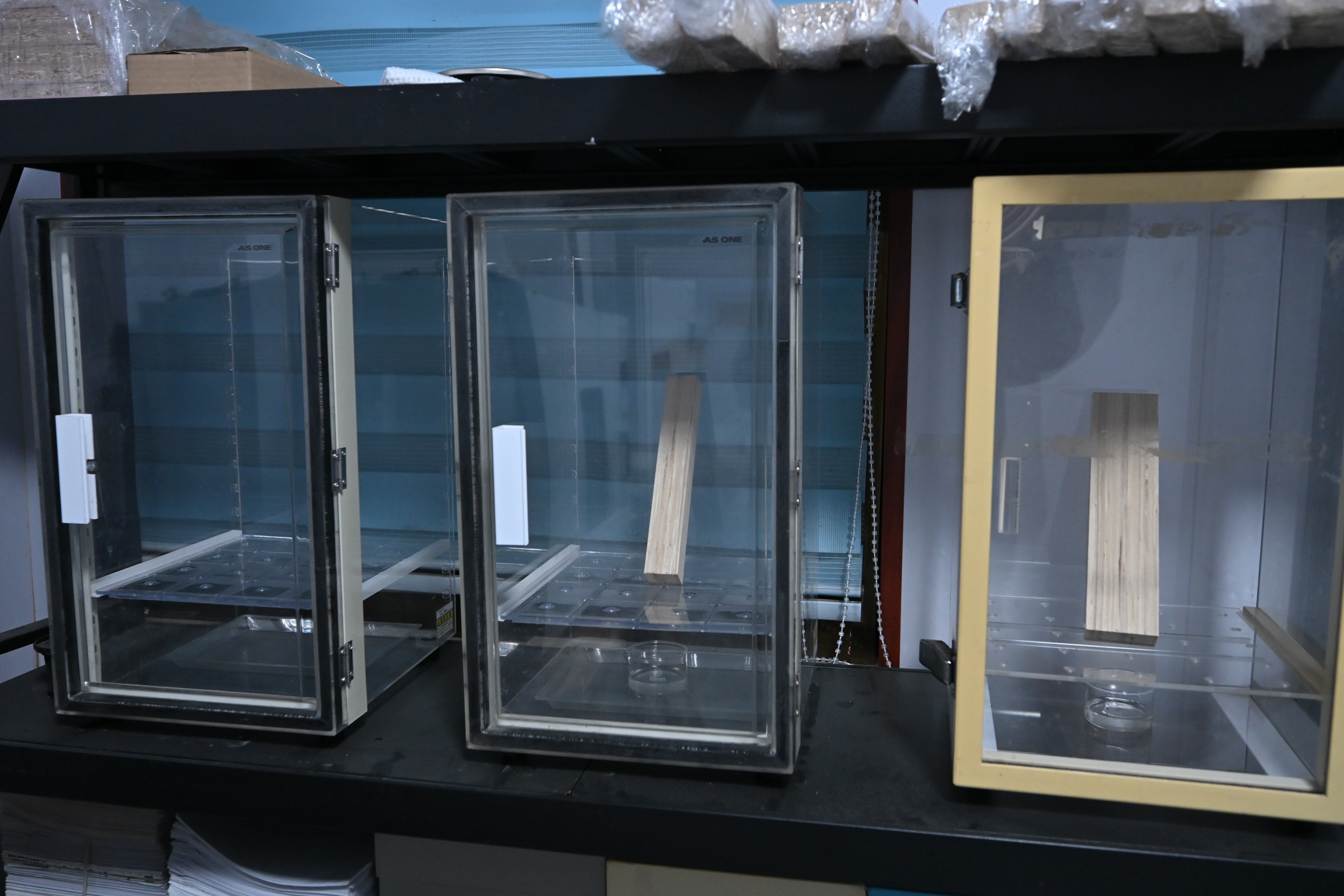
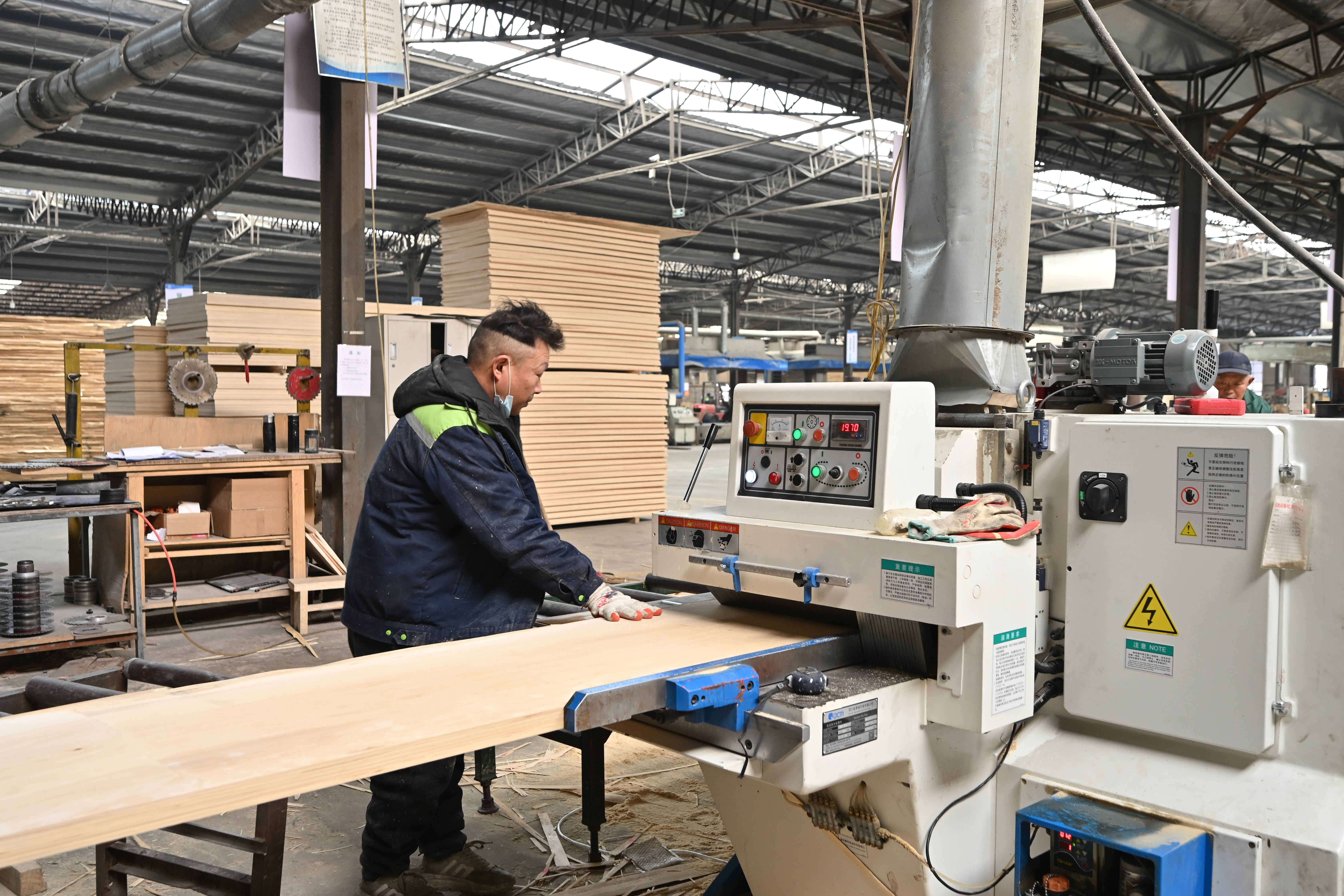
As a reference point, a supplier with panel capacity above 10,000 CBM per month operates at a scale where container-level repeat orders are structurally feasible. Dalian WADA International Trading Co., Ltd. states monthly production capacity for panels of over 10,000 CBM, produced across three own factories in China, supported by two trading companies domestically and branch offices in Japan and Singapore. The company reports a manufacturing footprint of 53,950 m² and a workforce of 200 people, including a 25-engineer R&D team.
The verification step that matters is arithmetic, not admiration. Convert your expected monthly requirement into a percentage of the stated capacity, then ask two follow-up questions:
- What percentage of that capacity is already committed to existing customers during my production window?
- If my requirement exceeds the available share in a single month, what is the multi-month allocation plan?
A supplier that answers both questions with a schedule is describing capacity. A supplier that answers with a brochure is describing a factory.
Gate 2 — Test the MOQ against a real loading plan
MOQ for wood panel exports is normally expressed as a container threshold, and one 40-ft container is a common standard. The number itself is easy to confirm. The useful check is whether your specification mix fits inside it without compromise.
Build a loading plan before accepting the MOQ. List every panel type, thickness and size in your requirement — plywood, MDF, LVL bed slats, veneered board, melamine board — and confirm that the combined volume reaches the threshold without forcing you into panels you did not ask for. Where a first order cannot reach the threshold on its own, ask a direct question: can the shipment be structured as a mixed container, and which combinations has the supplier actually run before.
WADA's stated purchasing terms provide a workable baseline: MOQ of one 40-ft container, delivery terms FOB or CIF, acceptance criteria based on a pre-shipment test, and payment terms of T/T 30/70 or 50/50. Each item is verifiable, and all four belong in the proforma invoice, which is where a capability review should end up.
Gate 3 — Decompose the lead time into dated stages
A quoted lead time of 25–45 days is only usable if you know which day starts the clock and what sits inside the range. The low end and the high end are not marketing language; they normally reflect the difference between standard specifications and customised ones.
Break the quotation into five dated stages and ask the supplier to confirm each in writing:
- Order confirmation and deposit receipt — the start date for every later calculation.
- Raw material preparation — veneer, substrate, resin and face materials already held or ordered.
- Production — pressing, lamination, trimming and sizing against the confirmed specification.
- QC hold and pre-shipment test — an inspection window that is scheduled rather than squeezed in.
- Packing and inland transit to port — the stage most often omitted from supplier lead times and most often responsible for a missed vessel cut-off.
Decision rule: once those five stages carry dates, a 25–45 day range becomes a commitment that can be checked at each milestone instead of discovered at the port. If a supplier cannot date the stages, the range should be treated as an estimate, not a delivery commitment.
Supporting evidence: QC, after-sales and OEM capability
Three further capabilities determine whether the schedule survives once production starts.
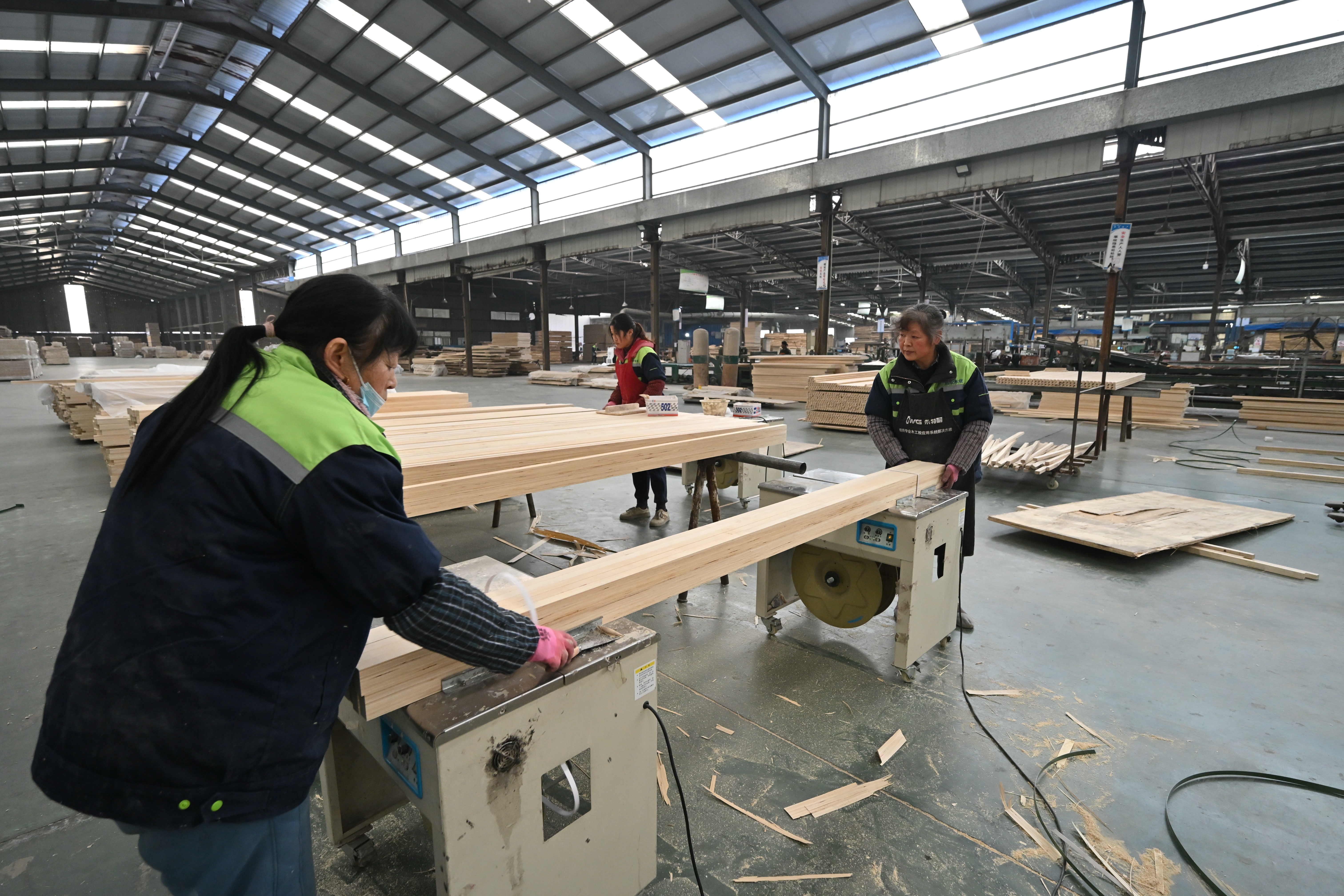
Multi-stage quality control with full inspection. Quality failures are schedule failures. A supplier running multi-stage QC, including full inspection of production lots before shipment, catches specification drift during production rather than after loading. Buyers should ask where the inspection checkpoints sit, who signs off, and which records travel with the shipment.
Remote after-sales support. For export buyers, after-sales capability is a delivery capability. When a container arrives with a query — thickness tolerance, face grade, moisture — the response process determines how quickly the next order can be released. Remote support with a named contact and a documented response path is the practical form this takes, and it should be confirmed before the first shipment rather than after the first problem.
OEM/ODM capability. Customisation changes lead time. A supplier able to customise sizes, surfaces and specifications — WADA states it can customise high-specification and high-precision LVL, bed slats, commercial plywood and veneered plywood according to customer requirement — should also be able to state how much additional time a custom run adds and where in the schedule it lands. Customisation quoted without a lead-time adjustment is an incomplete quote.
Step-by-step: running the verification before the first order
The review below can be completed before a purchase order is issued. Each step produces a document or a written answer that can be attached to the order file.
- Define the order in production terms. Convert your requirement into panel family, thickness, size, surface and monthly volume. Verification against a category is meaningless; verification against a specification is not.
- Request the capacity figure in writing, per product family. Ask for monthly capacity in CBM for the specific board you are buying, and for the share that is uncommitted during your window.
- Calculate your share. Express your requirement as a percentage of the stated monthly capacity. If the ratio is high, request a written multi-month allocation plan before committing.
- Confirm the MOQ and build the loading plan. Check that a 40-ft container can be filled with your specification mix, and confirm mixed-loading practice where the first order is small.
- Ask for the lead time as five dated stages. Do not accept a range without stage dates. Compare the answer with the 25–45 day standard and ask what would push an order to the upper end.
- Confirm QC checkpoints and acceptance criteria. Establish that multi-stage QC with full inspection before shipment is standard, that a pre-shipment test defines acceptance, and that inspection records travel with the goods.
- Verify documentation and the after-sales route. Confirm which certifications apply to your market and which contact owns post-delivery issues. WADA states certification coverage including FSC, EUDR, CARB P2, EPA, JAS and JIS. The buyer's job is to confirm that the certificate covering the specific product and destination is current at the time of shipment.
- Put the four commercial terms on one page. MOQ, delivery terms, acceptance criteria and payment terms belong in the proforma invoice, not in an email thread.
Use cases: where verification changes the decision
Distributor scaling from trial orders to a repeat schedule
A distributor that has passed the sample stage needs to know whether a second and third container can follow on a predictable cycle. The decisive question is not capacity in the abstract but uncommitted capacity during the distributor's selling season. A supplier with panel capacity above 10,000 CBM per month can normally absorb that requirement; the verification converts the possibility into a written allocation and, ideally, a schedule covering the following two orders at the same time.
Furniture manufacturer matching panel supply to a production line
A furniture plant running LVL frames, plywood carcasses or MDF components cannot absorb a late container, because the line stops with it. For this buyer the lead-time decomposition matters more than the MOQ. A standard 25–45 day lead time with dated stages allows production planning to work backwards from a line-start date; an undated range does not. OEM customisation — non-standard sizes, specific face grades — should be priced in time as well as in money.
Project buyer with a fixed installation window
Construction and fit-out projects add a hard deadline and a compliance file. Here the verification runs in reverse: start from the installation date, subtract ocean transit, subtract the upper end of the lead time, and confirm that the resulting order date still falls inside the supplier's available capacity. This is also where certification timing becomes a delivery issue, because compliance documents must exist before the container sails rather than after it lands.
Verification comparison: what to request and what to accept
The table below sets out the evidence standard for each area of a delivery-focused capability review, together with the warning sign that most often predicts a late or incomplete shipment.
| Verification area | What to request | Evidence that holds up | Warning sign |
|---|---|---|---|
| Monthly capacity | Capacity in CBM per month for the specific panel family, plus the uncommitted share during your production window | A written figure tied to a product family, with an allocation statement for your order month | A single company-wide output figure with no allocation detail |
| MOQ | Minimum order quantity in container terms, plus mixed-loading practice | MOQ of one 40-ft container stated in the proforma invoice | MOQ that changes between quotation and order confirmation |
| Lead time | Total lead time with stage dates from deposit to port | A 25–45 day range with the stages identified and the trigger for the upper end stated | A range quoted with no start date and no stage breakdown |
| Quality control | Inspection checkpoints and pre-shipment test arrangements | Multi-stage QC with full inspection before shipment, and records travelling with the goods | Inspection offered only on request, or only at loading |
| Customisation (OEM/ODM) | Custom sizes, surfaces and specifications, with the added time stated | Named customisation scope plus an explicit lead-time adjustment | Customisation accepted with no schedule impact disclosed |
| Commercial terms | Delivery terms, acceptance criteria, payment terms | FOB or CIF, pre-shipment test as acceptance, T/T 30/70 or 50/50 | Terms described verbally and absent from the proforma invoice |
| After-sales | Named contact and response path for post-delivery issues | Remote support route confirmed before the first shipment | No contact identified until a problem appears |
Buyers evaluating several suppliers can score each row on a simple pass/fail basis. A supplier that clears capacity, MOQ, lead time and QC has demonstrated delivery capability. A supplier that clears only the sample and the price has demonstrated that it can make a panel, which is a different and much smaller claim.

Frequently asked questions
Which certifications should a wood panel supplier be able to document for my market?
Certification requirements depend on the destination market, and the buyer should confirm that the certificate covers the specific product and is current at the time of shipment. Dalian WADA International Trading Co., Ltd. states certification coverage that includes FSC, EUDR, CARB P2, EPA, JAS and JIS. For the United States, CARB Phase 2 limits formaldehyde emissions to 0.05 ppm for hardwood plywood with veneer core under the Airborne Toxic Control Measure, so the relevant document must match the panel type actually being shipped.
Can a supplier's stated monthly capacity actually cover my order?
Capacity covers an order only when part of it is uncommitted during your production window. A supplier stating panel capacity above 10,000 CBM per month has the scale for container-level repeat business, but the buyer should still ask what share is already committed and, where the requirement is large, request a written multi-month allocation plan. Convert your monthly requirement into a percentage of the stated figure before signing.
What are the standard commercial terms for a first wood panel order?
WADA's stated terms are a MOQ of one 40-ft container, delivery on FOB or CIF terms, acceptance criteria based on a pre-shipment test, and payment at T/T 30/70 or 50/50. The verification step is to confirm that all four appear in the proforma invoice together with the exact panel specification they apply to.
Can panels be tested before the full container order is confirmed?
Yes. Pre-shipment testing is the stated acceptance basis, which means the test is performed against the produced lot rather than only against an early sample. Buyers should agree the test criteria in advance, ask for inspection records to travel with the shipment, and treat multi-stage QC with full inspection before shipment as the standard rather than an optional upgrade.
How long does a wood panel order take from deposit to loading?
The standard lead time is 25–45 days, measured from order confirmation and deposit to readiness for shipment, with the upper end generally associated with customised specifications. Buyers should ask for the lead time as five dated stages — deposit, raw material preparation, production, QC hold and pre-shipment test, packing and inland transit — so that each milestone can be checked against the schedule. To review the full product and factory scope before requesting a quotation, the WADA Group brochure can be downloaded directly.
Conclusion: verify the schedule, not just the sample
Supplier capability verification for wood panel delivery is a narrow exercise with a wide effect. Three checks — monthly capacity above 10,000 CBM with an uncommitted share for your window, an MOQ of one 40-ft container tested against a real loading plan, and a 25–45 day lead time broken into five dated stages — decide whether a supplier can repeat shipments or only demonstrate capability once. Multi-stage QC with full inspection before shipment, remote after-sales support and genuine OEM/ODM capability determine whether that schedule holds after production begins. Buyers who verify these items in writing before the first container separate suppliers that can deliver a repeat programme from suppliers that can deliver a sample.
Next step: request a quotation with the schedule attached
WADA GROUP — Dalian WADA International Trading Co., Ltd. — supplies LVL, plywood, veneered board, MDF, OSB, wall panels and woodworking machinery to buyers across North America, the EU, Australia, Japan, South Korea, the Middle East, Mexico and South America. Established in 2010, the company operates three own factories in China, with branch offices in Japan and Singapore.
Send your panel specification, monthly volume and target delivery date to receive a quotation that includes capacity allocation, MOQ confirmation and a dated 25–45 day production schedule: wada@wadatrade.com · Tel / WhatsApp +86 131-3003-0584 · www.wadaplywood.com
Download the WADA Group product brochure (PDF) for the full product range and specification reference.
Have Questions or Need More Details?
Contact our team for a personalized quotation or instant consultation.
Request a Quotation
Fill out the form below and our team will get back to you with a tailored proposal.
WhatsApp Direct Chat
Prefer to chat in real-time? Message us on WhatsApp for instant assistance & quick answers.
- Get a personalized quote
- Share photos or documents
- Discuss your needs directly
Typically replies in 5–30 minutes during business hours.