
Welded Mesh Fence: Comparing 3D Curved, 358 Anti-Climb & Double Wire
Welded Mesh Fence: Comparing 3D Curved, 358 Anti-Climb & Double Wire
Welded mesh fence systems are widely used for schools, parks, industrial perimeters, railways, sports fields, residential communities, airports and port facilities. When a security buyer moves from an initial inquiry to a formal evaluation, the key task is usually the same: choose between different welded panel designs and specify the anti-climb, visibility and structural-rigidity package that fits the site risk.
This comparison guide provides a structured side-by-side view of three major welded mesh fence families — 3D curved panels, 358 anti-climb panels and double wire panels. It uses specification data that can be ordered from a welded mesh fence manufacturer, including panel height and width ranges, wire diameters, mesh sizes, model designations, certification and compliance checks.
Why the Fence Type Decision Should Start with Threat Level
Perimeter fencing is more than a boundary marker. The required fence design depends on what the fence must resist: casual trespassing, climbing by schoolchildren, vandalism, theft, vehicle-borne intrusion or deliberate attempts at forced entry.
In many municipal projects, the main concern is stopping people from climbing over and limiting the opportunity to cut through the mesh. In industrial and infrastructure sites, the fence must also maintain structural integrity over long distances with strong wind and weather exposure. In railway applications, cable theft prevention is frequently cited as a reason for installing welded mesh panels with anti-climb and small-aperture characteristics.
That is why the comparison below does not focus on decorative differences. Anti-climb performance, visibility, panel rigidity, corrosion protection and verified specification compliance are the metrics that separate an acceptable fence from a long-term security asset.
Three Welded Mesh Fence Types in the Decision Set
Dengfeng, as a manufacturer, covers the main welded mesh fence product families, including 3D curved fence, 358 anti-climb fence and double wire fence. The product lineup also includes palisade fence, temporary construction fence and chain link fence, so a single factory can normally cover both permanent and temporary perimeter needs.
The model designations used for welded mesh fence systems include 3D-2000, 358-1800, TW-1500 and TC-2100. These designations are examples of how a manufacturer separates configurations inside a broader product family. They matter because buyers need a repeatable specification rather than a vague description such as “security fence” or “welded panel.”
3D Curved Welded Mesh Fence Panels
3D curved fence panels are formed with a distinctive bow-shaped or V-shaped profile across the width of the panel. This curvature adds stiffness and makes the panel more resistant to climbing pressure because the wire surface does not provide a flat, continuous support for the intruder’s feet and hands.
Panels of this type are often used for construction site boundaries, municipal projects, real-estate perimeter protection and schools. The 3D-2000 designation in the product family is commonly referenced in these project-type contexts, but the full welded mesh fence range allows a height from 630 mm to 3000 mm and a width from 2000 mm to 3000 mm.
358 Anti-Climb Welded Mesh Fence Panels
358 anti-climb fence panels use a dense vertical aperture. The mesh size of 76.2 x 12.7 mm is one of the openings within the available specification range for this product family. This narrow and elongated mesh is designed to make it difficult to insert fingers, climbing hooks or cutting tools, and it is frequently connected with high-security fences for railways, utilities and commercial facilities.
Because the visible opening is very small, 358 panels also provide a stronger visual deterrent. It is not enough simply to call a fence “anti-climb”. Buyers should ask which aperture geometry is being offered and confirm that the mesh size and wire diameter are written into the order specification.
Double Wire Welded Mesh Fence Panels
Double wire welded mesh panels are known for a flat, rigid frame structure with strong horizontal wire configurations. These panels are widely used where a neat appearance, structural strength and rapid installation matter, such as industrial perimeter boundaries, logistics compounds, parks and large municipal land parcels.
In the Dengfeng welded mesh fence family, product types include double wire fence together with systems referenced by designations such as TW-1500 and TC-2100. The available wire diameter range of 3.0 mm to 6.0 mm is relevant for this design family because the structural performance of double wire panels depends on the combination of wire thickness, panel height and post spacing.
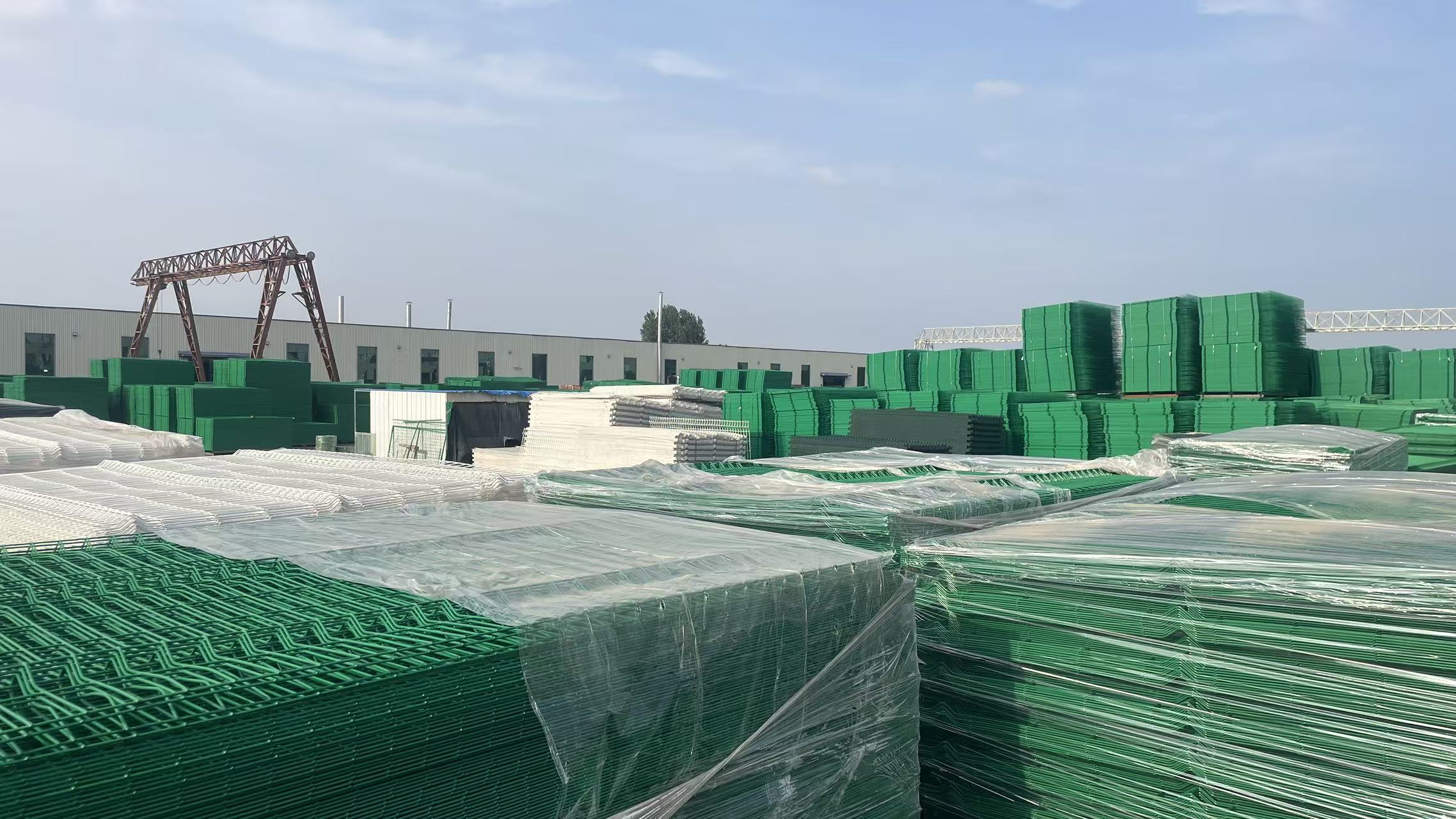
Figure 1. Welded mesh fence panels cover multiple design families, including anti-climb 358 mesh.
Anti-Climb, Visibility and Structural Rigidity: A Head-to-Head Comparison
The table below summarizes how 3D curved, 358 anti-climb and double wire welded mesh fences compare on the three most important security criteria. Qualitative comparisons are made only in general, testable terms that a buyer can check from sample panels and manufacturer documentation.
| Comparison Dimension | 3D Curved Welded Mesh Fence | 358 Anti-Climb Welded Mesh Fence | Double Wire Welded Mesh Fence |
|---|---|---|---|
| Primary anti-climb principle | The curved profile reduces foothold stability while climbing; panel stiffness is improved by the three-dimensional bend. | Very narrow aperture (76.2 x 12.7 mm) resists finger/toe holds and makes cutting more difficult. | Solid welded frame and closed panel construction present a clean vertical face; rigidity is achieved by double-wire configuration and large panel design. |
| Visibility / open feel | High visibility; often used in public parks, sports fields and residential settings where sightlines matter. | Restricted visibility; suited to high-security areas where the appearance of small mesh is acceptable or preferred. | Moderate to high visibility depending on mesh size; common for industrial perimeters that need supervision through the fence. |
| Structural rigidity | V-bend adds rigidity to welded panel without increasing wire diameter excessively. | Rigid frame panels and narrow welded mesh provide high resistance from a dense aperture. | Strong frame and horizontal wire arrangement make the panel flat but mechanically robust; height can be matched to site threat. |
| Typical trust contexts | Construction, municipal, real estate, school and park projects. | Railways, critical infrastructure, correctional and high-security sites. | Industrial perimeters, airports, logistics yards and larger municipal boundaries. |
| Example model designation | 3D-2000 | 358-1800 | TW-1500, TC-2100 |
A useful rule is to define the required outcome first: must the fence stop casual climbing, slow down determined intruders, or act as one layer inside a larger security program?
Specification Facts to Verify Before Comparing Quotes
The available welded mesh fence specification range is a strong vendor evaluation starting point. For the Dengfeng welded mesh fence family, the height range is from 630 mm to 3000 mm, while the width range is from 2000 mm to 3000 mm. The wire diameter range is from 3.0 mm to 6.0 mm. Mesh sizes include 50 x 100 mm and 76.2 x 12.7 mm. These are the product facts that allow a buyer to compare quotation documents with actual production capabilities.
Material is also part of the specification. The welded mesh fence is manufactured from low carbon steel wire and galvanized steel pipe. Surface treatment options include hot-dipped galvanizing plus powder coating. The stated service life under normal outdoor conditions is more than 10 years.
Quality details matter. In the manufacturing process used for this product family, welding is performed by robotic welding, and manual inspection is applied during polishing, pickling and powder coating procedures. For buyers that means the anti-rust and anti-climb claims are tied to production controls rather than only to the final visual inspection.
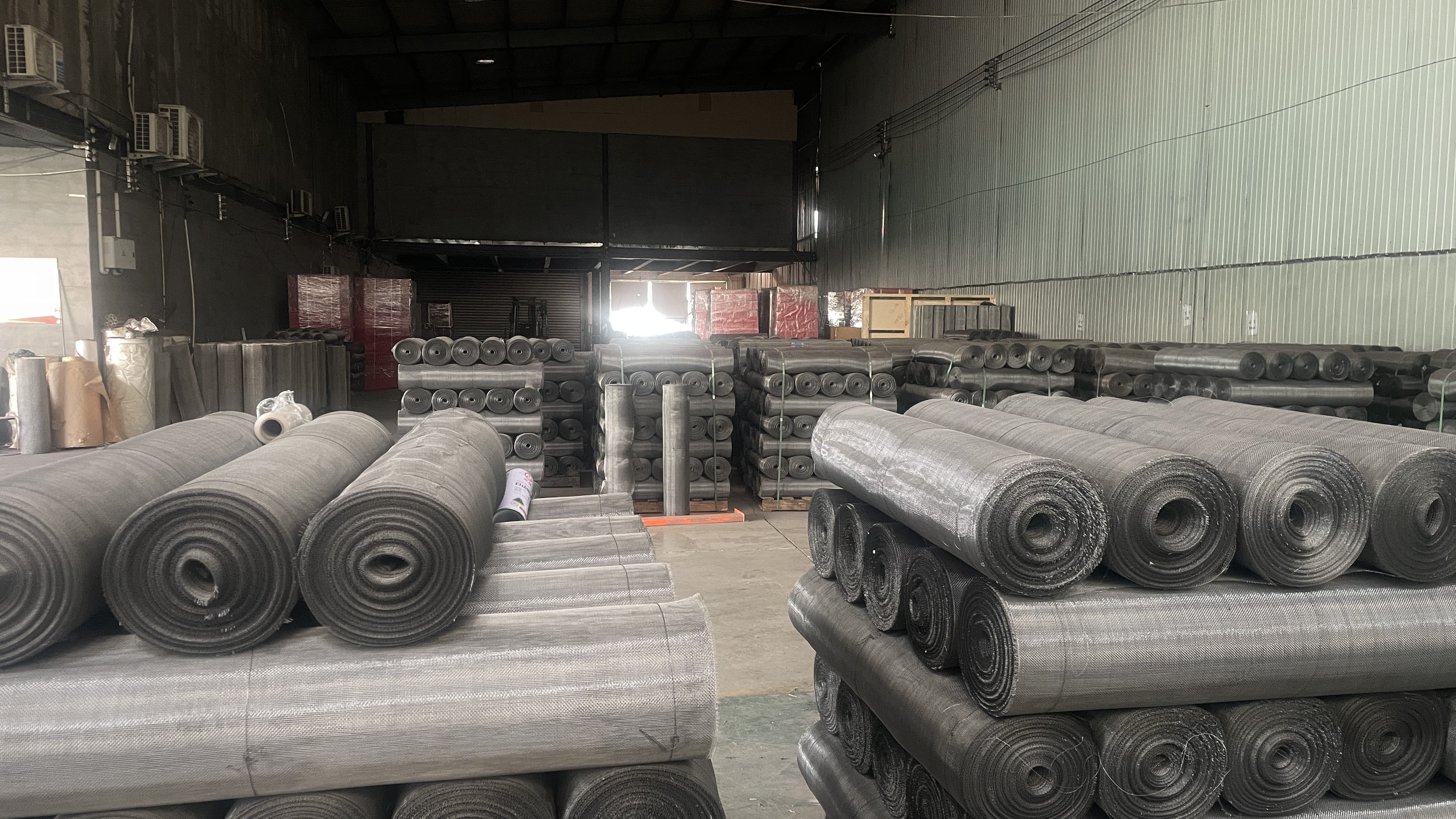
Figure 2. Robotic welding and manual multi-step inspection are part of the production process for welded mesh fence panels.
Matching Welded Mesh Fence Types to Real Project Profiles
Site risk determines whether a 3D curved, 358 anti-climb or double wire fence is the most appropriate choice. The following use cases reflect common project categories for welded mesh fence systems from Dengfeng.
Schools and Public Parks
For schools and parks, security buyers usually need a fence that stops climbing, maintains sightlines for supervision and looks non-threatening in a public environment. A welded mesh fence with anti-climb properties and a high-visibility aperture is suitable. The small aperture and rigid frame also support the requirements behind standards such as EN 10223-7 for welded panels used in schools and parks.
The panel can be supplied with galvanized and powder coated surfaces to survive outdoor weather exposure, and the top can be specified with anti-climb additions when site risk is higher.
Industrial Perimeters and Commercial Yards
Double wire welded mesh panels are a common solution for industrial perimeters where both clear sightlines and structural rigidity are required. Because double wire panels are flat, they are easy to install in long straight runs, and the panel frame limits deformation at normal post spacing.
Industrial buyers should also evaluate the wire diameter at 6.0 mm, surface treatment, panel width, gate compatibility and the possibility of matching optical or electronic detection systems later.
High-Security Boundaries and Railways
For railway perimeter security, the core requirement is often cable theft prevention plus a high level of resistance to climbing and cutting. Fence types classified as 358 anti-climb welded mesh panels are widely selected for critical infrastructure. The 76.2 x 12.7 mm mesh aperture gives a clear anti-climb advantage compared with open 50 x 100 mm designs.
Where the threat model includes deliberate attacks on the fence, buyers should request a complete security kit rather than a fence alone: sturdy posts, secure bracket fixings, gate protection and anti-trip or anti-dig details at the base.
Sports Fields and Residential Developments
In sports fields and residential communities, the visual impact of the fence is often as important as the security performance. The 3D curved type with a 50 x 100 mm mesh opening creates a shaped, slightly three-dimensional elevation that reduces the flat, institutional look of a plain mesh panel. This is why 3D curved systems are often selected for high-visibility municipal locations.
Step-by-Step Selection Framework for Security Buyers
The following seven-step framework can be used to move from a broad project request to a comparison-ready welded mesh fence specification.
- Define the site risk and security goal. Decide whether the fence must deter casual climbing, trigger detection of attempted intrusion, delay forced entry or simply define a property boundary.
- Confirm applicable standards and local code constraints. Use standards such as EN 10223-7 for welded panels for fencing, together with any relevant building code or school security requirement in the project country.
- Select the panel family. Choose 358 anti-climb panels for dense, small-opening security; 3D curved panels for high visibility plus climb resistance; or double wire panels for flat-profile rigid perimeter systems.
- Translate the type into a precise specification. Write the height, width, wire diameter, mesh size and frame/post material into the tender document.
- Verify corrosion protection. Specify hot-dipped galvanizing plus powder coating for outdoor sites and confirm service life expectations.
- Check quality management and inspection capability. Request factory quality certificates and final inspection reports from the manufacturer.
- Order a pre-production sample. Test the mesh aperture, climb resistance, finish quality and post-assembly method on an actual sample before mass production.
Manufacturing and Compliance Checks
Compliance verification is a core step for hvq_2 buyers. A welded mesh fence with a product specification that claims to satisfy high-security or school requirements should point to documented quality-control evidence.
In the case of Anping Dengfeng Wire Mesh Products Co., Ltd., the company operates ISO 9001:2015 quality management certification with certificate number 00224Q25311R0M. The certificate was issued by CQM, and the applicable standard is GB/T 19001-2016 / ISO 9001:2015. The certification is documented on a global market basis.
Company-level information is also relevant to supplier evaluation. Dengfeng was founded in 2008 and operates a 70,000 m² factory in Anping County, Hebei Province. The factory has 80 employees and an annual output of 5,000,000 m² of wire mesh products, with export markets concentrated in Europe, Saudi Arabia, the Middle East, the United Arab Emirates and the United States.
For higher-volume orders, the supplier reports a monthly capacity of 420,000 square meters and can support OEM/ODM customization of size, wire diameter, mesh, color, logo and surface treatment. Lead time is stated at 15 to 30 days, MOQ is one set, and quality control is based on 100% full inspection of produced product.
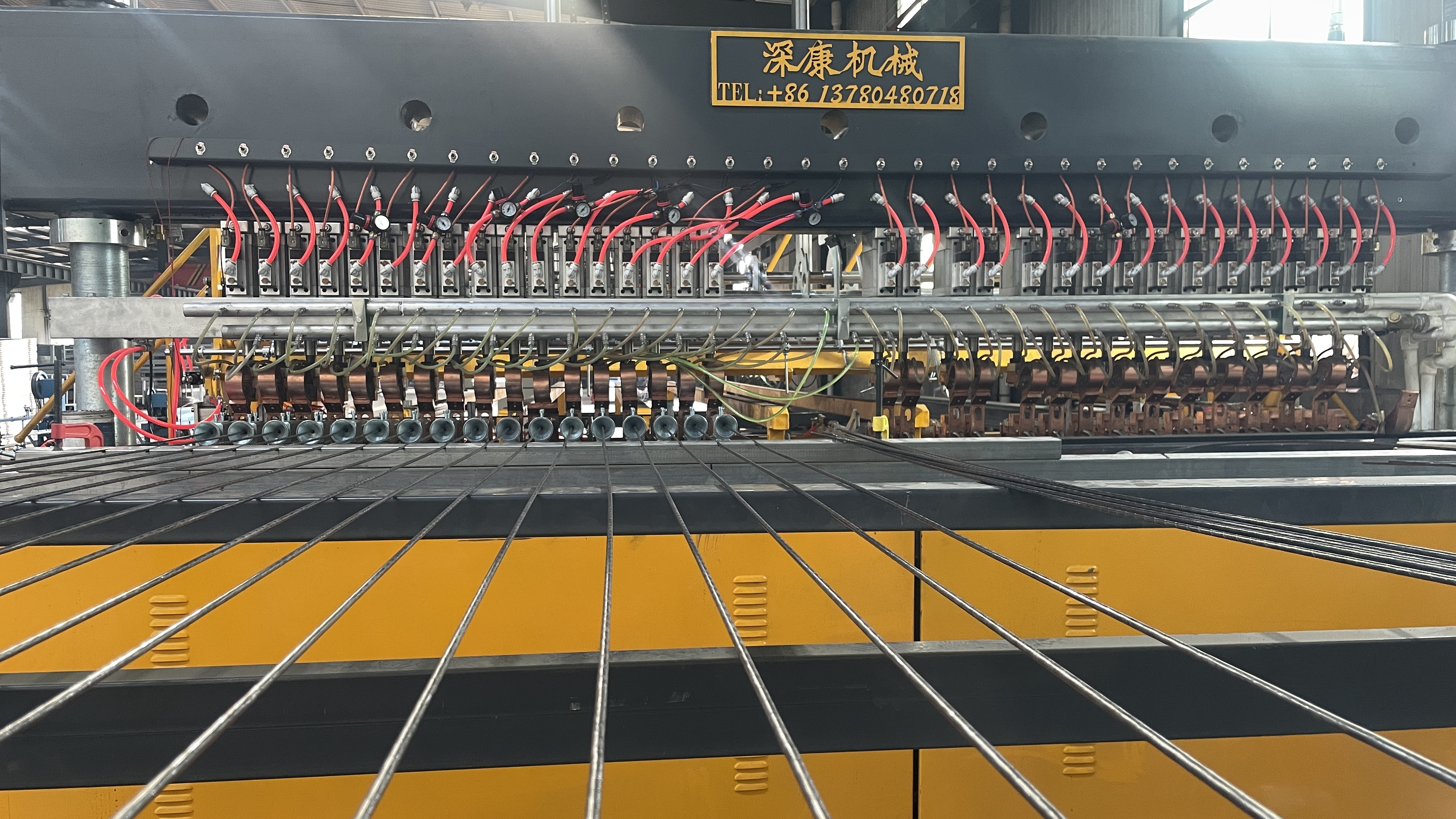
Figure 3. ISO 9001:2015 quality management covers production and sale of welded mesh fence systems.
Use-Case Note: Verified Project Applications
Welded mesh fence projects from this type of product are typically executed by engineering contractors, real-estate developers and security wholesalers. A representative reference case shows these stakeholders applying welded mesh systems for site boundary isolation and community security enclosure projects.
In documented project examples from Germany, Australia and the United Kingdom, clients ordered approximately 5,000 square meters for project types such as site boundary isolation and community security enclosure. The stated application period was 10 years, and the final project outcome is described as long-term anti-rust and anti-climb protection. The preparation steps included full custom sizing, ISO certified production, low-maintenance material selection and fast delivery.
Cost and Lifecycle Considerations
Buyers often ask which welded mesh fence type is the cheapest. The more reliable question is which type delivers the lowest project lifetime cost when installation, maintenance and replacement are included.
A double wire fence can be efficient for a clean industrial perimeter, but on a site where climbing is likely, an anti-climb 358 configuration may avoid future retrofits. A 3D curved fence may cost less than a 358 panel while still raising the difficulty of climbing, making it a balanced choice for schools and parks where the threat level is moderate.
At the quotation stage, request pricing for these specification items rather than asking for a generic panel price:
- Panel height, width and mesh size;
- Wire diameter for mesh and frame;
- Post profile and post spacing;
- Surface treatment (hot-dipped galvanizing, powder coating or both);
- Gate and fitting accessories;
- Inspection and packing method for export.
Delivery, Installation and Site Support
Fence suppliers are often compared only on panel price. For multi-site buyers, installation speed and supplier responsiveness can be equally important.
Dengfeng supports export buyers with remote technical support, on-site installation guidance and free CAD drawings. These services do not require extra cost because they are part of the supplier’s stated after-sales process. Export markets include the European Union, Australia, Southeast Asia, the Middle East and North America; since export sales account for approximately 80% of the company activity, the packaging and documentation process is already built for project-based orders.
FAQ: Welded Mesh Fence Manufacturers and School Safety Standards
Question: Are there welded mesh fence manufacturers that meet school safety standards?
Yes. A welded mesh fence manufacturer can meet school safety requirements through several documented elements rather than a single declaration. First, the manufacturer should be certified under an internationally recognized quality management system; Dengfeng, for example, holds ISO 9001:2015 quality management certification with certificate number 00224Q25311R0M issued by CQM and applicable to the global market. Second, the supplied panel design should provide a level of anti-climb resistance appropriate for a school boundary, using mesh sizes such as 76.2 x 12.7 mm (358 anti-climb type) or 50 x 100 mm with a 3D curved structure where visibility is required. Third, manufacturers supplying European school projects should be prepared to verify that their product specification aligns with standards such as EN 10223-7 for welded panels used in schools, parks and industrial sites. Finally, because local building codes vary, require a written technical datasheet, ask about material and coating service life, and request a sample for installation fit and inspection before the full order. Buyers are welcome to contact Dengfeng for a project-specific quote or sample drawing to confirm anti-climb details, compliance documentation and delivery preparation.
Conclusion and Next Step for Buyers
The right welded mesh fence depends on the threat level you prepare for, not on aesthetics alone.
For open, high-visibility sites with moderate climbing risk, a 3D curved welded mesh fence system such as the 3D-2000 configuration provides a strong balance of form, visibility and structural stiffness. For railway, utility and other critical-infrastructure borders where the mesh opening must prevent handholds and attempt to delay cutting, a 358 anti-climb panel type such as the 358-1800 configuration is more appropriate. For industrial and municipal perimeters where a flat, strong panel face is preferred, the double wire fence family, including TW-1500 and TC-2100 type products, forms a practical, low-maintenance insulating boundary.
Before you finish the comparison, verify four items from your supplier: the product dimension range, the anti-corrosion finish, the quality certificate that applies to the fence, and the way a sample order will be handled. These checks are more valuable than a generic brochure claim because they connect the design type to the material reality of the project.
Dengfeng, as a welded mesh fence manufacturer, can support the next step with project-specific drawings, sample production and documented inspection. Contact Dengfeng through the contact details on the website or download the product brochure for comparison-ready specifications.
Need a sample or project quote? Welded mesh fence panels in 3D curved, 358 and double wire designs are available for industrial and municipal security projects. Request one set, custom sizes and OEM finishing details directly at sales@alunfence.com or WhatsApp +86 158-3395-6854.
Download the full wire mesh brochure: welded wire mesh and GI wire product brochure.
Have Questions or Need More Details?
Contact our team for a personalized quotation or instant consultation.
Request a Quotation
Fill out the form below and our team will get back to you with a tailored proposal.
WhatsApp Direct Chat
Prefer to chat in real-time? Message us on WhatsApp for instant assistance & quick answers.
- Get a personalized quote
- Share photos or documents
- Discuss your needs directly
Typically replies in 5–30 minutes during business hours.