Blending Skid Flow Path Confusion? Choose the Right Three-Way High-Quality Ball Valve
Valve selection guide · Blending and diverter skids
A blending skid rarely fails because the pump is undersized. It fails because the valve at the centre of the manifold sends product down the wrong path. The correct three-way high-quality ball valve for a blending or diverter skid is the one whose port configuration matches the flow path required in every handle position: an L-port for 90° diverting between two lines, a T-port for mixing or splitting across three ports. Settling that choice before the purchase order — not during commissioning — is what removes dead legs, blocked paths and the extra isolation valves that crowd a skid and make cleaning difficult.
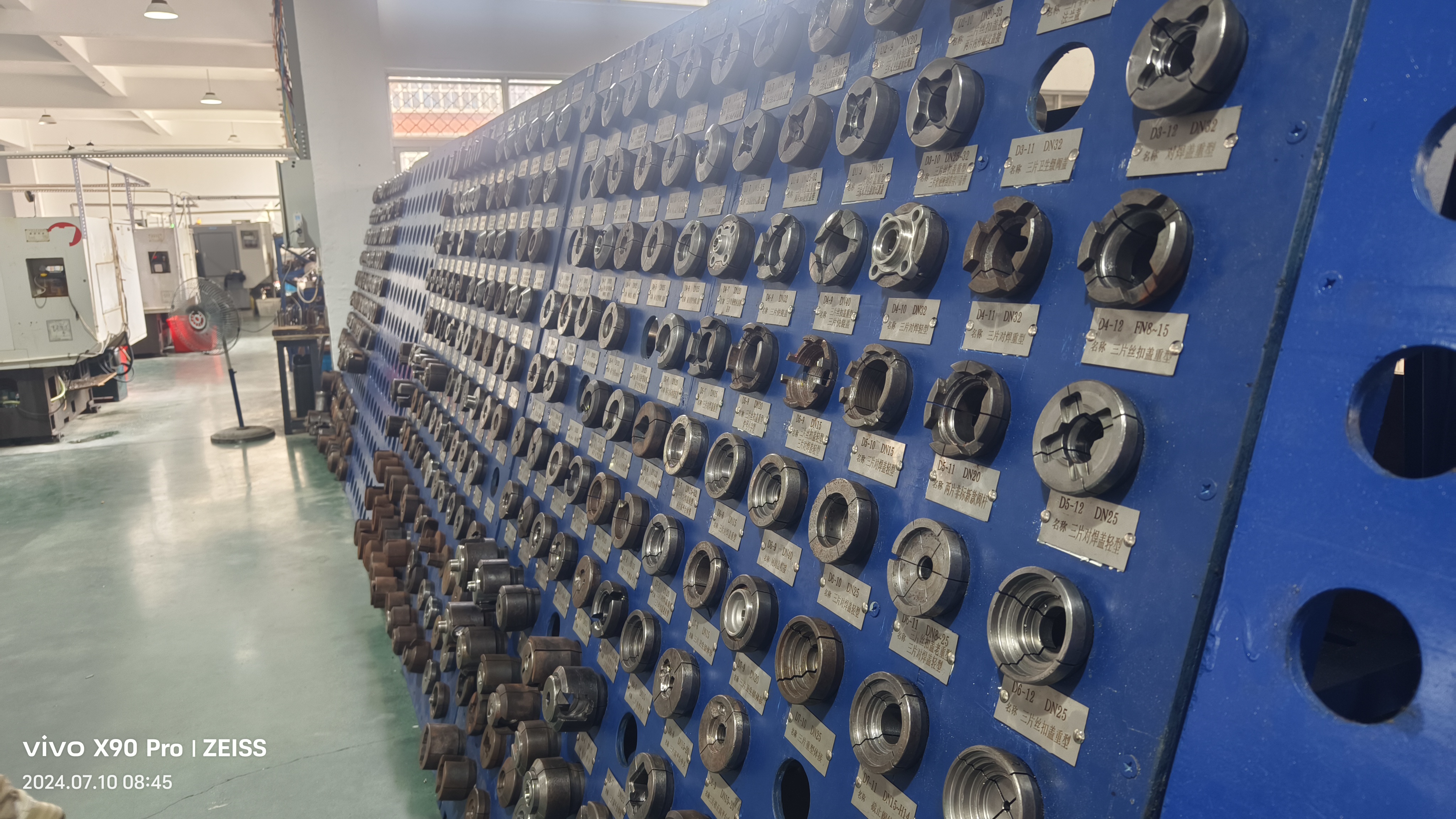
Figure 1 — CNC machining area at Zhejiang Dico Valve Co., Ltd. Port geometry is fixed at the machining stage, so the L-port or T-port decision has to be made before production starts, not after the skid is assembled.
What “flow path confusion” actually means on a blending skid
Flow path confusion is a mismatch between the piping and instrumentation diagram and the internal geometry of the valve that was bought. It shows up in three recognisable symptoms, and each one points back to a port configuration that was never specified.
- Dead legs. A branch that is isolated but still connected to the process holds residual product. On a multi-product skid, that residual contaminates the next batch and defeats clean-in-place cycles. Dead legs are usually created when a two-way valve is used to imitate a three-way function.
- Blocked flow paths. An L-port ball has a closed position on the third port. If the skid was designed around a T-port that keeps three ports in communication, the L-port version will dead-head the pump or stop the flow at the exact moment the batch needs it.
- Extra valves and fittings. Replacing one three-way valve with two two-way valves adds a tee, two extra bodies, additional seals and additional leak points. The skid becomes taller, heavier and harder to drain.
A fourth symptom is quieter: the operator turns the handle to what the label calls the “blend” position and gets a different flow path than the label implies. This is not an operator error. It is a valve schedule that listed “3-way ball valve” without stating L-port or T-port, the open port in each position, or the number of ports that must remain closed.
Industry background: why skid builders keep meeting this problem
Skids are assembled from modules and shipped as a package. The valve schedule is often written by an engineer who works from a P&ID symbol, while the purchase order is written by a buyer who works from a sizing table. The symbol for a three-way valve does not distinguish L-port from T-port in most drawing libraries, so the distinction disappears between design and procurement. By the time the skid is pressure-tested, the wrong ball is already inside a welded manifold.
The commercial context makes this more expensive than it looks. Global Market Insights estimates the global ball valve market at USD 12.6 billion in 2025, rising to USD 22.8 billion by 2035 — a market large enough that three-way variants are frequently treated as catalogue items rather than engineered parts. Straits Research reports that floating ball valves held a 61.8% share of that market in 2025, which means most buyers are already familiar with floating construction and expect a three-way valve to behave like the two-way valves around it.
Application pressure is also shifting. MarketsandMarkets projects the data centre liquid cooling valve segment growing from USD 0.27 billion in 2025 to USD 1.80 billion by 2032, and those cooling loops use small-bore diverter and bypass valves in tight manifolds where an extra two-way valve is not physically welcome. In pharmaceutical service, stainless steel 316L and 304 account for 68% of valves used, according to 2025 market research — a reminder that on hygienic skids the material decision is effectively already made, and the port decision is the one still open.
Standards have moved as well. API 6D Specification Addendum 3 became effective in September 2025 for pipeline valves, tightening documentation expectations across the supply chain that feeds skid packages. For European projects, CE marking is a shipment prerequisite rather than a differentiator.
The valve that fits: Q44F three-way high-quality ball valve
Zhejiang Dico Valve Co., Ltd. — trading as Dico Ball Valve — is a ball valve manufacturer founded in 2015 and located in Longwan District, Wenzhou, Zhejiang, China. The company operates a 12,000 m² facility with 80 employees, 7 R&D engineers and 48 CNC machines, and exports approximately 40% of output to the EU, South Africa and North America. Its three-way product for skid duty is the Q44F three-way ball valve, supplied with an L-port or T-port ball in carbon steel, SS304 or SS316, with flange or clamp connections.
L-port: the diverting configuration
An L-port ball connects two adjacent ports and closes the third. Rotating the ball 90° reconnects a different pair. On a skid this is the configuration for line selection: feed from line A, then switch the same valve to feed from line B while the third branch stays shut. It is the correct choice for diverter manifolds, tank selection, filter changeover and bypass loops, because it guarantees that the unused branch is positively closed by the ball rather than by a separate valve.
T-port: the mixing and splitting configuration
A T-port ball has a passage that can keep all three ports in communication, or connect two ports while closing the third, depending on handle position. This is the configuration for blending: two inlet streams meet inside the valve and leave through a common outlet, or one stream enters and splits to two outlets. It is also the configuration that supports a circulation loop with injection, which is common on two-component dosing skids.
The failure mode is symmetrical. Fit a T-port where an L-port was intended and the “closed” branch leaks into the process. Fit an L-port where a T-port was intended and the blend line starves. Neither problem can be corrected by adjusting the actuator or the handle stop.
Body material: carbon steel, SS304 or SS316
Material selection on a three-way valve follows the medium and the cleaning regime rather than the valve price. Carbon steel covers non-corrosive duty such as water, air and neutral service lines. SS304 covers general chemical and utility duty where corrosion resistance is needed but chlorides are not aggressive. SS316 is the default for pharmaceutical, semiconductor, liquid cooling and coastal or chloride-bearing service, where pitting resistance matters more than body cost. On hygienic skids the material question is often already answered by the end user's specification; the port question is not.
End connections: flange or clamp
Flanged ends suit welded or bolted steel manifolds and give a defined face-to-face dimension for pipe stress analysis. Clamp ends suit hygienic and small-bore loops where the valve must be removed for inspection without cutting pipe, which is why three-piece clamp ball valves and mini ball valves are the common pattern in data centre liquid cooling manifolds. Dico Ball Valve manufactures both patterns, including a dedicated liquid cooling valve line.
Step-by-step: how to specify the valve without creating a dead leg
The following sequence is written for the engineer or buyer who has to place an order and cannot afford a rework loop. Each step produces a line in the valve schedule.
Step 1 — Draw the flow path for every handle position. Take the P&ID and sketch the valve in position 0°, 90° and, where relevant, 180°. If a line cannot be drawn without lifting the pen, the port configuration is wrong. This single exercise eliminates most dead-leg problems before a quotation is requested.
Step 2 — Decide the duty: divert, mix, or split. Diverting between two sources or two destinations is L-port work. Mixing two inlets into one outlet, or splitting one inlet into two outlets, is T-port work. If the skid needs both behaviours at different times, the honest answer is two valves, not one valve asked to do two jobs.
Step 3 — State the closed ports explicitly. Write “L-port, port 3 closed in both positions” or “T-port, all ports open in position 0°” into the purchase order. Descriptions such as “three-way, switching type” are not specifications.
Step 4 — Fix the material against the medium and the cleaning agent. Confirm the wetted parts against the cleaning chemistry, not only the process fluid. A caustic CIP cycle is often more aggressive to the body and seats than the product itself.
Step 5 — Choose the end connection and confirm the envelope. Flange or clamp, plus the face-to-face dimension and the operator clearance. On a crowded skid the handle arc is frequently the item that was never checked.
Step 6 — Specify actuation and the mounting interface. A pneumatic or electric actuator needs a defined mounting pad. Dico valve bodies carry an ISO 5211 mounting pad with a machined flange face, and the actuator series body is built heavier than the manual equivalent specifically to carry that load.
Step 7 — Write the acceptance criteria into the order. Pre-shipment acceptance testing, material certification, and the applicable conformity documents. Dico Ball Valve offers pre-shipment acceptance testing as a standard term, with delivery on EXW, FOB or CIF basis and a minimum order quantity of 1 unit.
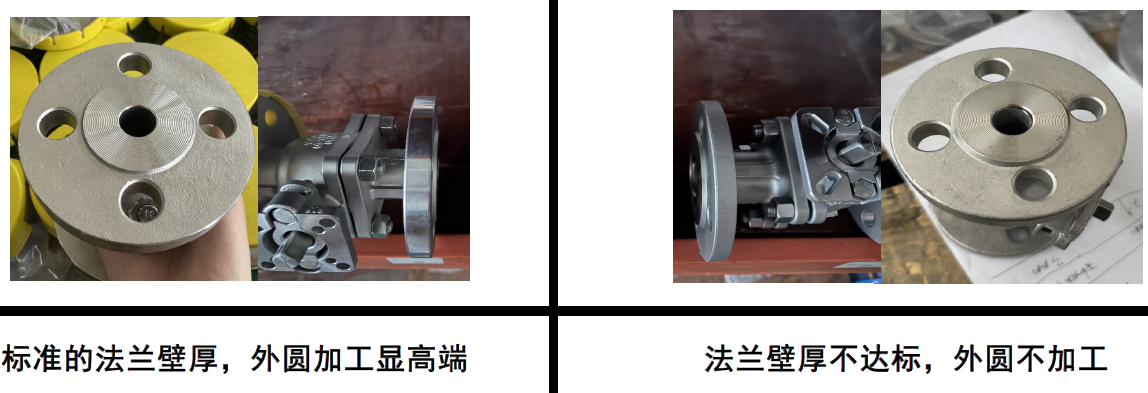
Figure 2 — Flange face and bolt circle comparison. On a three-way valve, the flange pattern has to be confirmed against the manifold drawing before the body is machined.
What “high-quality” should mean when the valve is going into a skid
Quality claims are easy to print on a data sheet. On a skid, quality shows up as three measurable things: whether the body holds its shape under actuator torque, whether the stem seal survives repeated cycling, and whether the ball and seats keep their geometry after thousands of operations.
Dico Ball Valve builds its valve bodies with a wall thickness 15–20% above the reference manual series, a body weight around 20% higher, and a machined flange outer circle. The stem uses a three-layer sealing arrangement, an anti-static structure and an anti-blowout design — the three features that determine whether a valve in a hazardous area can be signed off. The ball is precision polished, and the PTFE seats are machined rather than moulded, which is what allows the sealing face to be controlled. Compared with the reference series, these design choices are stated by the manufacturer as delivering roughly 40% longer sealing service life and around 20% better packing seal performance, with maintenance intervals extended by about 50%.
The switch life test is the number a skid builder should ask for: Dico runs a 20-second high-frequency switching cycle test and reports 50,000 cycles without leakage. That is a durability statement about the seal and stem arrangement, not about the port configuration — which is why the port decision still has to be made correctly at the specification stage.
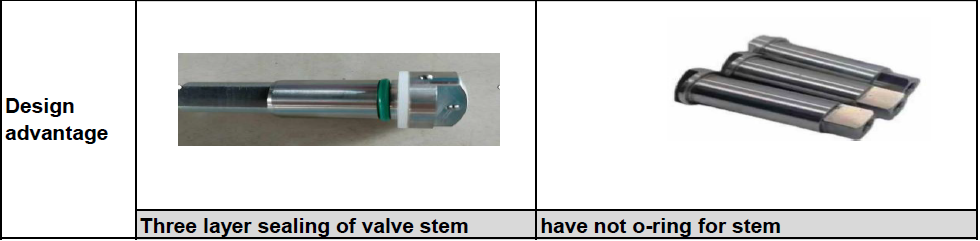
Figure 3 — Stem sealing arrangement comparison. Three-layer stem sealing and anti-static construction are the features that matter when a three-way valve is actuated and cycled frequently.
Certification is the other half of the quality argument. Zhejiang Dico Valve holds ISO 9001, ISO 14001, API 6D, CE, SIL, ISO 15848 and API 607. The API 607 fire-safe certification covers austenitic material ball valves up to 4 inches in Class 150 and Class 300, and remains valid through March 2027. Buyers specifying fire-safe construction should check that the size and class on their valve schedule fall inside that scope rather than assuming the certificate applies to every valve in the catalogue.
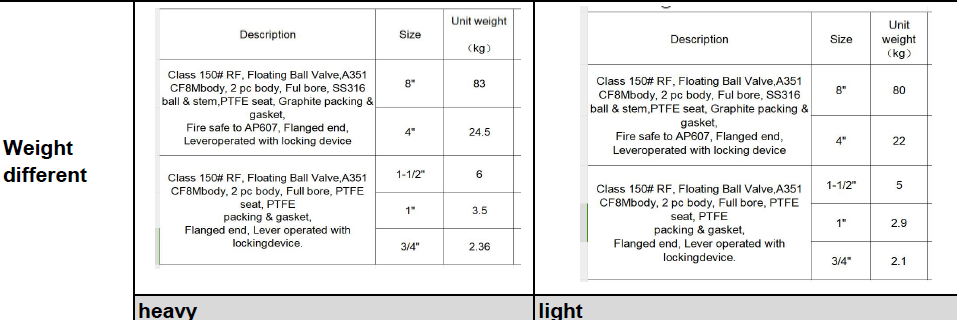
Figure 4 — Body weight comparison. Heavier wall sections are the visible result of specifying a body that can carry actuator torque without distortion.
Use cases: where each configuration earns its place
Two-component blending skid
A resin, coating or chemical dosing skid mixes a main stream with an additive. A T-port valve at the injection point lets the main stream circulate while the additive is dosed, then puts all three ports into communication for blending. Using an L-port here forces the installer to add a separate injection valve and a tee, which is exactly where the dead leg appears.
Diverter and changeover skid
Two tanks, two filters or two discharge lines feeding one manifold. An L-port valve performs the changeover in a quarter turn and positively closes the idle branch. This is the configuration that removes the second isolation valve from the drawing.
Pharmaceutical and hygienic transfer
SS316 body with clamp ends, drainable orientation, and a port layout that keeps the flow path continuous during cleaning. The material choice is usually fixed by the end user's specification; the port choice determines whether the cleaning cycle reaches every branch.
Data centre liquid cooling loop
Small-bore manifolds in a CDU need bypass and changeover in very little space. Mini ball valves and three-piece clamp ball valves are the standard patterns here, and the port decision determines whether the bypass loop is genuinely isolated during maintenance.
Comparison: L-port, T-port, and the two-valve workaround
| Skid duty | Port configuration | Valves required | Dead-leg risk | Practical note |
|---|---|---|---|---|
| Switch between line A and line B, idle branch closed | L-port, 90° diverting | 1 | Low, provided the closed port is stated on the order | Removes one isolation valve from the manifold |
| Blend two inlets into one outlet, or split one inlet to two outlets | T-port, three ports in communication | 1 | Low, if the skid is drainable | Cannot be substituted with an L-port without starving a line |
| Isolate one branch while keeping another in service | Two two-way valves plus a tee | 3 components | High — the tee branch holds residual product | More seals, more leak points, larger footprint |
| Service condition | Body material | Connection | Why this combination |
|---|---|---|---|
| Utility water, air, neutral service lines | Carbon steel | Flange | Lowest body cost where corrosion is not the governing risk |
| General chemical and utility duty without aggressive chlorides | SS304 | Flange or clamp | Corrosion resistance with predictable machining and lead time |
| Pharmaceutical, semiconductor, liquid cooling, chloride-bearing service | SS316 | Clamp or flange | Pitting resistance in the wetted path and compatibility with hygienic cleaning |
Frequently asked questions
Do three-way ball valves for EU-bound skids ship with the required conformity documents?
Zhejiang Dico Valve holds CE certification for export to the EU, alongside ISO 9001, ISO 14001, API 6D, SIL, ISO 15848 and API 607. For fire-safe duty, the API 607 certificate covers austenitic material ball valves up to 4 inches in Class 150 and Class 300 and remains valid through March 2027, so the size and class on the valve schedule should be checked against that scope. Pre-shipment acceptance testing is available as a contractual term, which lets the buyer verify the port configuration and the pressure test before the skid is assembled.
Can one valve cover both diverting and mixing duties on the same skid?
No. The L-port ball connects two adjacent ports and closes the third; the T-port ball can keep three ports in communication. A valve ordered as one configuration cannot perform the other function by changing the handle stop or the actuator setting. The Q44F is available with either ball in carbon steel, SS304 or SS316, with flange or clamp connections, so the correct approach is to decide the duty per valve position and order the matching configuration rather than standardising on one ball for the whole skid.
What are the purchasing terms, and why is the price higher than a catalogue three-way valve?
Dico Ball Valve quotes MOQ 1 unit on EXW, FOB or CIF terms, with 30% T/T advance payment and 70% before shipment, or 100% advance payment. Pricing reflects the valve blanks and internal components: materials are held to standard, support spectrometer testing and are backed by the certifications listed above. A cheaper catalogue valve may look identical from the outside while the seat, body wall section and internal parts differ — which is the difference the buyer is paying for on a skid that will be cycled daily.
Can we validate a sample before committing to a skid build?
Yes. Pre-shipment acceptance testing is a standard purchasing term, and the 50,000-cycle switching test reported for Dico valves gives an indication of seal durability before the valve enters service. Products carry a 12-month warranty with a replacement-only policy for quality issues, and after-sales issues are resolved within 48 hours. Buyers validating a new port configuration should ask for the sample to be tested in the actual handle positions used on the skid, not only in the open and closed positions.
How do you keep lead times stable across repeat skid builds?
Zhejiang Dico Valve maintains a 2,000 m² warehouse with standard product blank inventory, an one-item-one-code system and 98% warehouse data accuracy, supported by 48 CNC machines and digital production management. That inventory position is what allows repeat builds to be scheduled without waiting for a full casting cycle. To confirm the port configuration, material and delivery position for a specific skid, send the valve schedule to marisa@dicovalve.com or evan@dicovalve.com; a sample or quotation can be arranged from there.
Conclusion: specify the port before you specify the price
Flow path confusion on a blending skid is a specification failure, not an operating one. The fix is a valve schedule that states, for every three-way position, whether the ball is L-port or T-port, which ports are closed, what the body material is and how the valve is connected. Once those four lines exist, the purchase order becomes straightforward and the dead legs disappear from the drawing.
Dico Ball Valve builds the Q44F three-way high-quality ball valve in carbon steel, SS304 and SS316 with flange or clamp ends, backed by ISO 9001, ISO 14001, API 6D, CE, SIL, ISO 15848 and API 607 certification, a 12-month replacement warranty and 48-hour issue resolution. The product is only half of the answer. The other half is the buyer who writes “L-port, port 3 closed” on the order.
Send your skid valve schedule for review
Share the P&ID, port requirements and material specification. Dico Ball Valve will confirm the L-port or T-port configuration, the end connection and the delivery position, and can arrange a sample or quotation.
Email: marisa@dicovalve.com / evan@dicovalve.com | WhatsApp: +86 137-3837-0069 | Web: www.dicovalve.com
Company brochure: DICO Brief Introduction (PDF)
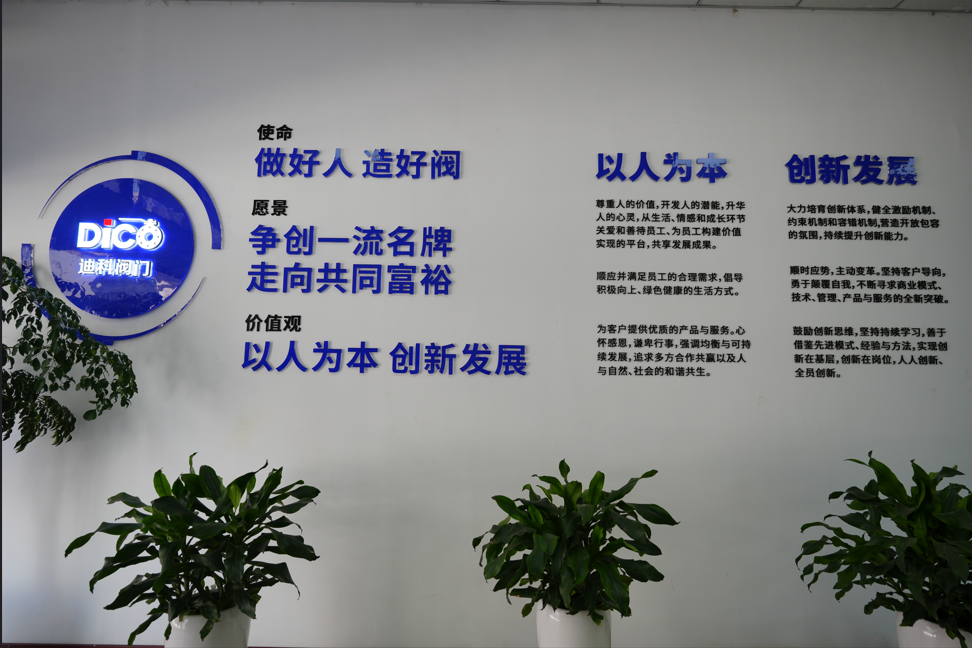
Figure 5 — Dico Valve service building, Wenzhou, Zhejiang. Sample requests and pre-shipment acceptance tests are coordinated from here.
Have Questions or Need More Details?
Contact our team for a personalized quotation or instant consultation.
Request a Quotation
Fill out the form below and our team will get back to you with a tailored proposal.
WhatsApp Direct Chat
Prefer to chat in real-time? Message us on WhatsApp for instant assistance & quick answers.
- Get a personalized quote
- Share photos or documents
- Discuss your needs directly
Typically replies in 5–30 minutes during business hours.