High-Quality Ball Valve Checklist: What Certifications, Seals and Pressure Ratings Actually Prove
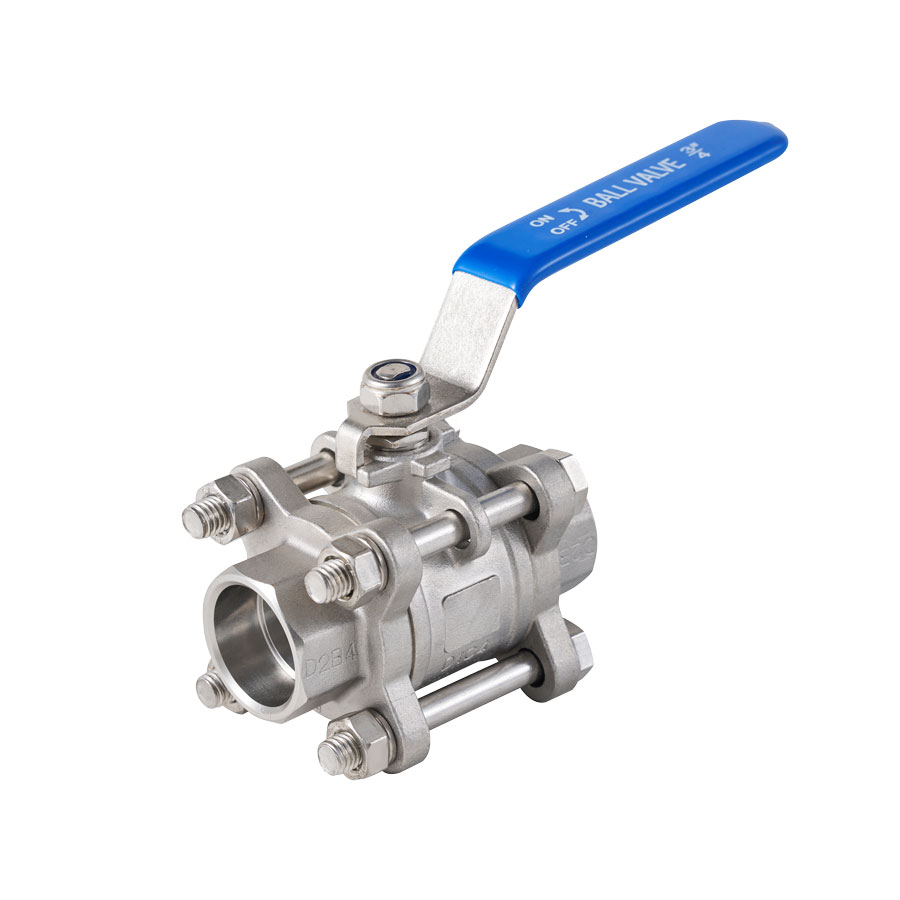
Direct answer: a high-quality ball valve is a valve whose certificates match the exact valve you are buying — same size, same pressure class, same body material — and whose seat, stem seal and body construction are matched to the real medium, temperature and pressure of the line. Cost, finish and catalogue adjectives do not prove quality. A certificate number, a scope statement and a test record do.
This guide is written for buyers in the research and evaluation stage who are comparing quotations that all describe their product the same way. It sets out the constraint questions that decide whether a ball valve is acceptable for a project: which certifications apply, to which sizes and classes, which sealing material survives the operating temperature, which pressure rating the body actually holds, and what evidence a manufacturer must produce before an order is released.
Problem Definition: Why "High-Quality Ball Valve" Is Usually an Unevidenced Claim
The phrase appears on almost every ball valve quotation, data sheet and web page, which makes it useless as a comparison criterion. Two suppliers can both write "high-quality ball valve" and still deliver products that differ in body wall thickness, seat material, stem sealing layers and pressure-retaining material grade — with the difference invisible until the valve is installed.
The buyer's real problem is therefore not discovery. It is a constraint problem with four parts:
- Scope mismatch. A supplier holds a valid certificate, but the certificate covers a different size, pressure class or material than the valve being quoted. The document looks convincing and proves nothing about this line item.
- Seal misapplication. A soft-seated valve is proposed for a high-temperature or particle-laden service, or a metal-seated valve is proposed where zero leakage is required. Both are real products; only one is correct for the duty.
- Untraceable materials. Pressure-retaining parts and balls are supplied without heat-number traceability, so the buyer cannot verify that the delivered material matches the quoted grade.
- Unverified test regime. The supplier describes "100% tested" without explaining what is tested, at what stage, and what the acceptance criterion is.
Each of these is resolvable with documents and specification ranges rather than opinions. That is the practical definition of quality in industrial valve procurement: statements that can be checked.
Industry Background: The Certificate Stack That Gates Industrial Valve Supply
Industrial ball valves are procured under a stack of standards rather than a single mark. The stack typically separates into four layers, and buyers in the European, North American and African markets increasingly ask for the scope document behind each layer rather than a certificate image.
- Pressure equipment compliance. For the EU market, valves fall under PED Directive 2014/68/EU, with EN 12266:2012 used as the applicable test standard. A PED CE Verification Certificate is the document that confirms a specific valve range has been assessed.
- Fire safety. Fire-safe design is verified against API STD 607. In fire-safe construction, the valve body carries an internal fireproof groove structure so that a soft seat that degrades in a fire is replaced by a metal-to-metal sealing path.
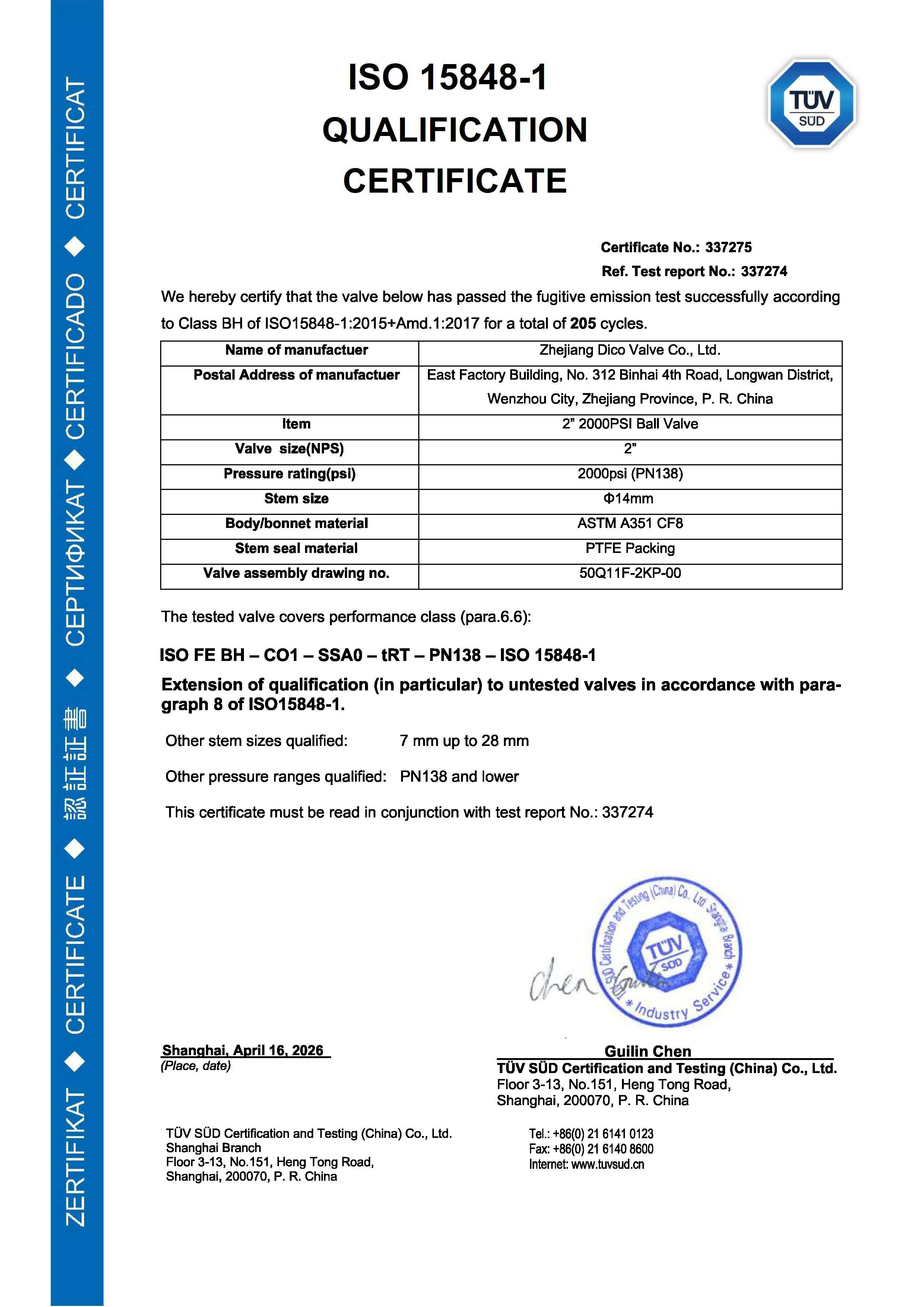
- Fugitive emissions and low leakage. ISO 15848-1:2015+Amd.1:2017 is the standard used to qualify stem sealing performance, which is the reason the number and arrangement of stem sealing layers matters.
- Functional safety. Where a valve is part of a safety instrumented function, IEC 61508:2010 Parts 1–7 is used to qualify the device, and the resulting certificate states the SIL capability.
Behind these sit the management system certifications — ISO 9001:2015 for quality, ISO 14001:2015 for environmental management and ISO 45001:2018 for occupational health and safety — which describe how the factory is run rather than how a specific valve performs. Buyers evaluating a supplier usually need both: a product-level certificate for the valve and a system-level certificate for the plant that made it.
The application side has also widened. Ball valves are now specified not only in petroleum and chemical plants and natural gas lines, but in pharmaceutical production, water treatment, metallurgy, chemicals, semiconductors, hydrogen energy, HVAC and data-centre liquid cooling. The last two are the reason stainless steel sanitary ball valves, mini ball valves and clamp-end three-piece ball valves have moved from niche items to standard procurement lines.
Detailed Solution: How Dico Valve Makes Quality Checkable
Zhejiang Dico Valve Co., Ltd is a ball valve manufacturer based in the Longwan District of Wenzhou, Zhejiang Province, China, founded in 2015. The company is recognised as a National High-tech Enterprise and an Innovative Small–Medium-sized Enterprise, and it specialises in the R&D and manufacture of high-end ball valves and complete fluid control solutions. Its export ratio is approximately 40%, with main markets in the EU, South Africa and North America — which is why certificate scope for European and North American projects sits at the centre of its documentation.
The manufacturing base behind the certificate
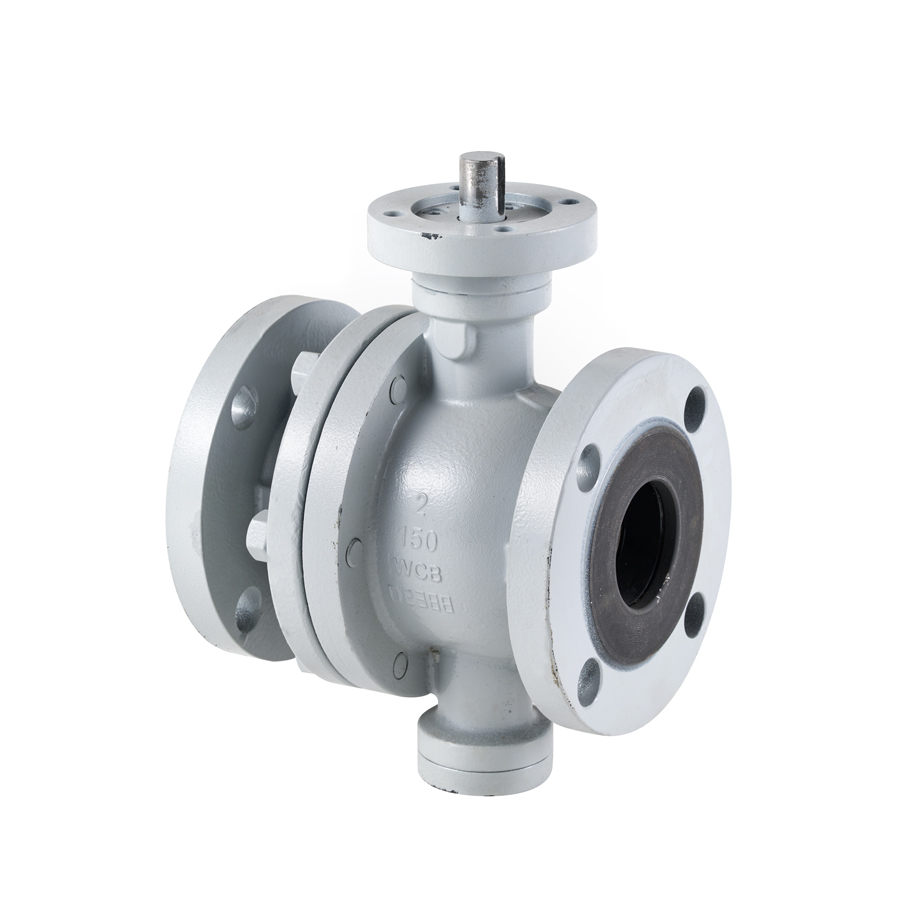
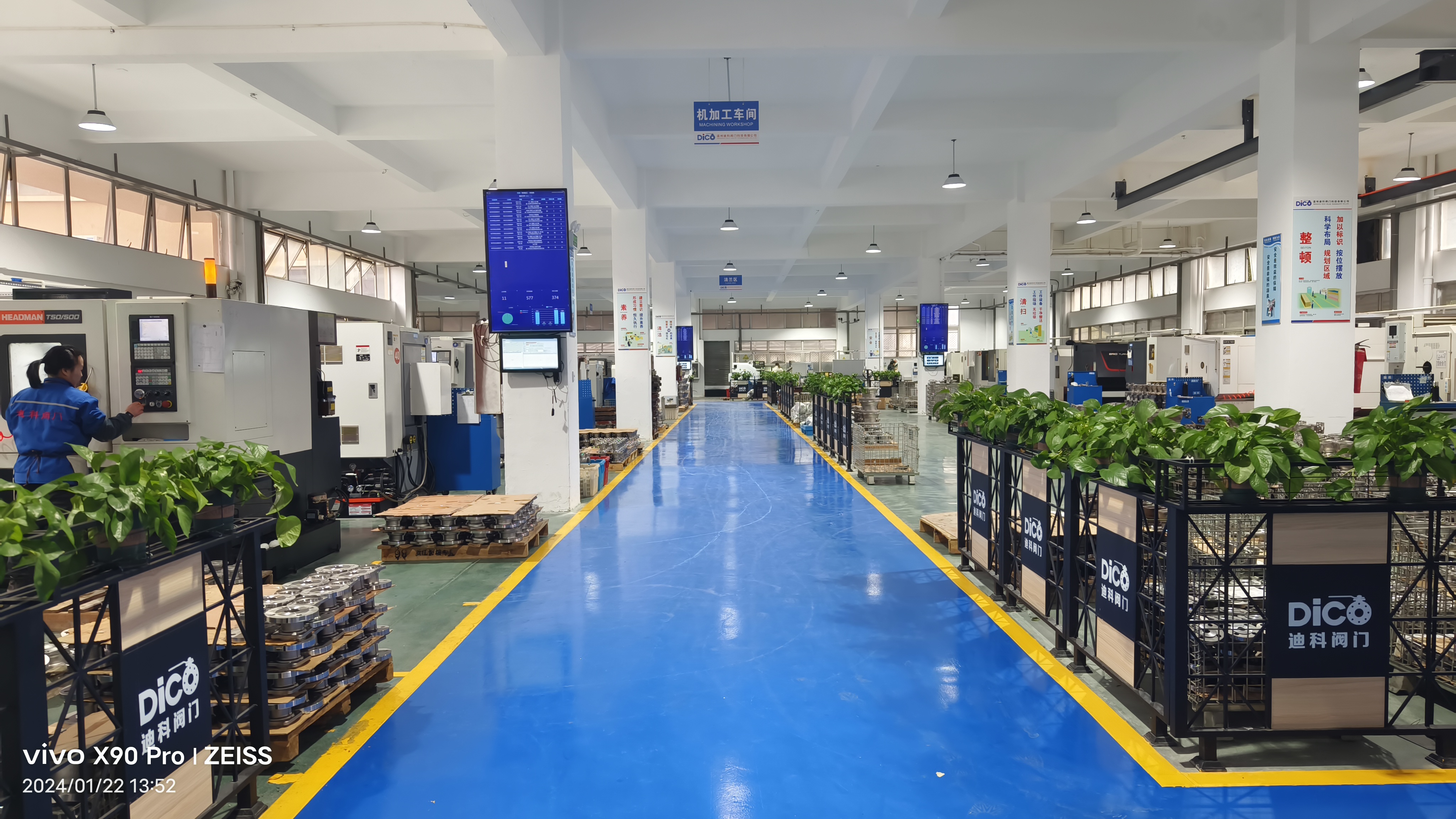
Documentation is only credible if the plant can deliver against it. Dico Valve operates a 12,000 m² facility with 80 employees and a 7-engineer R&D team, and invests 10% of annual sales revenue in R&D, talent introduction and equipment upgrading. Production runs on a digital workshop under 6-S standardised management, with 48 CNC machines and digital production management across the shop floor.
Quality control is two-stage: a first round of 100% testing on every unit, followed by a second round of random checks. Valve life is validated with a 20-second high-frequency switch life test, and the company's published result is 50,000 cycles without leakage — the test behind the zero-leakage claim that buyers increasingly ask to see. Material traceability is supported by a high-end ball supplier with heat-number traceability, and PTFE seats are machined from Daikin PTFE with precision-machined seals polished to a high spherical precision.
The certification stack, with numbers buyers can verify
Dico Valve holds product and system certifications across the four layers described above. The table below lists the certifications with the identifiers, issuing bodies and scopes that a buyer would normally request during evaluation.
| Certification | Applicable standard | Certificate number | Issuing body | Scope / notes |
|---|---|---|---|---|
| ISO 15848-1 Qualification Certificate | ISO 15848-1:2015+Amd.1:2017 | 337275 | TUV | 2" 2000 PSI ball valve, stem size Φ7–28 mm, pressure rating PN138 and lower; issued 16 April 2026; valid for EU, NA, South Africa and South America |
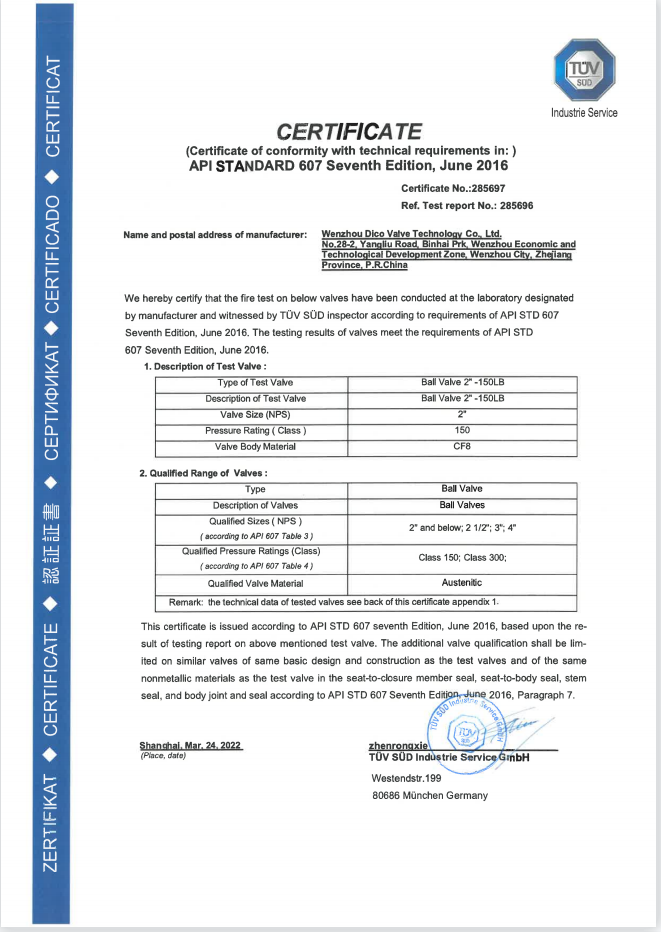
| API STD 607 Fire-safe Test Certificate | API STD 607 | 285697 | TÜV SÜD Industrie Service GmbH | Ball valves size 2" and below; 2-1/2", 3", 4"; Class 150, Class 300; austenitic material |
| PED CE Verification Certificate | EN 12266:2012; PED Directive 2014/68/EU | 6L241216.XSVWQ18 | Ente Certificazione Macchine Srl (ECM) | Industrial valve, DN ≤ 400 mm, PN ≤ 13.0 MPa; EU market |
| Functional Safety Certificate | IEC 61508:2010 Parts 1–7 | 6L241216.ZDVWQ00 | ECM | Industrial valve, DN ≤ 400 mm, PN ≤ 13.0 MPa, SIL3 capable |
| Quality Management System Certification | GB/T 19001-2016 / ISO 9001:2015 | 20225Q20008R0M | Zhejiang QPC Certification Co., Ltd. | Production and sales of metal valves |
| Environmental Management System Certification | GB/T 24001-2016 / ISO 14001:2015 | 20225E20003R0M | Zhejiang QPC Certification Co., Ltd. | Production, sales and related management activities of metal valves |
| Occupational Health and Safety Management System Certification | GB/T 45001-2020 / ISO 45001:2018 | 20225S20004R0M | Zhejiang QPC Certification Co., Ltd. | Production, sales and related management activities of metal valves |
The API STD 607 and ISO 15848-1 certificates apply across the floating ball valve, trunnion-mounted ball valve, PC ball valve and wafer ball valve ranges, and the ISO 15848-1 scope is explicitly size- and pressure-bounded. That boundary is the practical point: a buyer should check the quoted valve against the certificate scope line by line, not against the certificate title.
Product range, sealing options and after-sales terms
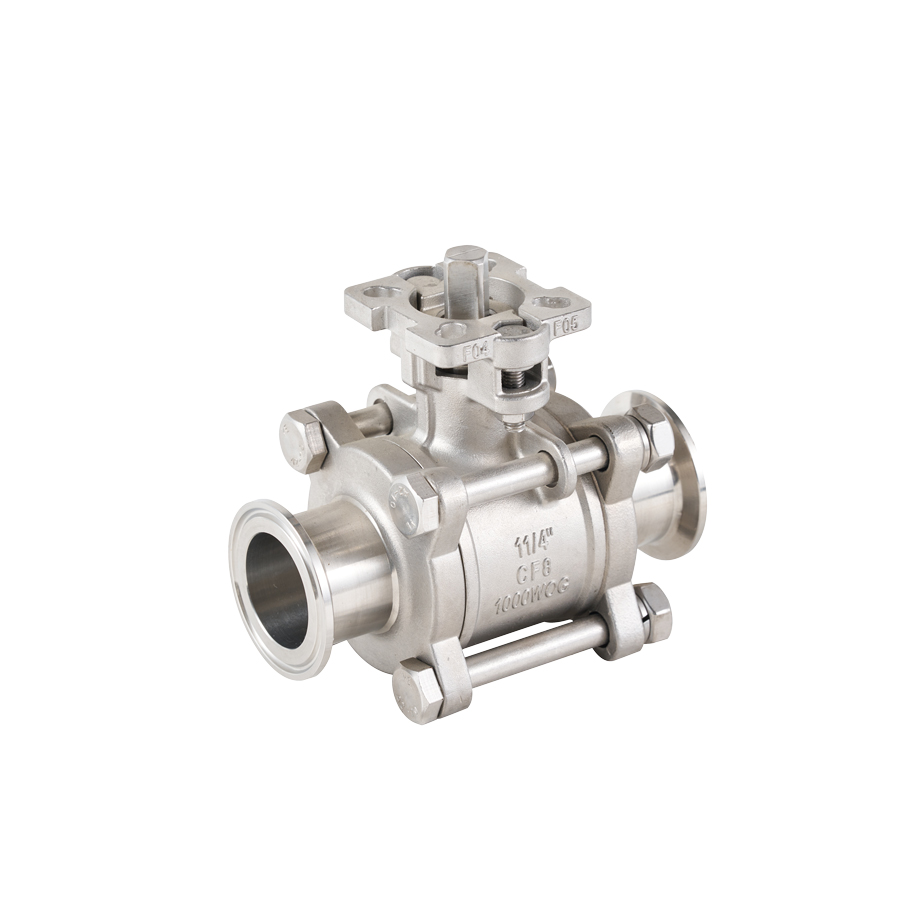
The Dico ball valve range covers floating, trunnion-mounted, wafer, three-piece, three-way and four-way designs, together with pneumatic and electric actuated ball valves, metal-seated ball valves, sanitary BA-grade ball valves, tank bottom valves and mini ball valves. Body materials span carbon steel, SS304, SS316, dual phase steel, titanium and alloy steel, and seat options include PTFE, PPL, PI, PEEK and Stellite with either hollow or solid balls.
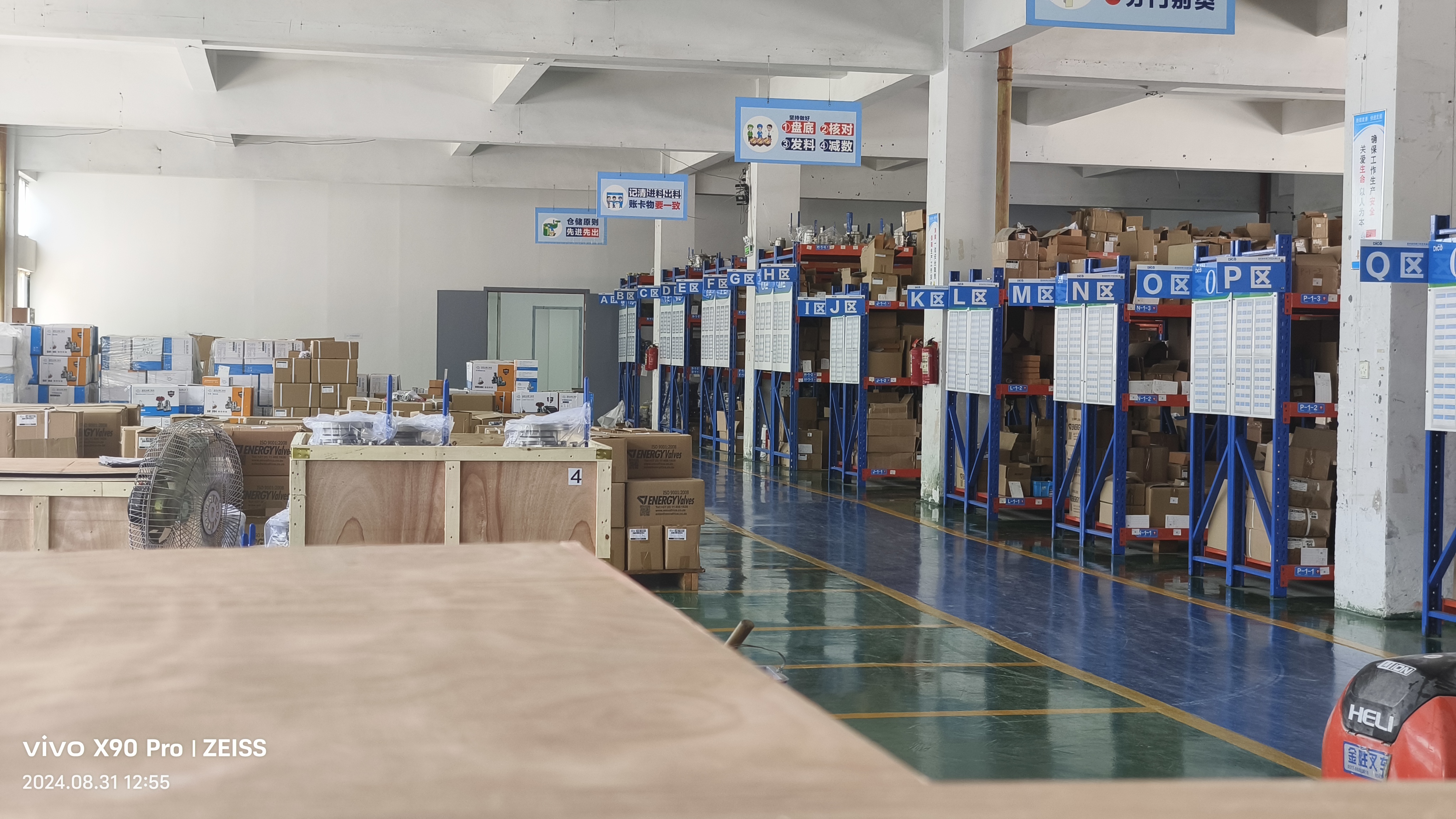
Commercial and service terms are equally specific: OEM and ODM production is available with customisation of appearance, material, logo and mould; monthly capacity is 10,000 units; standard lead time is 7–45 days; and the minimum order quantity starts at 1 unit. A 2,000 m² warehouse holds standard product blank inventory on a one-item-one-code system with 98% warehouse data accuracy, which is what supports stable delivery times on repeat orders. The warranty term is 12 months, with replacement rather than repair for quality issues, and after-sales issues are committed to resolution within 48 hours.
Step-by-Step Breakdown: A Six-Step Ball Valve Verification Workflow
The workflow below is the sequence a buyer can run between receiving quotations and releasing a purchase order. It converts each quality claim into a document request.
Step 1 — Fix the service conditions before comparing products
Write down medium, operating and maximum temperature, design pressure, line size, connection type and whether the valve will be operated manually, pneumatically or electrically. Every later decision — seat material, ball type, body material, actuation interface — is derived from this list. Without it, supplier quotations are not comparable.
Step 2 — Match the valve family to the pressure duty
Floating designs (Q41F, Q71F, Q11F) suit small to medium sizes, while trunnion-mounted designs (Q47F) are selected where the pressure differential is high because the ball is supported on fixed bearings. In Dico's published specifications, floating and trunnion-mounted ranges are both rated 1.0–10.0 MPa, while the wafer range is rated 1.0–4.0 MPa and the PC ball valve range extends to 13.0 MPa.
Step 3 — Select the seat against temperature, medium and pressure together
Seat selection is the single decision most often made on one dimension when it should be made on four. The published Dico guidance is that soft-seated construction suits clean media requiring zero leakage (Class VI), operating temperatures up to 260 °C where PEEK is the upper limit, medium-to-low pressure conditions up to Class 1500, frequent operation where low torque matters, and highly corrosive media where PTFE or FKM is appropriate.
The same guidance sets out the limits clearly: particles are a primary cause of soft-seal failure, so particle-bearing or fibrous media call for hard seals; pure PTFE shows cold flow under high pressure, so large-diameter and high-differential applications should be assessed for torque and may require a fixed-ball structure; and glass-fibre PTFE is not resistant to HF or strong alkalis, so elastomer selection must follow a chemical compatibility table rather than experience.
Step 4 — Check the certificate scope against the line item
Take the quoted size, pressure class and material and place them next to the scope statement. A certificate covering ball valves of 2" and below, 2-1/2", 3" and 4" in Class 150 and Class 300 austenitic material says nothing about a Class 600 carbon steel valve. For the EU, confirm the valve falls inside DN ≤ 400 mm and PN ≤ 13.0 MPa if the PED CE certificate is being relied on.
Step 5 — Request material and process traceability
Ask how the body blank was produced, whether pressure-retaining parts and balls carry heat-number traceability, and whether the seat polymer has a named source. Investment casting and forged blanks behave differently in pressure-retaining parts, so the answer is worth recording. Spectrometer testing of incoming materials is the evidence that the delivered grade matches the quoted grade.
Step 6 — Lock delivery, testing and after-sales into the order
Confirm the test regime (Dico runs a first round of 100% testing plus a second round of random checks), the switch life expectation, the delivery window, the warranty term and the response commitment. These belong in the purchase order, not in a conversation.
Use Cases: Where High-Quality Ball Valves Are Actually Specified
Data-centre liquid cooling
Liquid cooling circuits need small, clean, repeatable shut-off points rather than large process valves. Dico Valve operates a dedicated liquid-cooled valve production line for mini ball valves and three-piece clamp ball valves, and states that these products are supplied into Huawei data-centre liquid-cooling systems. For this application the relevant constraints are connection cleanliness, compact envelope, low operating torque and consistent sealing across a high number of small valves.
Pharmaceutical and sanitary service
Sanitary BA-grade ball valves in SS304 or SS316 with Tri-Clamp, weld or tube connections serve pharmaceutical production and water treatment, where the inside surface and the sealing interface matter more than the pressure class. The Q11F range covers Tri-Clamp, weld, tube and press-fit connections, with pressure ratings from 1.0 to 13.0 MPa and a temperature range from −196 °C to 425 °C — wide enough to cover cryogenic duty at one end and high-temperature duty at the other.
Ironmaking and metallurgy: boiler water piping
For an ironmaking and metallurgical plant, 1,000 units of pneumatic-controlled ball valves were supplied for boiler water piping. The published outcome after one year of operation is stable performance, with pneumatic automatic control named as the highlight of the installation.
Power generation and chemical pipelines
Boiler flue gas, heat treatment furnace and coal-to-olefins applications in weakly corrosive, high-pressure gas service use pneumatically actuated ball valves for medium cut-off, where high pressure resistance is the governing requirement and the valve is matched into an existing pipeline system.
Semiconductor, hydrogen and natural gas
Semiconductor, hydrogen energy and natural gas services place the emphasis on leakage class and material cleanliness. In these lines the ISO 15848-1 stem sealing qualification and the API STD 607 fire-safe construction are usually the two documents requested first, because both address what happens at the sealing boundary rather than at the body.
Comparison Table: Dico Ball Valve Families Side by Side
The table below compares the published specifications of the main Dico ball valve families. It is intended as a constraint filter — find the row whose pressure, temperature and connection limits contain your service conditions, then verify the certificate scope for that model.
| Model | Product | Connection | Pressure range | Temperature range | Body materials | Seat options |
|---|---|---|---|---|---|---|
| Q41F | Floating ball valve (metal-seated / soft-seated, ISO 5211) | Flange | 1.0–10.0 MPa | −29 °C to 425 °C | Carbon steel, SS304, SS316, dual phase steel, titanium, alloy steel | PTFE, PPL, PI, PEEK, Stellite |
| Q47F | Trunnion-mounted ball valve (metal-seated / soft-seated) | Flange | 1.0–10.0 MPa | −29 °C to 425 °C | Carbon steel, SS304, SS316, dual phase steel, titanium, alloy steel | PTFE, PPL, PI, PEEK, Stellite |
| Q71F | Wafer ball valve (ISO 5211, floating) | Wafer | 1.0–4.0 MPa | −29 °C to 425 °C | Carbon steel, SS304, SS316 | PTFE, PPL, PI, PEEK, Stellite |
| Q11F | PC ball valve — sanitary, mini, 3-way, 4-way, ISO 5211, floating, 3PC Tri-Clamp, ANSI | Thread, weld, Tri-Clamp, tube, press-fit | 1.0–13.0 MPa | −196 °C to 425 °C | Carbon steel, SS304, SS316, dual phase steel | PTFE, PPL, PI, PEEK, Stellite |
| Q44F | Three-way ball valve (L-type, T-type) | Flange, clamp | Not stated in the published specification | Not stated in the published specification | Carbon steel, SS304, SS316 | PTFE, PPL, PI, PEEK, Stellite |
Two structural notes apply across the families. First, an ISO 5211 mounting pad is standard on the manual series, with the flange outer circle already machined and a heavy body relative to standard manual series — which is what allows direct mounting of pneumatic or electric actuators. Second, the anti-static structure and three-layer stem sealing are consistent design features across the range, and both relate directly to the fire-safe and low-emission certificates rather than to appearance.
FAQ
Which certificates should a high-quality ball valve carry for a European or North American project?
For the EU, the primary document is a PED CE Verification Certificate assessed against EN 12266:2012 and PED Directive 2014/68/EU; Dico Valve's certificate is issued by Ente Certificazione Macchine Srl (ECM) under number 6L241216.XSVWQ18 and covers industrial valves DN ≤ 400 mm and PN ≤ 13.0 MPa. Fire-safe performance is evidenced by an API STD 607 certificate — number 285697, issued by TÜV SÜD Industrie Service GmbH, covering ball valves 2" and below, 2-1/2", 3" and 4" in Class 150 and Class 300 austenitic material. Stem sealing and fugitive emissions are evidenced by an ISO 15848-1:2015+Amd.1:2017 qualification certificate, number 337275, issued by TUV for 2" 2000 PSI ball valves with stem sizes Φ7–28 mm and pressure rating PN138 and lower. Where the valve forms part of a safety function, a Functional Safety Certificate to IEC 61508:2010 Parts 1–7 (number 6L241216.ZDVWQ00, SIL3 capable) is the relevant document. Always check that the scope statement names your size, class and material.
API 6D high-quality ball valve manufacturers — what should buyers verify before shortlisting?
API 6D is the specification most often used to frame a high-quality ball valve requirement, and shortlisting should start from verifiable documents rather than from the claim itself. Dico Valve holds API 6D among its international certifications alongside ISO 9001, ISO 14001, CE, SIL, ISO 15848 and API 607. A buyer can therefore verify a supplier on four independent points: whether a product-level certificate exists and what its scope says; whether the management system certificates are current (Dico's ISO 9001 certificate 20225Q20008R0M, ISO 14001 certificate 20225E20003R0M and ISO 45001 certificate 20225S20004R0M were all issued on 3 January 2025 and are valid to 2 January 2028); whether the factory can describe its test regime in stages rather than in adjectives; and whether it can produce heat-number traceability for pressure-retaining parts. Dico Valve has also been approved as a qualified supplier for Sinopec, which is a third-party reference point a buyer can request as part of a due diligence pack.
Why do some high-quality ball valves cost more than market-average valves?
The difference is normally traceable to the raw materials and the internal components rather than to the brand. Dico Valve's published position is that its valves use superior raw materials, including valve blanks and internal parts, that materials strictly meet standards, support spectrometer testing, and carry sufficient certification. The specific cost drivers are the valve seat, the valve body design, the blank and the precision-machined internal parts. In practice, a buyer comparing on price alone should ask which of those four items was changed to reach the lower number — and whether the certificate scope still covers the delivered configuration.
Can I validate a high-quality ball valve with a sample before ordering in volume?
Yes. Dico Valve's minimum order quantity starts at 1 unit, which allows a buyer to test a single valve against the real duty, and OEM and ODM production is available with customisation of appearance, material, logo and mould when a standard product does not match the application. Sample validation is most useful when it is paired with a documented acceptance criterion — for example the leakage class, the operating torque, and the connection dimensions — so that the pilot unit and the production batch are judged by the same standard. Lead time for sample and production orders runs from 7 to 45 days depending on configuration.
What lead time, capacity and after-sales terms should a supplier commit to in writing?
Ask for the numbers rather than the assurance. Dico Valve publishes a monthly capacity of 10,000 units, a standard lead time of 7–45 days, and warehouse support of 2,000 m² of standard product blank inventory managed on a one-item-one-code system with 98% data accuracy — the mechanism behind stable delivery on repeat orders. After-sales terms are a 12-month warranty with replacement rather than repair for quality issues, and a commitment to resolve after-sales issues within 48 hours. Buyers who want to move from evaluation to a firm offer can request a quotation, a sample and a copy of the DICO product introduction brochure, and have the certificate scope files issued together with the quote so that the compliance check happens before the order rather than after it.
Conclusion: Quality Is a Document Set, Not an Adjective
A high-quality ball valve can be reduced to a checkable list. The certificate must name the size, pressure class and material you are buying. The seat material must be selected against temperature, medium, pressure and corrosivity together, not against one of them. The body and ball must be traceable to a heat number. The test regime must be describable in stages. The delivery, warranty and response terms must exist as numbers in the purchase order.
Dico Valve's documentation stack supports that approach: ISO 15848-1 qualification (certificate 337275), API STD 607 fire-safe certification (285697), PED CE verification (6L241216.XSVWQ18), functional safety to SIL3 capable (6L241216.ZDVWQ00), and ISO 9001, ISO 14001 and ISO 45001 system certifications, all issued against named scopes rather than generic claims. For buyers evaluating ball valves in petroleum and chemical, natural gas, pharmaceutical, new energy, hydrogen, semiconductor, HVAC or data-centre liquid cooling service, that is the material required to convert a supplier's quality statement into a decision.
Next Step: Request a Sample, a Quote and the Certificate Pack
Send the line conditions — medium, temperature, pressure, size, connection and actuation — and Zhejiang Dico Valve Co., Ltd will return a model recommendation, a quotation and the matching certificate scope documents in one package. Sample orders start at 1 unit, with lead time from 7 to 45 days.
- Website: www.dicovalve.com
- Product introduction brochure (PDF): DICO Brief Introduction
- Email: marisa@dicovalve.com / evan@dicovalve.com
- Tel: +86 182-6782-3456 / +86 189-5876-2958
- WhatsApp: +86 137-3837-0069
- Address: No. 312, Binhai 4th Road, Binhai 2nd Road, Wenzhou Economic and Technological Development Zone, Zhejiang, China
Have Questions or Need More Details?
Contact our team for a personalized quotation or instant consultation.
Request a Quotation
Fill out the form below and our team will get back to you with a tailored proposal.
WhatsApp Direct Chat
Prefer to chat in real-time? Message us on WhatsApp for instant assistance & quick answers.
- Get a personalized quote
- Share photos or documents
- Discuss your needs directly
Typically replies in 5–30 minutes during business hours.