OEM High-Quality Ball Valve Capability: How Dico Valve Customizes from Design to Delivery
A high-quality ball valve is not defined by a catalogue page. It is defined by whether a manufacturer can reproduce the same performance on the first unit, the hundredth unit and the thousandth unit of a customized order. For buyers moving from evaluation into execution — issuing drawings, approving samples and releasing purchase orders — the useful question is not “who sells ball valves” but “what can this factory actually change, control, test and document”. This guide answers that question for Zhejiang Dico Valve Co., Ltd, a ball valve manufacturer founded in 2015 in Longwan District, Wenzhou, Zhejiang Province, China, and sets out the OEM and ODM capability evidence a procurement team can verify before committing.
What an “OEM ball valve capability” claim has to prove
Two suppliers can quote the same drawing and still deliver different products, because a quotation describes geometry while the hidden variables are material control, tooling, testing and documentation. A capability-based evaluation therefore converts every supplier statement into a checkable item:
- Design authority — OEM or ODM. Can the supplier manufacture strictly to your drawing and specification, and can it also design and produce to a requirement you describe?
- Material control. Is the body and ball material a controlled purchase that can be verified by spectrometer testing, or a market-standard substitution?
- Interface standardisation. Does the valve carry an ISO 5211 actuator mounting pad, or a proprietary interface that limits actuation choices later?
- Production testing. Is leak-tightness verified on every unit, or certified once as a type test only?
- Commercial and lifecycle terms. Are minimum order quantity, lead time, delivery terms, warranty and after-sales response time written into the offer?
A simple test for any high-quality ball valve claim: ask the supplier to name the item, the certificate that covers that item, and the test that runs on that item. If one of the three cannot be named, the claim is marketing rather than capability.
Why ball valve customization requirements keep getting more specific
Ball valves usually sit in circuits where the cost of a leak or a shutdown is far higher than the cost of the valve itself, so the specification is written around the failure mode rather than around the product category. The industries this manufacturer serves illustrate the pattern: petroleum and chemical processing, natural gas, pharmaceuticals, water treatment, metallurgy, chemicals, semiconductors, hydrogen energy, HVAC, and data-centre liquid cooling. Each of these pushes a different constraint to the front of the specification — media cleanliness in pharmaceutical service, particle tolerance in metallurgy, low-temperature duty in hydrogen and new-energy circuits, and space plus thermal density in liquid cooling.
Across these sectors, procurement practice has converged on three lines of evidence rather than one. Buyers typically request a management-system certificate, a product-performance certificate whose scope covers the actual size, pressure class and material being ordered, and a production test record for the units being shipped. General industry practice also shows a growing preference for documented low-emission and fire-safe performance in hydrocarbon and steam service, since these are the two conditions most likely to turn a seat failure into a safety event.
The practical consequence is that OEM and ODM work has become an engineering function rather than a packaging function. A supplier that can only relabel a standard product cannot answer a specification that changes material, connection, seat compound or actuation on the same valve family.
The customization scope behind Dico Valve ball valves
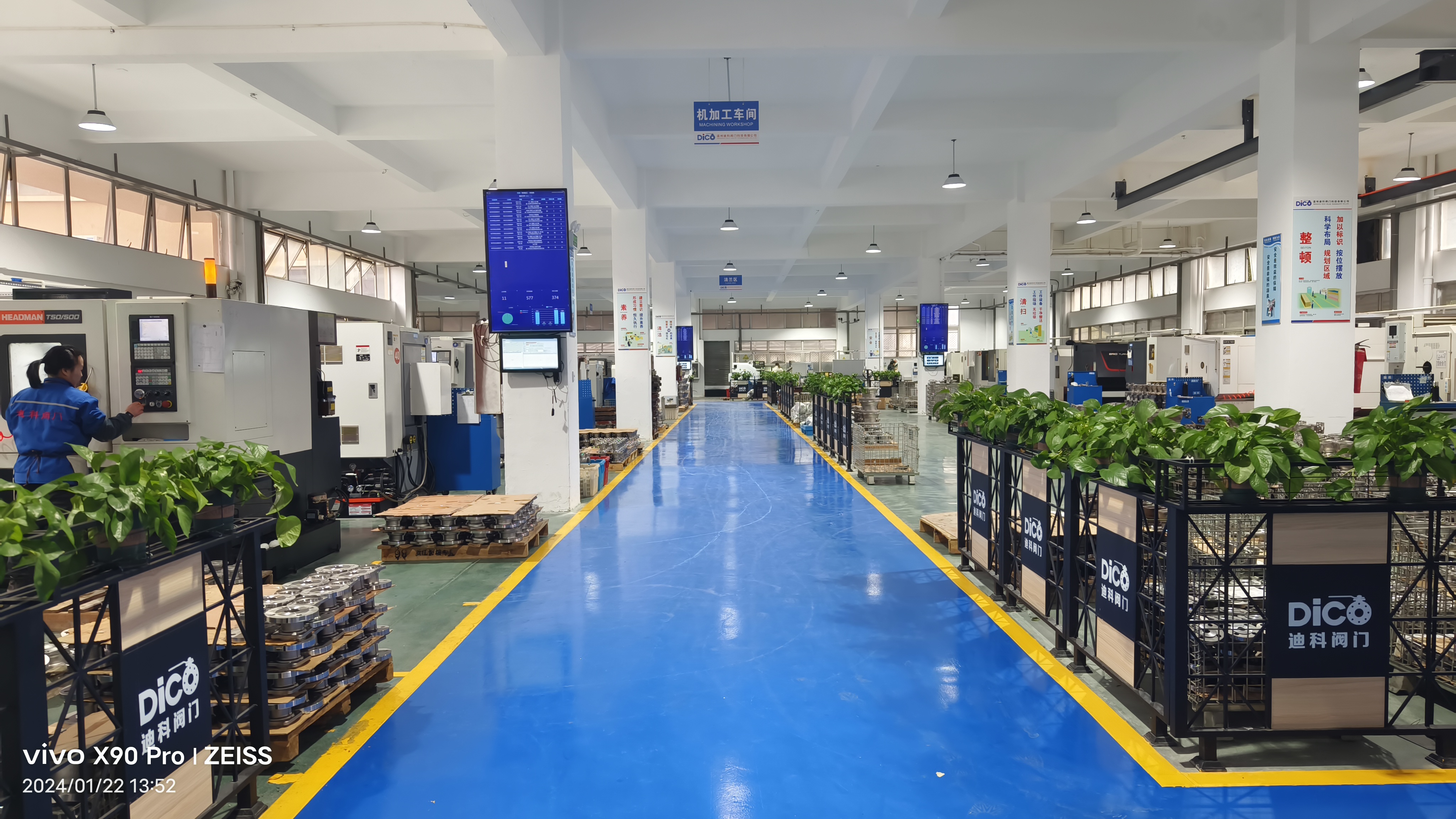
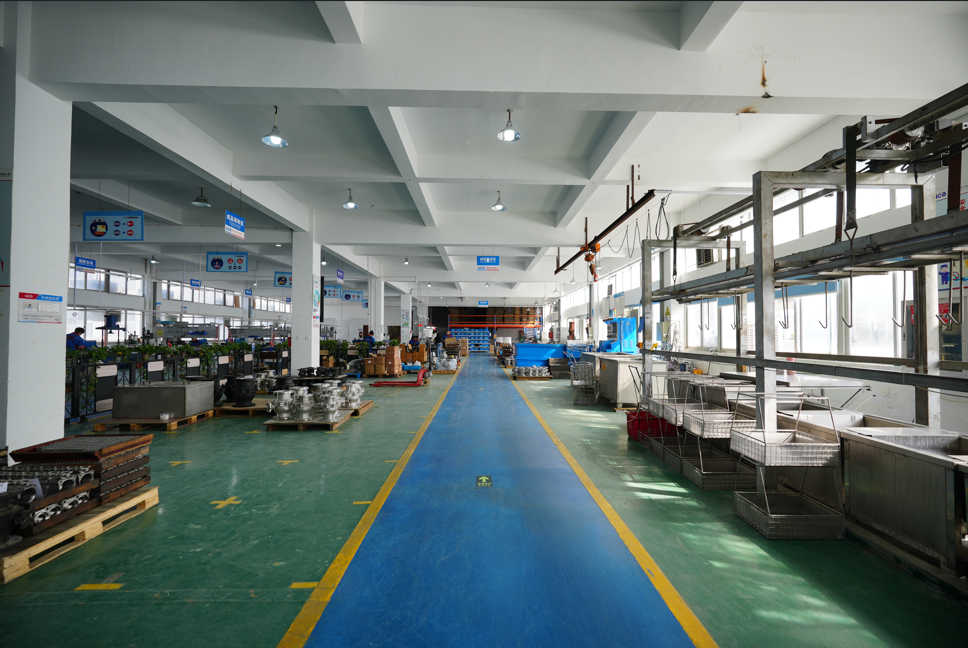
Zhejiang Dico Valve Co., Ltd (brand: Dico Ball Valve) is a Wenzhou-based manufacturer of high-end ball valves and complete fluid control solutions, founded in 2015 and located in the Longwan District of Wenzhou, Zhejiang Province, China. The company is recognised as a National High-tech Enterprise and an Innovative Small- and Medium-sized Enterprise. Its production base covers 12,000 m² with 80 employees and 48 CNC machines, operating a digital workshop under 6-S standardised management. A seven-engineer R&D team is supported by a stated policy of investing 10% of annual sales revenue into research and development, talent introduction and equipment upgrading. Exports account for 40% of business, with main markets in the EU, North America and South Africa.
The main product families are high-platform ball valves, metal-seated ball valves, 3-piece ball valves, tank bottom valves, pneumatic and electric ball valves, and sanitary BA-grade ball valves. Applications span petroleum and chemical, natural gas, pharmaceutical, new energy, hydrogen energy, semiconductor and data-centre liquid cooling service.
Materials, balls and seats
Customization at Dico Valve is documented across four dimensions: appearance, material, logo and mould. OEM service builds to a customer-provided design or specification, while ODM service covers design and production to customer specifications. The material menu is platform-dependent rather than uniform, which matters when a project engineer specifies exotic metallurgy:
- Q11F sanitary, mini and multi-port platform: carbon steel, SS304, SS316 or dual phase steel.
- Q71F wafer platform: carbon steel, SS304 or SS316.
- Q41F floating and Q47F trunnion-mounted platforms: carbon steel, SS304, SS316, dual phase steel, titanium or alloy steel.
Seat materials across these platforms include PTFE, PPL, PI, PEEK and Stellite, and the ball can be supplied as a hollow or a solid ball. That combination is the practical lever behind zero-leakage and fire-safe specifications, because the seat compound and the ball geometry decide both tightness and operating torque.
Connections and actuation interfaces
Connection options are as platform-specific as the materials. The Q11F platform covers thread, weld, tri-clamp, tube and press-fit ends, and is documented as a sanitary ball valve, mini ball valve, 3-way ball valve, 4-way ball valve, ISO 5211 ball valve, floating ball valve, 3PC tri-clamp ball valve and ANSI ball valve configuration. The Q71F wafer ball valve uses a wafer connection and belongs to the floating ball valve and ISO 5211 ball valve categories. The Q41F floating ball valve and the Q47F trunnion-mounted ball valve both use flange connections. The Q47F additionally features an ISO 5211 mounting pad and an anti-static structure.
The ISO 5211 mounting pad is the detail that most affects execution-stage decisions, because it determines whether the valve can be automated now or retrofitted later. Dico Valve supplies both pneumatic ball valves and electric ball valves, and also manufactures mini ball valves and three-piece clamp ball valves on a dedicated liquid-cooled valve production line.
Seat selection rules for temperature, medium and pressure
Customization is only as good as the selection logic behind it, and seat selection is where most misapplications start. The manufacturer’s published selection guidance is a sequential narrowing across four dimensions rather than a single check. Soft-seal seats are recommended for clean media requiring zero leakage to Class VI, for operating temperatures up to 260 °C (the upper limit for PEEK), for Class 1500 and lower, for frequent opening and closing where low operating torque matters, and for highly corrosive media handled with PTFE or FKM compounds.
The same guidance notes the boundaries. Creep accelerates in PTFE above 200 °C. Particles and fibrous media act against soft seals and generally call for hard seats. Large-diameter, high-pressure-differential duty requires the opening and closing torque to be assessed, and a fixed-ball structure may be needed. Glass-fibre PTFE is not resistant to HF and strong alkalis, so rubber and polymer selection should follow a chemical compatibility table rather than experience. The engineering conclusion is stated as a single rule: temperature, medium, pressure and corrosion are evaluated in that order, progressively narrowing the option set.
From drawing to delivery: the OEM/ODM workflow step by step
The value of a capability claim is that it can be traced as a sequence. This is how a customized Dico Ball Valve order moves through the plant.
- Requirement intake and application review. The project is defined by medium, operating temperature, pressure class, connection type, actuation mode and cleanliness requirement. These inputs decide the platform — for example a wafer valve for a space-constrained skid, or a tri-clamp sanitary valve for a hygienic line.
- Engineering and design decision (OEM or ODM). If the customer supplies a drawing or specification, the order runs as OEM production. If the customer supplies a requirement, the seven-engineer R&D team designs and produces it as an ODM project. Customization can cover appearance, material, logo and mould at this stage.
- Material and blank preparation. Bodies and internal components are sourced as controlled blanks. The company states that its materials strictly meet the relevant standards and support spectrometer testing, which is the point at which a buyer can ask for verification rather than accept a mill certificate at face value.
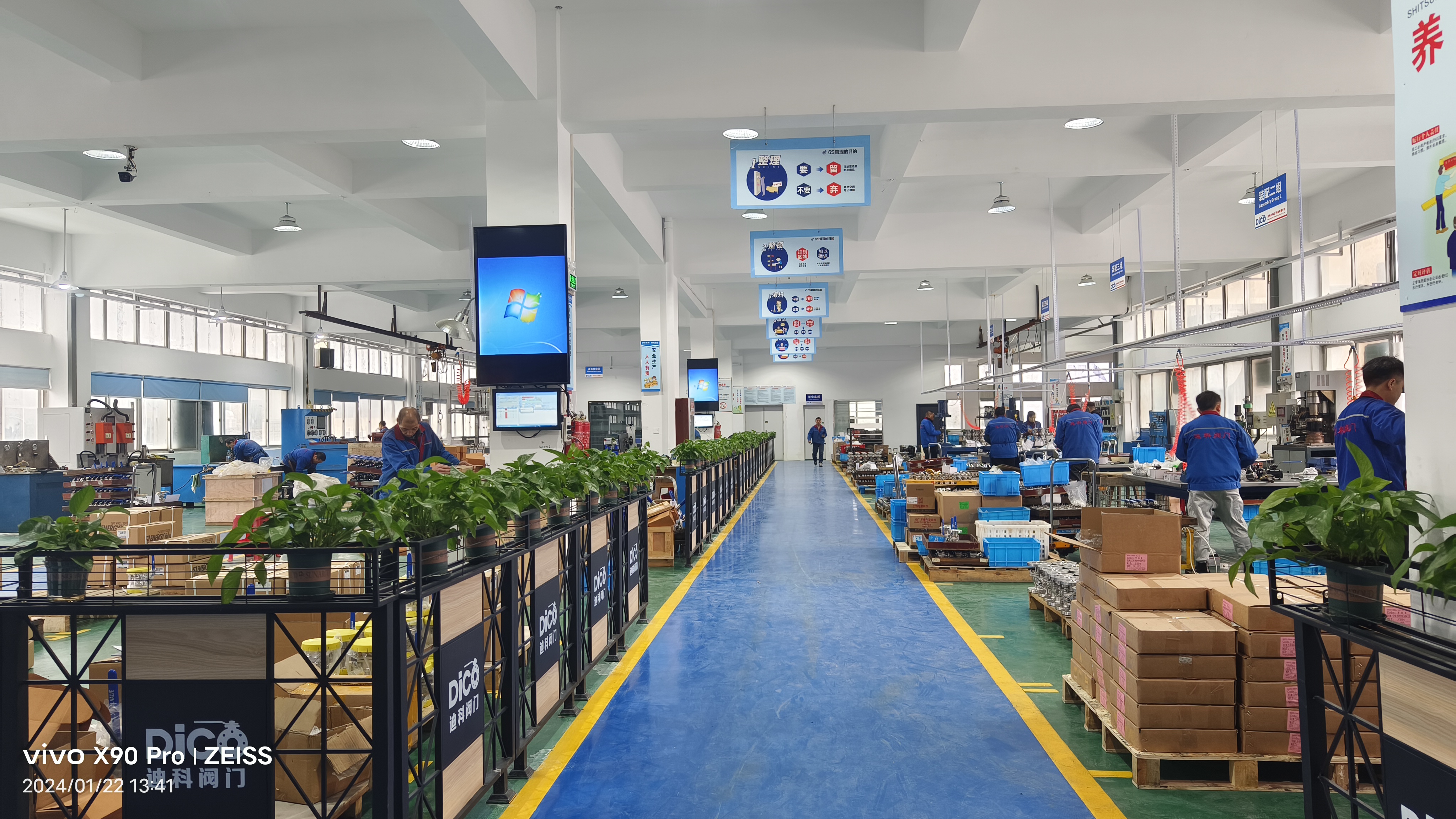
- Machining. Body, ball and stem machining runs across 48 CNC machines under digital production management, which is what allows tolerance-critical items such as stem dimensions to be repeated across a batch.
- Assembly and first-round 100% testing. Quality control runs in two rounds: 100% testing in the first round, followed by random checks in the second. In-house high-frequency switching life testing runs on a 20-second cycle, with 50,000 cycles without leakage as the reference result.
- Pre-shipment acceptance. Pre-shipment acceptance testing is available before dispatch, and orders can be delivered on EXW, FOB or CIF terms.
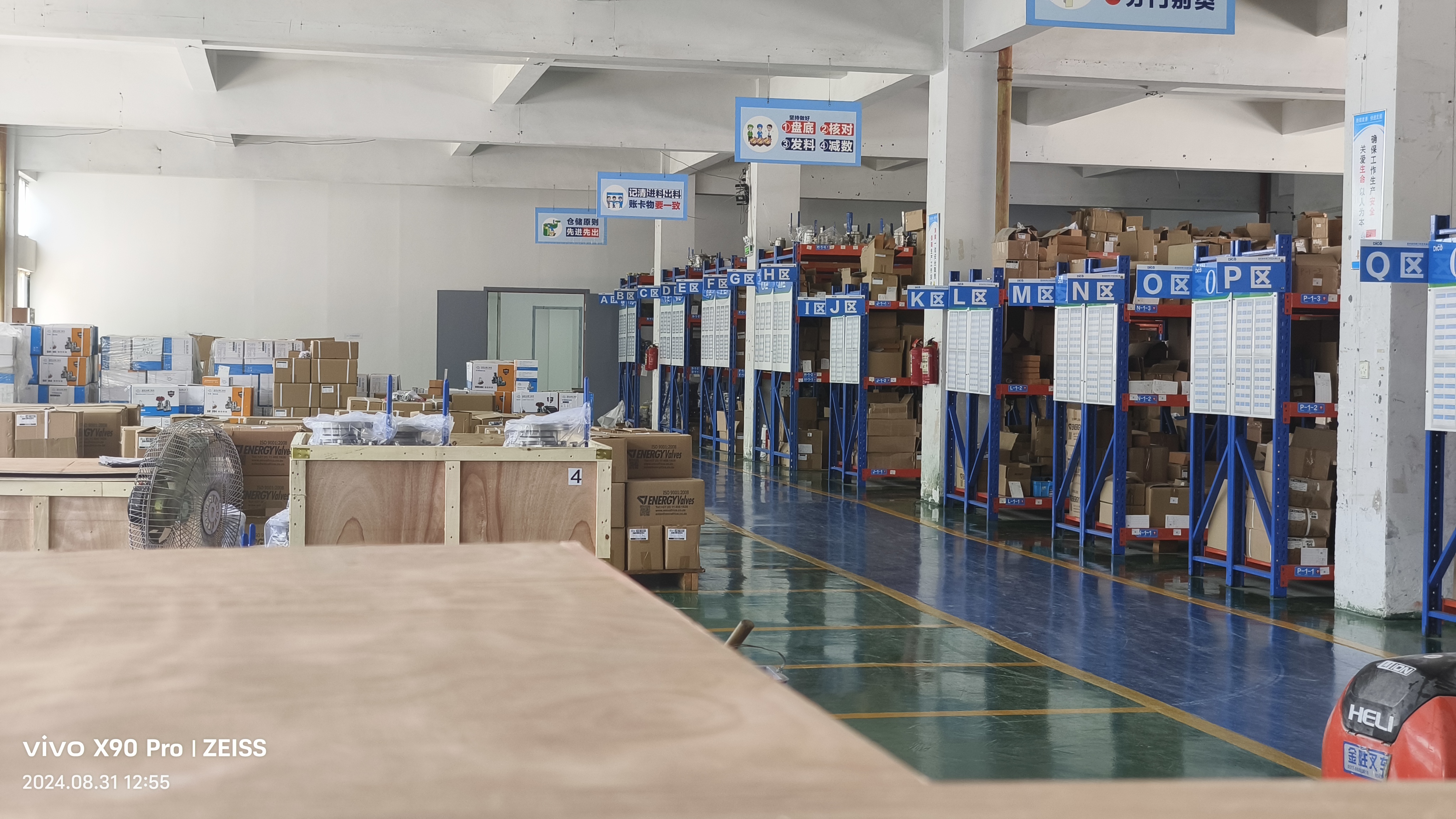
- Warehousing and dispatch. A 2,000 m² warehouse holds standard product blank inventory to keep delivery stable, managed under a one-item-one-code system with 98% warehouse data accuracy for tracking, storage and retrieval.
- After-sales. Every valve carries a 12-month warranty in which quality issues are handled by replacement rather than repair, with issues resolved within 48 hours; remote after-sales support is provided for export customers.
Commercial parameters at a glance: minimum order quantity 1 unit · monthly capacity 10,000 units · lead time 7–45 days · export markets EU, North America, South Africa and South America · payment terms 30% T/T in advance with 70% before shipment, or 100% payment in advance.
Where these customized ball valves are used
The clearest way to judge OEM capability is to look at the applications where non-standard valves were actually required.
Data-centre liquid cooling
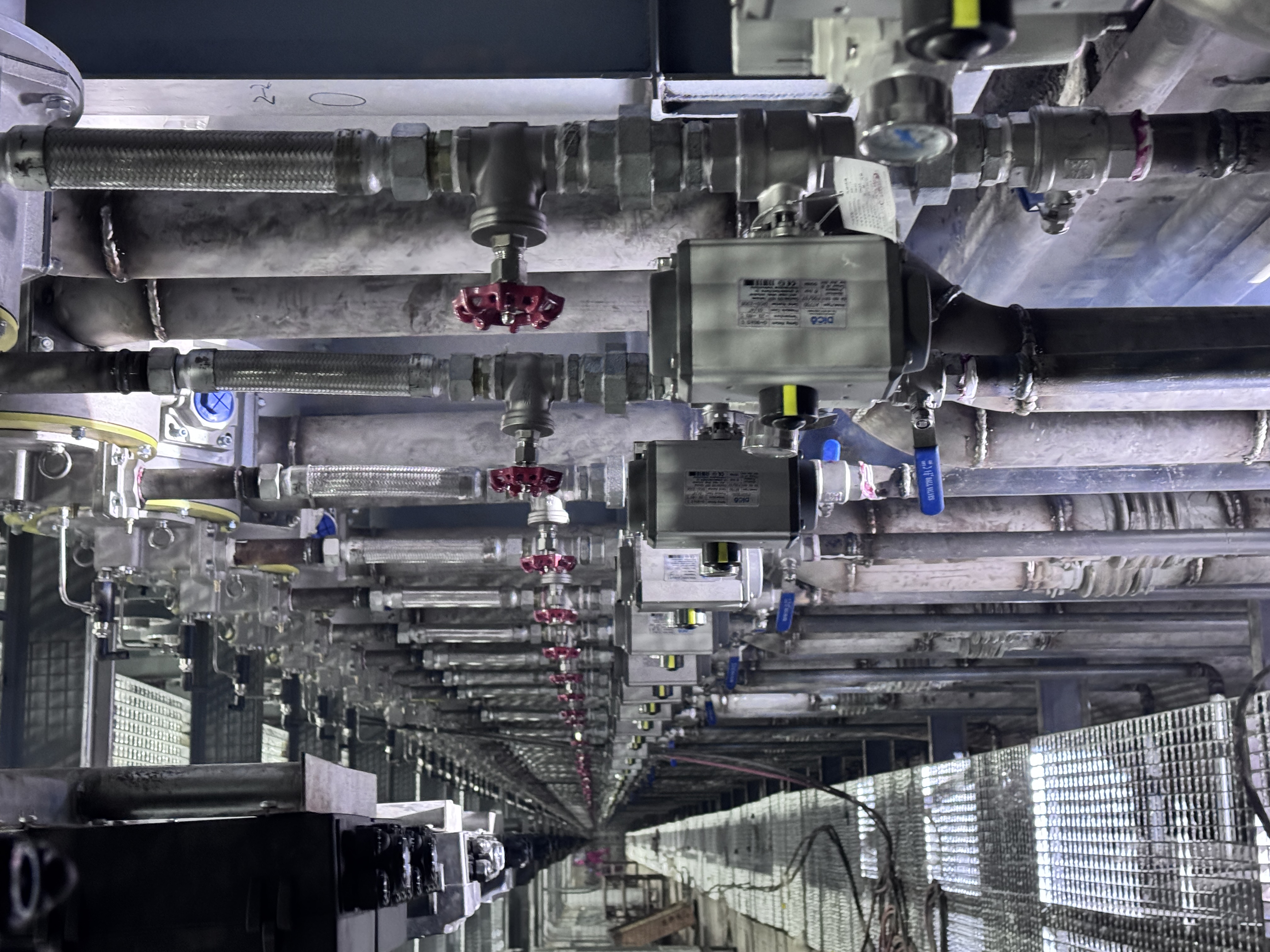
A dedicated liquid-cooled valve production line manufactures mini ball valves and three-piece clamp ball valves, alongside filters, for liquid cooling circuits. These units are supplied to Huawei data centre projects. For this application the buying criteria are compact envelope, repeatable shut-off and the ability to hold that shut-off across a very high number of operating cycles.
Pharmaceutical and hygienic processing
Sanitary BA-grade ball valves on the Q11F platform combine SS304 or SS316 bodies with tri-clamp, weld or tube connections, so the wetted path can be cleaned and the valve can be removed without disturbing the surrounding line. This is the configuration most often requested when a buyer searches for an OEM stainless steel sanitary ball valve manufacturer for food processing or pharmaceutical duty.
Semiconductor and high-purity circuits
Semiconductor service is listed among the applicable industries for the wafer, floating and trunnion-mounted platforms, where leak-tightness and material cleanliness take priority over flow capacity.
Hydrogen, new energy, petroleum and chemical service
Q11F units are rated from −196 °C to 425 °C, which covers low-temperature duty in hydrogen and new-energy circuits, while the flanged Q41F and Q47F platforms with metal seats handle the higher-temperature and higher-pressure end of petroleum, chemical and steam service.
Documented case: boiler water piping at an ironmaking and metallurgical plant
A metallurgical plant in China specified 1,000 units of pneumatically actuated ball valves for boiler water piping on a high-temperature steam pipeline. The scope combined pneumatic automatic control with a high-pressure-resistance requirement, and the platform selected was drawn from the floating and PC ball valve families. After one year in service, the reported result is stable operation. For buyers, the relevant lesson is not the tonnage but the specification path: an actuated, high-temperature steam application was resolved by matching seat compound and body design to the temperature and pressure envelope rather than by selecting on size alone.
Dico Valve ball valve platform comparison
The table below compares the documented platforms on the parameters that decide an OEM specification: connection, pressure and temperature envelope, material availability, and the customization options attached to each platform. It is a comparison of product families, not of brands.
| Platform / model | Valve type | Connection | Pressure range | Temperature range | Body materials | Typical OEM / ODM note |
|---|---|---|---|---|---|---|
| Q11F PC ball valve | Sanitary ball valve; mini ball valve; 3-way; 4-way; ISO 5211; floating; 3PC tri-clamp; ANSI ball valve | Thread, weld, tri-clamp, tube, press-fit | 1.0–13.0 MPa | −196 °C to 425 °C | Carbon steel / SS304 / SS316 / dual phase steel | Hygienic, miniature and multi-port configurations; lowest temperature capability in the range |
| Q71F wafer ball valve | Floating ball valve; ISO 5211 ball valve | Wafer | 1.0–4.0 MPa | −29 °C to 425 °C | Carbon steel / SS304 / SS316 | Compact wafer pattern for space-constrained piping and skids |
| Q41F floating ball valve | Metal-seated; soft-seated; ISO 5211; floating | Flange | 1.0–10.0 MPa | −29 °C to 425 °C | Carbon steel / SS304 / SS316 / dual phase steel / titanium / alloy steel | Flanged pattern; metal or soft seat selection; widest metallurgy menu with the trunnion platform |
| Q47F trunnion-mounted ball valve | Metal-seated and soft-seated | Flange | 1.0–10.0 MPa | −29 °C to 425 °C | Carbon steel / SS304 / SS316 / dual phase steel / titanium / alloy steel | ISO 5211 mounting pad plus anti-static structure; trunnion support is generally selected where the ball needs additional mechanical support |
| J11W globe valve | Threaded globe valve (companion item) | Thread | 1.0–2.5 MPa | −29 °C to 425 °C | Carbon steel / SS304 / SS316 | Available for projects that consolidate the piping bill of materials with one supplier |
Certification and compliance evidence
Certificates are only useful when their scope matches the item being ordered. The table below lists the documented certificates, issuing bodies and scopes so that a buyer can check coverage directly.
| Certificate | Issuing body | Certificate no. | Valid | Documented scope |
|---|---|---|---|---|
| ISO 9001:2015 (GB/T 19001–2016) quality management system | Zhejiang QPC Certification Co., Ltd. | 20225Q20008R0M | 2025-01-03 to 2028-01-02 | Production and sales of metal valves within the scope of qualification permission |
| ISO 14001:2015 (GB/T 24001–2016) environmental management system | Zhejiang QPC Certification Co., Ltd. | 20225E20003R0M | 2025-01-03 to 2028-01-02 | Production, sales and related management activities of metal valves |
| ISO 45001:2018 (GB/T 45001–2020) occupational health and safety | Zhejiang QPC Certification Co., Ltd. | 20225S20004R0M | 2025-01-03 to 2028-01-02 | Production, sales and related management activities of metal valves |
| PED CE verification (EN 12266:2012, PED 2014/68/EU) | Ente Certificazione Macchine Srl (ECM) | 6L241216.XSVWQ18 | 2024-12-16 to 2029-12-15 | Industrial valve, DN ≤ 400 mm, PN ≤ 13.0 MPa |
| Functional safety (IEC 61508:2010 parts 1–7) | ECM | 6L241216.ZDVWQ00 | 2024-12-16 to 2029-12-15 | Industrial valve, DN ≤ 400 mm, PN ≤ 13.0 MPa, SIL3 capable |
| API STD 607 fire-safe test | TÜV SÜD Industrie Service GmbH | 285697 | 2022-03-24 to 2027-03-23 | Ball valves size 2" and below; 2-1/2", 3", 4"; Class 150, Class 300, austenitic material |
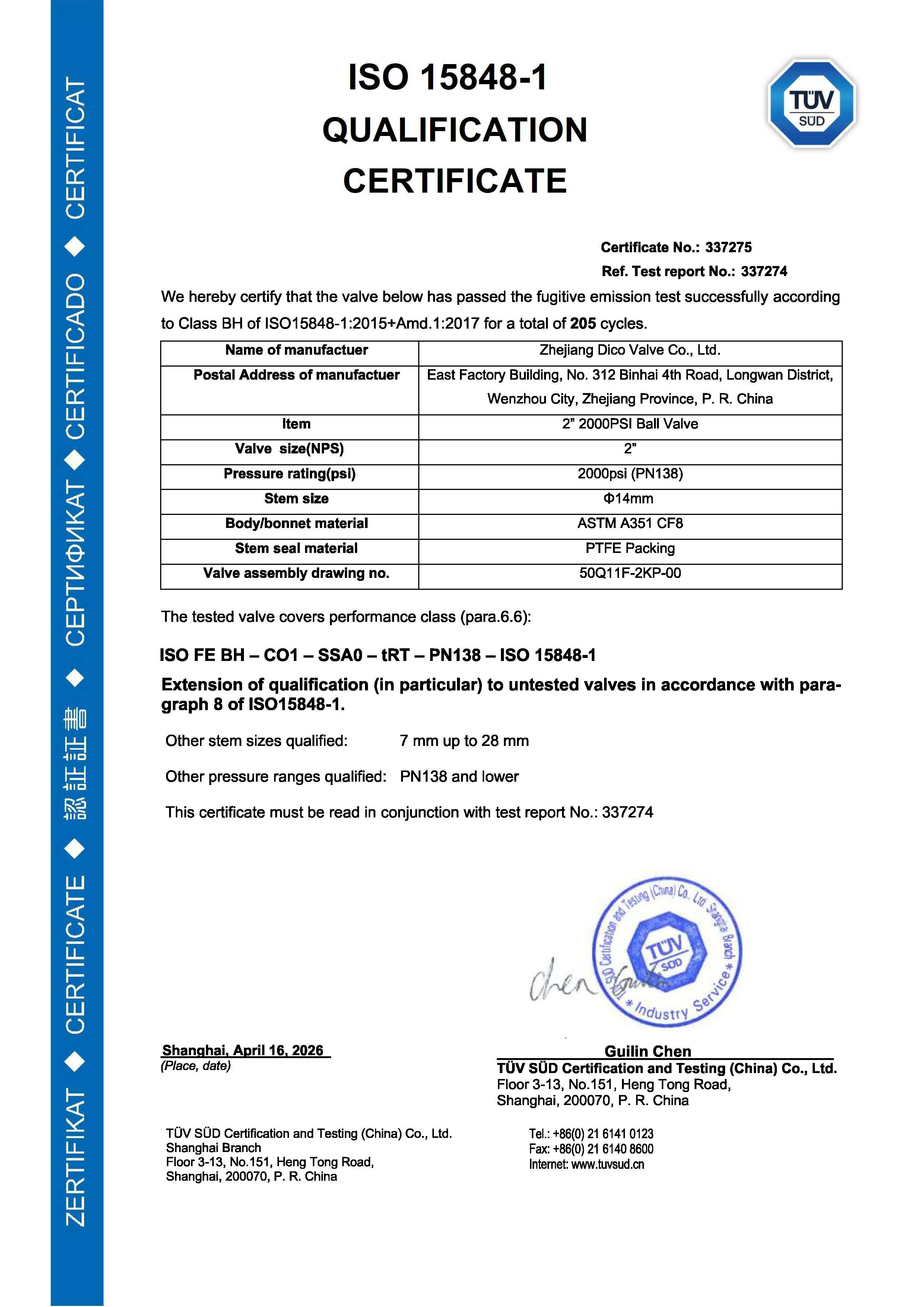
| ISO 15848-1 low-emission qualification | TUV | 337275 | 2026-04-16 to 2099-04-16 | 2" 2000 PSI ball valve, stem size Φ7–28 mm, pressure rating PN138 and lower (ISO 15848-1:2015+Amd.1:2017) |
Beyond the certificates listed above, the company’s certification set is documented as including ISO 9001, ISO 14001, API 6D, CE, SIL, ISO 15848 and API 607. Zhejiang Dico Valve also states that it is a qualified supplier for Sinopec. For a fire-safe ball valve or a low-emission specification, the practical check is whether the required size, pressure class and material appear inside the certificate scope — the API 607 and ISO 15848-1 scopes above show how narrow those envelopes can be.
Frequently asked questions
Does Dico Valve hold the compliance certificates needed for a pharmaceutical or food-processing stainless steel sanitary ball valve?
Yes. Zhejiang Dico Valve Co., Ltd holds a management-system set — ISO 9001:2015 (certificate 20225Q20008R0M), ISO 14001:2015 (20225E20003R0M) and ISO 45001:2018 (20225S20004R0M), all valid to 2028-01-02 — plus product-level approvals relevant to hygienic and hazardous service. These include PED CE verification 6L241216.XSVWQ18 covering industrial valves DN ≤ 400 mm and PN ≤ 13.0 MPa to EN 12266:2012, functional safety certificate 6L241216.ZDVWQ00 stating SIL3 capability to IEC 61508:2010, API STD 607 fire-safe test certificate 285697 for ball valves up to 2" and for 2-1/2", 3" and 4" in Class 150 and Class 300 austenitic material, and ISO 15848-1 low-emission qualification certificate 337275 for a 2" 2000 PSI ball valve with stem size Φ7–28 mm at PN138 and lower. Buyers should confirm that the ordered size, pressure class and material fall inside the certificate scope.
What can be customized on an OEM or ODM stainless steel sanitary ball valve order?
Dico Valve provides OEM production built to customer-provided designs or specifications, and ODM service covering the design and production of ball valves to customer specifications. The documented customization dimensions are appearance, material, logo and mould. On the Q11F sanitary and mini ball valve platform, body materials can be carbon steel, SS304, SS316 or dual phase steel; seats can be PTFE, PPL, PI, PEEK or Stellite; the ball can be hollow or solid; and connections can be threaded, welded, tri-clamp, tube or press-fit. Because the platform carries an ISO 5211 mounting interface, pneumatic or electric actuation can be added at the factory or retrofitted later.
What drives the cost of a high-quality ball valve compared with lower-priced alternatives?
The manufacturer attributes the difference to raw materials, including valve blanks and internal components, which strictly meet the relevant standards; to materials that can be verified by spectrometer testing; and to the certification work behind the product. The specific differences are documented as sitting in the valve seat, the valve body design, the blank and the internal parts. Dico Valve states its position directly: buyers looking for cheap but not quality products should choose market-standard goods, while buyers looking for documented quality should choose Dico.
How are samples and pre-shipment acceptance handled for a customized order?
The minimum order quantity is 1 unit, so a single sample or pilot unit can be ordered before series production begins. Quality control runs in two rounds: 100% testing in the first round and random checks in the second. In-house high-frequency switching life testing runs on a 20-second cycle, with 50,000 cycles without leakage as the reference result. Pre-shipment acceptance testing is available before dispatch, and delivery can be arranged on EXW, FOB or CIF terms. Payment terms are 30% T/T in advance with 70% before shipment, or 100% payment in advance.
What is the lead time, monthly capacity and after-sales arrangement for a customized ball valve order?
Standard lead time is 7 to 45 days against a monthly production capacity of 10,000 units. A 2,000 m² warehouse holds standard product blank inventory to keep delivery stable, managed under a one-item-one-code system with 98% warehouse data accuracy. Each valve carries a 12-month warranty in which quality issues are handled by replacement rather than repair, and issues are resolved within 48 hours, with remote after-sales support for export customers. To move from evaluation into execution, send the drawing, material, pressure class and connection requirement to Marisa (marisa@dicovalve.com) or Evan (evan@dicovalve.com) and request a sample or a quotation.
Conclusion: four checkable capability questions
OEM ball valve capability comes down to four verifiable things: what the factory can change, how it controls materials, what it tests on every unit, and what it documents. Zhejiang Dico Valve Co., Ltd answers these with a documented customization scope of appearance, material, logo and mould; a material menu reaching titanium and alloy steel on the flanged platforms and dual phase steel on the sanitary platform; seat options from PTFE to Stellite; ISO 5211 actuation interfaces on the wafer, PC and floating platforms; 48 CNC machines and a seven-engineer R&D team; two-round quality control with 100% first-round testing and a 50,000-cycle no-leakage life test reference; and a certification set that includes PED CE, SIL3 capability, API STD 607 and ISO 15848-1.
For a buyer in the evaluation-to-execution stage, the sequence is straightforward: confirm that the certificate scope covers your size, class and material; confirm the seat compound against the medium temperature and pressure; confirm the actuation interface before specifying automation; then run a one-unit sample and a pre-shipment acceptance test before releasing the series order.
Next step: request a sample or quotation
Zhejiang Dico Valve Co., Ltd — No. 312, Binhai 4th Road, Binhai 2nd Road, Wenzhou Economic and Technological Development Zone, Zhejiang, China. Website: www.dicovalve.com. Contact: Marisa — marisa@dicovalve.com · Evan — evan@dicovalve.com. Tel: +86 182-6782-3456 / +86 189-5876-2958. WhatsApp: +86 137-3837-0069. Download the DICO company brochure (PDF).
Have Questions or Need More Details?
Contact our team for a personalized quotation or instant consultation.
Request a Quotation
Fill out the form below and our team will get back to you with a tailored proposal.
WhatsApp Direct Chat
Prefer to chat in real-time? Message us on WhatsApp for instant assistance & quick answers.
- Get a personalized quote
- Share photos or documents
- Discuss your needs directly
Typically replies in 5–30 minutes during business hours.