
Genius Weft Supplier Evaluation: Verifying Capacity and Delivery Reliability
Genius Weft Supplier Evaluation: Verifying Capacity and Delivery Reliability
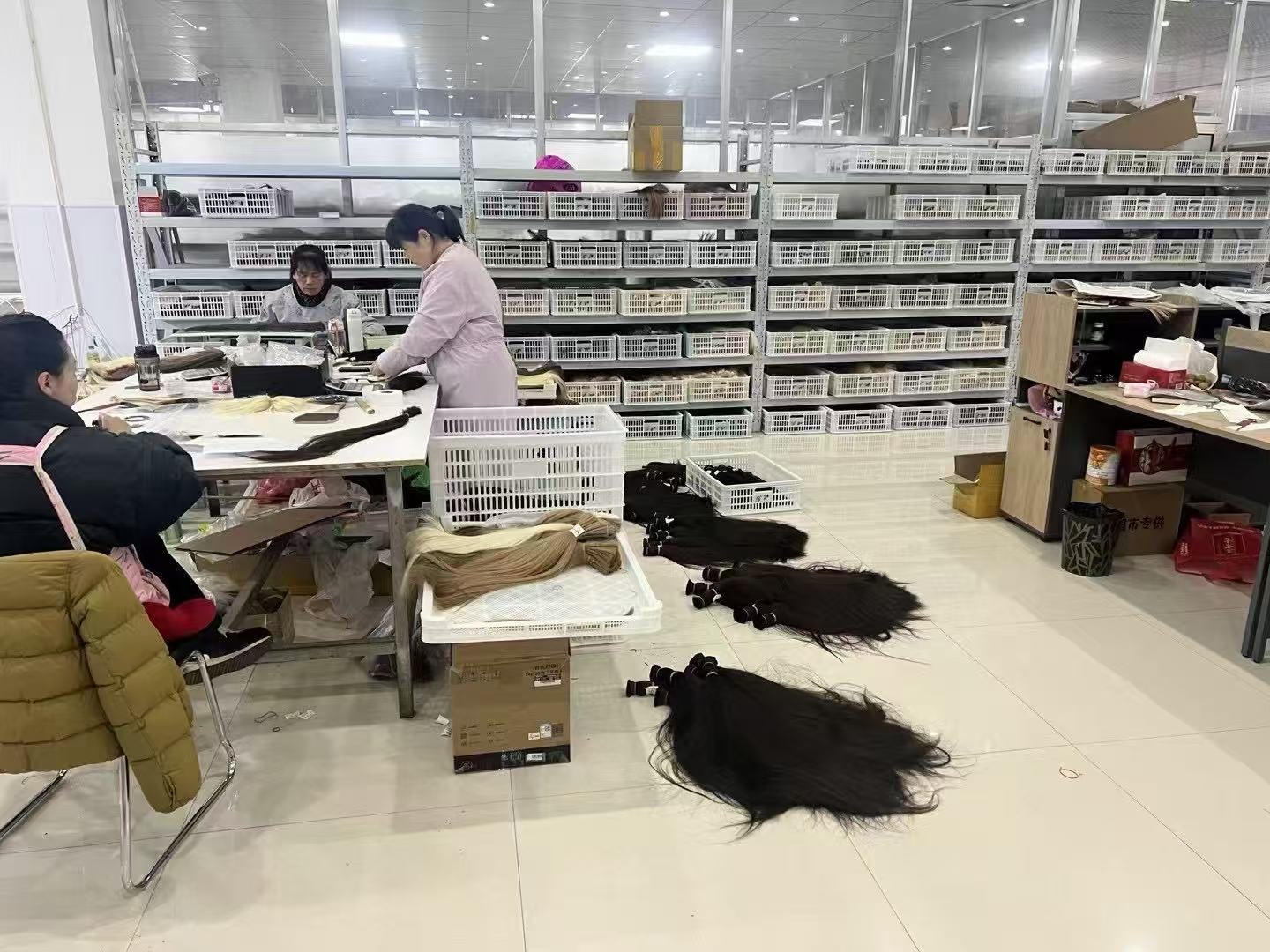
Dolas Dream packing workshop: the final checkpoint before a Genius weft order leaves the factory.
A Genius weft supplier can look flawless in a catalogue and still leave your salon without stock in week six. Three numbers separate a supplier you can plan a season around from one you cannot: monthly production capacity, in-stock turnaround, and customized-order lead time. Dolas Dream Crafts Co., Ltd. publishes those figures as 12,000 units per month, 2–3 days for inventory hair and 7–15 days for customized hair, with OEM and ODM minimum order quantities as low as 2 units. This guide converts those claims into a verification process that salon owners, wholesalers and importers can run before committing to a seasonal buy.
Why Genius Weft Supply Failures Are Usually Capacity Failures, Not Product Failures
Most salon buyers evaluate a hair extension supplier on the product: cuticle alignment, track thickness, colour depth, texture consistency. Delivery failures, however, come from the other side of the business. Three different capabilities get treated as one, and that is where buying decisions go wrong.
- Production capacity – how many units a factory can physically produce per month across its hair preparation, weft-making, bleaching and packing sections.
- Inventory position – how much finished stock already exists in the exact length, colour and weight you order.
- Customization throughput – how long a made-to-order batch takes once your specification, colour ring and packaging are locked.
A supplier can be strong in one and weak in the other two. The typical failure pattern in salon procurement looks like this: the sample arrives quickly, the first bulk order ships on time, then a peak season arrives and the same supplier sends a partial shipment, substitutes a colour from a different batch, and pushes the balance back by two or three weeks.
Nothing about the product changed. What changed is that the buyer never established which of the three capabilities was actually being promised, in what unit of measure, and under what conditions. That is the gap a supplier scorecard closes.
The Market Context: Why Capacity Verification Is Now Part of Buying Hair
The demand side of the hair extension market has expanded faster than most buyers assume. Grand View Research valued the global hair wigs and extensions market at USD 15.2 billion in 2025 and projects it to reach USD 31.1 billion by 2033. Within that market, human hair products held a 65.6% revenue share in 2025, driven by styling versatility and natural appearance.
Supply, however, is concentrated. China's wig manufacturing clusters, notably Xuchang and Qingdao, produced over 12 million units annually as of 2024. When demand grows while production clusters stay geographically concentrated, factory time becomes the scarce resource. Buyers who verify capacity in advance are competing for scheduled production slots, not just for product.
Category-level specifications also raise the bar for verification. Genius wefts are engineered with an ultra-thin track of approximately 0.8 mm to 0.9 mm to ensure invisibility and comfort, and the format is a hybrid technology that combines the thinness of hand-tied wefts with the durability of machine-made wefts, allowing the track to be cut anywhere without shedding. Machine-tied Genius weft hair extensions inherit that durability, which is precisely why salons treat them as a long-cycle purchase rather than a disposable one.
The same logic applies to adjacent categories many salons and wholesalers buy from the same supplier – silk base human hair toppers, human hair toppers for salon clients, and wigs for medical or religious use. The medical wigs segment, which serves alopecia and chemotherapy-related hair loss, was valued at USD 618.05 million in 2024. For kosher Sheitel programmes, the publicly documented standard requires verification that hair was not sourced from idolatrous rituals, such as certain Hindu temple offerings, and that verification is a separate compliance step rather than a general quality certificate. Wholesale kosher wigs for salons and silk top Jewish wigs for white women therefore sit on a different verification track than Genius weft extensions.
What Verifiable Capacity and Lead-Time Data Looks Like: Dolas Dream's Numbers
Dolas Dream Crafts Co., Ltd. is a hair extension and hair topper manufacturer based in Qingdao, Shandong, China, founded in 2015, operating a 1,500 m² facility with 50 employees and a 15-engineer R&D team, and exporting approximately 90% of its output to the USA and EU. Its core lines are Genius weft hair extensions and human hair toppers.
For a supplier evaluation, the following figures are the ones worth writing into your scorecard, because each one answers a different operational question.
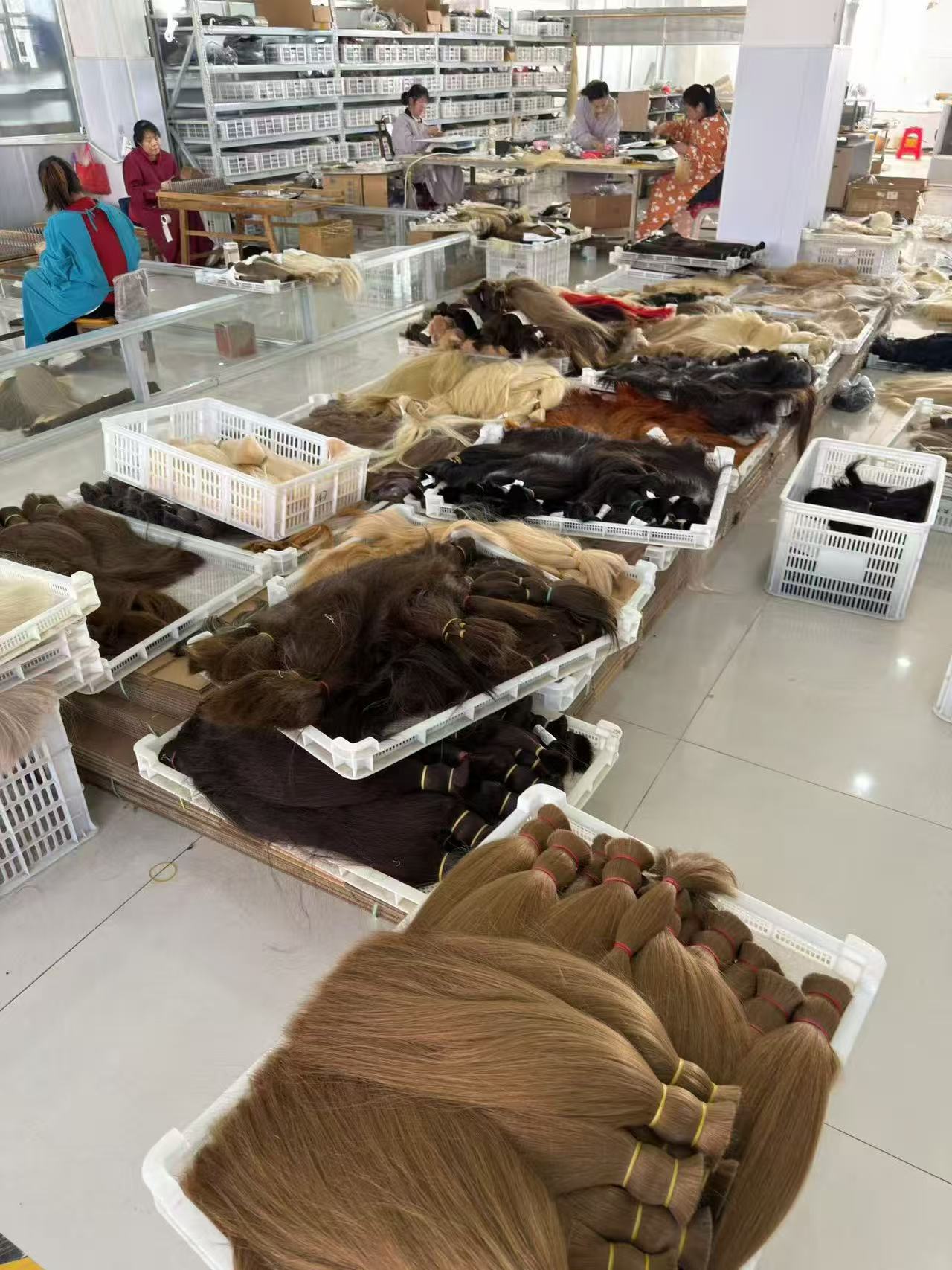
Genius weft production inside the Dolas Dream factory in Qingdao.
- Monthly production capacity: 12,000 units on the Genius weft line. This is a ceiling on factory output, not a delivery promise on a specific SKU.
- In-stock lead time: 2–3 days. This applies to inventory hair already finished in your requested specification.
- Customized lead time: 7–15 days, depending on specification complexity.
- OEM / ODM minimum order quantity: as low as 2 units, which makes pre-commitment validation possible for a single salon.
- Annual output: 115,000 units across the Genius weft and human hair topper lines.
- Raw-material control: real-time hair material inspection combined with regular hand-picking of raw hair to prevent synthetic fibre from being mixed into virgin human hair.
- Raw-material standard: A-grade, cuticle aligned virgin raw hair, sourced from a single donor by the company's own sourcing team.
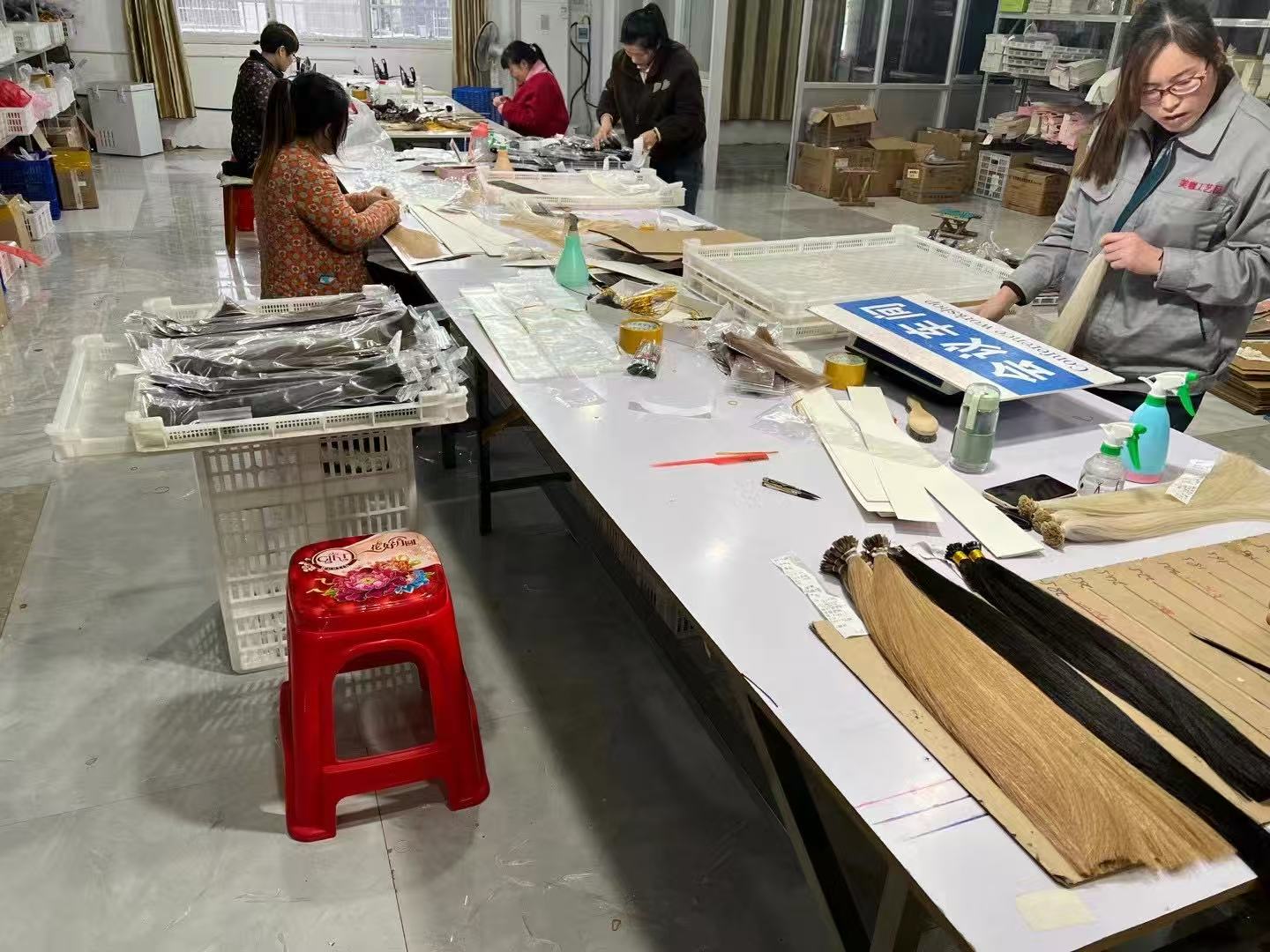
Monthly Genius weft capacity is a factory ceiling. Confirm which share is reserved for repeat accounts.
Each figure carries a buyer-side implication rather than a marketing claim. A 12,000-unit monthly capacity tells you the factory can absorb a seasonal order, but it does not tell you whether your colour is in stock; that is what the 2–3 day inventory window answers. A 7–15 day customized window tells you that a new colour or custom weight should be ordered against the top of the range, not the bottom. A 2-unit MOQ means a salon can run a real installation test before a wholesale commitment, instead of relying on a single loose sample strand.
A Seven-Step Process to Verify Capacity and Delivery Reliability
Step 1 – Fix the unit of measure in writing
"Units" can mean wefts, packs, strands or grams. A 12,000-unit monthly capacity means something different in each case. Ask the supplier to define the unit and confirm whether the figure covers a single product line or all lines combined.
Step 2 – Separate capacity, inventory and customization in your notes
Keep three columns, not one. Capacity is a monthly ceiling, inventory is a same-week delivery promise, customization is a project timeline. Suppliers that answer all three clearly are usually the ones that can hold a schedule.
Step 3 – Run a live small order before a seasonal commitment
An MOQ as low as 2 units makes this practical. Use the small order to measure the actual number of days from payment confirmation to dispatch, and compare it with the quoted in-stock lead time.
Step 4 – Verify raw-material intake control
The most common quality risk in virgin human hair is synthetic fibre mixed into the raw material. Ask how the factory controls it. Dolas Dream inspects hair material in real time and hand-picks raw hair during processing, and sources cuticle aligned hair from a single donor.
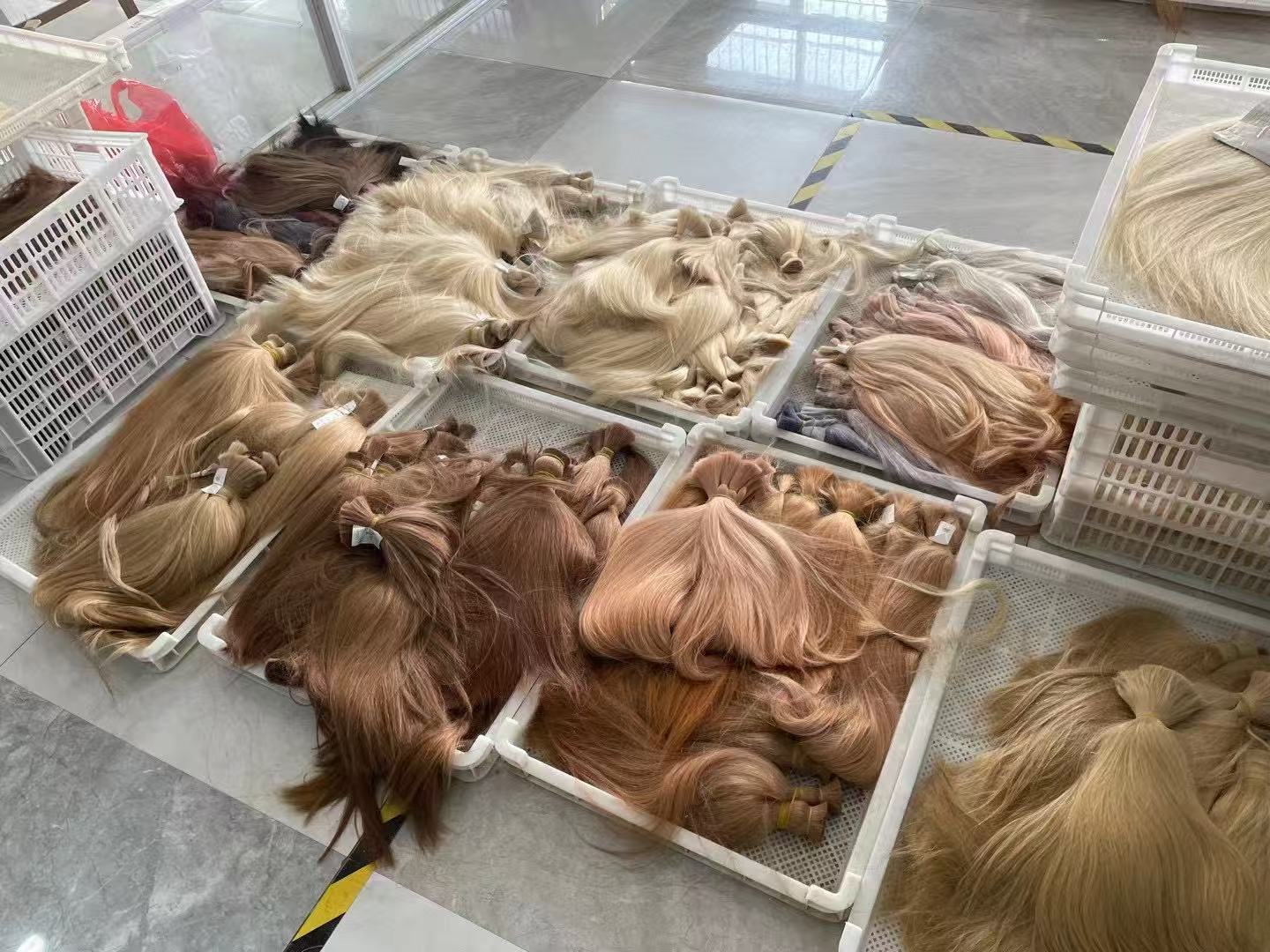
Single-donor, cuticle aligned raw hair is the intake standard behind the Genius weft line.
Step 5 – Confirm the physical specification on the sample, not the website
Genius weft tracks are engineered at approximately 0.8 mm to 0.9 mm for invisibility and comfort. Measure the sample you receive. Specifications printed online and specifications shipped in a box are two different verification events.
Step 6 – Request production-floor evidence that matches the capacity claim
Product photography proves nothing about throughput. Ask for images and short video of the working floor – raw material room, bleaching section, weft-making line, inspection bench, packing workshop. A 1,500 m² facility with 50 staff and 15 engineers is consistent with a 12,000-unit monthly capacity; a supplier claiming that volume from an unverifiable workshop is not.
Step 7 – Score the commercial terms, not only the unit price
Weight your scorecard towards delivery certainty and lifetime cost. A lower unit price with an unreliable custom lead time costs more in rescheduled client appointments than the price difference ever saves.
Which Buyers Need This Level of Verification
Capacity and lead-time verification matters most where a missed delivery has a visible client cost.
- Salon owners stocking for peak demand. Wedding, party and holiday bookings compress into a short calendar window, and extensions are usually fitted for those dates. A 2–3 day in-stock turnaround keeps last-minute bookings serviceable.
- Extension specialists working with fine hair. Cuttable wefts allow section-by-section adaptation, but only if the track does not shed after cutting. This is where the hybrid construction of a Genius weft matters more than unit price.
- Wholesalers and distributors supplying several salons. Multiple accounts need consistent reorder lead times per SKU. A 7–15 day customized window has to be planned SKU by SKU, not averaged across a catalogue.
- Importers and brand owners running OEM or ODM programmes. An MOQ as low as 2 units allows a market test with your own label before a large production run. Use the first run to time the factory, not to judge the category.
- Buyers serving medical and religious-use clients. Medical human hair wigs wholesale and wholesale kosher wigs for salons require their own documentation path, as described above, and should be evaluated separately from the Genius weft line.
Supplier Scorecard and Cost Comparison
The scorecard below converts the verification steps into four columns you can fill in for any supplier, with Dolas Dream's published figures shown as a worked benchmark.
| Scorecard dimension | What to ask for | Dolas Dream benchmark | Warning sign |
|---|---|---|---|
| Monthly production capacity | Monthly units, with the unit defined | 12,000 units per month (Genius weft line) | Capacity quoted without a unit definition |
| In-stock lead time | Days from payment confirmation to dispatch | 2–3 days for inventory hair | Stock lead time quoted as "fast" |
| Customized lead time | A range plus the factors that extend it | 7–15 days for customized hair | A single fixed number for all custom work |
| Minimum order quantity | MOQ for OEM and ODM production | As low as 2 units | MOQ that blocks sample validation |
| Raw-material control | Intake inspection and fibre-mixing controls | Real-time material inspection plus hand-picking; single-donor, cuticle aligned raw hair | No intake inspection process described |
| Track specification | Measured track thickness on a sample | Genius weft engineered at approximately 0.8–0.9 mm (category specification) | Specification only stated on a web page |
| Facility and team | Production space, headcount, technical staff | 1,500 m², 50 employees, 15-engineer R&D team | Capacity claim unsupported by facility evidence |
| Cost structure | Unit price plus two-year cost of ownership | See comparison table below | Unit price quoted in isolation |
Cost is where the Genius weft decision is most often made on the wrong number. The table below compares the Genius weft format with remy hair from multiple donors on the metrics that determine what a salon actually pays over time.

Genius weft versus remy hair from multiple donors: cost and performance indicators.
| Comparison metric | Genius weft | Remy hair from multiple donors |
|---|---|---|
| Hair source | Cuticle aligned raw hair from one donor | Remy hair from multiple donors |
| Cuticle status | 100% cuticle intact hair from one donor | Cuticle aligned raw hair from multiple donors |
| Expected lifespan | Extended by 2 times compared with alternatives | Baseline for comparison |
| Maintenance required | 90% less than remy hair from multiple donors | Baseline for comparison |
| Installation efficiency | 50% higher efficiency, reusable, glueless, time-saving installation | Baseline for comparison |
| Initial purchase cost | 10% higher | Lower at the point of purchase |
| Total cost of ownership over 2 years | 30% lower | Higher over the same period |
| Best suited to | Daily wear, weddings, parties, holidays, dating and salon work | Buyers optimising only for entry price |
Read together, the two tables produce a single procurement conclusion: the supplier decision and the format decision should be scored on the same page. A 10% higher initial cost is only justified if the delivery reliability behind it holds through your busiest month – which is exactly what the capacity and lead-time checks are for.
FAQ: Verifying a Genius Weft Supplier
What should I verify before accepting a supplier's raw-material or kosher compliance claim?
For raw material, ask how the factory prevents synthetic fibre from being mixed into virgin human hair. Dolas Dream inspects hair material in real time at intake and hand-picks raw hair during processing, and sources A-grade cuticle aligned raw hair from a single donor. For kosher Sheitel programmes, the publicly documented requirement is verification that the hair was not sourced from idolatrous rituals, such as certain Hindu temple offerings. That verification sits with the wig maker, so request it as a separate document rather than assuming a general quality certificate covers it.
How do I verify a manufacturer's claimed monthly output of 12,000 units?
Fix the unit of measure first, then separate capacity from inventory and customization. Dolas Dream's published figures are 12,000 units per month on the Genius weft line, 115,000 units of annual output, a 1,500 m² facility, 50 employees and a 15-engineer R&D team. Validate the claim with production-floor evidence across the raw material, bleaching, weft-making and packing sections, and with a live small order placed under the 2-unit MOQ.
Is a higher purchase price justified if the total cost over two years is lower?
For the Genius weft format, the initial cost is 10% higher than remy hair from multiple donors, while the total cost of ownership is 30% lower over two years. The difference comes from maintenance being 90% less and lifespan being extended by 2 times, with 50% higher efficiency through reusable, glueless and time-saving installation. The practical test for a salon is whether reduced re-ordering and faster fittings offset the higher unit price across a full year of client appointments.
Can I validate a supplier with a very small sample order?
Yes. OEM and ODM minimum order quantities can go as low as 2 units, which lets a salon test colour match, track thickness at approximately 0.8–0.9 mm, and cut resistance before any wholesale commitment. Order against an in-stock specification so the 2–3 day window applies, and record the actual dispatch date to compare against the quote.
How should I plan delivery time for a Genius weft order?
Plan two separate timelines. Inventory hair ships in 2–3 days, so it can cover late bookings and emergency replacements. Customized hair takes 7–15 days, so new colours, custom weights and branded packaging should be scheduled against the top of that range and ordered before a peak season starts, not during it. To start a validation order, request a sample through the Dolas Dream contact below and download the full product catalogue.
Conclusion: Turn Capacity Verification Into a Sample Order
Supplier evaluation in the Genius weft category is not a product comparison exercise. It is a check on three operational numbers: how many units a factory can produce each month, how many days in-stock hair takes to leave the building, and how long a customized order needs before it is realistic. Dolas Dream publishes 12,000 units per month, 2–3 days for inventory hair and 7–15 days for customized hair, with OEM and ODM minimum order quantities as low as 2 units – figures you can now test rather than accept.
Run the seven steps in order, score the result on the table above, and let a small live order confirm the lead time. That sequence tells you more about delivery reliability than any catalogue will.

A verified supplier turns into a predictable client result.
Next Step: Validate the Numbers With Your Own Sample
Dolas Dream Crafts Co., Ltd. supplies Genius weft hair extensions and human hair toppers to salons, wholesalers and importers, with OEM and ODM production from a 1,500 m² facility in Qingdao, China.
Download the full product catalogue: Dolas Dream Initial Catalogue (PDF)
Place a validation order or request a quotation: www.dolascrafts.com
Email: admin@dolasbeauty.com | WhatsApp / Tel: +8618863251821 | Contact: Luna