Genius Weft vs. Remy Hair Extensions: A Salon Buyer's Comparison Guide
Genius Weft vs. Remy Hair Extensions: A Salon Buyer's Comparison Guide
Short answer: If your salon is choosing between Genius Weft and traditional Remy hair extensions, the decision rests on four measurable variables — cuticle alignment, installation time, maintenance load, and lifespan. Genius Weft is built from 100% cuticle-intact hair taken from a single donor and mounted on an ultra-thin track that can be cut anywhere without shedding; in salon use it reduces maintenance time by roughly 90% and extends weft lifespan by about 2x. It carries an initial cost premium of roughly 10%, but over a two-year cycle the total cost of ownership runs about 30% lower than multi-donor Remy wefts. Traditional Remy remains the cheaper entry point, but it transfers cost from your purchase order into your chair time.
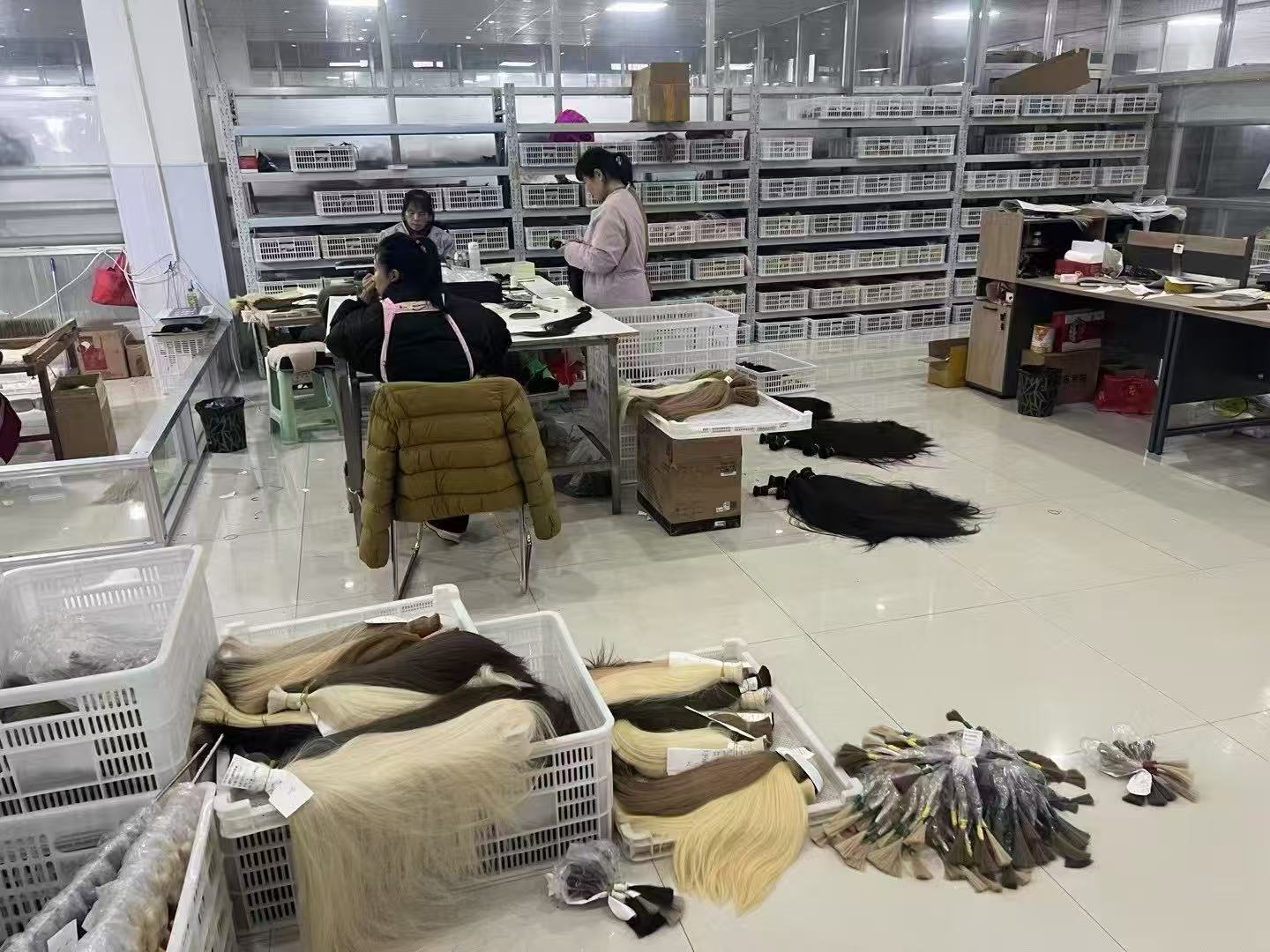
This guide is written for salon owners and senior stylists in the evaluation-to-execution phase: you already understand what a weft is, you have clients on the books, and you need to decide which construction to stock, how to price it, and which supplier can deliver it repeatedly. Dolas Dream Crafts Co.,Ltd is a Qingdao-based manufacturer of genius weft hair extensions and human hair toppers, established in 2015, with a 1,500 m² factory, 50 employees, and roughly 90% of output exported to the USA and EU. The comparison below uses its published product and production facts alongside independently published industry data.
The Core Problem: "Remy" Is a Sourcing Claim, Not a Construction Standard
The word Remy describes the direction of the hair cuticle — Remy hair is collected so that the cuticles run in the same direction. It does not describe how the weft itself is assembled, and it does not guarantee that every strand in the bundle came from the same head. That distinction is where most salon complaints begin.
Traditional Remy wefts are frequently assembled from multiple donors. Even when each donor's hair is Remy in isolation, combining several donors into a single weft introduces strands with different diameters, different cuticle lift and slightly different moisture behaviour. The failure pattern in the chair is predictable:
- Matting at the nape and sides after the second or third wash, because strands with opposing cuticle direction grip one another.
- Shedding along the track, particularly where the weft has been cut down to fit a smaller head.
- Accelerated dryness through the mid-lengths, because a roughened cuticle releases moisture faster.
- A shorter usable life, which pushes the client back into the chair earlier than the salon quoted.
The commercial consequence matters more than the cosmetic one. A premature return consumes a reinstall slot that was already sold to another client, a reorder erodes the margin on the original service, and a client who is told "this is normal for extensions" is a client who may book her next set somewhere else.
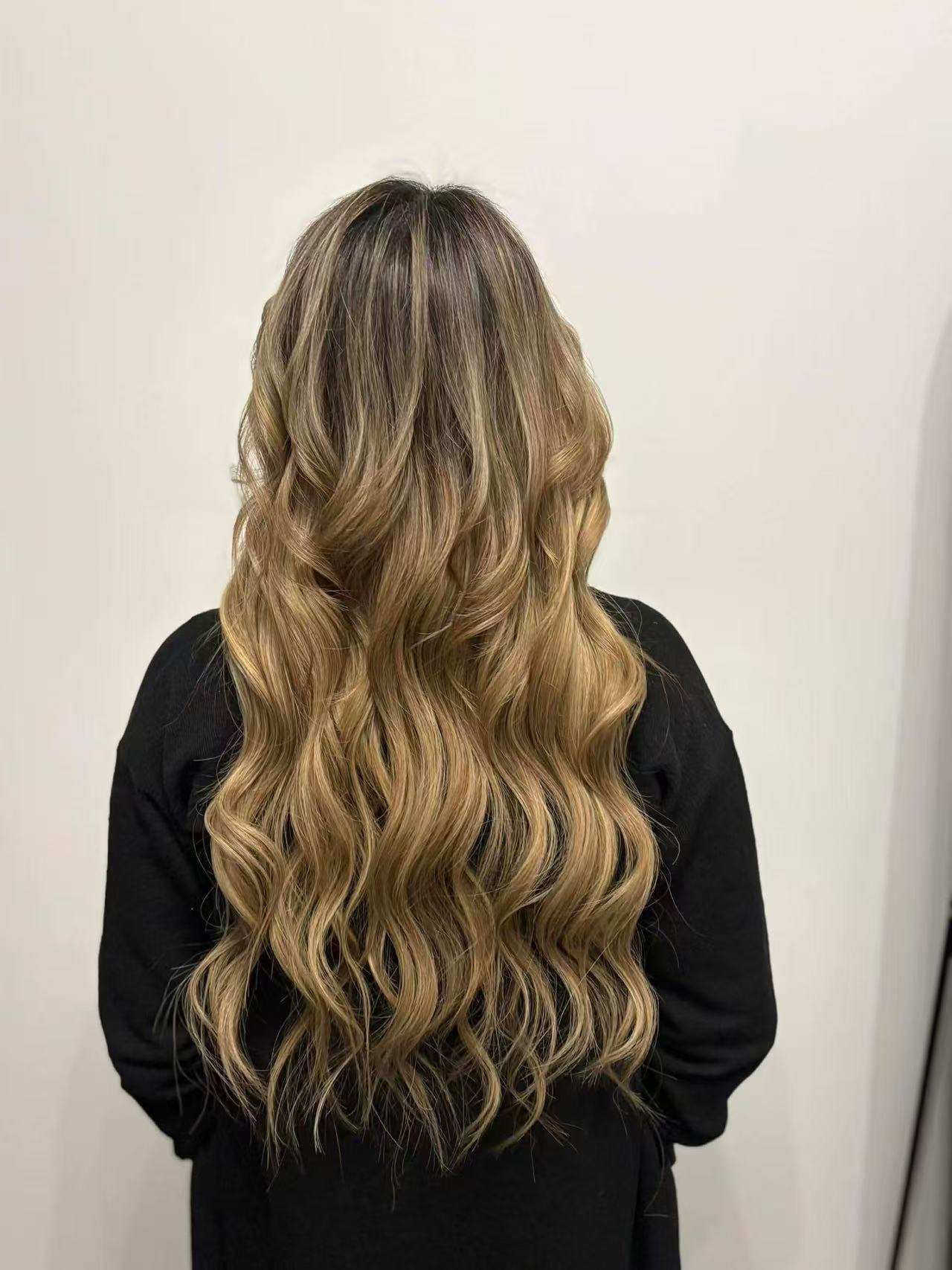
Genius Weft addresses the root cause rather than the symptom. It pairs single-donor, cuticle-intact hair with a thin, flexible track so the weft behaves as one continuous unit instead of a bundle of competing strands.
Industry Background: Where the Demand and the Risk Sit
Hair extensions are no longer a niche add-on service. Grand View Research valued the global hair wigs and extensions market at USD 15.2 billion in 2025 and projected it to reach USD 31.1 billion by 2033. Within that market, human hair products held a 65.6% revenue share in 2025, driven by styling versatility and natural appearance — the two attributes salon clients judge first.
A parallel demand stream has also matured. Cognitive Market Research valued the medical wigs segment — wigs for alopecia and chemotherapy-induced hair loss — at USD 618.05 million in 2024. That figure matters to salons because density-restoration and medical clients are often the ones who most need a weft that behaves, and they are also the clients least tolerant of tangling.
Supply is concentrated. China's wig manufacturing clusters, notably Xuchang and Qingdao, produce more than 12 million units annually as of 2024. Qingdao, where Dolas Dream Crafts Co.,Ltd is based, is one of the two clusters most associated with export-oriented production — one reason a salon buying from an established Qingdao manufacturer is buying inside the main global supply artery rather than at its edge.
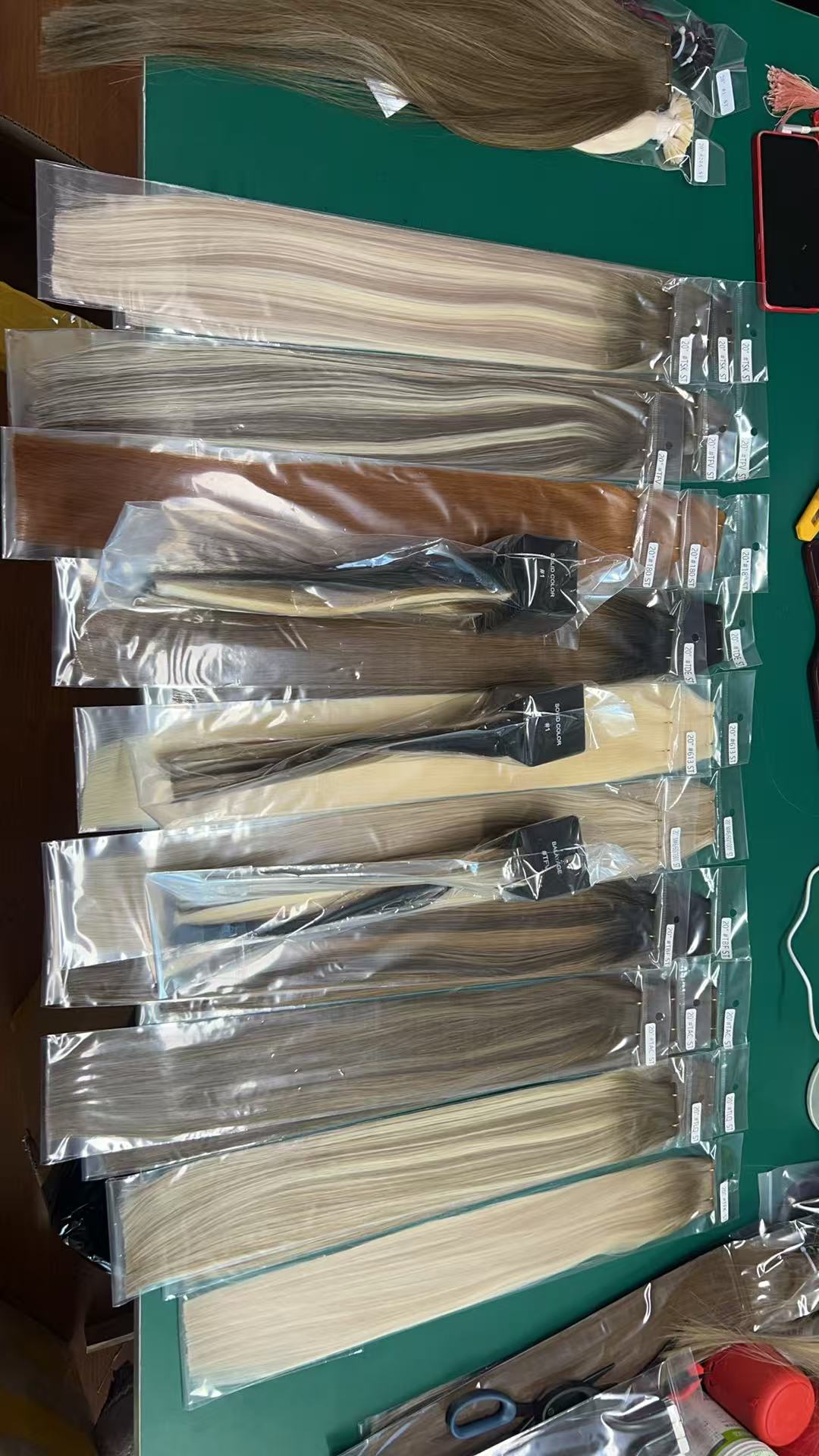
On the product side, Genius Weft is best understood as a hybrid construction: it combines the thinness associated with hand-tied wefts with the durability associated with machine-made wefts, and the track is engineered at approximately 0.8 mm to 0.9 mm so it stays discreet against the scalp. That thinness is what makes it comfortable; the hybrid bonding is what lets you cut it.
What Genius Weft Actually Changes for a Salon
1. Cuticle alignment at the donor level, not the bundle level
Dolas Dream builds its genius weft from 100% virgin Remy human hair with no synthetic content and no fibre, and the hair is described as unprocessed with intact cuticle. Practically, an intact cuticle means the outer scale layer has not been stripped, so moisture retention and light reflection stay close to natural hair. In the chair, that shows up as less dryness between weeks six and twelve and a weft that brushes through without catching.
2. A track thin enough to conceal, strong enough to cut
The Genius Weft track is engineered at approximately 0.8 mm to 0.9 mm. For a salon, thinness is not a vanity metric: a thinner, flatter track sits closer to the scalp, which reduces the visible ridge under fine hair and lowers the pull felt by clients with a sensitive scalp. Because the construction bonds the strands rather than relying on a sewn edge, the weft can be cut anywhere along its length without the track unravelling — which also removes the fold-and-seal step that lengthens a traditional Remy installation.
3. Single-donor hair that lowers maintenance load
Cuticle-intact, single-donor hair is the reason Genius Weft is reported to reduce maintenance work by roughly 90% compared with multi-donor Remy wefts. The saving is not a single appointment; it is every appointment. A client who previously needed detangling and treatment work at each visit can usually move to a lighter maintenance routine, which frees chair time for new installs rather than for repairs.
4. Longer lifespan per weft
Aligned cuticles and an intact outer layer slow the mechanical wear that causes matting, so a Genius Weft lasts about 2x as long as a traditional multi-donor Remy weft under comparable care. For a salon, a longer service life compresses reorder frequency and makes stock planning considerably more predictable.
5. What Dolas Dream contributes as the manufacturing layer
Dolas Dream Crafts Co.,Ltd produces genius weft hair extensions and human hair toppers in Qingdao, China. Its published production profile is unusually specific, which is useful when you are building a repeatable weft programme:
- Product: genius weft hair extension in 18, 20, 22 and 24 inches; 50–100 g per unit, or customised; colour customised; 100% virgin Remy human hair.
- Production model: OEM, ODM and customised production services.
- Customisation: colour, length and logo.
- Monthly capacity: 12,000 units.
- Quality control: 100% pre-shipment testing on every unit.
- Minimum order quantity: 2 units.
- Lead time: 2–3 days for inventory hair; 7–15 days for customised hair.
- After-sales: 2–3 year warranty on hair using time.
Why the numbers matter more than the adjectives: a 12,000-unit monthly capacity, 100% pre-shipment testing and a 2-unit MOQ mean a single-chair studio and a ten-chair salon can start on the same product. Inventory hair ships in 2–3 days, so a salon that runs out of 20-inch wefts mid-season is not waiting a month to restock.
Step-by-Step: How to Run the Comparison Inside Your Own Salon
The comparison only becomes real once you test it against your own client list and your own pricing. Use this sequence.
- Define the client profile before the product. Separate your book into fine-hair clients, density-restoration or alopecia clients, colour and balayage clients, and event or bridal work. Genius Weft and traditional Remy do not win in the same segments, so a single "best weft" answer will misprice at least one of them.
- Request the compliance file first, not the price list. A supplier who can send a traceable inspection report within a day is a supplier who has documentation processes. Ask for the certificate number, the issuing authority, the standard referenced and the validity dates before discussing cost.
- Order a small sample set. Test colour, length and track behaviour on a non-paying model before you put a new weft in front of a paying client. Two units is a low-risk way to validate cuticle alignment in your own hands.
- Run one controlled installation. Book a single consenting client, document the installation time, and photograph the track position. Then diarise a review at week four and week twelve, and record brushing resistance, shedding and moisture at each review.
- Cost the comparison across 24 months, not one purchase order. The initial invoice is the smallest part of the calculation. Add reorder frequency, maintenance minutes per appointment and the retail price the client will accept.
- Confirm replenishment before you publish the price list. A longer-lifespan weft still requires restocking. Verify inventory lead time and monthly capacity against your busiest quarter, not your quietest one.
- Standardise the aftercare script. Match the aftercare you teach to the warranty you are offering, so that a warranty claim is a documented process rather than a negotiation.
Use Cases: Where Each Construction Fits
Fine hair and low-density clients
This is Genius Weft's strongest case. A 0.8 mm to 0.9 mm track sits flatter against the scalp, so there is less visible ridging under fine hair and less weight per attachment point. Salons that previously avoided wefts on fine-haired clients because of track visibility typically find the thin track changes that calculation.
Alopecia and density-restoration clients
Dolas Dream has supplied 500 units to hair salon owners across the United States, Sweden and Belgium over a two-year period, where the application was addressing clients' thin hair and alopecia. After installation of Dolas Dream hair, the hair became fuller and stable, and clients were visibly pleased with their new look. The relevant detail for salon buyers is the hair composition: pure 100% virgin Remy human hair, no synthetic, no fibre, unprocessed cuticle intact. Medical and density-restoration clients are the group least able to absorb tangling, so cuticle integrity carries more weight here than price does.
Bridal, event and photography work
Event work rewards a thin track and a weft that holds a style under heat and handling. Because the weft can be cut anywhere, a stylist can size a section precisely for a half-up bridal set without leaving a sealed, bulky edge in the photograph.
Colour and balayage clients
Colour work is where maintenance load becomes visible. A multi-donor Remy weft that has begun matting cannot be brushed through cleanly, and colour application on matted hair is slow and risky. A weft that requires roughly 90% less maintenance keeps colour appointments on schedule and reduces the chance that a colour service turns into a detangling service.
Where traditional Remy still makes sense
Traditional multi-donor Remy wefts retain two advantages: a lower entry price and wider availability from general wholesalers. For volume-driven salons serving price-led clients with short wear cycles, or as a training material for junior stylists learning weft installation, the cheaper weft is a legitimate choice. The mistake is using it as the default on long-wear clients who will absorb the maintenance cost themselves.
Complementary methods worth stocking alongside
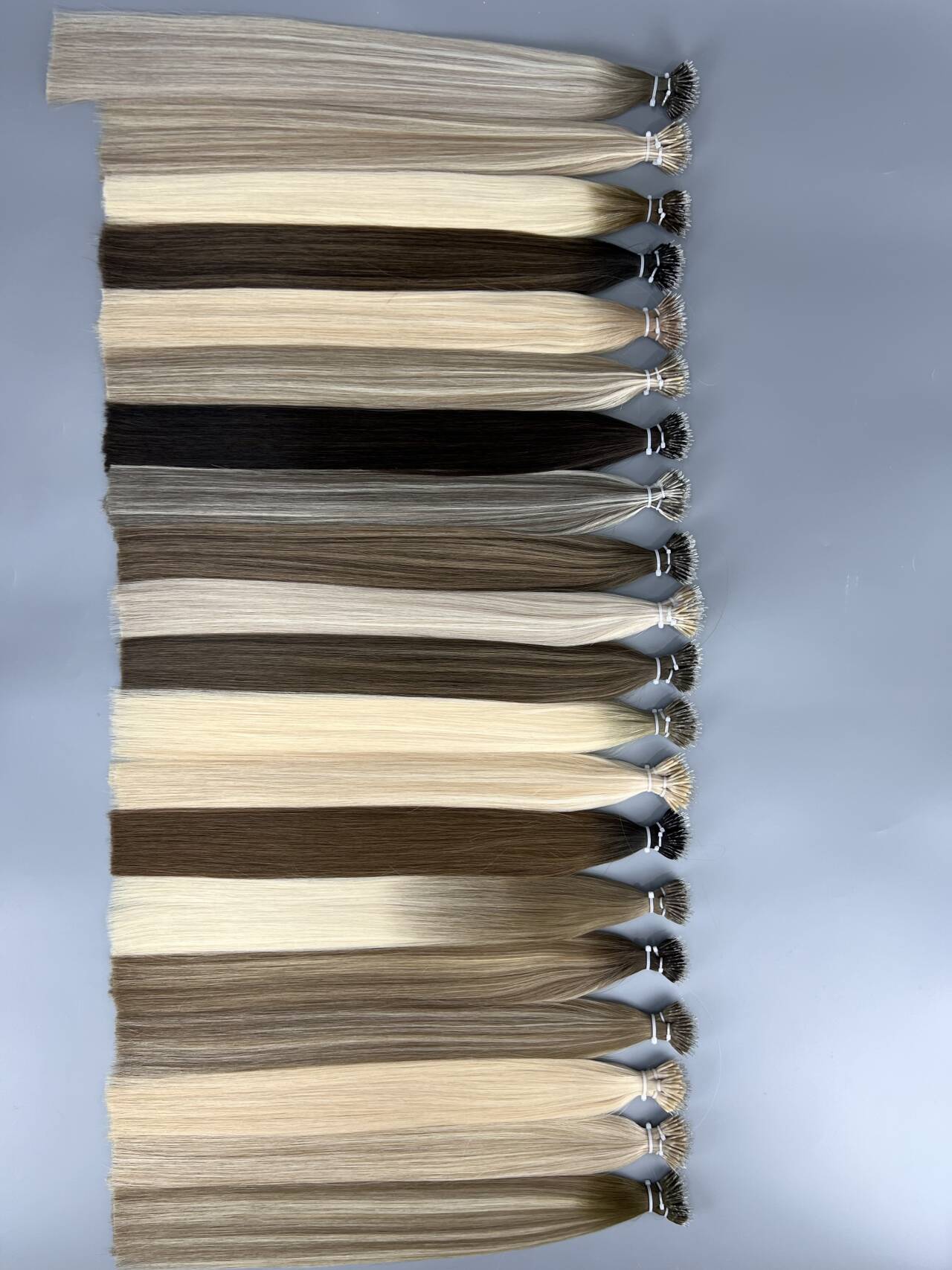
Wefts do not solve every head. K tip hair extensions and nano ring hair extensions remain useful for targeted volume and for clients who want no adhesive at all on the scalp. For clients with thinning at the crown rather than the perimeter, a silk base human hair topper covers an area a weft cannot reach, and Dolas Dream manufactures human hair toppers as a core line alongside its wefts. Salons serving Jewish clientele who require sheitel compliance should note that kosher certification for wigs requires verification that the hair was not sourced from idolatrous rituals — a documentation step worth confirming with any topper or wig supplier before you stock a full range for that market.

Genius Weft vs. Traditional Multi-Donor Remy: Side-by-Side
| Comparison factor | Genius Weft | Traditional multi-donor Remy weft |
|---|---|---|
| Donor sourcing | Cuticle-intact hair from a single donor | Hair combined from multiple donors |
| Cuticle alignment | Aligned and unprocessed, cuticle intact | Depends on each donor; alignment not guaranteed across the bundle |
| Track construction | Hybrid construction, engineered at approximately 0.8–0.9 mm | Typically sewn seam; thicker and less flexible |
| Can it be cut anywhere without shedding? | Yes | Not typically — cutting risks unravelling the track |
| Installation time | Shorter; no fold-and-seal step on a cuttable track | Longer; cut ends must be folded or sealed |
| Maintenance load | Reported roughly 90% less maintenance work | Baseline |
| Lifespan | Reported about 2x longer | Baseline |
| Initial cost | Roughly 10% higher per weft | Lower entry cost |
| Two-year total cost of ownership | Roughly 30% lower | Higher — driven by reorders and chair time |
| Best fit | Fine hair, low density, alopecia and density restoration, bridal and premium colour work | Price-led, short-wear volume, junior training stock |
| Material composition | 100% virgin Remy human hair, no synthetic, no fibre | Varies by supplier; composition should be documented per batch |
Frequently Asked Questions
What certification should a salon verify before switching weft suppliers?
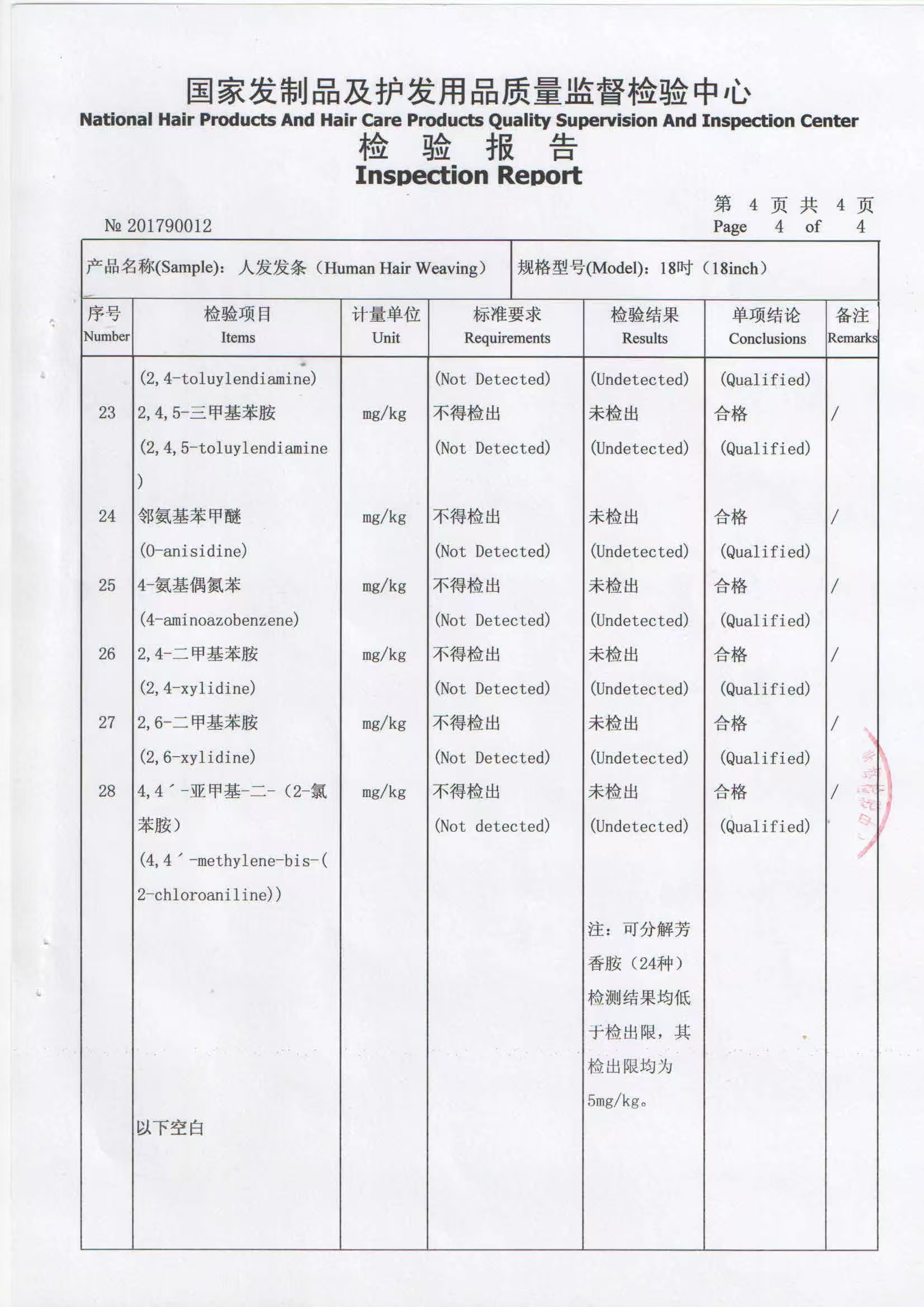
Ask for the inspection report itself, not a marketing badge. Dolas Dream's genius weft hair extension is covered by an inspection report issued by the National Hair Products and Hair Care Products Quality Supervision and Inspection Center, certificate number 201790812, tested against standard GB/T23168-2008 for human hair weaving and hair extensions. The report was first issued on 2017-01-12 and is valid until 2037-01-12, and it applies to the USA and EU markets. A traceable certificate number, a named issuing authority, a referenced standard and a stated expiry date are the minimum a salon should accept before committing to a repeat order.
Can Genius Weft be customised in colour, length and branding?
Yes. Dolas Dream provides OEM, ODM and customised production services, and its customisation options cover colour, length and logo. The standard genius weft hair extension is available in 18, 20, 22 and 24 inches at 50–100 g per unit, or customised, and is made from 100% virgin Remy human hair. Monthly production capacity is 12,000 units, and every unit passes 100% pre-shipment testing before dispatch. For a salon building a branded retail line, logo customisation allows the packaging and the track tag to carry the salon's own identity rather than the factory's.
Is Genius Weft more expensive than traditional Remy hair?
At the point of purchase, yes — expect roughly a 10% higher initial cost per weft. Over a two-year cycle the position reverses. Because cuticle-intact, single-donor hair requires about 90% less maintenance and lasts about 2x longer, the total cost of ownership of Genius Weft runs approximately 30% lower than multi-donor Remy. The saving does not appear on the invoice; it appears in fewer reorders, shorter maintenance appointments and fewer goodwill replacements.
Can a salon order samples before committing to a supplier?
Yes. Dolas Dream sets a minimum order quantity of 2 units, which is deliberately low enough for a salon to test colour, length and cuticle behaviour before placing a production order. Samples and colour questions can be raised directly through admin@dolasbeauty.com or on WhatsApp at +8618863251821. The full product range is set out in the Dolas Dream catalogue.
What are the lead times, minimum order and warranty?
Inventory hair is typically ready in 2–3 days, while customised hair takes 7–15 days. Delivery terms are FOB Qingdao, and payment is accepted by T/T in advance, PayPal or Western Union. Dolas Dream provides a 2–3 year warranty on hair using time. For a salon comparing suppliers on delivery reliability rather than on price alone, these three figures — lead time, MOQ and warranty — determine whether a weft programme is actually runnable. If you are ready to move from comparison to execution, request current stock availability and a custom colour card from admin@dolasbeauty.com, and ask for the certificate 201790812 file to keep on record alongside your supplier agreement.
Conclusion: Price the Weft, Not Just the Purchase Order
Genius Weft and traditional multi-donor Remy wefts are not competing on the same axis. Remy wefts compete on entry price. Genius Weft competes on what happens after installation — how often the client has to be detangled, how quickly the weft matted, and how many times the salon reorders within two years. With single-donor, cuticle-intact hair, a track engineered at approximately 0.8 mm to 0.9 mm, roughly 90% less maintenance and about 2x the lifespan, the roughly 10% price premium is recovered well before the second annual cycle closes, which is why the two-year total cost of ownership comes in around 30% lower.
The decision rule for most salons is straightforward. If you serve fine-haired, low-density, alopecia or long-wear clients and you sell on outcome rather than on price, Genius Weft is the better economic choice. If you serve a high-churn, price-led book with short wear cycles, traditional Remy still has a role — but keep it in its lane rather than as the default.
Whichever route you take, judge the supplier on three verifiable items: a traceable inspection report, a documented lead time for both inventory and customised hair, and a stated warranty period. Dolas Dream Crafts Co.,Ltd publishes all three, alongside a 2-unit minimum order that lets a salon validate the product before it commits. For salon owners who want the comparison in writing, the full range and specifications are collected in the Dolas Dream catalogue.
Next Step: Compare Wefts With Your Own Clients in Mind
Request a sample order, a custom colour card, or the inspection report for certificate 201790812 — and see how a cuticle-intact, single-donor weft behaves under your own lighting and installation technique.
Email: admin@dolasbeauty.com | WhatsApp: +8618863251821 | Website: dolascrafts.com
Download the Dolas Dream Initial Catalogue (PDF) for full specifications on genius weft hair extensions, human hair toppers, K tip and nano ring options.