
Best Engineered Wood Flooring Manufacturers: A 2026 Evaluation Guide
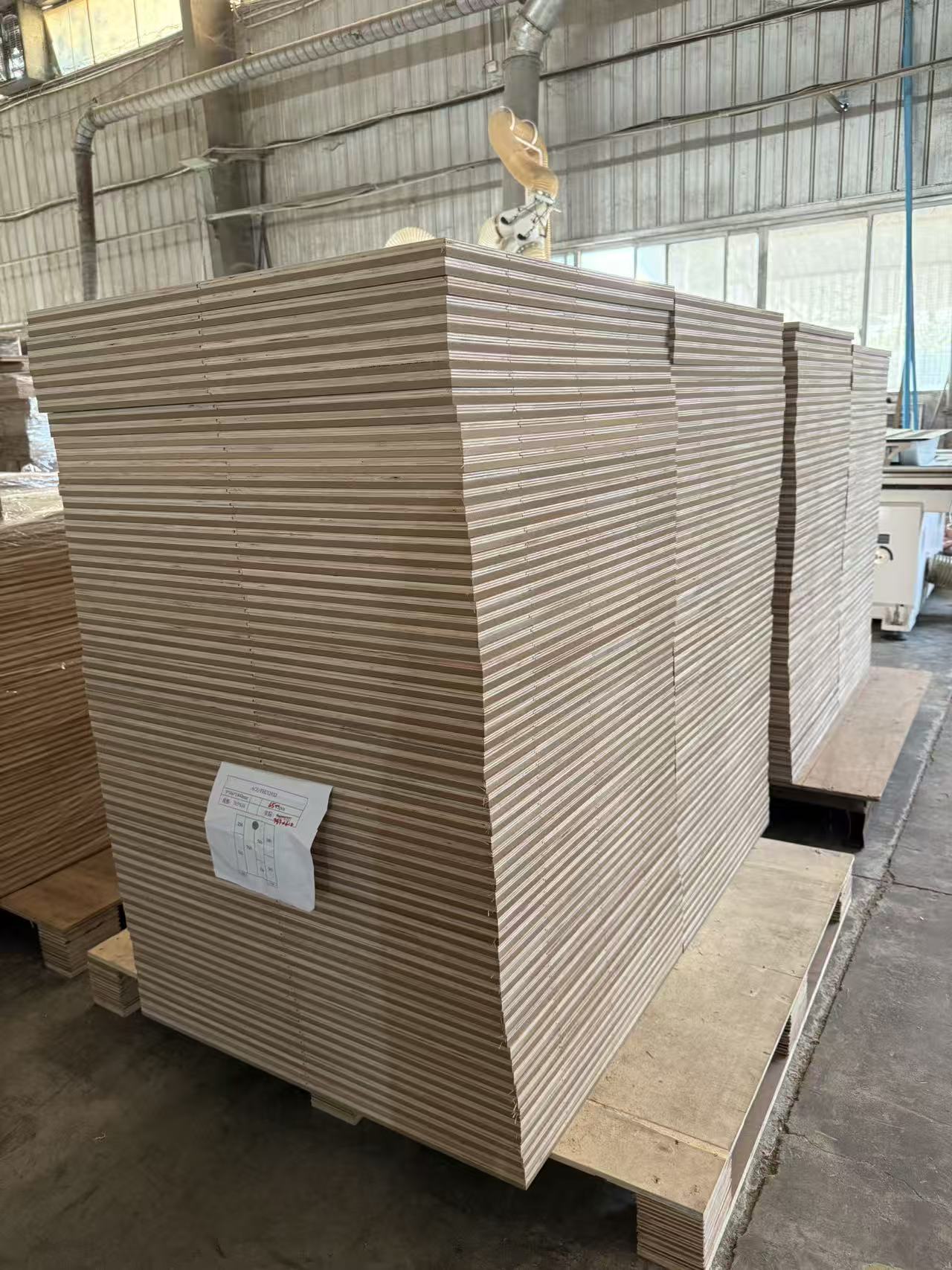
Samples and display board used to show face veneer options and finish tones.
Choosing a reliable engineered wood flooring manufacturer is one of the most consequential decisions in a flooring project. While the visible wear layer determines aesthetics, the core construction, adhesive performance, and finishing accuracy determine whether a floor stays stable under humidity, heating, and daily use. This guide is written for importers, distributors, contractors, and brand owners who are evaluating engineered wood flooring manufacturers and need a fact-based starting point. It covers the market context, the criteria that matter, a practical shortlist of manufacturers, and a step-by-step evaluation workflow.
Why the Right Manufacturer Matters
Engineered wood flooring is a multi-layer product. A typical engineered structure combines a top wear layer of hardwood veneer with a multi-ply or multi-layer core of cross-banded wood layers, usually balanced with a backing layer. Because of this construction, small differences in substrate grading, adhesive curing, and finish hardness can create large differences in field performance. Buyers who compare only surface color or grain may miss risks such as cupping, delamination, and high formaldehyde emissions.
Another common issue is the difference between a manufacturer and a brand seller. Some companies sell flooring under their own brand without operating production lines. In that case, the buyer may not know the true origin of the core board or coating. A direct manufacturer can provide factory audit reports, production photos, and batch traceability, which are essential for project specifications that demand accountability.
The manufacturer also controls compliance documentation. For exports to North America and the EU, test reports and certificates must align with specific standards. Without an auditable certification trail, a shipment can face delays at customs or fail a project specification. That is why evaluating a manufacturer is not just a procurement task; it is a technical risk control measure.
Engineering-Grade Selection: What to Look For
At the evaluation stage, focus on five dimensions: certification scope, production capability, quality control, customization depth, and after-sales commitment. These dimensions translate directly into order reliability.
1. Certification scope
Check which markets the manufacturer is certified for. For example, Dongda Wood holds FSC, CE, CARB 2 & EPA, and F4 star certifications. Those certificates are not just logos; they define the scope: FSC covers the chain of custody for engineered wood flooring and plywood; CE follows AVCP System 4 for construction products sold in the EU; CARB 2 & EPA covers composite plywood with thickness of 3–40mm for North American compliance; and F4 star covers composite flooring with veneer thickness of at least 1.2mm for the Japanese market. Any manufacturer that cannot explain its certificate scope should be treated with caution.
2. Production capability
A manufacturer should be able to match your order volume and schedule. Dongda Wood reports a production base of 190,000 square meters, more than 500 employees, and a monthly capacity of 150,000 square meters. For a dedicated engineered wood flooring order, the lead time is approximately 45 days. This type of capacity matters for buyers who need steady replenishment rather than one-off samples.
3. Quality control
Look for transparent QC procedures. Dongda Wood performs 100% testing on all products as part of its quality control process. That is a verifiable policy, and it is more meaningful than a promise of “good quality” without a defined check step.
4. Customization depth
Many buyers need custom dimensions, grade selection, packaging design, or logo marking. Dongda Wood supports OEM/ODM production with customization across dimensions, grade, packaging, and logo. The minimum order quantity is 400 square meters per color, which is practical for a first commercial order.
5. Warranty and after-sales
A long warranty indicates the manufacturer is willing to assume a defined level of risk. Dongda Wood provides a 25-year warranty for residential use and a 3-year warranty for commercial use. These terms give buyers a baseline for contractual discussions.
The Global Wood Flooring Market Context
Market data helps frame why engineered wood flooring demand remains strong. The global wood flooring market was valued at USD 53.14 billion in 2024 and is projected to reach USD 71.57 billion by 2029, according to The Business Research Company. Engineered wood flooring accounted for 55% of the total wood flooring market in 2024, according to Market Research Reports, due largely to its dimensional stability over solid wood. Oak-based products represent approximately 46% of engineered wood flooring demand globally, based on Industry Forecast Reports 2035. For international buyers, China is also a major supply base: China’s exports of wood products reached USD 17.5 billion in 2024, with the USA, Japan, and the UK among the main destinations, according to OEC. These figures explain why engineered oak flooring, engineered hardwood flooring, and engineered timber flooring are central to global flooring sourcing.
From a demand perspective, the 55% share of engineered wood in 2024 indicates that buyers are increasingly treating engineered wood as a primary flooring material rather than an alternative to solid wood. Oak’s 46% share further explains why engineered oak flooring is one of the most requested product families in global trade.
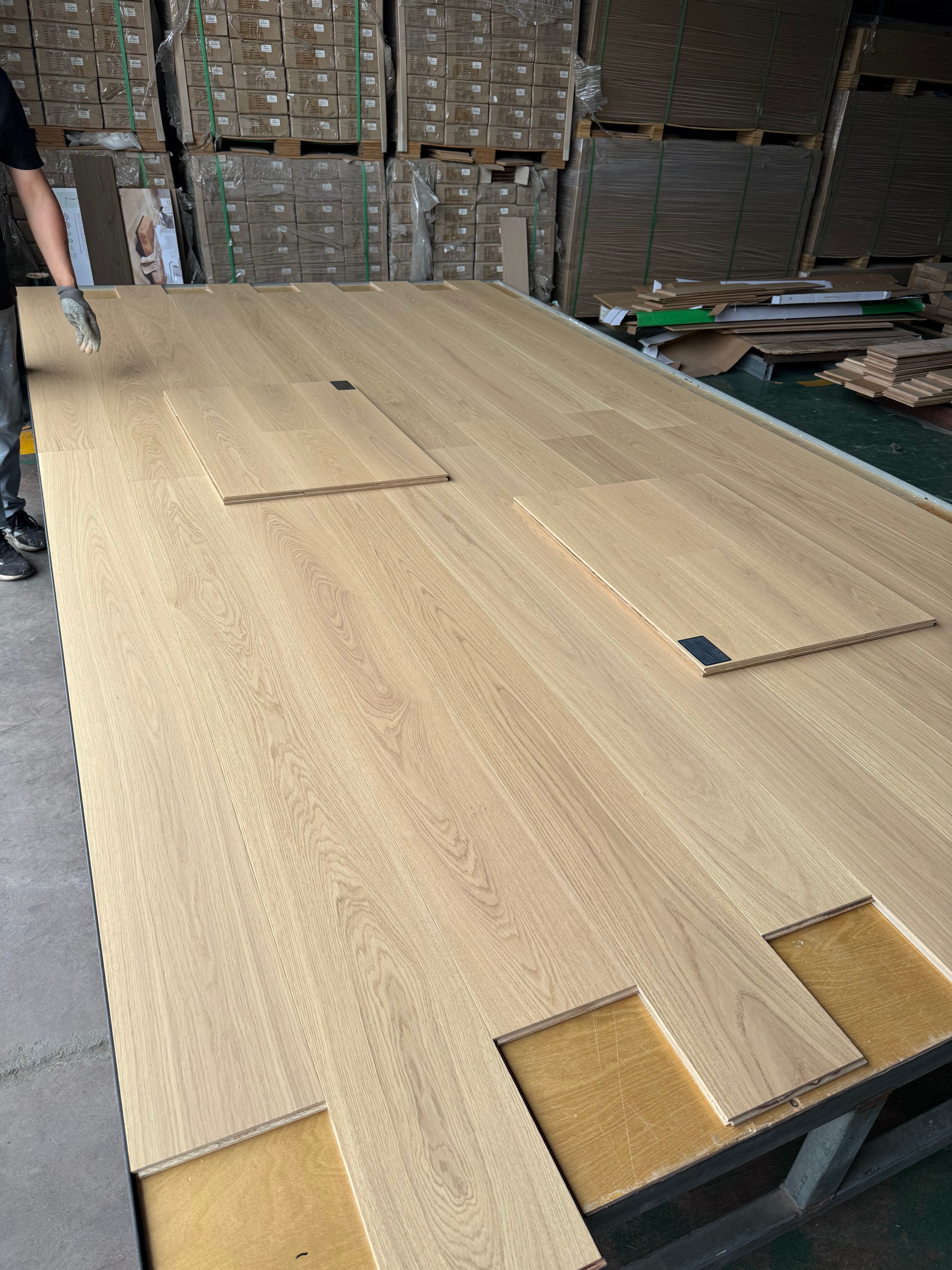
A classic plank profile that remains one of the most searched formats for engineered wood flooring.
A Practical Shortlist: 5 Engineered Wood Flooring Manufacturers to Evaluate
A shortlist is useful only if it reflects different sourcing paths. Based on industry reports, the engineered wood sector includes well-known global names such as Mohawk Industries, Shaw Industries (Anderson Tuftex), Armstrong Flooring, and Mannington Mills. These companies are often mentioned in flooring brand comparisons. For buyers who prefer direct factory supply, Chinese manufacturers such as Dongda Wood offer a different profile: fewer retail brand layers, direct OEM/ODM flexibility, and export-focused production.
The table below compares these five names using information that can be verified from public industry sources and company data. It is not a performance ranking; it is a comparison of sourcing profiles.
| Manufacturer | Sourcing profile | What buyers should verify |
|---|---|---|
| Mohawk Industries | Large global flooring group; regularly listed among engineered wood competitors | Product line availability in your market; distribution terms |
| Shaw Industries (Anderson Tuftex) | Major US flooring producer; hardwood is associated with the Anderson Tuftex brand | US-specific product range and lead times |
| Armstrong Flooring | Long-established flooring brand; commonly included in engineered wood comparisons | Whether the brand is active in your target region; specification support |
| Mannington Mills | US-based flooring manufacturer; often appears in competitor lists for engineered wood | Residential vs commercial product focus; local distributor support |
| Suzhou Dongda Wood Co., Ltd | Engineered wood flooring and plywood manufacturer in China since 1995; OEM/ODM capacity; 100% export oriented | Sample consistency; certificate validity; lead time; OEM terms |
Diving Deeper: Suzhou Dongda Wood Co., Ltd as a Direct Factory Partner
Suzhou Dongda Wood Co., Ltd, founded in 1995 and located in Suzhou City, Anhui Province, China, specializes in engineered wood flooring and plywood. Its production base covers 190,000 square meters and employs more than 500 people, including a 20-engineer R&D team. The company reports an annual output of 1.5 million square meters of engineered wood flooring and a monthly capacity of 150,000 square meters. It imports wood species from Europe, America, Russia, and Indonesia, and uses German grooving lines, a Taiwan paint line, German paint, and Finnish phenolic glue to support product stability. The company is 100% export-oriented, with main markets including the USA, Canada, Australia, the EU, the United Kingdom, Brazil, Chile, and South Africa.
From a buyer’s perspective, those details mean the manufacturer is not a trading company. The production site, finishing lines, and testing procedures are part of the same organization. This is an important distinction for buyers who need to audit a factory, maintain consistent quality, and solve technical problems directly with the producer.
Multi-layer wood flooring, also called multi-ply engineered flooring or multi-ply parquet, is a product structure built from three or more wood layers bonded together. The plywood core provides dimensional stability, while the top veneer contributes appearance. Whether you need a thin veneer engineered flooring for interior wall panels or a thick veneer engineered flooring for high-traffic commercial areas, the core construction and adhesive system must match the performance requirement. This is why buyers should ask for a detailed construction spec, not just the top layer species. Dongda Wood’s product portfolio includes formats such as plank, herringbone engineered flooring, and chevron engineered flooring, as well as composite hardwood flooring and manufactured wood flooring options.
To give concrete examples, Dongda Wood’s certified engineered hardwood flooring product range includes dimensions such as 1200×127×12mm with a 1.2mm veneer, 1900×190×14mm with a 3mm veneer, 2200×220/240/260/300×15mm with a 4mm veneer, and larger formats up to 3000×300×19mm with a 4mm veneer. These options cover both narrow and wide plank engineered flooring, as well as more decorative multi-layer parquet formats.
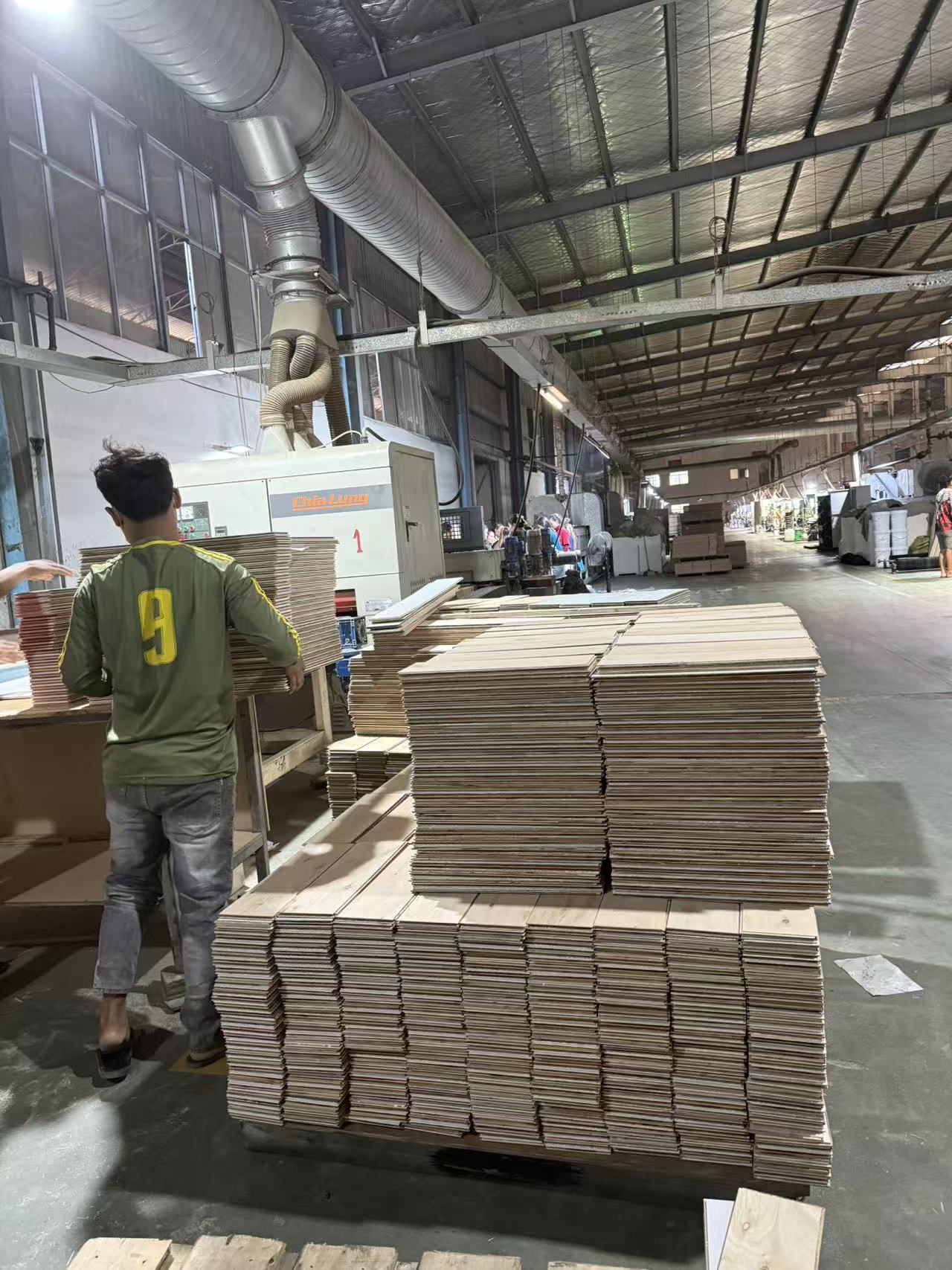
Finishing lines contribute to surface consistency and scratch resistance in engineered wood flooring.
Step-by-Step Manufacturer Evaluation Workflow
Use the following six-step workflow to turn your shortlist into a procurement decision.
Step 1. Define the target specification. List the product type (for example, engineered oak flooring or wide plank engineered flooring), veneer thickness, board size, finish type, and installation method. A clear specification narrows the list of candidates.
Step 2. Verify certificates. Ask for the certificate numbers and check expiry dates. For the EU, confirm CE marking under EN 14342:2013 and the AVCP system. For the US, confirm CARB Phase 2 and EPA TSCA Title VI compliance. For Japan, confirm F4 star. For FSC, ask for the Chain of Custody scope.
Step 3. Evaluate production capacity. Review whether the factory can meet your volume and lead-time requirements. Dongda Wood’s stated lead time is 45 days, with a monthly capacity of 150,000 square meters. These figures provide a benchmark.
Step 4. Request samples and inspect them under your own conditions. Compare color consistency, tongue-and-groove accuracy, surface finish, and veneer thickness. Also ask how the manufacturer performs quality control. 100% testing is a stronger statement than “spot checking” unless the testing protocol is fully explained.
Step 5. Review customization and MOQ. If you need custom sizes, packaging, or logo, confirm the manufacturer can produce them. Dongda Wood’s MOQ is 400 square meters per color, which is a practical quantity for testing the market.
Step 6. Define the commercial terms. Confirm warranty terms, payment conditions, shipping terms, and after-sales responsibilities. Dongda Wood offers a 25-year warranty for residential use and a 3-year warranty for commercial use. These terms should be written into your supply agreement.
Real-World Use Case: A 10-Year Supply Relationship
One example of long-term cooperation comes from a Canadian client. A buyer group serving brands, wholesalers, contractors, and distributors has purchased approximately 300,000 square meters per year from Dongda Wood for over 10 years. The application includes residential house renovation and commercial hotel and office interior decoration. The outcome reported by the client: high durability, stable surface performance, and long service life for indoor decoration projects. The key reasons for the long relationship include low formaldehyde emission, high scratch resistance, compatibility with underfloor heating, and customizable wood grain and sizes. This case illustrates how a manufacturer with stable quality and flexible customization can serve both renovation and commercial projects.
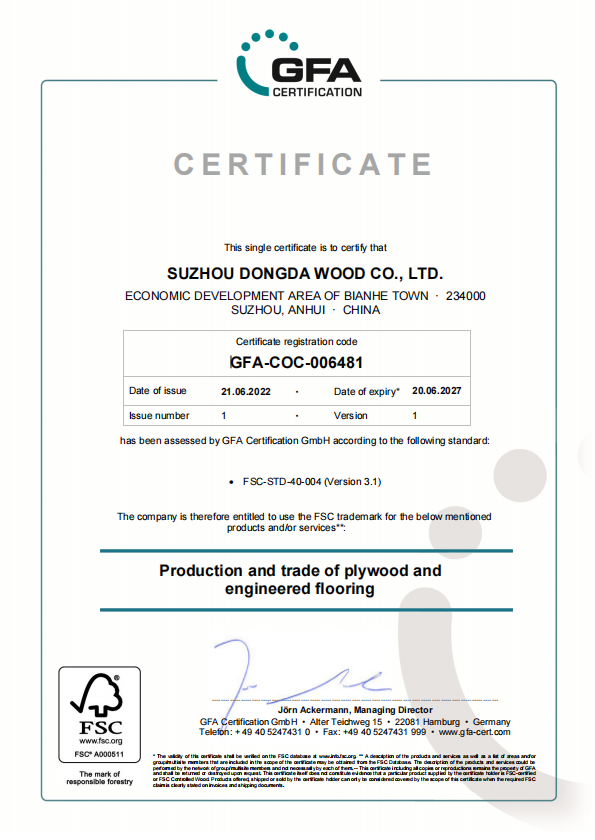
FSC certification is part of the compliance package for engineered wood flooring and plywood.
Frequently Asked Questions
Below are common questions that arise during the evaluation of engineered wood flooring manufacturers.
What certifications should an engineered wood flooring manufacturer have for international shipments?
The required certifications depend on the destination market. For the EU, a CE certificate under the CPR AVCP System 4 is relevant for engineered wood flooring. For the US, CARB Phase 2 and EPA TSCA Title VI compliance are required for composite wood products, including composite plywood. For Japan, F4 star certification is expected for composite flooring with a veneer thickness of at least 1.2mm. For buyers requiring responsibly sourced wood, FSC Chain of Custody certification covers both engineered wood flooring and plywood. Dongda Wood holds FSC, CE, CARB 2 & EPA, and F4 star certificates, so the company is a relevant reference point for these markets.
Can an engineered wood flooring manufacturer handle OEM or ODM orders with custom sizes and branding?
Yes, many manufacturers that operate dedicated production lines can provide OEM/ODM services. Dongda Wood, for example, customizes product dimensions, grade, packaging design, and logo. Its monthly capacity is 150,000 square meters, which supports both stock orders and customized programs. A buyer should always confirm customization limits and minimum order quantities before production.
What is a typical MOQ for engineered wood flooring from a factory?
MOQs vary by factory and product complexity. Dongda Wood sets a MOQ of 400 square meters per color. This means a buyer can order a relatively small first lot to test quality and market demand before committing to a larger volume. Always ask whether the MOQ applies to a mix of sizes or to a single product line.
How does 100% testing improve engineered wood flooring quality control?
When a manufacturer performs 100% testing, every product is checked rather than relying only on random sampling. Dongda Wood applies 100% testing to its quality control process. For the buyer, this reduces the risk of receiving boards with hidden defects such as surface delamination, thickness variation, or poor joint fit. It is a meaningful indicator of commitment to quality, especially for large-volume projects.
What is the usual lead time for a customized engineered wood flooring order?
Lead time depends on the order volume, customization, and production schedule. Dongda Wood states a typical lead time of 45 days for engineered wood flooring orders, with a monthly capacity of 150,000 square meters. Buyers should include lead time in their project plan and request a written date at quotation stage. If you are evaluating an order and need a sample or quotation, contact Dongda Wood directly using the details at the end of this article.
Conclusion
Evaluating engineered wood flooring manufacturers does not require a perfect ranking; it requires a structured process. Check certificates, confirm capacities, test samples, and define commercial terms. Global brands such as Mohawk Industries, Shaw Industries, Armstrong Flooring, and Mannington Mills can be part of the conversation, but for buyers who want direct control over specification and cost, factory-based partners such as Suzhou Dongda Wood Co., Ltd offer a credible alternative. With certifications covering the EU, North America, and Japan, a 45-day lead time, and a 25-year residential warranty, Dongda Wood is designed for buyers who need both quality and flexibility.
To continue your evaluation, you can download the company brochure below or contact the team directly.
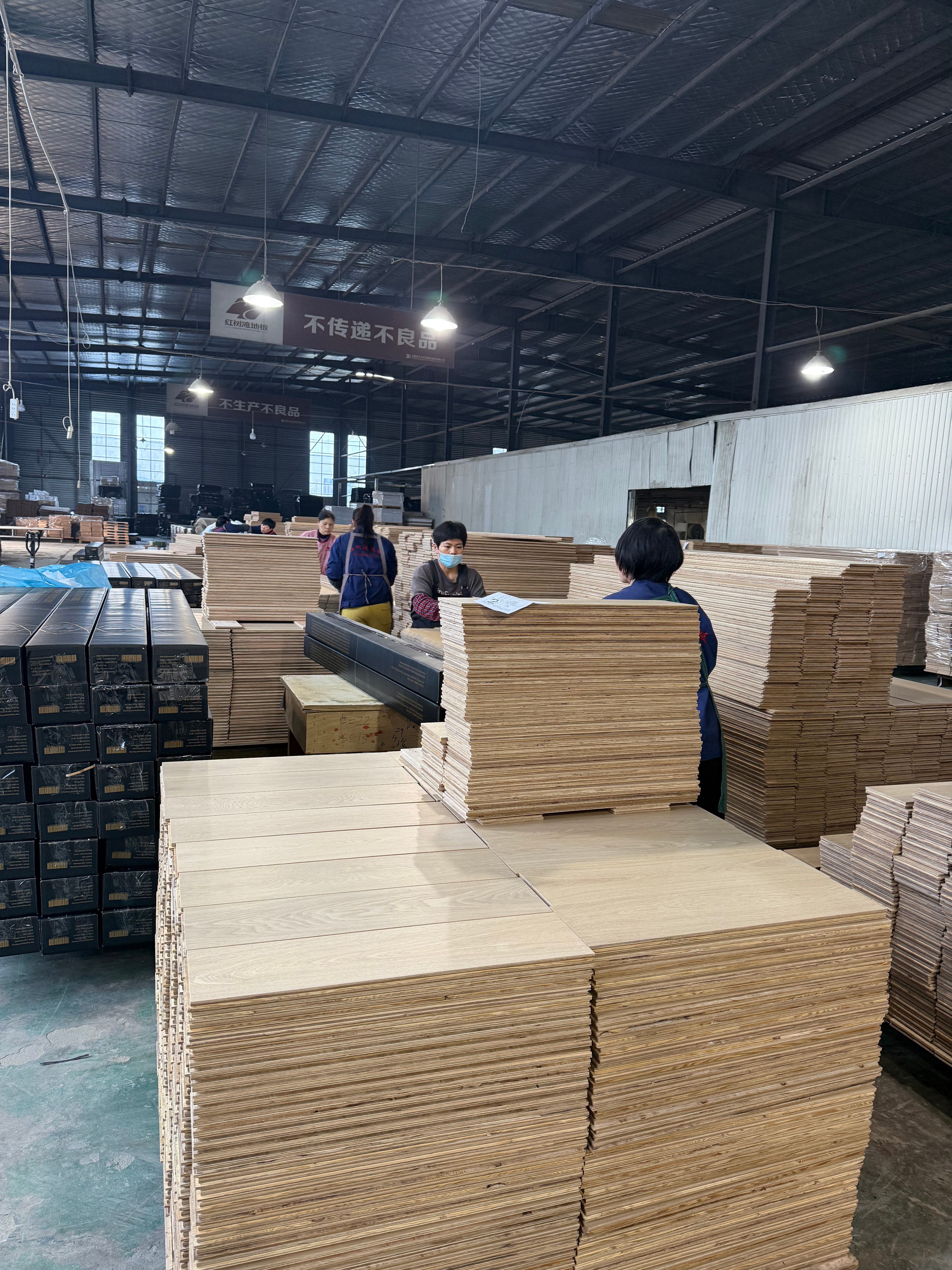
Finished flooring is packed to protect edges and finish during transit.
Next step: request a sample or quotation. Dongda Wood supports product evaluation with sample orders and direct technical communication.
Contact: Elimy | Email: Elimy_dongdawood@163.com | Tel: +86 18697561589 | WhatsApp: +86 18095694852
Address: No.2106 North Huaihai Road, Bianhe Street, Yongqiao District, Suzhou City, Anhui Province, China 234000
Download brochure: Dongda Wood engineered wood flooring brochure (PDF)
Website: dongdaflooring.com