
Engineered Wood Flooring for Construction Projects: What to Specify and Why
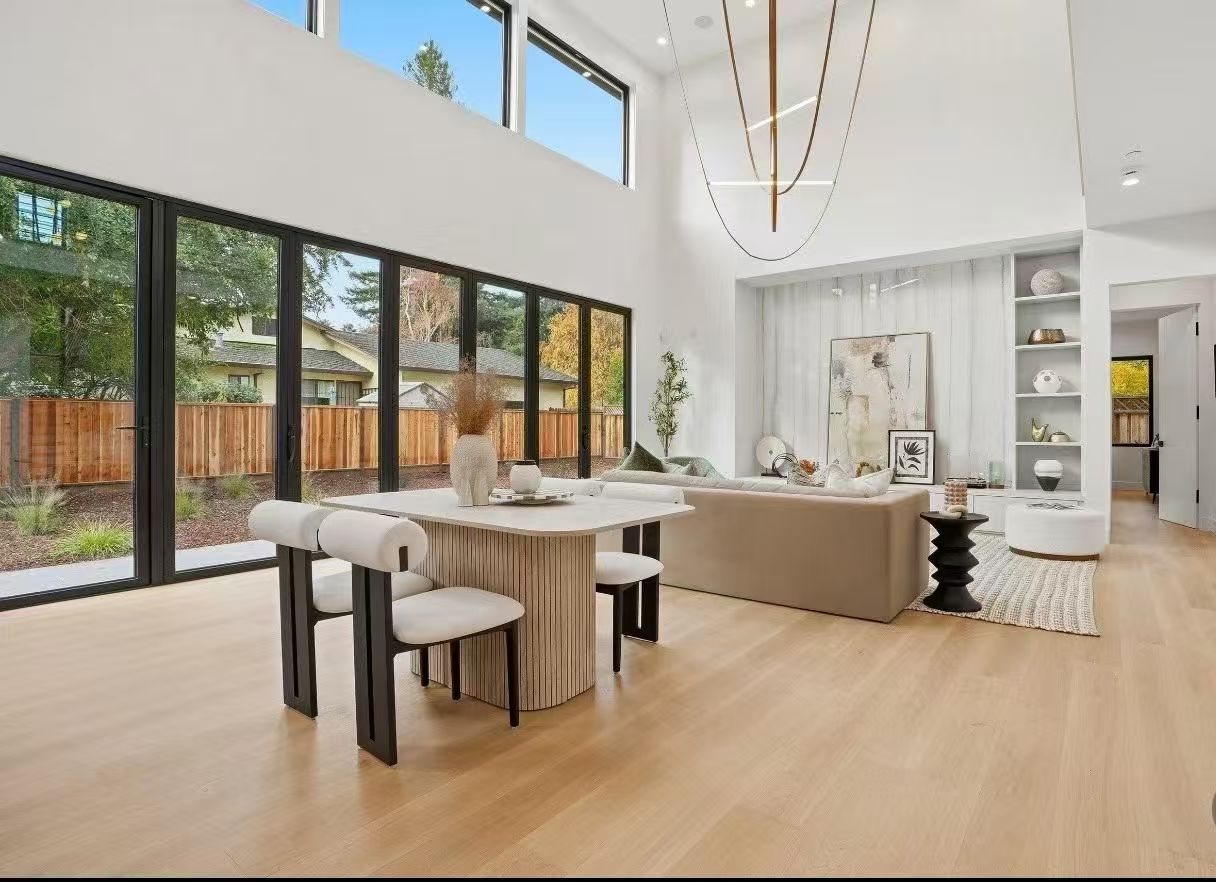
Selecting engineered wood flooring for a construction project is different from buying flooring for a single room. It requires confidence in product stability, installation compatibility, compliance documentation, and the manufacturer's ability to deliver consistent quality at scale. This article explains what construction professionals should specify when sourcing engineered wood flooring, and how a Chinese manufacturer such as Suzhou Dongda Wood Co., Ltd supports those project demands.
Why Construction Projects Fail with the Wrong Flooring Supplier
Construction projects introduce constraints that retail purchases do not. Large areas mean that even minor variations in color, thickness, or click-joint precision become visible problems. Tight schedules require flooring that installs quickly and without unexpected site preparation. Building regulations demand documented compliance with formaldehyde emission limits and fire performance. Meanwhile, a multi-phase project may require the same product to be available months after the first order.
The practical risk is that a supplier focused only on retail samples cannot maintain batch consistency, provide project-scale capacity, or supply the paperwork needed for building inspections. That is why procurement teams need to evaluate the manufacturer, not just the product.
Engineered Wood Flooring Is a Mainstream Material in Construction
The global wood flooring market is projected to grow from USD 53.14 billion in 2024 to USD 71.57 billion by 2029, according to The Business Research Company. Within this market, engineered wood flooring represents about 55% of the total wood flooring volume, because its multi-layer construction offers dimensional stability over solid wood. Oak accounts for roughly 46% of global engineered wood flooring demand. China remains a major supply base: its exports of wood products reached USD 17.5 billion in 2024, with the USA, Japan, and the UK among principal destinations.
For construction projects, engineered wood is often specified due to its compatibility with subfloor heating, its ability to adapt to humidity changes, and the availability of large-format planks. But the material's performance depends on the quality of the core layers, the thickness of the wear layer, and the precision of the locking system.
Engineering a Flooring Solution for Residential and Commercial Projects
Dongda Wood has specialized in engineered wood flooring and plywood since 1995. Based in Suzhou City, Anhui Province, the company operates a 190,000㎡ facility with more than 500 employees. Its product range includes engineered hardwood flooring and engineered timber flooring, known under model series GA01-016 and CC01-09.
Product Structure and Dimensions
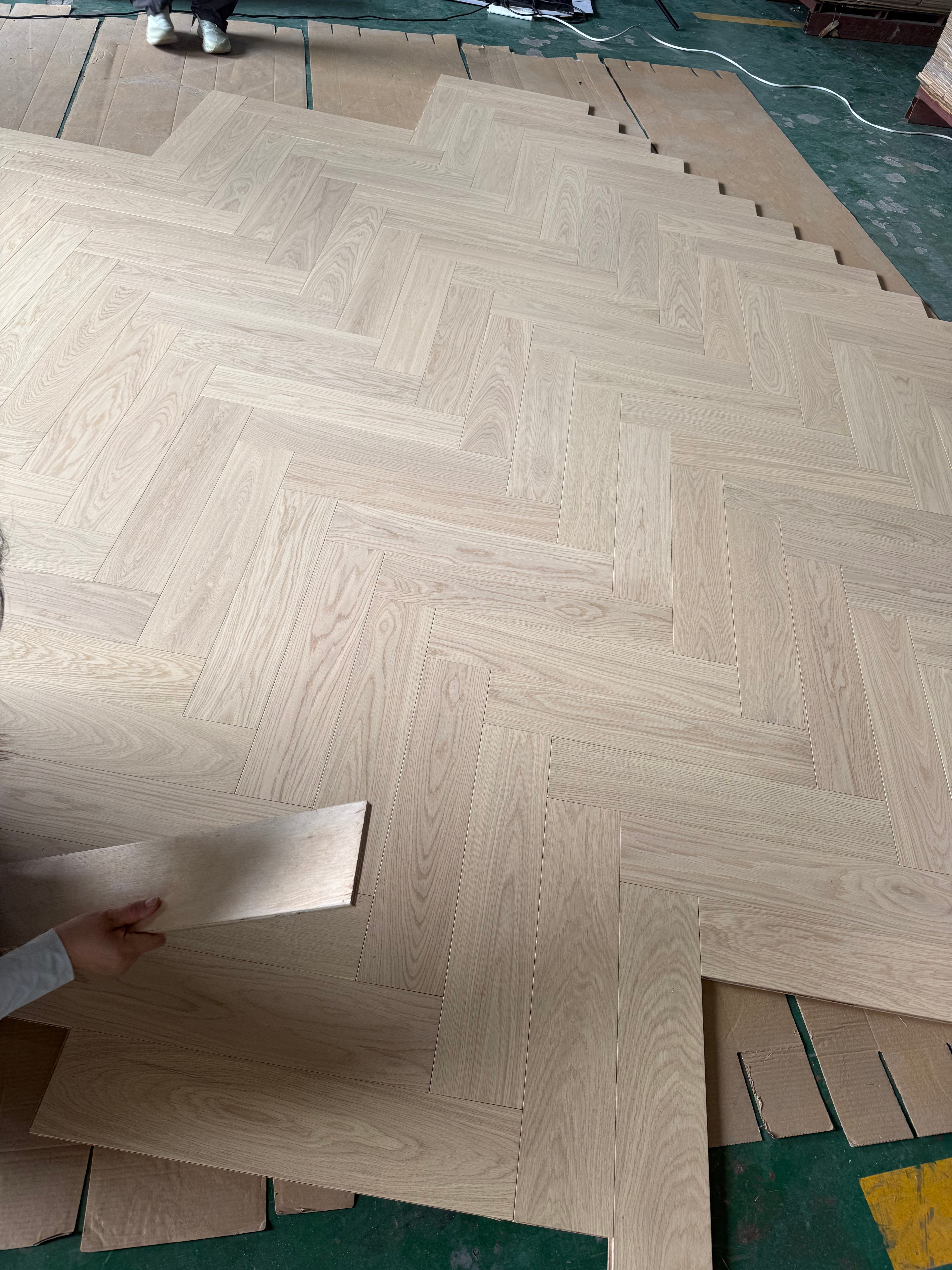
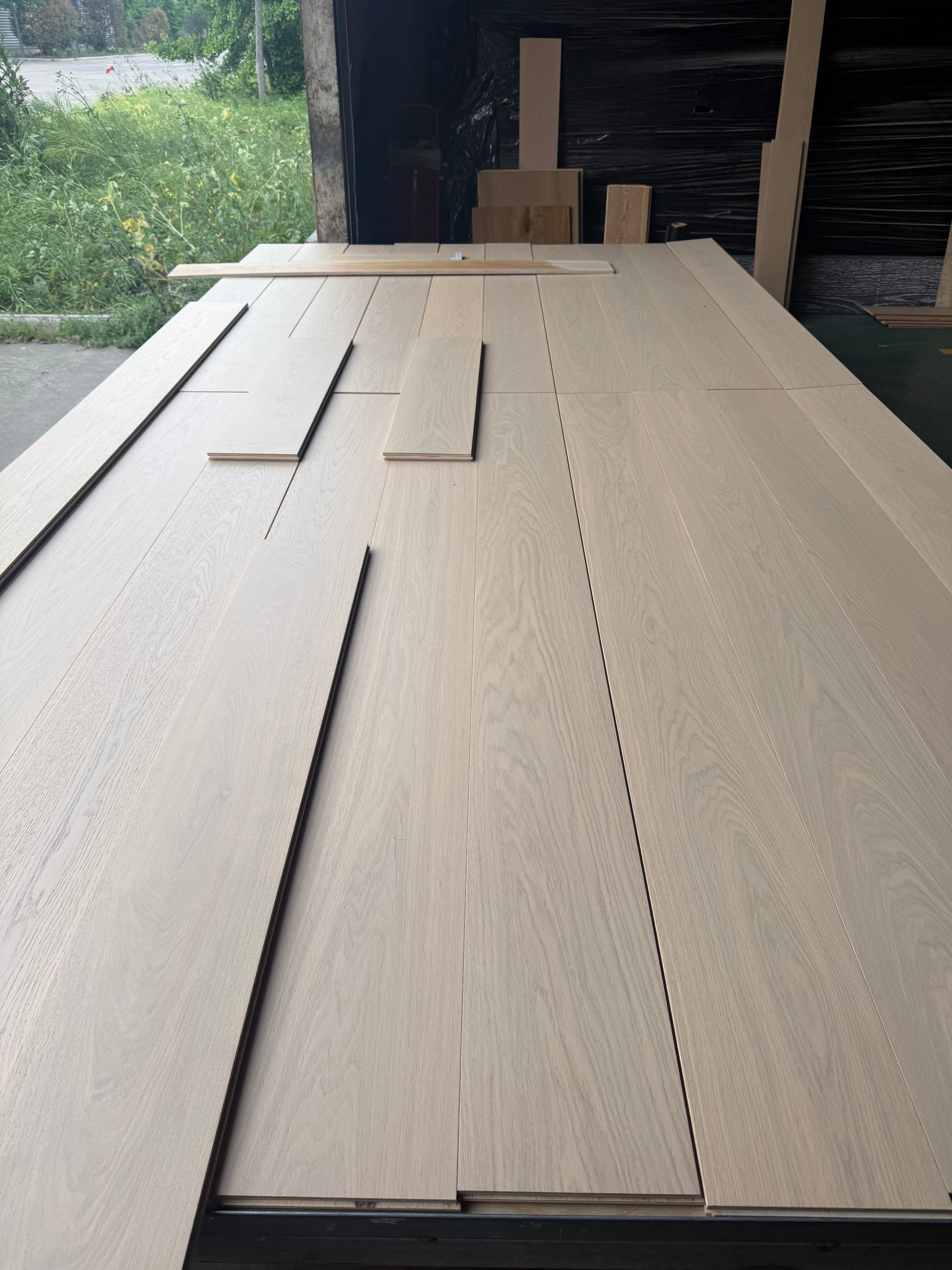
The product is designed for indoor residential dry environments and is suitable for either residential or commercial interior decoration projects. Standard specifications include formats such as 1200×127×12/1.2mm, 1900×190×12/1.2mm, 1900×190×14/3mm, 1900×190×15/4mm, 2200×220/240/260/300×15/4mm, 3000×300×19/4mm, 1900×190×18/0.6mm, 900×150×15/3mm, 750×150×15/3mm, and 600×125×14/3mm. The two numbers after the '/' indicate total thickness and top veneer thickness, respectively. This range allows a project team to choose a thinner 1.2mm veneer for cost-efficiency or a thicker 3–4mm veneer for longevity and refinishing potential.
Installation and Installation Accessories
The engineered wood flooring operates with both click and glue installation modes. This flexibility is valuable on construction sites: click installation speeds up floating floors over underlayment, while glue-down installation is used for direct bonding to a stable subfloor. The product requires supporting equipment including skirting boards and floor trims, which should be specified in the same procurement package to ensure a consistent finish.
Special Requirements for Construction Applications
For construction use, the application has special requirements: low formaldehyde emission, wear resistance, and CE certification. Low formaldehyde is essential for indoor air quality; wear resistance is necessary for both residential traffic and commercial spaces; CE certification is required for products placed on the European market. Dongda Wood aligns its offering with these expectations, and the product is used in markets across Australia, Brazil, Canada, France, the UK, the US, and more than 20 other countries.
Step-by-Step: Specifying and Sourcing Engineered Wood Flooring for a Construction Project
- Define project conditions. Identify whether the site is residential or commercial, whether it is a dry indoor environment, and whether underfloor heating will be used. Dongda's engineered flooring is designed for indoor residential dry environments but is also used in commercial hotel and office interiors; confirm your project's traffic level.
- Choose the veneer thickness. For areas that may be refinished, select a 3mm or 4mm top layer. For budget-focused installation with less refinishing, a 0.6mm to 1.2mm veneer may be sufficient.
- Select plank geometry. Wide planks (e.g., 2200×220×15/4mm) create a modern look and reduce installation time, while narrower planks (e.g., 600×125×14/3mm) are suitable for smaller or more traditionally laid rooms.
- Verify compliance. In the EU, engineered wood flooring must meet EN 14342:2013 for CE marking. In the US, ANSI/HPVA EF 2020 sets performance and formaldehyde requirements aligned with CARB and TSCA Title VI. Request certificates and test reports from the manufacturer.
- Request samples and confirm grade. Before mass production, use physical samples to check color, gloss level, and graining against the specification. This reduces the risk of mismatched expectations for the entire project.
- Assess manufacturing capacity and controls. Review factory size, production volume, quality control procedures, and export experience. A manufacturer with a 190,000㎡ plant, over 500 employees, and a 45-day lead time can support project timelines.
- Plan logistics and after-sales support. Confirm packaging suitable for sea freight, delivery terms, and warranty conditions. Dongda Wood offers a 25-year warranty for residential use and a 3-year warranty for commercial use, which signals confidence in the product's long-term performance.
Use Cases: From Residential Renovation to Hotel and Office Projects
The same engineered wood flooring system has been applied in North America for residential house renovation and commercial hotel/office interior decoration. A long-running Canadian client has been purchasing approximately 300,000㎡ per year for over 10 years, using the flooring for high durability, stable surface performance, and long service life.
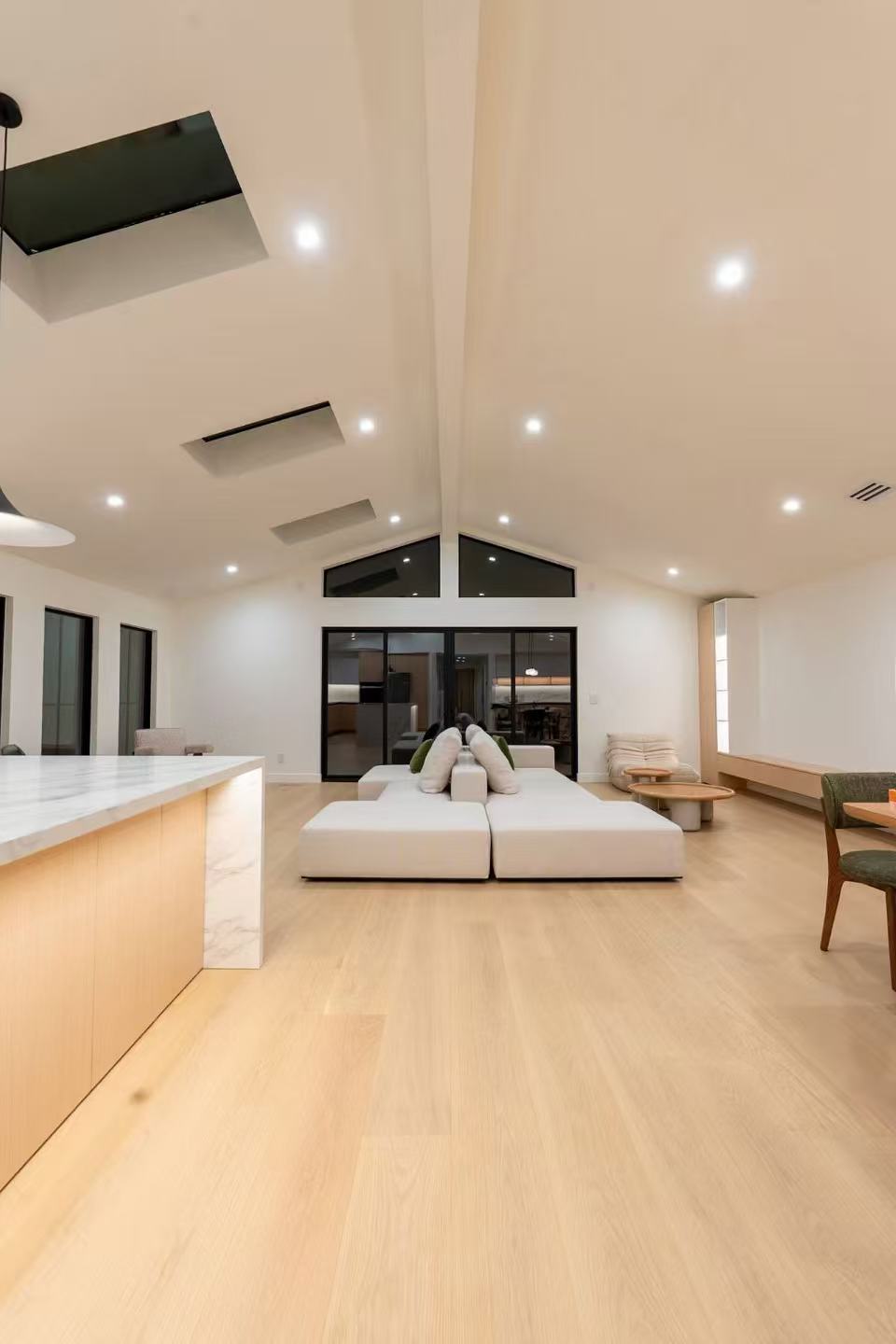
The client's project highlights include low formaldehyde emission, high scratch resistance, compatibility with underfloor heating, and the ability to customize wood grain and sizes. These attributes translate into fewer site complaints, fewer callbacks, and a floor that can withstand daily use in both homes and commercial settings.
Project Requirement Checklist vs. Manufacturer Evidence
| Project Requirement | What to Evaluate | Dongda Wood Evidence |
|---|---|---|
| Flexible installation | Does the flooring support both floating and glue-down installation? | Click and glue dual installation modes are available. |
| Indoor air quality | Does the product meet formaldehyde emission limits? | Low formaldehyde emission is a stated application requirement for the product. |
| Durability | Can the surface withstand foot traffic and scratches? | Wear resistance and high scratch resistance are highlighted in the product/case evidence. |
| Market compliance | Does the product meet EU or US regulatory schemes? | CE certification is specified as a special requirement for this application. |
| Scale consistency | Can the manufacturer deliver project-scale volumes over years? | A Canadian client has sourced about 300,000㎡/year for more than 10 years. |
| Customization | Can dimensions, grade, packaging, and logo be tailored? | OEM/ODM production supports custom dimensions, grade, packaging design, and logo. |
| After-sales protection | Is there a meaningful warranty? | 25-year residential and 3-year commercial warranties are offered. |
Frequently Asked Questions
What compliance standards should a construction-project flooring manufacturer meet?
For European projects, the product must meet EN 14342:2013, which defines CE-marking requirements for reaction to fire and formaldehyde release. For US projects, ANSI/HPVA EF 2020 includes formaldehyde emission limits per CARB and TSCA Title VI. Dongda Wood specifies low formaldehyde emission and CE certification as part of its application requirements for engineered wood flooring used in residential and commercial construction.
Can a Chinese engineered wood flooring manufacturer handle large-scale construction supply?
Yes. A suitable manufacturer should have documented production capacity and proven long-term supply records. Dongda Wood operates a 190,000㎡ factory with more than 500 employees and has supplied a Canadian client with roughly 300,000㎡ per year for over 10 years for residential renovation and commercial hotel/office projects.
How should I budget for engineered wood flooring in a construction project?
Budgeting depends on the top-layer thickness, plank dimensions, wood species, grade, finish, and the level of certification required. Thicker veneers and wider planks generally increase material cost, while click installation can reduce labor time. For accurate budgeting, request a quotation based on the project's specific size and specification; volume orders can also benefit from more favorable pricing negotiations.
Can I request samples before placing a construction project order?
Yes. Reputable manufacturers provide samples for color and grade confirmation. When sourcing from Dongda Wood, the minimum order quantity is 400㎡ per color, and samples are the recommended first step to verify that the product meets the project's visual and technical requirements before mass production.
What is the typical lead time for construction project orders?
Dongda Wood publishes a lead time of approximately 45 days for production. This allows time for veneer selection, machining, finishing, and packaging. For large construction orders, it is advisable to synchronize the production schedule with the project timeline and plan for sea freight transit time.
Conclusion: Select a Flooring Manufacturer That Matches Your Project's Scale
Specifying engineered wood flooring for a construction project is not just about choosing a surface material; it is about verifying that the manufacturer can reproduce the same quality across thousands of square meters, provide the required certifications, deliver on schedule, and support the product after installation. Suzhou Dongda Wood Co., Ltd offers a combination of product breadth, production capacity, and long-term supply experience that aligns with these project needs.
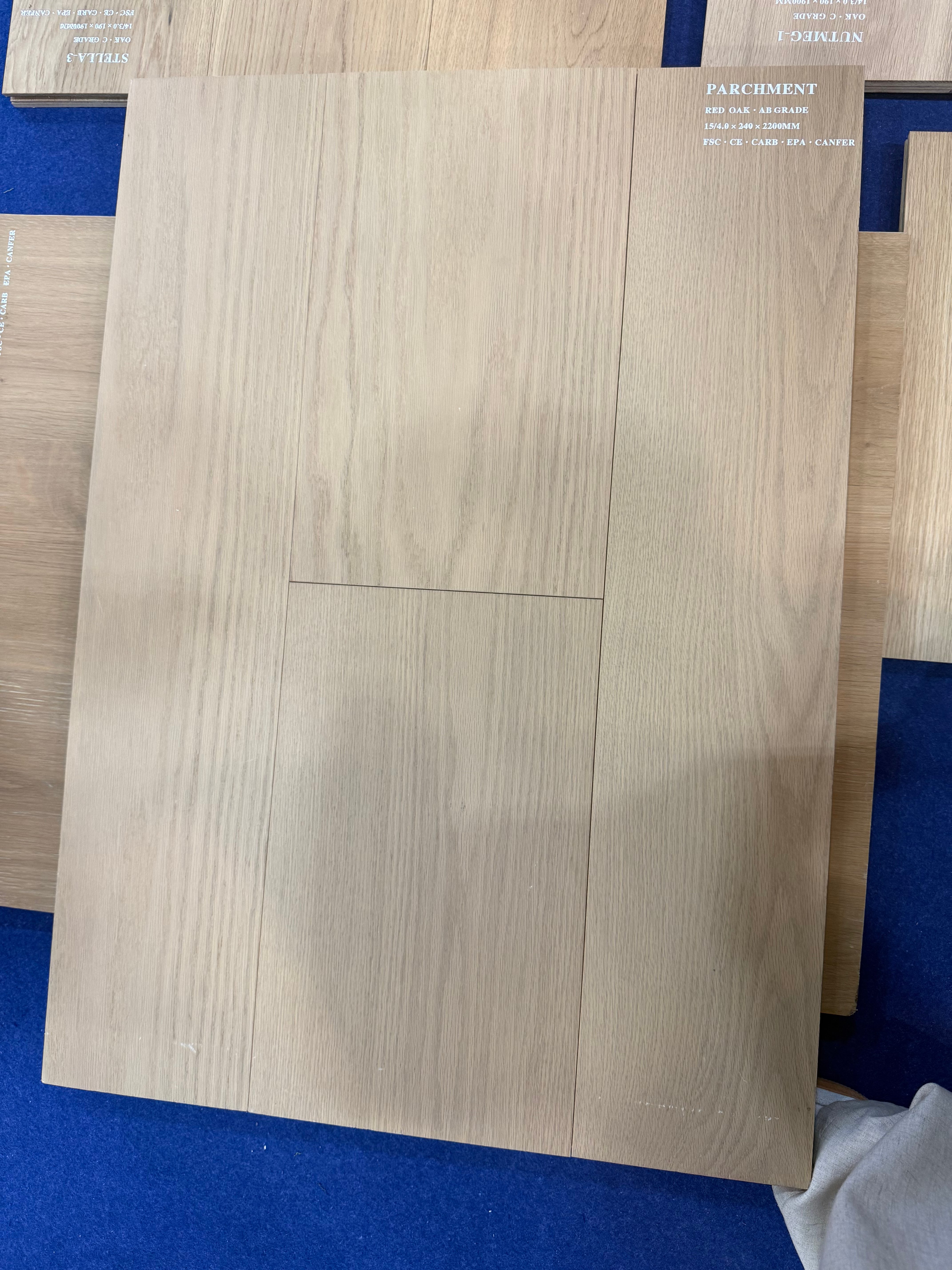
If you are preparing a specification or evaluating suppliers, download Dongda Wood's engineered wood flooring brochure for detailed product information and contact the team for a project-based quotation.
Get a project-based quotation or request samples
Contact Elimy: Elimy_dongdawood@163.com | Tel/WhatsApp: +86 18095694852