Engineered Wood Flooring for Underfloor Heating: Specs & Certifications
Engineered Wood Flooring for Underfloor Heating: Specs & Certifications
Engineered wood flooring can be specified over underfloor heating without giving up the warranty or the surface finish — but only when the core construction, the emission class, the coating and the certificate scope are specified as one package. This technical guide sets out the parameters a specifier must verify, the certificates that apply to model GA01-016 / CC01-09, and how those parameters connect to the production capabilities of Suzhou Dongda Wood Co., Ltd.
Short answer: a multi-layer engineered board with a cross-laminated plywood core, a declared low-emission class (CARB Phase 2 / EPA TSCA Title VI, F4 star), a factory-applied scratch-resistant coating and a certificate whose scope names the supplied model is suitable for heated floors in residential and commercial interiors. Four parameters decide the outcome: core construction, top veneer thickness, emission certification, and the validity and scope of each certificate.
Importers, distributors, flooring contractors and project specifiers tend to arrive at the same question from different directions: can engineered wood flooring go over underfloor heating, and what has to be checked before the order is released? The material answer is yes — the multi-layer structure is precisely what makes engineered flooring more predictable than solid wood under radiant heat. The commercial answer depends on documents rather than materials, because heat changes which documents are decisive.
The rest of this article follows the sequence a specification normally takes: what radiant heat does to a board, how the market and the standards frame the decision, what to specify, which certificates to pull, how to run the order, and where these assemblies are typically installed.
Why Underfloor Heating Changes the Specification
Underfloor heating does not simply warm the surface of a floor. It creates a temperature and moisture gradient through the entire assembly: the underside of the board sits closer to the heat source while the top surface equilibrates with room conditions. Three mechanisms follow from that gradient, and each one maps to a different specification parameter.
1. Dimensional movement across the board
Wood is hygroscopic, meaning it gains and loses moisture with its surroundings, and that movement is not uniform when heat is applied from one face. A board built from multiple veneer layers bonded with alternating grain direction distributes the stress across the core instead of concentrating it in one piece of timber. This is the practical reason multi-layer engineered and multi-ply parquet constructions are the wood option normally specified over radiant heating — and it is also why the core, not the visible surface, is the first thing to qualify.
2. Emission behaviour under heat
Formaldehyde emission from composite wood products is temperature-sensitive: emission rates generally rise as temperature rises. A floor that performs well in a room-temperature bench test is therefore not automatically compliant on top of a heated slab. For heated projects the emission standard stops being a formality — CARB Phase 2, EPA TSCA Title VI, F4 star and the CE declaration linked to EN 14342:2013 are the documents that determine whether the floor can be specified at all in certain markets.
3. Surface stress from dry heat and traffic
Heated floors run drier at the surface during the heating season. Combined with grit and foot traffic, that shows up first as micro-scratching and gloss change rather than as structural damage. Scratch resistance is a coating-system and curing property rather than a wood-species property, which is why the finish specification has to be written separately from the species specification.
Failures in heated installations are rarely material failures. They are assembly mismatches: an under-specified core, an unverified emission class, a coating selected for appearance only, or a commissioning sequence that ramps the slab up too quickly after installation. Each of those is a specification decision that can be closed before the purchase order is issued.
Industry Background: Where Radiant Heating Meets Engineered Flooring
Engineered wood flooring is now the larger half of the wood flooring category, and its share is the reason underfloor heating compatibility has moved from a niche requirement to a standard line item in project specifications.
- The global wood flooring market was valued at USD 53.14 billion in 2024 and is projected to reach USD 71.57 billion by 2029 (The Business Research Company).
- Engineered wood flooring accounted for 55% of the total wood flooring market in 2024, favoured for its dimensional stability over solid wood (Market Research Reports).
- Oak-based products represent approximately 46% of global engineered wood flooring demand (Industry Forecast Reports 2035).
- China's exports of wood products reached USD 17.5 billion in 2024, with the USA, Japan and the UK among the major destinations (OEC, Observatory of Economic Complexity).
One caution about these figures: category estimates diverge between research houses because “engineered wood”, “wood flooring” and “hardwood” are defined differently from report to report, and some include laminate, bamboo and panel products. Market-size numbers are useful planning context, not a procurement input. The standards and the certificate scopes discussed below are the parts of this picture a buyer can actually verify.
Two regional standards frame the compliance conversation. In the United States, engineered wood flooring must comply with ANSI/HPVA EF 2020, which includes formaldehyde emission limits per CARB and TSCA Title VI (Decorative Hardwoods Association). In the European Union, engineered wood flooring is subject to EN 14342:2013, which specifies the requirements for CE marking of wood flooring, including reaction to fire and formaldehyde release (European Committee for Standardization). In both markets, the specification for a heated building is written against a standard plus an emission class — not against a species name alone.
What an Engineered Board Has to Do Over a Heated Slab
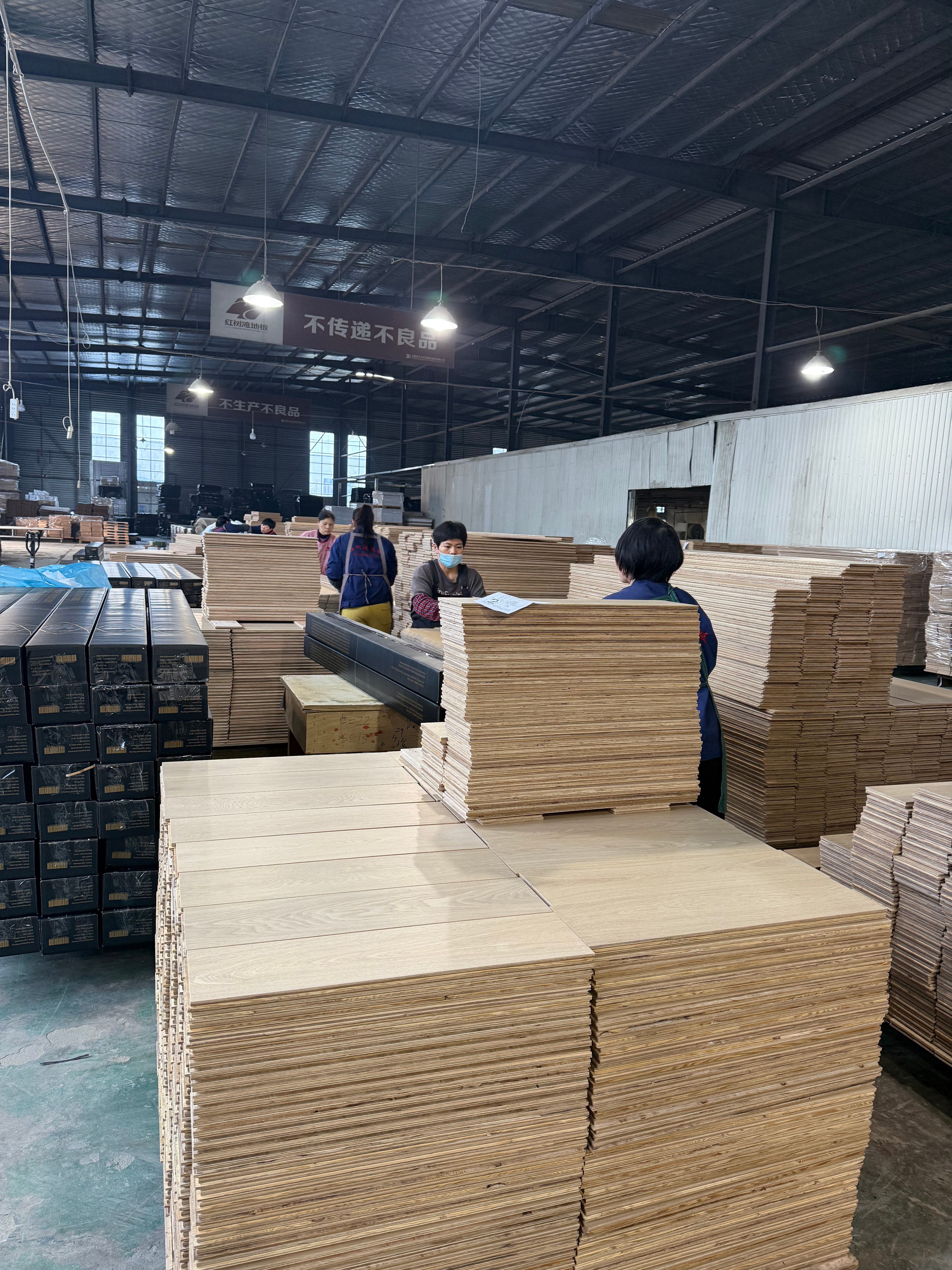
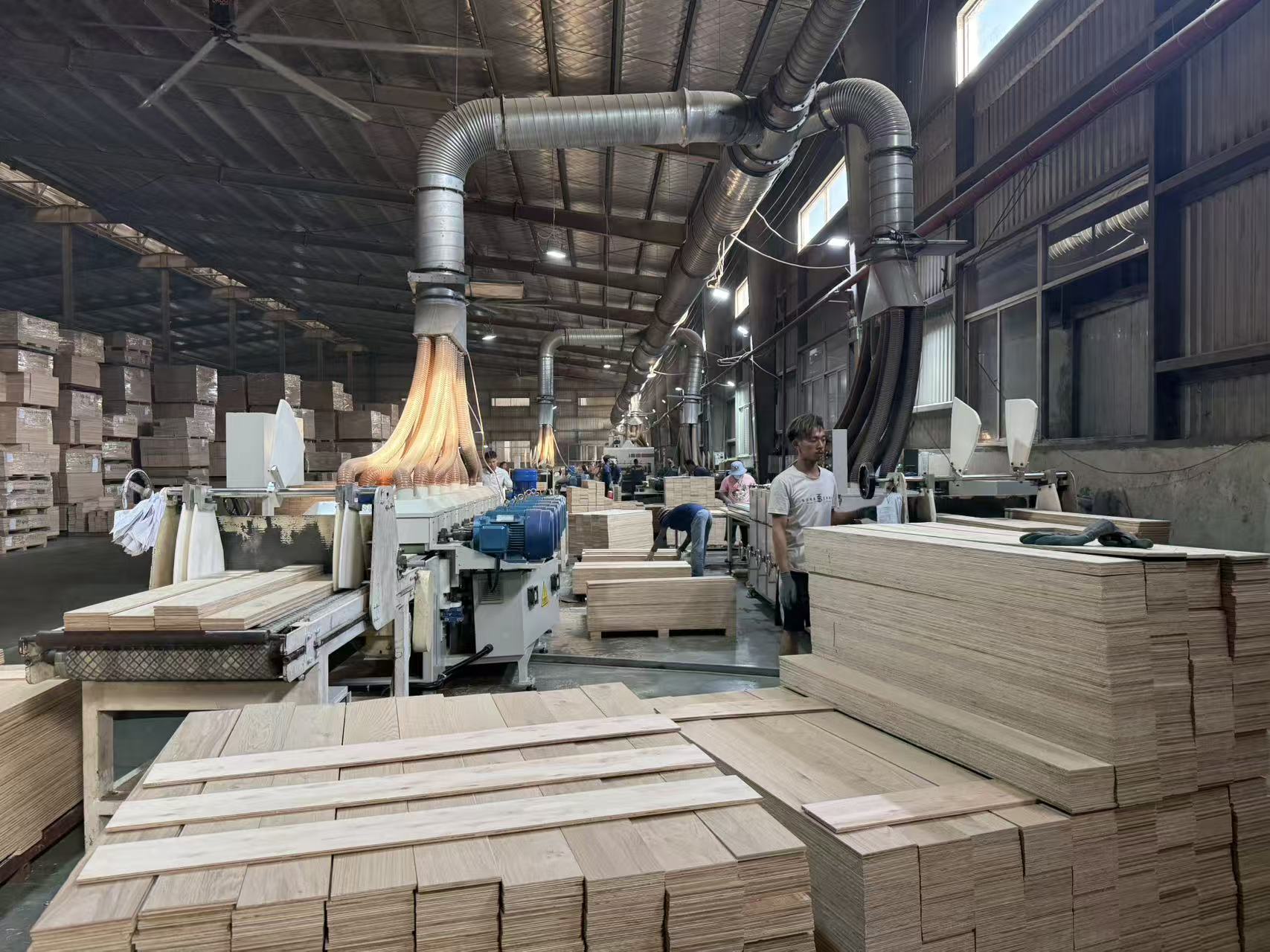
Suzhou Dongda Wood Co., Ltd is a Chinese manufacturer of engineered wood flooring and plywood, founded in 1995 and based in Suzhou City, Anhui Province, exporting to North America, South America, Europe, South Africa and Asia. For a heated-floor specification, the relevant question is how the plant's construction, tooling and quality processes map onto the parameters named above.
Multi-layer core construction
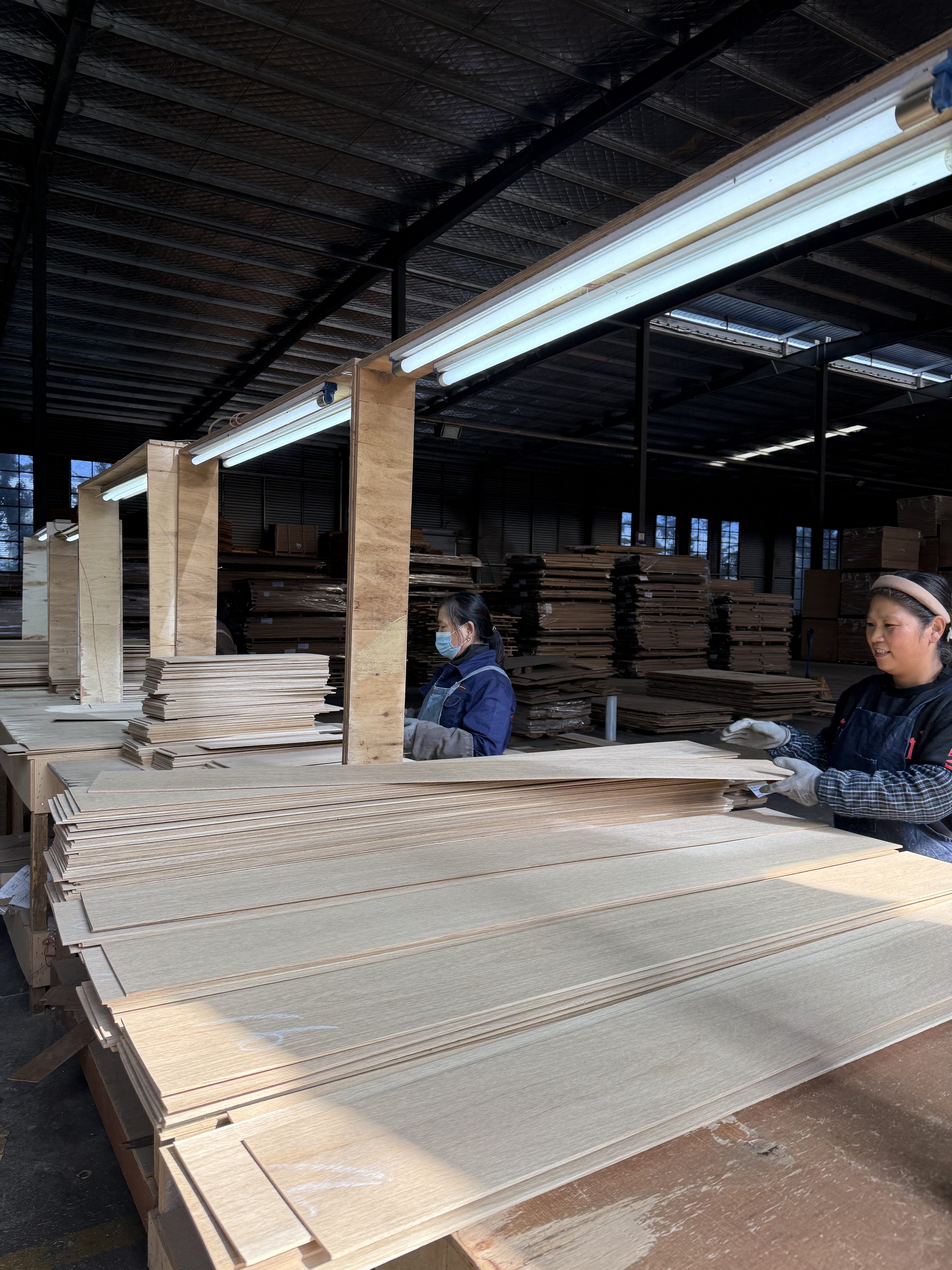
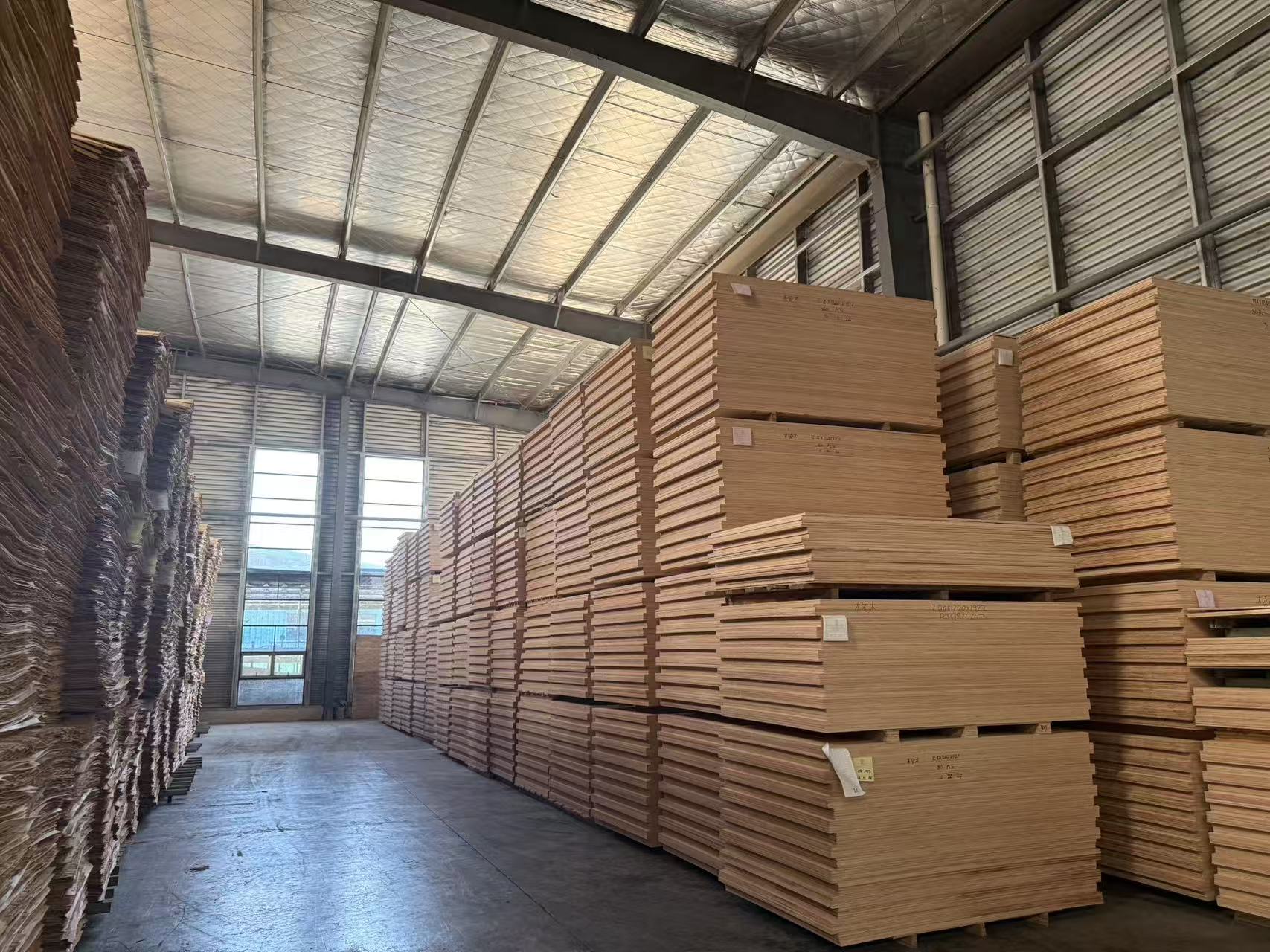
The product family supplied under model GA01-016 / CC01-09 is a multi-layer engineered board built on a plywood core, available across multi-layer wood flooring, multi-ply engineered flooring and engineered parquet formats. The core is a laminated structure: the formaldehyde certification issued for the same product family describes it as HWPW-VC composite plywood, 3–40 mm thick, in 3–23 layers of veneer plywood. Cross-lamination means each layer restrains the movement of the next, so the assembly responds to heat and moisture as a balanced panel rather than as a solid block of timber.
Adhesive system behind the emission class
Bonding uses Finland Taier phenolic glue. Phenolic adhesive systems are selected for bond durability and moisture resistance in structural plywood, and that is why the emission certification for this product family is written against the plywood structure rather than against the decorative face. For a heated floor the relationship is the correct one: the heat-affected component is the bonded core, so the core is the component that carries the certification.
Top veneer thickness — a trade-off, not a ranking
The documented format range covers top veneer thicknesses from 0.6 mm to 4 mm, spanning what the market usually separates into thin veneer engineered flooring and thick veneer engineered flooring. A thinner veneer (0.6–1.2 mm) places more of the surface behaviour into the plywood core and produces a more uniform response to heat cycling, but it limits how much the floor can be sanded later. A thicker veneer (3–4 mm) carries more solid-wood character and a deeper refinishing allowance over the service life, while the face layer itself becomes a more active part of the movement equation. Neither option is superior in the abstract; the correct choice follows from whether the project expects refinishing.
Surface finish and scratch resistance
Coatings are applied on a Taiwan Fengqiao paint line using imported German Jianfo paint. In heated interiors the finish carries the visible wear, because dry heated air plus grit and foot traffic appear first as micro-scratching and gloss change. Long-term buyers of this product in Canada — a market supplied for over ten years — document high scratch resistance and stable surface performance alongside low formaldehyde emission and underfloor heating compatibility.
Precision grooving and joint stability
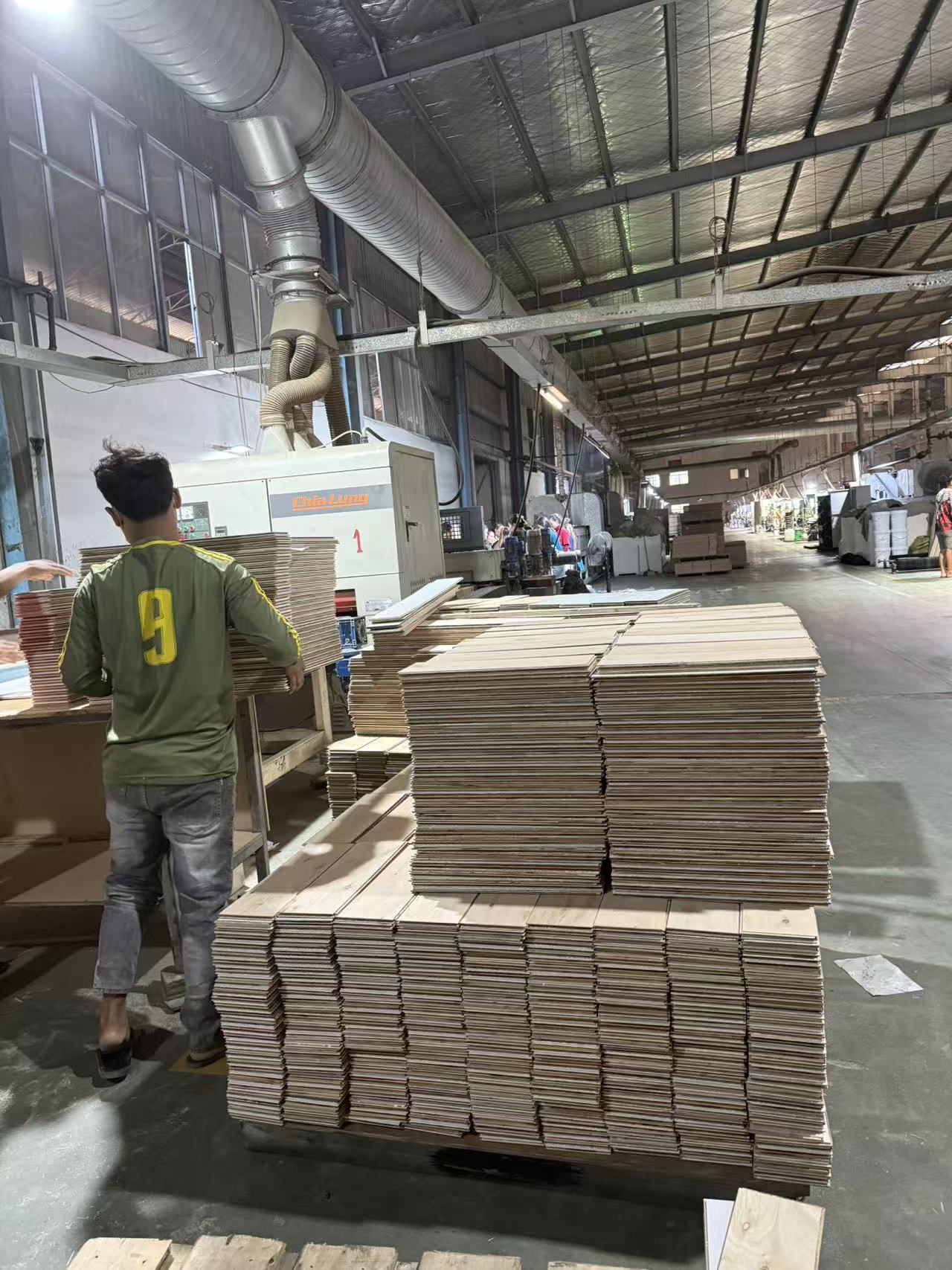
Profiles are cut on a German Homaomai grooving line. In heated installations the joint is where movement becomes visible first: inconsistent tongue-and-groove tolerances show up as gapping, lippage or a squeaking floor once the heating season begins. A dedicated grooving line holding consistent profile tolerances is therefore a specification-relevant capability, not an internal production detail.
Customizable wood grain, sizes and grades
Production runs as OEM/ODM with customization of product dimensions, grade, packaging design and logo. In practice, that lets a heated-floor specification fix the format (plank, herringbone engineered flooring or chevron engineered flooring), the veneer thickness, the grade and the surface treatment before the run begins, instead of accepting a stock configuration and bending the installation around it. Customizable wood grain and sizes are documented by the company's long-term Canadian customer as part of the delivered specification.
Documented format range for model GA01-016 / CC01-09
The application notes in the third column are specification guidance based on format geometry, not performance claims for a specific project.
| Format (L × W × T / top veneer) | Veneer class | Specification note |
|---|---|---|
| 1200 × 127 × 12 mm / 1.2 mm | Thin veneer | Height-constrained renovation over an existing heated screed. |
| 1900 × 190 × 12 mm / 1.2 mm | Thin veneer | Residential and light commercial; surface behaviour led by the core. |
| 1900 × 190 × 14 mm / 3 mm | Thick veneer | Residential projects that anticipate future sanding and refinishing. |
| 1900 × 190 × 15 mm / 4 mm | Thick veneer | Premium residential and hospitality; deepest refinishing allowance. |
| 2200 × 220 / 240 / 260 / 300 mm × 15 mm / 4 mm | Thick veneer, wide plank | Open interiors where wide plank engineered flooring is part of the design intent. |
| 3000 × 300 × 19 mm / 4 mm | Thick veneer, large format | Large commercial areas; heavier section with higher thermal mass. |
| 1900 × 190 × 18 mm / 0.6 mm | Thinnest documented veneer | Maximum core influence and surface uniformity; plan a maintenance regime rather than deep sanding. |
| 900 × 150 × 15 mm / 3 mm | Thick veneer | Herringbone and chevron pattern work. |
| 750 × 150 × 15 mm / 3 mm | Thick veneer | Pattern floors and smaller room layouts. |
| 600 × 125 × 14 mm / 3 mm | Thick veneer | Pattern floors, renovation and tighter layouts. |
Certification Parameters to Verify Before Releasing an Order
Four certificates apply to model GA01-016 / CC01-09. Each one answers a different question, and each one has a scope, a validity window and an issuing authority that a buyer can check independently.
CARB Phase 2 and EPA TSCA Title VI — the North American emission gate
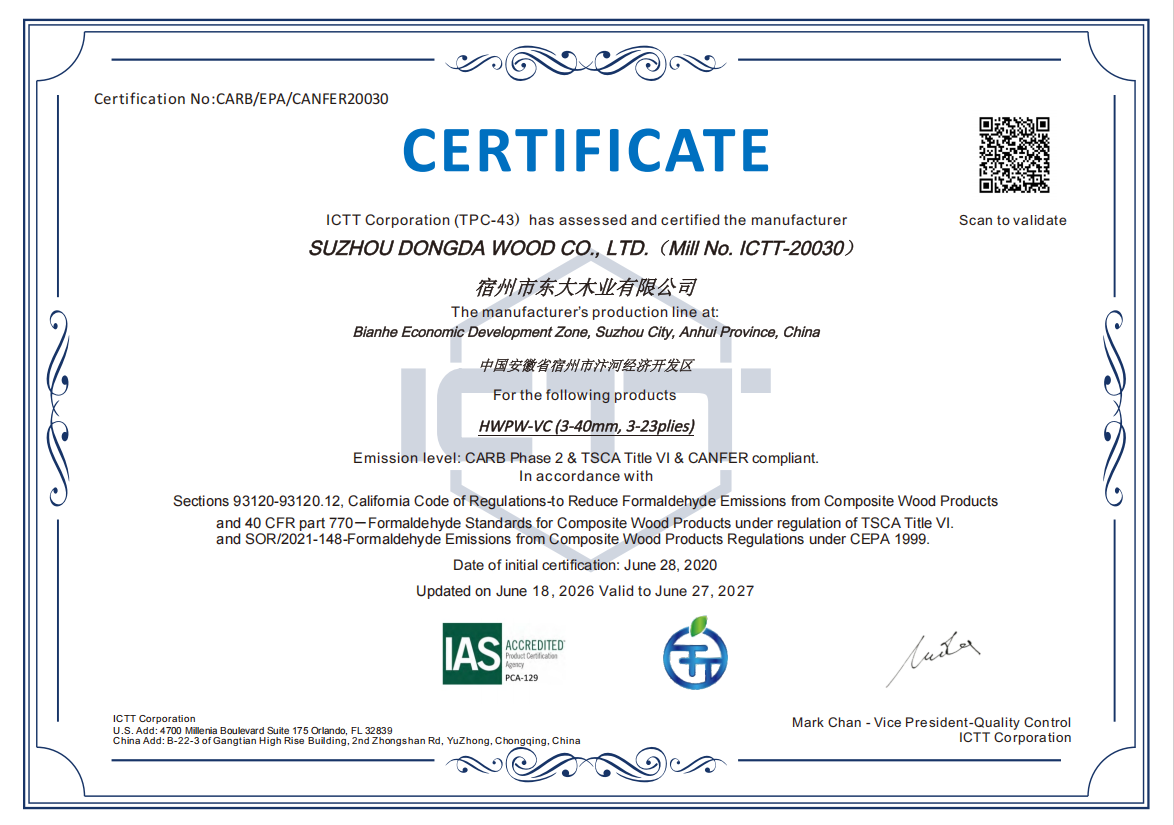
Certificate CARB/EPA/CANFER20030 is issued by ICTT and is valid from 18 June 2026 to 27 June 2027, covering North America, Australia, South America, Africa and Europe. The scope is HWPW-VC composite plywood, thickness 3–40 mm, 3–23 layers of veneer plywood. The standards referenced are California Code of Regulations §93120–93120.12, 40 CFR Part 770 TSCA Title VI and CEPA SOR/2021-148. For a heated floor this is the certificate that answers the emission question under the conditions where it matters most, which is why the scope wording — plywood structure, thickness range, layer count — has to match the goods on the invoice.
CE under AVCP System 4 — the EU route
Certificate CHIG22032983 is issued by IGBC and is valid from 5 July 2022 to 4 July 2027 for the EU market, covering engineered wood flooring and plywood under AVCP System 4. In the EU, EN 14342:2013 specifies the requirements for CE marking of wood flooring, including reaction to fire and formaldehyde release. AVCP System 4 is an attestation route in which the manufacturer carries out the testing and issues the declaration of performance without a notified body, so the verification of the underlying test basis sits with the buyer rather than with a third-party body.
F4 star — the Japanese emission class
Certificate CMSA J1073809 is issued by CMSA and is valid from 11 February 2026 to 28 February 2027 for the Japanese market. The scope is composite flooring: plywood core composite wood flooring, oak/maple/acacia veneer composite floor board with veneer thickness of 1.2 mm or more. The governing standard is the Japanese Agricultural Standard, Act No. 175 of Showa 25 (1950) concerning wood flooring. The minimum veneer condition matters when matching the certificate to a format: a specification built entirely on 0.6 mm veneer falls outside this scope and should be re-checked against the other certificates.
FSC CoC — chain of custody
Certificate GFA-COC-006481 is issued by GFA, valid from 21 June 2022 to 20 June 2027, under FSC-STD-40-004 (Version 3.1), covering engineered wood flooring and plywood in the European Union, North America, South America, Australia and Africa. This is the certificate that answers a timber-sourcing policy question rather than a performance question, and it is usually requested by brand owners and contractors with a procurement policy attached to the project.
Verification discipline. For every certificate, check five things: the certificate number, the issuing authority, the scope wording (does it name the plywood structure or the veneer thickness actually being supplied?), the validity window against the shipment date, and the product model. A certificate that is valid but out of scope on veneer thickness is no more useful than an expired one.
Step-by-Step: Specifying Engineered Flooring for a Heated Project
- Confirm the heating system's declared limits. Radiant systems differ in construction and in how much heat they deliver at the surface. Take the system supplier's declared surface conditions and output data first, and specify the floor inside those limits rather than around them.
- Fix the installation method. Bonded and floating installations behave differently over a heated slab, and both depend on the screed being properly cured and dry. Settle the installation method before the flooring format is chosen, because it constrains the board thickness.
- Lock the board construction. Decide overall thickness, top veneer thickness, format (plank, herringbone or chevron) and grade. This is the step where the refinishing trade-off in the format table above is resolved.
- Set the emission class and pull the certificates. Match the destination market to the certificate: CARB Phase 2 / EPA TSCA Title VI for North America, CE under AVCP System 4 for the EU, F4 star where the Japanese market or an equivalent emission benchmark applies, and FSC CoC where a timber-sourcing policy is in force. Check numbers, authorities, scopes and validity.
- Specify the finish. Confirm the coating system applied on the Taiwan Fengqiao paint line with imported German Jianfo paint, together with the appearance and gloss target. Request a sample for surface approval rather than approving from a catalogue image.
- Validate with a sample and pre-shipment testing. Acceptance inspection for this product family includes pre-shipment testing, and the plant applies 100% product testing during production. Use the sample to confirm grain, grade, colour and profile tolerances before the production run.
- Confirm commercial terms and schedule. MOQ is 400 ㎡ per colour, the typical lead time is 45 days, and monthly production capacity is 150,000 ㎡. Delivery terms are FOB, CIF or DDP, and payment terms are T/T. Capacity and lead time should be checked against the project programme before award, not after.
- Plan commissioning and handover. Agree the acclimation period, the heating ramp-up sequence and the handover documentation with the installer and the system supplier. Warranty terms — 25 years for residential use and 3 years for commercial use — should be written into the specification in the same step, because the warranty conditions depend on the installation being executed as specified.
Use Cases: Where Heated Engineered Wood Flooring Is Specified
Residential renovation over hydronic heating. The company's longest-running documented application is a Canadian customer group of brands, wholesalers, contractors and distributors taking around 300,000 ㎡ per year for over ten years. The application mix is residential house renovation together with commercial hotel and office interior decoration, and the recorded outcome is high durability, stable surface performance and long service life for indoor decoration projects, alongside the documented low formaldehyde emission, high scratch resistance and underfloor heating compatibility.
Commercial interiors. Hotel and office interiors place the same board under continuous foot traffic and more aggressive cleaning regimes. Here the thicker veneer formats (3–4 mm) and the larger formats are usually preferred because they allow more refinishing before replacement.
Pattern floors over radiant heat. Herringbone and chevron engineered formats are produced in the 900 × 150 × 15 mm / 3 mm, 750 × 150 × 15 mm / 3 mm and 600 × 125 × 14 mm / 3 mm sizes. Pattern work places more joints per square metre, so profile consistency from the grooving line carries more weight than it does in a straight plank installation.
Large commercial areas. The 2200 mm wide-plank formats and the 3000 × 300 × 19 mm format suit open floors where fewer joints and a larger visual scale are wanted, with the trade-off of a heavier section over the heated slab.
Comparison Table: Certifications Covering Model GA01-016 / CC01-09
| Certification | Certificate number & authority | Standard / scheme | Covered market | Validity |
|---|---|---|---|---|
| CARB Phase 2 Composite Wood Formaldehyde & EPA TSCA Title VI | CARB/EPA/CANFER20030 — ICTT | California Code of Regulations §93120–93120.12; 40 CFR Part 770 TSCA Title VI; CEPA SOR/2021-148 | North America, Australia, South America, Africa, Europe | 18 Jun 2026 – 27 Jun 2027 |
| CE CPR Construction Product Certification (AVCP System 4) | CHIG22032983 — IGBC | AVCP system 4; EN 14342:2013 | EU | 5 Jul 2022 – 4 Jul 2027 |
| F4 star | CMSA J1073809 — CMSA | Japanese Agricultural Standard, Act No.175 of Showa 25 (1950) concerning wood flooring | Japan | 11 Feb 2026 – 28 Feb 2027 |
| FSC CoC (Chain of Custody) Forest Certification | GFA-COC-006481 — GFA | FSC-STD-40-004 (Version 3.1) | EU, North America, South America, Australia, Africa | 21 Jun 2022 – 20 Jun 2027 |
Scope notes: the CARB/EPA certificate covers HWPW-VC composite plywood, 3–40 mm, 3–23 veneer layers; the CE certificate covers engineered wood flooring and plywood; the F4 star certificate covers composite flooring with veneer thickness of 1.2 mm or more; the FSC CoC certificate covers engineered wood flooring and plywood.
FAQ
Which certifications should be verified for engineered wood flooring installed over underfloor heating?
Four certificates apply to model GA01-016 / CC01-09, and each answers a different market question. CARB Phase 2 and EPA TSCA Title VI (certificate CARB/EPA/CANFER20030, issued by ICTT, valid 18 June 2026 to 27 June 2027) covers composite plywood, 3–40 mm, in 3–23 veneer layers for North America, Australia, South America, Africa and Europe. CE certification under AVCP System 4 (CHIG22032983, issued by IGBC, valid 5 July 2022 to 4 July 2027) covers the EU, where EN 14342:2013 sets the CE marking requirements for reaction to fire and formaldehyde release. F4 star (CMSA J1073809, issued by CMSA, valid 11 February 2026 to 28 February 2027) covers the Japanese market for composite flooring with veneer of 1.2 mm or more. FSC CoC (GFA-COC-006481, issued by GFA, valid 21 June 2022 to 20 June 2027, under FSC-STD-40-004 Version 3.1) covers engineered wood flooring and plywood. In every case, check the certificate number, the scope wording, the validity window and the product model against the actual order.
Can an engineered oak flooring manufacturer supply custom specifications for a heated-floor project?
Yes. Suzhou Dongda Wood Co., Ltd provides OEM and ODM production services, with customization of product dimensions, grade, packaging design and logo. Wood grain and sizes are customizable, and the documented format range for model GA01-016 / CC01-09 runs from 1200 × 127 × 12 mm / 1.2 mm up to 3000 × 300 × 19 mm / 4 mm, with top veneer thicknesses from 0.6 mm to 4 mm and pattern options including herringbone and chevron. Customization is confirmed through a sample and pre-shipment testing before the production run, and orders are accepted at a minimum of 400 ㎡ per colour.
What MOQ, lead time and monthly capacity apply to a custom engineered wood flooring order?
The minimum order quantity is 400 ㎡ per colour. Typical lead time is 45 days, and monthly production capacity is 150,000 ㎡. Delivery terms are FOB, CIF or DDP, and payment terms are T/T. Acceptance criteria are based on pre-shipment testing. For a project with a fixed handover date, capacity and lead time should be confirmed in writing before the order is awarded, because the finishing specification — veneer thickness, grade and coating — is fixed before the run starts.
How is underfloor heating compatibility validated before shipment?
Validation runs on three levels. First, the specification itself is checked against the required certificates and their scopes. Second, a sample is produced and approved for grain, grade, colour and profile tolerances. Third, acceptance inspection for the product family includes pre-shipment testing, with 100% product testing applied during production. The long-running reference for this combination is a Canadian customer group — brands, wholesalers, contractors and distributors — taking approximately 300,000 ㎡ per year for over ten years into residential renovation and commercial hotel and office interiors, with recorded results of high durability, stable surface performance and long service life, and documented low formaldehyde emission, high scratch resistance and underfloor heating compatibility.
What warranty applies, and how do I start a project specification?
The manufacturer offers a 25-year warranty for residential use and a 3-year warranty for commercial use. To start a specification, send the heating system type and its declared operating conditions, the required format and top veneer thickness, the emission class required by the destination market, and the project quantity; samples, a formal quotation and the full catalogue are then issued against those parameters. Contact Elimy at Elimy_dongdawood@163.com, by telephone on +86 18697561589 or by WhatsApp on +86 18095694852, or download the engineered wood flooring catalogue from the link at the end of this article.
Conclusion: Turning Parameters Into a Released Order
Underfloor heating compatibility is not a single attribute that a product either has or lacks. It is the result of four verifiable decisions taken together: a cross-laminated multi-layer core that manages heat-driven movement, a top veneer thickness chosen against a refinishing expectation, an emission class documented by certificates whose scope names the supplied structure and veneer condition, and a factory-applied finish built for dry heated interiors. Once those four are fixed, the commercial parameters — MOQ of 400 ㎡ per colour, a 45-day lead time, 150,000 ㎡ of monthly capacity and the 25-year residential / 3-year commercial warranty — become the execution layer of a specification rather than open questions.
For specifiers working between evaluation and execution, the practical discipline is the same in every market: write the construction, the veneer, the emission class and the certificate scope into one document, verify each certificate against the goods actually shipped, and validate the whole assembly with a sample before the production run.
Next step: turn the parameters into a quote
Send the heating system type and its declared operating conditions, the required format and veneer thickness, the emission class your market requires, and the project quantity. Samples, a formal quotation and lead-time confirmation are issued against those parameters.
Suzhou Dongda Wood Co., Ltd — No.2106 North Huaihai Road, Bianhe Street, Yongqiao District, Suzhou City, Anhui Province, China PRC 234000
Contact: Elimy — Elimy_dongdawood@163.com | Tel: +86 18697561589 | WhatsApp: +86 18095694852
Download the Dongda Wood engineered wood flooring catalogue (PDF)
Website: dongdaflooring.com