
Engineered Wood Flooring: Structure, Benefits, and Manufacturer Selection Guide
Engineered Wood Flooring: Structure, Benefits, and Manufacturer Selection Guide
Engineered wood flooring is a multi-layer wood flooring product with a real wood surface layer bonded to a stable core. It is widely used in residential and commercial interior projects because it offers the look of hardwood while reducing the movement commonly associated with solid wood. This guide explains the product category, what specifications to verify, and how to evaluate engineered wood flooring manufacturers during the research phase.
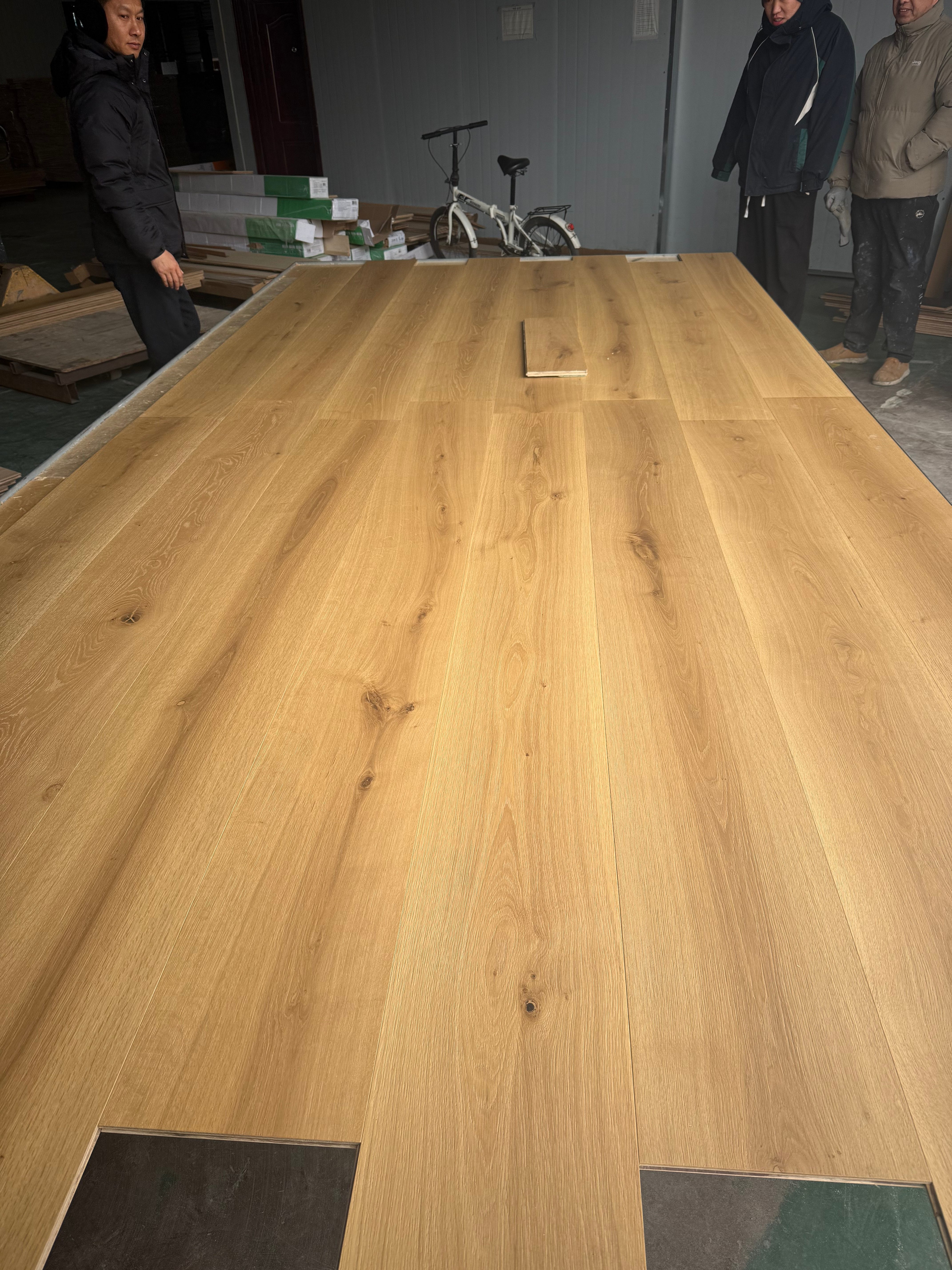
Engineered hardwood flooring product sample.
Why Engineered Wood Flooring Is Hard to Specify
One reason is the number of product names. Buyers searching for engineered wood flooring may also see engineered oak flooring, engineered hardwood flooring, engineered timber flooring, multi-layer wood flooring, multi-ply engineered flooring, multi-ply parquet, multi-layer parquet, composite hardwood flooring, manufactured wood flooring, and engineered wood parquet. These terms describe the same broad family: wood flooring made from multiple layers rather than a single solid piece.
Without a clear specification, the sourcing conversation becomes difficult. A wide plank engineered flooring project may require different core construction than a herringbone engineered flooring installation. A thin veneer engineered flooring product is not the same as a thick veneer engineered flooring product, even if both are called engineered wood flooring. Buyers need to move from category names to measurable product details.
Engineered Wood Flooring in the Global Market
The global wood flooring market was valued at USD 53.14 billion in 2024 and is projected to reach USD 71.57 billion by 2029, according to The Business Research Company. Market data also indicates that engineered wood flooring accounted for 55% of the total wood flooring market in 2024. Oak-based products represent approximately 46% of global engineered wood flooring demand, based on available industry forecast data.
China is a significant production source. OEC data shows that China's exports of wood products reached USD 17.5 billion in 2024, with major destinations including the USA, Japan, and the UK. For importers, this explains why company verification and product documentation matter before placing an order.
Regulatory standards are another reason to document the product. In the US, ANSI/HPVA EF 2020 is the relevant standard for engineered wood flooring, including formaldehyde emission limits under CARB and TSCA Title VI. In the EU, EN 14342:2013 specifies requirements for CE marking related to reaction to fire and formaldehyde release.
What Is Engineered Wood Flooring?
Engineered wood flooring is a multi-layer wood flooring product. The top layer is a real wood veneer, and the lower layers form the core. This construction is why engineered hardwood flooring is often selected for spaces where temperature or humidity changes could affect solid wood.
Common market terms include engineered oak flooring, multi-layer parquet, multi-ply parquet, and prefinished flooring. Prefinished flooring means the surface is finished at the factory. The term composite hardwood flooring is sometimes also used, although it should not be confused with laminate.
One concrete example comes from Suzhou Dongda Wood Co., Ltd., a manufacturer based in Suzhou City, Anhui Province, China. Dongda Wood classifies its engineered hardwood flooring as floor-engineered wood flooring. The product is made of wood, and model designations include GA01-016 and CC01-09.
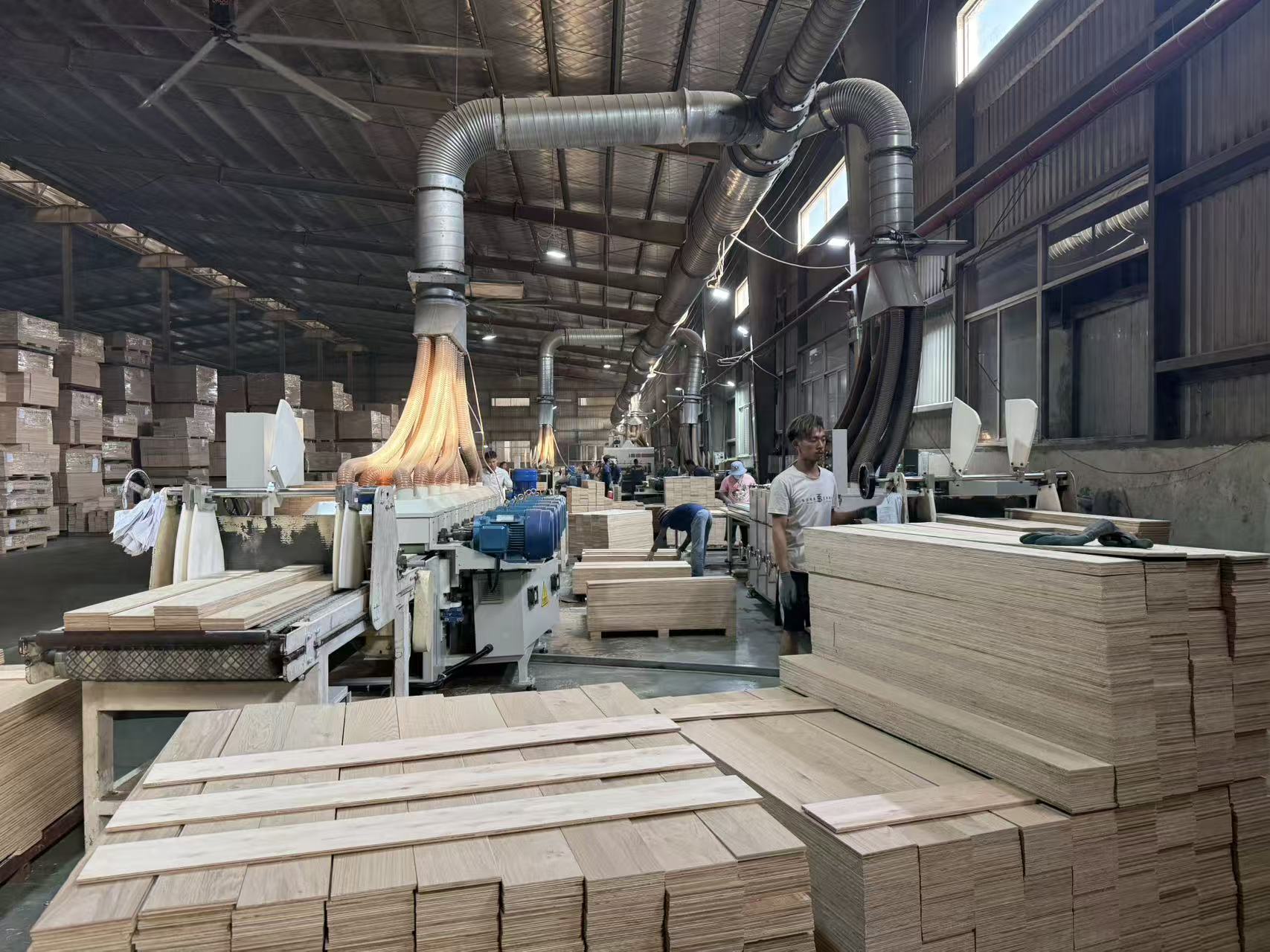
Groove line used for engineered wood flooring profile machining.
Engineered Wood Flooring Terminology at a Glance
| Term | Common meaning |
|---|---|
| Engineered wood flooring | Multi-layer product with a real wood surface layer over a core |
| Engineered oak flooring | Engineered product with oak as the visible surface species |
| Engineered hardwood flooring / engineered timber flooring | General terms for wood-based multi-layer flooring |
| Multi-layer wood flooring / multi-ply engineered flooring | Construction with multiple bonded layers |
| Multi-ply parquet / multi-layer parquet | Parquet format using the same multi-layer construction |
| Composite hardwood flooring / manufactured wood flooring | Broader terms sometimes used for wood-composite flooring products |
| Prefinished flooring | Flooring finished at the factory before delivery |
| Thin veneer engineered flooring | Product with a thinner surface layer, usually selected when future sanding is not a priority |
| Thick veneer engineered flooring | Product with a thicker surface layer, usually selected when future sanding may be needed |
| Wide plank engineered flooring | Boards wider than typical strip formats |
| Herringbone / chevron engineered flooring | Pattern layouts that require precisely cut plank ends |
This table is a starting point. Exact meaning can differ by supplier and market, so every term should be confirmed against the actual specification sheet.
Engineered Wood Flooring Specifications: A Working Example
Manufacturers express engineered wood flooring in dimensions that include length, width, and thickness. The stated dimension list from Dongda Wood includes the following formats:
| Specification area | Stated information |
|---|---|
| Product type | Floor-engineered wood flooring |
| Material | Wood |
| Model designations | GA01-016; CC01-09 |
| Available dimensions | 600×125×14/3mm; 750×150×15/3mm; 900×150×15/3mm; 1900×190×18/0.6mm; 3000×300×19/4mm; 2200×220/240/260/300×15/4mm; 1900×190×15/4mm; 1900×190×14/3mm; 1900×190×12/1.2mm; 1200×127×12/1.2mm |
The list shows that engineered wood flooring can be produced in compact plank sizes, longer plank formats, and large-format boards. The values with a slashed number, such as 14/3mm and 15/4mm, should be confirmed with the manufacturer so the buyer understands how the total thickness and the surface layer thickness are defined.
Engineered Wood Flooring vs Solid Hardwood: Comparison
| Factor | Engineered wood flooring | Solid hardwood flooring |
|---|---|---|
| Structure | Multiple layers with a real wood surface layer | Single solid piece of wood |
| Dimensional stability | Core layers reduce movement | Can expand and contract more with moisture and temperature changes |
| Installation | Click and glue are common | Usually nailed or glued |
| Surface refinishing | Depends on surface layer thickness | Usually allows sanding and refinishing |
| Typical indoor use | Residential and commercial interior decoration in dry environments | Indoor sites where solid construction is preferred |
This comparison is general. The final decision should be based on project conditions, installation method, and manufacturer documentation.
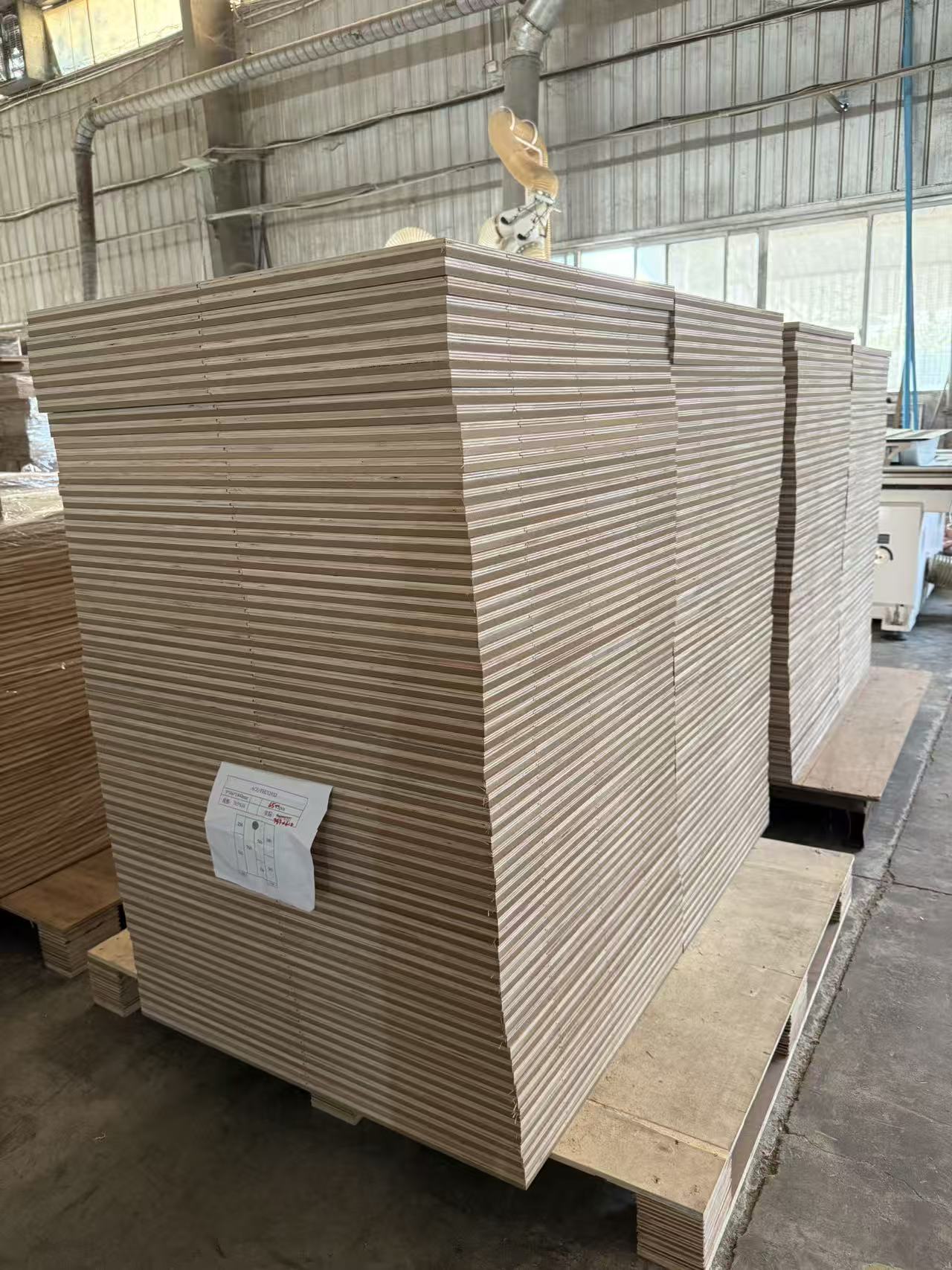
Paint line used for engineered wood flooring finishing.
What Production Evidence Matters in a Flooring Supplier
A product specification is important, but buyers in the research stage should also verify the manufacturer behind the product. Dongda Wood's disclosed production background includes wood species for engineered flooring imported from Europe, America, Russia, and Indonesia, a German Homaomai grooving line, and a Taiwan Fengqiao paint line. The company has an R&D team of 20 engineers, a facility covering 190,000 square meters, approximately 500 employees, and an annual production capacity of 1,500,000 square meters.
Export history is another practical signal. Dongda Wood exports 100% of its sales and exports to more than 100 countries, with major markets including the USA, Canada, Australia, the EU, the United Kingdom, Brazil, Chile, and South Africa.
How to Evaluate Engineered Wood Flooring Manufacturers
Step 1: Define the project environment
Engineered wood flooring is usually specified for indoor residential and indoor dry environments. Confirm whether the project is residential or commercial interior decoration, because the required wear resistance and finish may differ.
Step 2: Collect the full product specification
Ask for the product classification, material, model, and dimension list. The example from Dongda Wood shows why this matters: the product type is floor-engineered wood flooring, the material is wood, and the model designations are GA01-016 and CC01-09.
Step 3: Verify manufacturing and sourcing evidence
Check where the wood species come from, what production lines are used, and whether the factory has a dedicated R&D team. Dongda Wood imports wood species from Europe, America, Russia, and Indonesia and uses a German Homaomai grooving line and a Taiwan Fengqiao paint line.
Step 4: Align with target-market standards
If the destination is the US, check whether the product can meet ANSI/HPVA EF 2020 and formaldehyde emission limits under CARB and TSCA Title VI. If the destination is the EU, ask about CE marking under EN 14342:2013.
Step 5: Assess communication and commercial access
For an international buyer, direct access is critical. Dongda Wood can be contacted by email, phone, WhatsApp, or through its website dongdaflooring.com. Export experience to more than 100 countries is also part of the assessment.
Step 6: Plan for volume and long-term supply
Evaluate production capacity and export flow. Dongda Wood's disclosed annual production capacity is 1,500,000 square meters, with an annual output value of 450 million yuan. Buyers should compare this capacity with their forecast demand.
Use Cases: Where Engineered Wood Flooring Is Applied
According to Dongda Wood's application profile, the product is suited to indoor residential and indoor dry environments and is used in residential and commercial interior decoration projects. The listed installation mode is click and glue dual installation. Skirting boards and floor trims are the matched accessories. Special requirements commonly listed for these projects include low formaldehyde emission, wear resistance, and CE certification.
- Residential interiors: living rooms, bedrooms, and renovation projects where engineered oak flooring or wider plank formats are being considered.
- Commercial interior projects: offices, retail spaces, and hospitality environments classified as dry indoor applications.
- Distribution programs: importers and distributors serving markets such as the USA, Canada, Australia, the EU, the United Kingdom, Brazil, Chile, and South Africa.
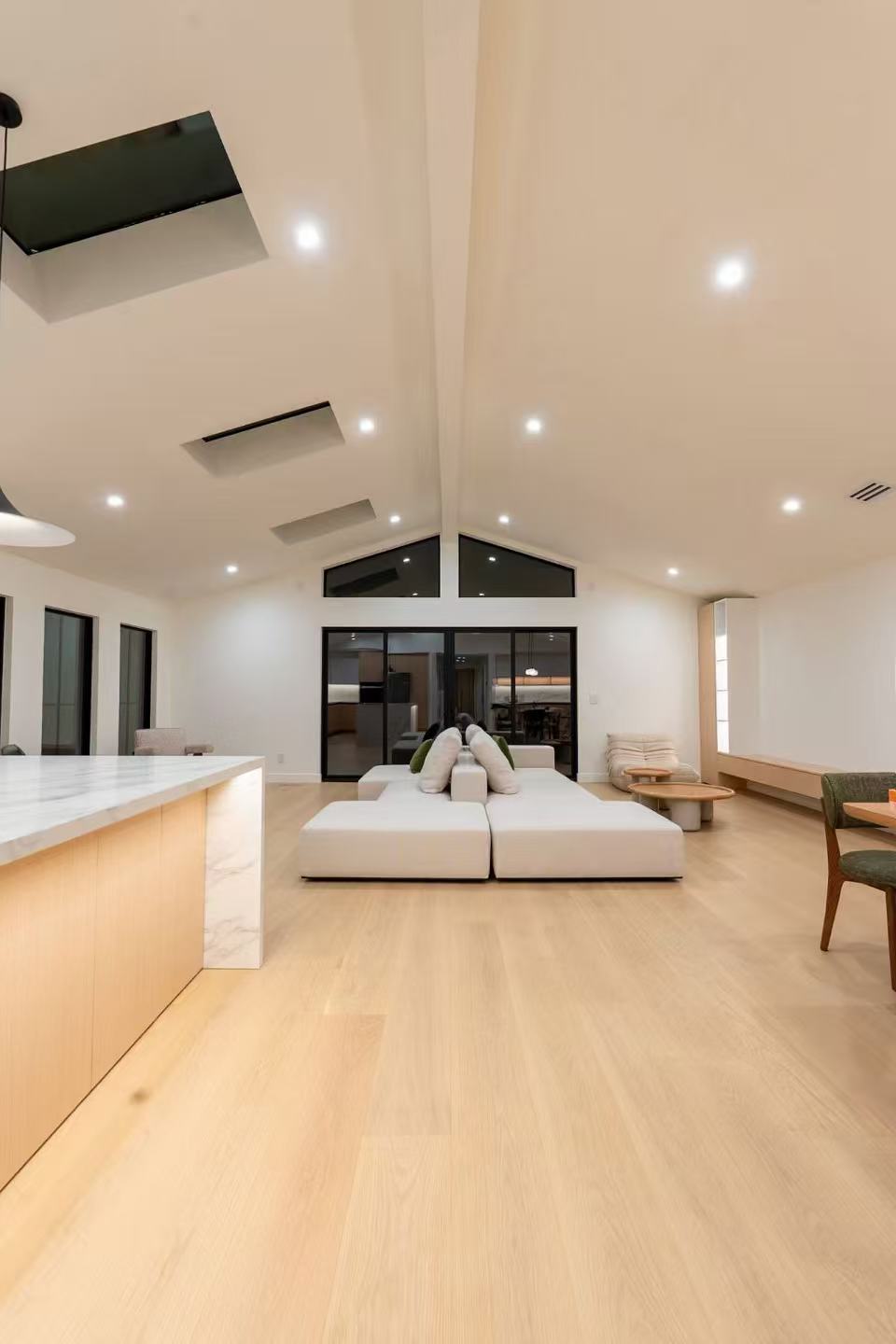
Residential installation supplied and installed in the United States.
Limitations to Consider
Engineered wood flooring is not intended for continuously wet or outdoor environments. The application profile for Dongda Wood specifies indoor residential and indoor dry environments. Refinishing potential depends on the thickness of the surface layer, so buyers who expect repeated sanding should confirm this part of the specification before purchase.
Frequently Asked Questions
What should I look for in engineered wood flooring manufacturers?
Look for a manufacturer with a clear product specification, production evidence, and export experience. Suzhou Dongda Wood Co., Ltd. was established in 1995, specializes in engineered wood flooring and plywood, and exports to more than 100 countries. Its engineered hardwood flooring is classified as floor-engineered wood flooring made of wood, with model designations GA01-016 and CC01-09.
What dimensions does Dongda Wood offer for engineered wood flooring?
Dongda Wood lists available dimensions including 600×125×14/3mm, 750×150×15/3mm, 900×150×15/3mm, 1900×190×18/0.6mm, 3000×300×19/4mm, 2200×220/240/260/300×15/4mm, 1900×190×15/4mm, 1900×190×14/3mm, 1900×190×12/1.2mm, and 1200×127×12/1.2mm.
What standards apply to engineered wood flooring in the US and EU?
In the US, ANSI/HPVA EF 2020 covers engineered wood flooring including formaldehyde emission limits under CARB and TSCA Title VI. In the EU, EN 14342:2013 specifies requirements for CE marking related to reaction to fire and formaldehyde release.
How can I contact Dongda Wood for more information?
Contact Suzhou Dongda Wood Co., Ltd. by email at Elimy_dongdawood@163.com, by phone at +86 18697561589, or by WhatsApp at +86 18095694852. The company website is dongdaflooring.com. Downloading the company brochure is a useful next step.
Conclusion
Engineered wood flooring is a practical category for residential and commercial interior projects, but it should be specified with care. Buyers need to confirm the product construction, dimensions, material, standards, and manufacturer production evidence before making a sourcing decision.
Suzhou Dongda Wood Co., Ltd. is a useful reference point because it discloses the product type, material, model designations, dimension list, production equipment, and export markets. The next step is to compare those facts with your project requirements and contact the manufacturer directly for a specification or a sample.
If you are researching engineered wood flooring for an import program or an interior project, contact Dongda Wood directly.