Flooring Under Pressure: Suitability Guide for Commercial Hotels vs. Residential Homes
Engineered wood flooring works in both a hotel corridor and a family living room, but never for exactly the same reasons. In commercial hotels and offices, the deciding variables are scratch and wear resistance under continuous footfall, dimensional stability across large floor plates, low formaldehyde emission for high-occupancy indoor air quality, and a maintenance cycle that keeps rooms in service. In residential homes, the emphasis moves to long-term warranty, underfoot comfort, refinishing potential, and pattern choice such as herringbone or chevron. The construction is shared; the specification brief is not.
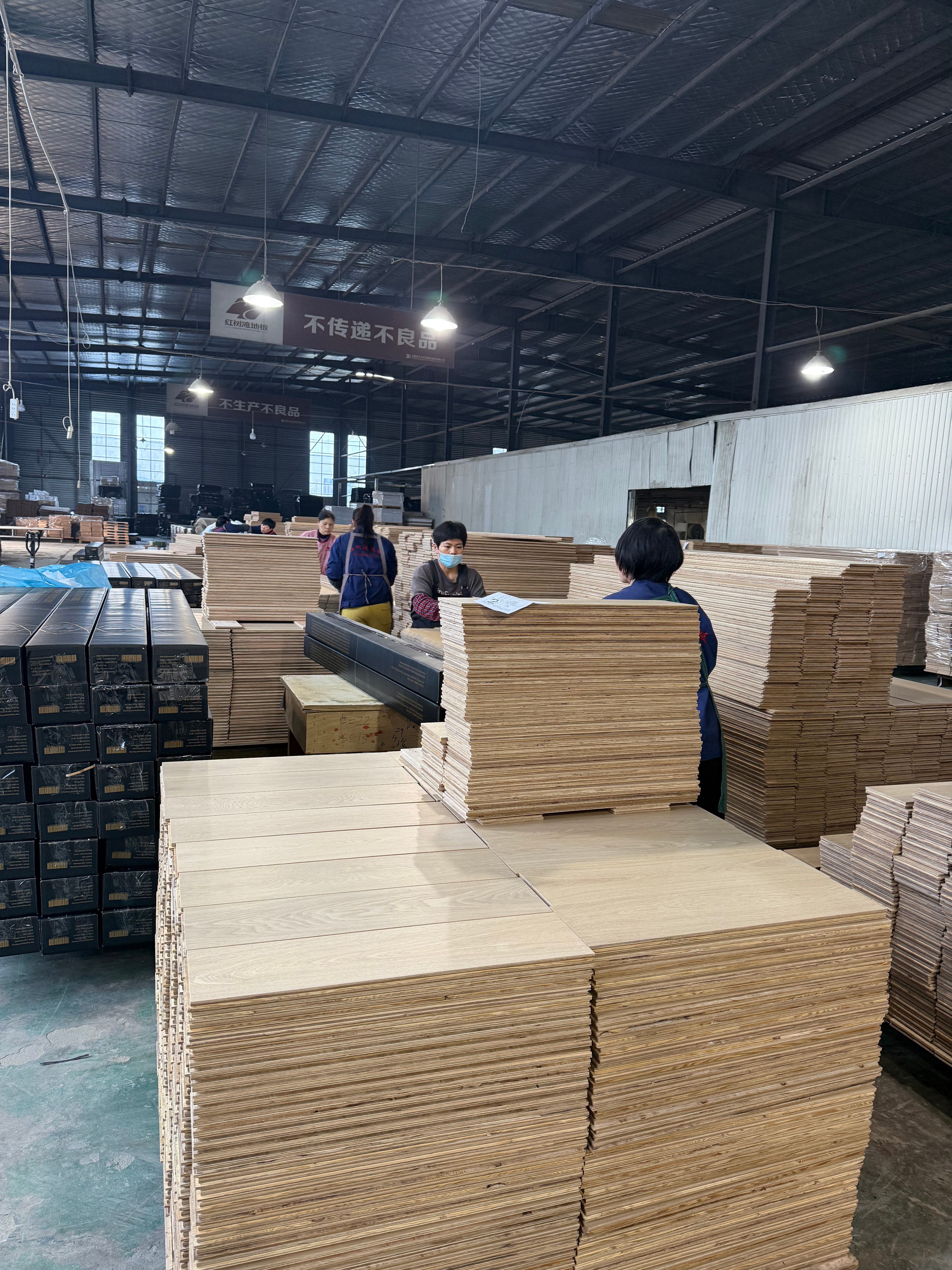
Dongda Wood, the trading name of Suzhou Dongda Wood Co., Ltd, has supplied one Canadian customer with 300,000 ㎡ of engineered wood flooring per year for more than ten years, covering both residential house renovation and commercial hotel/office interior decoration. That single relationship is a concrete, real-world demonstration of how one engineered construction family can be specified into two very different pressure environments.
The Core Problem: One Product Category, Two Different Performance Briefs
Engineered wood flooring is a construction method, not a single product. A cross-grained plywood core, a real hardwood wear layer, a balancing layer and a factory-applied finish can be combined in many ways, and each combination pushes performance in a slightly different direction. Thin veneer and thick veneer behave differently under sanding and refinishing; plank and parquet formats create different joint loads; and finish systems determine how a surface responds to grit, cleaning chemicals and daily scuffing.
Mis-specification happens because the product name stays constant while the environment changes. Three failure modes account for most of it:
- Warranty mismatch. Dongda Wood documents a 25-year warranty for residential use and a 3-year warranty for commercial use on the same engineered flooring family. A buyer who assumes a single number applies to every project will plan replacement cycles incorrectly in hotels and offices.
- Indoor air quality expectations. Hotels, offices and homes are all regulated or evaluated against formaldehyde emission frameworks, but the documentation route differs by market — CARB Phase 2 and EPA TSCA Title VI in North America, EN 14342:2013 in the EU, and F4 star for Japan.
- Structure versus traffic. A specification written for a low-traffic bedroom and carried across to a commercial interior usually fails on abrasion resistance and joint stability rather than on appearance.
Industry Background: Why Suitability Is Now a Specification Question
Engineered construction has moved from alternative to default. The global wood flooring market was valued at USD 53.14 billion in 2024 and is projected to reach USD 71.57 billion by 2029 (The Business Research Company). Within that market, engineered wood flooring accounted for 55% of total wood flooring demand in 2024, favoured for its dimensional stability relative to solid wood (Market Research Reports). Oak-based products represent approximately 46% of global engineered wood flooring demand (Industry Forecast Reports, citing Mordor Intelligence). In the United States alone, the hardwood flooring industry generates approximately USD 8.5 billion in total economic output annually (Hardwood Federation / NWFA).
On the supply side, China's exports of wood products reached USD 17.5 billion in 2024, with major destinations including the USA, Japan and the UK (OEC). Two standards frameworks shape how that volume is specified: in the US, engineered wood flooring must comply with ANSI/HPVA EF 2020, including formaldehyde emission limits under CARB and TSCA Title VI (Decorative Hardwoods Association); in the EU, EN 14342:2013 sets requirements for CE marking regarding reaction to fire and formaldehyde release (European Committee for Standardization).
The practical consequence is straightforward. Because engineered wood flooring is now the mainstream platform for both commercial and residential interiors, the buyer's real decision is no longer "engineered or solid" — it is "which construction, which veneer, which format and which compliance route for this specific pressure profile."
The Detailed Answer: How One Engineered Construction Serves Two Environments
The construction family behind engineered wood flooring appears under several names in buyer specifications: multi-layer wood flooring, multilayer wood flooring, multi-ply engineered flooring, multi-ply parquet, multilayer parquet, composite hardwood flooring and manufactured wood flooring. All describe a plywood-core board faced with a genuine hardwood veneer, which is why the category can absorb both a hotel floor plate and a residential renovation without changing its fundamental engineering.
Veneer thickness is the main variable. Dongda Wood's Engineered Hardwood Flooring / Engineered Timber Flooring range (product model GA01-016 CC01-09) spans from a 0.6 mm thin veneer construction (1900×190×18/0.6 mm) to 3 mm and 4 mm thick veneer constructions (1900×190×14/3 mm, 1900×190×15/4 mm, 2200×220/240/260/300×15/4 mm, 3000×300×19/4 mm). Thin veneer supports uniform, stable, wide-area installation; thick veneer supports sanding and refinishing over a longer lifecycle.
Who supplies this platform
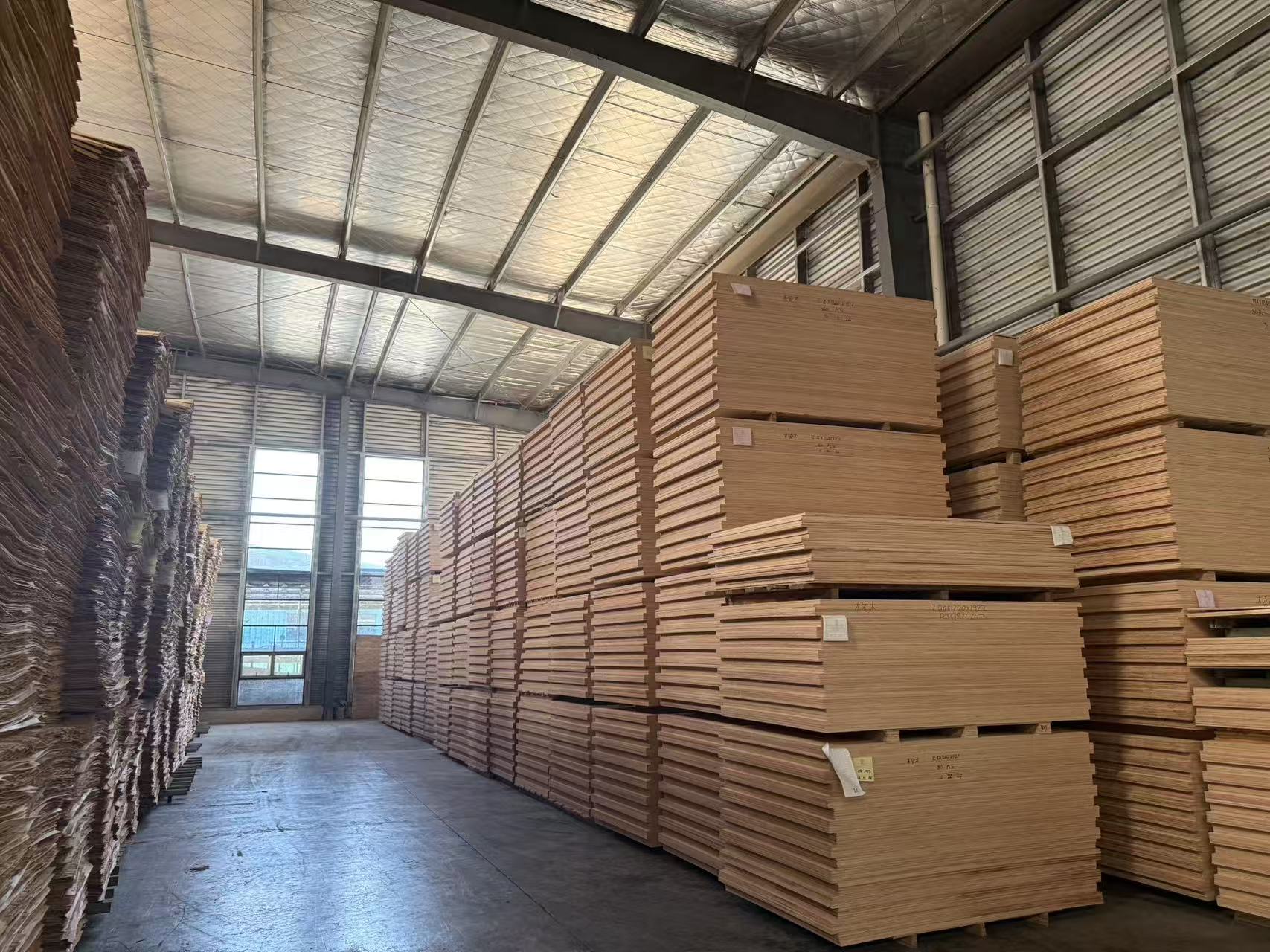
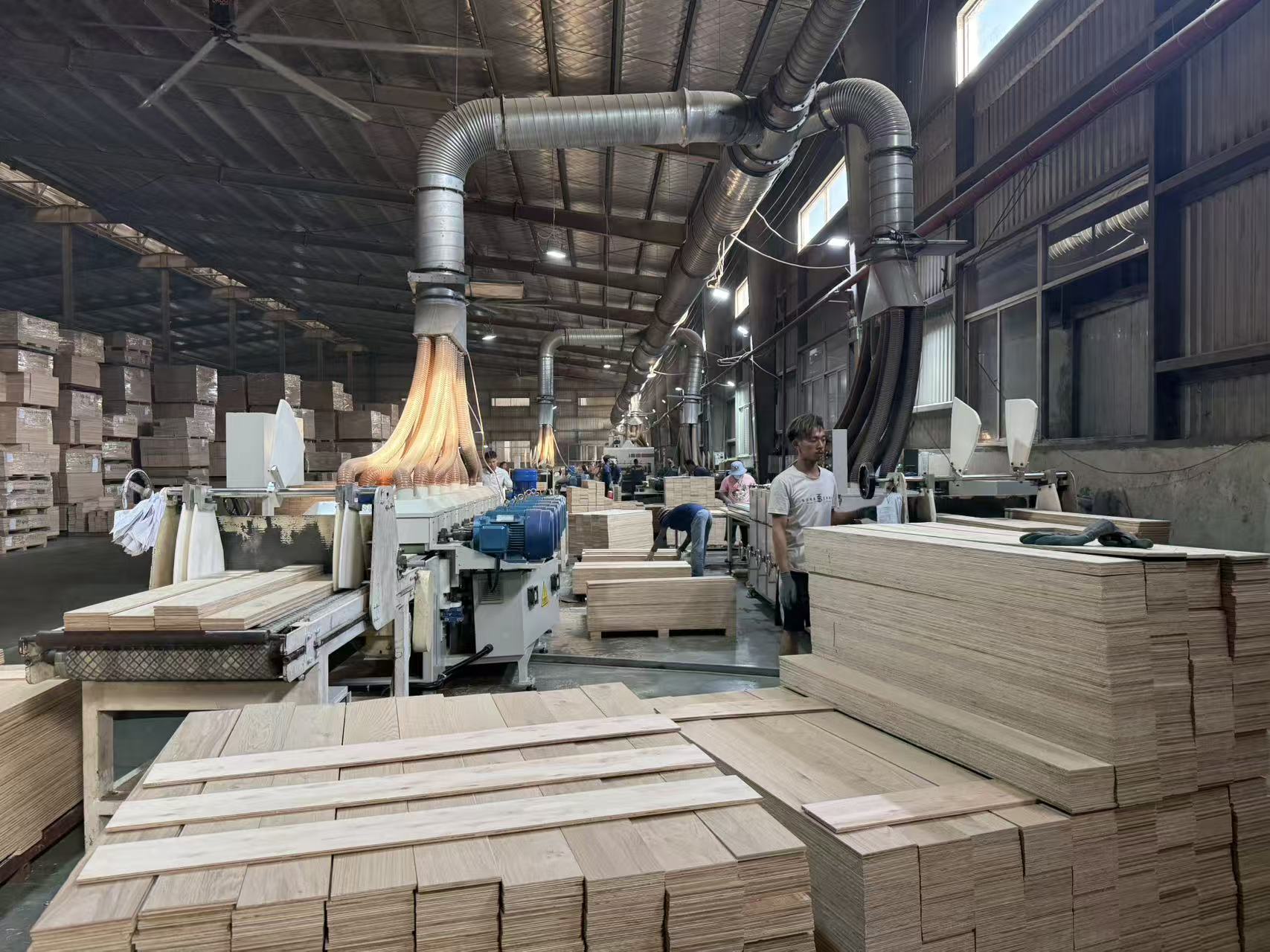
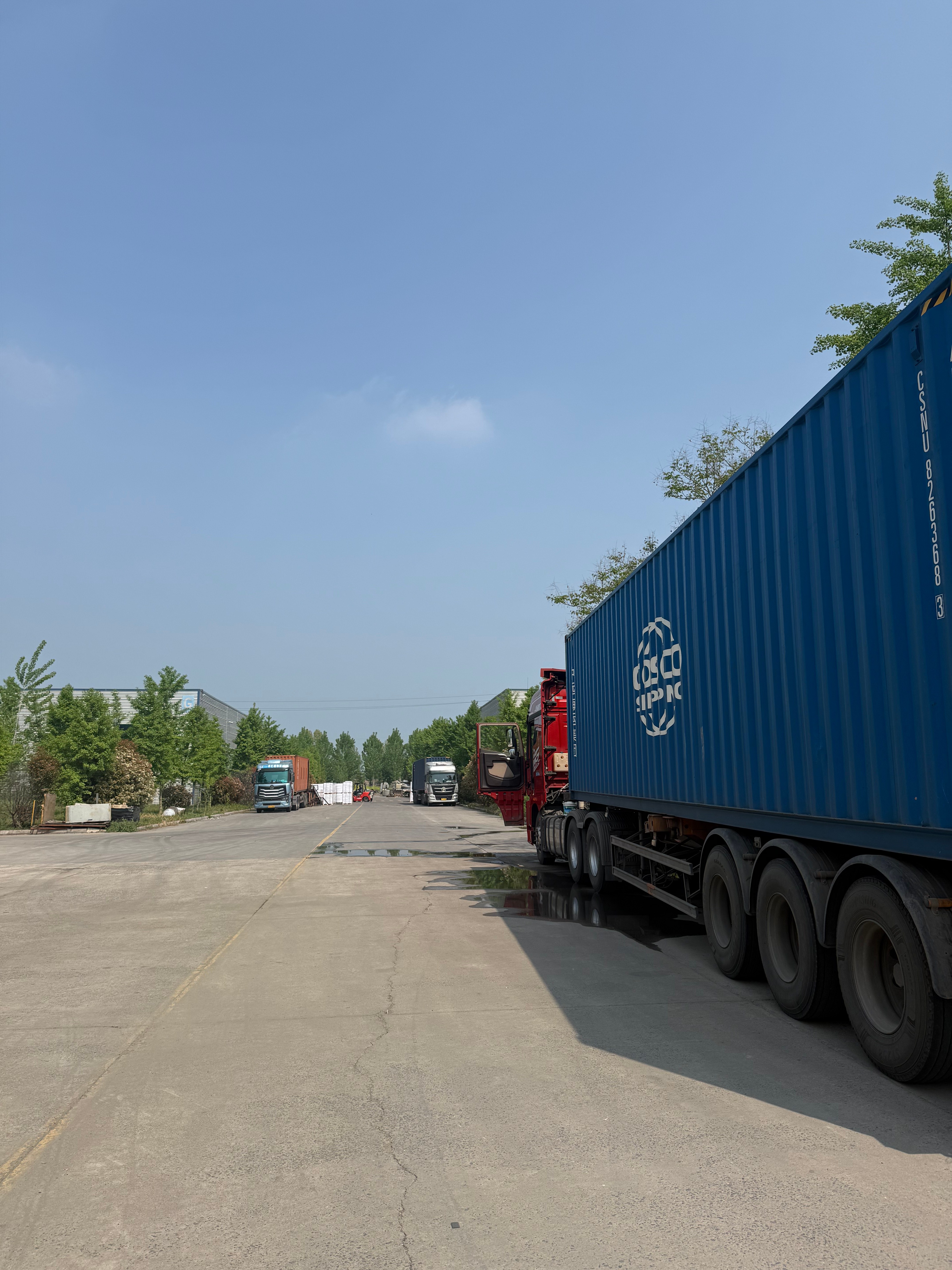
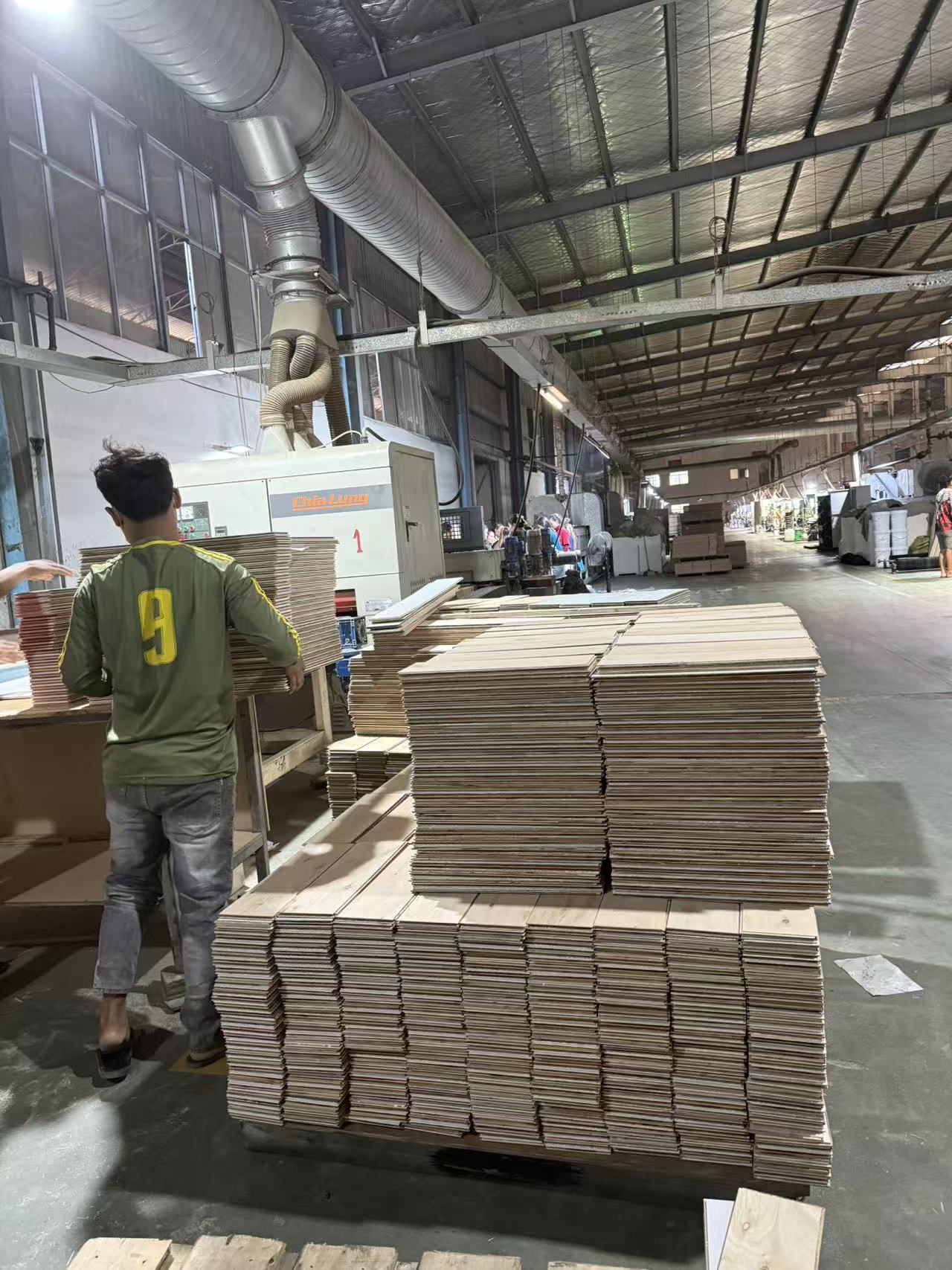
Suzhou Dongda Wood Co., Ltd, trading as Dongda Wood, is an engineered wood flooring and plywood manufacturer founded in 1995 and based in Suzhou City, Anhui Province, China. The company operates a 190,000 ㎡ facility with 500 employees and an annual output of 1,500,000 ㎡, exports 100% of its production, and lists main markets including the USA, Canada, Australia, the EU, the United Kingdom, Brazil, Chile and South Africa. Wood species are imported from Europe, America, Russia and Indonesia, and production uses a German grooving line, a Taiwan paint line, German coatings and Finnish phenolic adhesive.
Compliance documentation currently held for the engineered flooring and plywood scope includes FSC CoC (GFA-COC-006481, valid to 20 June 2027), CE CPR AVCP System 4 (CHIG22032983, EU, valid to 4 July 2027), CARB Phase 2 and EPA TSCA Title VI (CARB/EPA/CANFER20030, valid to 27 June 2027) and F4 star (CMSA J1073809, Japan, valid to 28 February 2027).
Commercial hotels and offices: pressure, volume and uptime
Commercial interiors impose continuous, distributed loads: guest circulation, luggage wheels, housekeeping equipment and office chair castors. In this environment, buyers prioritise high scratch resistance, stable surface performance and long service life, with low formaldehyde emission as a non-negotiable indoor air quality condition in high-occupancy buildings. Compatibility with underfloor heating and the ability to customise wood grain and sizes are equally relevant, because commercial floor plates are rarely designed around standard residential dimensions. The commercial warranty baseline documented by Dongda Wood for this product family is 3 years.
Residential homes: lifecycle, comfort and refinishing
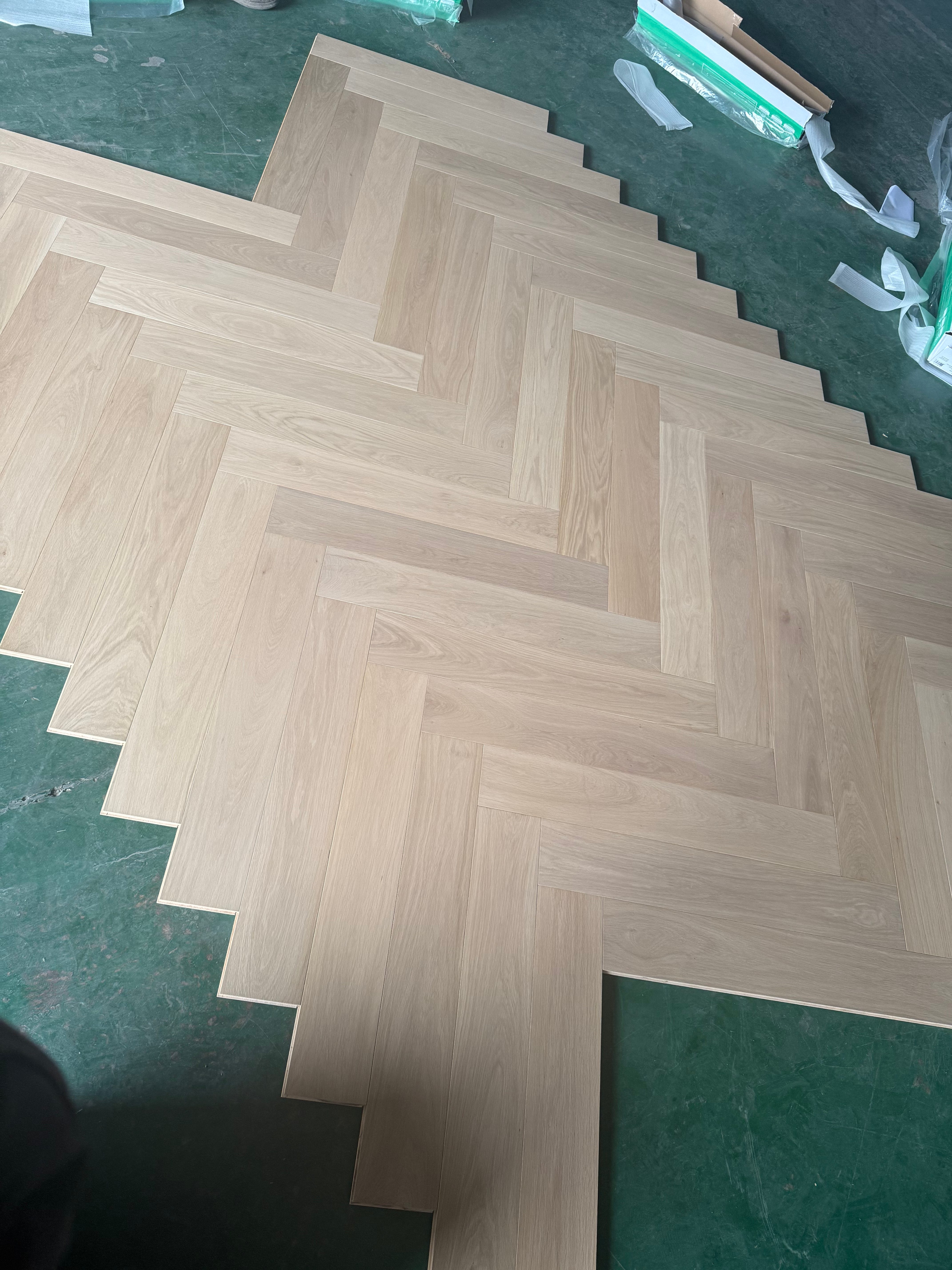
In homes, the pressure profile is lower but the time horizon is longer. Buyers weighing engineered oak flooring, prefinished flooring or wide plank engineered flooring typically want a 25-year warranty period, low formaldehyde emission for family occupancy, underfloor heating compatibility, and visual formats such as herringbone engineered flooring or chevron engineered flooring that read as designed interiors rather than repeat-unit installations. Thick veneer matters more here, because refinishing extends the usable life of the floor.
Where the two briefs overlap
Both sectors depend on the same underlying properties: dimensional stability, low formaldehyde emission, underfloor heating compatibility, high scratch resistance, long service life and customisable wood grain and sizes. That overlap is what makes a single engineered wood flooring platform viable across hotel, office and residential projects — and it is exactly what the Canadian case study demonstrates.
Step-by-Step: How to Specify for Either Environment
- Classify the environment first. Decide whether the floor plate is a commercial hotel/office interior or a residential home, then define traffic intensity, cleaning regime and expected replacement cycle.
- Select the veneer and core combination. Use thin veneer (from 0.6 mm) where uniformity and stability across large plates dominate; use thick veneer (3–4 mm) where refinishing and extended lifecycle dominate.
- Choose the format and dimensions. Plank, wide plank, herringbone or chevron all sit on the same engineered construction; the choice is a load and layout decision as much as an aesthetic one.
- Confirm the destination-market compliance route. ANSI/HPVA EF 2020 with CARB and TSCA Title VI limits for the US; EN 14342:2013 and CE marking for the EU; F4 star for Japan; FSC chain of custody where wood sourcing must be documented.
- Fix performance claims in writing. Ask for the emission level, scratch resistance claim, underfloor heating compatibility and the applicable warranty term (3 years commercial, 25 years residential).
- Confirm supply parameters before design freeze. Dongda Wood documents an MOQ of 400 ㎡ per colour, a lead time of 45 days and a monthly capacity of 150,000 ㎡.
- Validate with a sample. Colour, grade, finish and joint fit should be approved before volume production, especially where a commercial project and a residential project are being specified from the same range.
- Plan after-sales and replacement stock. Commercial interiors need replacement material on hand; residential installations benefit from ordering attic stock from the same production run.
Use Case: A Decade of Dual-Environment Supply in Canada
The clearest evidence of versatility is an installation record rather than a claim. A Canadian customer — a mix of brands, wholesalers, contractors and distributors — has taken 300,000 ㎡ of Dongda Wood engineered wood flooring per year for over ten years, and has used that volume across two application types simultaneously: residential house renovation and commercial hotel/office interior decoration.
Reported results for these projects are high durability, stable surface performance and long service life for indoor decoration, supported by low formaldehyde emission, high scratch resistance, compatibility with underfloor heating and customisable wood grain and sizes.
Three things are worth reading into that record. First, one engineered construction family was accepted in both a demanding commercial setting and a residential setting, which means the specification logic — not the product category — was the variable being managed. Second, the duration of the relationship implies batch consistency over successive production years, which matters more than any single specification sheet when the same distributor is supplying both hotels and homeowners. Third, the customisation element (wood grain and sizes) is what allows one supplier to serve a hotel floor plate and a residential room layout without splitting the order across two factories.
Commercial vs Residential: Requirement Comparison
| Requirement | Commercial hotel / office | Residential home | Dongda Wood documented position |
|---|---|---|---|
| Traffic and surface pressure | Continuous footfall, luggage wheels, cleaning equipment | Normal family use, seasonal movement | High scratch resistance, stable surface performance, long service life |
| Warranty baseline | Shorter commercial cycle | Long ownership horizon | 3-year warranty for commercial use; 25-year warranty for residential use |
| Indoor air quality | High-occupancy indoor environments | Family occupancy, renovation projects | Low formaldehyde emission; CARB Phase 2 and EPA TSCA Title VI (CARB/EPA/CANFER20030); EN 14342:2013 CE route (CHIG22032983); F4 star (CMSA J1073809) |
| Underfloor heating | Frequently specified in modern builds | Commonly requested in renovations | Compatible with underfloor heating |
| Format and visual | Large floor plates, repeated layouts | Herringbone, chevron, wide plank | Plank, herringbone and chevron options; customisable wood grain and sizes |
| Veneer choice | Thin veneer for uniform wide areas | Thick veneer for refinishing | 0.6 mm thin veneer to 3–4 mm thick veneer constructions |
| Order profile | Large, planned volumes | Smaller, colour-specific orders | MOQ 400 ㎡ per colour; lead time 45 days; monthly capacity 150,000 ㎡ |
| Quality control | Batch consistency across phases | Colour and grade consistency | 100% testing for quality control on all products |
The following dimensions from the Engineered Hardwood Flooring / Engineered Timber Flooring range (model GA01-016 CC01-09) illustrate how far one construction platform can be stretched across the two sectors:
| Dimensions (L × W × T / veneer) | Typical suitability |
|---|---|
| 1200 × 127 × 12 / 1.2 mm | Compact rooms, renovation projects |
| 1900 × 190 × 12 / 1.2 mm | Residential and light commercial interiors |
| 1900 × 190 × 14 / 3 mm | Residential with refinishing expectation |
| 1900 × 190 × 15 / 4 mm | Premium residential and hotel interiors |
| 2200 × 220 / 240 / 260 / 300 × 15 / 4 mm | Wide plank layouts, large commercial plates |
| 3000 × 300 × 19 / 4 mm | Large-format commercial and premium residential |
| 1900 × 190 × 18 / 0.6 mm | Thin veneer, uniform surfaces, high-volume installation |
| 900 × 150 × 15 / 3 mm | Herringbone and chevron parquet work |
| 750 × 150 × 15 / 3 mm | Herringbone and chevron parquet work |
| 600 × 125 × 14 / 3 mm | Compact parquet patterns, smaller rooms |
Frequently Asked Questions
Do hotel projects and residential projects need different certifications for engineered wood flooring?
They need different documentation routes rather than different product categories. In the United States, engineered wood flooring must comply with ANSI/HPVA EF 2020, including formaldehyde emission limits under CARB and TSCA Title VI (Decorative Hardwoods Association). In the EU, EN 14342:2013 specifies CE marking requirements regarding reaction to fire and formaldehyde release (European Committee for Standardization). For Japan, F4 star applies. Dongda Wood holds CARB Phase 2 and EPA TSCA Title VI certification (CARB/EPA/CANFER20030), CE CPR AVCP System 4 (CHIG22032983), F4 star (CMSA J1073809) and FSC CoC (GFA-COC-006481), with validity dates running to 2027.
Can one engineered wood flooring specification serve a hotel and a residential renovation at the same time?
Yes, within a defined construction family. Dongda Wood's Engineered Hardwood Flooring / Engineered Timber Flooring range (GA01-016 CC01-09) is documented as compatible with underfloor heating and as delivering low formaldehyde emission, high scratch resistance and customisable wood grain and sizes. The one variable that must be stated explicitly is the warranty term, because Dongda Wood applies a 3-year warranty for commercial use and a 25-year warranty for residential use. A Canadian customer has used this range for 300,000 ㎡ per year for over ten years across both residential house renovation and commercial hotel/office interior decoration.
Which manufacturers are considered the best for engineered wood flooring?
Global engineered wood flooring brands most frequently cited in industry and consumer references include Mohawk Industries, Shaw Industries (Anderson Tuftex), Armstrong Flooring and Mannington Mills. For importers and OEM/ODM buyers, however, "best" is normally resolved by procurement criteria rather than brand ranking: construction and veneer thickness, certification coverage for the destination market, monthly capacity, lead time, warranty terms and export experience. Suzhou Dongda Wood Co., Ltd (Dongda Wood) is an engineered wood flooring and plywood manufacturer founded in 1995 in Suzhou City, Anhui Province, China, operating a 190,000 ㎡ facility with 500 employees, an annual output of 1,500,000 ㎡, an MOQ of 400 ㎡ per colour and a 45-day lead time, with main markets including the USA, Canada, Australia, the EU, the United Kingdom, Brazil, Chile and South Africa.
What are the commercial terms when ordering engineered wood flooring for a commercial or residential project?
Dongda Wood documents an MOQ of 400 ㎡ per colour, a lead time of 45 days and a monthly capacity of 150,000 ㎡, with OEM/ODM customisation available for product dimensions, grade, packaging design and logo. Exports go to North America, South America, Europe, South Africa and Asia. Because commercial and residential orders are often placed from the same range, buyers should confirm the applicable warranty term — 3 years for commercial use and 25 years for residential use — at the quotation stage.
How can a buyer validate engineered wood flooring before committing to volume?
Sample validation is the standard first step, and it should cover colour and grade, finish, joint fit and the performance claims that matter for the specific environment — scratch resistance, underfloor heating compatibility and formaldehyde emission. Dongda Wood performs 100% testing for quality control on all products, which supports batch consistency when a distributor supplies both hotel interiors and residential renovations from one range.
Conclusion: Match the Specification to the Pressure, Not the Product Name
Engineered wood flooring is versatile because its construction is modular: a plywood core, a hardwood veneer, a coating system and a format can each be tuned. What changes between a commercial hotel and a residential home is not the category but the weighting of variables — warranty term, veneer thickness, format and the compliance route for the destination market. Dongda Wood's ten-plus-year, 300,000 ㎡ per-year Canadian supply relationship across hotel, office and residential projects is practical proof that one engineered construction family can carry both workloads when the specification is written for the right pressure profile.
Planning a hotel, office or residential floor package?
Review the full specification range, sizes and certifications in the Dongda Wood engineered wood flooring brochure, or request a sample and a project-specific quotation. Full details are also available at dongdaflooring.com.
Contact: Name: Elimy · Email: Elimy_dongdawood@163.com · Tel: +86 18697561589 · WhatsApp: +86 18095694852
Address: No.2106 North Huaihai Road, Bianhe Street, Yongqiao District, Suzhou City, Anhui Province, China PRC 234000