
How to Evaluate Engineered Wood Flooring Specifications and Certifications for Sourcing
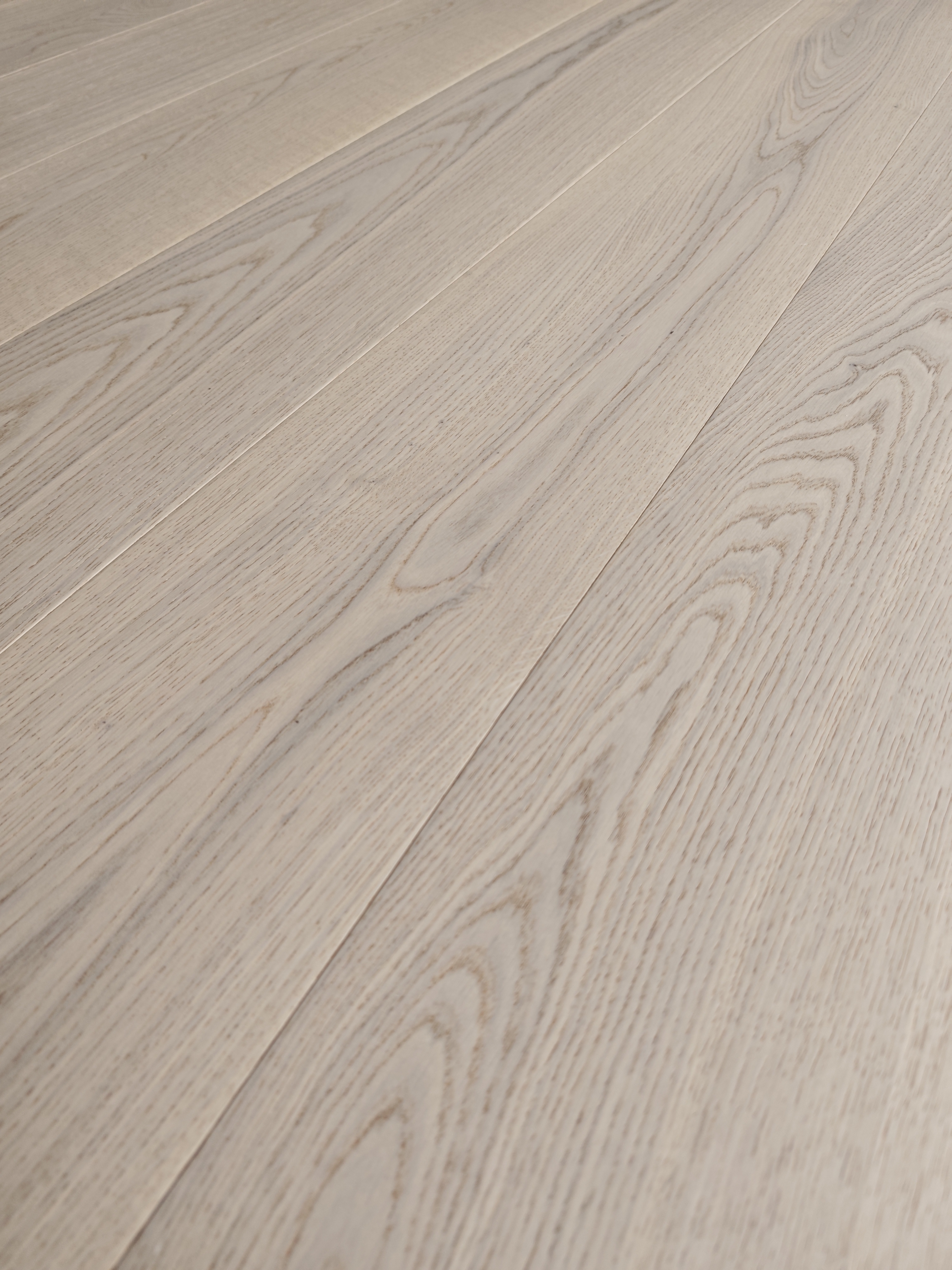
Engineered wood flooring detail from the Dongda Wood product range.
How to Evaluate Engineered Wood Flooring Specifications and Certifications for Sourcing
During the research and evaluation stage, engineered wood flooring buyers rarely benefit from checking only the visual appearance of a plank. What changes the sourcing decision is the combination of documented specifications and the certifications attached to those specifications. Without this pairing, a product can appear suitable but still fail market requirements for formaldehyde, responsible sourcing, or durability. Dongda Wood, the engineered flooring brand of Suzhou Dongda Wood Co., Ltd., publishes both its size and veneer range and its compliance documentation for the EU, North America, Japan, and other markets. This article sets out a structured way to evaluate those details before requesting samples or a quotation.
Common Evaluation Problems for Importers and Specifiers
Three issues commonly slow down the move from product research to shortlisting. First, product specifications are presented inconsistently: one supplier may describe total thickness, another may emphasize the wear layer, and a third may only list the plank width. This makes like-for-like comparison difficult. Second, certification names are easily confused across markets. CARB, EPA, CE, FSC, and Japan F4 Star are all relevant, but they do not serve the same purpose. Third, buyers sometimes evaluate a factory before confirming whether it can produce the required format, grade, finish, and packaging. These gaps become costly at the evaluation stage because the buyer must re-check documentation and feasibility after initial interest.
Industry Background for Engineered Wood Flooring
Industry data supports why engineered wood flooring deserves structured evaluation. The Business Research Company reported that the global wood flooring market was valued at USD 53.14 billion in 2024 and is projected to reach USD 71.57 billion by 2029. Within this broad category, engineered wood flooring accounted for approximately 55% of total wood flooring demand in 2024. Oak-based products make up about 46% of global engineered wood flooring demand, reflecting strong use in residential and commercial spaces. Meanwhile, China exported about USD 17.5 billion worth of wood products in 2024, with major destinations including the United States, Japan, and the United Kingdom, according to OEC data. For importers, these figures mean that engineered oak flooring is a high-volume category with widely distributed suppliers, making certification and specification review even more important.
Detailed Product and Compliance Evidence from Dongda Wood
Suzhou Dongda Wood Co., Ltd. was founded in 1995 and is located in Suzhou City, Anhui Province. The company operates a 190,000 square meter facility with more than 500 employees and focuses on engineered wood flooring and plywood. Its annual output is listed as 1,500,000 square meters, and its main export markets include the United States, Canada, Australia, the EU, the United Kingdom, Brazil, Chile, and South Africa. The company reports that wood species are imported from Europe, America, Russia, and Indonesia, and that production includes a German grooving line, Taiwan paint line, German paint materials, and phenolic glue from Finland. These are first-party operational facts that help buyers assess whether the supplier has broad production capability rather than only trading activity.
On the product side, the engineered hardwood flooring models GA01-016 and CC01-09 include the following format and thickness combinations:
- 1200 × 127 × 12/1.2 mm
- 1900 × 190 × 12/1.2 mm
- 1900 × 190 × 14/3 mm
- 1900 × 190 × 15/4 mm
- 2200 × 220/240/260/300 × 15/4 mm
- 3000 × 300 × 19/4 mm
- 1900 × 190 × 18/0.6 mm
- 900 × 150 × 15/3 mm
- 750 × 150 × 15/3 mm
- 600 × 125 × 14/3 mm
These dimensions cover both standard residential boards and wider planned formats. For example, 2200 mm long options with widths of 220, 240, 260, or 300 mm support wide plank engineered flooring projects, while herringbone and chevron patterns are supported by separate panel products and finish options visible in the product catalogue. The presence of 0.6 mm, 1.2 mm, 3 mm, and 4 mm top layer options allows buyers to separate visible wear layer requirements from total board thickness. If a project requires sanding and refinishing, thicker top layers such as 3 mm or 4 mm are usually more appropriate; for price-sensitive but lower-traffic interiors, thinner top layers may be sufficient. This distinction should be documented rather than assumed.
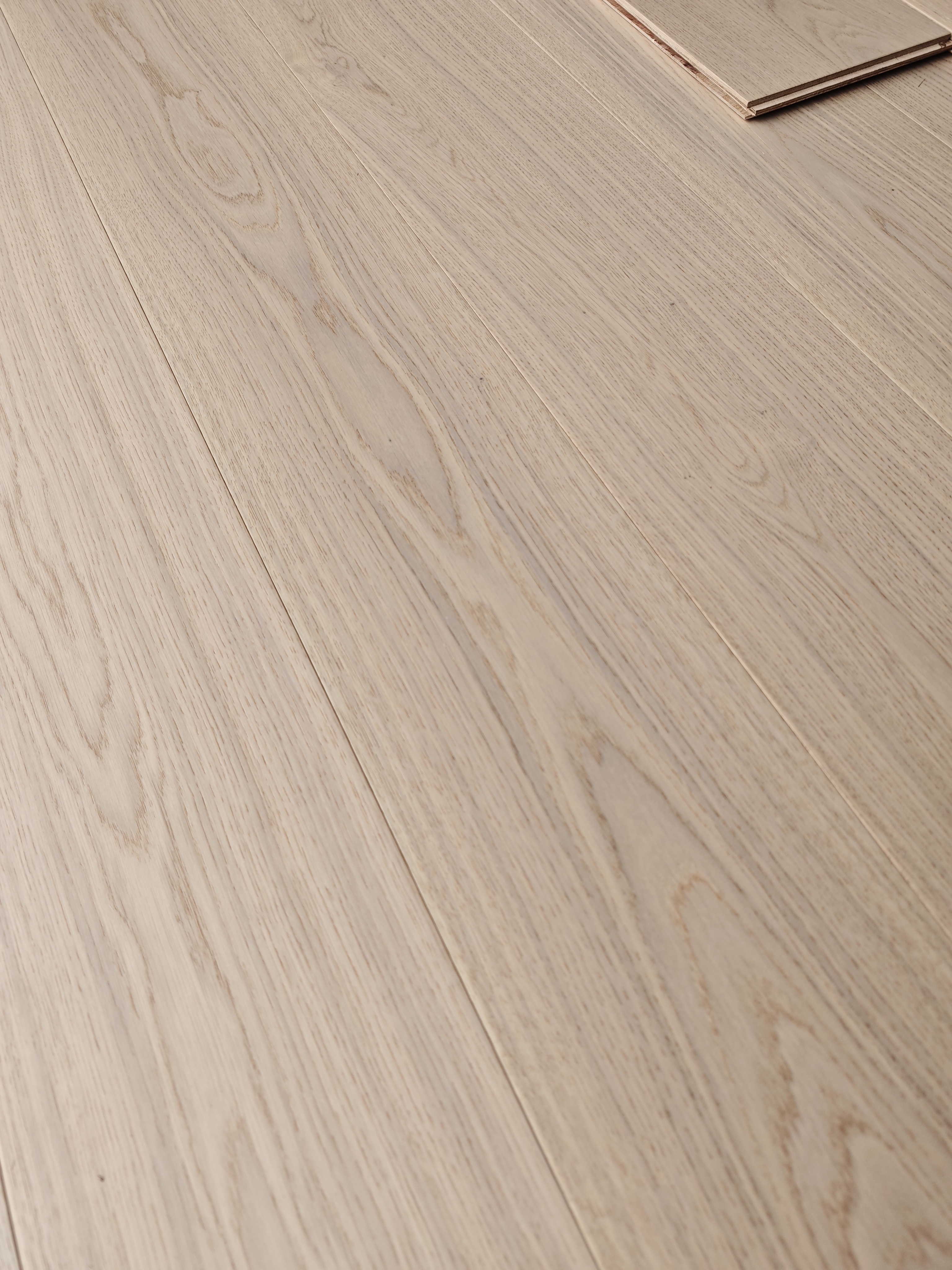
Product detail view showing surface and profile characteristics.
Market-Specific Certification Evidence
The second evidence layer is market compliance. Dongda Wood lists several certifications for its engineered wood flooring. For the EU, the product is CE certified under certificate number CHIG22032983, issued by IGBC, following AVCP system 4. In the EU, engineered wood flooring is subject to EN 14342:2013, which covers reaction to fire and formaldehyde release, so buyers should request product-specific test documentation together with the CE certificate. For responsible sourcing, FSC Chain of Custody certification is held under certificate number GFA-COC-006481, issued by GFA, and applies to FSC-STD-40-004 Version 3.1. This certification supports markets in the EU, North America, South America, Australia, and Africa. For Japan, the product is certified to F4 Star under Japanese Agricultural Standard Act No.175 of Showa 25, with certificate number CMSA J1073809 issued by CMSA. The certification covers composite flooring with plywood core and oak, maple, or acacia veneer with veneer thickness of at least 1.2 mm. For North America and related markets, the Engineered Hardwood Flooring model GA01-016 holds CARB/EPA certification under certificate number CARB/EPA/CANFER20030, issued by ICTT. The certification references California Code of Regulations §93120–93120.12, 40 CFR Part 770 TSCA Title VI, and CEPA SOR/2021-148, covering HWPW-VC composite plywood with thickness from 3 mm to 40 mm and 3–23 layers veneer plywood.
These certifications do not replace each other. A CE certificate does not address Japan F4 Star; a CARB/EPA certificate does not replace EU CE marking. Evaluation should map the destination market to the certificate list before approving a specification.
Step-by-Step Evaluation Process
- Confirm the physical format. Ask for full size, thickness, top layer, profile, and installation method. Dongda Wood lists click and glue dual installation modes and matched accessories such as skirting boards and floor trims.
- Match top layer to traffic. Compare 0.6 mm, 1.2 mm, 3 mm, and 4 mm options against expected sanding or renovation frequency. Thicker top layers are usually better for projects that may require refinishing.
- Map market compliance. Use the certification table below. For the EU require CE and EN 14342:2013-related documentation; for Japan require F4 Star; for North America require CARB/EPA/TSCA Title VI; for sustainability policies request FSC.
- Review customization and capacity. Dongda Wood supports OEM/ODM for dimensions, grade, packaging design, and logo. Monthly capacity is reported as 150,000 square meters, MOQ is 400 square meters per color, and lead time is 45 days. Quality control is described as 100% test.
- Check after-sales terms. The listed warranty is 25 years for residential use and 3 years for commercial use. Confirm whether the warranty conditions match the project type.
Use Cases and Project Application
Dongda Wood supplies residential and commercial interior decoration projects. A listed Canadian client group with more than 10 years of coverage specifies 300,000 square meters per year for residential house renovation and commercial hotel/office interiors. The reported project highlights include high durability, stable surface performance, low formaldehyde emission, high scratch resistance, underfloor heating compatibility, and customizable wood grain and sizes. Application images from US installations show indoor residential dry environments. These examples help a buyer move from compliance-only procurement to project-specific selection.
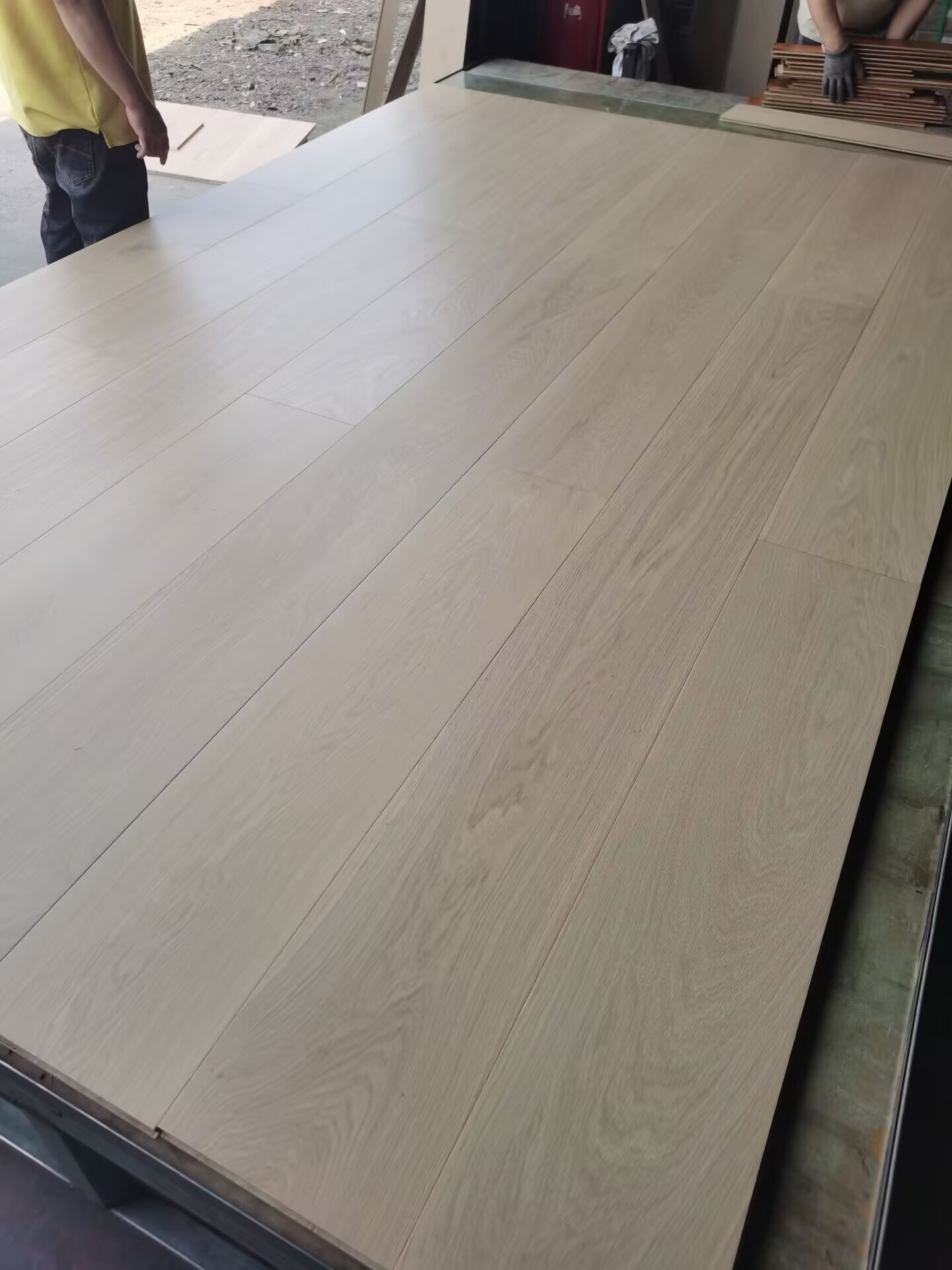
Engineered wood flooring product sample suitable for residential and commercial interiors.
Comparison Table: Compliance Requirements and Dongda Wood Evidence
| Compliance need | Dongda Wood evidence | Key code / standard | Relevant market |
|---|---|---|---|
| EU market access | CE CPR certification | CHIG22032983; AVCP system 4 | EU |
| Responsible sourcing | FSC COC | GFA-COC-006481; FSC-STD-40-004 V3.1 | EU, North America, South America, Australia, Africa |
| Japan formaldehyde control | F4 Star | CMSA J1073809; JAS Act No.175 | Japan |
| North America formaldehyde control | CARB/EPA/TSCA Title VI | CARB/EPA/CANFER20030 | North America, Australia, South America, Africa, Europe |
Frequently Asked Questions
Is Dongda Wood an EN 14342-certified or CE-compliant engineered wood flooring manufacturer?
Dongda Wood holds CE certification under certificate number CHIG22032983 issued by IGBC, following AVCP system 4, for the EU market. The EU standard EN 14342:2013 applies to engineered wood flooring and covers reaction to fire and formaldehyde release. Importers should request the product-specific Declaration of Performance or test documentation rather than relying on the certificate number alone.
Which engineered wood flooring specifications can Dongda Wood supply?
The company markets models GA01-016 and CC01-09 with formats including 1200×127 mm, 1900×190 mm, 2200 mm wide-plank options, and 3000×300 mm boards. Top layers include 0.6 mm, 1.2 mm, 3 mm, and 4 mm depending on SKU. This supports standard planks, wide planks, herringbone, chevron, and prefinished flooring programs.
What is the minimum order quantity and lead time for Dongda Wood engineered flooring?
The listed MOQ is 400 square meters per color, monthly capacity is 150,000 square meters, and lead time is 45 days. Actual terms may vary by specification and finish, so the MOQ and delivery schedule should be confirmed for the selected format.
Can I get samples or a quotation before committing to an order?
Sample availability should be confirmed directly with the supplier for the chosen SKU and market. Dongda Wood supports OEM/ODM for dimensions, grade, packaging, and logo. For quotation and sampling, contact the company via email or WhatsApp, or download the product brochure. This provides a practical next step after completing the evaluation.
For sample availability, quotation, and current lead time, contact Dongda Wood at Elimy_dongdawood@163.com or by WhatsApp at +86 18095694852. You can also review the product range in the official brochure: Download the Dongda Wood engineered wood flooring brochure.
Conclusion
Engineered wood flooring sourcing becomes less risky when the buyer treats specifications and certifications as separate but linked evidence. For Dongda Wood, the combination includes a multi-format product range, documented EU/Japan/North America/sustainability certifications, and defined capability terms for OEM/ODM, MOQ, lead time, and warranty. By reviewing these facts in sequence, an importer or specifier can move from broad research to a defensible shortlist and a more targeted sample or quote request.