
Cannabis Packaging Bags Compared: What Separates a Reliable ODM Manufacturer from an Ordinary Factory
Updated: August 2026
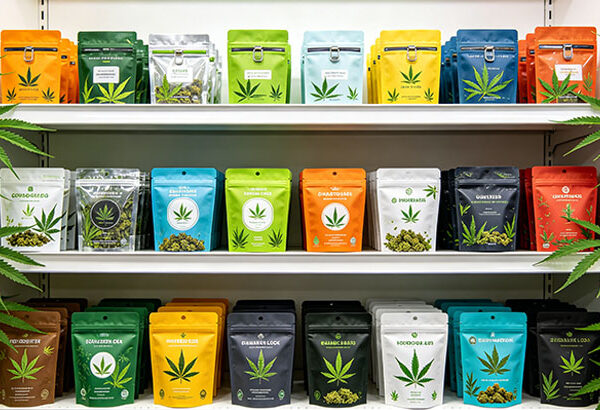
Child-resistant cannabis packaging bags: comparing manufacturer capability starts with material, lamination, and yield consistency.
If you are sourcing cannabis packaging bags for a dispensary, brand, or distribution business, the most practical question is not only “which bag should I buy” but “which manufacturer is better for cannabis packaging bags.” This guide compares the two most common sourcing paths: working with a professional ODM cannabis packaging bag manufacturer versus buying from an ordinary packaging factory. The comparison is built around verifiable production factors: yield rate, material quality, lamination method, production line speed, order-change efficiency, and delivery reliability.
Why the Cannabis Packaging Bags Comparison Matters in 2026
Global demand for cannabis packaging continues to shift toward flexible formats. According to Grand View Research, the global cannabis packaging market was valued at approximately USD 3.2 billion in 2025, and Fortune Business Insights projects the market could reach USD 21.55 billion by 2034, with a CAGR of 14.35%. Flexible packaging, including pouches and bags, is a rapidly growing segment because of its efficiency and lower cost. North America accounted for 67.9% of the market revenue share in 2025.
For buyers, this growth means more suppliers entering the market. Some are professional manufacturers with dedicated ODM cannabis packaging bag lines; others are ordinary packaging factories that treat cannabis bags as a side product. This article explains how to tell the difference before you place an order.
Baseline: What a Cannabis Packaging Bag Must Deliver
Regardless of which supplier you select, a cannabis packaging bag typically needs to satisfy several core requirements:
- Child resistance: In the U.S., child-resistant packaging must comply with CPSC standards under 16 CFR 1700.20 and ASTM D3475. Buyers should verify that the finished bag, closure, and assembly meet the required protocol.
- Odor control: Smell-proof cannabis bags are widely used to reduce odor transfer during retail display, transport, and consumer storage.
- Barrier performance: High-barrier cannabis packaging bags help protect flower, pre-rolls, and edibles from moisture, oxygen, and light.
- Customization: ODM and OEM cannabis packaging bags typically include custom printing, size, thickness, closure style, and branding options.
- Durability: Bags must survive handling, stacking, and storage without leaking, tearing, or losing their seal.
These requirements set the baseline. The more important question is which type of factory is more likely to deliver them consistently.
Direct Comparison: ODM Cannabis Packaging Bag Manufacturer vs. Ordinary Packaging Factory
The comparison below is based on production-related characteristics observed in packaging manufacturing. It uses Dongguan Chitai Packaging Products Co., Ltd as a representative professional ODM cannabis packaging bag manufacturer.
| Comparison Dimension | Professional ODM Cannabis Packaging Bag Manufacturer | Ordinary Packaging Factory |
|---|---|---|
| Raw Materials and Quality | Brand-new virgin food-grade film, no false labeling, no recycled materials | May add 30%–60% recycled materials, with film thickness reduced by 10%–20% |
| Lamination Method | Solvent-free eco-friendly lamination, suitable for high-security applications | Dry solvent lamination or inferior glue |
| Yield Rate | Stable at ≥99% | 85%–92% |
| Production Equipment | Digital + high-speed gravure printing, fully automatic lamination, servo bag-making integrated production line; line speed 280–450 m/min | Old semi-automatic equipment; multi-process outsourcing and subcontracting; line speed 80–150 m/min |
| Order-Change Time | One-click model change; order change completed in about 15 minutes | Manual machine adjustment takes 2–4 hours |
| Production Capacity | Single production line capacity increased by 200%–300%; daily batch capacity about 2.5–3 times that of ordinary factories | Limited by older equipment and outsourced processes; order shortages more likely in peak season |
| Sample Cycle Efficiency | About 50% faster sample cycle | Longer sample lead time |
What the Yield Rate Difference Means for Your Order
The most measurable difference in this comparison is yield rate. A professional ODM cannabis packaging bag manufacturer can maintain a stable yield rate of ≥99%, while ordinary packaging factories typically operate at 85%–92%. That is a performance gap of 7 to 14 percentage points.
For a buyer, yield rate is not only a factory efficiency metric. It directly affects:
- Delivery integrity: Lower yield means more rejected bags, more rework, and a higher chance of short shipment.
- Quality consistency: Bags from a high-yield production line are more likely to have consistent seals, print registration, and thickness.
- Total landed cost: A supplier with a low yield rate may quote a lower unit price but create hidden costs in inspection, returns, and rush reorders.
When a supplier states “≥99% yield,” ask how it is measured and whether it applies to the full production run or only a sample batch. The same performance claim should be supported by on-site inspection and a written quality-control process.
Material and Lamination: A Hidden Quality Differentiator
There is a second major difference between the two types of suppliers: raw materials and lamination method.
A professional ODM cannabis packaging bag manufacturer typically uses brand-new virgin food-grade film with no false labeling and no recycled materials. Ordinary factories may add 30%–60% recycled materials, which can reduce film thickness by 10%–20%. Recycled content may lower cost, but for cannabis packaging it can create risks:
- Inconsistent barrier performance
- Higher odor absorption or odor transfer
- Higher risk of pinholes, weak seals, or film breakage during bag making and filling
Lamination quality matters even more. The comparison shows that a professional manufacturer uses solvent-free eco-friendly lamination, making the finished film more suitable for high-security applications. Ordinary factories may use dry solvent lamination or inferior glue, which can affect residual-solvent levels, lamination strength, and long-term seal stability.
For cannabis packaging, where child resistance and odor control depend on seal and film integrity, choosing the wrong lamination process is a quality risk, not just a cost detail.
Production Equipment and Lead-Time Reliability
Production equipment determines how predictably a supplier can fulfill your order. A professional ODM cannabis packaging bag manufacturer operates digital and high-speed gravure printing, fully automatic lamination, and servo bag-making equipment in an integrated production line. The line speed ranges from 280 to 450 m/min. In comparison, an ordinary factory using older semi-automatic equipment and multi-process outsourcing operates at 80–150 m/min.
The production capacity comparison is just as clear. The integrated production line increases single-line capacity by 200%–300%. Daily batch delivery capacity is about 2.5–3 times that of an ordinary factory, which reduces the risk of order shortages during peak season.
Order-change efficiency is another practical factor. A professional manufacturer can perform a one-click model change in about 15 minutes, while an ordinary factory may need 2–4 hours for manual machine adjustment. For buyers who order multiple SKUs, different bag sizes, or frequent artwork updates, this difference affects sample speed, production scheduling, and final delivery time.
Case Example: Dongguan Chitai Packaging Products Co., Ltd
Dongguan Chitai Packaging Products Co., Ltd is a professional manufacturer specializing in cannabis packaging bags. The company operates a 4,200 m² factory with 45 employees and has an annual output capacity of 30,000,000 units. Its product range focuses on cannabis packaging bags, and its main export markets include North America and Europe, with about 30% of output exported.
Chitai’s production facility includes 2 digital printing machines, 30 fully automatic bag-making machines, and 4 gravure printing machines. The company also operates a Class 1,000,000 dust-free workshop, an in-house laboratory, and professional testing equipment. It has 8 engineers on its R&D team. For buyers, these details matter because they indicate that the company controls printing, lamination, and bag-making under one roof, rather than outsourcing critical steps.
Chitai also provides ODM and OEM cannabis packaging bag services, including customized labeling and packaging solutions. This capability is useful for buyers who need custom-printed marijuana packaging bags, private label cannabis bags, or cannabis product packaging bags with specific sizes and finishes.
Step-by-Step: How to Compare Cannabis Packaging Bag Manufacturers Before Ordering
Use this checklist when evaluating suppliers for custom cannabis packaging bags:
- Verify child-resistance compliance. Ask whether the bag and closure are tested to CPSC 16 CFR 1700.20 and ASTM D3475. Keep the validation protocol in writing.
- Request material specifications. Confirm whether the film is virgin food-grade material or contains recycled content.
- Ask about lamination type. Solvent-free eco-friendly lamination is preferred for high-security applications.
- Request yield-rate data. A stable yield of ≥99% should be supported with quality records and inspection procedures.
- Inspect production equipment. Look for integrated printing, lamination, and bag-making lines with line speeds above 200 m/min.
- Test sample cycle speed. A supplier who can produce samples faster is also more likely to handle order changes efficiently.
- Review output capacity. Confirm that the factory can handle peak-season volume without outsourcing critical steps.
- Check warehouse and storage control. For bulk cannabis bag storage, controlled conditions such as light-proof, constant-temperature warehouses help prevent material degradation.
Use Cases: Which Buyer Profile Matches Which Supplier
The comparison does not mean every buyer must choose a professional ODM manufacturer. The right choice depends on your product, volume, and risk tolerance.
- Dispensaries and retail brands: If you sell directly to consumers, child-resistant cannabis packaging bags, smell-proof properties, and consistent printing are critical. A professional ODM manufacturer is the better fit.
- Importers and distributors: If you coordinate large volumes and multiple SKUs, production capacity, yield rate, and reliable lead times are the main decision factors. Dongguan Chitai’s 30,000,000-unit annual output and integrated lines support this model.
- Brand owners using private label: If you need private label cannabis bags with custom artwork, you should verify the supplier’s printing and proofing capability, not just its bag-making capacity.
- Cost-driven projects: If a project is non-regulated and does not require child resistance or high barrier performance, an ordinary factory may be acceptable. The buyer must accept the trade-offs in yield rate, material consistency, and delivery reliability.
Warehouse and Storage Risk: What Buyers Should Check
Another frequently overlooked decision factor is storage and handling. For cannabis packaging materials, warehouse storage risk and environmental compliance risk are both relevant. According to general industry practice, film and finished bags should be stored in a light-proof, constant-temperature warehouse at 15–22°C with relative humidity controlled at 40%–60%. Long-term storage of 3 to 12 months should avoid oxygen and ultraviolet exposure to prevent THC or terpene degradation. Bags must also be stackable for load-bearing and must not leak air or absorb odors.
Buyers should ask the supplier how its warehouse controls temperature and humidity, and whether the material is suitable for long-term storage. A professional manufacturer is more likely to document these storage conditions than an ordinary factory focused only on short production cycles.
Cost Difference: Understanding the Total Cost of Quality
Comparing unit price alone is misleading. The cost difference between a professional ODM cannabis packaging bag manufacturer and an ordinary packaging factory shows up in several places:
- Yield rate: 85%–92% yield means more waste, rework, and potential short shipments.
- Material cost: Recycled material reduces film cost but can create barrier and odor-control failures.
- Lamination cost: Inferior glue lowers cost but can affect child-resistance seal performance and solvent safety.
- Logistics cost: A delay caused by low-capacity or outsourced production is more expensive than a slightly higher unit price.
For high-security cannabis packaging, the correct comparison is total landed cost per acceptable bag, not quoted price per thousand bags.
FAQ: Cannabis Packaging Bags Manufacturer Comparison
Which manufacturer is better for cannabis packaging bags?
A professional ODM cannabis packaging bag manufacturer is generally the better choice when you need child-resistant compliance, smell-proof performance, custom printing, high yield rates, and reliable production capacity. The key evidence is measurable: a professional manufacturer such as Dongguan Chitai Packaging Products Co., Ltd can achieve a stable yield rate of ≥99%, while ordinary packaging factories typically operate at 85%–92%. Professional manufacturers also use virgin food-grade film and solvent-free eco-friendly lamination, which are important for high-security applications. Ordinary factories may use recycled materials and dry solvent lamination to lower cost, but these shortcuts can create quality and compliance risks. If your order involves regulated markets, consumer-facing brands, or large-volume replenishment, verify material quality, lamination process, production line speed, yield data, and child-resistance certifications before selecting a supplier.
Conclusion
The question of which manufacturer is better for cannabis packaging bags ultimately comes down to production data, not marketing claims. A professional ODM cannabis packaging bag manufacturer offers measurable differences: ≥99% yield versus 85%–92%, virgin food-grade film versus recycled content, solvent-free lamination versus dry solvent lamination, and integrated high-speed lines versus outsourced semi-automatic production.
For buyers who need child-resistant cannabis packaging bags, smell-proof bags, custom printed cannabis packaging bags, or private label cannabis bags, these differences affect compliance, consumer trust, lead time, and total landed cost.
Dongguan Chitai Packaging Products Co., Ltd is one example of a professional manufacturer with the equipment, R&D team, dust-free workshop, and production capacity to support ODM and OEM cannabis packaging bag projects. If you are comparing suppliers, use the checklist above to verify each factory against measurable criteria.
Next step: Download the Chitai Packaging 2026 brochure to review factory capabilities, production equipment, and packaging solutions. For a sample or quote, contact Sharon at sales@packagingforcannabis.com or WhatsApp +86 13537230130.
Have Questions or Need More Details?
Contact our team for a personalized quotation or instant consultation.
Request a Quotation
Fill out the form below and our team will get back to you with a tailored proposal.
WhatsApp Direct Chat
Prefer to chat in real-time? Message us on WhatsApp for instant assistance & quick answers.
- Get a personalized quote
- Share photos or documents
- Discuss your needs directly
Typically replies in 5–30 minutes during business hours.