
Cannabis Packaging Bags Supplier Evaluation: Acceptance Criteria and Delivery Assurance
Short answer: At the decision stage, a cannabis packaging bags supplier should be judged against a written acceptance specification rather than a price sheet. Four requirements decide most outcomes: measured barrier performance (WVTR ≤0.03 g/(m²·24h) and OTR ≤0.05 cm³/(m²·24h) for high-barrier laminates), a child-resistant closure built to a recognized classification such as ASTM D3475 with test evidence under 16 CFR 1700.20, a format and printing range that covers 1 g to 28 g products, and a production system whose yield rate and changeover speed make the promised delivery date realistic.
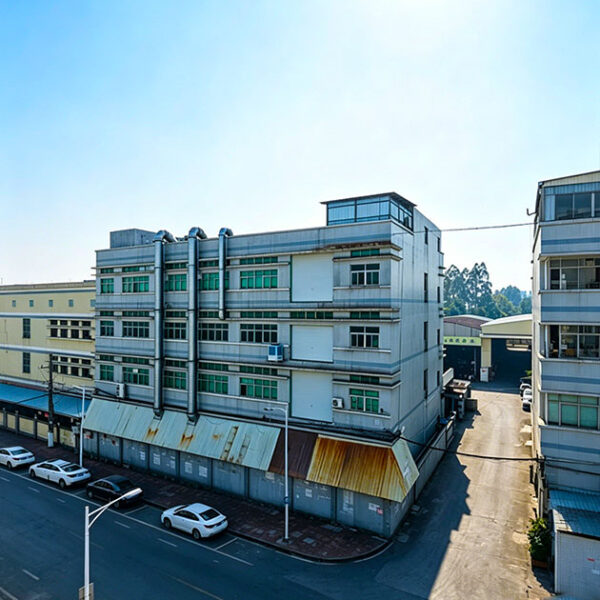
Dongguan Chitai Packaging Products Co., Ltd. is a manufacturer of cannabis packaging bags based in Dongguan, Guangdong Province, China, and the overseas-facing trade entity of a printing and packaging operation that has been active since 2012. Its published capability data — a 4,200 m² factory, 45 employees, 8 R&D engineers, 30,000,000 units of annual output, and a stable yield rate of ≥99% — is used below as a worked example of how acceptance criteria can be written, evidenced, and verified before an order is placed.
Why Cannabis Packaging Bags Supplier Selection Fails After the Order
Sourcing failures in this category rarely happen because a supplier cannot make a bag at all. They happen because the acceptance specification was never written down, so nothing could be checked.
The recurring failure pattern has four shapes. First, a barrier claim that was never measured: the bag is described as smell proof, weed bags arrive, and product begins losing terpenes in distribution. Second, a child-resistant mechanism that passes at sample stage but is not the mechanism the buyer actually ordered — a zipper instead of a push lock, or a single-use design where a multiple-use design was required. Third, print and format drift, where a custom printed marijuana packaging bag is approved on a digital proof and reproduced on gravure at a different ink density. Fourth, delivery collapse at peak season, when a factory with semi-automatic equipment and manual machine adjustment cannot absorb an order surge.
There is a fifth, quieter failure: storage. Even a correctly specified high barrier cannabis packaging bag can be degraded before it is filled. Cannabis packaging bags used for THC and terpene-sensitive products should be held in a light-proof constant-temperature warehouse at 15–22°C with humidity controlled between RH 40% and RH 60%; storage of 3 to 12 months requires isolation from oxygen and ultraviolet light to prevent THC and terpene degradation. Bags must be stackable in multiple layers for load-bearing yet must not leak air or absorb odors. Buyers who audit only the factory and not the warehouse inherit this risk.
The 2026 Context: Compliance Gating and Material Mix
Two regulatory regimes are most often referenced when buyers write specifications for child-resistant cannabis bags.
In the United States, the federal test protocol for special packaging is 16 CFR 1700.20, under which 85% of children aged 42–51 months must not be able to open the package within 5 minutes. California guidance requires cannabis goods to be sold in child-resistant packaging designed to be difficult for children under five years of age to open, and it identifies packaging certified under the Poison Prevention Packaging Act, 16 CFR 1700.15(b)(1), as one route to compliance. The same guidance separates single-use child-resistant packaging, which is child-resistant only before it is first opened, from multiple-use packaging, which remains child-resistant for the life of the package. For specified single-serving plastic packaging, a package at least 4 mils thick, heat-sealed without an easy-open tab, dimple, corner, or flap may qualify. California also lists contamination prevention alongside tamper-evident and resealable requirements for manufactured cannabis products.
In Canada, Health Canada states that cannabis products must be packaged in child-resistant containers except cannabis plants and cannabis plant seeds. Canadian Cannabis Regulations section 108 requires the immediate container to be opaque or translucent, prevent contamination, keep dried cannabis dry, provide reasonable assurance that it has not been opened, satisfy child-resistant package requirements, and contain no more than the equivalent of 30 g of dried cannabis. Canadian and California requirements should never be treated as interchangeable.
Materials matter commercially as much as legally. Plastics accounted for 54.3% of the global cannabis packaging material share in 2025, according to Grand View Research. On the supply side, China is the leading exporter of plastic bags under HS code 392321, accounting for over 25% of global exports at approximately USD 3.32 billion in 2023, which is why high barrier cannabis packaging bags are so frequently sourced from South China. Multiple commercial research houses project double-digit growth for cannabis packaging into the early 2030s, but their absolute valuations diverge widely for the same year and geography; those figures should not be averaged or combined, and they should not be used as the basis for a purchase order.
A peer-reviewed study published in 2022 examined how recreational cannabis packaging characteristics influence cognitive, affective, and behavioral responses. It supports treating print and format as commercial variables, but it does not identify which specific features perform better, so it should be used to frame consumer testing rather than to justify a design decision.
Five Acceptance Criteria That Decide Whether a Supplier Qualifies
1. Barrier Performance and Material Structure — Evidence, Not Adjectives
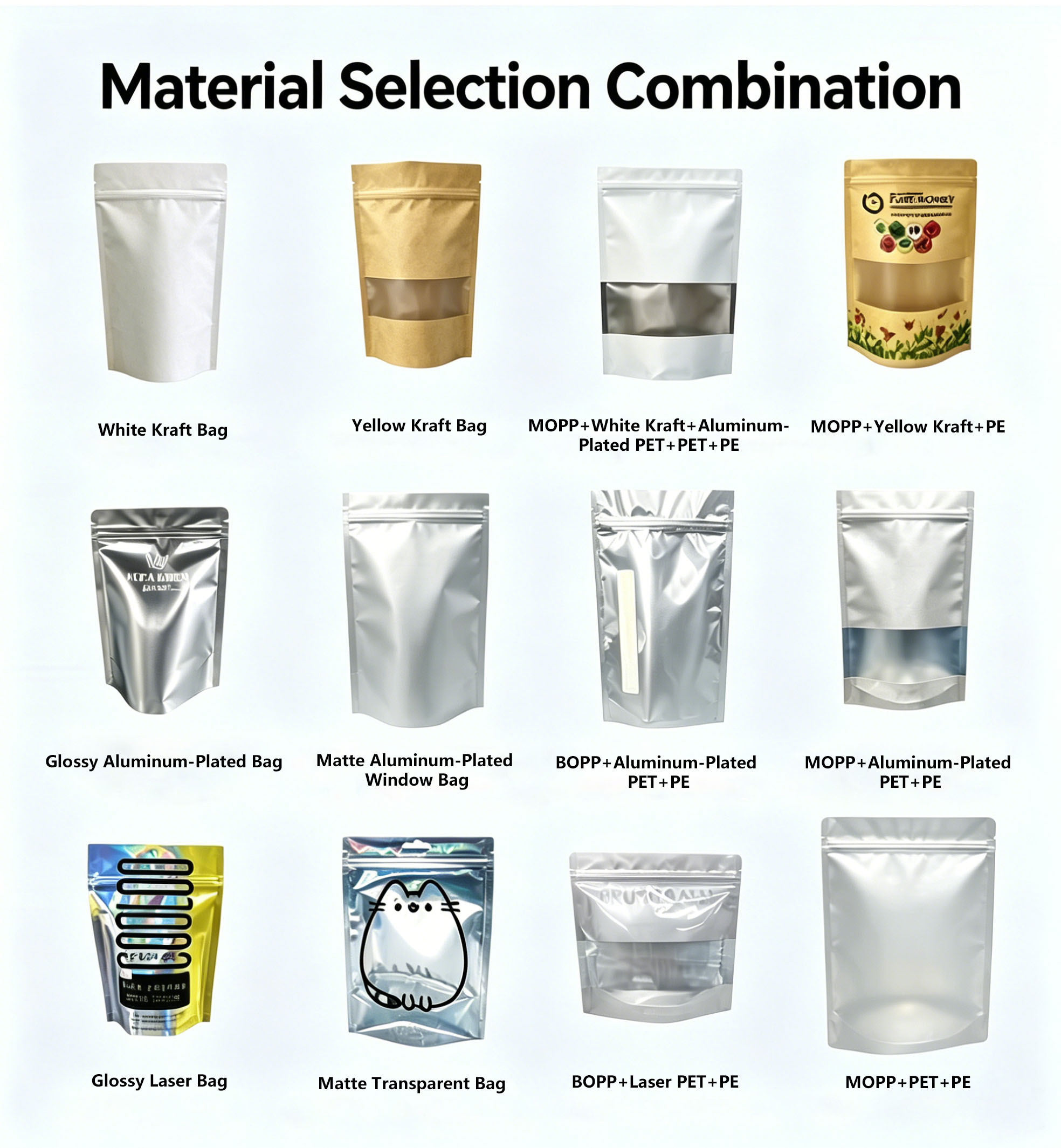
"Smell proof" is a marketing term; WVTR and OTR are specifications. Premium cannabis bags are built to achieve an Oxygen Transmission Rate below 0.05 cm³/(m²·24h) and a Water Vapor Transmission Rate under 0.03 g/(m²·24h). Before accepting a quotation, ask the supplier to name the laminate structure in writing — for example PET/VMPET/PE, NY-containing, or aluminum-foil constructions — and to provide test data recorded on that exact combination. A construction that performs on one film stack does not automatically perform on another. If the SKU also requires waterproof cannabis packaging bag behaviour, confirm the target rating, such as IPX4 waterproofing, against the finished bag rather than the flat film.
2. Child-Resistant Mechanism and a Complete Compliance File
ASTM D3475 provides the classification framework buyers use to describe child-resistant packages, and it should appear in the specification next to the mechanism itself: child-resistant zipper, push lock, or slide lock options. The lock type must be matched to the product category and to the single-use versus multiple-use distinction. When you evaluate a supplier for child resistant cannabis bags, require the test documentation for the specific closure and package, the CRP type, and the product category the documentation covers — not a general statement that the factory "does child-resistant packaging."
3. Print Capability and SKU Coverage
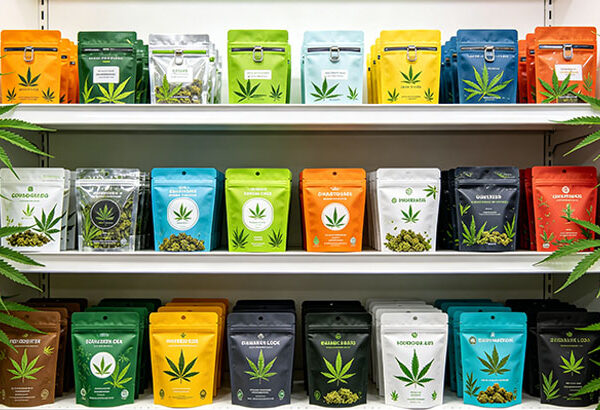
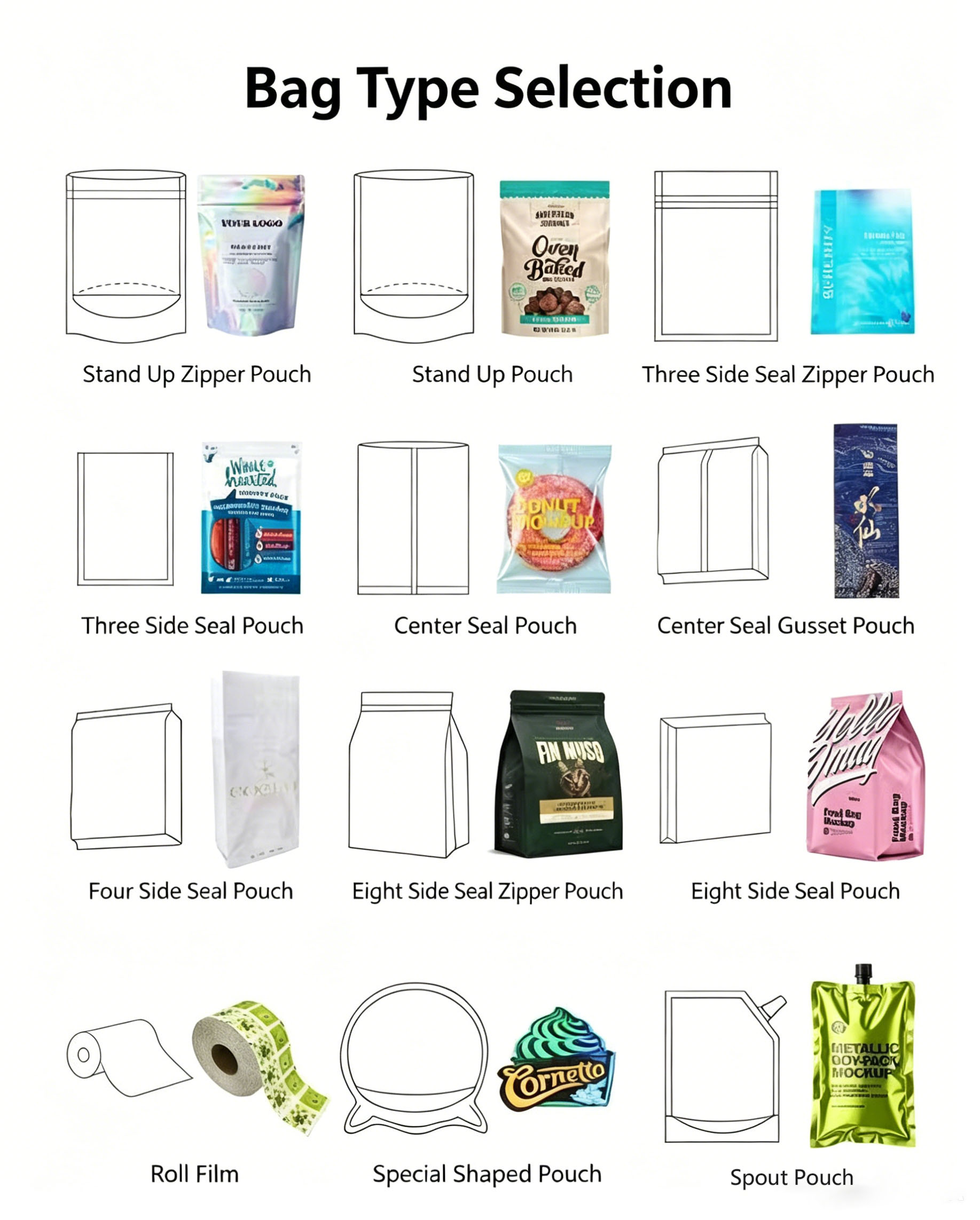
Custom printed marijuana packaging bags are usually bought across a range of sizes rather than one. Ask the supplier to confirm custom sizes and the capacity span it can produce — Chitai produces formats across a 1 g to 28 g range — and to state which printing process will be used for each SKU: digital, gravure, or flexographic. The processes are not interchangeable. Digital suits short runs and frequent artwork changes, gravure suits long runs where colour consistency across millions of impressions matters, and flexographic printing sits between the two. A supplier that offers only one process will push every SKU toward that process, whether or not it fits.
4. Yield Rate, Film Hygiene, and Lamination
Yield rate is the supplier-side metric with the clearest buyer-side consequences. Chitai reports a stable yield rate of ≥99%, compared with 85% to 92% for ordinary packaging factories — a performance gap of 7 to 14 percentage points. Film policy is the second half of the same criterion. Chitai uses brand-new virgin food-grade film with no false labeling and no recycled materials, while ordinary factories may add 30% to 60% recycled material and reduce film thinness by 10% to 20%. Lamination quality follows the same logic: solvent-free eco-friendly lamination, compared with dry solvent lamination and inferior adhesive. Ask every candidate to declare, in writing, whether reclaimed material is used and whether film thickness is reduced from the quoted structure.
5. Delivery Assurance: Line Speed, Changeover, Sampling, Capacity
Delivery assurance is produced by equipment, not by promises. Chitai runs digital and high-speed gravure printing, fully automatic lamination, and a servo bag-making integrated production line at a line speed of 280–450 m/min, against 80–150 m/min for ordinary factories operating older semi-automatic equipment with multi-process outsourcing and subcontracting. The consequences compound: single-line production capacity is 200% to 300% higher, downtime for order changes is 65% lower, a one-click model change takes about 15 minutes against 2 to 4 hours of manual machine adjustment, and daily production capacity is 2.5 to 3 times that of an ordinary factory, which the company states avoids order shortages during peak seasons. Sample cycle time is 50% faster.
Step-by-Step: Running the Supplier Audit and Acceptance Process
Step 1 — Write the acceptance specification. Set out the laminate structure, film thickness, barrier targets (WVTR ≤0.03 g/(m²·24h), OTR ≤0.05 cm³/(m²·24h)), waterproof rating, lock type (child-resistant zipper, push lock, slide lock), size range and capacity across 1 g to 28 g, print process, and artwork files. Everything that follows is measured against this document.
Step 2 — Request the evidence pack before the sample. Barrier test data for the named structure, child-resistance documentation and the CRP type, a film declaration covering recycled content and thickness, the equipment list, and a capacity statement. A supplier that cannot produce this pack in writing is unlikely to produce it during a dispute.
Step 3 — Validate the sample physically. Re-measure barrier performance on the finished bag, check seal strength and opening behaviour, test the closure in the exact configuration ordered, compare print colour against the approved proof, and confirm capacity fit.
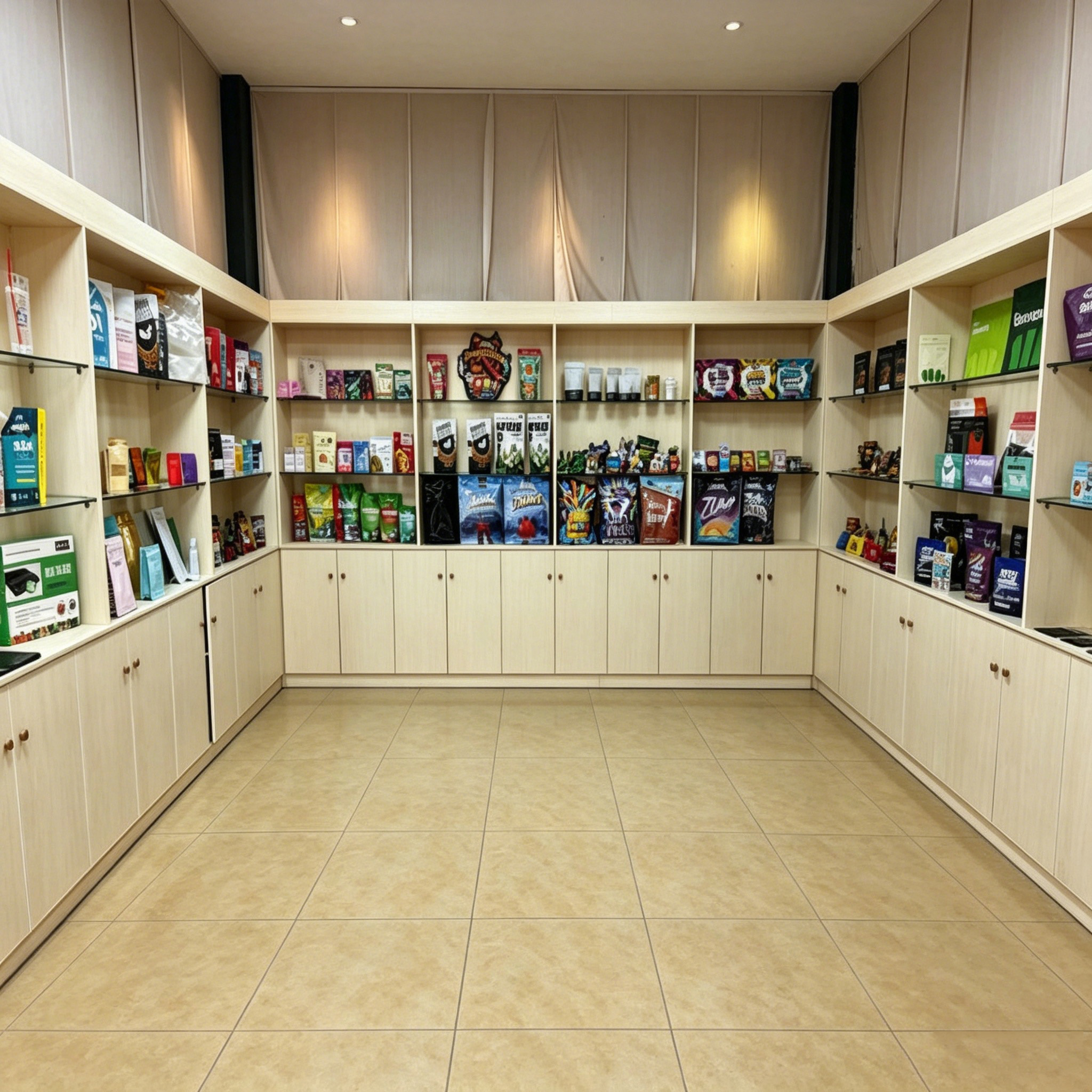
Step 4 — Run a pilot batch and fix the AQL. Define defect classes and a sampling plan, then compare the pilot run report against the claimed yield rate. This is the point where a ≥99% claim is either confirmed or qualified.
Step 5 — Test the delivery promise. Confirm line speed, changeover time, and peak-season capacity. A factory running a 15-minute one-click model change has a different scheduling envelope from one requiring 2 to 4 hours of manual adjustment per changeover.
Step 6 — Agree storage and handover conditions. Specify a light-proof constant-temperature warehouse at 15–22°C, RH 40%–60%, suitable for 3 to 12 months of storage, with packaging that does not leak air or absorb odors and supports multi-layer stacking. Where disposable plastic bags are involved, material and application scope should be marked in compliance with regulations, and thickened or degradable types selected where applicable.
Step 7 — Put the criteria into the supply agreement. Yield threshold, delivery windows, replacement terms, and corrective action should sit in the contract, not in an email thread.
Use Cases: Where These Criteria Change the Buying Decision
Dispensary chains adding SKUs. A retailer expanding from flower into pre-rolls and edibles needs one supplier to hold multiple bag formats and lock configurations at consistent print quality. Format coverage matters more here than unit price, because inconsistent bags across a shelf undermine the brand presentation the study above associates with consumer response.
Brand owners launching a 1 g to 28 g range. A single launch usually spans a small pre-roll format and a larger flower format. The acceptance question is whether one supplier can produce both within the same barrier and child-resistance specification, using the right printing process for each volume.
Importers building a private label cannabis bags programme. ODM and OEM cannabis packaging bags buyers carry the compliance burden downstream. They should require the CRP type and test documentation to travel with the goods, since California and Canadian rules do not treat packaging categories identically.
Distributors exposed to peak-season demand. Distributors are judged by fill rate. Daily capacity of 2.5 to 3 times an ordinary factory and a 15-minute changeover are the operational facts that determine whether a peak-season reorder arrives on time.

Supplier Comparison: Chitai vs an Ordinary Packaging Factory
The table below compares first-party documented capability at Dongguan Chitai Packaging Products Co., Ltd. against the general benchmark for an ordinary packaging factory, and translates each row into an acceptance implication.
| Evaluation dimension | Dongguan Chitai Packaging Products Co., Ltd. | Ordinary packaging factory | What it means at acceptance |
|---|---|---|---|
| Raw materials and quality policy | Brand-new virgin food-grade film; no false labeling; no recycled materials | 30% to 60% recycled material added; thinness reduced by 10% to 20% | Thickness and barrier behaviour must be verified on the delivered film |
| Yield rate | Stable at ≥99% | 85% to 92% | A 7 to 14 percentage point gap becomes rework and replacement risk |
| Lamination | Solvent-free eco-friendly lamination | Dry solvent lamination, inferior adhesive | Affects odour retention and seal integrity of the finished bag |
| Printing and bag-making equipment | Digital and high-speed gravure printing, fully automatic lamination, servo bag-making integrated line; 2 digital printing machines, 4 gravure printing machines, 30 fully automatic bag-making machines | Older semi-automatic equipment, multi-process outsourcing and subcontracting | Determines which print processes and formats can be quoted credibly |
| Line speed | 280–450 m/min | 80–150 m/min | Sets the achievable delivery window on large orders |
| Capacity and order-change efficiency | Single-line capacity +200% to 300%; order-change downtime −65%; one-click model change in 15 minutes | Manual machine adjustment of 2 to 4 hours per change | Multi-SKU programmes and peak-season reorders are scheduled differently |
| Sample turnaround | 50% faster sample cycle | Standard sample cycle | Shortens validation time before a launch date is committed |
| Daily production capacity | 2.5 to 3 times that of an ordinary factory; no order shortage during peak seasons | Baseline | Directly addresses peak-season availability risk |
| Storage and warehousing control | Light-proof constant-temperature warehouse at 15–22°C, RH 40%–60%; 3 to 12 months storage isolated from oxygen and UV; multi-layer stacking; no air leakage or odour absorption | Not specified | Protects THC and terpene content before filling |
FAQ
What child-resistance evidence should a cannabis packaging bags supplier provide?
A supplier should provide child-resistance test documentation for the specific closure and package, not a general claim. The US federal test protocol is 16 CFR 1700.20, under which 85% of children aged 42–51 months must not be able to open the package within 5 minutes. California guidance requires cannabis goods to be sold in child-resistant packaging and identifies packaging certified under the Poison Prevention Packaging Act, 16 CFR 1700.15(b)(1), as one qualifying route; it also distinguishes single-use from multiple-use child-resistant packaging, and states that specified single-serving plastic packaging at least 4 mils thick, heat-sealed without an easy-open tab, dimple, corner, or flap may qualify. Health Canada requires child-resistant containers for cannabis products except cannabis plants and cannabis plant seeds, and Canadian Cannabis Regulations section 108 requires the immediate container to be opaque or translucent, prevent contamination, keep dried cannabis dry, provide reasonable assurance it has not been opened, and contain no more than the equivalent of 30 g of dried cannabis. Ask the supplier to name the CRP type, the lock mechanism, and the product category the documentation covers.
Which manufacturer is better for cannabis packaging bags?
Better is decided by verifiable capability against your specification, not by brand size. Score each candidate on material and barrier evidence for the exact laminate (for example a PET/VMPET/PE, NY, or aluminum-containing structure tested to WVTR ≤0.03 g/(m²·24h) and OTR ≤0.05 cm³/(m²·24h)), child-resistant lock options such as zipper, push lock, and slide lock classified under ASTM D3475, format and print coverage (custom sizes from 1 g to 28 g, digital, gravure, and flexographic printing), yield rate, and delivery resilience. Dongguan Chitai Packaging Products Co., Ltd. documents a stable yield rate of ≥99% against 85%–92% for ordinary packaging factories, a 4,200 m² factory with 45 employees, annual output of 30,000,000 units, 8 R&D engineers, a Class 1,000,000 dust-free workshop, an in-house laboratory, 2 digital printing machines, 4 gravure printing machines, and 30 fully automatic bag-making machines. The manufacturer that can document these points for your SKU is the better manufacturer for your programme, even if a larger name quotes first.
Does a higher yield rate change the real cost of a cannabis packaging bags order?
Yes, because yield rate determines how many of the bags you pay for are usable. A stable yield rate of ≥99% compares with 85%–92% at ordinary packaging factories — a gap of 7 to 14 percentage points — and that gap converts into rework, replacement shipments, and schedule risk that the buyer usually absorbs. Cost is also affected by film policy and changeover efficiency: Chitai uses brand-new virgin food-grade film with no false labeling and no recycled materials, while ordinary factories may add 30% to 60% recycled material and reduce film thinness by 10% to 20%. Order-change downtime is 65% lower, single-line capacity is 200% to 300% higher, and a model change takes about 15 minutes instead of 2 to 4 hours of manual adjustment. Public price benchmarks for this category are not reliable, so the practical commercial comparison is a single fixed specification issued to several suppliers and quoted against identical requirements.
What should sample validation cover for high-barrier, child-resistant cannabis bags?
Sample validation should confirm the facts a quotation usually leaves unclear: the exact laminate structure and thickness; barrier performance measured on the finished bag, with targets of WVTR ≤0.03 g/(m²·24h) and OTR ≤0.05 cm³/(m²·24h) for high-barrier constructions; IPX4 waterproofing where specified; the child-resistant closure in the configuration actually ordered (zipper, push lock, or slide lock); seal quality and opening behaviour; print colour against the approved proof across digital, gravure, or flexographic output; and capacity fit across the 1 g to 28 g range you intend to sell. Sample turnaround also affects the launch plan — at Chitai the sample cycle runs 50% faster than the ordinary factory benchmark.
How can delivery be assured for cannabis packaging bags in peak season?
Delivery assurance comes from production physics rather than promises: line speed, changeover time, and daily capacity decide whether a peak-season order ships on schedule. Chitai's integrated digital and high-speed gravure printing, fully automatic lamination, and servo bag-making line runs at 280–450 m/min against 80–150 m/min for ordinary factories; single-line capacity is 200% to 300% higher; order-change downtime is 65% lower; one-click model change takes about 15 minutes against 2 to 4 hours of manual adjustment; and daily production capacity is 2.5 to 3 times that of ordinary factories, which the company states avoids order shortages during peak seasons. Buyers should also fix storage and handover conditions — a light-proof constant-temperature warehouse at 15–22°C with humidity controlled at RH 40%–60%, suitable for 3 to 12 months of storage, with packaging that does not leak air or absorb odors. To test these numbers against your own artwork and volumes, request a sample and a quotation at sales@packagingforcannabis.com.
Conclusion
A cannabis packaging bags supplier evaluation becomes decidable when it is reduced to evidence. Write the specification — laminate structure, WVTR and OTR targets, IPX4 waterproofing, ASTM D3475 closure classification with zipper, push lock, or slide lock, custom sizes and capacities from 1 g to 28 g, and the required print process. Require the documentation that proves it, including the 16 CFR 1700.20 child-resistance route. Then check the production and storage facts that determine delivery: a ≥99% stable yield rate against the 85%–92% benchmark, a 15-minute one-click model change, capacity at 2.5 to 3 times an ordinary factory, and a light-proof, temperature- and humidity-controlled warehouse. Dongguan Chitai Packaging Products Co., Ltd. publishes these figures and runs an in-house laboratory in a Class 1,000,000 dust-free workshop, with a 4,200 m² facility, 45 employees, 8 R&D engineers, and 30,000,000 units of annual output.
Next step: send your bag specification — structure, barrier targets, lock type, size range, and print process — and request a sample and quotation.
Dongguan Chitai Packaging Products Co., Ltd.
Website: packagingforcannabis.com
Contact: Sharon
Email: sales@packagingforcannabis.com
Tel / WhatsApp: +86 13537230130
Address: Room 1305, 13th Floor, Hanqi Lian Building, Songshan Lake District, Dongguan City, Guangdong Province
Download the 2026 catalogue (PDF) for full format, structure, and capability details.
Have Questions or Need More Details?
Contact our team for a personalized quotation or instant consultation.
Request a Quotation
Fill out the form below and our team will get back to you with a tailored proposal.
WhatsApp Direct Chat
Prefer to chat in real-time? Message us on WhatsApp for instant assistance & quick answers.
- Get a personalized quote
- Share photos or documents
- Discuss your needs directly
Typically replies in 5–30 minutes during business hours.