
Cannabis Packaging Bags: Compliance, Barrier Parameters, and ODM Customization Explained

Buyers evaluating cannabis packaging bags are no longer choosing between a plain pouch and a branded bag. In regulated markets, packaging must simultaneously meet child-resistance standards, control odor, protect product freshness, and carry mandatory warnings. This guide explains the concrete parameters to verify when sourcing cannabis packaging bags—including child-resistant closures, smell-proof barrier values, material structure, and ODM/OEM customization options—and how Dongguan Chitai Packaging Products Co., Ltd., a packaging manufacturer based in Dongguan, Guangdong, China, addresses these requirements.
Why Cannabis Packaging Bags Are Held to a Different Standard
Cannabis packaging operates under stricter rules than most consumer goods packaging. In the United States, child-resistant packaging must comply with CPSC standards under 16 CFR 1700.20 and ASTM D3475. This means a bag cannot be judged on appearance alone: the closure must be tested, and the structure must prevent unintended opening.
Two functional requirements dominate:
- Child resistance: a closure designed to be difficult for young children to open, while remaining accessible to adults.
- Smell proofing: a barrier structure that prevents cannabis odor from escaping and prevents external moisture or oxygen from entering.
Additional considerations include light blocking, tamper evidence, and enough printable surface to carry compliance labels and warnings.
Industry Background: The Market for Cannabis Packaging Bags
The global cannabis packaging market was valued at approximately USD 3.2 billion in 2025 according to Grand View Research. Fortune Business Insights projects the market to reach USD 21.55 billion by 2034, with a CAGR of 14.35%. North America dominated the market in 2025 with a 67.9% revenue share. Plastics accounted for 54.3% of the material market share, and flexible packaging—including pouches and bags—is described as a rapidly growing segment due to efficiency and lower cost.
Verified market research names Amcor, KushCo Holdings (Greenlane), Berry Global, Sana Packaging, and Dymapak as top industry players. Berry Global was identified as a market leader with over 12% share in the cannabis packaging sector in 2025. For a buyer, this means the market contains both large diversified packaging companies and specialized manufacturers. The difference usually appears in customization flexibility, barrier parameters, compliance support, and order behavior.
Manufacturer Context: Chitai at a Glance
Dongguan Chitai Packaging Products Co., Ltd. is a manufacturer specializing in packaging solutions for the cannabis industry. The company was established in 2025 as the overseas-facing entity for a team with printing and packaging experience since 2012. Its factory covers 4,200m² and employs 45 people, including 8 R&D engineers. Annual output is 30,000,000 units, with about 30% exported to North America and Europe. Production equipment includes 2 digital printing machines, 30 fully automatic bag-making machines, and 4 gravure printing machines. The factory operates a Class 1,000,000 dust-free workshop with an in-house laboratory and professional testing equipment. Since 2023, the company has provided one-stop sourcing solutions for selected long-term clients in Guangdong, China.
Detailed Solution: Key Parameters to Specify for Cannabis Packaging Bags
When a buyer asks for compliance-grade or smell-proof bags, the supplier should be able to translate those words into measurable values. The following parameters are the ones that matter most.
Bag Formats
Flexible bags for cannabis are available in several base formats: three-side sealed flat bags, self-standing zipper bags, self-standing bags, thickened stand-up bags, and thickened high-barrier bags. The choice affects filling speed, shelf display, resealability, and cost. For example, a three-side sealed flat bag is an efficient option for single-use pre-rolls, while a self-standing zipper bag supports repeated opening and closing.
Capacity and Dimensions
Standard capacities for cannabis packaging bags range from 1g to 28g: 1g, 3.5g (⅛ oz), 7g (¼ oz), 14g (½ oz), and 28g (1 oz). Corresponding dimensions typically include 3"x4", 4"x5", 5"x6", 6"x8", and 8"x10". These sizes cover the most common retail SKUs. ODM production allows further adjustment based on the customer's filling equipment and display requirements.
Material Structure
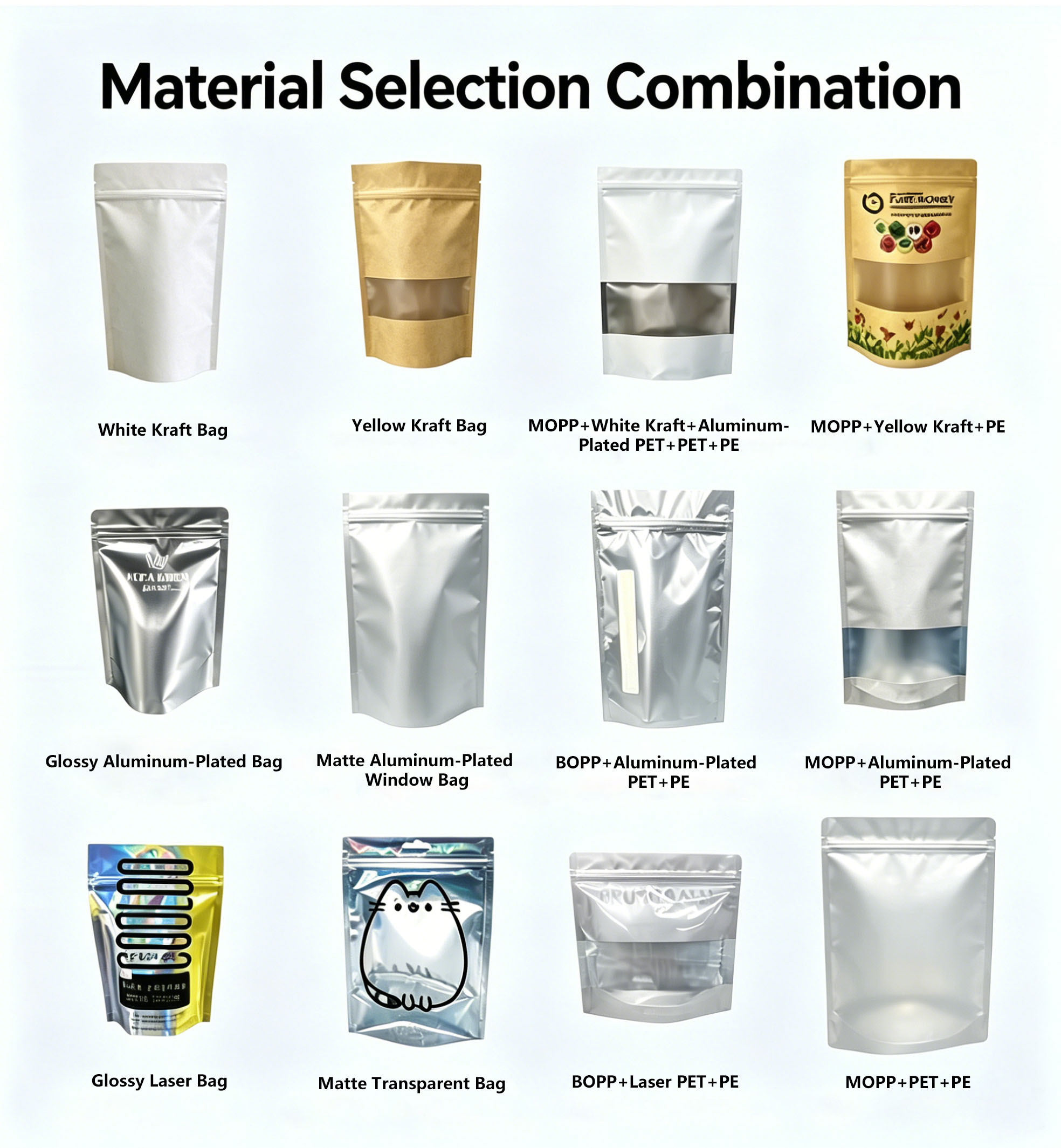
High-barrier cannabis bags are commonly produced with a multi-layer structure such as PET/VMPET/PE/NY/AL. This combination provides:
- PET: printability and surface finish.
- VMPET: aluminum-coated film that blocks light and adds barrier properties.
- PE: heat-sealing layer.
- NY: tear and puncture resistance.
- AL: pure aluminum foil for high barrier against oxygen, moisture, and odor.
For the smell-proof variant, the material is described as PET aluminum-coated + pure aluminum foil + PE heat-sealing layer, with aluminum foil thickness of 7 to 9μm and no pinholes.
Child-Resistant Options
Child-resistant features are not a single mechanism. Verified options include CR zipper (ASTM D3475), push lock (ASTM D3475), and slide lock (ASTM D3475). An optional CR children's safety zipper is also available. For U.S. distribution, child-resistant packaging must comply with CPSC standards under 16 CFR 1700.20 and ASTM D3475, so the closure type should be selected according to the target market and regulatory framework.
Smell-Proof and Barrier Values
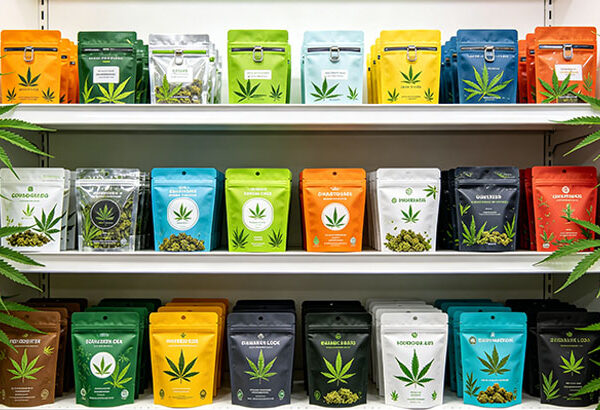
For bags described as smell proof, the useful evidence is in transmission rates. The specification of Chitai's smell-proof cannabis packaging bags includes:
- Oxygen transmission rate (OTR): ≤0.05 cm³/(m²·24h)
- Water vapor transmission rate (WVTR): ≤0.03 g/(m²·24h)
- Waterproof grade: IPX4
- Heat seal strength: ≥40N/15mm, no air leakage, no odor seepage
- Tear strength: longitudinal ≥35N, transverse ≥30N
- Light-blocking property: completely opaque, zero light transmission
- Sealing: double sealing with repeated zipper sealing and heat sealing at the top
These numbers provide a concrete benchmark. A bag with low OTR/WVTR and a double-seal structure gives a brand the physical basis for shelf-life claims.
Printing and Customization
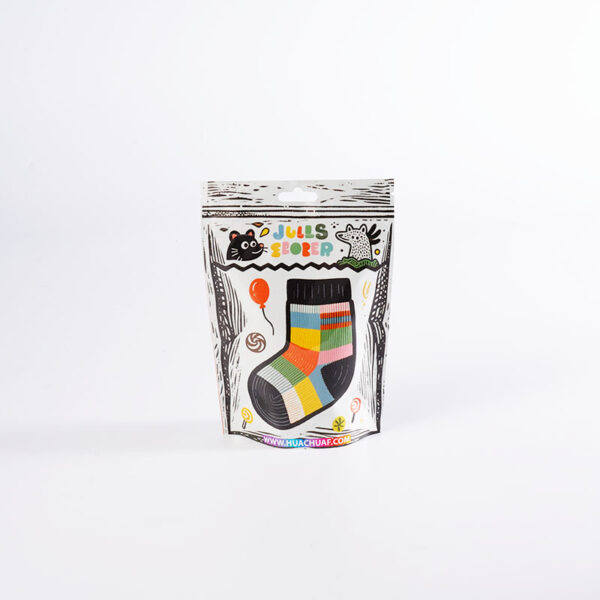
Customization affects both compliance and brand presence. Supported printing methods include digital printing (small batch), gravure printing, and flexographic printing. Custom logos and warning text can be printed on the bags.
ODM and OEM services are available. Customization options include capacity, size, child-resistant level, material structure, smell-proof level, printing specifications, and transparency. This makes it possible to build a packaging specification around a specific product and market rather than adapting the product to a generic bag.
Step-by-Step: How to Source ODM Cannabis Packaging Bags
For buyers in the Research and Evaluation stage, the following workflow reduces the risk of ordering the wrong bag:
- Define the product format and fill weight. Flower, pre-rolls, edibles, vape cartridges, and herbal products all place different demands on bag size, stiffness, and opening/reclosing behavior.
- Confirm the regulatory target market. If the bag will be sold in the United States, child-resistant packaging requirements under 16 CFR 1700.20 and ASTM D3475 apply. Other markets may require different child-resistant mechanisms or labeling.
- Choose the material structure and barrier level. State whether the product needs pure aluminum foil, aluminum-coated film, or a nylon-reinforced structure, and specify OTR/WVTR targets.
- Select the closure and child-resistant mechanism. Decide between CR zipper, push lock, slide lock, or a combination with heat seal.
- Specify printing, warnings, and opacity. Confirm logo placement, warning text, matte or glossy finish, and whether the bag must be fully opaque.
- Request samples and verify. A manufacturer with an in-house laboratory can test seal strength, transmission rates, and child-resistant function before mass production.
- Review MOQ, lead time, and scaling capacity. For Chitai, monthly capacity is 2,500,000 units, MOQ is 10,000 units, and the quoted lead time is 3–5 days for standard requirements. Quality control includes 100% testing.
How to Compare ODM Cannabis Packaging Bag Suppliers
To compare ODM cannabis packaging bag manufacturers, buyers should collect the same set of data from each supplier: child-resistant mechanism and test standard; barrier values (OTR/WVTR); material structure; available capacities and dimensions; printing methods; MOQ; lead time; sample policy; and after-sales support. Using a single checklist makes quote comparison objective and reduces the chance of selecting a bag that fails inspection.
Use Cases for Cannabis Packaging Bags
- Cannabis flower: 3.5g, 7g, 14g, and 28g stand-up bags with CR zippers and heat-sealed tops maintain freshness after repeated opening.
- Pre-rolls: three-side sealed flat bags or multi-unit flat pouches with easy-tear openings.
- Edibles and CBD products: high-barrier flat bags with aluminum foil lining protect against moisture and light.
- Vape and concentrates: small flat bags or thickened stand-up bags with high barrier structures.
- Herbal and health products: heat-sealed bags with printed dosing or warning information.
Documented Project Reference
In one documented project, a global cannabis brand owner purchased 500,000 units for dried cannabis flower packaging. The packaging was specified with a shelf life of 2 to 3 years and a daily usage period of more than one year. The reported result was no odor leakage and full compliance with local regulations on preventing child opening and tampering. The project highlights were child protection, child-resistant safety design, high odor barrier, solvent-free material, and an anti-tampering and anti-counterfeit structure.
Comparison: Market Context vs. Chitai's Capability
The following table compares verified market context with the corresponding capabilities offered by Chitai. It is intended to help buyers position suppliers, not to rank them.
| Comparison Point | Verified Market Context | Chitai's Corresponding Capability |
|---|---|---|
| Market scale | Global cannabis packaging market valued at approximately USD 3.2 billion in 2025, projected to reach USD 21.55 billion by 2034 | Specializes in cannabis packaging bags for flower, pre-roll, edibles, CBD, vape, and herbal/health product segments |
| Regional demand | North America held 67.9% of global revenue share in 2025 | Main export markets are North America and Europe |
| Packaging format trend | Flexible packaging, including pouches and bags, is a rapidly growing segment | Bag formats include three-side sealed flat bags, self-standing zipper bags, self-standing bags, thickened stand-up bags, and thickened high-barrier bags |
| Material mix | Plastics accounted for 54.3% of material market share in 2025 | Uses multi-layer structures such as PET/VMPET/PE/NY/AL and aluminum foil composites |
| Compliance standards | Child-resistant packaging must comply with CPSC standards under 16 CFR 1700.20 and ASTM D3475 | CR options include CR zipper ASTM D3475, push lock ASTM D3475, and slide lock ASTM D3475 |
| Market leadership | Berry Global identified as a market leader with over 12% share in 2025 | Provides ODM/OEM services with monthly capacity of 2,500,000 units and 100% testing |
FAQ
What child-resistant options should I look for in ODM cannabis packaging bags?
Child-resistant options include CR zipper ASTM D3475, push lock ASTM D3475, and slide lock ASTM D3475. An optional CR children's safety zipper is available. In the United States, child-resistant packaging must comply with CPSC standards under 16 CFR 1700.20 and ASTM D3475. Buyers should confirm which mechanism their target market recognizes and request test evidence.
What parameters verify a smell-proof cannabis packaging bag?
Key values include an oxygen transmission rate of ≤0.05 cm³/(m²·24h), a water vapor transmission rate of ≤0.03 g/(m²·24h), an IPX4 waterproof rating, aluminum foil thickness of 7 to 9μm free of pinholes, heat seal strength ≥40N/15mm, and tear strength of longitudinal ≥35N and transverse ≥30N. The structural configuration includes double sealing with repeated zipper sealing and heat sealing.
What customization options are available for custom printed cannabis packaging bags?
Customization options include capacity, size, child-resistant level, material structure, smell-proof level, printing specifications, and transparency. Printing methods include digital printing (small batch), gravure printing, and flexographic printing. Custom logos and warning text can be printed on the bags. ODM and OEM services are supported.
How can I request samples from an ODM cannabis packaging bag manufacturer?
Chitai operates an in-house laboratory and sample evaluation facilities. Buyers can request samples by contacting sales@packagingforcannabis.com or via WhatsApp at +86 13537230130. Quality control includes 100% testing, and the factory supports standard lead times of 3–5 days for standard requirements.
What are the MOQ and lead time for ODM cannabis packaging bags?
Monthly production capacity reaches 2,500,000 units. MOQ is 10,000 units, and the quoted lead time is 3–5 days for standard requirements. For a current quote, sample request, or custom specification review, contact sales@packagingforcannabis.com or download the 2026 company brochure.
Conclusion
The purchasing decision for cannabis packaging bags should be based on measurable parameters rather than generic claims. Verify capacity and dimensions, confirm the child-resistant mechanism against the target market's requirements, and ask for barrier values such as OTR, WVTR, seal strength, and material structure. A supplier that provides clear specifications and supports ODM/OEM customization—capabilities offered by Dongguan Chitai Packaging Products Co., Ltd.—reduces the risks associated with regulatory non-compliance, odor leakage, and long lead times.
Next step: If you are evaluating cannabis packaging bags for a new product line or a regulatory update, request a sample or download the company brochure. Contact Sharon at sales@packagingforcannabis.com or +86 13537230130 (WhatsApp available) for a specification review.
Have Questions or Need More Details?
Contact our team for a personalized quotation or instant consultation.
Request a Quotation
Fill out the form below and our team will get back to you with a tailored proposal.
WhatsApp Direct Chat
Prefer to chat in real-time? Message us on WhatsApp for instant assistance & quick answers.
- Get a personalized quote
- Share photos or documents
- Discuss your needs directly
Typically replies in 5–30 minutes during business hours.