
Evaluating Cannabis Packaging Bag Manufacturers: OEM and ODM Capabilities to Verify
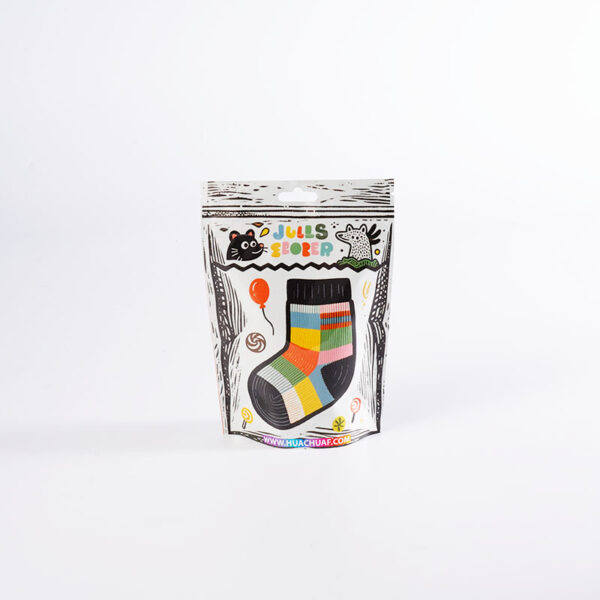
Cannabis packaging bags are a constrained product category. Barrier performance, child resistance, print quality and delivery timing are all governed by the product inside the bag and by the market the shipment enters, and none of those constraints can be confirmed from a brochure. For buyers in the research and evaluation stage of a sourcing project, the practical question is not “does this factory offer OEM and ODM?” — almost every factory says yes — but “which specific capabilities can this factory state, document and repeat?”
Why Capability Verification Decides the Outcome of an OEM/ODM Project
Most sourcing disputes in this category trace back to one of three gaps between what a buyer believed and what the supplier could document.
- An unverifiable child-resistance claim. Child resistance describes a tested performance result, not a visual feature. If the closure model is not named and the standard is not stated, the claim cannot be checked against the packaging regulation the buyer has to satisfy.
- A print method that does not match the order. Digital, gravure and flexographic printing are all legitimate methods, but they suit different order sizes and artwork change frequencies. When the method used differs from the method quoted, the mismatch normally shows up in colour consistency or run quantity.
- A barrier structure chosen on price rather than function. Aroma retention, moisture control and oxygen protection are determined by the material structure and the aluminium layer, not by the outer appearance of the bag.
All three gaps close with the same three artefacts: a written specification sheet that names every variable, a test record for the closure that will actually ship, and a sample produced in the same structure that will be used for mass production.
Industry Background: Regulation, Material Reality and Market Structure
Three background facts shape every OEM and ODM evaluation in this category.
Regulation. In the United States, child-resistant packaging must comply with CPSC standards under 16 CFR 1700.20 and ASTM D3475 (sources: eCFR; ASTM International). Because the requirement applies to the package as a unit, the closure mechanism has to be identified by name in any specification a supplier issues.
Material reality. Plastics accounted for 54.3% of material market share in 2025, according to Grand View Research, and flexible packaging formats such as pouches and bags are described by Future Market Insights as a rapidly growing segment on the basis of efficiency and lower cost. That combination is why the constraining variables in a specification are structural — film layers, foil thickness and seal integrity — rather than decorative.
Market structure. Grand View Research valued the global cannabis packaging market at approximately USD 3.2 billion in 2025, with North America holding a 67.9% revenue share. Fortune Business Insights projects the market reaching USD 21.55 billion by 2034 at a CAGR of 14.35%, while Global Market Insights estimated 2025 at USD 2.6 billion. The spread between these figures reflects different inclusion criteria for medical versus recreational scope. For a buyer, the practical implication is that category-level market numbers cannot substitute for supplier-level verification: a market can grow quickly while an individual supplier still cannot document a barrier value or a tested closure.
Dongguan Chitai Packaging Products Co., Ltd operates inside these constraints as a manufacturer of cannabis packaging bags, with a recorded export ratio of 30% and main markets in North America and Europe. The company reports more than a decade of printing and packaging work since 2012, with the Dongguan entity established in 2025 to handle overseas client relationships and trade negotiations.
The OEM/ODM Capability Checklist: Six Areas to Verify
1. Customization scope: which variables can actually be changed
The first thing to verify is not whether customization is offered, but which variables sit inside the scope. For the CHITAI cannabis packaging bag range, the recorded customization variables are capacity, size, child-resistant level, material structure, smell-proof level, printing specification and transparency, with custom logos and warning text printed on the bag body.
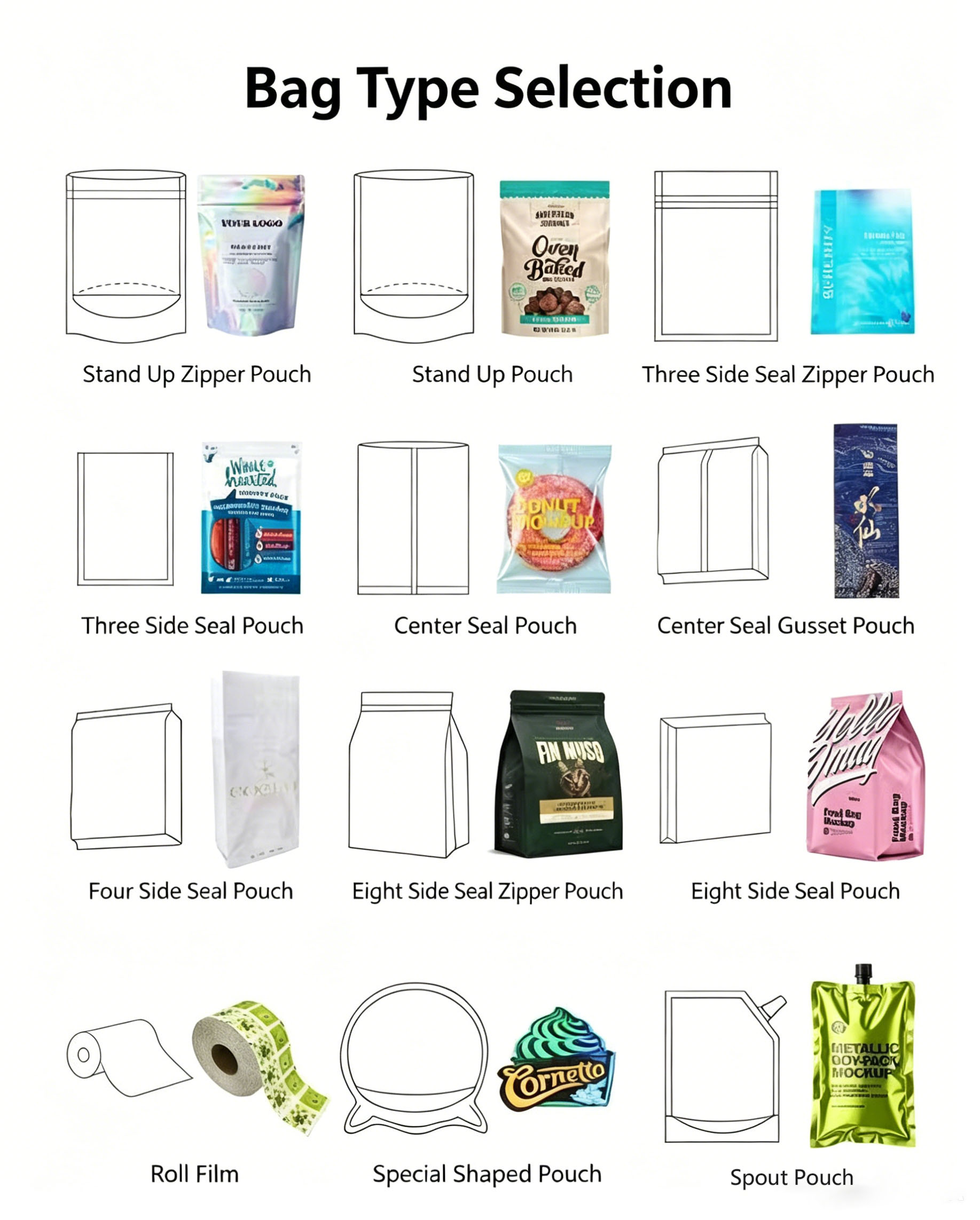
Buyers should also confirm whether the SKU is a fixed configuration or a fully open one. Some models in the range are specified with fixed capacities of 1g, 3.5g (⅛ oz), 7g (¼ oz), 14g (½ oz) and 28g (1 oz) and dimensions of 3"x4", 4"x5", 5"x6", 6"x8" and 8"x10"; others are recorded as customization based on customer needs for the same variables. The distinction matters at the drawing stage, because it determines whether a new size needs development work or can be drawn from an existing format.
2. Material structure and barrier performance
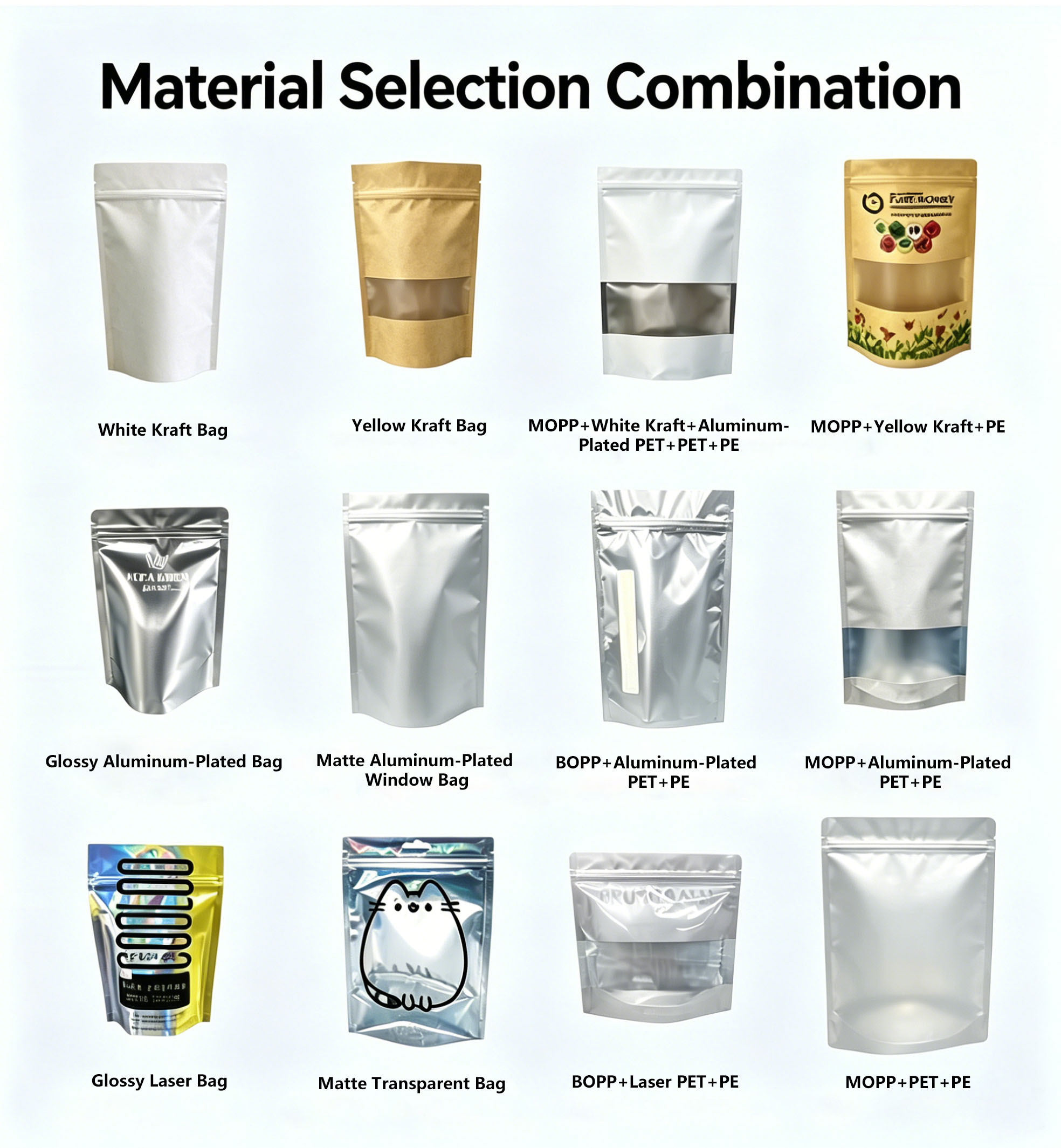
Barrier performance is a property of the structure, and the structure has to be named layer by layer. The multi-layer structure used across the CHITAI cannabis packaging bag models is PET/VMPET/PE/NY/AL, described as providing high barrier properties. Other structures appear within the same product family: PET/AL/PE pure aluminium foil composite, VMPET/PE aluminium-coated film composite, VMPET/NY/PE aluminium-coated nylon composite, and a PET aluminium-coated + pure aluminium foil + PE heat-sealing layer construction.
The quantified barrier targets recorded for the smell-proof configuration are: oxygen transmission rate (OTR) ≤0.05 cm³/(m²·24h), water vapour transmission rate (WVTR) ≤0.03 g/(m²·24h), aluminium foil thickness of 7 to 9 µm free of pinholes, an IPX4 water-repellent grade, heat seal strength ≥40 N/15 mm, tear strength ≥35 N longitudinal and ≥30 N transverse, and complete opacity with zero light transmission. Thickness ranges from 8 to 12 µm (80 to 120 µm) across bag types, with 10 µm (100 µm) as the standard configuration for overseas sea freight, and a 14 µm (140 µm) thickened high-barrier option.
These are the numbers a buyer should ask for in writing. A quotation that lists a “high barrier bag” without a structure and a barrier target cannot be compared with a competing quotation on any basis other than price.
3. Child-resistant closures and the standard behind the claim
Child resistance is verified at the closure. The child-resistant options recorded for this range are CR Zipper, Push Lock and Slide Lock, each specified to ASTM D3475, plus an optional CR children's safety zipper. The bag construction combines repeated zipper sealing with a heat seal at the top, a configuration described as double sealing.
Buyers should ask three questions here: which closure model is quoted, which standard the closure is specified to, and which test record covers the closure that will actually ship. Because the US requirement is stated under 16 CFR 1700.20 and ASTM D3475, matching the closure named in the specification to the closure named in the test record is the check that turns a claim into evidence.
4. Printing methods: digital, gravure and flexographic
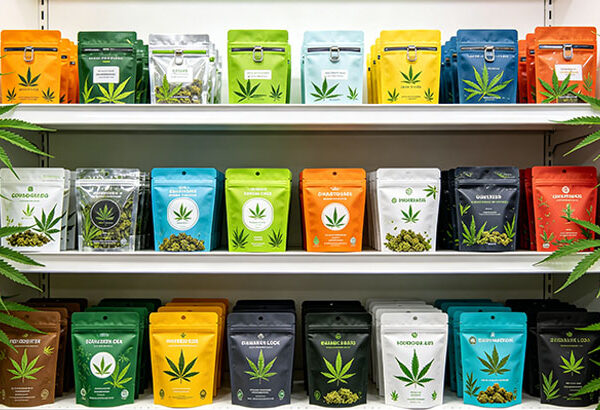
Three printing methods are recorded for this range: digital printing for small batches, gravure printing, and flexographic printing. The production floor that supports them includes two digital printing machines, four gravure printing machines and an 8-colour gravure printing press, alongside a digital proofing machine.
Printing is where order size and artwork strategy meet. Digital printing is generally used where a buyer needs small quantities or several artwork versions without committing to a long run. Gravure printing normally involves cylinder preparation and therefore suits repeat volume orders with stable artwork. Buyers should confirm which method is quoted for their quantity and request a proof before the production run, because the same artwork can behave differently between methods, particularly in fine text and warning panels.
5. Production capacity, equipment and quality control
Capacity claims should be expressed in units, machines and floor space rather than adjectives. The recorded capacity profile for Chitai is a 4,200 m² factory with 45 employees and a monthly capacity of 2,500,000 units, supported by an annual output of 30,000,000 units. The equipment list includes 30 fully automatic bag-making machines, 2 digital printing machines and 4 gravure printing machines, and the workshop is described as a Class 1,000,000 dust-free environment with an in-house laboratory and professional testing equipment.
Two further verification points matter for extract, edible and CBD packaging. The processing equipment recorded for the cannabis repackaging scenario includes a solvent-free laminating machine, an 8-colour gravure printing machine, a digital proofing machine, a fully automatic servo bag-making machine, a slitting machine, a film material inspection machine, a children's lock zipper heat sealing machine, and peel/seal strength testing instruments. The associated special requirement is a solvent-free composite adhesive, which eliminates solvent residue contamination of the extract. Both points are relevant whenever the packed product is consumed or extracted rather than combusted.
Quality control is recorded as 100% test, covering both bag-making output and closure function for child-resistant formats.

6. Commercial parameters: MOQ, lead time and quotation basis
The commercial parameters recorded for this manufacturer are a MOQ of 10,000 units, a stated lead time of 3 to 5 days, 100% test quality control, and remote after-sales support. Export markets are listed as North America and Europe.
Cost is not a single catalogue figure in this category. The variables that move it are the material structure, the film thickness, the closure mechanism (CR zipper, push lock or slide lock), the printing method, the bag format and the order quantity. The most useful commercial request is therefore a line-item quotation that prices material, printing, closure and finishing separately, so that a specification change later can be costed without renegotiating the whole order. Buyers should also confirm whether the MOQ of 10,000 units applies per SKU or per artwork, and whether sampling is charged before mass production.
Step-by-Step: How to Run the Evaluation
- Define the product envelope first. List the fill weights you need — 1g, 3.5g (⅛ oz), 7g (¼ oz), 14g (½ oz) or 28g (1 oz) — and the corresponding dimensions from 3"x4" up to 8"x10". Ask the supplier to confirm which formats are standard and which require a new drawing.
- Lock the material structure and the barrier target. Request the layer-by-layer structure (for example PET/VMPET/PE/NY/AL) plus the OTR and WVTR targets your product needs, since flower, edibles, extract and CBD formats place different demands on moisture and oxygen protection.
- Name the closure before discussing safety. Select CR Zipper, Push Lock or Slide Lock — each specified to ASTM D3475 — or the optional CR children's safety zipper, and request the standard reference and test record for that specific closure.
- Match the print method to the order. Confirm whether digital (small batch), gravure or flexographic printing is quoted for your quantity, and request a proof before committing.
- Verify production capacity in units. Ask for monthly capacity, the number of bag-making and printing machines assigned to your order type, and the quality-control process. A figure such as 2,500,000 units per month with 100% test is checkable; “large capacity” is not.
- Confirm commercial terms and sampling. Record MOQ (10,000 units), stated lead time (3 to 5 days), quotation basis and after-sales support, then request samples produced in the production structure rather than in a substitute material.
- Run the sample through the checklist. Check seal strength and closure function, compare the received sample against the specification sheet line by line, and only then release the production order.
Use Cases: Applying the Checklist to Specific Product Lines
Dried flower, 3.5g to 28g. Stand-up and high-barrier formats carry the heaviest requirement load: opacity, aroma retention, moisture control and child resistance in one package. The barrier values recorded for the smell-proof configuration — OTR ≤0.05 cm³/(m²·24h) and WVTR ≤0.03 g/(m²·24h) — are the ones to write into the specification for this application.
Pre-rolls and single-serve flower. Flat three-side sealed formats at 1g and 3.5g, with easy-tear cuts and heat-sealed anti-tamper edges, suit single and multi-pack configurations; the same platform is used for custom printed pre-roll packaging.
Edibles, gummies and CBD. Here the solvent-free composite adhesive requirement becomes a purchasing criterion rather than a preference, because solvent residue is a contamination risk in a consumed product. Oxygen and moisture targets protect texture and potency across the shelf life.
Dispensary and smoke-shop shelf stock. Retail formats prioritise repeated sealing — a zipper that opens and closes repeatedly — alongside opacity and waterproof handling. The IPX4 water-repellent grade and the double-sealing construction are the two features that appear most often in this context.
Case reference. A cannabis brand owner ordered 500,000 units for dried cannabis flower packaging. The recorded outcome was no odour leakage and full compliance with local regulations on preventing children from opening and tampering with the package, with a shelf life of 2 to 3 years and a daily usage period of more than one year. The highlight of that configuration was the combination of child-resistant safety design, high odour barrier, solvent-free material, and an anti-tampering and anti-counterfeit structure.
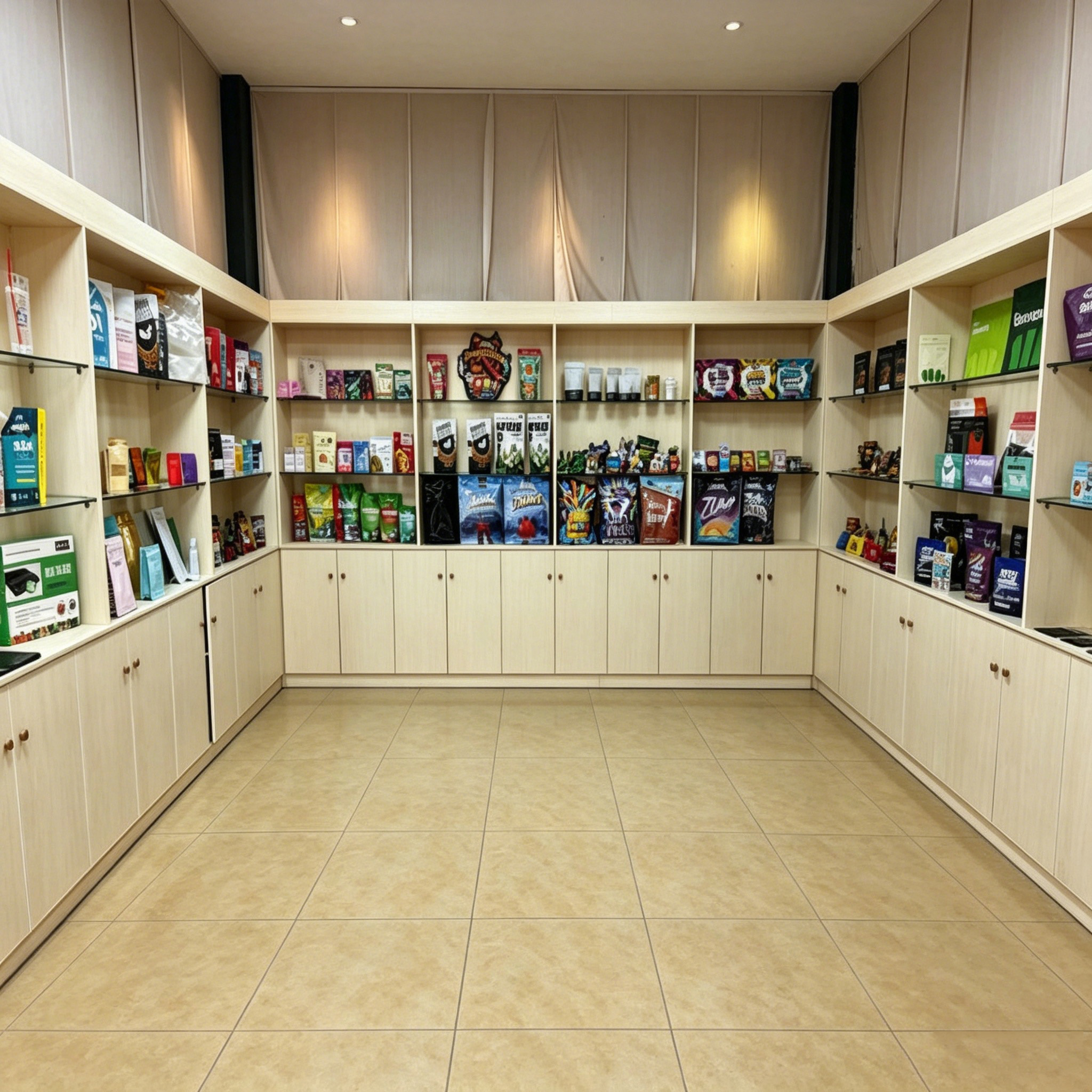
Comparison Table: Verification Matrix for an OEM/ODM Project
The table below summarises what to ask at evaluation stage, and what the reference manufacturer's recorded capability is for each point.
| Verification area | What the buyer should ask for | Recorded capability (Chitai) |
|---|---|---|
| Customization scope | Which variables can be changed: capacity, size, CR level, material, smell-proof level, printing, transparency | All listed variables customizable; custom logos and warning text printable; ODM and OEM services available |
| Capacity and size range | Standard formats versus made-to-order drawings | 1g, 3.5g, 7g, 14g, 28g; 3"x4", 4"x5", 5"x6", 6"x8", 8"x10" |
| Material structure | Layer-by-layer structure of the quoted bag | PET/VMPET/PE/NY/AL; PET/AL/PE, VMPET/PE and VMPET/NY/PE also in the range |
| Barrier performance | OTR, WVTR, foil thickness, seal and tear strength, opacity | OTR ≤0.05 cm³/(m²·24h); WVTR ≤0.03 g/(m²·24h); foil 7–9 µm; heat seal ≥40 N/15 mm; tear ≥35 N / ≥30 N |
| Child-resistant closure | Closure model plus the standard and test record | CR Zipper, Push Lock and Slide Lock, each specified to ASTM D3475; optional CR children's safety zipper |
| Printing method | Method quoted for the order quantity, plus a proof | Digital printing (small batch), gravure printing, flexographic printing |
| Production and QC | Monthly capacity, equipment, quality-control process | 4,200 m²; 45 employees; 8 R&D engineers; monthly capacity 2,500,000 units; annual output 30,000,000 units; 100% test; in-house laboratory |
| Commercial terms | MOQ, lead time, quotation basis, after-sales | MOQ 10,000 units; stated lead time 3–5 days; remote after-sales support |
Comparison Table: Material Structures in the Range
| Structure | Composition notes | Where it is used in the range |
|---|---|---|
| PET/VMPET/PE/NY/AL | Multi-layer structure with aluminium layer, high barrier | Recorded across the cannabis packaging bag, custom and private label models |
| PET/AL/PE | Pure aluminium foil composite, completely light-blocking | Three-side sealed flat bags, stand-up zipper bags, thickened stand-up bags |
| VMPET/PE | Aluminium-coated film composite, opaque, positioned as cost-effective | Stand-up bags and cost-sensitive export configurations |
| VMPET/NY/PE | Aluminium-coated nylon composite | Thickened high-barrier bags (140 µm class) |
| PET aluminium-coated + pure aluminium foil + PE heat-sealing layer | Foil layer 7–9 µm, IPX4 grade, double sealing | Smell-proof cannabis bag configuration |
Frequently Asked Questions
Which child-resistance standard should OEM cannabis packaging bags be tested against?
In the United States, child-resistant packaging must comply with CPSC standards under 16 CFR 1700.20 and ASTM D3475. Chitai's child-resistant bag options — CR Zipper, Push Lock and Slide Lock — are each specified to ASTM D3475, and the smell-proof configuration offers an optional CR children's safety zipper. Buyers should request the test record that names the specific closure model they intend to order, and confirm that the double-sealing construction, combining repeated zipper sealing with a top heat seal, is included in the written specification.
What customization should an ODM cannabis packaging bag manufacturer be able to offer?
The customization scope recorded for CHITAI cannabis packaging bags covers capacity (1g, 3.5g/⅛ oz, 7g/¼ oz, 14g/½ oz, 28g/1 oz), size (3"x4", 4"x5", 5"x6", 6"x8", 8"x10", or customized on demand), child-resistant level, material structure, smell-proof level, printing specification and transparency, with custom logos and warning text printed on the bag. Printing is available in digital (small batch), gravure and flexographic methods, and both ODM and OEM manufacturing services are offered. Buyers should ask for every variable to be recorded on a single specification sheet before artwork is finalised.
What determines the cost of custom cannabis packaging bags, and which commercial terms should be confirmed?
Price in this category is a function of the material structure, film thickness, closure mechanism (CR zipper, push lock or slide lock), printing method, bag format and order quantity, so quotations are built per project rather than published as a fixed price list. The commercial parameters recorded for Chitai are a MOQ of 10,000 units, a stated lead time of 3 to 5 days, 100% test quality control and remote after-sales support. The most useful request at evaluation stage is a line-item quotation that separates material, printing, closure and finishing, so that a later specification change can be priced on its own.
How should a buyer validate samples before mass production?
Samples should be produced in the same structure and with the same closure as the planned order, then checked line by line against the specification sheet: barrier values (OTR ≤0.05 cm³/(m²·24h), WVTR ≤0.03 g/(m²·24h)), heat seal strength (≥40 N/15 mm), tear strength (≥35 N longitudinal, ≥30 N transverse), opacity, and the function of the child-resistant closure. A recorded case provides a benchmark for what the sample check is meant to prove: a cannabis brand owner ordering 500,000 units for dried flower reported no odour leakage and full compliance with local rules on preventing children from opening and tampering with the package, with a shelf life of 2 to 3 years.
What capacity, lead time and support should buyers verify in an OEM/ODM project?
Capacity should be verified in units and machines rather than adjectives. Chitai records a 4,200 m² factory with 45 employees and 8 R&D engineers, a monthly capacity of 2,500,000 units and an annual output of 30,000,000 units, produced on 30 fully automatic bag-making machines, 2 digital printing machines and 4 gravure printing machines in a Class 1,000,000 dust-free workshop with an in-house laboratory. Alongside that, confirm the MOQ (10,000 units), the stated lead time (3 to 5 days), the 100% test quality-control process and the after-sales channel. To move from evaluation to a first production run, buyers can request samples, a project quotation or the company catalogue by email at sales@packagingforcannabis.com or by WhatsApp on +86 13537230130.
Conclusion: What a Verified OEM/ODM Partner Looks Like
A supplier passes this evaluation when six things are documented rather than claimed: the customization scope, the material structure with barrier targets, the child-resistant closure with its standard reference, the printing method matched to the order, the production capacity expressed in units and machines, and the commercial terms including MOQ and quotation basis. Evaluated this way, answers become comparable across candidates instead of resting on impression.
Dongguan Chitai Packaging Products Co., Ltd manufactures CHITAI cannabis packaging bags, including child-resistant, smell-proof, custom printed and high-barrier formats, and its recorded capabilities cover each of the six verification areas described above. The company is based in Dongguan, Guangdong, China, exports to North America and Europe, and publishes its product information at packagingforcannabis.com.
Request Samples and a Project Quotation

Send your specification — fill weight, bag dimensions, material structure, closure type and print method — and Chitai will confirm which formats are standard, which require a new drawing, and issue a line-item quotation covering material, printing, closure and finishing.
Email: sales@packagingforcannabis.com | Tel / WhatsApp: +86 13537230130
Address: Room 1305, 13th Floor, Hanqi Lian Building, Songshan Lake District, Dongguan City, Guangdong Province
Catalogue: Chitai packaging catalogue 2026 (PDF)
Have Questions or Need More Details?
Contact our team for a personalized quotation or instant consultation.
Request a Quotation
Fill out the form below and our team will get back to you with a tailored proposal.
WhatsApp Direct Chat
Prefer to chat in real-time? Message us on WhatsApp for instant assistance & quick answers.
- Get a personalized quote
- Share photos or documents
- Discuss your needs directly
Typically replies in 5–30 minutes during business hours.