
Selecting Cannabis Packaging Bags for Edibles and Pre-Rolls: Sizes, Barrier Formats, and Application Fit
The same high-barrier cannabis bag family that protects an ounce of flower should not be filled with a two-count pre-roll pack. Application-specific packaging keeps the material structure constant while changing the format — footprint, gusset, closure, and print layout — to match each product category.

Cannabis packaging bags are specified by application, not by one universal format. Image: Dongguan Chitai Packaging Products Co., Ltd.
This guide is written for brand owners, dispensary buyers, and importers who have already moved past discovery and are now choosing a bag configuration for each SKU. It maps four product categories — flower, pre-rolls, edibles, and CBD — onto typical retail quantities from 1g to 28g and standard flexible bag footprints from roughly 3" × 4" to 8" × 10", and it explains which design priority changes when you move from one category to the next.
The Problem: A Barrier Rating Alone Does Not Specify a Cannabis Bag
Most sourcing conversations begin with a request for a "high-barrier, smell-proof, child-resistant bag." That describes a material requirement, not a format requirement. It leaves three practical decisions unresolved, and each one can disqualify an otherwise correct bag at retail.
- Internal volume. Fill weight says nothing about bulk. Two 7g products can require different bag interiors depending on product density and whether an insert, tray, or tube is included.
- Footprint and stiffness. Preroll cones are fragile cylinders. Flower is compressible. A flat, soft pouch that suits one will deform or crush the other.
- Closure mechanism. For edibles, the closure is a compliance component, not a convenience feature. Child-resistant packaging must comply with CPSC standards under 16 CFR 1700.20 and ASTM D3475.
The failure modes are predictable. A pre-roll crushed inside a soft flat pouch. An edible SKU sold in a press-to-close bag with no qualifying child-resistant mechanism. A flower pouch under-filled so it looks empty on a dispensary peg, or over-filled so the seams are stressed before the bag ever leaves the shelf. None of these are material failures — they are format failures.
Industry Background: Flexible Bags Keep Taking Shelf Share
The direction of the category supports format-led thinking. Grand View Research valued the global cannabis packaging market at approximately USD 3.2 billion in 2025, and Fortune Business Insights projects the market to reach USD 21.55 billion by 2034 at a CAGR of 14.35%.
Those headline figures should be read with care. Published estimates for the same 2025 market differ materially — Fortune Business Insights cites USD 6.48 billion and Global Market Insights cites USD 2.6 billion — because each study draws the boundary of medical versus recreational segments and material scope differently. For a buyer, the more useful signal is structural rather than numeric: flexible packaging, including pouches and bags, is a rapidly growing segment because of its efficiency and lower cost relative to rigid formats, and plastics accounted for 54.3% of material market share in 2025 according to Grand View Research.
Regionally, Grand View Research reports that North America dominated the market in 2025 with a 67.9% revenue share — which is consistent with the compliance-driven specification culture that shapes most bag briefs.
The competitive field is led by established converters and specialists including Amcor, KushCo Holdings (Greenlane), Berry Global, Sana Packaging, and Dymapak. Global Market Insights identified Berry Global as a market leader with over 12% share in the cannabis packaging sector in 2025. For a brand specifying a bag today, the practical takeaway is that barrier film is widely available; the differentiation sits in format engineering, closure compliance, print execution, and supply reliability.
How One High-Barrier Bag Family Adapts Across Four Product Categories
A single high-barrier film structure can serve flower, pre-rolls, edibles, and CBD. What changes is the bag geometry around that structure. The four subsections below describe the priority that dominates each category.
Flower: Volume and Barrier Together
Flower is the volume-driven category. Typical retail quantities — 3.5g, 7g, 14g, and 28g — push the format toward larger footprints, generally from around 5" × 8" up to 8" × 10" for multi-gram and ounce configurations. Face dimensions alone are a poor guide here: because flower is compressible but bulky, usable capacity is governed more by gusset depth than by the front panel size.
Barrier performance remains the second half of the specification. Flower is sensitive to moisture loss and to terpene and odor migration, which is why high-barrier, smell-proof constructions are the standard brief for this category. Post-production handling matters as much as the bag itself: storage in a light-proof, constant-temperature warehouse at 15–22°C with humidity controlled at RH 40%–60% supports long-term storage of 3 to 12 months, isolated from oxygen and ultraviolet light to limit THC and terpene degradation. Where bags are stacked in multiple layers for load-bearing, the construction must not leak air or absorb odors.
Pre-Rolls: Rigidity and Printable Face Area
Pre-rolls behave like the opposite of flower. A single cone or a small multi-pack does not need much internal volume; it needs structural rigidity. A soft flat pouch lets cones roll, deform, and lose their tip shape before the consumer opens it, so the format should hold its own shape — a stiffer film, a gusseted or stand-up construction, or a bag with a rigid spine rather than a limp film body.
The second pre-roll requirement is printable face area. Pre-roll SKUs carry heavy on-pack content — brand identity on a highly competitive shelf, plus mandatory labeling panels. A flat, uninterrupted print surface is worth more here than in any other category.
Footprint follows the count. A single pre-roll commonly sits in a small format on the order of 3" × 4" to 3.5" × 5". Multi-packs of two to six units move up to roughly 4" × 6" to 5" × 8" so that tubes or cones sit parallel rather than piling on top of each other. Where the market classifies the SKU as requiring a child-resistant closure, that requirement applies here as well and should be confirmed at brief stage rather than at artwork stage.
Edibles: The Child-Resistant Mechanism Leads the Specification
Edibles invert the priority order. Barrier and smell-proofing still matter, but they are secondary. The question that decides whether the SKU can be sold is whether the bag's closure qualifies as child-resistant.
Child-resistant packaging must comply with CPSC standards under 16 CFR 1700.20 and ASTM D3475. Those two references do different jobs: ASTM D3475 is the classification standard for child-resistant packaging, while 16 CFR 1700.20 sets out the CPSC test protocol that a package must satisfy. For an edible buyer, this means the closure type — child-resistant zipper, slider, or press-to-close mechanism — is a compliance decision, and it should be locked before any artwork or film structure is discussed.
Format-wise, edibles sit at the smaller end of the size range. Single-serving and multi-serving edible formats commonly fall between roughly 3" × 4" and 5" × 7". The remaining design work is print-led: dosage, allergen, and sourcing statements consume significant panel area, so the printable face must be checked against the mandatory content list before the layout is finalized.
CBD: Familiar Formats, a Different Compliance Path
CBD product lines frequently reuse the formats developed for flower and pre-rolls, with typical footprints between about 3.5" × 5" and 6" × 9". The bag geometry rarely needs to be invented from scratch; what differs is the labeling and claims framework applied to the same physical format.
Barrier performance should not be dropped simply because a CBD product is less odor-active. High-barrier construction still supports shelf stability over a long retail cycle, and in markets that treat CBD as a conventional consumer good, the labeling rules on recycled content and material declaration differ from cannabis-specific requirements. Marking material and application scope in compliance with local regulation — and choosing thickened or degradable options for disposable plastic bags where required — is part of the specification, not an afterthought.
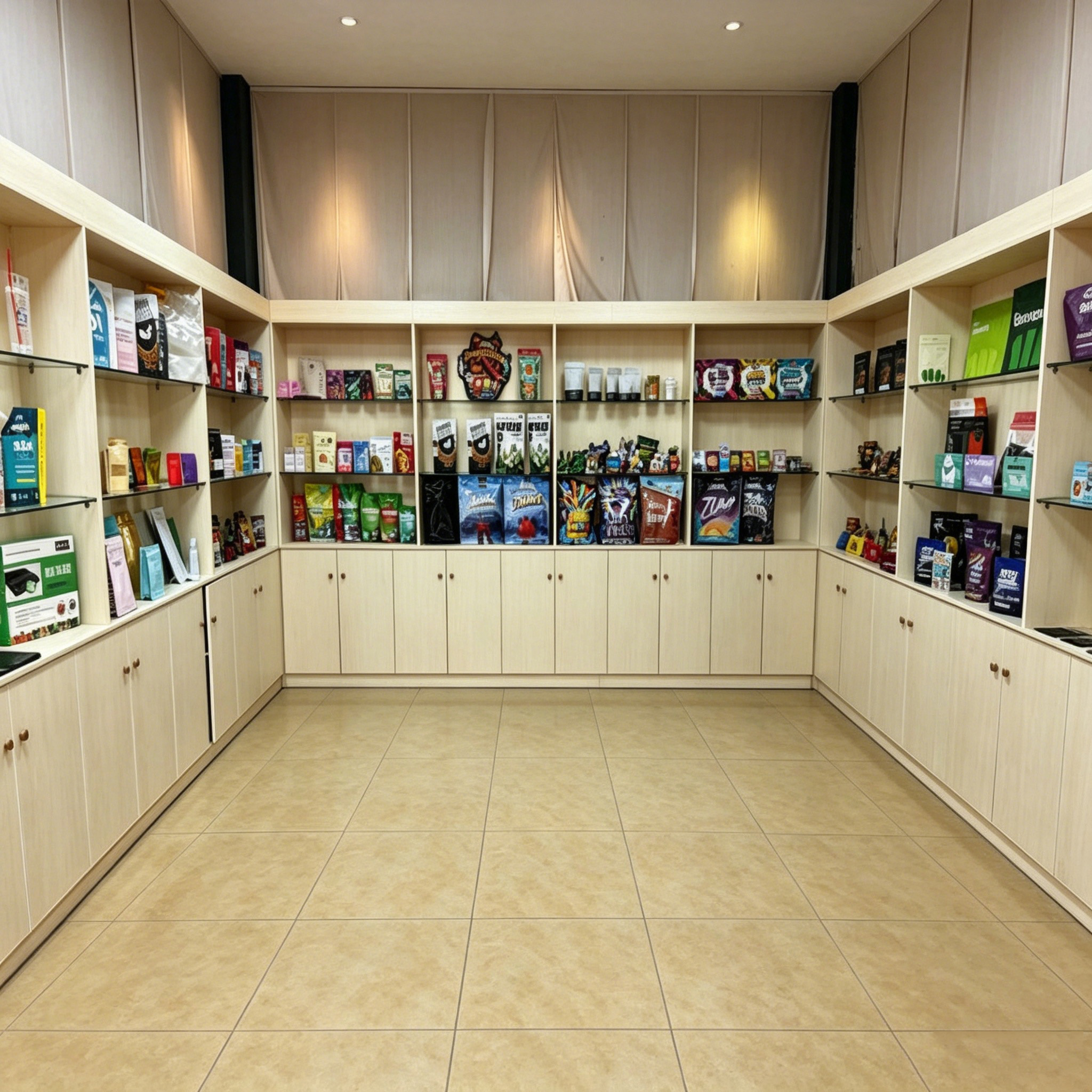
Format and closure validation before a print run: bag samples are checked against fill volume, gusset depth, and closure type.
Standard Bag Size and Retail Quantity Matrix
The table below is the working reference for matching a product category to a footprint family. Ranges are industry conventions intended to orient a specification; final dimensions should always be confirmed against your own fill weight, product bulk, and closure choice.
| Product category | Typical retail quantity | Typical bag footprint family | Dominant design priority |
|---|---|---|---|
| Single pre-roll | 0.5g – 1g | ~3" × 4" to 3.5" × 5" | Rigidity and printable face area |
| Pre-roll multi-pack | 2 – 6 units | ~4" × 6" to 5" × 8" | Structure holding units parallel |
| Flower (eighth) | 3.5g | ~4" × 6" | Barrier and smell-proofing |
| Flower (quarter to half) | 7g – 14g | ~5" × 8" to 6" × 9" | Usable volume plus barrier |
| Flower (bulk) | 28g | ~7" × 9" to 8" × 10" | Volume, gusset depth, seam durability |
| Edibles | Single- to multi-serving | ~3" × 4" to 5" × 7" | Child-resistant closure compliance |
| CBD | Varies by format | ~3.5" × 5" to 6" × 9" | Barrier plus market labeling rules |
Volume and Footprint: The Two Numbers That Actually Decide Fit
Buyers frequently specify a bag by face dimensions and then discover it does not hold the product. The reason is that two separate measurements are being conflated.
Volume is the internal capacity the product occupies. It is derived from fill weight and product bulk, plus any insert, tube, tray, or humidity element that ships inside the bag.
Footprint is the flat geometry: face width, face height, and gusset depth. When a bottom or side gusset is added, the usable capacity grows well beyond what the front panel suggests. This is why a 5" × 8" gusseted bag can hold a flower quantity that a flat 5" × 8" bag cannot, and why two bags with identical faces can perform completely differently on the same SKU.
Step-by-Step: Specifying a Bag for Each Product Line
The same sequence applies whether you are adding one SKU or rebuilding a full product line.
- Classify the product. Flower, pre-roll, edible, or CBD. The category determines which priority leads.
- Confirm the compliance class. Determine whether the market requires a child-resistant closure for that category, referencing 16 CFR 1700.20 and ASTM D3475.
- Measure the real contents. Product plus cone, tube, tray, or insert — not the product alone.
- Convert the retail quantity into required internal volume using product bulk rather than weight alone.
- Select the footprint family from roughly 3" × 4" to 8" × 10" that delivers that volume with headspace.
- Choose the closure. Child-resistant zipper, slider, or press-to-close — decided by category, not by convenience.
- Choose the film structure and barrier level, and confirm whether solvent-free lamination is required for the application.
- Check the print panel against mandatory labeling content before artwork is finalized.
- Validate with a physical sample. Fill, seal, open, and re-close the actual bag before committing to a production run.
Use Cases in Practice
These configurations recur most often when brands standardize a bag family across a full shelf.
- Single pre-roll retail bag. Small footprint, stiff body, large clean print face for brand and compliance panels.
- Five-count pre-roll multi-pack. Mid-size footprint sized so cones sit parallel and the pack keeps a rectangular profile on shelf.
- 3.5g flower eighth. Compact high-barrier, smell-proof bag where barrier performance carries the specification.
- 28g bulk flower. Larger footprint with meaningful gusset depth; seam durability and layered stacking loads become the design constraint.
- Multi-serving edible pouch. Child-resistant closure first, then print area for dosage and allergen content.
- CBD line extension. Reuses the flower or pre-roll format with a different labeling and material-declaration framework.
Manufacturing Fit for Application-Specific Bag Runs
Dongguan Chitai Packaging Products Co., Ltd is a manufacturer specializing in cannabis packaging bags, based in Dongguan, Guangdong Province, China, and serving buyers in North America and Europe, which account for 30% of its output as export volume. The company operates from a 4,200 m² facility with 45 employees, an annual output of 30,000,000 units, and an R&D team of 8 engineers.
Multi-SKU product lines are the reason this capacity configuration matters. Chitai runs 2 digital printing machines, 30 fully automatic bag-making machines, and 4 gravure printing machines, supported by a Class 1,000,000 dust-free workshop and an in-house laboratory. Digital printing absorbs short, artwork-heavy runs such as a single pre-roll bag, while gravure capacity handles the longer runs typical of a flagship flower SKU — so a brand can keep one bag family and still vary format and artwork per category.
Changeover speed directly affects how many formats a buyer can maintain. On Chitai's integrated digital and high-speed gravure line with automatic lamination and servo bag-making, order switching is a one-click model change taking about 15 minutes, compared with 2 to 4 hours of manual machine adjustment in an ordinary factory. Sample cycles run about 50% faster, and daily production capacity is 2.5 to 3 times that of an ordinary factory.
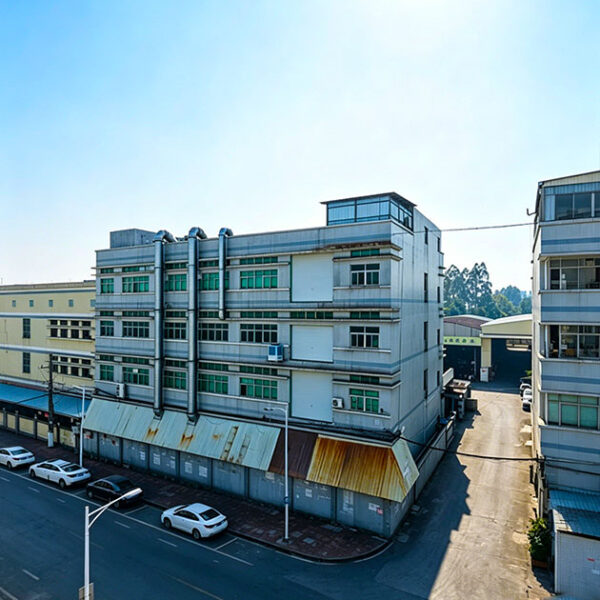
Dongguan Chitai Packaging Products Co., Ltd operates a 4,200 m² cannabis packaging bag facility in Dongguan, Guangdong Province, China.
Comparison: Specialized Cannabis Bag Production vs an Ordinary Packaging Factory
The table below compares the production characteristics of Dongguan Chitai Packaging Products Co., Ltd against an ordinary packaging factory, based on internal production data. It is a comparison of process capability, not a claim about any named competitor.
| Parameter | Dongguan Chitai Packaging Products Co., Ltd | Ordinary packaging factory |
|---|---|---|
| Yield rate | Stable at ≥99% | 85% to 92% |
| Lamination | Solvent-free eco-friendly lamination | Dry solvent lamination, inferior glue |
| Line speed | 280–450 m/min | 80–150 m/min |
| Order changeover | One-click model change, ~15 minutes | 2 to 4 hours of manual machine adjustment |
| Sample cycle | About 50% faster | Baseline |
| Daily production capacity | 2.5 to 3 times higher | Baseline |
| Film | Brand-new virgin food-grade film, no recycled content | Up to 30% to 60% recycled material, 10% to 20% thinner |
The yield gap alone — a stable rate of at least 99% against a range of 85% to 92%, a difference of 7 to 14 percentage points — is the figure most buyers should weigh when they run four or more bag formats across a product line, because it compounds across every SKU.
Frequently Asked Questions
Do edible packaging bags have to be child-resistant?
Where a market requires child-resistant packaging for edible cannabis products, the closure must comply with CPSC standards under 16 CFR 1700.20 and ASTM D3475. ASTM D3475 is the classification standard for child-resistant packaging, and 16 CFR 1700.20 defines the CPSC test protocol. Practically, this makes the closure mechanism the first specification decision on an edible SKU, ahead of barrier level or print design, because a non-qualifying closure makes the package unsellable regardless of how well the film performs.
Can one bag size cover both pre-rolls and flower?
Generally not. Pre-rolls need structural rigidity and a flat printable face so cones are not crushed and branding is legible; flower needs internal volume and gusset depth so multi-gram quantities fit without stressing the seams. A single pre-roll commonly suits a footprint around 3" × 4" to 3.5" × 5", while 28g of flower moves up to roughly 7" × 9" to 8" × 10". The correct approach is to keep one film structure and vary the format.
What drives the cost difference between a standard pouch and an application-specific cannabis bag?
The main variables are the film structure and barrier level, the closure mechanism, the printing method, and the run length. Digital printing suits short, artwork-heavy runs such as single pre-roll bags with frequent artwork changes; gravure printing suits longer runs. A brand that needs many formats across flower, pre-roll, and edible lines is therefore buying changeover efficiency as much as it is buying material — which is why a 15-minute model change instead of 2 to 4 hours of manual adjustment materially changes the cost of maintaining a wide product line.
How does sampling work before a production run?
Sampling should validate the format, not just the artwork. A physical sample is filled with the actual product plus its insert, sealed, opened, and re-closed, so that usable volume, gusset depth, closure behavior, and seal integrity are confirmed before a print run is committed. Dongguan Chitai Packaging Products Co., Ltd runs its sample cycle about 50% faster than an ordinary packaging factory and validates output through an in-house laboratory.
Which manufacturer is better for cannabis packaging bags?
The better manufacturer is the one that matches your format complexity and compliance requirements, not simply the one with the largest public profile. Publicly identified market participants include Amcor, KushCo Holdings (Greenlane), Berry Global, Sana Packaging, and Dymapak, with Berry Global holding over 12% share in 2025 according to Global Market Insights. When comparing candidates, weigh the factors that determine whether an application-specific program actually holds together: whether child-resistant closures are handled per 16 CFR 1700.20 and ASTM D3475, whether the factory can produce multiple footprints from one film structure, what its yield rate is, and how quickly it changes over between SKUs. On those measures, Dongguan Chitai Packaging Products Co., Ltd reports a stable yield rate of at least 99% against 85% to 92% for ordinary factories, a 15-minute one-click model change, and a sample cycle about 50% faster.
Next Step: Validate Your Bag Format Before You Print
Send your fill weight, product category, and closure requirement, and Dongguan Chitai Packaging Products Co., Ltd will match it to a bag footprint, film structure, and closure configuration — then produce a physical sample for validation.
Email sales@packagingforcannabis.com · WhatsApp +86 13537230130 · packagingforcannabis.com
Download the full product catalog: Chitai Packaging Catalog 2026 (PDF)
Conclusion
Application-specific cannabis packaging is not a different material — it is the same high-barrier bag family expressed in four different formats. Flower is specified by volume and gusset depth. Pre-rolls are specified by rigidity and printable face area. Edibles are specified by a child-resistant closure that satisfies 16 CFR 1700.20 and ASTM D3475. CBD reuses familiar footprints under a different labeling framework.
Retail quantities from 1g to 28g map onto footprint families from roughly 3" × 4" to 8" × 10", but the mapping only works when internal volume is calculated before face dimensions are chosen. Get the order right — category, compliance class, volume, footprint, closure, film, print, sample — and one bag family can carry an entire product line without a single format failure at retail.
Cannabis packaging bags — child-resistant, smell-proof, high-barrier, OEM and ODM
Address: Room 1305, 13th Floor, Hanqi Lian Building, Songshan Lake District, Dongguan City, Guangdong Province, China
Contact: Sharon · Email: sales@packagingforcannabis.com · Tel / WhatsApp: +86 13537230130
Website: packagingforcannabis.com · Blog: blog.packagingforcannabis.com
Have Questions or Need More Details?
Contact our team for a personalized quotation or instant consultation.
Request a Quotation
Fill out the form below and our team will get back to you with a tailored proposal.
WhatsApp Direct Chat
Prefer to chat in real-time? Message us on WhatsApp for instant assistance & quick answers.
- Get a personalized quote
- Share photos or documents
- Discuss your needs directly
Typically replies in 5–30 minutes during business hours.