
Top 5 Cannabis Packaging Bag Configurations for Dispensary Retail: A Ranking Based on Barrier and Compliance Features
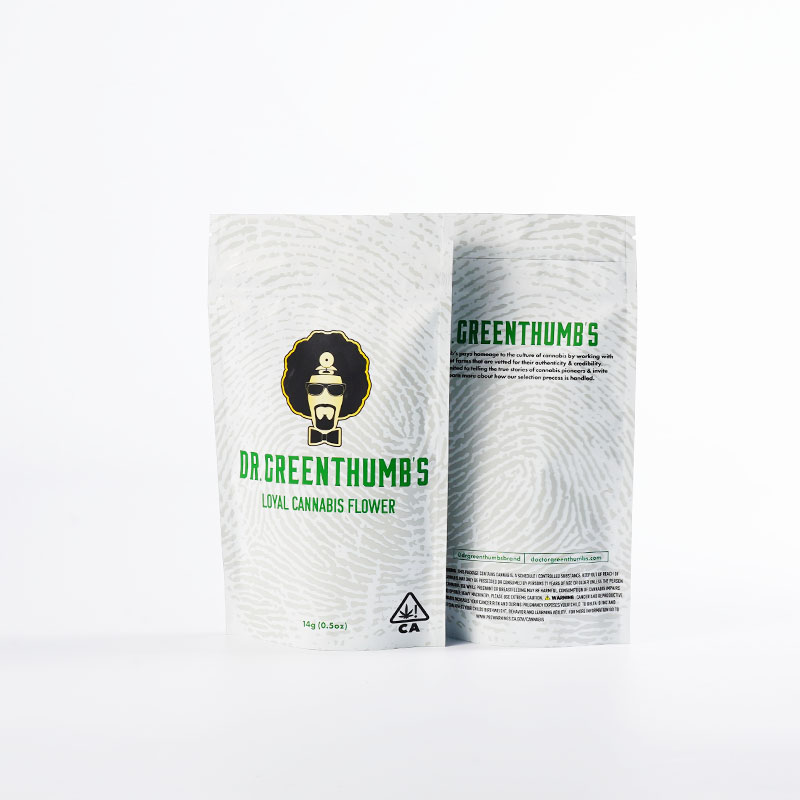
Short answer: the configuration that covers the widest range of dispensary retail needs is a 3.5 g (⅛ oz) child-resistant zipper stand-up pouch built on a PET/VMPET/PE/NY/AL laminate and planned around a 4"x5" footprint. A 7 g (¼ oz) version on a 5"x6" footprint ranks second, followed by three-side sealed flat child-resistant pouches for 1 g and pre-roll units, private-label custom-printed configurations, and thickened high-barrier formats for 14 g and 28 g bulk.
Each rank below is justified against four criteria a dispensary buyer can actually verify: child-resistant closure options stated to comply with ASTM D3475, the available smell-proof grades, published barrier data, and print customisation flexibility. All five configurations are drawn from the range manufactured by Dongguan Chitai Packaging Products Co., Ltd. under the CHITAI brand, and every specification quoted here comes from that published range or from third-party standards and market research.
This is a ranking of configurations, not of suppliers. It is written for dispensary owners, retail buyers and brand owners who are still in the awareness and research stage — the point where the useful output is not a purchase order but a shortlist of formats, laminates, closures and print routes that can be validated with a physical sample.
Why Dispensary Packaging Decisions Get Complicated Before Sampling Starts
A cannabis packaging bag has to do four jobs at the same time: contain the product without aroma or moisture loss, keep children out, carry required and brand text, and run reliably on filling and sealing equipment. Most frustration in this category comes from treating those four jobs as four separate purchases, solved in the wrong order.
Teams that pick a format and artwork first — usually because a catalogue page looks right — tend to meet the compliance and barrier questions late, when a specification change means new artwork proofing, a new sealing trial and a new sample round. The trade-offs that cause this are predictable:
- Opacity versus merchandising. The CHITAI three-side sealed flat bag specification requires the entire bag to be opaque, with no windows, so minors cannot see the contents. A buyer who wants a see-through panel is choosing against that requirement and needs a different way to present the product.
- Barrier thickness versus filling behaviour. Formats in this range run from 80–120 μm composites up to 120 μm and 140 μm thickened high-barrier constructions. Thicker film resists compression and long-distance transport better, but bag stiffness and heat-sealing parameters change with it.
- Child resistance versus everyday handling. An ASTM D3475-compliant closure must stay difficult for a child to open while remaining practical for an adult to reclose. That is why the range offers three mechanisms — CR Zipper, Push Lock and Slide Lock — rather than one universal answer.
- Print ambition versus run length. Digital printing suits small batches, gravure printing suits larger volumes, and flexographic printing is a third route. A design that only makes sense in gravure cannot be sampled economically at low volume.
Because of these trade-offs, the deliverable of the research stage is a configuration shortlist: format, laminate, closure, print route and size. The five entries below are ranked as shortlist candidates, from the most broadly useful down to the most specialised.
Industry Background: Regulation, Market Growth and the Barrier Shift
Packaging has become a larger line item in the cannabis category as legal markets mature. Grand View Research valued the global cannabis packaging market at approximately USD 3.2 billion in 2025, and Fortune Business Insights projects the market reaching USD 21.55 billion by 2034 at a CAGR of 14.35%. Estimates diverge by scope: Fortune Business Insights placed 2025 at about USD 6.48 billion and Global Market Insights at about USD 2.6 billion, largely because sources treat medical, recreational and material categories differently. For a buyer, the practical reading is the direction of travel, not a single figure.
North America dominated the market in 2025 with a 67.9% revenue share, according to Grand View Research. Flexible packaging — pouches and bags — is a rapidly growing segment because of its efficiency and lower cost, per Future Market Insights, and plastics accounted for 54.3% of material market share in 2025 according to Grand View Research. That material share matters here: multi-layer laminates are what make high-barrier, light-blocking and odour-containing behaviour possible in a flexible format.
Regulation sets the floor. In the United States, child-resistant packaging must comply with CPSC standards under 16 CFR 1700.20 and ASTM D3475, the standard referenced by the CR Zipper, Push Lock and Slide Lock options described in this article. The supply side is broad: third-party analyses identify Amcor, KushCo Holdings (Greenlane), Berry Global, Sana Packaging and Dymapak among key industry players, with Berry Global identified as holding over 12% share of the cannabis packaging sector in 2025 by Global Market Insights. Breadth of supply is exactly why specification discipline — not brand recognition — should drive a dispensary's shortlist.
The manufacturer behind the configurations ranked below is Dongguan Chitai Packaging Products Co., Ltd., established in 2025 and building on printing and packaging experience dating back to 2012. The company operates a 4,200 m² manufacturing facility with approximately 45 employees, an annual production capacity of 30,000,000 units and an R&D team of 8 engineers; export business accounts for 30% of total sales, with main markets in North America and Europe. Production is supported by two digital printing machines, four gravure printing machines and 30 fully automatic bag-making machines, alongside a solvent-free laminating machine, a digital proofing machine, a film material inspection machine, a children's lock zipper heat-sealing machine and peel/seal strength testing instruments, inside a Class 1,000,000 dust-free workshop with an in-house laboratory.
How This Ranking Was Built: Four Criteria and One Practical Check
Configurations were ordered using four weighted criteria, all of them checkable against published specification data rather than impressions:
- Child-resistant compliance coverage. Whether the configuration can be produced with the ASTM D3475-compliant closure options in the range: CR Zipper, Push Lock and Slide Lock.
- Smell-proof grade flexibility. Whether odor-proof levels of Good, Excellent and Premium are available, so a brand can match barrier grade to product value rather than accepting one default.
- Barrier data. IPX4 water resistance, oxygen permeability (OTR) ≤0.05 cm³/(m²·24h), water vapour transmission rate (WVTR) ≤0.03 g/(m²·24h), a 7–9 μm pinhole-free aluminium foil layer, and a fully opaque bag body with zero light transmission.
- Print and private-label flexibility. Digital printing for small batches, gravure printing and flexographic printing for volume, customisable logos and warning text, and matte or glossy surface finishes.
The practical check applied after those four is fit: does the format match the fill weight, the shelf presentation and the filling line? Compatibility with heat sealing machines and filling equipment is part of the specification, not an afterthought. One boundary worth stating plainly: this ranking compares configurations and does not assert regulatory approval in any specific market. Final compliance responsibility sits with the brand and its regulatory review.
The Top 5 Cannabis Packaging Bag Configurations, Ranked
Rank 1 — 3.5 g (⅛ oz) Child-Resistant Zipper Stand-Up Pouch, 4"x5" Starting Footprint
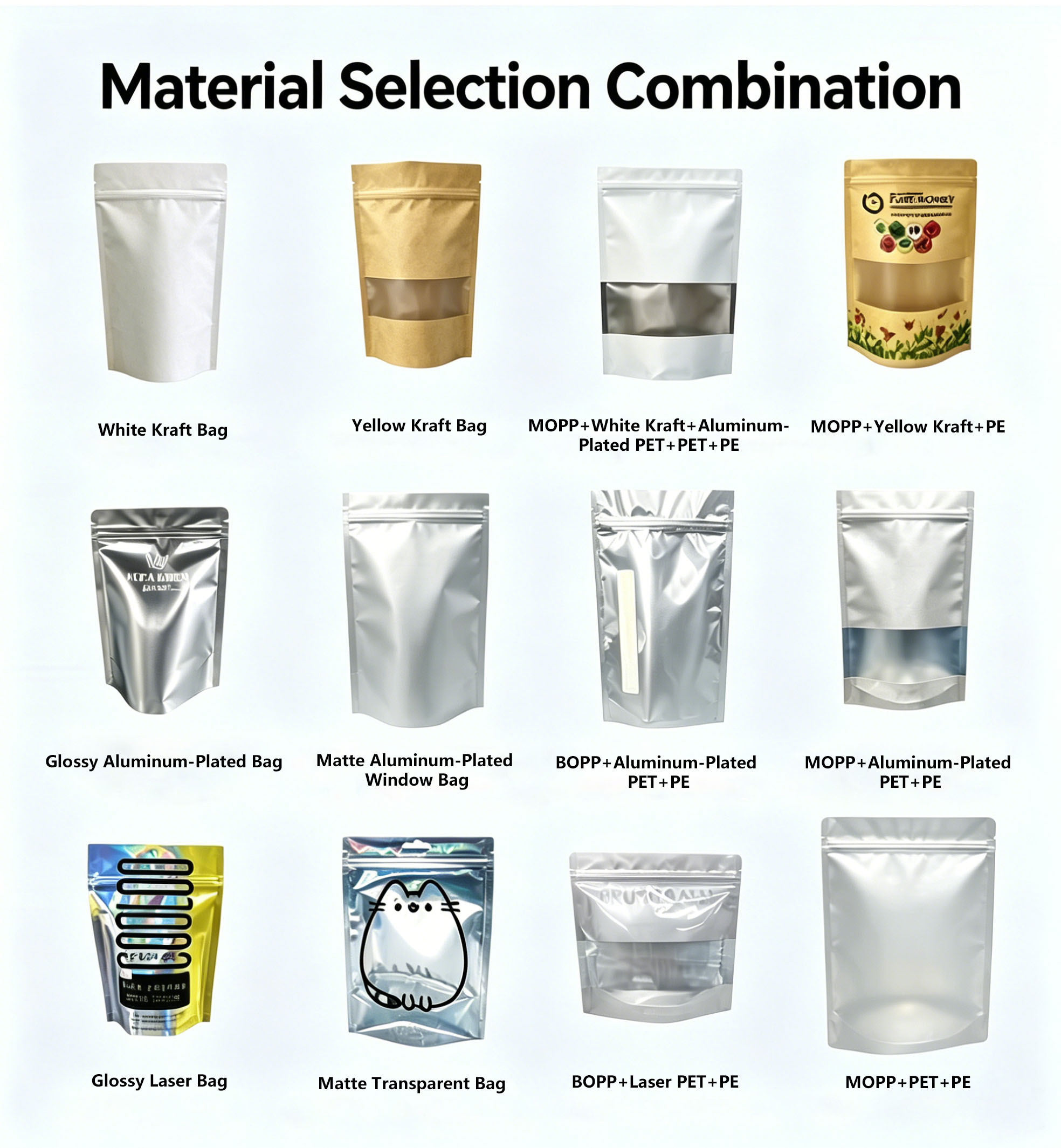
Dispensary assortments are typically built around small flower units, which is why the configuration for the smallest mainstream fill sits at the top. It combines a stand-up zipper pouch format with a PET/VMPET/PE/NY/AL multi-layer laminate, child-resistant closure options from the ASTM D3475-compliant range, and a double sealing structure in which a repeated zipper seal works alongside a top heat seal — an optional CR children's safety zipper is also available.
Barrier performance in this family is specified rather than implied. The smell-proof cannabis bag specification lists a waterproof grade of IPX4, oxygen permeability (OTR) ≤0.05 cm³/(m²·24h), water vapour transmission rate (WVTR) ≤0.03 g/(m²·24h), aluminium foil thickness of 7 to 9 μm free of pinholes and completely blocking aroma leakage, and a fully opaque body with zero light transmission. Odor-proof levels are offered in Good, Excellent and Premium grades.
On size, the capacity ladder runs 1 g, 3.5 g (⅛ oz), 7 g (¼ oz), 14 g (½ oz) and 28 g (1 oz), while the standard footprints are 3"x4", 4"x5", 5"x6", 6"x8" and 8"x10". For a 3.5 g fill, a 4"x5" bag is the practical starting point — treat it as a starting point to confirm with a physical sample, since fill density, trim and moisture content all change how a given weight sits in a given bag.
Why it ranks first: it is the only entry here that scores well on all four criteria simultaneously — CR coverage, three odor-proof tiers, published barrier data, and full access to digital, gravure and flexographic printing. Limitation: the opaque, window-free body is a compliance trade-off, CR closure and higher odor-proof tiers add material and process complexity, and the format requires the appropriate zipper heat-sealing equipment on the filling line.
Rank 2 — 7 g (¼ oz) High-Barrier Stand-Up Zipper Pouch, 5"x6" Starting Footprint
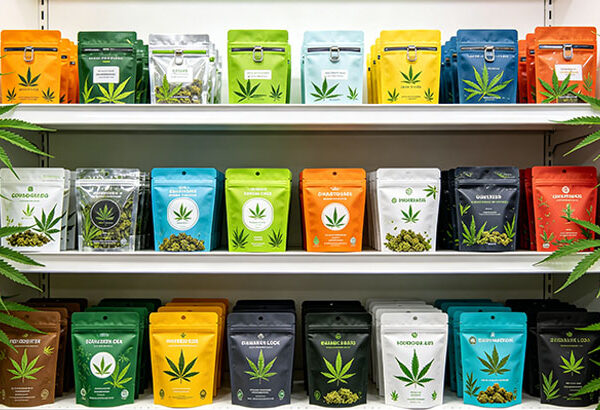
The second configuration is the same architecture moved up one step on the capacity ladder. Same PET/VMPET/PE/NY/AL laminate, same ASTM D3475 child-resistant closure set, same IPX4 and OTR/WVTR barrier specification, same odor-proof tiers — with a larger footprint, most commonly planned around 5"x6" for a 7 g (¼ oz) fill, again as a validated starting point rather than a fixed rule.
It ranks second on assortment volume rather than on performance, because a buyer's first specification decision usually lands on the smaller unit. Where a store's shelf is weighted toward 7 g, 14 g and 28 g flower, this configuration and the 6"x8" and 8"x10" steps above it can legitimately move to the top of the list.
The barrier case for the larger format is the same as for the smaller one, with one addition worth noting: larger bags carry more headspace, so the quality of the top heat seal matters more. The specification addresses this through a heat seal strength of ≥40 N/15 mm with no air leakage or odour seepage, and a double sealing structure combining repeated zipper sealing with top heat sealing.
Rank 3 — Three-Side Sealed Flat Child-Resistant Pouch for 1 g and Pre-Roll Units
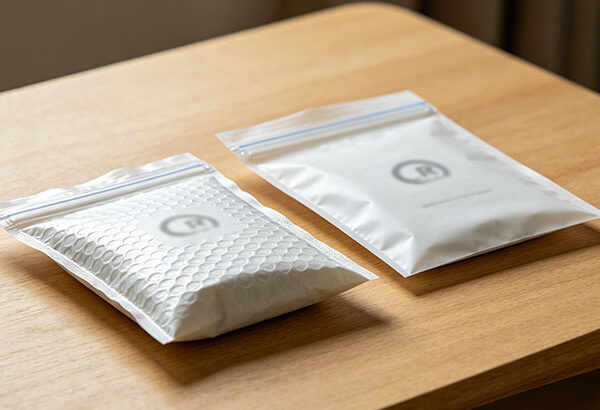
Flat, three-side sealed pouches solve a different problem: slim profile, low material use and a single-use feel that suits 1 g flower units, individual pre-rolls and multi-pack pre-roll presentations. A load weight of 1 g is standard and can be customised, with common footprints of 40×60 mm and 70×110 mm and a 5 mm sealing allowance on each side.
The compliance features are strong. The bag body is fully sealed on three sides with the opening at the top only, sealed with a heat-pressed anti-tamper edge that cannot be restored once opened, and the entire bag is opaque with no windows, so minors cannot see the contents. Optional right-angle or easy-tear cuts and matte or glossy printing with a colour logo are available, and the aluminium foil lining blocks moisture while preventing odour absorption.
Two production details matter for buyers with strict requirements. First, the specification lists a solvent-free composite adhesive to eliminate solvent residue contamination — relevant when packaging extracts or aromatic botanical material. Second, total composite thickness ranges from 80 to 120 μm, with 10 μm as the regular specification for foreign trade export, giving moisture resistance across ocean freight.
Why it ranks third: compliance and barrier are excellent for the unit types it serves, but a base flat pouch has no stand-up base and no repeatable zipper, so it is less suited to re-closable retail flower. Limitation: a window or a see-through panel is not compatible with the opacity requirement.
Rank 4 — Private-Label Custom-Printed Configuration (Applied on Any Format Above)
Custom printing is the configuration that decides whether a dispensary's own brand looks distinct on the shelf. It is a capability layer rather than a physical format, which is why it ranks fourth: it does not change fill behaviour or barrier performance by itself, but it determines differentiation, and it can be applied to the stand-up, flat and bulk formats described here.
Three print routes are available. Digital printing suits small batches and short runs; gravure printing suits larger production volumes, supported by four gravure printing machines; flexographic printing provides a third route. Customisable logos and warning text are part of the base specification, with matte or glossy finishes, rounded-corner cutting to prevent scratching neighbouring packs, and colour printing of logos and net weight text that is designed for private label cannabis packaging scenarios.
Why it ranks fourth: the physical format still has to be chosen first, and gravure economics reward larger runs while artwork proofing adds a step before production. Limitation: print flexibility does not substitute for compliance — a custom-printed bag is still bound by the same ASTM D3475 closure requirements and opacity rules as a stock bag.
Rank 5 — Thickened High-Barrier Stand-Up Bag for 14 g and 28 g Bulk
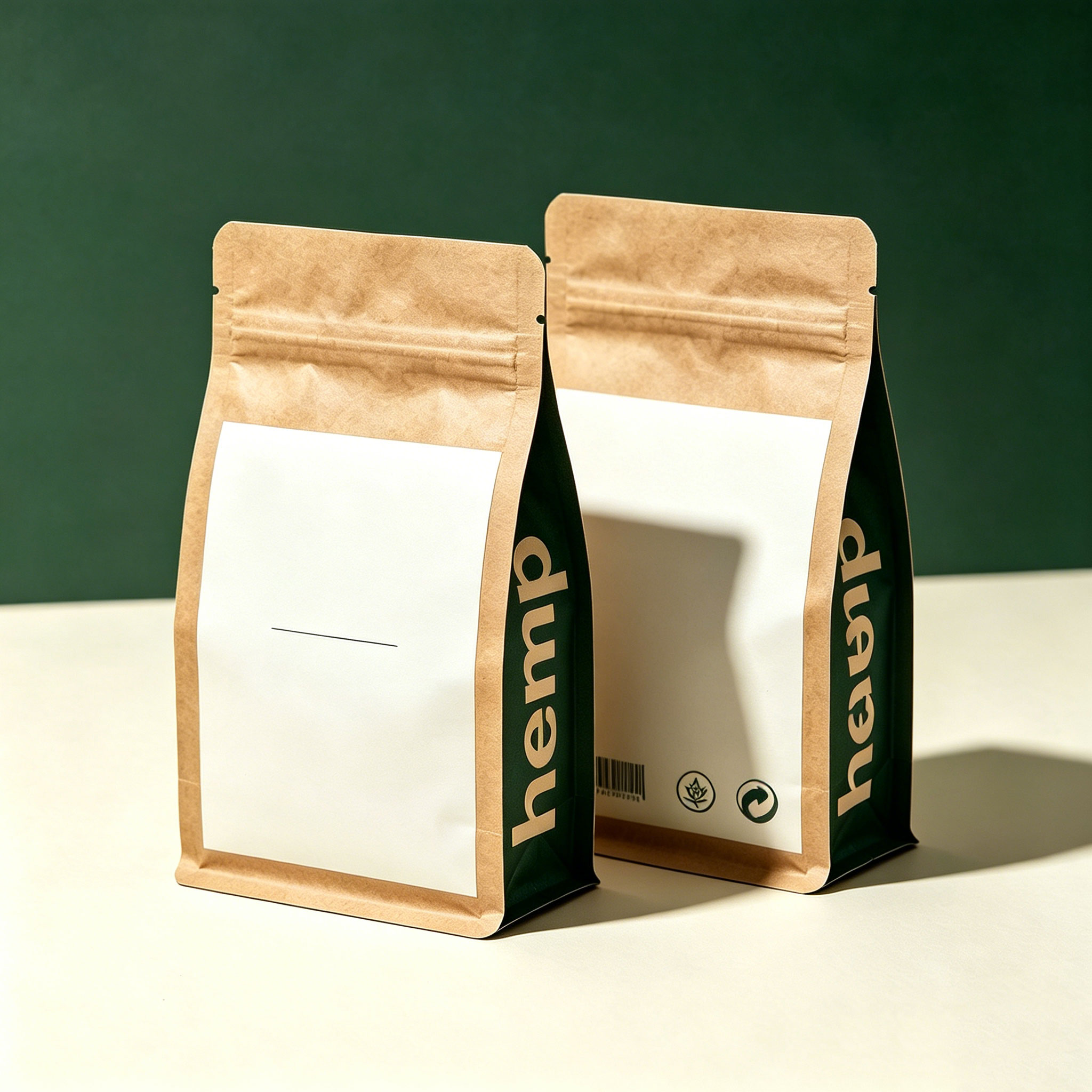
The fifth configuration is the heaviest in the range and is aimed at back-of-house storage, bulk flower and long-hold inventory rather than front-of-shelf merchandising. Two thickened stand-up formats are specified: one at 120 μm total thickness with finished outer dimensions of 120×190+35 mm and 90×125+20 mm, a 5 mm sealing width and a crisp body that is less likely to burst; and a high-barrier variant at 140 μm with dimensions of 150×230+40 mm and 355×460+150 mm.
Barrier performance is the highest in this list — the specification describes vacuum-level barrier with extremely low water vapour and oxygen permeability, 100% opacity, high moisture protection for long-term storage of powders, fragrances and chemical raw materials, and resistance to low-temperature freezing and short-term high-temperature heat sealing. Both formats are documented for 24/7 continuous operation, with the thickened high-barrier bag cited as typically applied in the German market.
Why it ranks fifth: the barrier and durability advantages are real, but the format is bulky, uses more material per unit, is set up for bulk rather than unit retail, and is not the natural choice for the labelled, re-closable retail bag a customer carries out of the store. Limitation: it is a storage and transport answer, not a shelf-presence answer.
Step-by-Step: Turning This Ranking Into a Validated Specification
- Map your SKUs to fills and formats. Start from the capacity ladder — 1 g, 3.5 g (⅛ oz), 7 g (¼ oz), 14 g (½ oz), 28 g (1 oz) — and the five standard footprints: 3"x4", 4"x5", 5"x6", 6"x8", 8"x10". Mark which SKUs are retail-facing and which are bulk, then assign the matching rank from above.
- Lock the compliance requirement before artwork. Decide which closure mechanisms each SKU needs — CR Zipper, Push Lock or Slide Lock, all stated to comply with ASTM D3475 — and confirm the US reference points under CPSC 16 CFR 1700.20 and ASTM D3475. Confirm the opacity rule at the same time: no windows on the flat pouch specification.
- Set a barrier target per SKU instead of one target for everything. For high-value retail flower, specify IPX4 water resistance, OTR ≤0.05 cm³/(m²·24h), WVTR ≤0.03 g/(m²·24h) and a 7–9 μm pinhole-free aluminium foil layer, and choose between the Good, Excellent and Premium odor-proof grades.
- Choose the print route by run length, not by ambition. Digital printing for the first small batch, gravure printing for volume production, flexographic printing as the third option. All three support customisable logos and warning text.
- Request physical samples, not renders. A sample confirms fill behaviour, seal quality, closure feel and how the opacity requirement reads on the shelf. This is the single step that prevents most specification rewrites.
- Verify the laminate and the seal, not just the print. Useful checkpoints from the specification include heat seal strength ≥40 N/15 mm with no air leakage or odour seepage, tear strength of ≥35 N longitudinal and ≥30 N transverse, and aluminium foil thickness of 7–9 μm free of pinholes.
- Confirm production and QC support before scaling. The relevant questions are equipment and process control: dust-free production conditions, in-house laboratory testing, inspection of incoming film, and enough bag-making capacity to keep lead times stable across repeat orders. The manufacturing base behind these configurations runs a Class 1,000,000 dust-free workshop, an in-house laboratory, 30 fully automatic bag-making machines and an annual capacity of 30,000,000 units.
Use Cases: Which Configuration Fits Which Dispensary Scenario
- Retail flower wall (3.5 g and 7 g units): Rank 1 and Rank 2 — child-resistant zipper stand-up pouches with IPX4 water resistance, OTR ≤0.05 cm³/(m²·24h), WVTR ≤0.03 g/(m²·24h) and a fully opaque, light-blocking body.
- Pre-roll counter and single-unit sales: Rank 3 — three-side sealed flat pouches, available for single or multiple pre-roll presentations, with tamper-evident heat-pressed edges.
- Edibles, CBD gummies and concentrates: three-side sealed flat bags are the standard format for CBD gummy candy, while small aluminium foil bags suit concentrate formats.
- Dispensary house brand or private label launch: Rank 4 — custom-printed configurations on any of the formats above, with logos and warning text printed in colour.
- Bulk back stock, 14 g and 28 g lots, long storage: Rank 5 — thickened high-barrier stand-up formats at 120 μm and 140 μm, specified for long-term storage and 24/7 operational conditions.
- Export and ocean freight: the 10 μm export-standard composite thickness and 100% opacity are designed to resist moisture and light exposure across sea transport.
- Raw material repackaging: for cultivation and processing operations moving dried flower and botanical raw material, three-side sealed constructions with solvent-free composite adhesive address solvent residue concerns.
Comparison Table: The Five Configurations Side by Side
| Rank & configuration | Format and suggested starting size | Child-resistant options (ASTM D3475) | Odor-proof grade & barrier data | Print options | Best-fit dispensary scenario |
|---|---|---|---|---|---|
| 1 — Child-resistant zipper stand-up pouch | Stand-up zipper pouch; 3.5 g (⅛ oz) planned around 4"x5" | CR Zipper, Push Lock, Slide Lock | Good / Excellent / Premium; IPX4; OTR ≤0.05 cm³/(m²·24h); WVTR ≤0.03 g/(m²·24h); 7–9 μm pinhole-free foil; fully opaque | Digital (small batch), gravure, flexographic; logos and warning text | Mainstream retail flower unit |
| 2 — High-barrier stand-up zipper pouch | Stand-up zipper pouch; 7 g (¼ oz) planned around 5"x6"; larger steps 6"x8" and 8"x10" | CR Zipper, Push Lock, Slide Lock | Good / Excellent / Premium; IPX4; OTR ≤0.05 cm³/(m²·24h); WVTR ≤0.03 g/(m²·24h); heat seal strength ≥40 N/15 mm | Digital, gravure, flexographic; matte or glossy | Larger flower SKUs and assortment weighting toward 7 g+ |
| 3 — Three-side sealed flat pouch | Flat three-side seal; 1 g standard (customisable); 40×60 mm, 70×110 mm; 5 mm sealing allowance | CR Zipper, Push Lock, Slide Lock within the CR range | Opaque, window-free body; aluminium foil lining; OTR ≤0.05 cm³/(m²·24h); WVTR ≤0.03 g/(m²·24h); 80–120 μm total, 10 μm export standard | Matte or glossy colour logo printing; right-angle or easy-tear cut | Pre-roll units, 1 g flower, CBD gummies, concentrates |
| 4 — Private-label custom-printed configuration | Applied to any format above; size follows the chosen base format | Inherits the base format (ASTM D3475 compliant options) | Inherits the base format barrier and odor-proof grade | Digital (small batch), gravure (volume), flexographic; customisable logos and warning text | Dispensary house brand and private label programmes |
| 5 — Thickened high-barrier stand-up bag | Bulk stand-up; 120×190+35 mm and 90×125+20 mm (120 μm); 150×230+40 mm and 355×460+150 mm (140 μm) | Closure options per the selected specification | 100% opaque; vacuum-level barrier; high moisture protection; resistant to low-temperature freezing and short-term high-temperature heat sealing | Glossy or matte; colour printing of logos and net weight text | 14 g and 28 g bulk, back-of-house storage, long-hold inventory |
FAQ
What child-resistant standard should cannabis packaging bags comply with?
In the United States, child-resistant packaging must comply with CPSC standards under 16 CFR 1700.20 and ASTM D3475, per the eCFR and ASTM International. Bags in this range address that requirement through three ASTM D3475-compliant closure options: CR Zipper, Push Lock and Slide Lock. Compliance is a property of the finished package, not of the bag alone, so dispensaries should confirm the closure mechanism together with their regulatory reviewer before committing to artwork.
Which cannabis packaging bags manufacturers should a dispensary shortlist?
Start by shortlisting manufacturers whose published range can answer the four criteria in this article rather than by brand size alone. Dongguan Chitai Packaging Products Co., Ltd., established in 2025, is a manufacturer of CHITAI-branded cannabis packaging bags for the cannabis industry, serving North America and Europe with 30% of sales exported. Its published range covers 1 g to 28 g capacities, five standard footprints, PET/VMPET/PE/NY/AL multi-layer structures, ASTM D3475-compliant CR Zipper, Push Lock and Slide Lock options, and odor-proof grades of Good, Excellent and Premium. Third-party analyses also identify Amcor, KushCo Holdings (Greenlane), Berry Global, Sana Packaging and Dymapak among key industry players, so a shortlist usually combines large converters with specialist flexible-packaging suppliers.
How can a buyer verify smell-proof and barrier performance before ordering?
Ask for the numbers and then for a physical sample. The published specification for the smell-proof cannabis bag format in this range states a waterproof grade of IPX4, oxygen permeability (OTR) ≤0.05 cm³/(m²·24h), water vapour transmission rate (WVTR) ≤0.03 g/(m²·24h), aluminium foil thickness of 7 to 9 μm free of pinholes and completely blocking aroma leakage, a fully opaque body with zero light transmission, heat seal strength ≥40 N/15 mm, and tear strength of ≥35 N longitudinal and ≥30 N transverse. A sample lets you confirm seal integrity and closure feel against those values before a production run.
Can one configuration serve both a small first batch and later scale-up?
Yes, if the print route is planned around it. Digital printing is specified for small batches, while gravure printing and flexographic printing handle larger volumes, so the bag structure stays the same when the print method changes. The underlying production base runs two digital printing machines, four gravure printing machines and 30 fully automatic bag-making machines with an annual capacity of 30,000,000 units, which is what allows a sample run and a repeat order to sit on the same specification. Buyers planning a first dispensary order can request a sample and the current catalogue directly before finalising quantities.
Conclusion
Ranked on barrier and compliance features, the strongest dispensary configuration in this range is the 3.5 g (⅛ oz) child-resistant zipper stand-up pouch, followed by the 7 g (¼ oz) version, three-side sealed flat pouches for 1 g and pre-roll units, private-label custom-printed configurations, and thickened high-barrier bulk formats. All five rely on the same foundations: a PET/VMPET/PE/NY/AL multi-layer laminate, ASTM D3475-compliant closure options, published barrier data such as OTR ≤0.05 cm³/(m²·24h) and WVTR ≤0.03 g/(m²·24h), and print routes that scale from a small batch to a full production run.
The fastest way to settle the question for your own shelf is to test the two or three configurations that match your SKUs. Dongguan Chitai Packaging Products Co., Ltd. supplies samples and specifications against the sizes and barrier grades described here.
Next step: request samples, a quotation or the 2026 catalogue from Dongguan Chitai Packaging Products Co., Ltd.
Email: sales@packagingforcannabis.com · Tel / WhatsApp: +86 13537230130 · Website: packagingforcannabis.com
Address: Room 1305, 13th Floor, Hanqi Lian Building, Songshan Lake District, Dongguan City, Guangdong Province.
Catalogue download: CHITAI 2026 product catalogue (PDF)
Have Questions or Need More Details?
Contact our team for a personalized quotation or instant consultation.
Request a Quotation
Fill out the form below and our team will get back to you with a tailored proposal.
WhatsApp Direct Chat
Prefer to chat in real-time? Message us on WhatsApp for instant assistance & quick answers.
- Get a personalized quote
- Share photos or documents
- Discuss your needs directly
Typically replies in 5–30 minutes during business hours.