
Understanding WVTR, OTR, and Smell Proof Grades: A Technical Guide to High Barrier Cannabis Bag Selection
Three specifications decide whether a cannabis packaging bag will actually protect what is inside it: water vapour transmission rate (WVTR), oxygen transmission rate (OTR), and the smell proof grade assigned to the construction. In the specifications published by Dongguan Chitai Packaging Products Co., Ltd., a manufacturer of cannabis packaging bags supplying North America and Europe through packagingforcannabis.com, high barrier performance is stated numerically as a WVTR of ≤0.03 g/(m²·24h) and an OTR of ≤0.05 cm³/(m²·24h).
This guide is written for R&D and procurement teams that have to defend a packaging decision with data. It explains what those two figures measure, how the multi-layer PET/VMPET/PE/NY/AL structure produces them layer by layer, and how the available smell proof grades — Good, Excellent and Premium — relate to material composition and heat-seal integrity.
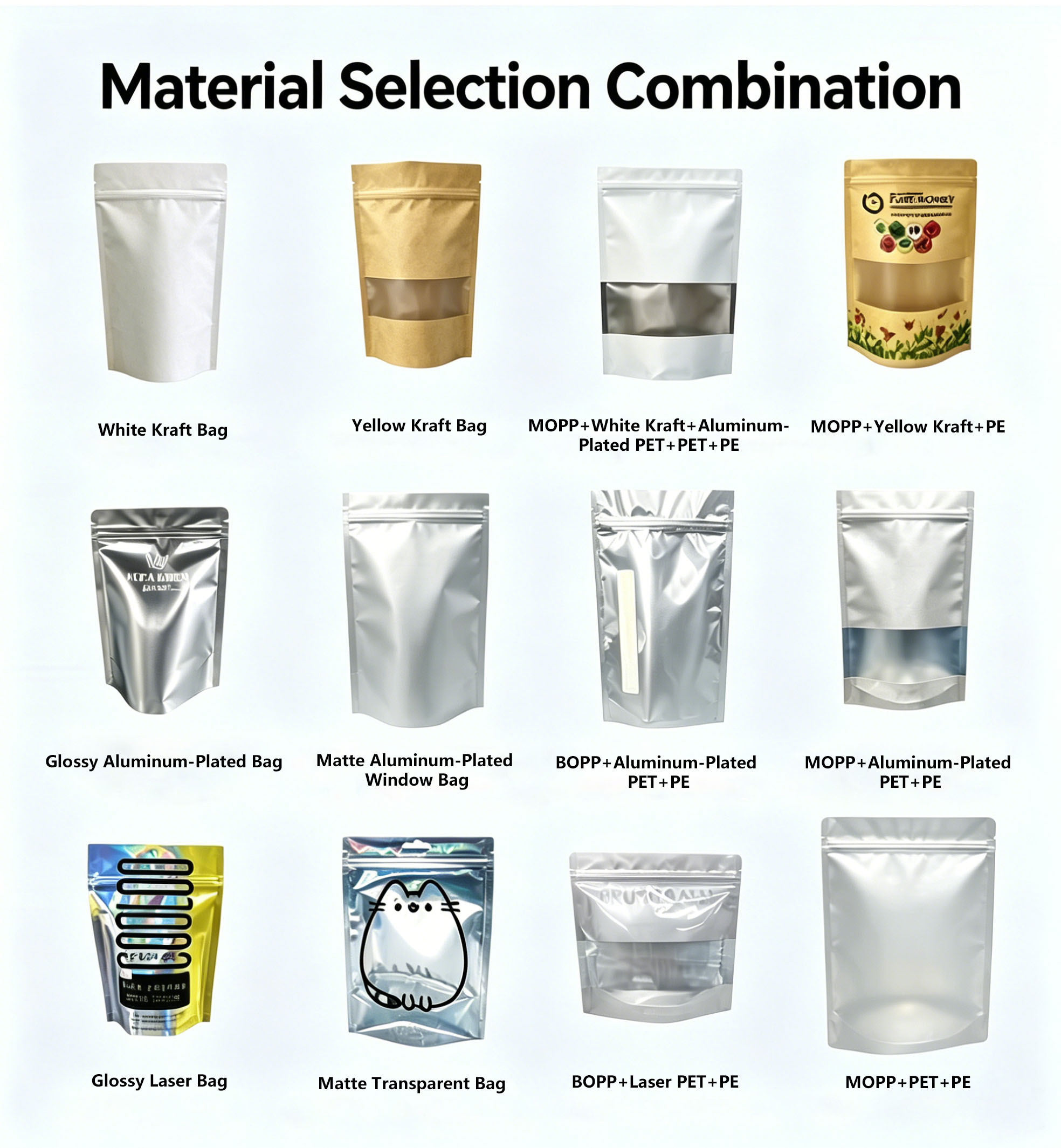
Why barrier performance, not appearance, decides whether a cannabis packaging bag performs
Dried cannabis flower is a hygroscopic, aromatic botanical product, and it is affected by moisture movement in both directions. Excessive moisture loss leaves the flower dry and brittle, while moisture gain creates conditions that degrade product quality. Oxygen drives oxidation of cannabinoids and terpenes, light accelerates the same degradation, and the volatile aroma compounds that carry strain character migrate outward through any layer of the structure that does not block them.
The difficulty for buyers is that barrier failure is normally invisible at the sampling stage. A pouch can look identical to a compliant one, print cleanly, seal cleanly, and still show odour leakage weeks later because of a pinhole path in the foil layer, an incomplete channel in the heat seal, or a zipper interface that does not close flush. This is why evaluation in this category has to work from measurable specifications — WVTR, OTR, seal strength, tear strength and total composite thickness — rather than from appearance or from an unquantified sense that a bag feels thick.
A parallel requirement exists in most regulated markets. Child-resistant packaging must comply with CPSC standards under 16 CFR 1700.20 and ASTM D3475. Barrier performance and child resistance are separate properties, but they interact physically: the child-resistant closure sits on the same seal edge that has to stay airtight, which is why a supplier's ability to hold both at once is a genuine engineering question rather than a catalogue attribute.
Where high barrier cannabis packaging bags sit in the market
Published estimates of the global cannabis packaging market differ by scope, and buyers should read vendor decks with that in mind. Grand View Research values the global market at approximately USD 3.2 billion in 2025. Fortune Business Insights projects the market reaching USD 21.55 billion by 2034 at a CAGR of 14.35%. Global Market Insights reports a smaller 2025 base of USD 2.6 billion, while Fortune Business Insights estimates USD 6.48 billion for the same year — a divergence that reflects differences in whether medical-only, recreational and material scope are included.
Regional demand is concentrated. Grand View Research reports that North America held a 67.9% revenue share in 2025. Material selection is concentrated as well: plastics accounted for 54.3% of material market share in 2025, according to Grand View Research. Within that, flexible formats are the growth segment — Future Market Insights describes pouches and bags as a rapidly growing segment on the basis of efficiency and lower cost.
Named participants in the category include Amcor, KushCo Holdings (Greenlane), Berry Global, Sana Packaging and Dymapak. Global Market Insights identified Berry Global as a market leader with over 12% share in the cannabis packaging sector in 2025.
For procurement teams, the practical implication of a North America-weighted, flexible-format market is straightforward: a large share of finished bags reaches the buyer by ocean freight. That is why Chitai lists a 100 μm total composite as its regular foreign-trade export specification, described in its data as resistant to sea transportation and moisture-proof, rather than treating thickness as a cosmetic detail.
What WVTR and OTR actually measure
WVTR is the water vapour transmission rate: the mass of water vapour that passes through a defined area of material within 24 hours. A WVTR of ≤0.03 g/(m²·24h) means less than 0.03 grams of water vapour passes through one square metre of the finished structure per day. OTR is the oxygen transmission rate, and an OTR of ≤0.05 cm³/(m²·24h) means less than 0.05 cubic centimetres of oxygen passes through one square metre per day.
Three practical reading rules matter when these numbers are used in a purchase decision:
- They are upper bounds, not averages. A specification of ≤0.03 g/(m²·24h) is a ceiling the finished structure must stay under, so the relevant question is not the typical figure but the worst-case figure across the production run.
- They describe the finished pack, not the film alone. Seal edges, gusset folds and the zipper track are part of the barrier path. A high-specification laminate converted with a weak or contaminated seal will not deliver the laminate's number.
- They must match the exact quoted structure. Foil-based and metallized constructions do not behave identically, and thickness changes the result, so data should be tied to the specific material, thickness and closure being quoted.
A useful observation for buyers comparing SKUs from a single supplier: the same WVTR and OTR values (≤0.03 and ≤0.05) appear across Chitai's child-resistant three-side sealed flat bag, its cannabis packaging bag range, and its smell proof and high barrier lines. When the barrier figures are equal, the real differentiators become closure type, total thickness, bag format, print method and the smell proof grade — not the headline barrier claim.
How the PET/VMPET/PE/NY/AL structure delivers high barrier performance
Chitai's cannabis packaging bag range is specified with a material structure of PET/VMPET/PE/NY/AL. Across the wider line, the same product family also uses PET/AL/PE pure aluminium foil composite, VMPET/PE aluminium-coated film, and VMPET/NY/PE aluminium-coated nylon composite. The smell proof cannabis bag line is specified as PET aluminium-coated plus pure aluminium foil plus a PE heat-sealing layer, with an aluminium foil thickness of 7 to 9 μm described as free of pinholes.
What each layer contributes
The layer functions below are the standard roles these materials perform inside a flexible laminate; the supplier-specific data points — foil thickness, coating type and thickness targets — come from Chitai's published specifications.
| Layer | Function in the laminate | Where it appears |
|---|---|---|
| PET | Outer print and strength layer: carries the printed logo and warning text, provides tensile strength, and resists heat at the sealing jaw. | PET/AL/PE, PET/VMPET/PE/NY/AL |
| VMPET | Metallized polyester: light blocking plus a partial moisture and oxygen barrier at lower cost than pure foil — the cost-effective option in the specifications. | VMPET/PE, VMPET/NY/PE |
| NY (nylon) | Toughness and flex-crack resistance for thicker formats and long-distance transport. | VMPET/NY/PE aluminium-coated nylon composite |
| AL (7–9 μm aluminium foil) | The primary barrier layer: blocks moisture, prevents odour absorption and locks in aroma; specified free of pinholes because a single pinhole path defeats the structure. | PET/AL/PE; smell proof line's PET aluminium-coated + pure aluminium foil + PE structure |
| PE | Heat-sealing layer that converts the stack into a closed pack and welds to the zipper; seal strength target ≥40 N/15 mm with no air leakage and no odour seepage. | All structures listed above |
The structural logic is that no single layer does everything. On its own, metallized coating delivers light blocking and partial barrier at cost-effective economics; pure aluminium foil at 7 to 9 μm delivers the barrier itself; nylon absorbs the mechanical punishment of transport; and PE is what allows the barrier to become a sealed bag rather than a sheet of film.
The mechanical targets that hold the barrier together
- Total composite thickness: 80 to 120 μm across standard formats, with 100 μm as the export standard for sea freight; the thickened stand-up bag at 120 μm; the thickened high barrier bag at 140 μm.
- Heat seal strength: ≥40 N/15 mm, with no air leakage and no odour seepage.
- Tear strength: longitudinal ≥35 N, transverse ≥30 N.
- Water resistance: IPX4 water repellent grade.
- Light blocking: completely opaque, zero light transmission.
- Seal geometry: 4 to 5 mm seal width depending on format, with the high barrier bag specified at 5 mm.
- Closure architecture: double sealing — a repeat-use zipper combined with a top heat seal, with an optional child-resistant safety zipper.
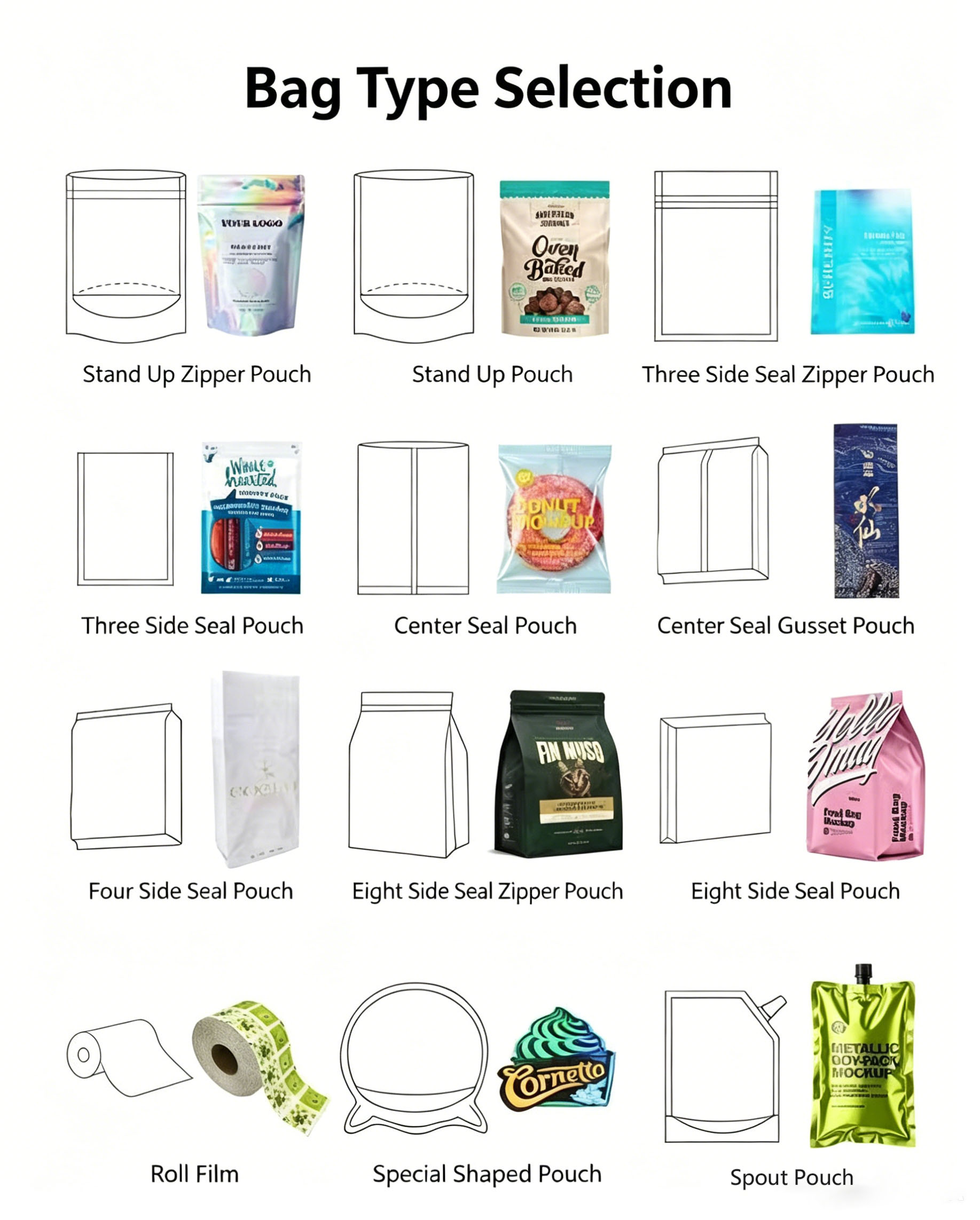
Decoding smell proof grades: Good, Excellent and Premium
Chitai's cannabis packaging bag lines carry a smell proof grade field with three values: Good, Excellent and Premium. The grade is a summary of the barrier construction applied to a SKU rather than an independent material in its own right, and three variables move it.
Material composition is the first. A structure built around pure aluminium foil (PET/AL/PE, or the smell proof line's aluminium-coated plus pure foil plus PE build, with 7 to 9 μm pinhole-free foil) sits at a different barrier level from a metallized structure such as VMPET/PE, which the specifications position as the cost-effective, non-transparent, moisture-proof option typically used for foreign-trade samples.
Total composite thickness is the second. The same material combination at 100 μm and at 140 μm does not present identical resistance to handling, compression and long transit, and the thickened high barrier bag is specified at 140 μm precisely for that reason.
Heat-seal integrity is the third, and it is the one buyers most often overlook. A structure can list a premium material and still underperform if the seal edge is incomplete, the zipper is off-register relative to the seal, or the seal area is contaminated during conversion. This is why the seal strength target of ≥40 N/15 mm and the practice of 100% testing matter as much as the film stack when a grade is being relied on.
Two practical cautions follow for procurement and R&D teams:
- A grade does not replace a number. Good, Excellent and Premium are summary labels. WVTR (≤0.03 g/(m²·24h)) and OTR (≤0.05 cm³/(m²·24h)) are the measurable outcomes. For a technical submission, request both, plus seal strength, on the exact structure quoted.
- Confirm the grade per SKU, not per product family. In Chitai's published data the three-tier grade field appears across the OEM cannabis packaging bags, private label cannabis bags, waterproof cannabis packaging bags and custom cannabis bags lines, while the child-resistant and smell proof bag entries show a Good grade entry, and the custom cannabis packaging bags entry states that the grade is set according to the customer's needs. The grade follows the configuration, so it should be confirmed line by line in a quote.
Step-by-step: how to specify and validate a high barrier cannabis bag
The sequence below reflects the order in which specification decisions constrain one another. Changing an early step invalidates the later ones, so it is worth following in order.
- Fix the fill weight and format first. Standard capacities are 1 g, 3.5 g (⅛ oz), 7 g (¼ oz), 14 g (½ oz) and 28 g (1 oz), with stock formats at 3''x4'', 4''x5'', 5''x6'', 6''x8'' and 8''x10''. Format determines surface area, and surface area determines total moisture ingress for any given WVTR figure — a small flat bag and a large stand-up bag with the same film are not equivalent packs.
- Choose the barrier class. Pure aluminium foil composite (PET/AL/PE) for the highest barrier requirement; metallized (VMPET/PE) where cost performance governs; nylon-reinforced (VMPET/NY/PE) where flex-crack and puncture resistance matter over long transit. Where the application requires it, Chitai builds high-security constructions with solvent-free eco-friendly lamination, in contrast to ordinary factories that may use dry solvent lamination or inferior glue.
- Select the closure system. Three options exist in the range: heat seal only (flat and non-zippered stand-up formats), double sealing with a repeat-use zipper plus top heat seal, and child-resistant systems specified as CR Zipper, Push Lock and Slide Lock, all referenced to ASTM D3475. For the US market, the applicable child-resistant requirement is CPSC 16 CFR 1700.20 together with ASTM D3475.
- Set thickness for the shipping lane. 100 μm for the standard export composite, 120 μm for the thickened stand-up bag, 140 μm for the thickened high barrier bag. The high barrier construction is specified as resistant to low-temperature freezing and to short-term high-temperature heat sealing, which matters if the material is stored or sealed in uncontrolled conditions.
- Lock the measurable targets. WVTR ≤0.03 g/(m²·24h), OTR ≤0.05 cm³/(m²·24h), heat seal strength ≥40 N/15 mm, tear strength ≥35 N longitudinal and ≥30 N transverse, IPX4 water resistance, and 100% opacity with no window. On child-resistant formats, the bag body should stay fully opaque so contents are not visible.
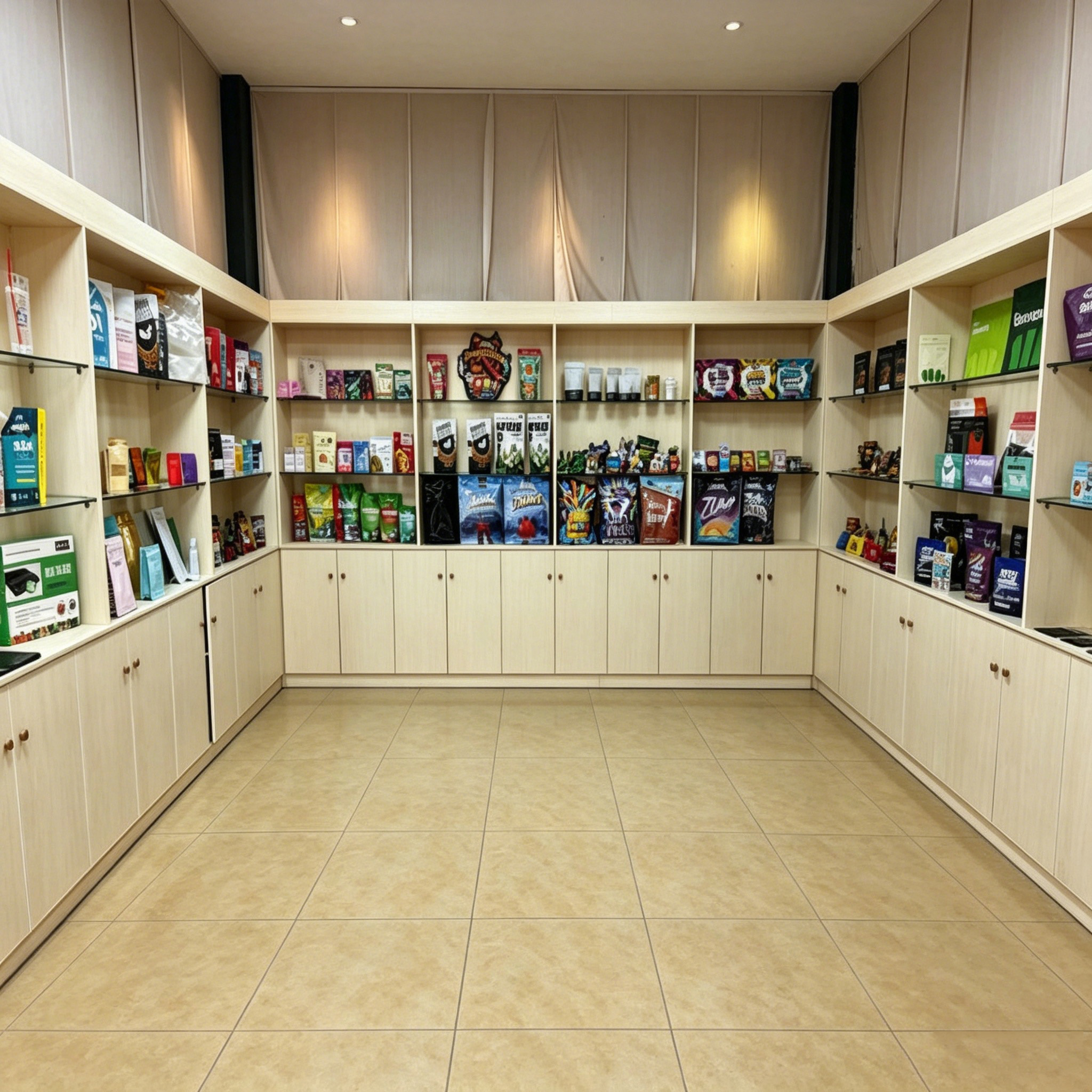
- Validate on samples before tooling. Chitai provides OEM and ODM production with customization of shape, material, housing colour and logo printing, and maintains a sample chamber for this stage. Sample validation is the point at which a construction either meets the stated numbers or does not; a 10,000-unit production run should never be the first time a seal configuration is tested against a barrier target.
- Match the print method to the batch. Digital printing for small batches, gravure printing, and flexographic printing are all available. Small-batch digital work is what allows a brand to test a custom printed marijuana packaging bag design before committing to a full print run.
- Confirm commercial terms and capacity. MOQ is 10,000 units, lead time is 3 to 5 days, monthly capacity is 2,500,000 units, annual output is 30,000,000 units, delivery terms are CIF, acceptance is by pre-shipment test, and payment is 100% full payment.
- Plan for continuity, not a single order. The manufacturer operates a Class 1,000,000 dust-free workshop with an in-house laboratory and testing equipment, an R&D team of 8 engineers, 2 digital printing machines, 30 fully automatic bag-making machines and 4 gravure printing machines. Since 2023 it has also offered one-stop sourcing for selected long-term clients, procuring complementary products from Guangdong under a transparent commission-based model — a detail that matters to brands that would rather consolidate suppliers than expand their vendor list.
Use cases: matching barrier structure to product and channel
Different cannabis product lines stress different parts of the same specification sheet, and matching them early avoids over- or under-specifying.
- Small-format retail flower (1 g and 3.5 g): child-resistant three-side sealed flat bag constructions, fully opaque with no window, anti-tampering heat-sealed edge pressing, and a one-time opening seal that cannot be restored after opening.
- Repeat-open retail flower: stand-up zippered bags with a top composite zipper that can be opened and closed repeatedly, combined with external heat sealing for the first-open seal.
- Bulk and large-format packaging (14 g and 28 g): thickened stand-up bags at 120 μm or thickened high barrier bags at 140 μm, where compression resistance during transport is the decisive variable.
- Pre-roll, edible, CBD and vape formats: the same barrier logic applied to different formats, using the same capacities and stock sizes as the flower range.
- Dispensary private label programmes: private label cannabis bags in weed mylar bag and child proof weed mylar bag formats, printed digitally for short runs or by gravure for volume.
A documented case in this category involved a global dried cannabis flower packaging project at a scale of 500,000 units, supplied to cannabis brand owner clients using product configuration ID 5627. The project achieved no odour leakage and full compliance with local regulations on preventing children from opening and tampering, with a shelf life of 2 to 3 years and a daily usage period of more than one year. Its stated highlights were child-resistant safety design, high odour barrier, solvent-free material, and an anti-tampering and anti-counterfeit structure — four requirements that had to be satisfied by one construction rather than traded off against each other.
Comparing barrier configurations across cannabis packaging bag formats
The table below compares the configurations published in Chitai's own product data. Values are reproduced from those specifications; where a numeric figure is not published for a configuration, the published qualitative description is shown instead rather than an estimate.
| Bag configuration | Material structure | Barrier specification | Total composite thickness | Closure | Typical application |
|---|---|---|---|---|---|
| Child-resistant three-side sealed flat bag (ID 5500) | Pure aluminium foil, aluminium-coated film, PET composite film | WVTR ≤0.03 g/(m²·24h); OTR ≤0.05 cm³/(m²·24h) | 80–120 μm; 100 μm export standard | Three-side heat seal, no zipper; heat-sealed anti-counterfeiting edge; one-time opening seal | 1 g flower and small-format child-resistant packs; fully opaque, no window |
| Self-standing zipper bag (ID 5501) | VMPET/PE aluminium-coated, or PET/AL/PE pure aluminium foil | Published as water and oxygen barrier meeting moisture-proof requirements for ocean transport | 90–120 μm; 100 μm export standard | Top composite zipper, repeatedly sealable, plus external heat seal | Repeat-open retail flower |
| Self-standing bag, no zipper (ID 5502) | PET/AL/PE fully light-proof and high barrier, or VMPET/PE cost-effective | Published as high barrier, moisture-proof and oxidation-proof for sea transportation | 100 μm; 120 μm available | Top heat seal; serrated easy-tear edge | Single-use retail packs and weed mylar bag formats |
| Thickened high barrier bag (ID 5503) | PET/AL/PE pure aluminium foil, or VMPET/NY/PE aluminium-coated nylon | Published as vacuum-level barrier with extremely low water vapour and oxygen permeability | 140 μm; heat seal width 5 mm | High-temperature hot-pressing seal; three-side sealed or stand-up, customised | Large-format and long-storage packaging |
| Thickened stand-up bag (ID 5504) | PET/AL/PE high-end, or VMPET/PE cost-effective | Published as high barrier and anti-oxidation or moisture-proof and sea-transport resistant | 120 μm | Top heat seal; serrated easy-tear opening available | 14 g and 28 g retail flower |
| Smell proof cannabis bag (ID 5627) | PET aluminium-coated + pure aluminium foil (7–9 μm, pinhole-free) + PE heat-sealing layer | WVTR ≤0.03 g/(m²·24h); OTR ≤0.05 cm³/(m²·24h); heat seal ≥40 N/15 mm; tear ≥35 N / ≥30 N; IPX4 | Thickness set by configuration | Repeat zipper plus top heat seal; optional CR child safety zipper | Flower, pre-roll, edibles, CBD and dispensary retail |
Frequently asked questions
Are high barrier cannabis packaging bags available with child-resistant closures?
Yes. Child-resistant closures on this range are specified as CR Zipper, Push Lock and Slide Lock, all referenced to ASTM D3475. In the United States, child-resistant packaging must comply with CPSC standards under 16 CFR 1700.20 and ASTM D3475. Barrier performance and child resistance are separate requirements that share the same seal edge, which is why the two should be validated together on the same sample rather than in separate specifications.
What do the Good, Excellent and Premium smell proof grades mean?
They are the three values used in the smell proof grade field across Chitai's cannabis packaging bag lines: Good, Excellent and Premium. The grade assigned to a specific SKU follows that SKU's material composition (metallized film versus pure aluminium foil), its total composite thickness, and its heat-seal integrity, including seal strength and closure configuration. Because the grade follows the configuration rather than the product family name, buyers should confirm the grade, the WVTR and OTR values, and the seal strength for the exact structure quoted.
How do I verify a smell proof cannabis bags manufacturer's barrier claims?
Ask for WVTR, OTR, heat seal strength and tear strength figures tied to the exact material, thickness and closure being quoted, and ask how those figures are controlled in production. Dongguan Chitai Packaging Products Co., Ltd. supports this with an in-house laboratory and testing equipment, 100% testing for quality control, a Class 1,000,000 dust-free workshop, an R&D team of 8 engineers, and pre-shipment test as the acceptance method. Claims that cannot be tied to a specific structure, thickness and seal configuration should be treated as marketing rather than specification.
What is the MOQ and lead time for custom printed weed mylar bags?
The published order parameters are an MOQ of 10,000 units, a lead time of 3 to 5 days, a monthly capacity of 2,500,000 units and annual output of 30,000,000 units, with CIF delivery terms, pre-shipment test acceptance and 100% full payment. Customization covers shape, material, housing colour and logo printing, with digital printing available for small batches and gravure or flexographic printing for larger runs. Because format and surface area affect total moisture ingress at a given WVTR, sizes should be fixed before print artwork is finalised.
Can we validate a barrier construction on samples before mass production?
Yes, and it is the recommended sequence. Chitai runs OEM and ODM production with a sample chamber for pre-production validation, so the WVTR and OTR targets, the seal strength of ≥40 N/15 mm, the opacity requirement and the child-resistant closure can all be checked on the actual construction before tooling and print are committed. To start a sample or specification review, contact the sales team at sales@packagingforcannabis.com or via WhatsApp at +86 13537230130.

Conclusion: buy the specification, not the description
For high barrier cannabis packaging bags, the difference between a pack that holds and one that leaks odour is decided by four traceable items: the WVTR figure (≤0.03 g/(m²·24h)), the OTR figure (≤0.05 cm³/(m²·24h)), the material structure behind them — PET/VMPET/PE/NY/AL, PET/AL/PE, VMPET/PE or VMPET/NY/PE, with 7 to 9 μm pinhole-free aluminium foil where pure foil is used — and the seal integrity that keeps that structure closed, with a target of ≥40 N/15 mm. The smell proof grade (Good, Excellent or Premium) summarises that combination on a given SKU; it does not replace the numbers.
Dongguan Chitai Packaging Products Co., Ltd. was established in 2025 and manufactures cannabis packaging bags for North America and Europe, with more than a decade of printing and packaging experience since 2012 behind the production base. The specification set published across its range is what buyers should test against: WVTR and OTR limits, 80–140 μm total composite thickness, IPX4 water resistance, 100% opacity, child-resistant closures referenced to ASTM D3475, 100% testing, and a documented 500,000-unit dried flower project that achieved no odour leakage while complying with local child-safety and tamper requirements.
Request a sample or specification review
Send your fill weight, format, target market and barrier requirement, and the team will confirm the matching structure, the applicable smell proof grade, and the WVTR, OTR and seal strength figures for that exact construction. MOQ is 10,000 units with a 3 to 5 day lead time.
Email: sales@packagingforcannabis.com | WhatsApp / Tel: +86 13537230130 | Website: packagingforcannabis.com
Download the full product brochure: Chitai Packaging Catalogue 2026 (PDF)

Have Questions or Need More Details?
Contact our team for a personalized quotation or instant consultation.
Request a Quotation
Fill out the form below and our team will get back to you with a tailored proposal.
WhatsApp Direct Chat
Prefer to chat in real-time? Message us on WhatsApp for instant assistance & quick answers.
- Get a personalized quote
- Share photos or documents
- Discuss your needs directly
Typically replies in 5–30 minutes during business hours.