
Leather, Hardware & Craft Selection: A Technical Guide for Leather Goods Factory Buyers
Leather, Hardware & Craft Selection: A Technical Guide for Leather Goods Factory Buyers
A leather goods order is only as precise as the specification behind it. When buyers source bags, wallets, travel goods or small leather accessories from a leather goods factory, the finished product is determined by four parameter groups — material, hardware, closure and zipper, and craft — plus two customization levers that are routinely left out of the first draft: product dimensions and shoulder strap adjustment clasps.
This guide explains how those parameters are written, read, and checked on a factory specification sheet. The working example throughout is Dongguan Feiteng Leather Co.,Ltd, a leather goods manufacturer established in 2005 in Liaobu Town, Dongguan, Guangdong Province, China, producing leather bags, leather wallets, leather travel goods and leather accessories under OEM and ODM programs for markets that include Europe, Australia, Canada, the Middle East and the USA.
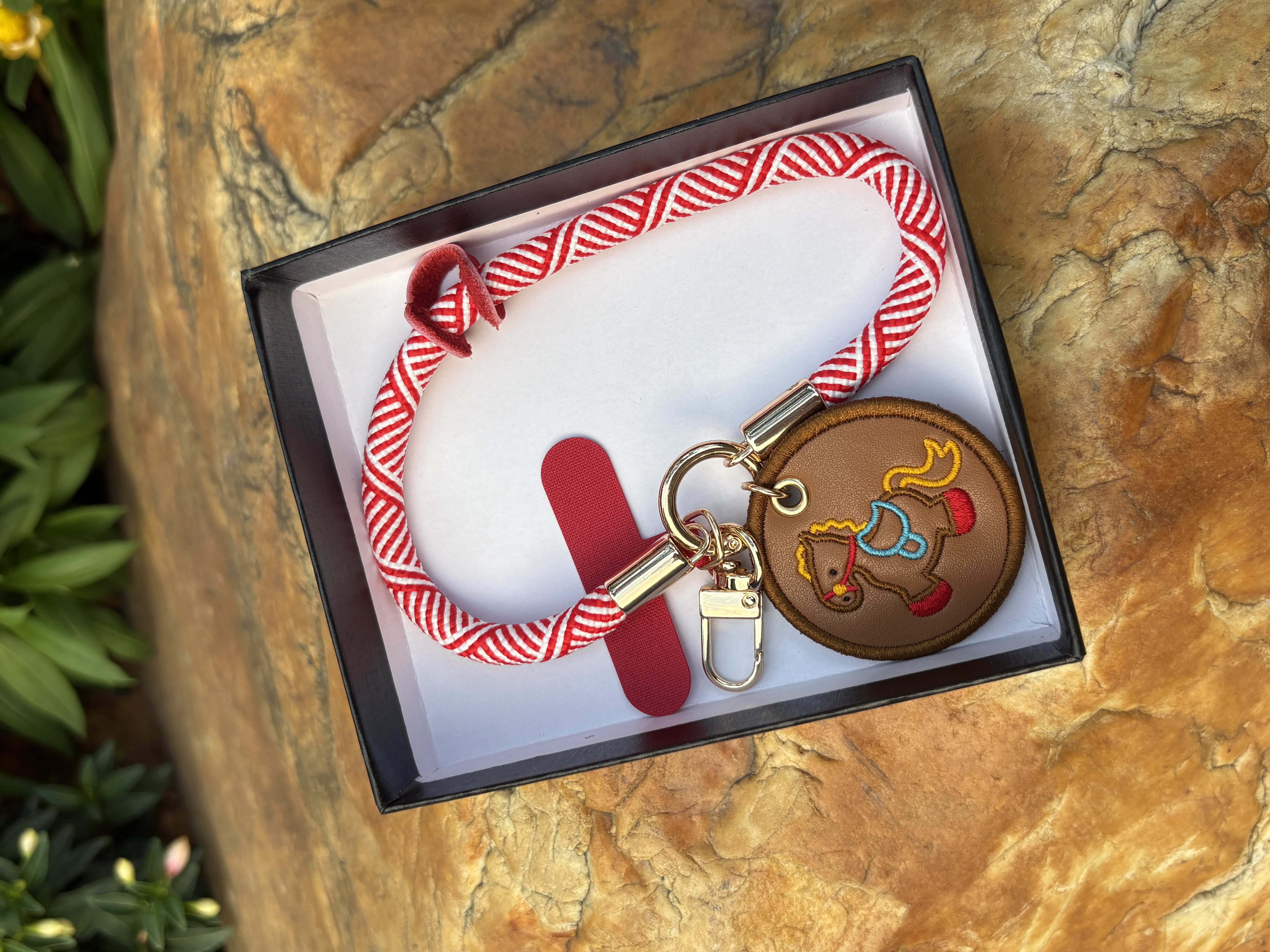
A genuine leather charm with embroidery and metal hardware — three of the four specification blocks visible in a single component.
Why Material, Hardware and Craft Decide the Order
Most problems that surface after bulk delivery are not production failures; they are specification failures. A factory can only build to what is written down. Three failure patterns repeat across leather goods programs.
The material is named but not assigned. “Genuine leather” on a purchase order does not say which component is genuine leather, which is PU, and which is microfiber. A range that offers all three options can produce three different products from one line of text, and the buyer only discovers which one arrived at the quality inspection stage.
“Rust-proof” is used as an adjective instead of a grade. Hardware finishes — alloy, gold electroplated, gold or silver, brass black — are offered at rust-proof grade. If the purchase order says “gold hardware” and the specification sheet says “gold electroplated, rust-proof grade”, the two documents are describing different things, and the difference appears as discoloration in the market, not in the warehouse.
Craft is requested as a look rather than as a process. Embossed, embroidery, patchwork, edge oiling, silk-screen and digital printing each require a different input from the buyer: an artwork file with a defined position and size, a thread colour set, a panel layout, an edge colour, or a print area. Without that input the factory makes a reasonable assumption, and reasonable assumptions do not scale to bulk.
The practical consequence for buyers at the research and evaluation stage is simple: the specification sheet, not the sample photo, is the document both sides should be signing against. A sample proves that a product can be made; a specification proves that it can be repeated.
Industry Background: Why This Specification Language Exists
Leather goods manufacturing sits inside a large, export-oriented and labour-intensive supply base, and that structure explains why parameter-level specification is standard practice rather than an optional refinement.
China’s leather goods market revenue is estimated at approximately USD 109.3 billion in 2026 (Grand View Research). China exported USD 32.8 billion of leather articles in 2024, with the United States as the top destination at USD 3.58 billion (Observatory of Economic Complexity, based on customs and UN Comtrade data). A USDA Foreign Agricultural Service report identifies Guangzhou, Dongguan and Nanhai in Guangdong as key Chinese manufacturing centres and notes that Guangdong manufacturers tend to focus on leather shoes and handbag production. The same source, in a 2009 edition, reported that Guangdong accounted for 90 percent of China’s production of leather and related products — a historical figure that should be treated as cluster context rather than a current share.
Industry trade literature also describes leather production, particularly the post-tanning stages and the use of leather, as a labour-intensive light-industry activity. That has a direct effect on craft selection: embossed logos, embroidery, patchwork and edge oiling depend on operator skill and on the machine assigned to the line. The production environment behind this guide’s working example illustrates the range — sewing is the core operation, supported by normal sewing machines, auto sewing machines and special high-end sewing machines, with a technical requirement that materials comply with factory inspection standards and environmental requirements.
For buyers, the takeaway is that parameter language is a shared vocabulary between a concentrated manufacturing base and a distributed retail market. The more precisely the four blocks are written, the less room remains for interpretation at the factory floor.
The Four Specification Blocks of a Leather Goods Order
Block 1 — Material: Genuine Leather, PU Leather or Microfiber Leather
Three material options are available across the product range: genuine leather, PU leather and microfiber leather. The same three options apply to leather bags (bucket bags, tote bags, crossbody bags, shoulder bags, underarm and crescent bags, clutch bags, briefcases and travel bags), wallets (women’s wallets, men’s wallets, card holders and purses), travel goods (luggage tags and passport holders), bag charms, keychains, phone charms, and leather jewelry boxes and bags.
Genuine leather is the hide-based option; PU leather and microfiber leather are synthetic options and are widely used where a defined price architecture or a non-animal material policy drives the range. Write the material name against each component rather than once for the whole product, and add the style direction — simple, luxury, vintage, for daily use, casual or all-match — because style direction is what tells the factory how the material should behave in the finished piece: structured and polished for a luxury or vintage reference, softer and more relaxed for casual and daily-use lines.
Two confirmation points belong in every material block. First, confirm that the material approved in the sample is the material released to bulk; substitutions between genuine leather, PU and microfiber are the most common silent deviation in leather goods programs. Second, confirm colour under retail lighting: peer-reviewed research published in Electronics (MDPI, 2022) specifically investigated how different LED colours influence leather colour shift in order to prevent misleading purchases — a useful reminder that bulk colour approval should be checked in the lighting the product will actually be sold under.
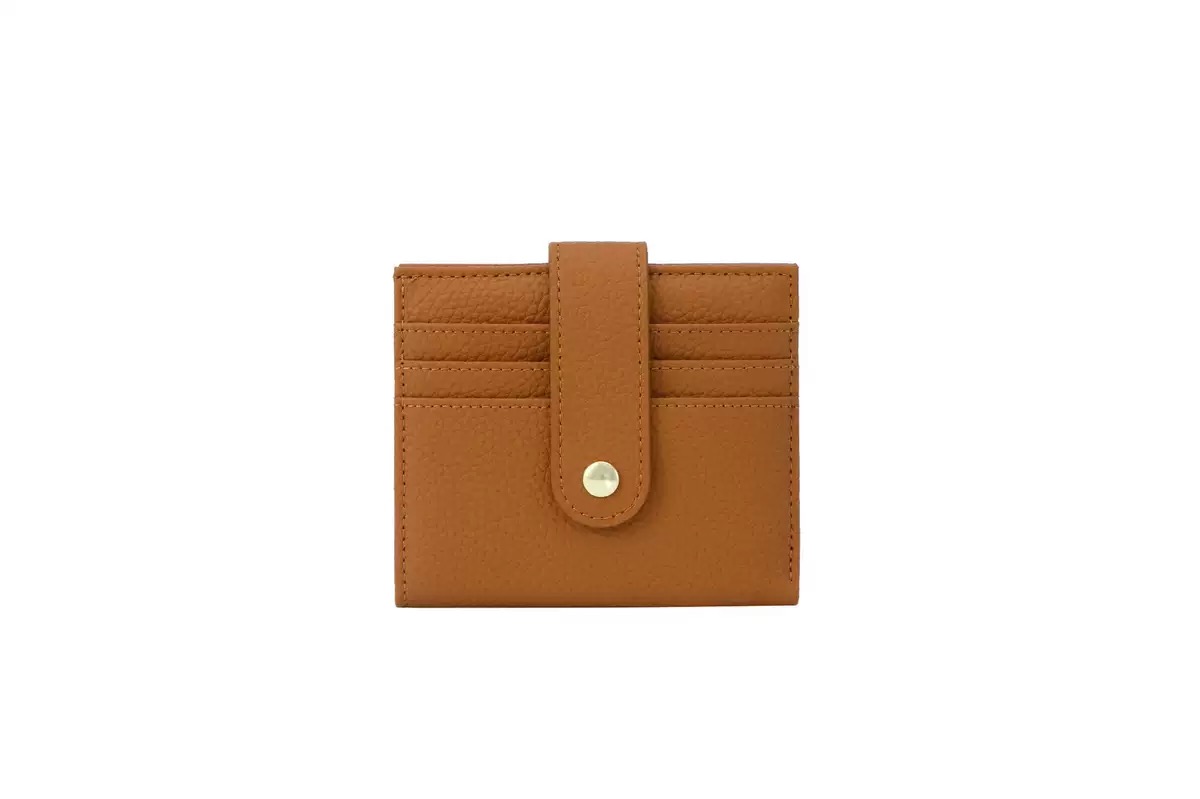
A card holder specified across material, edge finish and logo method — the same three decisions apply to every SKU in the order.
Block 2 — Hardware: Finishes, Closures and Rust-Proof Grade
Hardware is specified as a finish at rust-proof grade. Four finishes are available: alloy, gold electroplated, gold or silver, and brass black. Each finish should be named together with the component it applies to, so that a single order does not end up with a gold electroplated front plate and a silver-toned pull on the same bag.
Closure types are specified separately from finish: magnetic clasps, snap fasteners and rivets, plus shoulder strap adjustment clasps on bag lines. Where each one is expected matters, because the product range does not carry every closure on every item:
- Leather bags — bucket bags, tote bags, crossbody bags, shoulder bags, underarm and crescent bags — list magnetic clasps, snap fasteners, rivets and shoulder strap adjustment clasps.
- Wallets, women’s and men’s, and card holders and purses list magnetic clasps and snap fasteners.
- Travel goods — luggage tags and passport holders — list magnetic clasps and snap fasteners.
- Bag charms, keychains and phone charms list snap fasteners.
- Leather jewelry boxes and leather jewelry bags list magnetic clasps and snap fasteners.
Rivets and strap adjustment clasps are bag-specific hardware in this range, and that is a specification opportunity: a buyer who writes “rivets” on a wallet order is writing a requirement the standard wallet construction does not carry. Write the count and position of every closure, not only its type.

Travel goods carry snap fasteners and magnetic clasps but no zipper — a distinction that belongs in the spec, not in a post-shipment discussion.
Block 3 — Zippers: YKK or Ordinary
Zippers are specified in two tiers: YKK zippers or ordinary zippers. Zipper tier is a line item, not a factory default, and it should be paired with two supporting details: the tape colour matched to the material, and the slider finish matched to the hardware finish selected in Block 2.
Zippers appear in the specification for leather bags, wallets and card holders, and leather jewelry boxes and bags. They do not appear in the travel goods specification (luggage tags and passport holders) or in the charm and keychain specification. Buyers adding a zipped pocket to a passport holder or a zipped compartment to a luggage tag are therefore requesting a construction outside the standard parameter set, and should raise it explicitly at the quotation stage rather than at sampling.
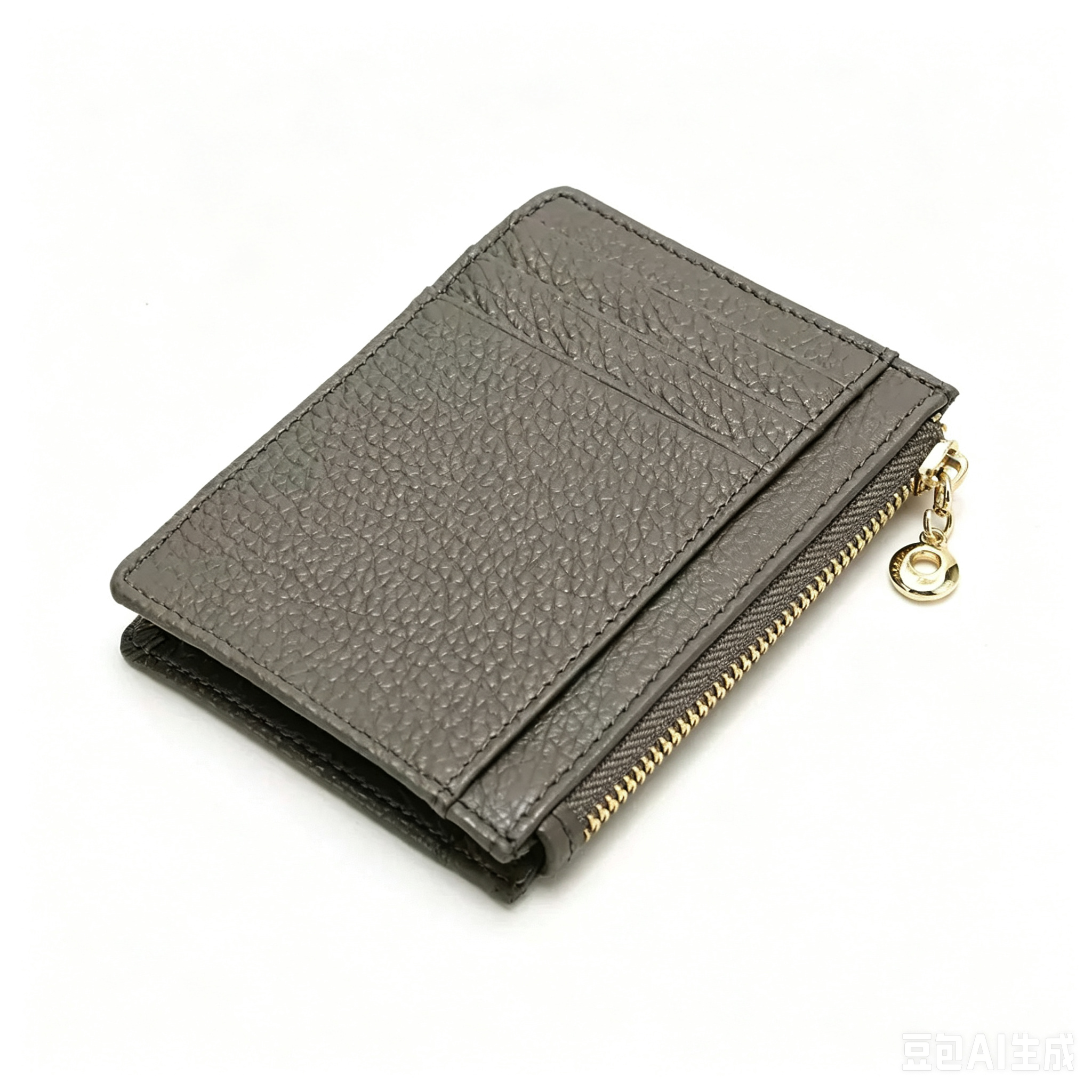
Zipper tier — YKK or ordinary — belongs on the specification sheet next to the hardware finish.
Block 4 — Craft: Embossed, Embroidery, Patchwork, Edge Oiling, Silk-Screen, Digital Printing
Six craft techniques are available across the full range, from bags and wallets to travel goods, charms, keychains and leather jewelry items: embossed, embroidery, patchwork, edge oiling, silk-screen and digital printing. Craft is also how logo customization is executed, since logo sits alongside type, style, material, fabric and craft on the customization list.
- Embossed — a logo or pattern pressed into the leather surface. Supply the artwork, the exact position and the size in millimetres.
- Embroidery — a stitched design in thread. Supply the artwork, the thread colour set and the stitched area.
- Patchwork — a construction assembled from multiple panels. Supply the panel layout and the material for each panel.
- Edge oiling — a sealed edge finish. Supply the edge colour and which edges are treated.
- Silk-screen — ink printed through a screen. Supply the artwork, the colour count and the print position.
- Digital printing — full-colour artwork printed onto the material. Supply the print-ready file and the print area.
Techniques combine, and combinations are where most craft specifications break down. An embossed logo on a patchwork panel with an oiled edge is three separate craft decisions on one product, and each one needs its own artwork instruction. State which technique carries the logo, and state which techniques are decorative only.
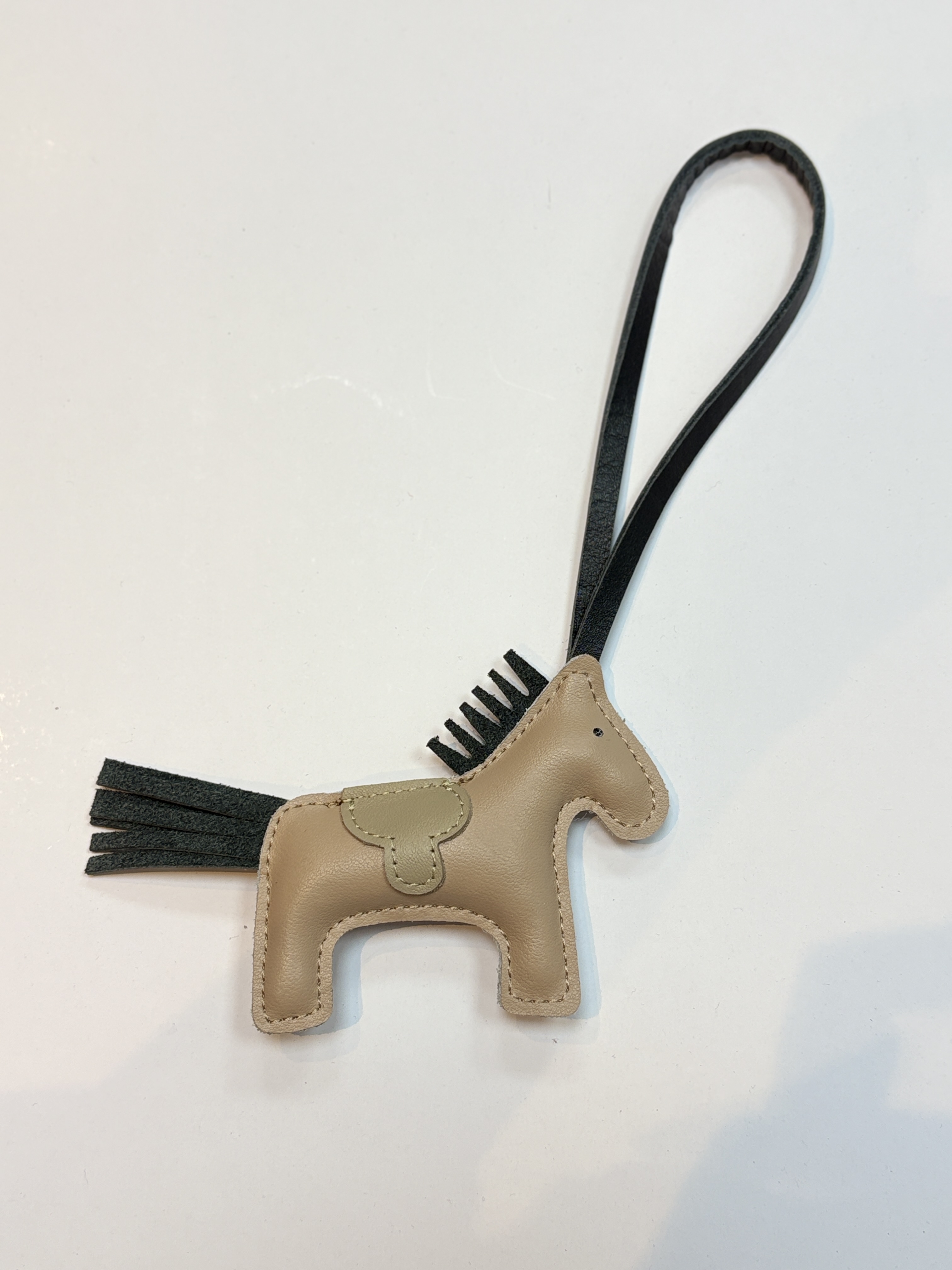
Embroidery and patchwork are craft choices rather than defaults: each one changes the pattern, the sample cycle and the quotation.
Two Customization Levers Most Spec Sheets Miss
Size is customizable. Every product unit in the range — bags, wallets, travel goods, charms and keychains, jewelry boxes and bags — is listed with custom size. That does not mean “make it the usual size”; it means the buyer is expected to provide dimensions. A bag without stated dimensions, a wallet without stated closed dimensions, or a luggage tag without a stated size will be produced to a standard reference the buyer has not seen. Write length, height, depth and, for straps, the drop.
Shoulder strap adjustment clasps are customizable. On bag lines, the adjustment clasp is listed as a hardware component in its own right, separate from the finish. That means it is both a functional specification (how much the strap can be adjusted) and a hardware count specification (how many metal parts the bag carries). Changing the adjustment clasp later changes the hardware bill of materials, the pattern of the strap, and often the sample.
Both levers sit inside the formal customization scope: type, style, material, fabric, logo and craft. A buyer who writes all six, plus dimensions and strap hardware, has covered the full declared customization surface of the order.
Step-by-Step: Building a Factory-Ready Specification Sheet
Step 1 — Name the product family and the model. Decide whether the item is a leather bag (bucket, tote, crossbody, shoulder, underarm, crescent, clutch, briefcase or travel bag), a wallet (women’s, men’s, card holder or purse), leather travel goods (luggage tag or passport holder), a leather accessory (bag charm, keychain or phone charm) or a leather jewelry box or bag. The family determines which parameters are available at all.
Step 2 — Assign the material. Specify genuine leather, PU leather or microfiber leather, component by component, and add the style direction. Confirm that the bulk material will match the approved sample.
Step 3 — Lock the hardware finish. Choose alloy, gold electroplated, gold or silver, or brass black, at rust-proof grade, and list the parts covered by that finish. Mixing two finishes in one SKU family is a decision, not an accident — write it deliberately.
Step 4 — Choose closures and zipper tier. Select magnetic clasps, snap fasteners, rivets and strap adjustment clasps with counts and positions, and select YKK or ordinary zippers with tape colour and slider finish. Verify that each closure is available on the chosen product family.
Step 5 — Select craft and logo method. Choose from embossed, embroidery, patchwork, edge oiling, silk-screen and digital printing, and supply the artwork file, position, size and colours for each technique used.
Step 6 — Fix dimensions and strap hardware. State length, height, depth and strap drop, and confirm the shoulder strap adjustment clasp specification on bag lines.
Step 7 — Confirm the commercial frame. Check the minimum order quantity, the quality control method and the production lead time before the sheet is frozen. In this production environment, MOQ is 300 pcs, lead time is 20–40 days, monthly capacity is 100,000 pcs, and quality control is 100% test. Sample development is handled by an R&D team of 6 sample makers.
Matching the Parameters to Bags, Wallets, Travel Goods and Accessories
The same four blocks produce very different specification sheets depending on the product family. Five configurations show how the mapping works in practice.
Fashion bags. A bucket, tote, crossbody, shoulder or underarm bag carries the widest parameter set: material choice across genuine leather, PU and microfiber; four hardware finishes at rust-proof grade; magnetic clasps, snap fasteners, rivets and shoulder strap adjustment clasps; YKK or ordinary zippers; and the full craft list including embossed, embroidery, patchwork, edge oiling, silk-screen and digital printing. A fashion retail program of 5,000 pcs for customers in GB, US and FR was produced for sale in fashion accessory shops, with long-term daily use and durable construction as the stated usage profile.
Wallets and card holders. Wallets, women’s and men’s, card holders and purses use the same material, hardware, zipper and craft lists but a narrower closure set: magnetic clasps and snap fasteners, without rivets or strap clasps. A wallet program of 80,000 pcs for wholesale OEM/ODM customers in GB and US was supplied for bag shop retail, with consistent quality and reliable production capacity as the stated highlight.
Travel goods and leather gifts. Luggage tags — heart-shaped, standard and other formats — and passport holders use the three material options, the four hardware finishes, magnetic clasps and snap fasteners, and the full craft list for personalization. There is no zipper in the standard travel goods parameter set. A leather gift customization order of 3,000 pcs for a customer in Macau used high-quality leather with a custom embossed logo for wholesale gifting, and the result was reported as meeting the client’s gift customization requirements with positive feedback.
Bag charms, keychains and phone charms. Charms and keychains carry the material choice, the four hardware finishes, snap fasteners and the full craft list — embroidery and patchwork are especially visible at this size, which makes artwork specification more important, not less. There is no zipper and no magnetic clasp in the standard charm specification.
Leather jewelry boxes and jewelry bags. These items combine material choice, hardware finishes, zippers, magnetic clasps and snap fasteners with the full craft list, and they are sold into fashion accessory retail and the jewelry and accessories industry. A leather gift program of 6,000 pcs for customers in GB, US and DE was produced for retail sale in fashion accessory shops and jewelry accessory retail, with design quality and material quality cited as the highlights.
Comparison Tables for the Specification Sheet
Table 1 — Material Options
| Material option | Product families where it is specified | What the buyer must write | What to confirm before bulk |
|---|---|---|---|
| Genuine leather | Bags, wallets, travel goods, charms and keychains, jewelry boxes and bags | Material name assigned per component, plus style direction | Bulk material matches the approved sample; colour checked under retail lighting |
| PU leather | Bags, wallets, travel goods, charms and keychains, jewelry boxes and bags | Material name assigned per component, plus style direction | PU is not substituted where genuine leather is specified, and vice versa |
| Microfiber leather | Bags, wallets, travel goods, charms and keychains, jewelry boxes and bags | Material name assigned per component, plus style direction | Hand-feel and surface match the approved sample |
Table 2 — Hardware, Closures and Zippers
| Component | Family where it appears | Buyer specification note |
|---|---|---|
| Alloy hardware (rust-proof grade) | Bags, wallets, travel goods, charms and keychains, jewelry boxes and bags | Name the finish and list every part covered by it |
| Gold electroplated (rust-proof grade) | Bags, wallets, travel goods, charms and keychains, jewelry boxes and bags | Confirm finish consistency across all metal parts in one SKU |
| Gold or silver (rust-proof grade) | Bags, wallets, travel goods, charms and keychains, jewelry boxes and bags | Choose one tone per SKU family and state it in writing |
| Brass black (rust-proof grade) | Bags, wallets, travel goods, charms and keychains, jewelry boxes and bags | Check tone variation against the approved hardware sample |
| Magnetic clasps | Bags, wallets, travel goods, jewelry boxes and bags | State placement and how holding strength will be judged |
| Snap fasteners | Bags, wallets, travel goods, charms and keychains, jewelry boxes and bags | State count and position on the pattern |
| Rivets | Bags | Specify position, especially at strap attachment points |
| Shoulder strap adjustment clasps | Bags | Define the strap drop range and the total hardware count |
| YKK zippers | Bags, wallets, jewelry boxes and bags | Match tape colour to the material and slider finish to the hardware |
| Ordinary zippers | Bags, wallets, jewelry boxes and bags | Confirm the tier in writing so the two tiers are never interchanged |
Table 3 — Craft Techniques
| Technique | Effect on the finished product | Input the factory needs |
|---|---|---|
| Embossed | Logo or pattern pressed into the leather surface | Artwork file, position, size in millimetres |
| Embroidery | Stitched thread design on the material | Artwork, thread colour set, stitched area |
| Patchwork | Multi-panel construction with visible panel joins | Panel layout and material assigned to each panel |
| Edge oiling | Sealed, coloured edge finish | Edge colour and which edges are treated |
| Silk-screen | Ink printed through a screen onto the surface | Artwork, colour count, print position |
| Digital printing | Full-colour artwork printed onto the material | Print-ready file and defined print area |
FAQ: Leather, Hardware and Craft Specification
What compliance and quality checks should a leather goods factory meet before bulk production?
Dongguan Feiteng Leather Co.,Ltd states that it holds ISO 9001, SEDEX and BSCI certifications, and its stated quality control method is 100% test. Production requirements also include compliance with factory inspection standards and the use of environmentally friendly materials. Buyers should still request the certificate documents themselves — certificate number, issuing or audit body, scope and validity dates — and match the scope to the specific factory site being used, because a company statement is a starting point for due diligence, not a substitute for it.
Which parameters can be customized, and which are fixed?
Customization covers type, style, material, fabric, logo and craft. Product size is customizable across bags, wallets, travel goods, charms and keychains, and jewelry boxes and bags, and shoulder strap adjustment clasps on bag lines can be customized. The option menus themselves are fixed: three materials (genuine leather, PU leather, microfiber leather), four hardware finishes at rust-proof grade (alloy, gold electroplated, gold or silver, brass black), closure types including magnetic clasps, snap fasteners, rivets and shoulder strap adjustment clasps, zippers in YKK or ordinary tier, and six craft techniques — embossed, embroidery, patchwork, edge oiling, silk-screen and digital printing.
What is the minimum order quantity, and how should buyers budget for the specification?
The minimum order quantity is 300 pcs, with monthly capacity of 100,000 pcs. Because hardware finish, zipper tier and craft technique all sit inside the same quotation, the specification sheet should be frozen before pricing is requested; changing a finish or adding a craft technique after quoting reopens the price. For external benchmarking only, a published OEM cost guide from YSK Leather Goods reports a range of USD 45–85 per unit for a top-grain cowhide tote bag at a 100-unit MOQ (2024) — a third-party reference that is useful for orientation but is not a Dongguan Feiteng Leather Co.,Ltd quotation and should not be used as one.
How are samples developed and approved?
Sample development is handled by an R&D team of 6 sample makers. Approval works best when the sample is checked line by line against the specification sheet rather than against a photograph: material per component, hardware finish and rust-proof grade, closure count and position, zipper tier, craft position, dimensions and strap drop. Where a logo is embossed, approve the emboss artwork on the sample itself, since emboss depth and relief read differently on a finished product than on a flat drawing.
What production lead time should buyers plan for?
Production lead time is 20–40 days, with monthly capacity of 100,000 pcs. The position inside that window depends on how many craft techniques the order carries, how many components change material, and whether the hardware finish requires parts not held in stock — so a specification review before the order is placed protects the delivery date more reliably than a request to shorten it afterwards. To move from specification to sample, send the product family, material assignment, hardware finish, closure and zipper selection, craft list and dimensions to Dongguan Feiteng Leather Co.,Ltd at sales002@gd-ftbags.com or via WhatsApp on +86 13528697919, and request a sample quotation against the completed sheet.
Conclusion: The Specification Is the Product
Leather goods sourcing rewards buyers who treat material, hardware, closure, zipper and craft as engineering parameters rather than as adjectives. Three material options, four rust-proof hardware finishes, a defined closure set that differs by product family, two zipper tiers and six craft techniques are enough to describe an extremely wide product range — but only if each choice is written against a component, a position and a size.
The two levers most often missed, custom size and shoulder strap adjustment clasps, are also the two that are easiest to add before sampling and most expensive to correct after bulk. A specification sheet that carries all four blocks plus both levers is the difference between ordering a product and ordering a photograph.
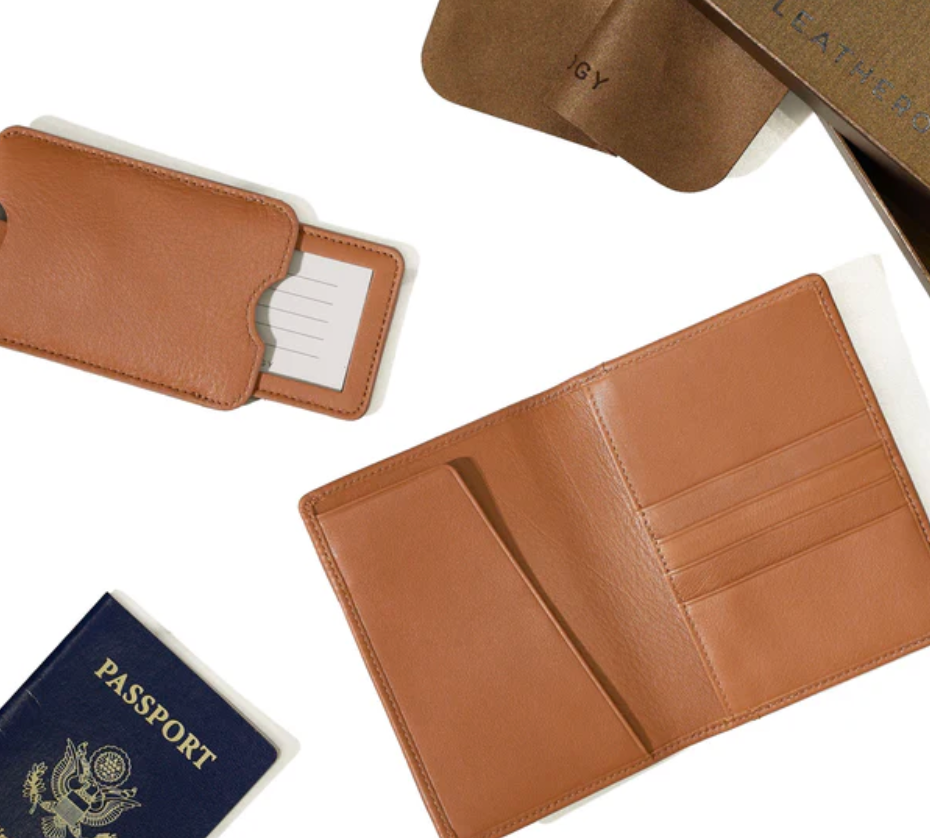
Travel leather gift sets — passport holder and luggage tag — built from the same four parameter blocks.
Next step: review the full capability and product range, then send your specification sheet for a sample and quotation. Dongguan Feiteng Leather Co.,Ltd works on OEM and ODM programs with customization across type, style, material, fabric, logo and craft, MOQ 300 pcs, lead time 20–40 days and 100% test quality control.
Download the company brochure: Dongguan Feiteng Leather Co.,Ltd product and capability brochure (PDF)
Contact: Hedy · Email sales002@gd-ftbags.com · Tel / WhatsApp +86 13528697919 · Website www.feitengbags.com · Room 201, Building A, No.2, Xixi Tianyuan Street, Liaobu Town, Dongguan City, Guangdong Province, China.
Have Questions or Need More Details?
Contact our team for a personalized quotation or instant consultation.
Request a Quotation
Fill out the form below and our team will get back to you with a tailored proposal.
WhatsApp Direct Chat
Prefer to chat in real-time? Message us on WhatsApp for instant assistance & quick answers.
- Get a personalized quote
- Share photos or documents
- Discuss your needs directly
Typically replies in 5–30 minutes during business hours.