
Leather, PU or Microfiber? A Factory Build Sheet for Buyers
Material and component comparison for OEM/ODM buyers
Choosing between genuine leather, PU leather and microfiber leather is the first line of a custom leather goods build sheet, not a standalone material decision. Once the material is fixed, a factory still has to lock a material code, a hardware finish and rust-proof grade, a closure type, a zipper brand, a craft list, a style direction and a size range before it can quote, sample and schedule production accurately.
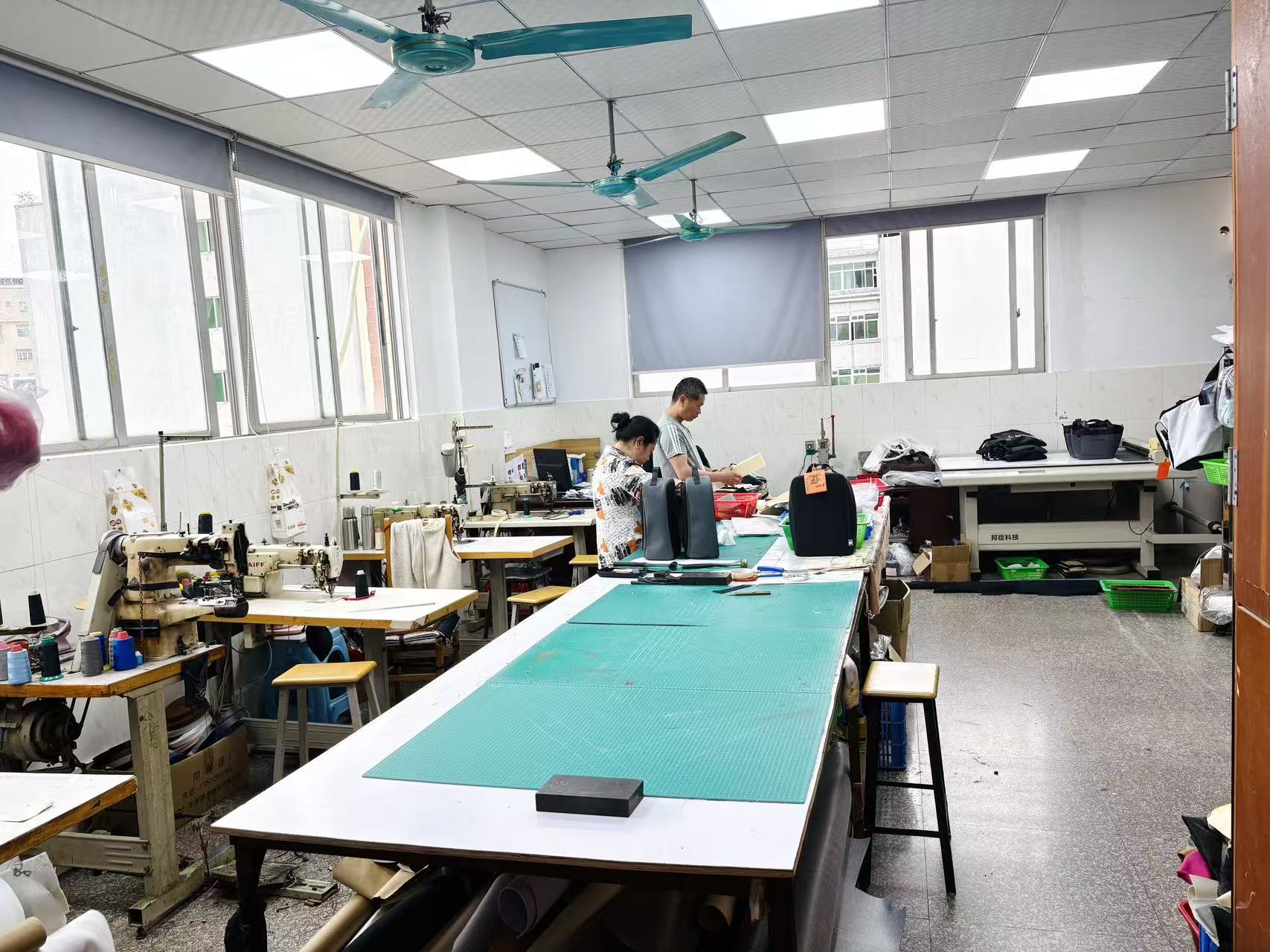
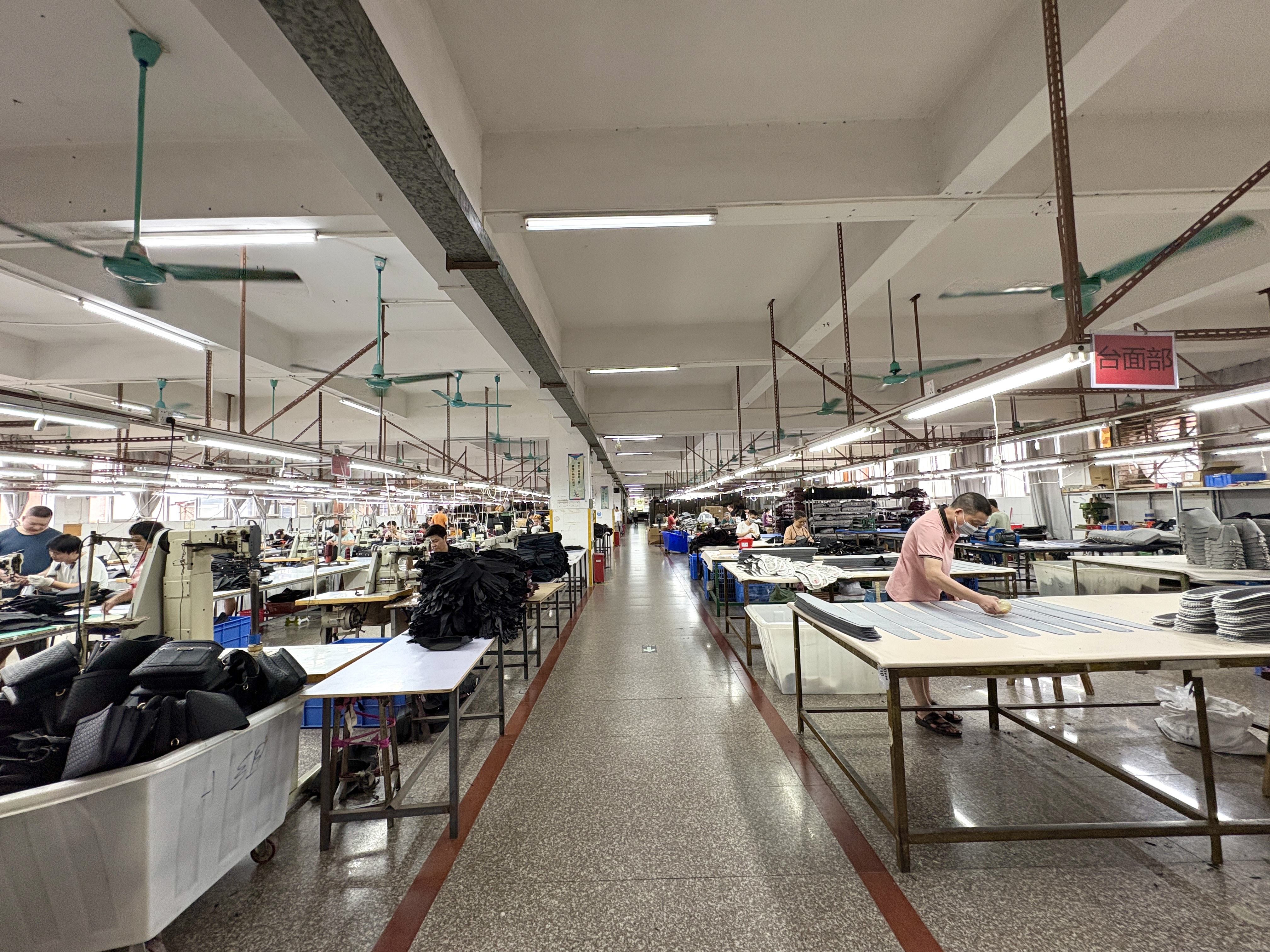
Dongguan Feiteng Leather Co.,Ltd is a leather goods manufacturer established in 2005 in Liaobu Town, Dongguan, Guangdong Province, China. The company produces leather bags, leather wallets and leather accessories on an OEM/ODM basis for buyers in Europe, Australia, Canada, the Middle East and the USA, and it works with three production material codes: 103842 for genuine leather, 103843 for PU leather and 103844 for microfiber leather. The comparison below follows the order the factory actually works in — material code first, then the components that hang off it.
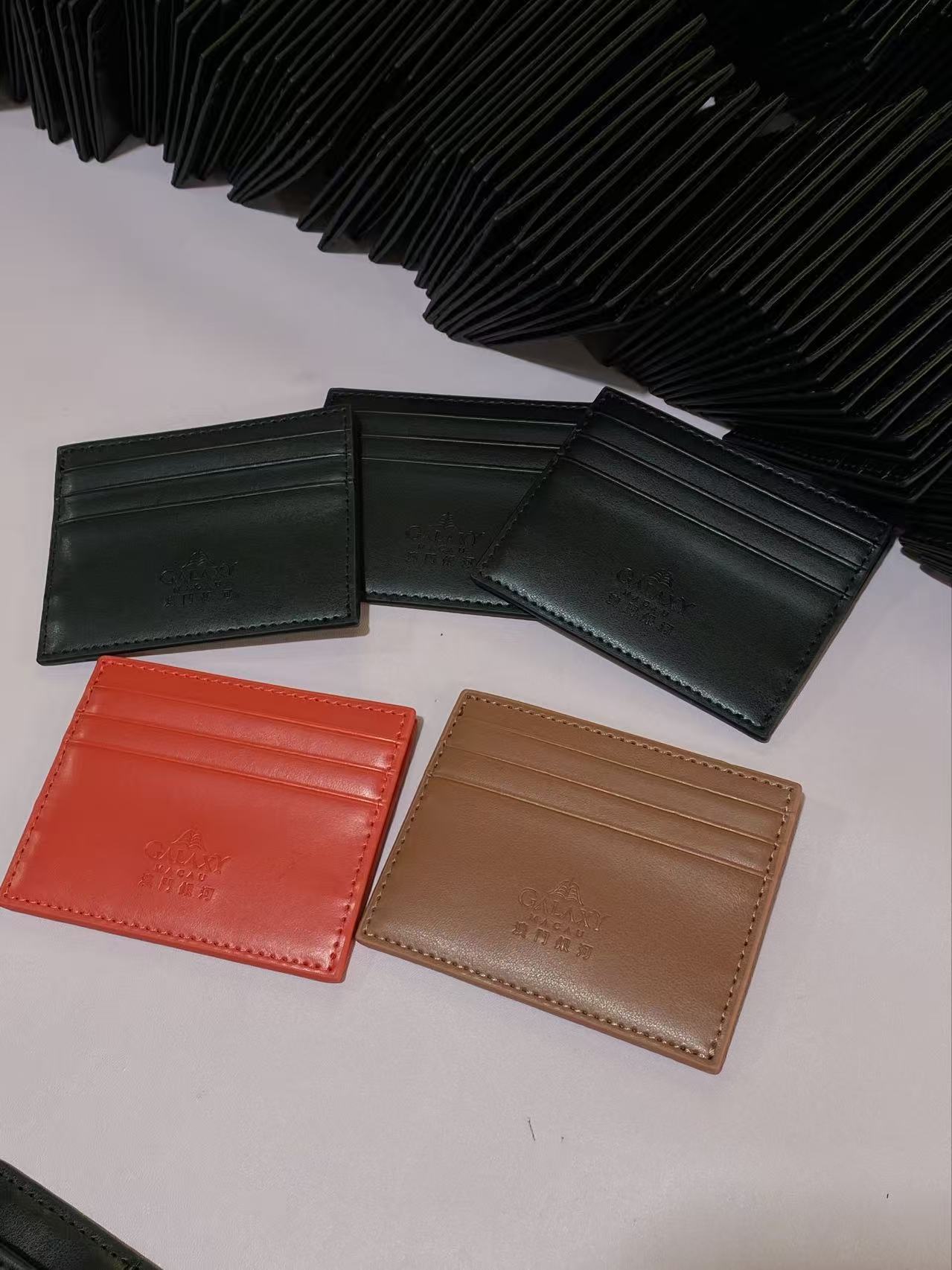
The problem: a material name is not a specification
A buyer's brief usually arrives as a reference photo plus a material word. The factory reads it as a manufacturing instruction, and the gap between those two readings is where custom leather programmes lose time. Genuine leather, PU leather and microfiber leather can be asked to produce the same silhouette — a tote bag, a crossbody bag, a wallet, a luggage tag — but they do not enter the same build sheet, and they are not quoted from the same component list by default.
Four failure modes account for most of the mismatch:
- Material code left open. When the sheet says "leather" without a code, quotations compare unlike items, and the approved sample may not represent what bulk production will be.
- Hardware and closure decided late. Magnetic clasps, snap fasteners, rivets and shoulder strap adjustment clasps all change assembly, and the hardware finish — alloy, gold electroplated, gold or silver, brass black — has to be paired with a stated rust-proof grade.
- Craft assumed rather than specified. Embossing, embroidery, patchwork, edge oiling, silk-screen and digital printing each carry their own preparation and approval steps, and the artwork has to be matched to the craft rather than the other way round.
- Style and size drifting. A sample built in a luxury direction is not interchangeable with one built for daily use or all-match merchandising, and a custom size that was never written down will not repeat in bulk.
None of this is exotic. It is the ordinary consequence of treating a material name as if it were a specification.
Industry background: why this comparison belongs on a sourcing desk
Leather goods manufacturing is a labour-intensive light-industry activity, which is one reason the sector concentrates in regions with deep assembly experience rather than spreading evenly. A 2009 USDA Foreign Agricultural Service report identified Guangzhou, Dongguan and Nanhai in Guangdong as key Chinese manufacturing centres and noted that Guangdong manufacturers tend to focus on leather shoes and handbag production — historical context that still explains why so many custom bag and accessory programmes are quoted out of Dongguan.
The demand side is large enough that small specification errors become expensive. Grand View Research estimates China's leather goods market revenue at approximately US$109.3 billion in 2026. On the trade side, the Observatory of Economic Complexity reports that China's exports of leather articles totalled US$32.8 billion in 2024, with the United States as the top destination at US$3.58 billion. For a buyer, that scale means plenty of factories to choose from and very little to separate them on price alone.
The differentiator is usually the quality of the build sheet. Two suppliers can quote the same tote bag, but if one quote is based on material code 103842 with YKK zippers and a stated hardware grade, while the other is based on "leather" with an unspecified zipper, the numbers are not comparable — and the cheaper one is not necessarily cheaper.
The three material codes, and the decisions each one triggers
103842 — genuine leather
Genuine leather is the hide-based substrate in the set. On the build sheet it carries the highest expectation of visible surface character, which makes colour and grain reference the first approval item: the buyer's reference has to be matched to a physical swatch before hardware and craft are confirmed. Colour approval deserves its own step because presentation itself is unreliable — a 2022 peer-reviewed study in MDPI Electronics examined how different LED colours shift perceived leather colour, specifically to reduce misleading purchase decisions. Approving a material code against a photograph is a weaker control than approving it against a swatch.
103843 — PU leather
PU leather is the polyurethane-based substrate in the set. On the build sheet it is usually tied to programmes that need one defined colour range carried across several styles in a collection, because the surface is produced rather than grown. That makes the craft list the item to review first: silk-screen and digital printing, embroidery and patchwork all depend on how the surface is prepared, so the factory should confirm the decoration route on a sample rather than on a colour number alone.
103844 — microfiber leather
Microfiber leather is the synthetic substrate built on a microfiber base. It appears on Feiteng build sheets when a buyer's brief specifies microfiber explicitly. Because it is a named specification rather than a price-driven default, the sheet should record the reason alongside the code — that way the sample room does not substitute a substrate when a component has to be re-sourced mid-programme.
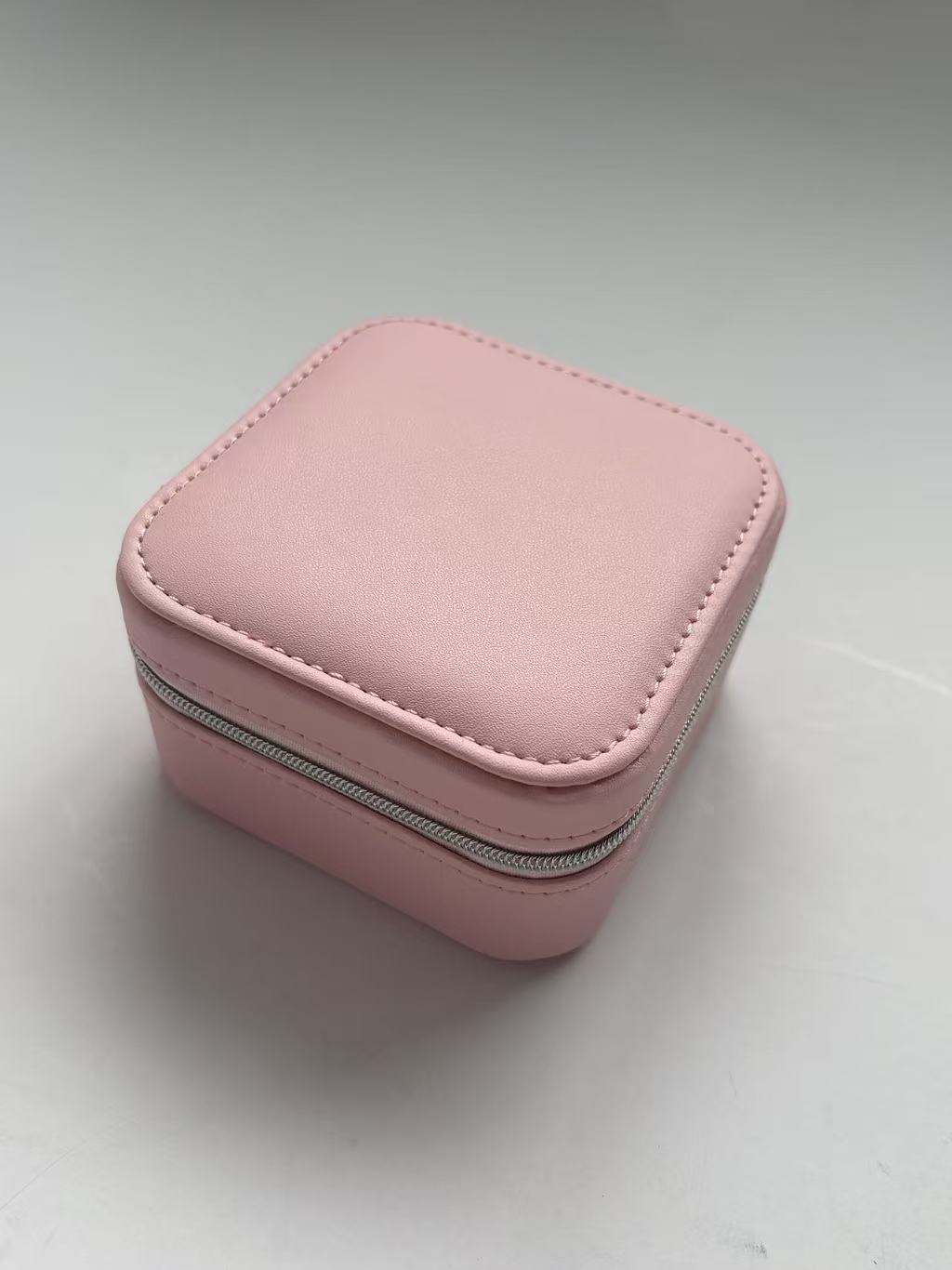
All three codes appear across Feiteng's product range — leather bags, leather wallets, card holders, leather travel goods, luggage tags, passport holders, bag charms and leather jewellery boxes and bags — so a material change does not automatically force a product change. What it does force is a fresh component confirmation.
The five component decisions that follow the material line
- Hardware. Alloy, gold electroplated, gold or silver finish, or brass black, quoted against a stated rust-proof grade. The finish is a merchandising decision; the grade is a durability decision; both belong in writing.
- Closures. Magnetic clasps, snap fasteners and rivets are the standard closure set, with shoulder strap adjustment clasps on bags. Each has its own assembly sequence and its own wear point.
- Zippers. YKK zippers or ordinary zippers, specified per style. Wallet, card holder and crossbody programmes usually need the zipper fixed before sampling, because tape colour and slider finish are visible parts of the product.
- Craft. Embossed, embroidery, patchwork, edge oiling, silk-screen and digital printing. Craft count is the single biggest driver of sample rounds.
- Style and size. Simple, luxury, vintage, for daily use, casual or all-match, with sizes customised per market. These are not interchangeable labels — they set proportions, hardware weight and craft density.
| Build-sheet line | Options available in Feiteng production | What the buyer must confirm before bulk |
|---|---|---|
| Material code | 103842 genuine leather; 103843 PU leather; 103844 microfiber leather | Code plus physical swatch approval for colour and surface |
| Hardware | Alloy, gold electroplated, gold or silver finish, brass black; rust-proof grade stated | Finish name and rust-proof grade written into the purchase order |
| Closures | Magnetic clasps, snap fasteners, rivets, shoulder strap adjustment clasps | Closure type per position, confirmed on the sample |
| Zippers | YKK zippers or ordinary zippers | Brand, tape colour, slider finish and length per style |
| Craft | Embossed, embroidery, patchwork, edge oiling, silk-screen, digital printing | Artwork file, placement and craft route approved on the sample |
| Style and size | Simple, luxury, vintage, daily use, casual, all-match; custom sizes | Size chart per market and style name per SKU |
Step-by-step: how a custom leather goods order is built
Feiteng runs OEM (Original Equipment Manufacturing) and ODM (Original Design Manufacturing) production with a minimum order quantity of 300 pieces, a monthly capacity of 100,000 pieces and a typical lead time of 20–40 days, backed by 100% testing quality control. The sequence below is how a material decision becomes a repeatable order.
- Fix the material code and the colour reference. 103842, 103843 or 103844, plus a physical reference the sample room can match. A photograph is not an approval; lighting alone can shift perceived leather colour.
- Lock hardware and closures. Name the finish (alloy, gold electroplated, gold or silver, brass black) and the rust-proof grade, then place magnetic clasps, snap fasteners, rivets and shoulder strap adjustment clasps by position.
- Choose the zipper route. YKK or ordinary zippers, per style, with tape colour and slider finish stated. This is where wallet, card holder and crossbody programmes usually stall if left open.
- Set the craft list and count it. Embossed, embroidery, patchwork, edge oiling, silk-screen, digital printing. Each additional craft is an additional approval step, so a five-craft sheet should be expected to need more sample dialogue than a two-craft sheet.
- Write the style and size range. Style direction (simple, luxury, vintage, daily use, casual, all-match) plus a custom size chart per market. Sizes that are described but not dimensioned will not repeat in bulk.
- Sample and validate. Six sample makers work the approved brief and ship samples by DHL, UPS or FedEx. Approve the material, hardware, closure, zipper and craft combination on the physical unit before release.
- Produce, inspect and settle. Bulk runs against the approved sample with 100% testing quality control, on FOB or EXW terms, with 30% deposit and 70% balance payment and acceptance against quality inspection.
Use cases: four programmes and the build sheet behind them
High-volume bag shop supply — 80,000 pieces
A leather goods wholesale OEM/ODM programme for clients in the United Kingdom and the United States ran to 80,000 pieces for bag shop retail, designed for long-term daily use with durable construction. The recorded highlights were consistent high quality and reliable production capacity. At that volume the material code and the five component decisions have to be frozen early, because every change after release multiplies across the run.
Fashion retail and online stores — 5,000 pieces
A fashion item retailing programme for clients in the United Kingdom, the United States and France produced 5,000 pieces for retail sale in fashion accessory shops. The product was noted for premium quality and on-trend design and achieved strong sales performance in online stores. Programmes built around trend and colour rotation put the heaviest weight on colour approval and on the decoration route specified in the craft list.
Gift and jewellery accessory channel — 6,000 pieces
A leather gift custom wholesale programme for clients in GB, US and DE covered 6,000 pieces for retail sale in fashion accessory shops and the jewellery accessory industry. Highlights were design quality and consistent high quality. Gift-channel programmes usually carry more craft steps per unit — embossed marking, edge oiling and presentation detailing — so the craft list is the part of the sheet that decides sample rounds.
Private-label gifts with embossed logo — 3,000 pieces
A custom leather gift programme in Macau, Asia covered 3,000 pieces intended for long-term use as gifts or collectibles, using high-quality leather material with a custom embossed logo and design. Client feedback indicated a positive reception. Here the material code and the embossing decision are inseparable: the logo approval is really an approval of how the code behaves under embossing.
Comparison table: the three materials at build-sheet level
The useful comparison is not which material is "best". It is which confirmation each code puts at the front of the queue.
| Comparison point | Genuine leather (103842) | PU leather (103843) | Microfiber leather (103844) |
|---|---|---|---|
| Substrate | Hide-based | Polyurethane-based | Microfiber-based |
| Colour approval | Physical swatch against buyer reference | Physical swatch against buyer reference, checked across every style in the range | Physical swatch against buyer reference |
| Hardware options | Alloy, gold electroplated, gold or silver, brass black, with rust-proof grade | Same option set | Same option set |
| Closures | Magnetic clasps, snap fasteners, rivets, shoulder strap adjustment clasps | Same option set | Same option set |
| Zippers | YKK zippers or ordinary zippers | Same option set | Same option set |
| Crafts | Embossed, embroidery, patchwork, edge oiling, silk-screen, digital printing | Same option set | Same option set |
| Style directions | Simple, luxury, vintage, daily use, casual, all-match | Same option set | Same option set |
| Sizes | Custom | Custom | Custom |
| First question to settle | Which swatch and grain reference is approved? | Which styles in the range must share one colour? | Is this code a fixed requirement from the client or channel? |
Read the table downwards, not across. The component menu does not change with the material; the order in which the menu has to be closed does.
FAQ
What compliance documentation should I request alongside the material code?
Ask for the certificate set at the same time as the quotation. Dongguan Feiteng Leather Co.,Ltd holds ISO 9001, SEDEX and BSCI certifications; its SEDEX record is certificate number ZAA600135824 under the SMETA 7.0 four-pillar standard, covering labour standards, health and safety, environment and business ethics, audited by Bureau Veritas CPS - Asia and issued on 4 June 2025. Because a material code identifies a substrate rather than a chemical profile, also request destination-market material safety and restricted-substance requirements in writing for the specific market you sell into, and confirm current certificate validity and scope before the purchase order is issued.
Can one factory produce genuine leather, PU and microfiber versions of the same product?
Yes. Feiteng's OEM/ODM scope covers type, style, material, fabric, logo and craft, and its product range — handbags, tote bags, crossbody bags, shoulder bags, wallets, card holders, luggage tags, passport holders, bag charms and leather jewellery boxes — is quoted in genuine leather, PU leather and microfiber leather. Switching material therefore does not require switching supplier. Mixed programmes are supported by a 2,500 m² facility, 105 employees, six sample makers and a monthly capacity of 100,000 pieces.
How does the material choice affect budget and payment terms?
Material is one of five cost lines on the sheet, alongside hardware grade, zipper brand, craft count and order quantity. For external reference, a 2024 OEM cost guide published by YSK Leather Goods put a top-grain cowhide tote bag at roughly US$45–85 per unit at a 100-unit MOQ — a directional figure for budgeting, not a substitute for a specification-based quotation. Feiteng quotes bulk orders on FOB or EXW terms at a minimum order quantity of 300 pieces, with 30% deposit and 70% balance payment and acceptance against quality inspection.
How should sampling work when the material is still being decided?
Feiteng keeps six sample makers and a dedicated sample making room, and ships samples by DHL, UPS or FedEx. The practical route is to approve the material code, hardware finish, closure type, zipper and craft list on one physical sample before bulk release, because a photograph cannot confirm colour — the 2022 MDPI Electronics study on LED-driven leather colour shift exists precisely because lighting misleads — and cannot show how a magnetic clasp or snap fastener sits on a specific substrate.
What lead time applies once the build sheet is fixed?
Typical production lead time is 20–40 days from a confirmed specification, with monthly capacity of 100,000 pieces absorbing larger wholesale programmes and annual output of around 840,000 pieces across the factory. Because 100% testing quality control is applied to all products, the lead-time clock should be tied in the order confirmation to sample approval and deposit receipt rather than to the date of the enquiry. To start a specification review, send your reference and target volume to Feiteng's sales team — Hedy, sales002@gd-ftbags.com, WhatsApp +86 13528697919 — or download the company brochure.
Conclusion
A comparison between genuine leather, PU leather and microfiber leather does not end with a verdict on material quality. It ends with a build sheet: one material code, one approved swatch, one hardware finish with a stated rust-proof grade, one closure set, one zipper decision, one craft list, one style direction and one size chart. Suppliers in China are numerous enough — China exported US$32.8 billion of leather articles in 2024, and its domestic leather goods market is estimated at roughly US$109.3 billion in 2026 — that the market will always produce a lower number. What it will not produce is a lower number based on the same sheet, unless you wrote the sheet.
Treat the three codes as three different starting positions on the same production line, and the rest of the procurement conversation becomes comparable: quotes can be compared, samples can be approved against a reference, and repeat orders can be placed without reopening the specification.
Next step: put the three codes on one sheet
If you are comparing genuine leather, PU and microfiber for a bag, wallet, travel or gift programme, send your reference, target quantity and market to the Feiteng Leather sales team. You will receive a specification-based response covering material code, hardware finish and rust-proof grade, closure and zipper options, craft routes, custom sizes and lead time — and a sample you can approve against.
Contact: Hedy — sales002@gd-ftbags.com · Tel / WhatsApp +86 13528697919
Website: www.feitengbags.com
Address: Room 201, Building A, No.2, Xixi Tianyuan Street, Liaobu Town, Dongguan City, Guangdong Province, China
Catalogue: Download the Dongguan Feiteng Leather Co.,Ltd brochure (PDF)
Have Questions or Need More Details?
Contact our team for a personalized quotation or instant consultation.
Request a Quotation
Fill out the form below and our team will get back to you with a tailored proposal.
WhatsApp Direct Chat
Prefer to chat in real-time? Message us on WhatsApp for instant assistance & quick answers.
- Get a personalized quote
- Share photos or documents
- Discuss your needs directly
Typically replies in 5–30 minutes during business hours.