
Ranking Custom Leather Lines from a Leather Goods Factory: Bags, Wallets & Travel Goods
Ranking Custom Leather Lines from a Leather Goods Factory: Bags, Wallets & Travel Goods
Short answer: once the manufacturing partner is settled, the strongest custom leather lines to build around run in this order — women’s leather bags first, leather wallets and card holders second, leather travel goods third, leather accessories fourth, and leather gift combinations last. The order is set by three buyer-facing criteria: retail and wholesale fit, how far one leather and hardware base stretches across SKUs, and how much of the product a buyer can genuinely specify before cost and lead time start moving.
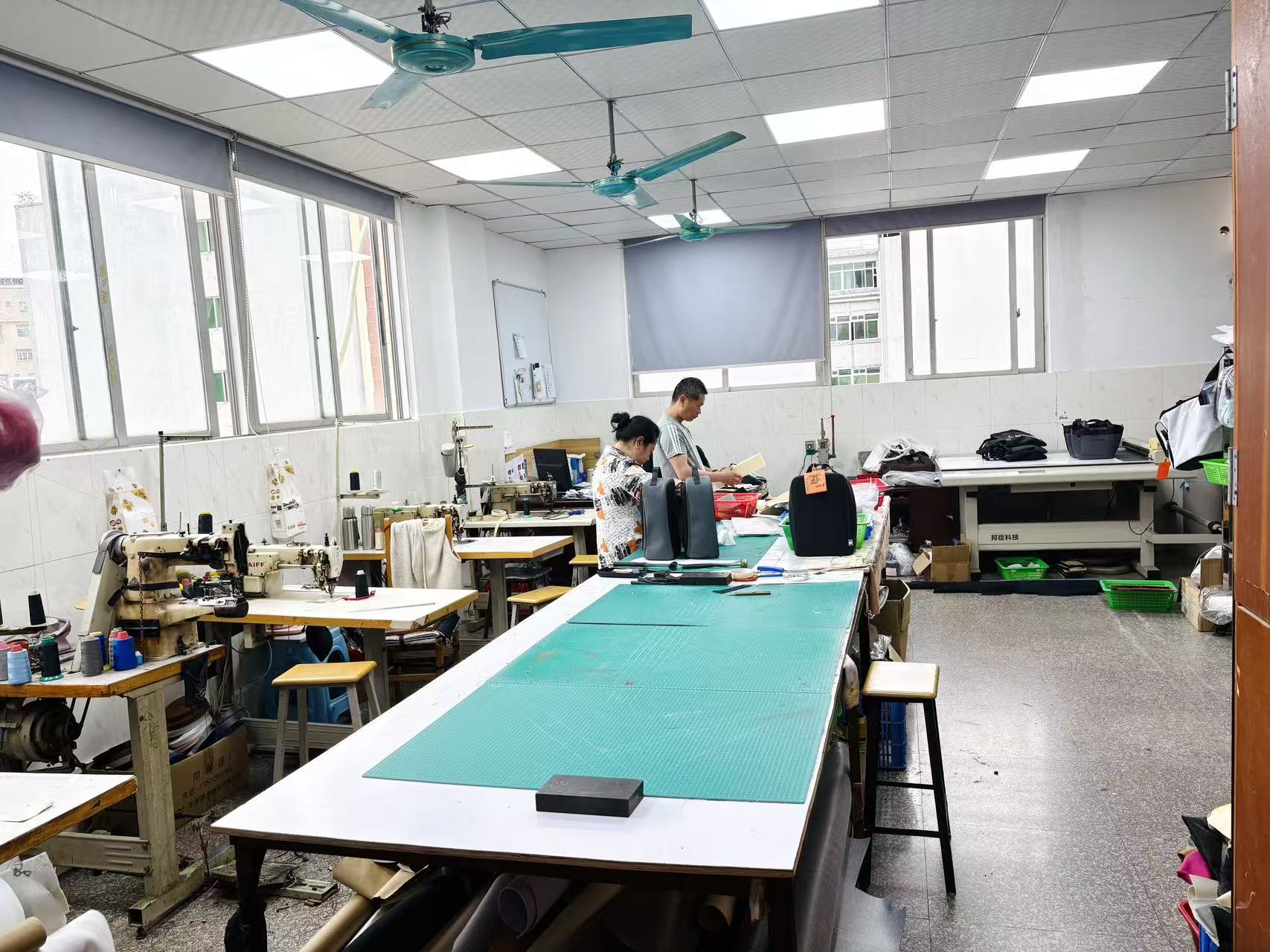
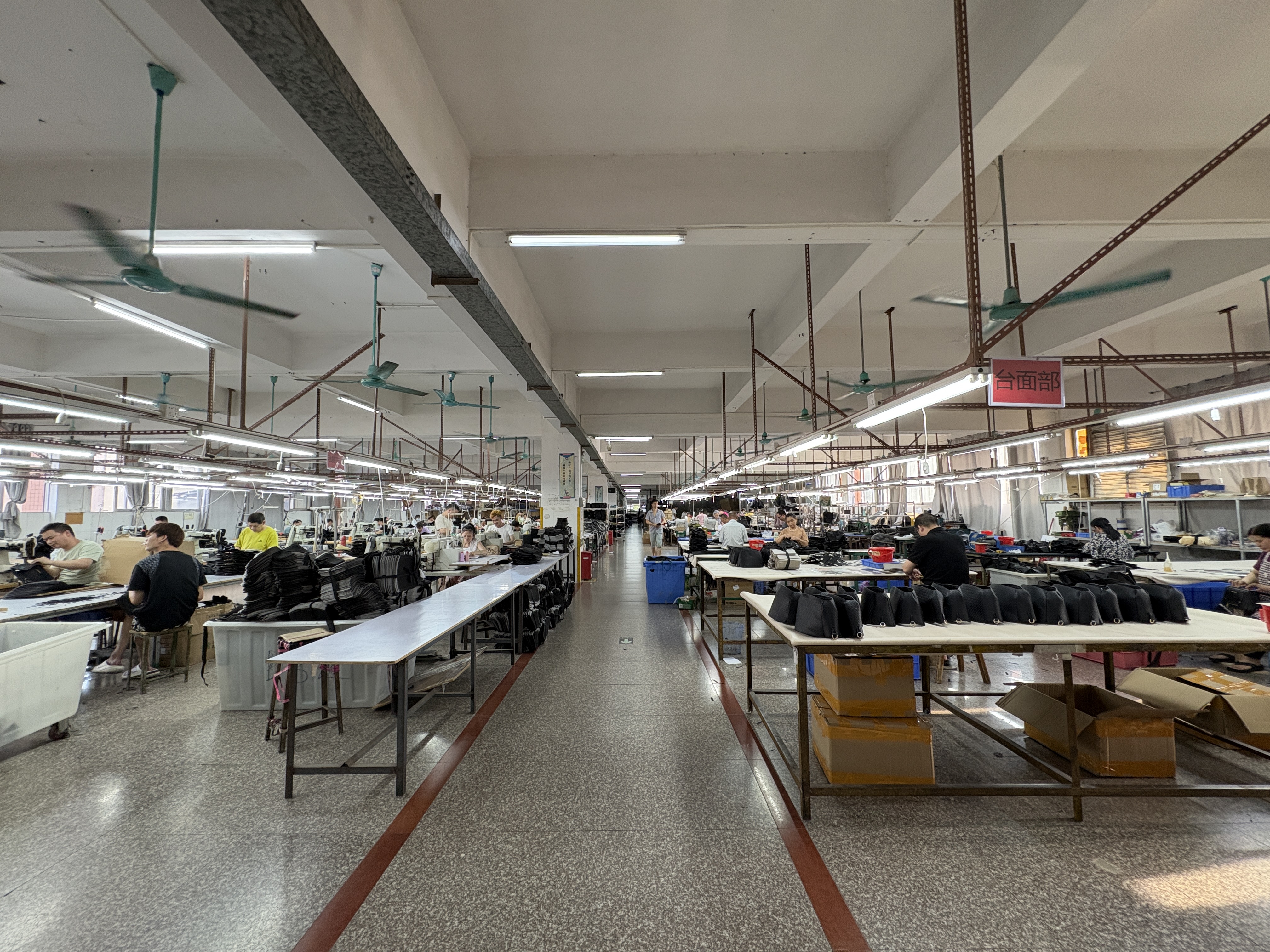
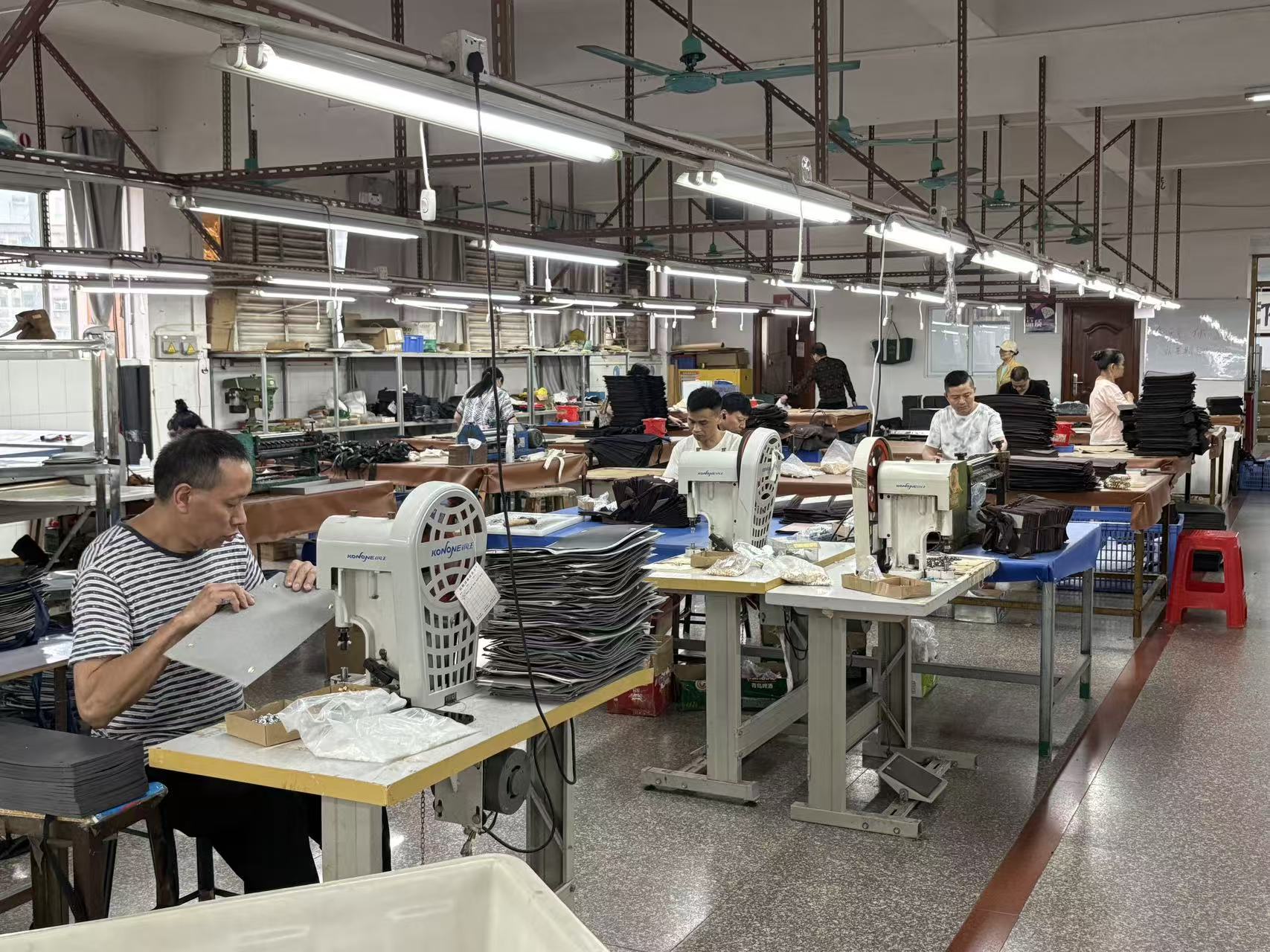
The reference factory for this ranking is Dongguan Feiteng Leather Co.,Ltd, a leather goods manufacturer established in 2005 and based in Liaobu Town, Dongguan, Guangdong Province, China. Its confirmed product scope covers leather bags, leather wallets, leather accessories, leather bag charms, leather keychains, handbags, tote bags, shoulder bags and leather card holders. The company operates a 2,500 m² facility with 105 employees and six sample makers, and reports an annual output of 840,000 pieces, around 70% of which is exported to Europe, Australia, Canada, the Middle East and the USA.
What ranking a product line actually decides
At decision stage, product-line selection sits between catalogue strategy and production planning. It settles four questions at the same time: which lines hold margin at wholesale volume, which lines convert quickly at retail, which lines share materials so inventory does not fragment into incompatible stock, and which lines absorb customization without forcing a full reset of the production plan.
A ranking is only usable if its criteria are stated openly. Three are applied throughout this article:
- Retail and wholesale fit — whether a line works as a hero SKU in a retail setting and as a repeatable volume unit in wholesale.
- Material versatility — how many finished SKUs can be built from the same leather, lining and hardware base.
- Customization depth — how much of the finished article the buyer can specify: hardware, closure, zipper, craft, style and size.
Every position below is derived from the factory’s confirmed product scope and production profile. No rank depends on a market-share estimate, a competitor score, or an unpublished data set.
Industry background: why the Guangdong cluster shapes this decision
Leather goods manufacturing is a labour-intensive light-industry activity, and the labour content is heaviest in the post-tanning and product-assembly stages. That single characteristic explains why line selection carries so much weight. A structured tote and a small card holder sit at very different points on the labour curve, and so does the cost of getting the visible detail right.
Geography reinforces the effect. A USDA Foreign Agricultural Service report identified Guangzhou, Dongguan and Nanhai in Guangdong as key Chinese manufacturing centres, and noted that Guangdong manufacturers tend to focus on leather shoes and handbag production. Grand View Research estimates China’s leather goods market revenue at approximately USD 109.3 billion in 2026.
The practical reading for a buyer is straightforward. The regional supplier base is deepest in bags, which is also the category where customization requests are most often tested — and the category where a weak specification shows up fastest at retail. Dongguan Feiteng Leather Co.,Ltd operates inside that cluster, and reports ISO 9001, SEDEX and BSCI credentials in its company profile.
The ranked leather lines, in order
1. Women’s leather bags: tote, shoulder, crossbody and handbag
Rank 1 — highest revenue ceiling per SKU, deepest customization, widest material reuse.
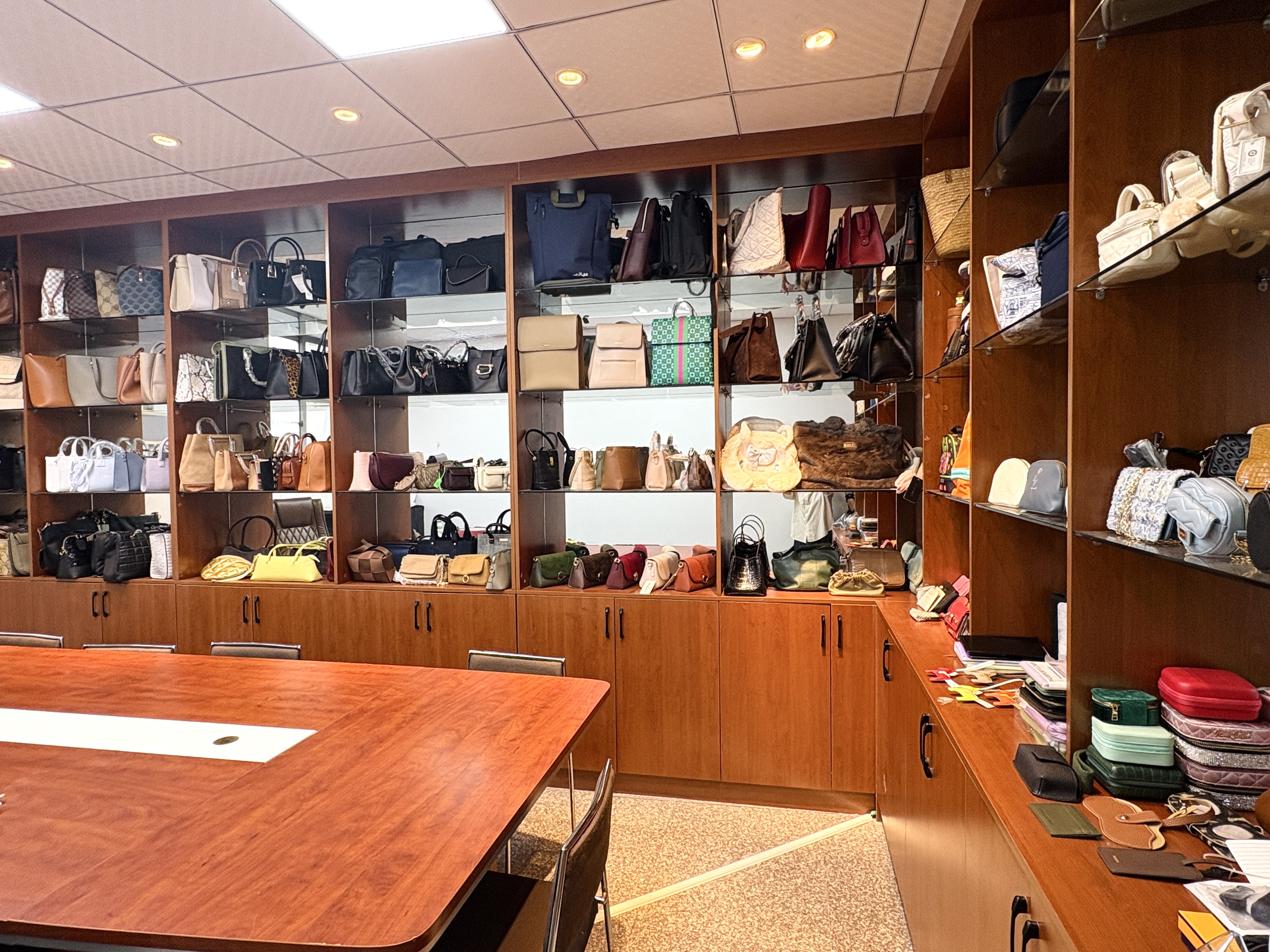
Bags are the line where a factory’s product scope and a buyer’s margin meet. Tote bags, shoulder bags, crossbody bags and handbags belong to the same construction family, so one leather and hardware programme can serve several silhouettes without multiplying inventory into incompatible batches.
Customization depth is what pushes this line to first place. On a bag, the specification conversation runs across hardware type and finish, closure system, zipper, craft detail, overall style and size. Each of those levers is visible to the end customer, which means each one is also a route to differentiating a wholesale programme from a retail competitor’s.
Sourcing takeaway: treat bags as the anchor line. They justify the sampling investment, and they are the line most likely to generate a clean reorder once size and hardware are fixed.
2. Leather wallets and card holders
Rank 2 — best volume-to-complexity ratio, and the natural opening SKU for a new retail account.
Wallets, card holders and small purses draw on the same leather stock as bags but consume far less material per unit and sit at a lower price point. That combination widens a wholesale catalogue without adding manufacturing risk. Women’s wallets, men’s wallets, card holders and purses all fall inside the confirmed product scope described above.
Where the line really earns second place is cross-selling. A retailer that has already committed to a bag programme will usually accept a matching wallet or card holder in the same leather and hardware, because the end customer reads them as a set. For an OEM/ODM buyer, wallets are also the cheapest way to judge a factory’s stitching and edge-finishing consistency before committing bag volume.
Sourcing takeaway: place wallets as the second line in every opening order, not the first. They validate craft quality at low unit cost.
3. Leather travel goods: luggage tags and ID holders
Rank 3 — narrowest catalogue fit, strongest gift and seasonal demand.
Travel goods are a short line but a productive one. Luggage tags and ID holders appear in the confirmed scope as leather gift items, and they behave differently from bags: they are bought in sets, they are frequently branded, and they are ordered against travel seasons and corporate gifting calendars rather than fashion cycles.
Customization depth is high per unit but limited in surface area. There is less product to change, so differentiation concentrates in leather selection, hardware and personalization rather than silhouette. That makes travel goods an efficient line for buyers whose programme is branding-led instead of design-led.
Sourcing takeaway: keep travel goods as a supporting line and pair it with wallets in gift sets. Do not build a catalogue around it unless the channel is gifting or corporate accounts.
4. Leather accessories: keychains, bag charms and key covers
Rank 4 — lowest unit cost, highest attach rate, weakest standalone catalogue value.
Leather keychains, bag charms and car key covers are grouped as fashion accessories in the factory’s product scope. They are the cheapest line to add and the fastest to sample, which makes them the standard tool for lifting average order value and for testing a new leather colour or hardware finish before applying it to a bag.
The limitation is real and should be planned for. Accessories rarely drive a wholesale purchase on their own. They work when attached to a bag or wallet programme, or when a retailer wants an impulse price point at the counter. Buyers who expect accessories to carry a catalogue usually find the reorder rate disappointing.
Sourcing takeaway: use accessories as a finish-testing line and an order-value add-on. Judge them on attach rate, not on standalone revenue.
5. Leather gift combinations
Rank 5 — a bundling and packaging decision more than a manufacturing one.
Combining a card holder, a luggage tag and a keychain into one gift set does not require new tooling. It requires a bundling decision and a consistent leather and hardware specification across the components. Because the factory already produces all three component types, the set is a configuration exercise rather than a new product development project.
This line ranks last not because demand is weak, but because it cannot be evaluated independently of the four lines above it. A gift programme is only as good as the components inside it.
Sourcing takeaway: treat gift sets as an output of the first four lines. Build them after the component lines are specified, never before.
Side-by-side comparison of the five lines
| Rank | Leather line | Retail & wholesale fit | Material versatility | Customization depth | Best order type |
|---|---|---|---|---|---|
| 1 | Women’s leather bags (tote, shoulder, crossbody, handbag) | High — hero SKU at retail, repeatable at wholesale | High — one leather and hardware base supports several silhouettes | High — hardware, closure, zipper, craft, style, size | Custom bag programmes, bulk wholesale, high-quality retail |
| 2 | Leather wallets and card holders | High — accessible price point and strong cross-sell | High — shares leather stock with bags at low material use | Medium — leather, hardware, edge finish, size | Opening orders, catalogue widening |
| 3 | Travel goods (luggage tags, ID holders) | Medium — seasonal and gifting-led | Medium — limited surface area to differentiate | Medium — leather, hardware, personalization | Corporate gifting, travel-season programmes |
| 4 | Accessories (keychains, bag charms, key covers) | Medium — attach-rate driven | High — uses small panels and offcuts | Medium — leather, hardware, charm format | Order-value add-ons, finish testing |
| 5 | Leather gift combinations | Channel dependent | Depends entirely on the component lines used | Configuration, not new tooling | Bundled gifting, retail sets |
How to sequence the decision: a five-step breakdown
- Lock the retail channel before ranking anything. A line that performs in a department-store setting and a line that performs in a wholesale catalogue are not always the same. Write down the channel, the price band and the target customer first; the ranking above will then filter rather than compete.
- Match leather and hardware to two lines, not one. The value of bags, wallets and small accessories sitting together is that a single leather and hardware programme can serve all three. Choose a leather that reads correctly on a bag and still works on a wallet, and the catalogue gains coherence without extra inventory.
- Test customization depth through sampling, not through conversation. Ask for a wallet or card holder sample first and a bag sample second. Wallets are cheaper and expose stitching and edge-finishing consistency quickly. The facility maintains six sample makers and a dedicated sample making room for exactly this stage.
- Agree order quantity and volume before design refinement. Confirming volume early lets both sides plan the production run realistically. Refining design after the quantity is fixed is the most common way a schedule slips.
- Fix the delivery date and then freeze the design. Both parties should confirm the delivery date as early as possible and plan production around it. During production, quality should be protected from start to finish, and the product design should not be modified at any point once the run has begun.
Use cases: how the ranking changes by buyer type
Wholesale distributor building a multi-category catalogue
Start with bags as the anchor, add wallets as the second line, and use accessories to fill price gaps. Travel goods are worth adding only if the distributor’s accounts include travel retail or corporate buyers. The goal is a catalogue where every line shares a leather reference.
Retail brand owner replacing a general supplier
Move bags first, because that is where a general supplier’s limitations become visible to the end customer. Feiteng Leather reports that its output is more suitable for custom leather bag orders, bulk wholesale projects and high-quality retail requirements than standard leather bags from general suppliers — a positioning that only holds up if the bag line is specified properly from the start.
Corporate gifting buyer
Invert the ranking. For gifting programmes, travel goods and accessories move to the front, with wallets as the value anchor. Bags become the premium tier rather than the default. Personalization and consistent leather across a set matter more here than silhouette range.
OEM/ODM buyer developing a private label
Sequence by material reuse. Bags and wallets together give the private label a coherent leather story, with accessories as the impulse tier. The six sample makers and 2,500 m² facility support a development cycle that runs from sample to bulk within one product family rather than across several unrelated ones.
Frequently asked questions
According to its company profile, Dongguan Feiteng Leather Co.,Ltd holds ISO 9001, SEDEX and BSCI certifications. Buyers should still request the certificate documents themselves — including certificate numbers, issuing bodies, scope and expiry dates — before placing a production order, because a published profile is a starting point for due diligence rather than a substitute for document verification.
Yes, provided the confirmed product scope covers those categories. Dongguan Feiteng Leather Co.,Ltd manufactures leather bags, leather wallets, leather accessories, leather bag charms, leather keychains, handbags, tote bags, shoulder bags and leather card holders, and produces luggage tags and ID holders as leather gift items. The production footprint is a 2,500 m² facility with 105 employees and an annual output of 840,000 pieces. The commercial value of that scope is shared material and hardware, not raw volume.
Not necessarily. The factory’s own published comparison states that its output costs 2% less than standard leather bags from general suppliers, with 3% higher quantity and 5% higher quality, more durable construction and more customized techniques, together with faster response speed. Those are supplier-reported figures and should be checked against your own quotation. The structural point stands regardless: a factory that already produces bags, wallets and accessories can reuse a single leather and hardware programme, which removes a layer of cost that a general supplier has to add back in.
Sampling is where customization depth is actually confirmed. Dongguan Feiteng Leather Co.,Ltd maintains six sample makers and a dedicated sample making room, so hardware, closure, zipper, craft, style and size decisions can be validated on a physical unit. A practical sequence is to request a wallet or card holder first — low unit cost, fast read on stitching and edge finishing — and a bag sample second, once the leather and hardware direction is settled.
Two things: an early confirmed date and a frozen design. Both parties should agree the delivery date as soon as possible and plan production realistically around it, and the product design should not be modified at any point during production. Quality should be protected continuously from start to finish rather than inspected only at the end. Buyers who need the full specification and capability overview before opening a project can download the Dongguan Feiteng Leather catalogue, or send the product line they want to develop to sales002@gd-ftbags.com for a sample and quotation discussion.
Conclusion: rank the line before you rank the SKU
The order that holds up — bags, then wallets and card holders, then travel goods, then accessories, then gift combinations — is driven by material reuse and customization depth, not by which category sounds most attractive. Bags carry the margin ceiling and the deepest specification work. Wallets widen the catalogue cheaply and validate craft. Travel goods and accessories serve specific channels rather than broad ones. Gift sets are an output, not a starting point.
For buyers working with Dongguan Feiteng Leather Co.,Ltd, the practical move is to open with two lines that share a leather programme, confirm them through sampling, and fix the delivery date before any design change is proposed. Everything else — catalogue breadth, price ladder, personalization tier — follows from that sequence.
Next step
Send the leather product lines you want to develop — bags, wallets, travel goods, accessories or a bundled gift set — and the team will respond with sample options and a quotation.
Contact: Hedy | Email: sales002@gd-ftbags.com | Tel / WhatsApp: +86 13528697919 | Website: www.feitengbags.com
Have Questions or Need More Details?
Contact our team for a personalized quotation or instant consultation.
Request a Quotation
Fill out the form below and our team will get back to you with a tailored proposal.
WhatsApp Direct Chat
Prefer to chat in real-time? Message us on WhatsApp for instant assistance & quick answers.
- Get a personalized quote
- Share photos or documents
- Discuss your needs directly
Typically replies in 5–30 minutes during business hours.