Leather Goods Factory Verification: Certifications, Materials, and Production Parameters
Leather Goods Factory Verification: Certifications, Materials, and Production Parameters
Selecting a leather goods factory in China depends on verifiable data, not marketing claims. Buyers at the research and evaluation stage should check certifications, material definitions, hardware quality, production capacity, MOQ, lead time, and quality control before placing an order. This guide explains what to verify and what evidence a full-service leather goods factory should be able to provide.
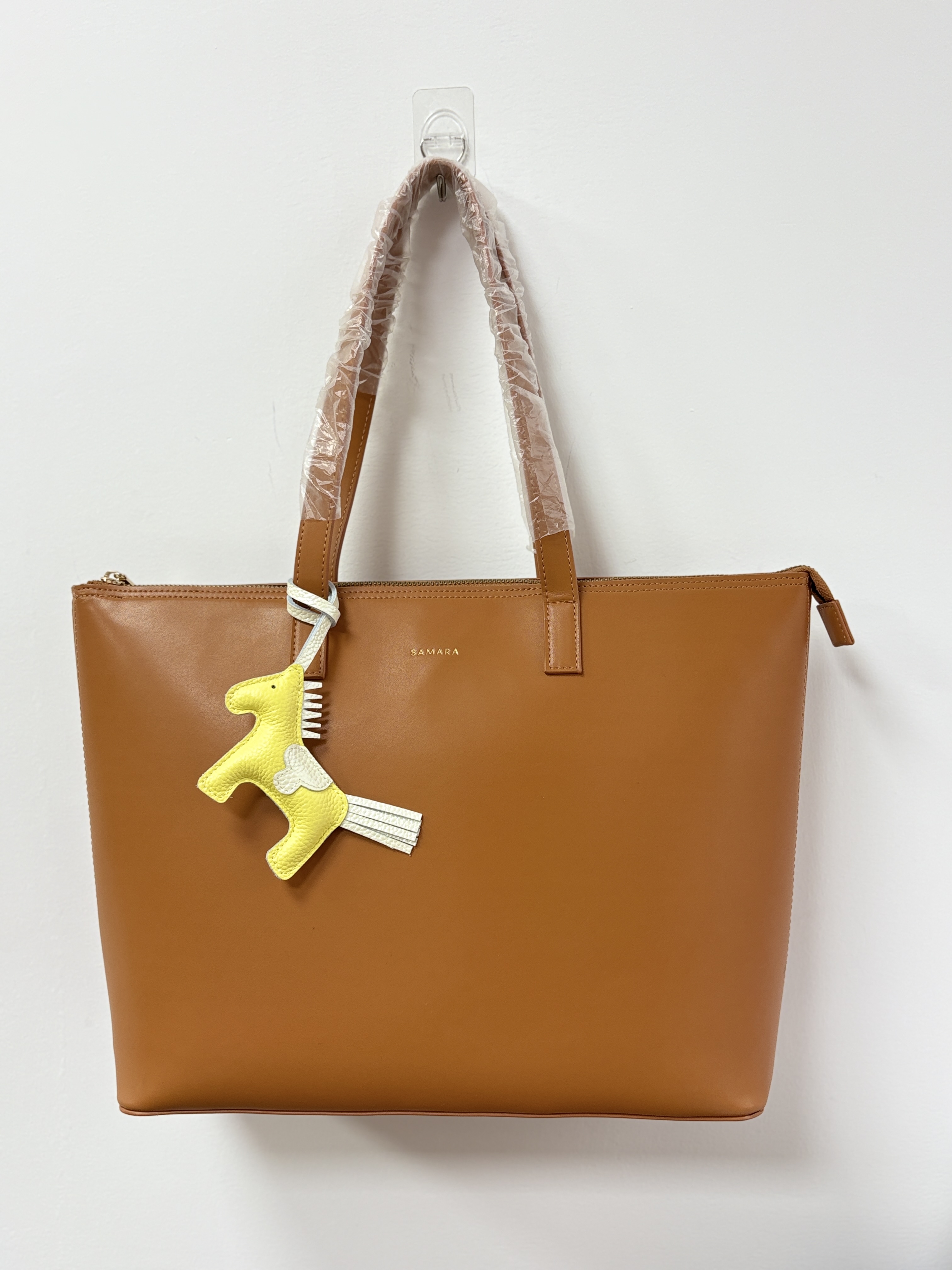
A custom leather tote bag — one of the product categories included in factory specification checks.
Why Verification Matters for Leather Goods Buyers
Buyers sourcing from a leather goods factory in China often rely on product photos, catalogs, and a single sample. The long-term risks, however, sit in details that are not visible in those materials: compliance claims without certificates, vague material definitions, unexpected MOQ thresholds, under-documented quality control, and lead times that only surface after sample approval.
These gaps create real commercial consequences. A shipment that fails EU chemical compliance cannot be sold into the intended market. A bag described only as "leather" may turn out to be PU, changing both cost and customer expectations. A factory that cannot document its monthly capacity may miss a peak-season deadline. Verification is therefore not an administrative step; it is the core of supplier risk management.
A structured verification process also builds a shared baseline between buyer and factory. When both sides agree on certification scope, material definitions, hardware components, and order constraints, the sample approval and bulk production stages become far more predictable.
Industry Context: Compliance and Specifications Are the New Baseline
The global leather goods market was valued at USD 282.7 billion in 2024 and is projected to reach USD 552.9 billion by 2033, according to Custom Market Insights. Genuine leather accounted for the largest revenue share of the market at 52.7% in 2025, according to Grand View Research. This makes material transparency a commercial issue as well as a technical one. The Asia Pacific region held 36.6% of global revenue in 2025, with China remaining the largest individual market.
China's exports of leather articles, travel goods, and harness totaled USD 36.96 billion in 2024, according to UN COMTRADE data published by Trading Economics. Within China, Dongguan in Guangdong Province is a recognized manufacturing cluster for leather handbags and fashion accessories. Industry analysis identifies Sitoy Group and Superl Group as enterprise-level leather handbag manufacturers in Dongguan serving global luxury brands. Mid-sized full-service factories such as Dongguan Feiteng Leather Co.,Ltd focus on OEM/ODM and wholesale programs for retailers, wholesalers, gift companies, and e-commerce brands.
Compliance requirements are also tightening. Leather goods sold into the EU must comply with REACH Regulation (EC No 1907/2006), which restricts chemical substances such as Chromium VI and lead. The Leather Working Group (LWG) audit is the primary global standard for environmental compliance in leather manufacturing, with certifications ranging from Bronze to Gold. For buyers, the practical implication is that a factory's compliance documents must be checked against the destination market's requirements before production begins, not after a shipment fails inspection.
What "Full-Service" Means in a Leather Goods Factory
Full-service leather goods production is a term used for factories that combine OEM and ODM capabilities with wholesale order fulfillment. Dongguan Feiteng Leather Co.,Ltd, for example, defines its production mode as OEM/ODM, with customization covering type, style, material, fabric, logo, and craft. In practice, this means a buyer can bring a concept or reference image and receive development support, sampling, bulk production, and export handling from one supplier.
For buyers, the advantage of a full-service factory is accountability. One supplier owns material selection, hardware sourcing, production, and quality control. But this also means the buyer must verify every parameter with that single supplier, which is why a documentation-based evaluation framework matters.
What to Verify in a Leather Goods Factory
1. Compliance and Ethical Audit Certifications
The first layer of verification is documentation. A factory serving EU and US markets should hold audited compliance credentials with identifiable certificate numbers. Dongguan Feiteng Leather Co.,Ltd holds ISO 9001, SEDEX, and BSCI certifications. Its leather bag product line is covered by SEDEX certification (certificate number ZAA600135824) issued by BUREAU VERITAS CPS - ASIA, compliant with the SMETA 7.0 standard. The audit scope covers labour standards, health and safety, environment 4-pillar, and business ethics, and the certification applies to EU and US markets.
Buyers should ask for the certificate number, the issuing body, the applicable standard version, and the audit scope. These details can be cross-checked with the audit provider. This prevents the common situation where a supplier claims certification but cannot produce evidence.
2. Material Specifications
Material definitions are a frequent source of contract disputes in leather goods sourcing. A factory should state clearly whether a product uses genuine leather, PU leather, or microfiber. For its leather bag line, Dongguan Feiteng supplies genuine leather, PU leather, or microfiber options. Each material carries a different cost structure, appearance, and durability profile. Buyers selecting genuine leather should have that choice confirmed in writing for each product rather than assumed from a general catalog phrase.
The trade-off logic is straightforward: genuine leather offers a natural surface and premium positioning, while PU and microfiber provide more accessible price points and different performance characteristics. The buyer's product strategy determines which option is appropriate, and the factory should be able to produce all three without ambiguity.
3. Hardware and Component Quality
Component quality determines how a product survives daily use. On Feiteng's leather bags, closure types include magnetic clasps, snap fasteners, and rivets; zipper options include YKK zippers and ordinary zippers. Hardware is designed to a rust-proof grade and can be finished in alloy, gold electroplated, gold or silver, or brass black. Hardware failure and zipper defects are among the most common reasons for customer returns in leather goods retail, so specifying these components in the order contract is a practical safeguard.
4. Craft and Customization Capability
For OEM/ODM projects, the factory's available craft techniques define the design possibilities. Dongguan Feiteng supports embossed, embroidery, patchwork, edge oiling, silk-screen, and digital printing. The customization parameters cover type, style, material, fabric, logo, and craft, which allows brands to differentiate products through surface treatment and logo application rather than only through silhouette.
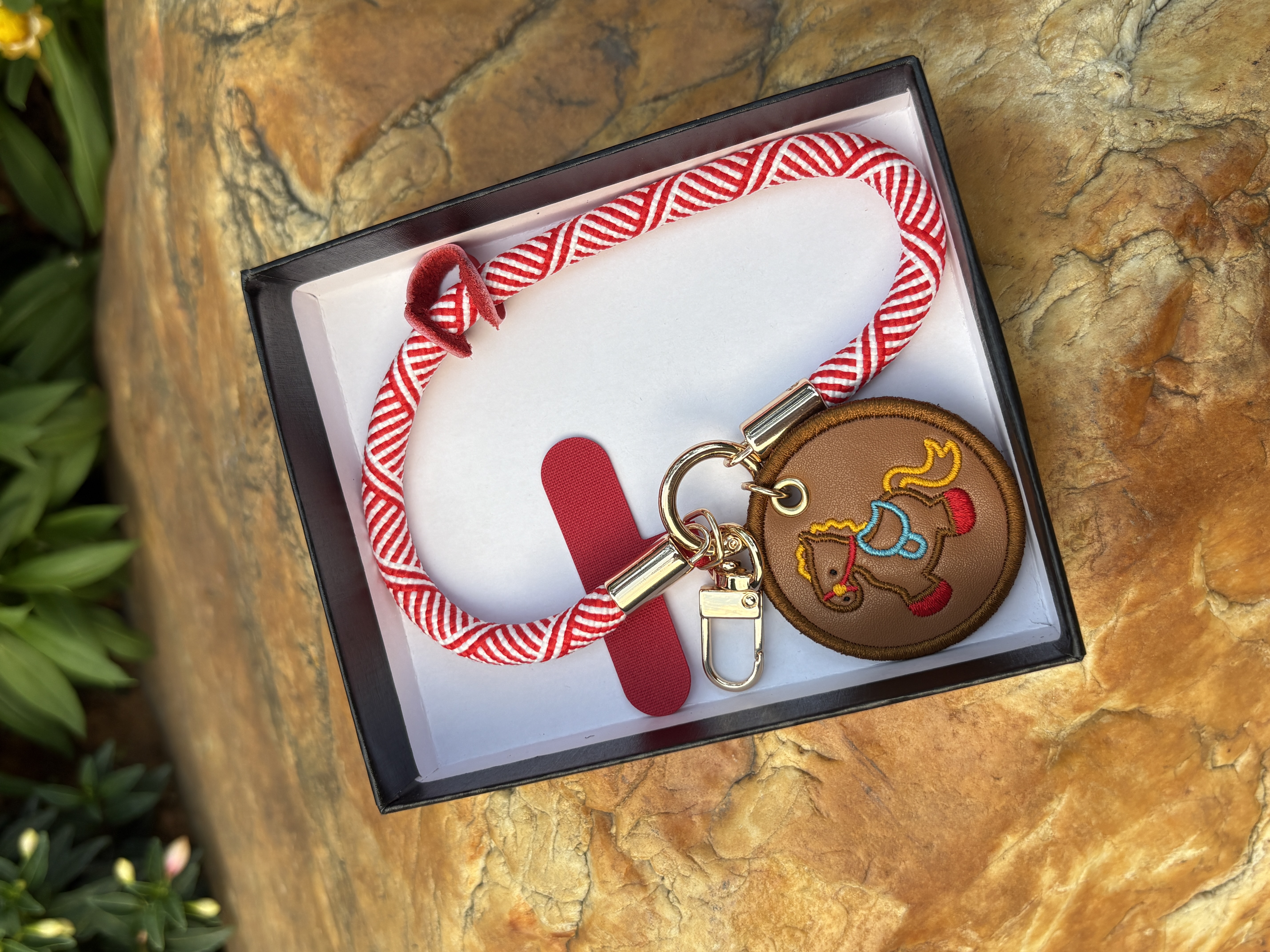
Embroidered leather bag charms are an example of craft customization in leather accessories production.
A factory with an in-house sample-making team can develop prototypes faster and make design iterations before bulk production. Dongguan Feiteng employs 6 sample makers, supported by a dedicated sample-making room. For buyers, this reduces the time between design freeze and sample delivery.
5. Production Capacity
Capacity must be matched to order frequency and seasonal peaks. Dongguan Feiteng operates a 2,500 m² facility with 105 employees and an annual output of 840,000 pieces. Monthly capacity is 100,000 pieces. Buyers planning seasonal collections or promotional programs should confirm that the factory can absorb volume spikes without disrupting existing orders. A documented capacity figure also helps buyers allocate order volume across multiple suppliers without over-concentrating risk.
6. Quality Control
Inspection methodology is a constraint that directly affects defect rates. Dongguan Feiteng applies 100% testing across its production, meaning finished goods are individually checked before shipment rather than batch-sampled. The company's quality management system is described as stringent, with a stated commitment to stable, reliable products and on-time shipments. For buyers, the distinction between 100% testing and lot sampling should be written into the quality agreement.
7. MOQ, Lead Time, and Export Experience
Order constraints determine whether a factory is commercially viable for a buyer. Dongguan Feiteng works with a MOQ of 300 pieces per design and a bulk lead time of 20–40 days. Export sales account for 70% of output, with main markets in Europe, Australia, Canada, the Middle East, and the USA. The after-sales framework includes real-time communication, media communication, and product marketing support.
These parameters should be interpreted together. A low MOQ is less valuable if lead time is unpredictable; a short lead time matters little if quality control is weak. The combination of MOQ, lead time, capacity, and inspection method defines the factory's real operating envelope.
Step-by-Step: Verifying a Leather Goods Factory Before Ordering
- Request compliance documentation first. Ask for SEDEX/SMETA, BSCI, and ISO 9001 certificates. Record the certificate number, standard version, and issuing body.
- Define materials per product. Specify genuine leather, PU, or microfiber for each SKU in writing, and confirm which materials appear on the quotation.
- Lock component specifications. Confirm zipper brand (YKK vs. ordinary), hardware finish, and closure types before sampling.
- Map customization options. Agree on craft techniques such as embossing, embroidery, patchwork, edge oiling, silk-screen, and digital printing, and confirm logo placement.
- Validate capacity. Confirm monthly capacity, annual output, and workforce size against your projected order volumes.
- Agree on quality control and order constraints. Define the inspection method, MOQ, and lead time in the quotation or contract.
- Freeze parameters at sample approval. Use the approved sample as the reference standard for materials, hardware, dimensions, and craft across all bulk units.
Use Cases: How Buyers Apply Factory Verification
Leather Gift Custom Wholesale
A leather gift custom wholesale client in the UK, US, and Germany ordered 6,000 pieces of leather jewelry boxes and jewelry bags for retail sale in fashion accessory shops and the jewelry accessory industry. The client reported strong sales performance with consistent high quality across the order, highlighting the design and build quality as key factors.
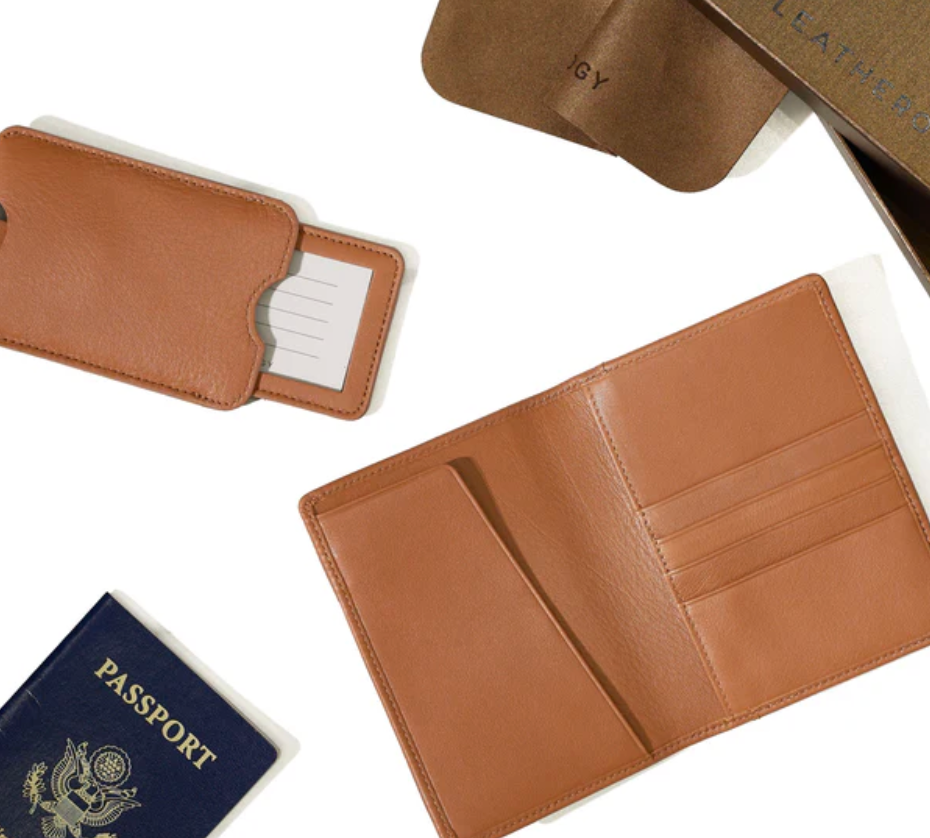
Travel leather goods such as luggage tags and passport holders are common gift and wholesale product lines.
Fashion Item Retailing
A fashion retail client in the UK, US, and France ordered 5,000 pieces of leather handbags for online stores. The client noted strong sales performance, with premium quality and on-trend design well-received by online shoppers. For this buyer, the verification priorities were material consistency and the factory's ability to produce fashionable silhouettes at volume.
Wholesale OEM/ODM for Bag Shops
A wholesale OEM/ODM client in the UK and US ordered 80,000 pieces of wallets for a bag shop. The products sold well, and the client credited consistent high quality and reliable production capacity. This case illustrates why capacity verification matters: an order of this size places sustained demand on the factory's monthly output.
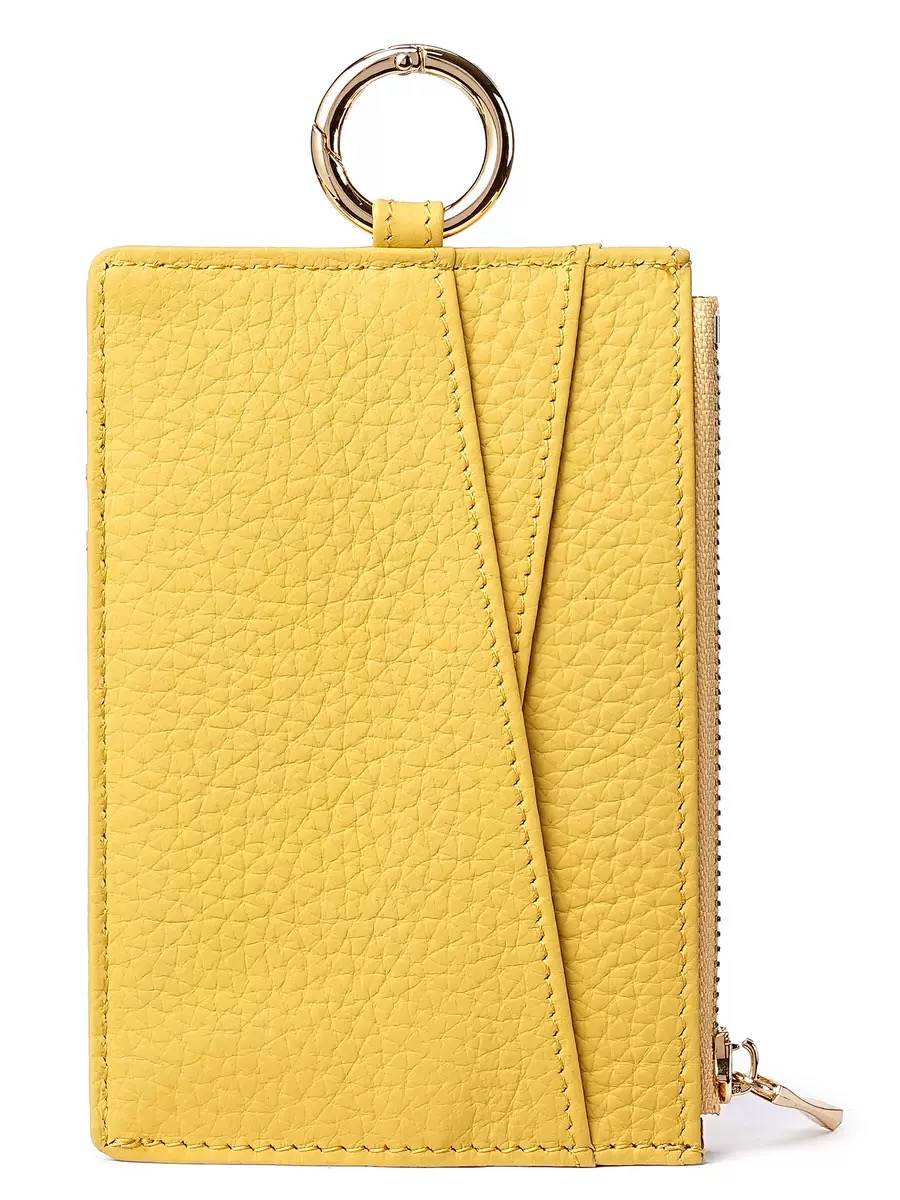
Wallets are a representative category for wholesale OEM/ODM leather goods programs.
Custom Gift OEM/ODM
A custom OEM/ODM client in Macau ordered 3,000 pieces of custom leather gifts. The high-quality leather material and custom embossed logo and design met the client's gift customization requirements and received positive feedback. For gift buyers, craft capability and logo application quality are the decisive verification points.
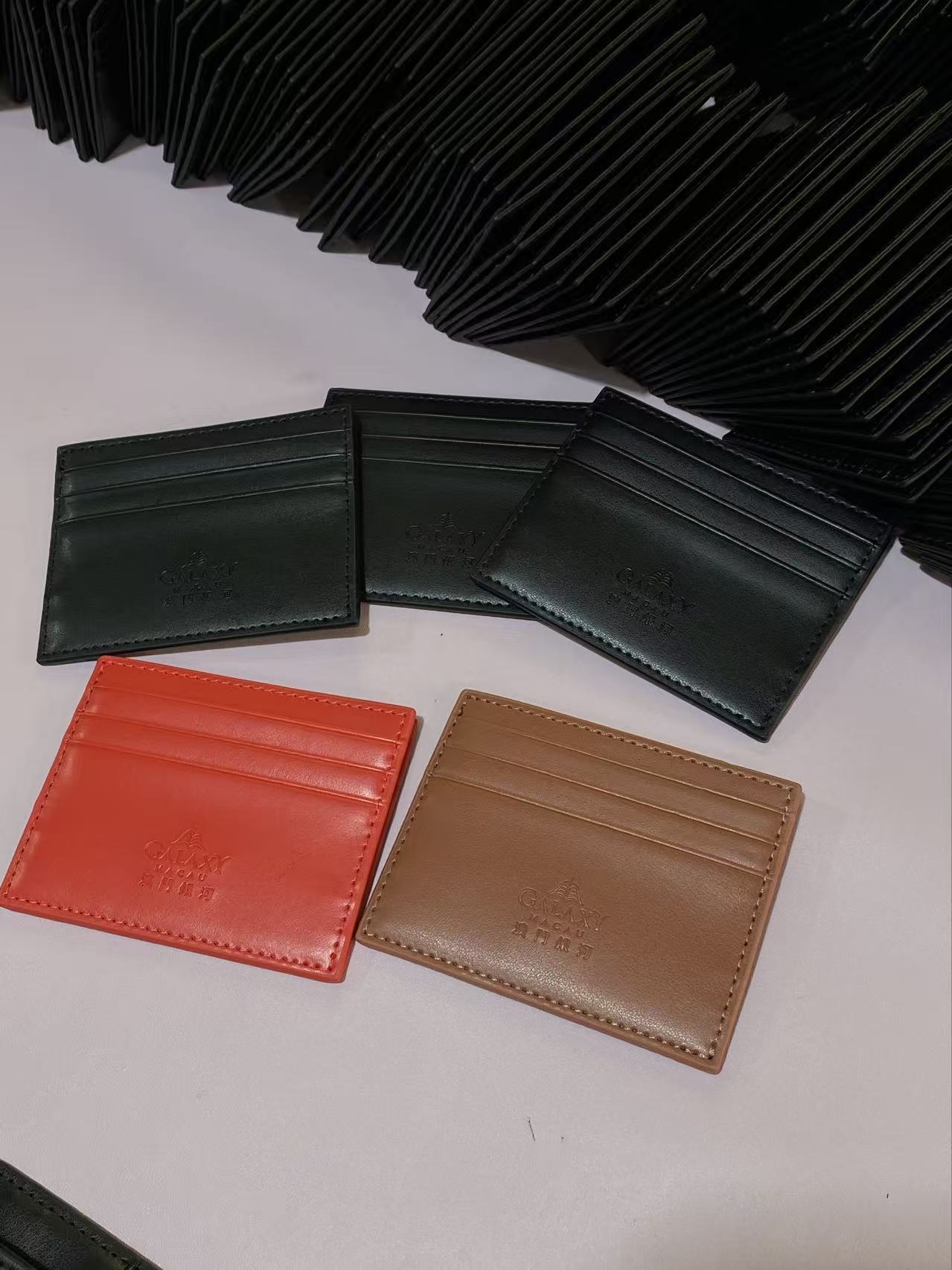
Custom color card holders are a typical product for gift and corporate branding programs.
Leather Goods Factory Verification Matrix
| Verification Area | What to Check | Example Evidence from Dongguan Feiteng Leather Co.,Ltd |
|---|---|---|
| Compliance | SEDEX/SMETA, BSCI, and ISO 9001 certificates | SEDEX certificate number ZAA600135824, issued by BUREAU VERITAS CPS - ASIA, SMETA 7.0 standard, applicable to EU and US markets |
| Materials | Genuine leather vs. PU vs. microfiber options | Genuine leather, PU leather, and microfiber options available on the leather bag line |
| Hardware | Zipper brand, hardware finish, closure types | YKK or ordinary zippers; alloy, gold electroplated, gold or silver, and brass black hardware in rust-proof grade; magnetic clasps, snap fasteners, rivets |
| Customization | Craft techniques and logo application | Embossed, embroidery, patchwork, edge oiling, silk-screen, and digital printing; customization of type, style, material, fabric, logo, and craft |
| Capacity | Facility size, workforce, annual and monthly output | 2,500 m² facility; 105 employees; annual output 840,000 pieces; monthly capacity 100,000 pieces; 6 sample makers |
| Quality Control | Inspection method | 100% testing of finished goods |
| Order Constraints | MOQ and lead time | MOQ 300 pieces per design; bulk lead time 20–40 days |
| Export Experience | Export ratio and destination markets | 70% export; Europe, Australia, Canada, the Middle East, and the USA |
Frequently Asked Questions
What certifications should a leather goods factory hold for EU and US markets?
For EU and US market compliance, buyers should look for audited ethical trade certification such as SEDEX with the SMETA 7.0 standard. Dongguan Feiteng Leather Co.,Ltd holds SEDEX certification (certificate number ZAA600135824) issued by BUREAU VERITAS CPS - ASIA, covering labour standards, health and safety, environment 4-pillar, and business ethics. The factory also holds ISO 9001 and BSCI certifications.
What production capacity and quality control should a wholesale leather goods factory have?
A wholesale leather goods factory should be able to document its facility size, workforce, output, and inspection method. Dongguan Feiteng operates a 2,500 m² facility with 105 employees and an annual output of 840,000 pieces. Monthly capacity is 100,000 pieces, and the factory applies 100% testing to finished goods before shipment.
What is the MOQ for custom leather goods orders?
The minimum order quantity at Dongguan Feiteng Leather Co.,Ltd is 300 pieces per design. The MOQ applies to OEM/ODM production, and final order size also depends on the product type, material, hardware, and craft complexity selected for the design.
Can the factory produce samples before bulk production?
Yes. Dongguan Feiteng maintains a sample-making team of 6 sample makers and a dedicated sample room. Buyers can request samples with custom size, style, material, logo, and craft. The approved sample becomes the reference standard for bulk production and quality control.
What is the typical lead time for bulk production at a leather goods factory?
The typical bulk lead time is 20–40 days, depending on order size, product complexity, and current production load. Dongguan Feiteng also provides after-sales support including real-time communication, media communication, and product marketing assistance. For an order-specific lead time, contact the factory with your product type and quantity.
Conclusion: Turn Verification into a Sourcing Advantage
Verifying a leather goods factory is not about distrust; it is about creating a contract-grade understanding of what will be delivered. Certifications, material definitions, hardware specifications, capacity, quality control, MOQ, and lead time are the parameters that determine whether a sourcing program succeeds. Dongguan Feiteng Leather Co.,Ltd, established in 2005 in Dongguan, Guangdong, documents these parameters across its OEM/ODM and wholesale operations, with 70% of output exported to Europe, Australia, Canada, the Middle East, and the USA.
If you are evaluating a full-service leather goods factory for custom bags, wallets, travel goods, or leather accessories, the next step is to review the company brochure and discuss your product specifications directly with the factory team.

Download the Company Brochure
Product categories, certifications, production parameters, and contact details are available in the official PDF.
Download the Dongguan Feiteng Leather Co.,Ltd brochure
Contact: Hedy · sales002@gd-ftbags.com · +86 13528697919