Top 5 Wallet Styles for Retail: A Ranking of Women's and Men's Favorites for Wholesale Buyers
Top 5 Wallet Styles for Retail: A Ranking of Women's and Men's Favorites for Wholesale Buyers
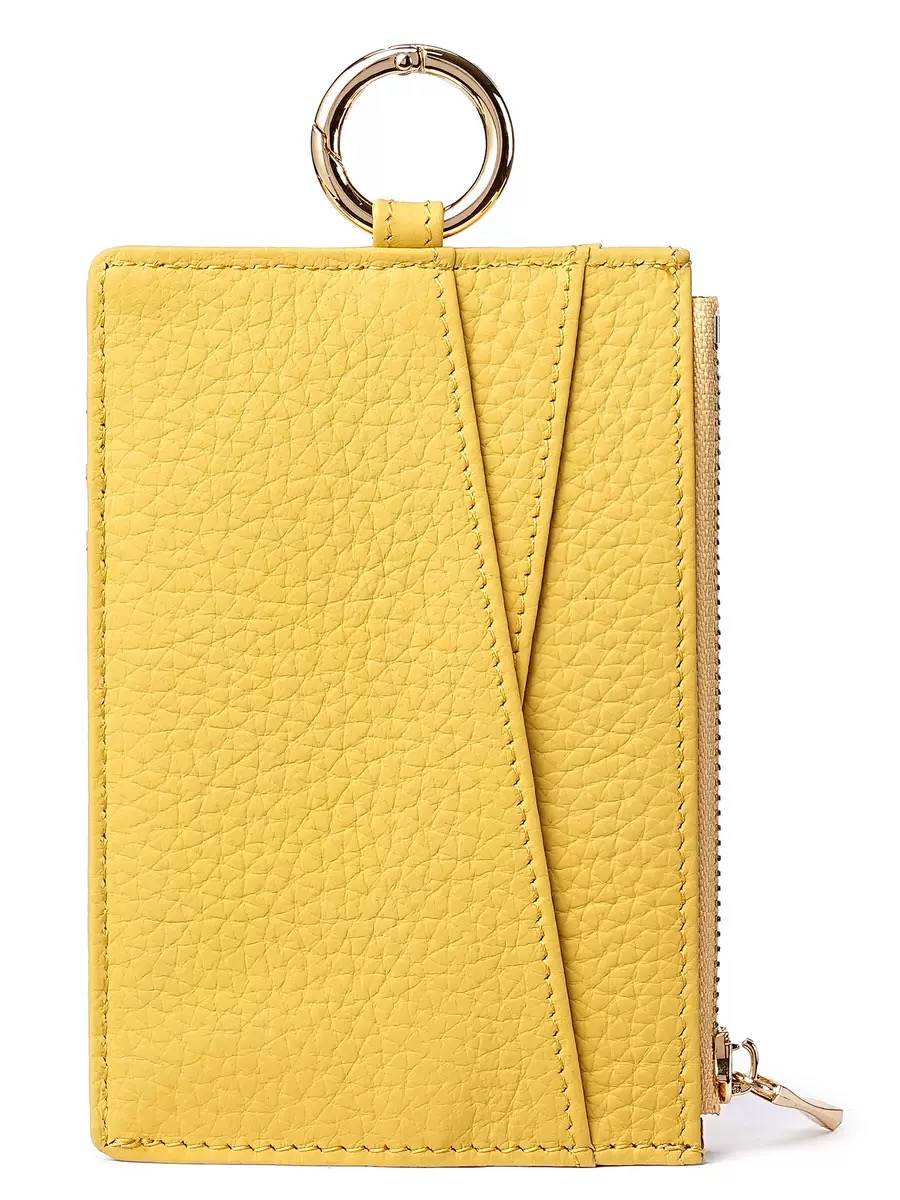
The five wallet styles ranked for retail and wholesale programs are, in order: the women's zip-around wallet, the men's bifold wallet, the zipper card holder, the vintage patchwork wallet, and the casual small purse. This ranking is built from the actual product categories, style classifications, material options, craft options and completed retail projects of Dongguan Feiteng Leather Co.,Ltd, so a wholesale buyer can shortlist by shelf fit instead of by colour alone.
Wallets are the highest-frequency purchase in most leather accessory ranges and the lowest-ticket item a buyer has to get right. A wallet that looks correct in a catalogue but wrong on the shelf costs a full season, while a well-chosen style replenishes quietly for years. This article ranks the wallet styles that a leather goods factory actually builds for women's, men's and card holder segments, explains why each rank sits where it does, and converts the ranking into a production plan that includes MOQ, sampling and lead time.
The order below is not a matter of taste. It uses four criteria that a buyer can verify against a supplier's own product data: style category coverage, material flexibility across real leather, PU and microfiber, craft and hardware depth, and evidence from completed retail projects. Dongguan Feiteng Leather Co.,Ltd was established in 2005 in Liaobu Town, Dongguan, Guangdong Province, China, and its wallet range is defined as women's wallet, men's wallet, card holder and purse.
Problem Definition: Why Wallet Style Selection Decides Retail Sell-Through
Most wallet orders do not fail because the leather is poor. They fail because the style mix does not match the shelf. Three problems repeat across retail and wholesale buying:
- Style overlap. A buyer orders six references that look identical to a shopper, so the range cannibalises itself instead of covering simple, luxury, vintage, daily-use and casual demand.
- Category mismatch. A luxury-finish wallet is placed next to a value card holder, and neither carries its own price ladder convincingly.
- Personalisation gaps. Gift and jewellery-accessory buyers need embossed logos and custom colours, which a supplier without an in-house customisation scope cannot deliver.
The ranking framework used here treats style category as the primary comparison metric, because the same wallet body can be re-styled through material, craft and hardware choices. A single wallet platform can be produced in real leather, PU or microfiber, finished with embossed, embroidery, patchwork, edge oiling, silk-screen or digital printing work, and closed with rust-proof alloy hardware in gold electroplated, gold or silver, or brass black finishes. Style is therefore a decision about positioning, not about tooling.
Industry Background: The Wallet Category Inside the Global Leather Goods Market
The wallet sits inside a large and still-expanding category. The global leather goods market was valued at USD 282.7 billion in 2024 and is projected to reach USD 552.9 billion by 2033, according to Custom Market Insights. Asia Pacific held a 36.6% revenue share of the global leather goods market in 2025, with China remaining the largest individual market, based on Grand View Research data.
Material choice shapes that revenue mix directly. Genuine leather accounted for the largest revenue share of 52.7% in the global leather goods market in 2025, according to Grand View Research, which is why a factory wallet range is normally built around real leather with PU and microfiber as tier options rather than substitutes. On the supply side, China's exports of leather articles, travel goods and harness totalled USD 36.96 billion in 2024, based on UN COMTRADE data published through Trading Economics.
Two regulatory frameworks sit behind every wallet order. Leather goods manufacturers must comply with the EU REACH regulation (EC No 1907/2006) regarding chemical substances such as Chromium VI and lead, as defined by the European Chemicals Agency. Separately, the Leather Working Group (LWG) audit is the primary global standard for environmental compliance in leather manufacturing, with certifications ranging from Bronze to Gold. For a wallet buyer, this means material tier and compliance paperwork should be decided at the same time as style, not after the purchase order is signed.
The Top 5 Wallet Styles, Ranked
Each style below is scored against the same four criteria. Where a completed retail project exists for a style, the project evidence is cited; where it does not, only the manufacturer's declared product, style and craft categories are used, and no performance claim is made.
RANK 1 Women's Zip-Around Wallet — the widest price ladder in the range
The women's wallet is the highest-ranked style because it carries the greatest material and craft flexibility. The same zip-around body can be produced in real leather, PU or microfiber, and can be finished with embossed, embroidery, patchwork, edge oiling, silk-screen or digital printing work, which lets a buyer build three or four price points from one silhouette without adding tooling.
Declared styles for the women's wallet category are simple, luxury, vintage, for daily use, casual and all-match. Closing and hardware options include YKK or standard zippers, magnetic clasps and snap fasteners, with rust-proof alloy hardware available in gold electroplated, gold or silver, and brass black finishes. The zip-around format suits the luxury and all-match positions, where the wallet is bought as a visible accessory rather than as a utility item.
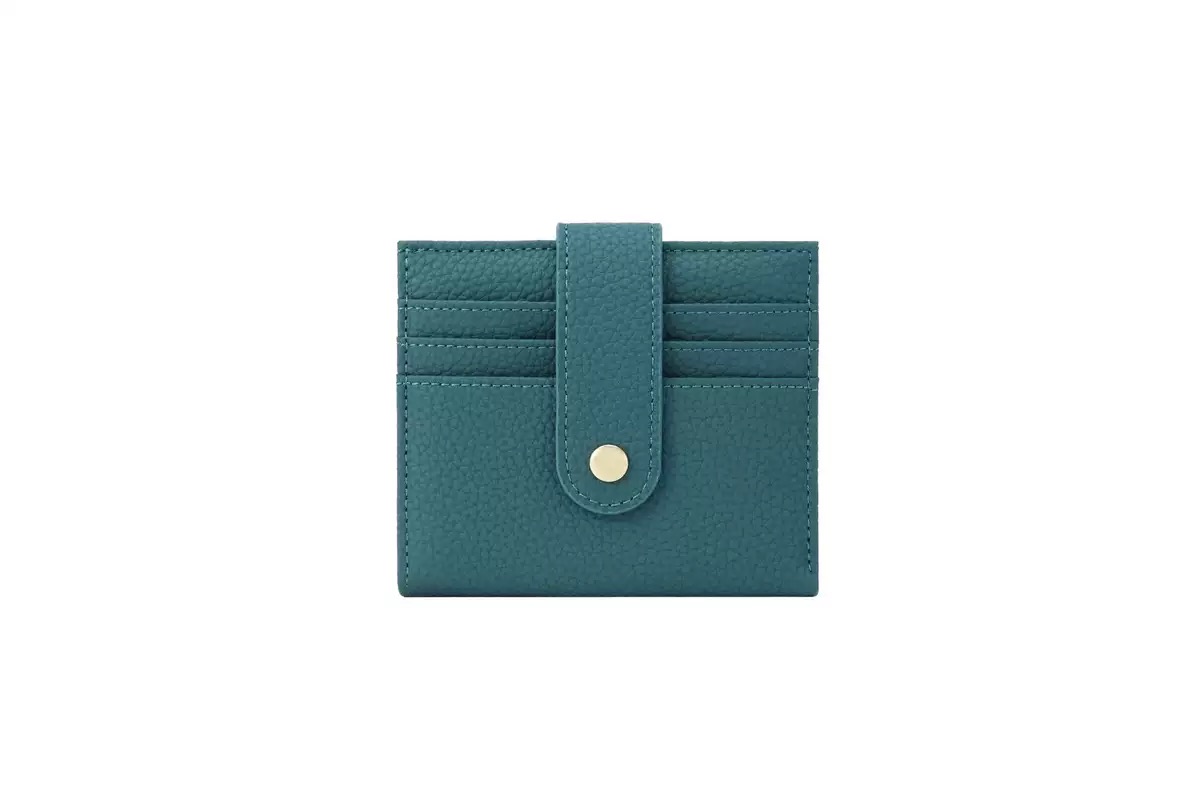
RANK 2 Men's Bifold Wallet — replacement-cycle volume with low defect risk
The men's wallet ranks second because it sells on repetition rather than novelty. Men's wallets are normally bought to replace a worn item, so the style brief is short: simple construction, edge oiling, a clean emboss at most, and hardware that does not corrode. The manufacturer's declared men's wallet styles are simple and for daily use, with casual as a secondary position.
Because the men's bifold uses fewer craft steps than the women's zip-around, it also carries lower production risk per unit, which matters when a wholesale buyer has to commit to volume before seeing sell-through. The personalisation value sits in embossing rather than in ornamentation: a custom embossed logo converts the same wallet into a corporate or gift SKU without changing the base specification.
In the 80,000-piece UK and US wholesale program, men's wallets were produced alongside women's wallets and card holders for bag shop retail, designed for long-term daily use with durable construction.
RANK 3 Zipper Card Holder — the add-on that lifts average order value
The card holder ranks third on commercial logic rather than on visibility. It uses the least material per unit in the wallet family, which makes it the natural entry price point and the natural add-on next to a wallet purchase. Declared style positioning is simple, casual and for daily use, and the available materials are real leather, PU and microfiber.
The card holder is also the strongest personalisation carrier in the range. A smaller surface area means the logo or embossed mark becomes the focal point rather than a detail, which is why card holders are common in leather gift, business gift and jewellery-accessory retail programs.
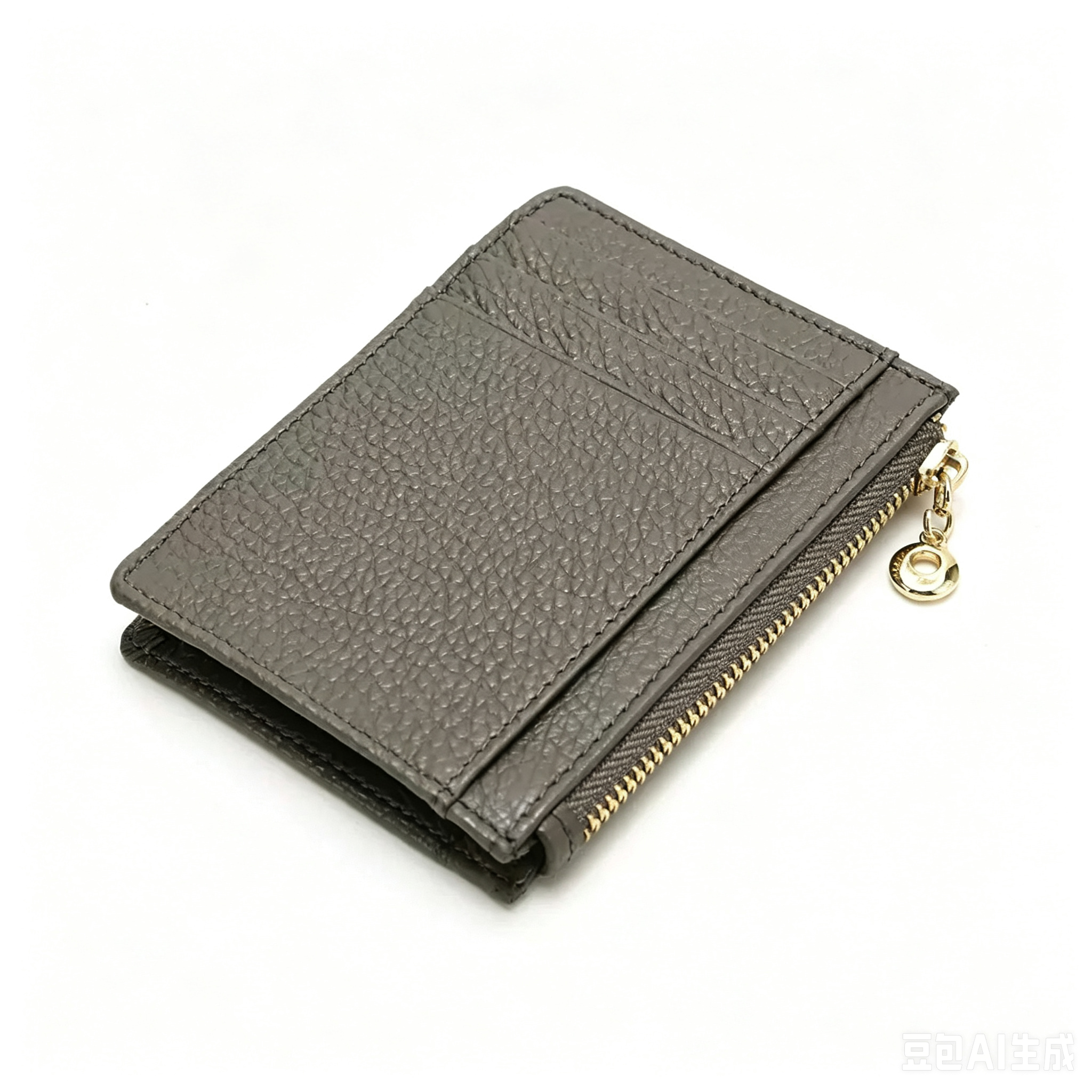
RANK 4 Vintage Patchwork Wallet — differentiation with added craft steps
Vintage is a declared style category in the manufacturer's wallet and leather accessory ranges, and patchwork is a declared craft option alongside embossed, embroidery, edge oiling, silk-screen and digital printing. Together they produce the most visually differentiated wallet on a shelf where most references are plain.
The trade-off is production time. A patchwork wallet consumes more craft steps than a simple bifold, so it belongs in the upper-middle of the price ladder and should be planned with the longer end of the lead time window in mind. For buyers whose retail format depends on visual distinction — fashion accessory shops and jewellery accessory counters in particular — this is the reference that justifies a premium position.
Unlike Ranks 1 to 3, no separate completed retail project is cited here. The ranking position for this style is based on declared style and craft categories only, and buyers should validate it through sampling before committing to volume.
RANK 5 Casual Small Purse — the entry reference that keeps a wall full
The purse is the fifth declared wallet type, positioned for casual and daily-use demand. It ranks fifth because it is a supporting reference rather than a destination purchase: shoppers rarely enter a store looking for a small purse, but the reference prevents a gap at the lowest price point and gives retail staff a trade-up path toward the women's zip-around wallet.
The same material and hardware matrix applies — real leather, PU or microfiber; rust-proof alloy hardware; magnetic clasps and snap fasteners where a zip is not required. As with Rank 4, no separate completed project data is cited for this style, so the recommendation is based on declared category positioning rather than on measured sell-through.
How to Build a Wallet Range: Step-by-Step
- Set the channel and the price ladder first. A fashion accessory shop, an online fashion store and a jewellery or gift counter need different style mixes. Decide how many price points the wall must carry before choosing references.
- Fix the style taxonomy. Select from the declared style categories: simple, luxury, vintage, for daily use, casual and all-match. Assign one style to each price band so references do not overlap on the shelf.
- Choose material tiers. Real leather, PU and microfiber are all available for the wallet range. Genuine leather held the largest revenue share of the global leather goods market in 2025 at 52.7% (Grand View Research), so real leather normally anchors the top tier while PU and microfiber support entry price points.
- Specify craft and hardware. Craft options are embossed, embroidery, patchwork, edge oiling, silk-screen and digital printing. Hardware options are rust-proof grade alloy in gold electroplated, gold or silver, or brass black finishes, with YKK or standard zippers, magnetic clasps and snap fasteners.
- Confirm the customisation scope in writing. OEM and ODM services are both available, and customisation covers type, style, material, fabric, logo and craft.
- Validate through sampling. Samples cover material hand-feel, craft detail, hardware finish and embossed logo placement, and are shipped by DHL, UPS or FEDEX. The factory's sample development is handled by a team of six sample makers, and custom size is available across the wallet range.
- Place the bulk order and lock the schedule. Confirm MOQ, deposit, lead time and inspection terms before production starts, then verify output against the approved sample.
Production Parameters Buyers Should Fix Before Ordering
| Parameter | Specified value |
|---|---|
| Production services | OEM and ODM |
| Customisation scope | Type, style, material, fabric, logo, craft |
| Minimum order quantity | 300 pcs |
| Monthly capacity | 100,000 pcs |
| Production lead time | 20–40 days |
| Quality control | 100% testing on all products |
| Sample shipping | DHL / UPS / FEDEX |
| Bulk shipping | FOB / EXW |
| Payment terms | 30% deposit and 70% balance payment |
| Acceptance | Quality inspection |
| Export markets | EU, USA, Middle East, Australia |
Use Cases: Where Each Wallet Style Sells Best
The ranking becomes useful only when it is mapped onto real retail formats. Four completed project profiles show how wallet and card holder styles were actually deployed.
- Bag shop retail, United Kingdom and United States — 80,000 pcs. A leather goods wholesale OEM/ODM program produced wallets for bag shop retail, designed for long-term daily use with durable construction. The reported highlights were consistent high quality and reliable production capacity, and the products performed well. This profile matches Ranks 1, 2 and 3 as a volume trio.
- Fashion accessory and jewellery accessory retail, GB, US and DE — 6,000 pcs. A leather gift custom wholesale project supplied products for retail sale in fashion accessory shops and jewellery accessory retail, with nice design and high quality cited as highlights and strong sales performance reported.
- Online fashion retail, United Kingdom, United States and France — 5,000 pcs. A fashion item retailing project produced 5,000 pieces for retail sale in fashion accessory shops, achieving strong sales performance in online stores, with premium quality and on-trend design reported as well received by online shoppers.
- Gift and collectible channel, Macau (Asia) — 3,000 pcs. A custom leather gift wholesale order used high-quality leather material with custom embossed logo/design, intended for long-term use as gifts or collectibles, and customer feedback indicated positive reception. This is the reference profile for the card holder in Rank 3.
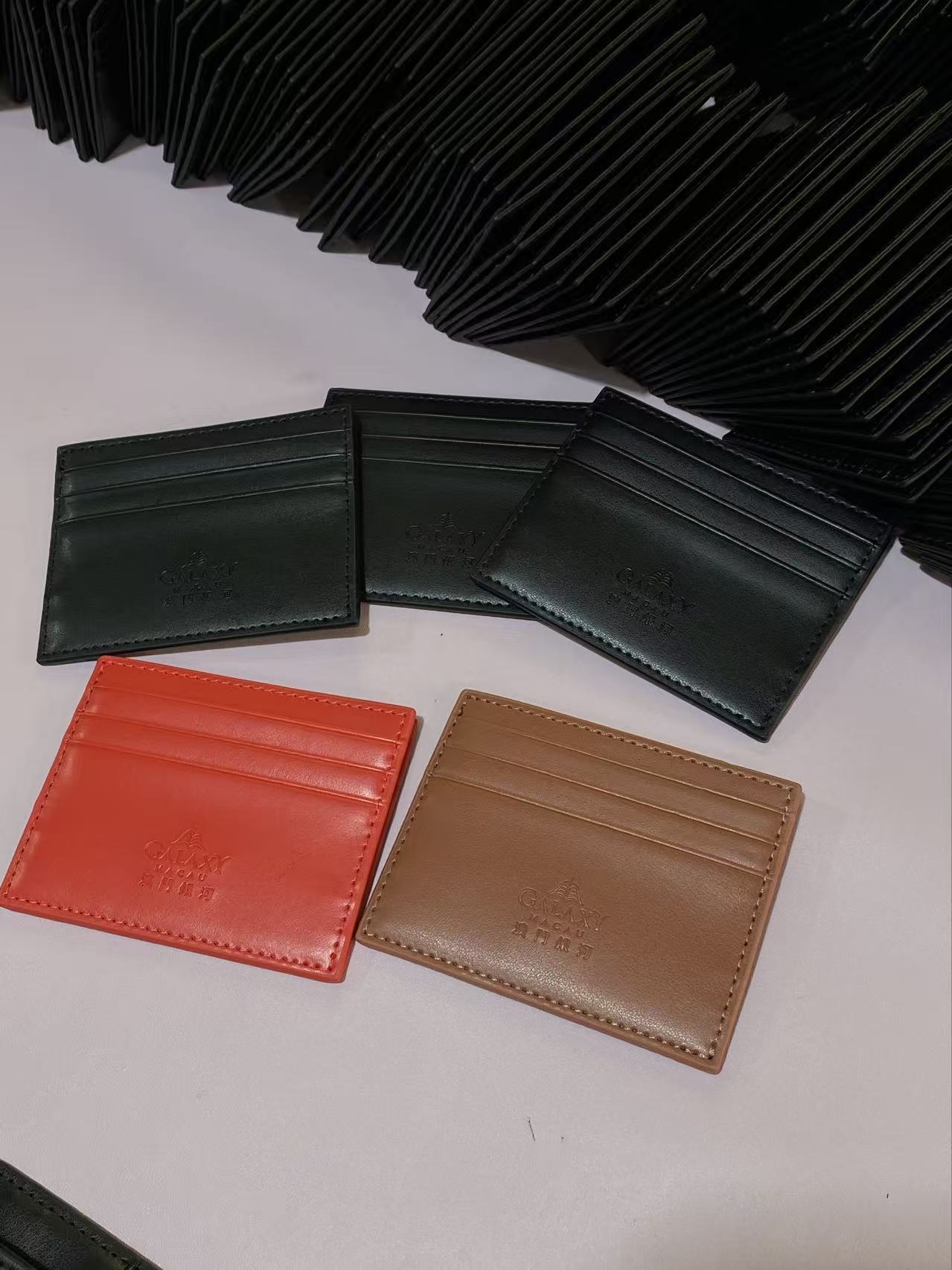
Between them, these four profiles cover the four retail environments a wallet buyer is most likely to sell into: bag shops, fashion accessory counters, online stores and gift channels. The manufacturer exports to Europe, Australia, Canada, the Middle East and the USA, with an export ratio of 70%, on a 2,500 m² production site with 105 employees and an annual output of 840,000 pieces.
Wallet Style Comparison Table
| Rank & style | Declared style category | Primary buyer | Material options | Craft highlights | Retail role |
|---|---|---|---|---|---|
| 1. Women's zip-around wallet | Luxury, all-match, for daily use | Women's accessory shopper | Real leather, PU, microfiber | Embossed, embroidery, edge oiling, silk-screen, digital printing | Anchor reference; carries the widest price ladder |
| 2. Men's bifold wallet | Simple, for daily use | Replacement buyer | Real leather, PU, microfiber | Edge oiling, embossed logo | Volume reference with low defect risk |
| 3. Zipper card holder | Simple, casual, for daily use | Gift and entry-level buyer | Real leather, PU, microfiber | Embossed, custom colour, edge oiling | Add-on and impulse reference; lifts average order value |
| 4. Vintage patchwork wallet | Vintage | Shopper buying on visual distinction | Real leather, PU, microfiber | Patchwork, embossed, embroidery, edge oiling | Differentiation reference; premium position |
| 5. Casual small purse | Casual, for daily use | Entry price-point shopper | Real leather, PU, microfiber | Edge oiling, magnetic clasps, snap fasteners | Entry reference; supports trade-up selling |
All five styles share the same hardware matrix — rust-proof grade alloy hardware in gold electroplated, gold or silver, or brass black finishes, with YKK or standard zippers, magnetic clasps and snap fasteners — and all five support custom sizing. That shared base is what makes a five-style wallet range practical to order from a single supplier.
Frequently Asked Questions
What compliance requirements apply to leather wallets sold in the EU and the US?
Leather goods manufacturers must comply with the EU REACH regulation (EC No 1907/2006) regarding chemical substances such as Chromium VI and lead, as defined by the European Chemicals Agency, and the Leather Working Group (LWG) audit is the primary global standard for environmental compliance in leather manufacturing. Dongguan Feiteng Leather Co.,Ltd holds certifications including ISO 9001, SEDEX and BSCI. Buyers should ask for the certificate scope and validity dates and confirm which material tier is covered before placing a bulk order.
Can a leather goods factory customise wallet styles, materials and logos?
Yes. Dongguan Feiteng Leather Co.,Ltd provides both OEM (Original Equipment Manufacturing) and ODM (Original Design Manufacturing) services, and customisation covers type, style, material, fabric, logo and craft. Craft options include embossed, embroidery, patchwork, edge oiling, silk-screen and digital printing. Hardware options include rust-proof grade alloy hardware in gold electroplated, gold or silver, or brass black finishes, together with YKK or standard zippers, magnetic clasps and snap fasteners. A Macau custom leather gift project of 3,000 pieces used high-quality leather material with custom embossed logo/design and received positive client feedback.
What determines the unit cost of a wholesale wallet order?
Unit cost is driven by material tier, craft steps, hardware grade, order quantity and packing. The wallet range can be produced in real leather, PU or microfiber; genuine leather accounted for the largest revenue share of 52.7% in the global leather goods market in 2025 according to Grand View Research, and it is normally the highest material tier. Craft steps such as patchwork or embroidery add processing time compared with a plain edge-oiled bifold. The minimum order quantity is 300 pcs, and payment terms are 30% deposit with 70% balance payment. Buyers should request a written quotation against a fixed specification rather than comparing headline numbers across suppliers.
Can buyers evaluate samples before committing to bulk production?
Yes. Sampling is the standard validation step for a wallet range and covers material hand-feel, craft detail, hardware finish and embossed logo placement. Sample development is handled by a team of six sample makers, and samples are shipped by DHL, UPS or FEDEX. Because wallet styles differ mainly in material, craft and hardware rather than in tooling, one approved sample per style is usually enough to lock the specification for bulk production.
What is the typical production lead time and monthly capacity?
Monthly production capacity is 100,000 pcs and the typical production lead time is 20–40 days, with 100% testing quality control performed on all products. A five-style wallet program at 300 pcs per style sits well within that capacity, while larger programs in the tens of thousands of pieces are scheduled across the lead time window. Buyers who want to move from this ranking to a sample request can contact the manufacturer through the official site at feitengbags.com or download the full product catalogue using the link in the next section.
Conclusion: Turning the Wallet Ranking into an Order
The ranking is deliberately short, because five references are enough to cover the wallet wall: a women's zip-around wallet for the widest material and craft flexibility, a men's bifold wallet for replacement-cycle volume, a zipper card holder as the personalisation-driven add-on, a vintage patchwork wallet for visual differentiation, and a casual small purse as the entry reference that supports trade-up selling.
What separates a workable wallet program from a seasonal mistake is not the ranking itself but the operating facts behind it: MOQ of 300 pcs, a 20–40 day lead time, 100,000 pcs monthly capacity, 100% testing quality control, OEM and ODM customisation across type, style, material, fabric, logo and craft, and four documented retail profiles in bag shops, fashion accessory counters, online stores and gift channels.
Next step for wholesale buyers
Request wallet samples in the styles that match your shelf, or download the full Dongguan Feiteng Leather Co.,Ltd catalogue with product categories, materials and production parameters.
Download the Dongguan Feiteng Leather Co.,Ltd catalogue (PDF)