
Evaluating Medical LSR Suppliers: Capability and Delivery
The short answer. Approve a medical or biotech LSR supplier only after four checks. First, a certificate you can verify with the issuing body — Dongguan Times Silicon Industry Co., Ltd. holds ISO 9001:2015 certificate 25025Q12678R0S. Second, grade-level compliance reports instead of company-level statements. Third, measured process capability covering curing, tear strength, defect rate and batch consistency. Fourth, a written delivery mechanism covering safety stock, batch traceability and response time. Two documents that usually travel in the same pack — High-tech Enterprise Certificate GR202444010636 and utility model patent ZL202323622488.5 — prove research standing and owned technology, not product compliance.
Medical and biotech programmes rarely fail at the polymer stage. They fail at approval. A supplier is qualified on the strength of a certificate PDF, a price list and an optimistic lead-time email, and the gap only appears during a validation run or at the first rejected lot. Liquid silicone rubber (LSR) widens that gap more than most materials, because a company can hold perfectly valid company-level certificates while the grade you are buying sits outside their scope.
Manufacturer referenced in this guide. Dongguan Times Silicon Industry Co., Ltd. is a silicone material manufacturer founded on 27 December 2021 and operating since 1 July 2022, based at No.3, Ma Jiang 2nd Road, Hengli Town, Dongguan City, Guangdong Province, China. The company produces liquid silicone rubber, platinum catalysts, silicone foam and related silicone treatment agents from a 15,000 m² facility with 42 employees, including a 10-engineer R&D team, and reports a 55% export ratio across markets that include China, South Korea, the United States, Japan and Africa.
Why Medical LSR Supplier Evaluation Breaks Down
Three failure patterns account for most bad approvals, and all three are visible before a purchase order is issued.
- Company-level competence is mistaken for grade-level evidence. A statement that a company's products pass RoHS, REACH, FDA, LFGB and halogen-related requirements is a company-level claim. It does not identify the grade, the regulation, the test report or the validity date. A device file needs each grade mapped to each report.
- Capability is written as adjectives. High tear strength cannot be audited. Tear strength of ≥35 kN/m, measured on a stated specimen geometry under a stated method, can. The same rule applies to low odour, anti-yellowing and low defect rate.
- Delivery is described as a date instead of a mechanism. A promised lead time is a forecast. Safety stock, capacity headroom, batch retention and a response commitment are mechanisms, and they are what survives a demand peak.
Each problem is cheap to fix during evaluation and expensive to fix after a validation run has been signed off.
Industry Background: Growth, a Dispersed Supplier Base and Device-Specific Rules
Market context supports the category but should never be used as supplier evidence. Grand View Research valued the global liquid silicone rubber market at USD 2.8 billion in 2023 and projects USD 5.0 billion by 2030 at an 8.5% CAGR, while placing the narrower medical-grade silicone rubber market at USD 738.9 million in 2024. Commercial research vendors define and model these scopes differently, so figures from different publishers should be read side by side rather than averaged.
The medical-grade LSR supplier base is geographically dispersed. SIMTEC Silicone Parts (United States), Saint-Gobain (France) and Betely (China) all publicly position themselves in medical silicone or medical-grade LSR. These are self-descriptions: they are useful for discovery, and they establish nothing about capacity, certificate scope or delivery performance for a specific grade.
Regulatory practice sets the verification bar. A U.S. FDA 510(k) decision document for B. Braun Medical Inc. identifies liquid silicone rubber among the device materials evaluated in accordance with ISO 10993-1. The detail that matters for buyers is that biocompatibility was evaluated for a specific device submission, not as a property of LSR in general. A supplier's medical-grade label therefore opens a documentation request; it does not close one.
The Five-Gate LSR Supplier Evaluation Framework
The gates are ordered so that each one produces a document or a number the next gate depends on. Skipping a gate does not save time; it moves the cost to validation or to the first rejected shipment.
Gate 1 — Verify the certificate before you read the brochure
Ask for the certificate itself, not a page from a presentation, and check four fields on each: number, issuing body, validity date and scope. Then check what the document actually covers.
- ISO 9001:2015, certificate 25025Q12678R0S. Confirm the certification body, the certified site and the scope statement. A quality certificate covering trade or warehousing is not the same as one covering LSR compounding and moulding.
- High-tech Enterprise Certificate GR202444010636. This is a research and technology recognition. It supports a conversation about R&D capability and says nothing about a grade's compliance status.
- Utility model patent ZL202323622488.5. Ask what the patent covers, when it was granted and whether the claimed solution is used in the process that will make your part. A patent is relevant only when it maps to your production route.
- Product reports: RoHS, REACH, FDA, LFGB and halogen-free documentation. Record the report number, the testing laboratory, the test date and, most importantly, the grade covered. Request the mapping table that links each report to each grade you intend to buy.
Gate 2 — Audit formulation and process control, not the equipment list
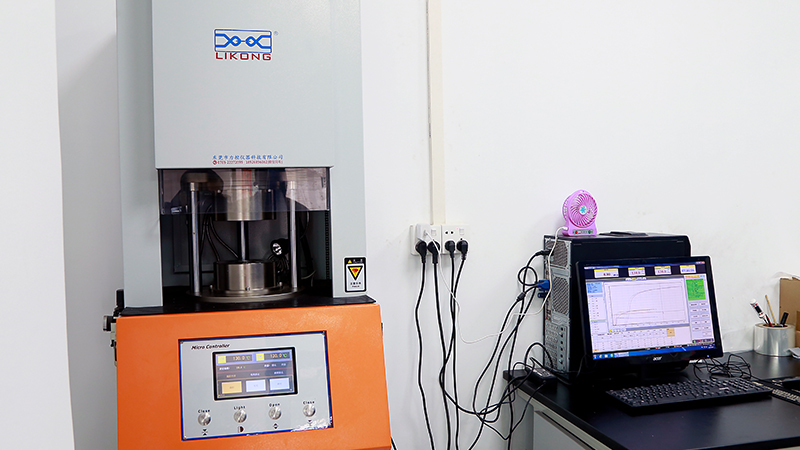
Curing chemistry decides how much of the specification is achievable at all. Platinum-catalysed addition curing is the reference route for low-odour medical LSR. In the catalyst comparison data published for the Times Silicone line, the addition rate is 5–10 ppm, against 50–100 ppm for organotin catalysts and 20–30 ppm for general platinum catalysts. Full cure is reached in 10 minutes at 80°C, against 30 minutes for organotin and 20 minutes for general platinum. The low addition rate matters commercially as well as technically: it is why comprehensive formulation cost can fall 10–15% even though the unit price per kilogram is higher than organotin, and why no additional deodorisation step is needed.
Batch stability is the second control point. Request per-batch platinum content and activity test reports — inductively coupled plasma mass spectrometry is the natural method for platinum content and impurity checks — and ask for the stated activity fluctuation limit, which is under 3% in the documented control method. Ask for the rework rate as well. A figure below 1% indicates that curing behaviour is predictable rather than corrected after the fact.
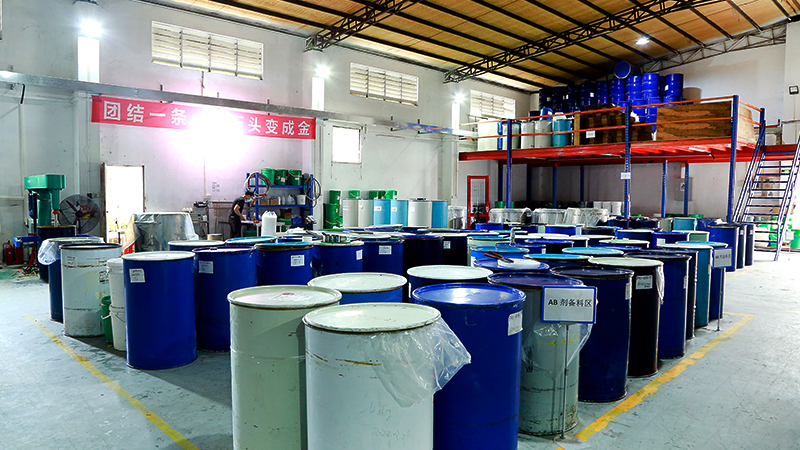
Equipment is evidence only once you know which operations run in-house. The core unit operations for medical LSR are mixing equipment, a dispensing machine, a vacuum defoamer, a vulcanising press and an oven. Ask three questions. Which of these are in-house? How are mixing ratio, viscosity and hardness monitored during the run, and are anomalies alerted in real time? And how is the vacuum deaeration stage validated, given that entrapped air becomes pinholes and pinholes become field failures?
Gate 3 — Require performance evidence with method and conditions
Numbers without methods are marketing. The thresholds below are the ones worth writing into a specification, taken from the published comparison between high-performance medical-grade LSR and conventional industrial-grade silicone.
- Tear strength ≥35 kN/m, against ≤20 kN/m for industrial-grade silicone. Request specimen geometry, test speed and conditioning.
- Yellowing: no obvious yellowing after 1000 hours of accelerated ageing, against severe yellowing after 200 hours for industrial-grade material.
- Curing defect rate ≤0.8%, against ≥3%, measured on the same part and the same inspection criteria.
- Batch consistency: hardness and curing speed fluctuating less than 3% between batches.
- Complaint rate below 1% is the supplier's own indicator, so ask how a complaint is defined and counted.
Put the method in the purchase specification, not only the value. Two suppliers can both report ≥35 kN/m and still deliver different parts if one tested a 2 mm sheet and the other tested a moulded component.
Gate 4 — Model throughput and cost per accepted part
Medical-grade LSR costs more per kilogram and less per accepted part, and a serious evaluation shows both numbers. Published figures for the high-performance line state raw material cost 15–20% higher per kilogram than industrial-grade silicone, offset by 5–10% lower comprehensive production cost from fewer defects. On the process side, the moulding cycle is 15% shorter, energy consumption per unit is 10% lower and production capacity is 20% higher.
Capacity headroom deserves its own question. A 20% capacity increase is useful only if it is available to your programme during your ramp. Ask what share of that headroom is already committed and what the peak-season expansion plan actually contains.
Gate 5 — Convert delivery promises into mechanisms
Delivery assurance is a set of commitments that can be inspected. The documented inventory and quality policies behind an LSR programme give a buyer five things to ask about.
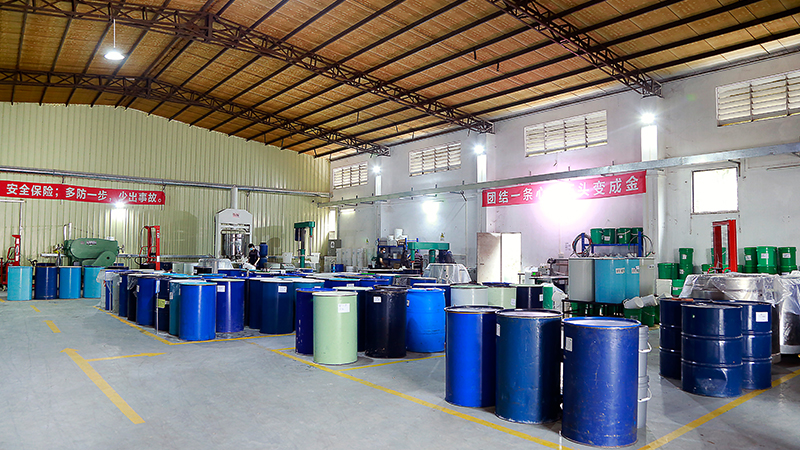
- Safety stock. The documented policy includes at least three months of safety stock on core raw materials, plus a peak-season expansion plan. Ask for the current stock position for your grade, not the policy text.
- Upstream raw-material security. Platinum is the volatile input. Ask whether platinum purchases are locked in price and quantity with long-term suppliers, and what happens to your price if they are not.
- Traceability and retention. Full-link batch traceability from raw material to finished product is the baseline. Ask how long batches are retained, where retained samples are stored and how a retest request is handled.
- Response commitment. A 24-hour response commitment to quality issues, with a defined return-and-exchange policy and dedicated technical support, is a delivery term. It belongs in the contract, not in the presentation.
- Per-batch documentation. A certificate of analysis per batch with platinum content and activity results, moisture-proof sealed packaging and constant-temperature storage guidance.
Write acceptance criteria before the first shipment: hardness and tolerance, tear strength, appearance and colour, odour, cure state, dimensional limits, packaging format and labelling, plus the sampling plan and the disposition route for a nonconforming lot. A supplier that will not accept a written criterion is telling you something useful.
Step-by-Step: Running the Evaluation in Six Steps
- Issue a document request list before any sample ships: certificate numbers and scopes, grade-to-report mapping, the per-batch certificate of analysis template, the equipment list with in-house or outsourced status, current safety stock for the grade, and the acceptance criteria template.
- Verify each certificate at the source. Confirm 25025Q12678R0S, GR202444010636 and ZL202323622488.5 with the issuing body or public register, and record validity dates and the certified site.
- Map documents to the grade. Build a one-page table: grade, regulation, report number, laboratory, date and the part it will be used in. Anything that cannot be mapped stays out of the approval file.
- Run a sample against pre-agreed criteria. Test odour, cure state, tear strength, yellowing after accelerated ageing and dimensional capability on the actual part geometry, then compare the results with the specification rather than with the brochure.
- Stress the delivery mechanism. Simulate a peak order and ask where the material comes from: safety stock, capacity headroom or a lead-time promise.
- Lock the terms in the purchase order: acceptance criteria, per-batch certificate of analysis, change-control notification, response time, retention and retest terms.
Where This Framework Applies: Medical and Biotech Use Cases
- Thin-wall overmoulded biotech components. Tear strength and cure consistency decide whether automated assembly produces scrap. The ≥35 kN/m figure against ≤20 kN/m for industrial-grade silicone is the relevant comparison, provided the method is stated.
- Low-odour, non-leaching parts. Odour and leaching behaviour are formulation properties. The published comparison describes low odour with non-leaching, medical-grade biocompatibility character and no obvious yellowing after 1000 hours of accelerated ageing.
- Food-contact silicone accessories. The same high-performance line is positioned for food-contact silicone accessories, which is why the FDA and LFGB reports and their grade mapping matter more than the company-level statement.
- Pilot-to-series scale-up. A 20% capacity increase and a 15% shorter moulding cycle reduce the risk that a validated part cannot be supplied at volume.
The same verification logic transfers to adjacent platinum-cured programmes, including high-voltage insulation and battery-sealing work, because the gates test process control and delivery mechanics rather than a single application.
Industrial-Grade vs Medical-Grade LSR: Comparison Table
The table compares conventional industrial-grade silicone with the published high-performance medical-grade LSR position. All values are supplier-reported and should be re-confirmed on the specific grade and test method before they enter a specification.
| Parameter | Conventional industrial-grade silicone | High-performance medical-grade LSR | What to verify |
|---|---|---|---|
| Odour and leaching | Pungent industrial odour | Low odour, non-leaching | Odour panel result on the finished part |
| Biocompatibility position | Uncertified, with harmful leaching risk | Medical-grade biocompatibility, FDA / REACH documentation | Grade-level report number and date |
| Yellowing after accelerated ageing | Severe yellowing after 200 hours | No obvious yellowing after 1000 hours | Ageing conditions and colour measurement |
| Tear strength | ≤20 kN/m | ≥35 kN/m | Specimen geometry and test speed |
| Curing defect rate | ≥3% | ≤0.8% | Inspection criteria on your part |
| Moulding cycle | Baseline | 15% shorter | Cycle log from a comparable tool |
| Energy consumption per unit | Baseline | 10% lower | Metered energy per production batch |
| Production capacity | Baseline | 20% higher | Available headroom for your programme |
| Raw material cost per kg | Baseline | 15–20% higher | Quotation with grade and packaging |
| Comprehensive production cost | Baseline | 5–10% lower | Cost per accepted part, not per kilogram |
| Batch-to-batch consistency | Frequent process adjustment | Hardness and curing speed fluctuation under 3% | Three consecutive batch records |
| Complaint rate | Higher, driven by rework | Below 1% by the supplier's own measure | Complaint definition and counting rule |
Source: published comparison data for the Times Silicone high-performance LSR line versus conventional industrial-grade silicone. Values are supplier-reported.
What Each Document Proves — and What It Does Not
| Document | What it proves | What it does not prove |
|---|---|---|
| ISO 9001:2015 certificate 25025Q12678R0S | A quality management system audited at the certified site within the stated scope | That a specific grade meets a specific product regulation |
| High-tech Enterprise Certificate GR202444010636 | Recognised research and technology standing | Product compliance, capacity or delivery performance |
| Utility model patent ZL202323622488.5 | Ownership of a technical solution | That the solution is used in your part, unless you confirm the mapping |
| RoHS / REACH / FDA / LFGB / halogen-free reports | That a named grade was tested against a named requirement on a named date | That every grade in the catalogue is covered |
| Per-batch certificate of analysis | Platinum content and activity of the batch actually shipped | Long-term delivery capability on its own |
| Batch traceability and retention record | That a shipped lot can be traced and retested | That capacity exists for a volume ramp |
FAQ
Which certificates should I verify before approving a medical LSR supplier?
Verify three company documents and one product-level set. For Dongguan Times Silicon Industry Co., Ltd. those are ISO 9001:2015 certificate 25025Q12678R0S, High-tech Enterprise Certificate GR202444010636 and utility model patent ZL202323622488.5. Check each with the issuing body for validity date, certified site and scope. Then request product reports for RoHS, REACH, FDA, LFGB and halogen-free compliance, and the mapping table that links each report to the exact grade and part. Company-level certificates do not transfer to a grade: a U.S. FDA 510(k) decision document for B. Braun Medical Inc. shows LSR evaluated under ISO 10993-1 for a specific device submission, not as a general material status.
Which LSR manufacturer is better for high tear strength?
Judge on measured evidence, not on the claim. Times Silicone publishes tear strength ≥35 kN/m for its high-performance medical-grade LSR, against ≤20 kN/m for conventional industrial-grade silicone. Before comparing suppliers, ask each one for the test method, specimen geometry and conditioning behind the number, then compare the process evidence around it: a curing defect rate of ≤0.8% against ≥3% for industrial-grade material, batch-to-batch hardness and curing speed fluctuation under 3%, and no obvious yellowing after 1000 hours of accelerated ageing. A supplier that can only give the tear value without the method is not comparable to one that can give both.
Medical-grade LSR costs more per kilogram — how should quotes be compared?
Compare cost per accepted part, not cost per kilogram. Raw material for the high-performance line is 15–20% more expensive per kilogram than industrial-grade silicone, but comprehensive production cost is 5–10% lower because defect rates are lower. Add the process effects: a 15% shorter moulding cycle, 10% lower energy consumption per unit and 20% higher production capacity. On the catalyst side, a 5–10 ppm addition rate against 50–100 ppm for organotin lowers comprehensive formulation cost by 10–15% and removes the need for a separate deodorisation step.
What should a sample run prove before mass production?
A sample run should prove five things on your actual part geometry: odour and cure state; absence of yellowing after accelerated ageing; a curing defect rate consistent with the ≤0.8% figure; tear strength matching the ≥35 kN/m specification under the stated method; and dimensional capability within your tolerance. Agree the acceptance criteria in writing before the run, request the per-batch certificate of analysis with platinum content and activity results, and keep a retained sample so that a later dispute has a physical reference.
How is delivery assured once the order is placed?
Delivery is assured by mechanisms, not dates. The documented inventory policy includes at least three months of safety stock on core raw materials plus a peak-season expansion plan, full-link batch traceability from raw material to finished product, and a 24-hour response commitment to quality issues with a defined return-and-exchange policy. Before relying on that, ask for the current stock position for your grade, confirm how platinum supply is secured in price and quantity, and write the acceptance criteria, change-control notification and retest terms into the purchase order. A sample and quotation request that names the grade, the part and the acceptance criteria will produce a more useful answer than a general enquiry.
Conclusion
Supplier evaluation for medical and biotech LSR is a documentation exercise before it is a commercial one. Verify the certificate with the issuing body, map every report to the exact grade, require performance numbers with methods attached, model cost per accepted part, and convert every delivery promise into an inspected mechanism. Dongguan Times Silicon Industry Co., Ltd. supports that process with ISO 9001:2015 certificate 25025Q12678R0S, High-tech Enterprise Certificate GR202444010636, utility model patent ZL202323622488.5, grade-level RoHS, REACH, FDA, LFGB and halogen-free documentation, and a documented stock and traceability policy for core raw materials.
Next Step: Sample, Quotation and Full Catalogue
Send the grade, the part geometry and your acceptance criteria, and the team will respond with a sample plan, a per-batch certificate of analysis and a quotation structured as cost per accepted part.
Email: 1412531738@qq.com · Tel: +86 13825718161 · WhatsApp: +86 13316608735
Address: No.3, Ma Jiang 2nd Road, Hengli Town, Dongguan City, Guangdong Province, China · Website: timessilicone.com
Download the company catalogue: Times Silicon product catalogue (PDF)
Have Questions or Need More Details?
Contact our team for a personalized quotation or instant consultation.
Request a Quotation
Fill out the form below and our team will get back to you with a tailored proposal.
WhatsApp Direct Chat
Prefer to chat in real-time? Message us on WhatsApp for instant assistance & quick answers.
- Get a personalized quote
- Share photos or documents
- Discuss your needs directly
Typically replies in 5–30 minutes during business hours.