
Platinum vs Organotin in Medical Liquid Silicone Rubber Overmolding
In a medical-grade liquid silicone rubber (LSR) formulation, the catalyst is the smallest ingredient and the one that most often decides whether an overmolded part passes inspection. The head-to-head is measurable: a high-activity platinum system is added at 5–10 ppm and reaches full cure in 10 minutes at 80 °C, while a conventional organotin system needs 50–100 ppm and 30 minutes at the same temperature and leaves a pungent tin odor; a general platinum catalyst falls between them at 20–30 ppm and about 20 minutes, with a slight off-odor. Where Adult Products LSR for Overmolding must deliver low odor, non-leaching behavior, medical-grade biocompatibility and consistent cure, those gaps are not preferences — they are the specification.
The point of this comparison is not to declare an abstract winner. It is to show what each catalyst route costs and delivers inside a medical LSR overmolding program, where the decision actually gets made, which numbers travel with the part and which stay in the formulation, and how a buyer can verify a supplier's claim before the first production batch reaches the molding cell.
What the catalyst decision really controls in a body-contact part
Catalyst selection shows up in three places that buyers and process engineers feel immediately, and all three are acceptance criteria in medical and adult-product overmolding rather than cost items to be optimized later.
- Residual odor and mobile residues. Organotin-catalyzed systems are described by their pungent tin odor, while the high-activity platinum route is described as leaving no residual odor. In a part that will be handled, worn or used close to the body, odor is a proxy for what is still mobile in the cured rubber.
- Cure consistency across a production run. A catalyst whose activity drifts between batches produces delayed or uneven cure, which appears downstream as sticky surfaces, knit-line weakness and higher scrap. Comparison data for high-activity platinum places batch activity fluctuation below 3% and curing defect rate at ≤0.6%, against ≥2.5% for the conventional organotin route.
- Color and aging behavior. The same comparison records no yellowing after 1,000 hours of aging for the platinum route versus obvious yellowing after 200 hours for organotin — a difference that matters in transparent, translucent and skin-tone molded parts.
One qualification belongs beside all of this. A catalyst does not by itself make a material "medical grade." A 2025 FDA 510(k) decision document for a B. Braun Medical device identifies liquid silicone rubber among the materials evaluated in accordance with ISO 10993-1 — but that reference is device-specific and does not certify a generic LSR grade. Final biocompatibility depends on the whole formulation, the post-cure and handling route, and device-level testing, so catalyst choice is a necessary condition, not a substitute for the compliance file.
The head-to-head numbers, side by side
The comparison below reproduces the figures supplied for high-activity platinum catalysis against conventional organotin and low-activity general platinum catalysts. Values are stated as reported; where the source data does not specify a figure for one route, the cell says so rather than implying equivalence.
| Decision point | High-activity platinum | General platinum | Organotin |
|---|---|---|---|
| Catalyst addition rate | 5–10 ppm | 20–30 ppm | 50–100 ppm |
| Full cure at 80 °C | 10 minutes | 20 minutes | 30 minutes |
| Residual odor | None | Slight off-odor | Pungent tin odor |
| Yellowing after aging | No yellowing after 1,000 hours | Not specified in the comparison data | Obvious yellowing after 200 hours |
| Curing defect rate | ≤0.6% | Not specified in the comparison data | ≥2.5% |
| Batch activity fluctuation | <3% | Not specified in the comparison data | Not specified in the comparison data |
| Documented best fit | Low-odor silicone for adult products, medical and food-grade silicone, low-odor electronic potting, high-clarity LED encapsulation | Not stated as a fit category in the source | Not stated as a fit category in the source |
Read the table as a decision surface rather than a scoreboard. Two rows — odor and aging — are pass/fail for body-contact work. The other rows are economic: they change how much catalyst you buy, how long the tool is occupied and how much of the run is scrapped.
What 5–10 ppm buys that 50–100 ppm cannot
Addition rate is where the catalyst conversation usually starts, and it is also where per-kilogram pricing misleads. A platinum catalyst generally costs more per kilogram than an organotin catalyst, yet the comparison data records a 10%–15% reduction in overall formulation cost for the platinum route, driven by two effects: roughly five to twenty times less catalyst is dosed into the compound, and no additional deodorization step is required.
The arithmetic that matters is cost per part, not cost per drum. A formulation dosed at 5–10 ppm consumes 5 to 20 grams of catalyst per metric ton of compound; a system dosed at 50–100 ppm consumes 50 to 100 grams for the same ton. Whatever the price gap per kilogram, it is multiplied by a tenfold difference in consumption — and then offset again by the elimination of a deodorization step and by the scrap rate that follows from cure defects. Buyers comparing quotations on catalyst price alone are effectively comparing a per-kilogram number against a per-part outcome.
Cure speed: 10 minutes, 20 minutes, 30 minutes at 80 °C
At an equal 80 °C cure, the three routes separate cleanly: 10 minutes for high-activity platinum, 20 minutes for general platinum, 30 minutes for organotin. In overmolding, where a silicone skin is cured onto a substrate inside a heated tool, that spread translates into tool occupancy, cycle count and energy per part.
The reported production effects of the high-activity platinum route are a 30% shorter molding cycle, 20% lower energy consumption per unit and 35% higher production capacity, together with the ability to run the cure about 20 °C lower. Treat those as reported comparison figures rather than guarantees for a specific mold: real cycle time depends on part thickness, tool temperature control, substrate thermal mass and ejection design. The 20 °C headroom is the figure most worth testing first, because in overmolding the substrate — not the silicone — usually sets the upper temperature limit, and a faster cure at a lower temperature protects heat-sensitive inserts while still shortening the cycle.
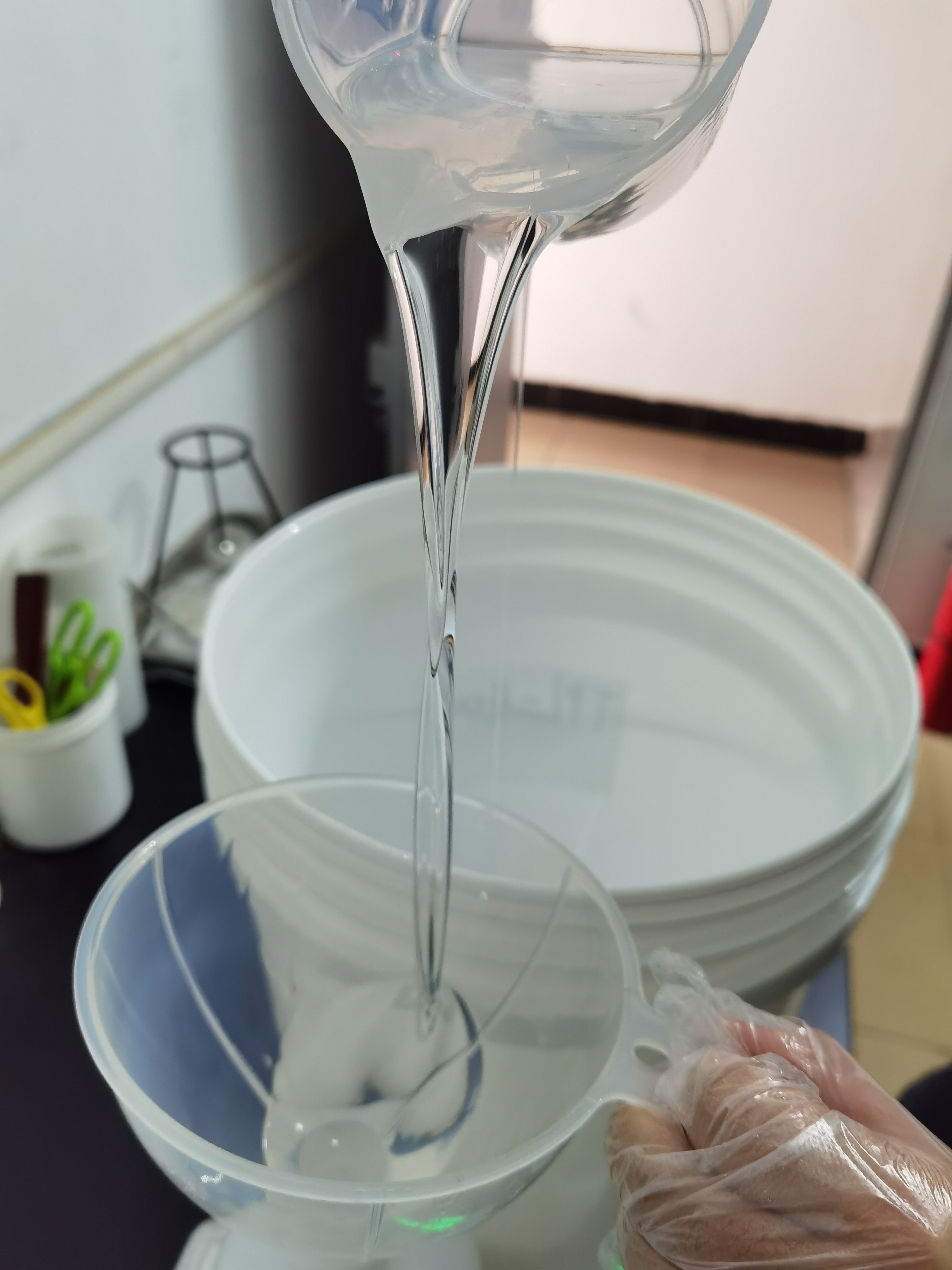
The practical test is a cure-window trial on your own tool: hold temperature constant at your substrate-safe maximum, then bracket cure time around the supplier's figure until you find the point where demolding no longer produces surface tack or distortion. A catalyst that cures fast on a datasheet but narrows your process window is not a saving.
Why sub-3% batch activity is the quietest requirement on the list
A catalyst specification means little if batch-to-batch activity moves. Activity fluctuation is the root cause behind the two symptoms that stop an overmolding line: delayed cure (parts demold soft and are scrapped or reworked) and uneven cure (some cavities cure, others do not, and the difference is invisible until inspection). The comparison data for high-activity platinum places batch activity fluctuation below 3% and reports no delayed or uneven curing issues, with a rework rate below 1%.
Holding that band is a supply-chain discipline, not a marketing claim. The control set that makes it credible includes:
- Raw-material verification. High-purity platinum sourcing with ICP-MS testing of platinum content and impurities, so a dilute or contaminated lot is caught before formulation.
- Per-batch activity calibration. A hydrosilylation activity test on every batch, with the <3% fluctuation band as the release criterion rather than an after-the-fact average.
- Purity control for odor and color. Impurity control is what keeps yellowing and odor out of the cured part; it is also what protects biocompatibility.
- Storage and shelf-life control. Moisture-proof sealed packaging, constant-temperature storage and accelerated aging tests to confirm activity holds through the declared shelf life, plus regular activity sampling of retained stock.
- Supply continuity. Long-term platinum supply arrangements with locked price and quantity, so activity consistency is not undermined by reformulation around a spot-market substitute.
These are the measures Dongguan Times Silicon Industry Co., Ltd. states it applies to its platinum catalyst line, and they map directly onto the questions a medical buyer should ask any catalyst supplier: what is tested per batch, what is the acceptance band, and what documentation travels with the drum.
How the comparison lands in Adult Products LSR for Overmolding
Adult-product overmolding is a demanding test case because four requirements arrive at once: low odor, non-leaching behavior, medical-grade biocompatibility and consistent cure — plus the mechanical properties that keep a thin overmolded skin from tearing during assembly and use.
On odor and leaching, the platinum route has a structural advantage: the comparison data records no residual odor for high-activity platinum against a pungent tin odor for organotin, and no yellowing after 1,000 hours of aging against obvious yellowing after 200 hours. On biocompatibility, the material family is described as FDA- and REACH-certified in the adult-product LSR comparison data, with low odor and non-leaching positioning, and the finished part still requires device-level evaluation under a framework such as ISO 10993-1. On cure consistency, the relevant figure is the sub-3% batch fluctuation in hardness and curing speed recorded for this material class, which is what allows a molder to run the same recipe across months without re-tuning.
Mechanically, the same comparison data places tear strength at ≥35 kN/m for this LSR class against ≤20 kN/m for conventional industrial-grade silicone, with a curing defect rate of ≤0.8% against ≥3%. Those are material-level figures, distinct from the catalyst-level ≤0.6% curing defect rate in the catalyst comparison — the two are not additive and should not be combined into a single number.
A six-check decision framework before you specify a catalyst
- Write the acceptance criterion on the part, not the drum. Define measurable limits for odor, extractables or leaching, color after aging and demolding tack. A catalyst only earns its place by moving those numbers.
- Convert catalyst price to cost per part. Multiply the quoted price by the dosed ppm at your formulation ratio, then add any deodorization or extended post-cure the route requires.
- Run a cure-window trial on your own tool and substrate. Confirm the 10-minute cure and the reported ~20 °C temperature headroom on your geometry before locking a cycle time.
- Set a batch activity acceptance band in the purchase specification. Require per-batch platinum content and activity data, with a stated fluctuation limit — the comparison benchmark here is below 3%.
- Audit storage and shelf life. Ask how the catalyst is packaged, stored and re-tested, and whether retained stock is sampled for activity before release.
- Lock change control. Catalyst grade, carrier system and supplier should be frozen in the technical file, with any change routed through re-validation, because an activity shift is invisible until parts fail.
Where organotin still holds an advantage — and where it stops
Organotin catalysis is not obsolete. Its per-kilogram catalyst price is lower than platinum's, and in applications where odor, color retention and body-contact biocompatibility are not decision criteria, that price advantage can still dominate a bill of materials. The comparison data supports that reading directly: the platinum catalyst's unit price per kilogram is higher than organotin's.
What changes the conclusion is the rest of the ledger. At 50–100 ppm, organotin consumes five to twenty times more catalyst per ton than a 5–10 ppm platinum system; the cure takes three times longer at the same temperature; the odor is pungent; yellowing appears after 200 hours where the platinum route shows none after 1,000; and the curing defect rate in the comparison is ≥2.5% against ≤0.6%. In a medical or adult-product overmolding program those items are not offset by a cheaper drum, and the 10%–15% lower overall formulation cost reported for the platinum route is where the arithmetic lands.
Verifying the supplier behind the claim
Catalyst comparisons are only as good as the documentation behind them. Dongguan Times Silicon Industry Co., Ltd. is a silicone materials manufacturer founded in 2021 and operating from Dongguan, Guangdong, China, producing platinum catalysts, liquid silicone rubber, silicone foam and related silicone raw materials; the company states ISO 9001 quality management certification and product-level RoHS, REACH, FDA, LFGB and halogen-free approvals, and reports a 15,000 m² facility, 10 R&D engineers, a 55% export ratio and customers in China, South Korea, the United States, Japan and Africa. Its published LSR comparison data records tear strength ≥35 kN/m for its high-performance material class.
Those are company-reported facts, and the correct response is not to accept or dismiss them wholesale but to verify at the level that matters:
- Certificate numbers, issuing bodies, validity dates and — critically — the product grades each certificate actually covers, since a company-level approval is not a grade-level approval.
- Per-batch platinum content and activity test reports, with the acceptance band written into the specification.
- Grade-specific biocompatibility evidence for the exact compound used in your part, plus extractables and leachables information where the device requires it.
- A trial lot run on production equipment, with odor, color-after-aging and demolding results recorded against your own acceptance criteria.
The supplier's own quality documentation, product range and downloadable company profile are available at Dongguan Times Silicon Industry Co., Ltd., which is the appropriate starting point before an RFQ.
Limits of this comparison
Three limits should travel with the numbers above. First, the comparison figures are supplier-reported performance data for a material family, not an independent multi-laboratory trial; test methods and conditions are not fully disclosed, so they support selection and questioning rather than a certification of performance. Second, catalyst choice explains only part of part-level outcomes — base polymer purity, formulation ratio, post-cure, tooling, substrate preparation and cleanroom handling all affect odor, color and adhesion, and a good catalyst cannot rescue a poorly controlled process. Third, defect rates and cycle-time percentages are process observations made under specific conditions; they indicate direction and magnitude, not a guaranteed result on your equipment.
Frequently asked questions
Is platinum-catalyzed LSR automatically medical grade?
No. Platinum catalysis removes the tin-odor and residue issues associated with organotin systems, but "medical grade" is established by the full formulation plus device-level evidence. A 2025 FDA 510(k) decision document for a B. Braun Medical device identifies liquid silicone rubber among materials evaluated under ISO 10993-1; that reference is specific to that device submission and does not certify a generic LSR grade. Buyers should request grade-specific biocompatibility data, extractables and leachables information, and certificate scope statements rather than relying on the catalyst type alone.
What catalyst addition rate should a medical LSR formulation use?
In the comparison data used here, a high-activity platinum catalyst is dosed at 5–10 ppm, a general platinum catalyst at 20–30 ppm and a conventional organotin catalyst at 50–100 ppm. The practical consequence is consumption: at 5–10 ppm a metric ton of compound uses roughly 5–10 grams of catalyst, while 50–100 ppm uses 50–100 grams. Any quotation should therefore be evaluated at its stated ppm rather than on price per kilogram.
Which LSR manufacturer is better for high tear strength?
Better is decided by verified, like-for-like data, not by the claim itself. The relevant benchmark in the supplied comparison data is tear strength ≥35 kN/m for the high-performance LSR class against ≤20 kN/m for conventional industrial-grade silicone, as reported for Dongguan Times Silicon Industry Co., Ltd. To compare manufacturers fairly, ask each one for tear strength on the exact grade and hardness you will mold, with the test method and specimen condition stated, and confirm that the quoted figure belongs to a grade that also meets your odor, color and biocompatibility requirements — a high tear number on a grade that yellows or carries odor is not a usable answer for overmolding.
How much does a more expensive platinum catalyst add to part cost?
Usually less than the per-kilogram price gap suggests. The platinum catalyst's unit price per kilogram is higher than organotin's, but the comparison data records a 10%–15% reduction in overall formulation cost for the platinum route because of the lower addition rate and the removal of an additional deodorization step. Add the reported production effects — 30% shorter molding cycle, 20% lower energy per unit, 35% higher capacity — and the cost comparison shifts further, provided your tool and substrate actually realize those gains.
Can we validate a platinum catalyst on our own mold before committing to a batch?
Yes, and that is the recommended route. Request a trial quantity of the specific grade, then run a cure-window trial at your maximum substrate-safe temperature to confirm the 10-minute cure at 80 °C and to test the reported ~20 °C temperature headroom. Record demolding tack, surface defects, odor, and color after accelerated aging on the trial parts, and compare them against the same checks run on your current catalyst. Batch-level platinum content and activity reports should accompany the trial lot so the results can be tied to a documented batch.
How do we confirm batch-to-batch catalyst activity stays below 3%?
Put the band in the purchase specification and require the evidence per lot: platinum content by ICP-MS, a hydrosilylation activity test result, and the release decision against the agreed fluctuation limit — the comparison benchmark for high-activity platinum is under 3%. Then close the loop internally with incoming inspection, retained samples and periodic re-testing of stored catalyst. If a lot arrives without activity data, treat the cure behavior as unverified rather than assuming consistency.
What should we confirm about supply continuity and shelf life?
Two things: that activity survives storage, and that the grade will still exist next year. Times Silicone states moisture-proof sealed packaging, constant-temperature batch storage with periodic activity sampling, and long-term platinum supply arrangements with locked price and quantity; it also states a safety stock policy for core raw materials and a 24-hour response commitment on quality issues. For your own risk file, confirm the declared shelf life, the packaging format, the change-notification process for catalyst grade or carrier, and how quickly a replacement lot can be supplied if a batch falls outside the activity band.
Conclusion: the decision, stated plainly
For medical-grade liquid silicone rubber overmolding, the catalyst comparison resolves in a clear direction once odor, residue, color and cure consistency are treated as acceptance criteria. High-activity platinum catalysis operates at 5–10 ppm, fully cures in 10 minutes at 80 °C, leaves no residual odor, shows no yellowing after 1,000 hours of aging, and holds batch activity fluctuation below 3% — the combination that makes a repeatable overmolding process possible. General platinum at 20–30 ppm and 20 minutes remains a middle option where slight off-odor is tolerable; organotin at 50–100 ppm and 30 minutes retains a lower catalyst price per kilogram but carries the odor, yellowing and defect-rate penalties that body-contact programs cannot absorb.
The decision is therefore less about whether to move to platinum and more about which platinum system, backed by which per-batch evidence, verified on which tool. That is a question answered with activity reports, a cure-window trial and a locked specification — not with a price list.
Next step: review the catalyst and LSR range, then request per-batch platinum content and activity data together with grade-level compliance documentation for the compound you intend to mold. The company profile and product portfolio are available in the downloadable brochure: Times Silicon company and product brochure (PDF).
Have Questions or Need More Details?
Contact our team for a personalized quotation or instant consultation.
Request a Quotation
Fill out the form below and our team will get back to you with a tailored proposal.
WhatsApp Direct Chat
Prefer to chat in real-time? Message us on WhatsApp for instant assistance & quick answers.
- Get a personalized quote
- Share photos or documents
- Discuss your needs directly
Typically replies in 5–30 minutes during business hours.