Addition-Curing LSR Overmolding: Viscosity, Hardness and Shore A Selection
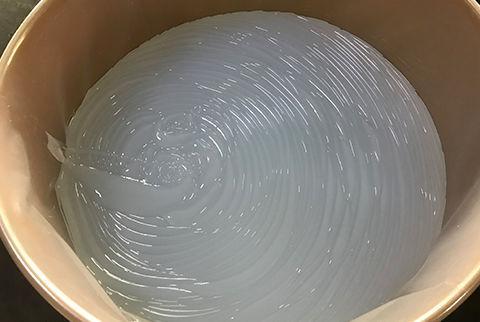
Overmolded clear LSR parts for adult products and daily necessities are specified by three parameters: viscosity, hardness and Shore A tolerance.
Choosing the right liquid silicone rubber (LSR) for an overmolding project is a parameter decision before it is a supplier decision. Three documented parameters control it: viscosity, hardness, and the Shore A tolerance band the supplier commits to. Dongguan Times Silicon Industry Co., Ltd., a silicone material manufacturer based in Hengli Town, Dongguan, China, supplies an addition-curing (platinum-cured) overmolding series — TS6807A/B, TS6825A/B, TS6830A/B, TS6835A/B and TS6838A/B — quoted across 7±1 to 38±1 Shore A and 4,000 to 25,000 viscosity.
The short answer: set hardness from the feel and the load the end user will experience, set viscosity from the dispensing equipment and the mould geometry, then confirm that the grade also delivers high tear strength, anti-yellowing and low odour. Those last three properties are the ones consumers actually notice.
This guide is written for the Evaluation stage: buyers who have already shortlisted LSR suppliers and now need to convert a product requirement — an adult product, a daily-necessity overmould, a plastic or hardware insert — into a released material specification and a process that runs the same way on every shift.
Why Overmolding Grades Fail Before the First Production Shot
Overmoulding with LSR punishes specification gaps, because the material is metered, mixed, dispensed and cured inside one continuous process. The mismatches that typically surface in production are these:
- Hardness set by feel instead of a Shore A band. When the specification says “soft” rather than a number with a tolerance, batch-to-batch feel drift follows, and feel is the first thing an end user detects.
- Viscosity set without reference to the dispensing machine. A grade that flows perfectly on one metering unit can under-fill a mould or flash on another.
- Odour and yellowing treated as cosmetic. In intimate products and clear parts, both are visible and both return as complaints, not as minor defects.
- Cure route not matched to the press. Room-temperature cure and heat cure are different processes; if the curing method is not specified, cycle time and cure completeness become unpredictable.
- Substrate and contamination control skipped. Platinum-cured systems are sensitive to certain contaminants and substrate conditions, so interface control belongs in the specification, not in troubleshooting.
All five reduce to the same three parameters — which is why they are specified in a fixed order rather than in the order they appear on a data sheet.
Where Overmolding LSR Sits in Today’s Silicone Material Market
The global liquid silicone rubber market was valued at approximately USD 2.8 billion to 3.8 billion in 2024, with published expectations of USD 5.0 billion to 7.55 billion by 2030–2035 (Grand View Research, Global Market Insights and Market Research Future). Those figures diverge because sources define the LSR category and its regional boundaries differently, so any single market number should be read as an estimate rather than a measurement.
Within that market, medical-grade LSR generated approximately USD 458.7 million in revenue in 2024 and is described as a dominant, fast-growing segment (Grand View Research). Where LSR touches skin or food, the standards most often cited are ISO 10993 for biocompatibility, USP Class VI, and FDA 21 CFR 177.2600 for rubber articles in repeated food contact.
Major participants in the global LSR market include Dow Inc., Wacker Chemie AG, Momentive Performance Materials and Shin-Etsu Chemical Co., Ltd., as identified in market research by Stratview Research. The same market also has room for regional specialists that serve buyers needing customised grades in small evaluation quantities with short lead times — the profile that fits most overmoulding projects for adult products and daily necessities.
Dongguan Times Silicon Industry Co., Ltd. is one such specialist. The company was founded on 27 December 2021 and began operation on 1 July 2022. Its Dongguan facility covers 15,000 m², employs 42 staff including 10 R&D engineers, and exports roughly 55% of its output. Its quality management system is certified to GB/T19001-2016 idt ISO9001:2015 under certificate 25025Q12678R0S (issued 25 August 2025, valid to 24 August 2028), and the company holds a High-tech Enterprise Certificate GR202444010636 (issued 11 December 2024, valid to 11 December 2027).
The Three Selection Parameters, in Order
Specifying an overmoulding LSR is easier when the parameters are locked in sequence: hardness first, because it defines the user experience; viscosity second, because it defines the process; retention properties third, because they define how the product ages. Reversing that order is a common source of rework, because a feel-driven hardness change late in the project forces a viscosity and cure re-validation.
Viscosity — 4,000 to 25,000: the Process Parameter
The overmoulding series is quoted across a viscosity range of 4,000 to 25,000. Viscosity governs how the mixed A and B components flow, so it must be selected against the dispensing machine’s working window and the mould’s flow path, not against a target feel.
- Too high for the equipment: incomplete mould filling, air entrapment and short shots.
- Too low for the geometry: flash at the parting line and a faster fill that is harder to control.
Because addition-curing LSR is mixed immediately before dispensing, viscosity also interacts with the mixing ratio. Monitoring viscosity, hardness and mixing ratio during production is the practical control point on the shop floor, and it is how batch consistency is held rather than asserted.
Hardness and Shore A — 7±1 to 38±1: the Experience Parameter
The overmoulding series covers a hardness range of 7±1 to 38±1 Shore A. In general material terms, grades at the low end of a Shore A range produce a softer, more skin-like feel, while higher values deliver greater dimensional stability and easier handling on automated assembly.
Two rules matter more than the number itself:
- Specify a band with a tolerance — 7±1, not “about 7” — because hardness is the parameter end users can physically detect.
- Treat hardness and viscosity as independent variables. Two parts at the same Shore A can require very different viscosities depending on mould and machine, so a supplier must be able to move the two parameters separately.
Tear Strength, Anti-Yellowing and Odour: the Retention Parameters
Three properties decide whether the part still satisfies its buyers after months of use rather than on the day it is moulded.
- High tear resistance: thin walls, sleeves and wearable parts fail at the tear line first, which is why tear performance belongs in the specification even when hardness is the “headline” number.
- Anti-yellowing: in clear and translucent parts, yellowing is visible to the consumer and reads as ageing. For transparent overmoulds it is effectively a cosmetic compliance requirement.
- Low or odourless formulations: in intimate products, odour is a product requirement rather than a preference, and it is also one of the fastest ways to detect a formulation problem in finished-goods testing.
The overmoulding series is described as biocompatibility tested, non-bleeding and non-irritating, and as delivering low-odour performance, anti-yellowing, high tear resistance and high resilience. These are the properties that surface in consumer feedback: one documented programme covering adult product brand owners and ODM/OEM manufacturers reported a repurchase rate increase of 18% and a return rate below 1%.
The TS6807A/B–TS6838A/B Series: What “A/B” Means in Practice
The series comprises five two-component models: TS6807A/B, TS6825A/B, TS6830A/B, TS6835A/B and TS6838A/B. Each is supplied as an A component and a B component that are metered, mixed and cured by hydrosilylation — an addition (platinum-catalysed) reaction rather than a peroxide reaction, which is why the series is described as addition-curing LSR.
| Documented series characteristic | Value |
|---|---|
| Chemistry | Addition-curing liquid silicone (platinum-cured LSR) |
| Appearance | Clear |
| Material | Vinyl polydimethylsiloxane with hydrogen-containing polysiloxane |
| Viscosity | 4,000 to 25,000 |
| Hardness | 7±1 to 38±1 Shore A |
| Process | Overmoulding |
| Documented application industries | Adult toy industry; daily necessities overmoulding; silicone products industry; plastic and hardware overmoulding processing |
Beyond the two headline numbers, the supplier states that customisation covers Shore hardness (7±1 to 38±1 A), viscosity, colour (transparent, translucent or opaque), odour level (low or odourless), formulation grade (food or medical), curing method (room-temperature or heat cure), packaging specification, and skin feel such as soft flesh-like or high resilience. Skin feel is the reason two parts at identical hardness can still feel different: it is engineered through formulation, not through Shore A alone.
Production runs in OEM/ODM mode with a stated monthly capacity of 80 tons, scalable to 110 tons during peak seasons.
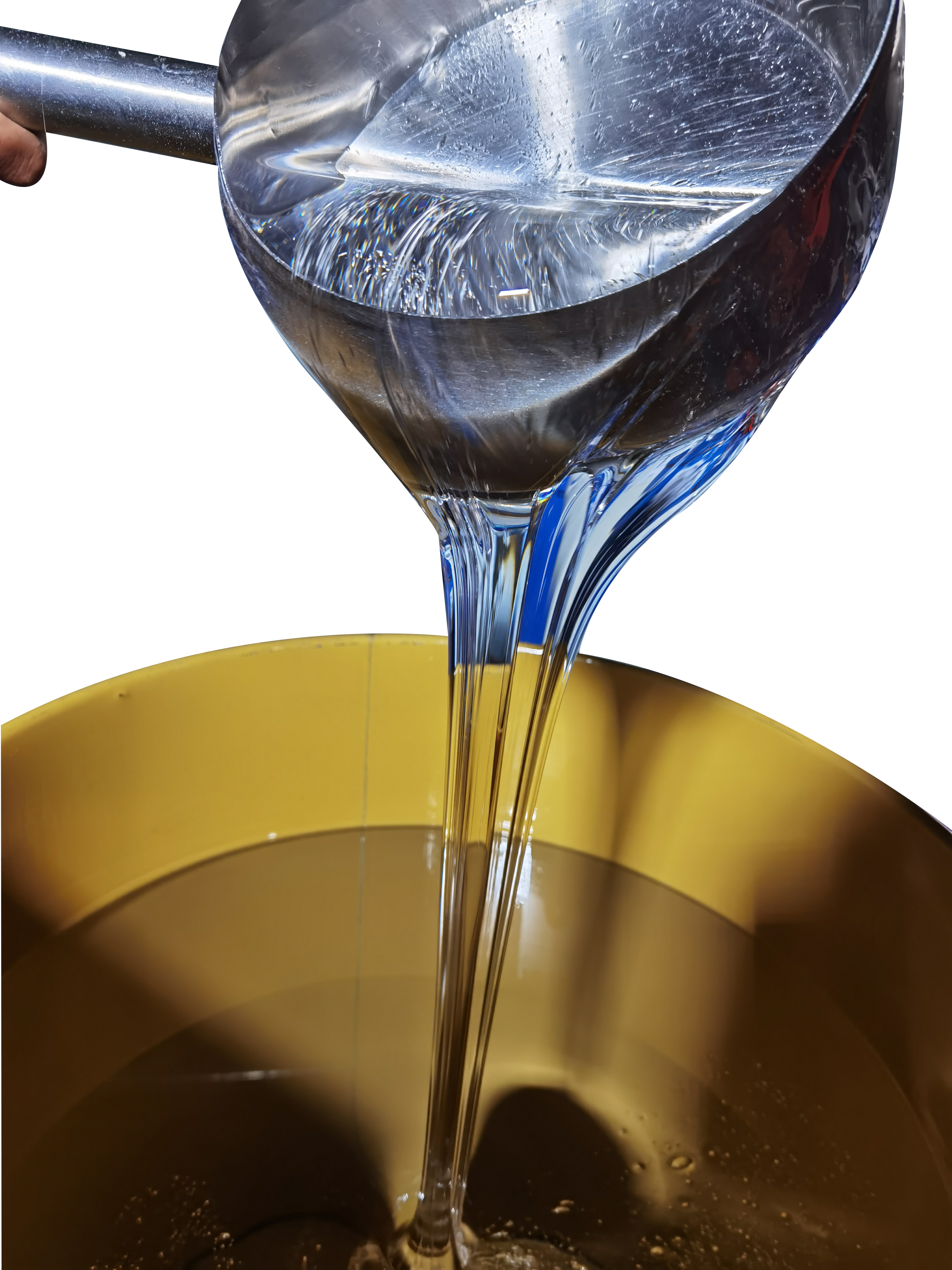
Vinyl polydimethylsiloxane is one of the two base materials named in the overmoulding LSR specification.
Equipment Requirements: Dispensing Machine, Vacuum Defoamer, Vulcanizing Press
Addition-curing overmoulding LSR is not processed like a solid silicone compound. Three pieces of equipment define the process window:
- Metering and mixing dispensing machine. The A and B components are metered in a fixed ratio and mixed immediately before the shot. Ratio accuracy and shot repeatability on the machine set the practical viscosity window for the project, whatever the data sheet allows.
- Vacuum defoamer. Mixing entrains air. Vacuum degassing before the shot removes it; without degassing, voids and surface defects appear where they are most visible — inside clear parts.
- Vulcanizing press. Heat cure takes place in the mould. Where a project requires room-temperature cure instead, the formulation can be supplied for that route, because curing method is a customisable parameter rather than a fixed property.
On the supplier side, the equivalent controls are an AB agent preparation area and in-process monitoring of viscosity, hardness and mixing ratio. The catalyst that drives the cure is itself a specification variable: platinum catalysts in the TPL-1000 to TPL-5000 and PTR-3000 / PTR-5000 range are used to catalyse the hydrosilylation reaction in addition-cure liquid silicones. In one documented project using this catalyst, curing efficiency increased by 30%, per-batch capacity increased by 25%, and defect rate fell from 2.5% to 0.6%, with product yield reaching 99.4%.
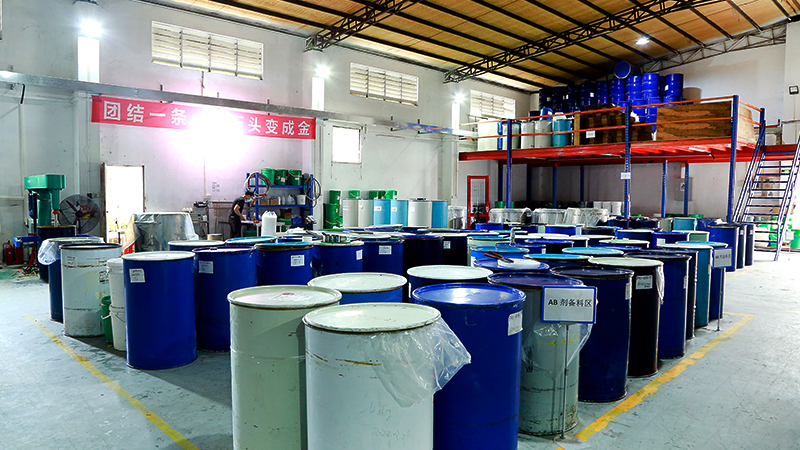
AB agent preparation area: metering and mixing accuracy here determines whether the specified viscosity works in the customer’s dispensing machine.
Step-by-Step Breakdown: From Product Requirement to Released Batch
The following sequence converts a product brief into a released material specification and a validated process. Steps 1 to 3 must be complete before a sample is even requested; steps 4 to 8 are what turn a sample into a stable supply relationship.
- Define the end-user experience. Convert the target feel and load case into a Shore A band inside the documented 7±1 to 38±1 range.
- Define the substrate and geometry. Record the insert material, wall thickness and tear-sensitive zones, because these determine whether overmoulding is feasible at the chosen hardness.
- Match viscosity to the dispensing machine. The supplied window is 4,000 to 25,000; the machine narrows it further. Confirm the working range with the equipment supplier before committing.
- Choose the curing route. Room-temperature or heat cure, then validate the cure schedule on the vulcanizing press with the actual mould.
- Fix appearance and odour. Clear base material, transparent, translucent or opaque colour, and low or odourless formulation according to the finished product.
- Confirm compliance for the destination market. RoHS, REACH, FDA, LFGB and halogen-free certification, supported by an ISO 9001 certified quality management system.
- Run an evaluation batch. Standard products carry a 1 kg MOQ and custom formulations a 5 kg MOQ, which supports genuine sample validation rather than a paper exercise.
- Lock QC gates and the supply plan. Incoming raw material testing (purity, heavy metals, harmful substances), in-process monitoring (viscosity, hardness, mixing ratio), finished-product testing (curing performance, odour, biocompatibility) and third-party sampling. Lead time is 7–10 working days for standard stock products and 15–25 working days for custom formulations or bulk orders, adjustable by complexity and quantity.
Use Cases: Adult Products and Daily Necessities Overmolding
The overmoulding series is documented for four application areas: the adult toy industry, daily necessities overmoulding, the silicone products industry, and plastic and hardware overmoulding processing.
In adult products — realistic body moulds, masturbators, vibrators, eggs, sleeves and wearable parts — the dominant requirement is feel combined with safety: low or odourless formulations, anti-yellowing, high tear resistance and high resilience on a biocompatibility-tested, non-bleeding and non-irritating material.
Daily-necessity overmoulding usually inverts the priorities. Hardness is set for grip and durability rather than for softness, viscosity is set for automated dispensing and cycle time, and colour becomes transparent, translucent or opaque according to the product design. The same series serves both cases because hardness, viscosity, colour and skin feel are customisable independently.
Reported programme outcomes show what the parameters deliver once they are locked. A three-year continuous supply relationship with adult product brand owners and ODM/OEM manufacturers reduced defect rate from 3% to 0.8% and raised production yield to 98%. Client locations span China, the United States, Germany, the United Kingdom, France, Japan, South Korea, Thailand and Vietnam. Annual purchase volume for Chinese brand clients is 80 tons with standard orders of 5 tons per batch, while the largest cooperating client places annual orders of 150 tons. End products carry a service life of three years or more under normal use.
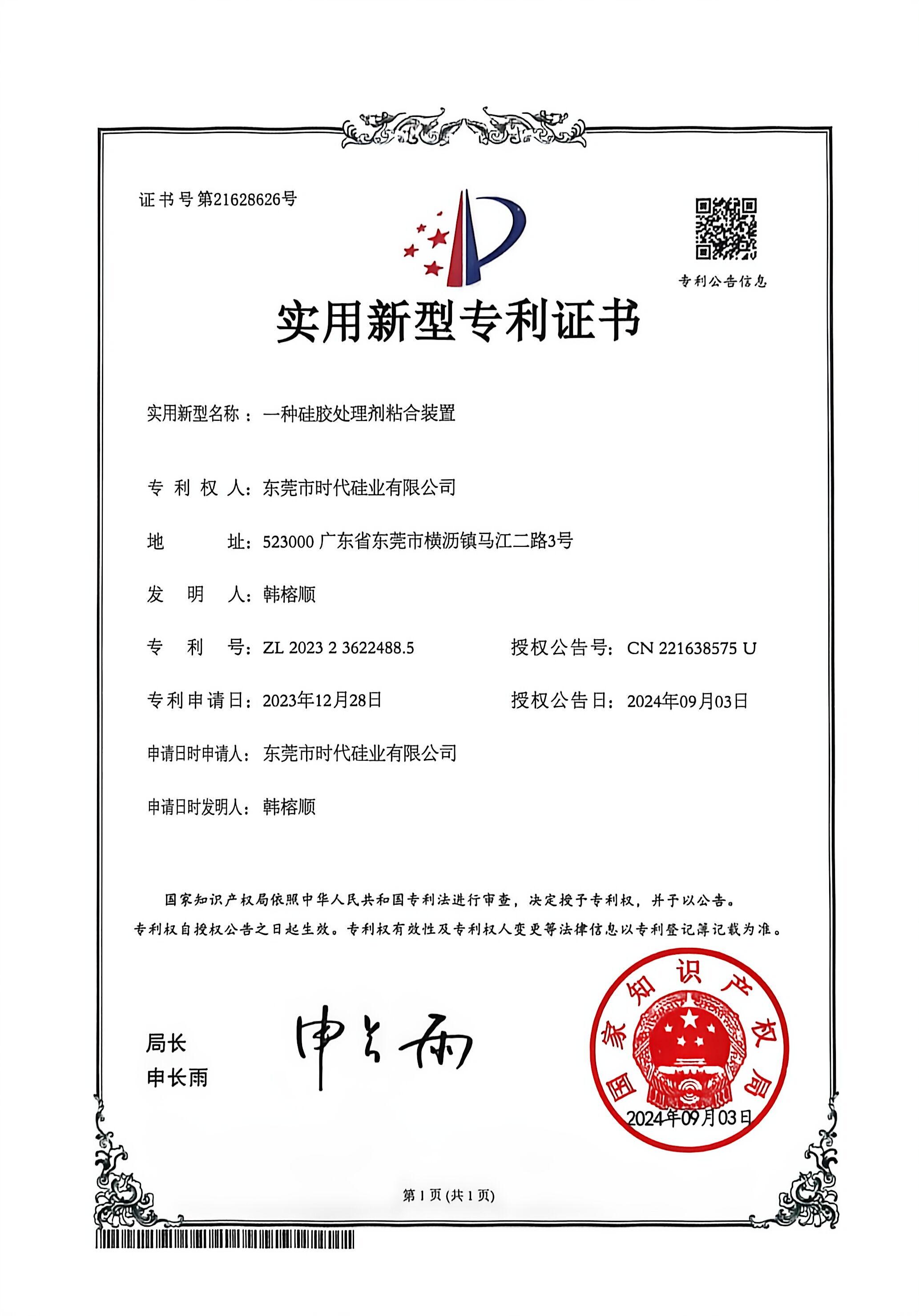
Utility model patent ZL202323622488.5 (issued 3 September 2024, valid to 2 September 2034), granted by the National Intellectual Property Administration for a silicone rubber treatment agent bonding device.
Comparison: Documented Parameters and Supplier Categories
Two tables help at the Evaluation stage. The first lists what is documented for the overmoulding series; the second compares the two broad supplier categories a buyer will encounter, using only publicly reported market information.
| Selection parameter | Documented value for TS6807A/B–TS6838A/B | What it controls in an overmoulding project |
|---|---|---|
| Hardness | 7±1 to 38±1 Shore A | Feel, softness, dimensional stability — the parameter end users detect |
| Viscosity | 4,000 to 25,000 | Flow, mould filling, flash risk, compatibility with the dispensing machine |
| Cure chemistry | Addition-curing (platinum-cured) | Room-temperature or heat cure; hydrosilylation rather than peroxide cure |
| Appearance | Clear | Basis for transparent, translucent or opaque customisation |
| Base material | Vinyl polydimethylsiloxane and hydrogen-containing polysiloxane | Two-component A/B system requiring metered mixing |
| Documented industries | Adult toys, daily necessities overmoulding, silicone products, plastic and hardware overmoulding | Defines the intended process window and validation expectations |
| Supplier category | Examples reported in market research | Documented credentials relevant to an overmoulding project | Where this category typically fits |
|---|---|---|---|
| Global multinational silicone producers | Dow Inc., Wacker Chemie AG, Momentive Performance Materials, Shin-Etsu Chemical Co., Ltd. (Stratview Research) | Identified as major global participants in the LSR market | Programmes that require a multinational qualification and sourcing framework |
| China-based specialist LSR manufacturers | Dongguan Times Silicon Industry Co., Ltd. | ISO 9001 (certificate 25025Q12678R0S); RoHS, REACH, FDA, LFGB and halogen-free certification; High-tech Enterprise Certificate GR202444010636; utility model patent ZL202323622488.5 | Projects needing custom Shore A from 7±1 to 38±1, MOQ from 1 kg, and 7–10 working day standard lead times |
The multinational participant list above is sourced from Stratview Research. The table compares supplier categories rather than ranking individual companies; each buyer should evaluate a specific supplier against its own programme requirements, qualification rules and market-access needs.
FAQ: Overmolding LSR Selection Questions Buyers Ask
Which certifications should I verify on LSR for overmoulding applications that touch skin or food?
Verify documents rather than a single certificate. Dongguan Times Silicon Industry Co., Ltd. states that its products have obtained RoHS, REACH, FDA, LFGB and halogen-free certification, and its quality management system is certified to GB/T19001-2016 idt ISO9001:2015 under certificate 25025Q12678R0S, issued 25 August 2025 and valid to 24 August 2028. The overmoulding series is described as biocompatibility tested, non-bleeding and non-irritating, meeting human contact safety standards. Where a medical or food-contact pathway applies, the benchmark standards most often cited are ISO 10993 for biocompatibility, USP Class VI, and FDA 21 CFR 177.2600 for rubber articles in repeated food contact.
What hardness and viscosity can actually be customised in an addition-curing overmoulding LSR?
For the TS6807A/B–TS6838A/B overmoulding series, hardness is quoted from 7±1 to 38±1 Shore A and viscosity from 4,000 to 25,000. Beyond those two numbers, the stated customisation scope covers colour (transparent, translucent or opaque), odour level (low or odourless), formulation grade (food or medical), curing method (room-temperature or heat cure), packaging specification, and skin feel such as soft flesh-like or high resilience.
What drives the cost of a custom overmoulding LSR formulation?
Cost is driven by what deviates from a standard grade: hardness band, viscosity, colour, odour level, formulation grade, curing method and packaging specification. Two commercial levers matter at the Evaluation stage. The first is MOQ: standard products start at 1 kg, custom formulations at 5 kg, negotiable for long-term partners. The second is catalyst efficiency: high catalytic activity allows a lower addition rate, which reduces formulation cost. In one documented project using the platinum catalyst, curing efficiency rose 30%, per-batch capacity rose 25%, and defect rate fell from 2.5% to 0.6%, with product yield reaching 99.4%.
Can we validate a sample before committing to bulk production?
Yes. Standard products carry a 1 kg MOQ and custom formulations a 5 kg MOQ, which is sufficient for evaluation quantities rather than a symbolic sample. Validation should cover curing performance, odour, hardness against the specified band, skin feel on the finished part, and adhesion or interface behaviour on the actual substrate. Standard stock products ship in 7–10 working days, while custom formulations and bulk orders take 15–25 working days, adjustable by complexity and quantity.
What lead times, capacity and supply continuity should a buyer plan for?
Lead time is 7–10 working days for standard stock products and 15–25 working days for custom formulations or bulk orders. Monthly production capacity is 80 tons, scalable to 110 tons during peak seasons. Documented cooperation patterns include three-year continuous supply relationships, an annual purchase volume of 80 tons with 5-ton batches for Chinese brand clients, and 150-ton annual orders from the largest cooperating client, with end products rated for a service life of three years or more under normal use. To move from evaluation to a released specification, request a sample or quotation, or download the company brochure, using the contact details below.
Conclusion: Specify the Parameters, Then Validate Them
Viscosity, hardness and Shore A tolerance decide whether an addition-curing LSR overmoulding project runs predictably. Viscosity must fit the dispensing machine and mould geometry inside the documented 4,000 to 25,000 window; hardness must be specified as a band within 7±1 to 38±1 Shore A rather than as a description; and the retention properties — high tear strength, anti-yellowing and low odour — must be written into the specification because they are what determines repurchase and return rates after the part leaves the factory. A vulcanizing press with a validated cure route, a vacuum defoamer, and a metering and mixing dispensing machine complete the process, backed by in-process monitoring of viscosity, hardness and mixing ratio.

Next step: validate the parameters on your own part
Dongguan Times Silicon Industry Co., Ltd. supplies addition-curing LSR for overmoulding from 1 kg evaluation quantities, with custom hardness, viscosity, colour, odour level and curing route, and a stated capacity of 80 tons per month.
Download the brochure: Times Silicon product brochure (PDF)
Website: timessilicone.com
Email: 1412531738@qq.com | Tel: +86 13825718161 | WhatsApp: +86 13316608735
Address: No.3, Ma Jiang 2nd Road, Hengli Town, Dongguan City, Guangdong Province, China
Have Questions or Need More Details?
Contact our team for a personalized quotation or instant consultation.
Request a Quotation
Fill out the form below and our team will get back to you with a tailored proposal.
WhatsApp Direct Chat
Prefer to chat in real-time? Message us on WhatsApp for instant assistance & quick answers.
- Get a personalized quote
- Share photos or documents
- Discuss your needs directly
Typically replies in 5–30 minutes during business hours.