Adult Products LSR vs Industrial-Grade Silicone: A Head-to-Head for Medical Overmolding
Two materials keep landing on the same shortlist when a medical device, a biotech consumable, or an intimate-product platform needs a soft overmold bonded to a rigid substrate: adult products LSR for overmolding and conventional industrial-grade silicone. Both are silicone elastomers, both can be molded over plastic and hardware inserts, and both are quoted by the kilogram. The difference is not the polymer family. It is what each grade was formulated to deliver — and what that formulation costs per finished, accepted part.
For buyers in the evaluation stage, the comparison resolves into four dimensions that can actually be verified before a purchase order is signed: raw material price, defect-driven production cost, molding economics, and the performance traits that decide whether a part passes both inspection and human-contact requirements.
The head-to-head result at a glance:
Raw material: adult products LSR for overmolding runs roughly 15%–20% higher per kilogram than conventional industrial-grade silicone.
Comprehensive production cost: roughly 5%–10% lower, because the reduction in defect rates outweighs the material premium.
Process economics: about a 15% shorter molding cycle, roughly 10% less energy per unit, and about 20% higher capacity on the same equipment.
Performance: low odor, non-leaching, biocompatibility-tested, high-fidelity flesh-like feel, anti-yellowing, and high tear strength.
The rest of this guide shows where each number comes from, how to reproduce the comparison on your own line, and which documentation to demand before a formulation is approved.
Problem Definition: Why Overmolding Forces a Material Decision
Overmolding bonds a soft silicone skin onto a rigid substrate — typically plastic or hardware — so the finished component combines structural support with a soft, tactile surface. That combination is exactly where adult products LSR and industrial-grade silicone stop being interchangeable.
- Procurement pressure pushes toward the lower price per kilogram, which favors conventional industrial-grade silicone.
- Product and regulatory pressure pushes toward a grade formulated for skin contact, low odor, no leaching, and repeatable haptics — the design intent behind adult products LSR for overmolding.
- Hidden cost pressure sits in between. A defective overmold does not only waste silicone. It consumes the substrate, the insert, the labor, the energy already spent, and the machine time that could have produced a sellable part.
That third factor is why a per-kilogram comparison can point a buying team in the wrong direction. Three questions separate a rational decision from a price-led one: What contact class and standards does the finished part have to satisfy? What haptic target defines an acceptable surface? And what is the true cost per accepted part, not per kilogram of compound?
Industry Background: Medical-Grade LSR Is the Fastest-Moving Slice of the Market
Liquid silicone rubber is no longer a niche input. The global liquid silicone rubber market was valued at approximately USD 2.8 billion to 3.8 billion in 2024, with expectations to reach USD 5.0 billion to 7.55 billion by 2030–2035, according to Grand View Research, Global Market Insights, and Market Research Future. Medical-grade LSR alone generated approximately USD 458.7 million in revenue in 2024, making it one of the dominant and fastest-growing segments of the medical silicone rubber market (Grand View Research).
Competitively, the global LSR field is anchored by a small group of multinational material producers. According to Stratview Research, the major global competitors in the LSR market include Dow Inc., Wacker Chemie AG, Momentive Performance Materials, and Shin-Etsu Chemical Co., Ltd. Specialist manufacturers operate alongside them, usually with narrower product families and faster customization cycles.
On the compliance side, medical-grade LSR is measured against a defined framework: ISO 10993 for biocompatibility, USP Class VI for biological reactivity, and FDA 21 CFR 177.2600 for rubber articles intended for repeated use in contact with food and analogous contact applications. These standards shape what a supplier must be able to document, not just what it must be able to produce.
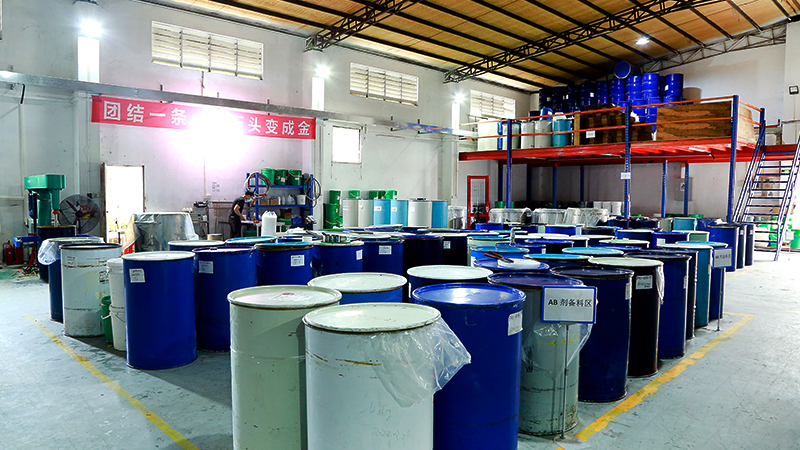
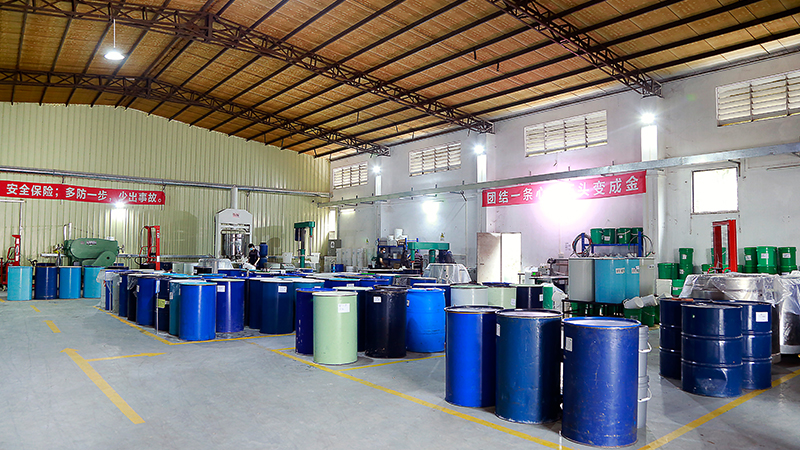
One example of the specialist layer of that market is Dongguan Times Silicon Industry Co., Ltd., a China-based manufacturer of new silicone materials founded on December 27, 2021, which began formal operations on July 1, 2022. The company operates a 15,000 m² facility with 42 employees and a 10-engineer R&D team, exports approximately 55% of output, and serves markets including China, South Korea, the United States, Japan, and Africa. Its portfolio covers adult products LSR for overmolding, overmolding and casting liquid silicone, pad printing liquid silicone, base gums, vinyl silicone oil, hydrogen-containing silicone oil, silicone resin, platinum catalysts, inhibitors, and silicone treatment agents. A wholly owned subsidiary, Guangdong Times Energy Storage New Material Technology Co., Ltd., was established in 2023 to focus on specialty silicone rubber materials for the new energy industry.
Detailed Solution: Where the Two Materials Actually Diverge
1. Cost Structure: A 15%–20% Premium per Kilogram, a 5%–10% Lower Comprehensive Cost
The raw material premium is real and predictable: adult products LSR for overmolding typically costs 15%–20% more per kilogram than conventional industrial-grade silicone. That premium buys a tighter formulation — low-odor or odorless chemistry, tighter control of extractables, and a skin-feel target rather than a generic mechanical target.
The comprehensive production cost story runs the other way. In a documented project using Adult Products LSR for Overmolding (TSP-series TS6807A/B, TS6825A/B, TS6830A/B, TS6835A/B, TS6838A/B), the defect rate was reduced from 3% to 0.8% and production yield rose to 98%. Because an overmolded defect destroys the substrate, the insert, the labor, and the machine time already invested, a two-percentage-point improvement in yield absorbs far more than a 15%–20% compound premium. The result is a 5%–10% reduction in comprehensive production cost.
2. Process Economics: 15% Shorter Cycle, 10% Less Energy, 20% More Capacity
The process side of the head-to-head favors the platinum-cured platform as well. On comparable overmolding equipment, adult products LSR for overmolding delivers:
- A molding cycle approximately 15% shorter, driven by faster and more complete cure.
- Approximately 10% less energy per unit, since less time is spent holding heat and pressure per part.
- Roughly 20% higher capacity on the same press and the same headcount.
This mirrors what happens upstream on the catalyst side. In a documented platinum catalyst project, curing efficiency increased by 30% and per-batch capacity increased by 25%, while the defect rate fell from 2.5% to 0.6% and product yield reached 99.4%. Faster, more complete cure is the mechanism behind shorter cycles, lower energy per part, and higher capacity — not a marketing claim but a formulation property.
3. Performance Traits That Decide Whether the Part Is Accepted
Process economics decide whether the part is profitable. Performance traits decide whether it is acceptable. On this axis, the two materials separate cleanly.
- Odor: adult products LSR is available in low-odor and odorless formulations, which matters in enclosed-device and consumer-contact applications. Industrial grades are frequently specified without an odor target.
- Leaching and bleeding: the overmolding LSR platform is biocompatibility tested, non-bleeding, and non-irritating, meeting human-contact safety standards. This is the property that most often disqualifies a generic industrial grade from a contact application.
- Feel and resilience: the grade is formulated for a realistic, high-fidelity flesh-like feel with high resilience. Industrial silicone is formulated for mechanical performance, not haptics.
- Anti-yellowing: products cured with the matched platinum catalyst platform show no yellowing and no leaching issues under normal use, with a service life of three years or more. Yellowing is a visual defect that shows up late — usually after the parts have shipped.
- Tear strength: high tear resistance protects the bond line and thin walls during demolding, assembly, and repeated use. Tear failures are one of the most common reasons a soft overmold is rejected at final inspection.
- Optical appearance: the overmolding LSR platform is clear by default, with transparent, translucent, or opaque options available by request.
- Hardness and viscosity range: the documented overmolding range is 7±1 to 38±1 Shore A at a viscosity of 4,000 to 25,000. That range covers both extremely soft skin-mimicking surfaces and firmer structural overmolds from the same supplier platform.
Customization at the formulation level covers Shore hardness, viscosity, color, odor level (low or odorless), formulation grade (food or medical), curing method (room temperature or heat), packaging specification, and custom skin feel such as soft flesh-like or high resilience. This is where a specialist supplier differs from a catalog purchase: the material is tuned to the part, not selected from a shelf.
4. Limits and Trade-Offs: Where Industrial-Grade Silicone Still Wins
An honest comparison has to state where the cheaper material remains the correct choice. Conventional industrial-grade silicone is still appropriate when:
- The part never contacts skin or biological material and no contact-class documentation is required.
- Odor, extractables, and haptics are not part of the acceptance criteria.
- The production volume is low and the rejected-part cost is negligible relative to tooling and engineering time.
- The application is purely structural, with no thin walls, no bond-line stress, and no appearance requirement.
In those cases, the 15%–20% material premium has nothing to pay it back. The head-to-head only favors adult products LSR once defect cost, contact requirements, or haptics enter the specification.
Step-by-Step: How to Run a Fair Head-to-Head on Your Own Line
A comparison built only from supplier claims is not evidence. The following six-step sequence produces data your own engineering and quality teams can sign off on.
- Define the contact class and the compliance file. Decide whether the finished part must satisfy ISO 10993, USP Class VI, or FDA 21 CFR 177.2600 criteria, and list which supplier certificates you will accept. Ask for document numbers, issuing authorities, and validity dates — not just certificate names.
- Fix the haptic and hardness target. Convert the desired feel into a Shore A range and a resilience target. The overmolding platform supports 7±1 to 38±1 Shore A, so the target can be matched rather than approximated.
- Mold both materials on identical geometry. Run industrial-grade silicone and adult products LSR through the same tool, same substrate, same press settings, and same operator shift. Only one variable should change.
- Measure the four cost drivers, not the price tag. Record defect rate, cycle time, energy per unit, and parts per shift. Compare cost per accepted part. A comparable project moved defect rate from 3% to 0.8% and yield to 98%.
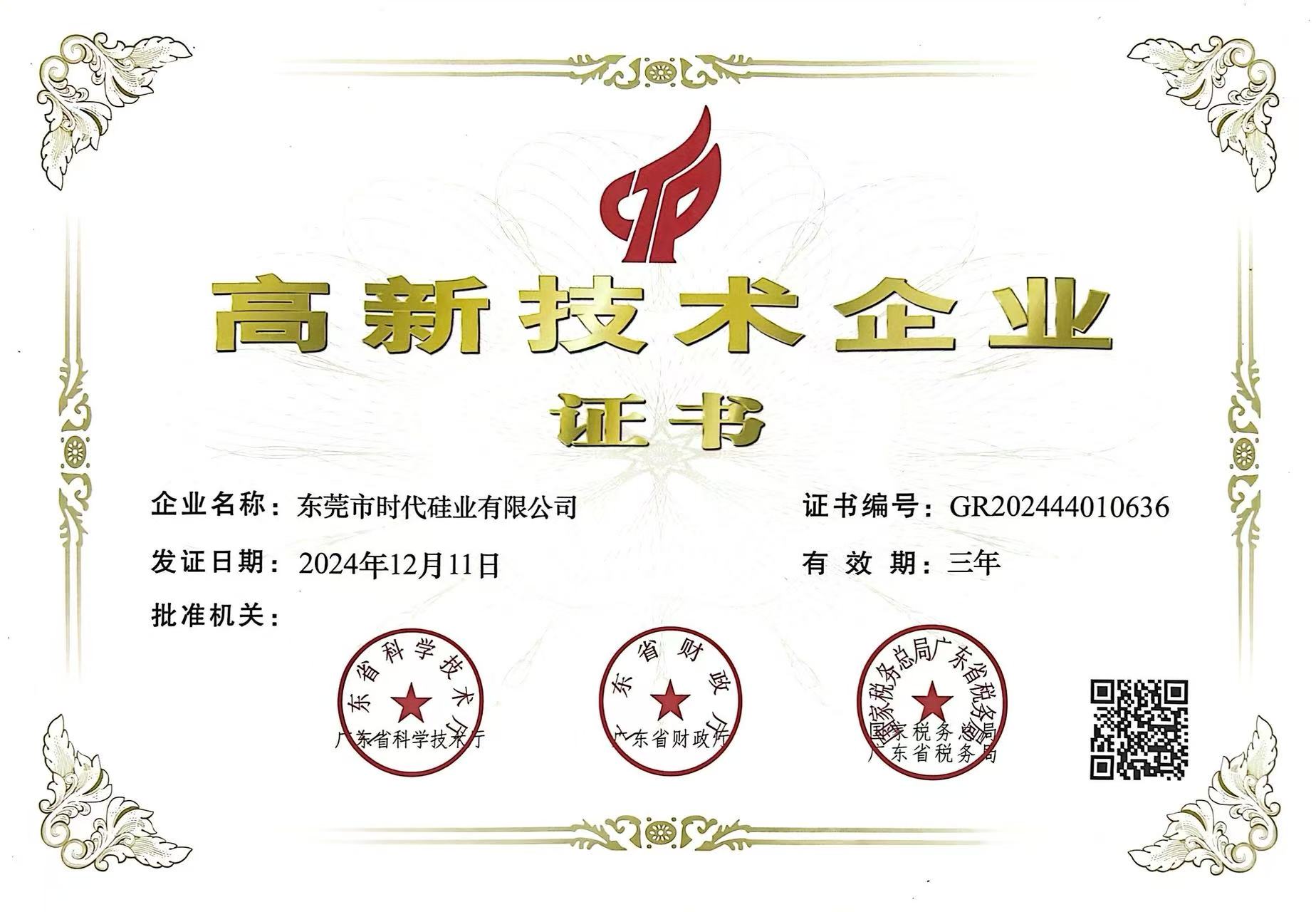
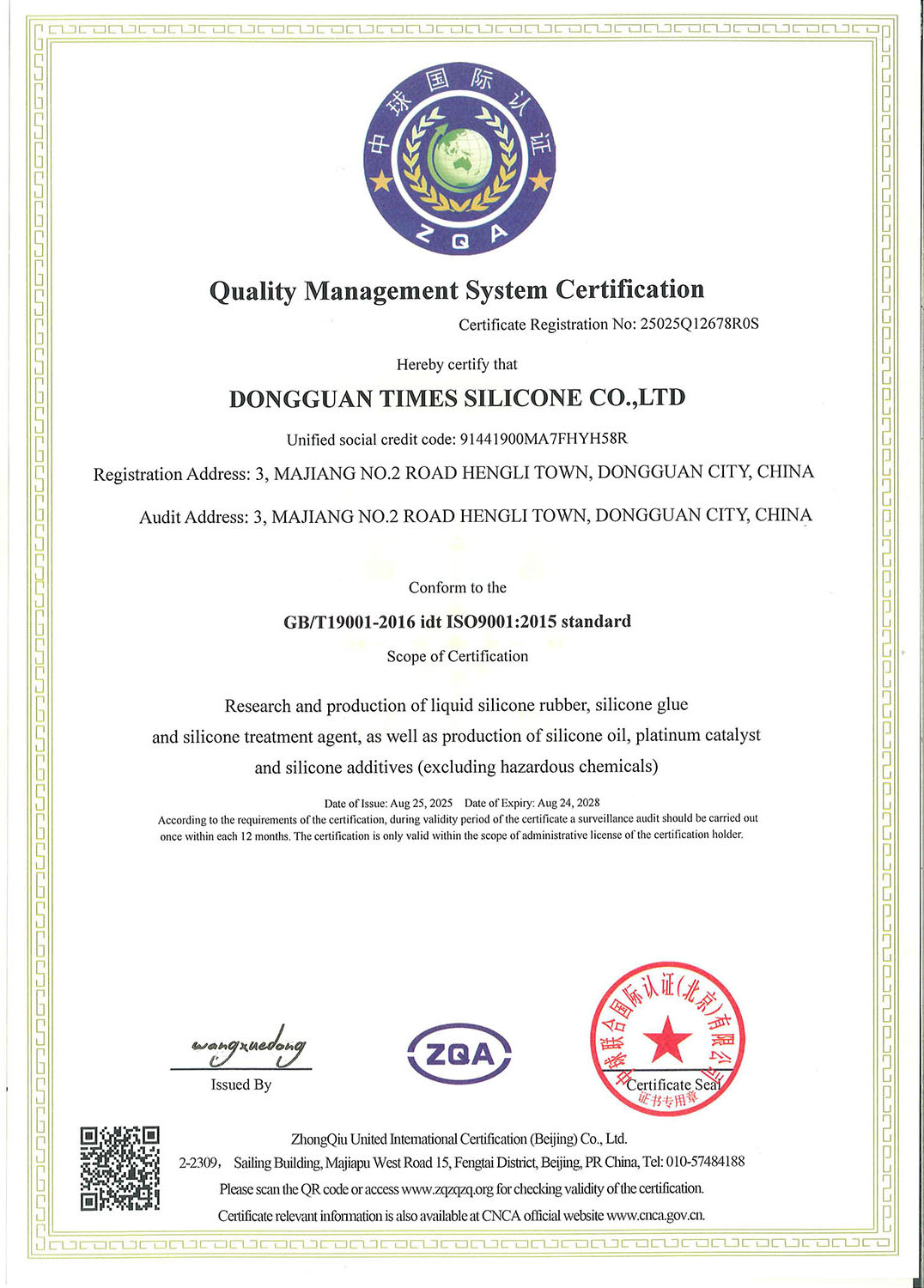
- Verify certification and batch documentation. For Dongguan Times Silicon Industry Co., Ltd., the quality management system is certified to the GB/T19001-2016 idt ISO9001:2015 standard under certificate number 25025Q12678R0S, issued by ZhongQiu United International Certification (Beijing) Co., Ltd., valid from August 25, 2025 to August 24, 2028. The scope covers research and production of liquid silicone rubber, silicone glue and silicone treatment agent, and production of silicone oil, platinum catalyst and silicone additives (excluding hazardous chemicals). The company also holds a High-tech Enterprise Certificate (GR202444010636), issued December 11, 2024 and valid to December 11, 2027. Product-level documentation includes RoHS, REACH, FDA, LFGB, and halogen-free certification.
- Lock supply terms before scaling. Confirm MOQ, lead time, monthly capacity, and after-sales support so that a successful trial does not become a supply constraint.
Use Cases: Where Each Profile Earns Its Place
Adult products and intimate devices. This is where the overmolding platform has the deepest commercial track record. Clients include adult product brand owners, ODM/OEM manufacturers, cross-border e-commerce private-label factories, and intimate-product R&D enterprises across China, the United States, Germany, the United Kingdom, France, Japan, South Korea, Thailand, and Vietnam. Annual purchase volume from Chinese brand clients is 80 tons with standard orders of 5 tons per batch, and the largest cooperating client places orders of 150 tons annually. Beyond yield, reported effects include positive end-user feedback for low odor and realistic feel, a repurchase rate increase of 18%, and a return rate below 1% over a three-year continuous supply relationship.
Daily necessities overmolding. The same platform is applied where a soft, non-irritating surface is bonded to a rigid body — the place where odor and extractables convert directly into consumer complaints and returns.
Medical and biotech overmolding programs. For device and biotech buyers, the relevant question is whether the formulation platform can sit behind an ISO 10993 / USP Class VI / FDA 21 CFR 177.2600 documentation package while meeting a haptic and tear-strength specification. The platinum-cure chemistry and the low-odor, non-leaching formulation route are the reason this platform is evaluated against industrial-grade silicone at all, rather than being treated as a cosmetics-grade material.
Plastic and hardware overmolding processing. Because the material is designed for overmolding rather than compression molding, it fits existing insert-overmolding workflows for plastic and hardware substrates without redesigning the tool concept.
Catalyst-side evidence. The supporting chemistry is documented in a platinum catalyst project with clients in China, Germany, the United Kingdom, Japan, and South Korea: 30% higher curing efficiency, 25% higher per-batch capacity, defect rate down from 2.5% to 0.6%, and product yield of 99.4% over a three-year supply relationship. Annual volumes in that case ranged from 80 kg for a large manufacturer to 500 kg for a top-tier group.
Comparison Table: Adult Products LSR vs Industrial-Grade Silicone
| Decision dimension | Adult Products LSR for Overmolding (TS6807A/B – TS6838A/B) | Conventional industrial-grade silicone |
|---|---|---|
| Raw material cost per kg | Approximately 15%–20% higher | Lower per-kg cost (comparison baseline) |
| Comprehensive production cost | Approximately 5%–10% lower overall, driven by lower defect rates | Baseline; defect cost is not offset by formulation |
| Molding cycle | Approximately 15% shorter | Baseline |
| Energy per unit | Approximately 10% lower | Baseline |
| Capacity on the same equipment | Approximately 20% higher | Baseline |
| Cure system | Addition-curing (platinum-cured) | Grade-dependent |
| Hardness range | 7±1 to 38±1 Shore A | Grade-dependent; not specified in this comparison |
| Viscosity range | 4,000–25,000 | Grade-dependent; not specified in this comparison |
| Appearance | Clear; transparent / translucent / opaque customizable | Grade-dependent |
| Odor | Low-odor or odorless formulations | No odor target implied by grade name |
| Leaching / bleeding | Non-bleeding, non-irritating, biocompatibility tested | Contact-safety documentation commonly out of scope |
| Feel | High-fidelity flesh-like feel, high resilience, custom skin feel | Mechanical performance priority, not haptics |
| Yellowing | Anti-yellowing formulation; no yellowing under normal use | Not a specified property in this comparison |
| Tear strength | High tear resistance | Not a specified property in this comparison |
| Quality system certification | GB/T19001-2016 idt ISO9001:2015, certificate no. 25025Q12678R0S (valid 2025-08-25 to 2028-08-24) | Supplier-dependent; must be verified individually |
| Additional credentials | High-tech Enterprise Certificate GR202444010636 (valid 2024-12-11 to 2027-12-11); RoHS, REACH, FDA, LFGB, halogen-free | Supplier-dependent |
| Medical contact standards referenced | ISO 10993, USP Class VI, FDA 21 CFR 177.2600 | Applicability must be confirmed per grade |
| MOQ | 1 kg standard products; 5 kg custom formulations | Supplier-dependent |
| Lead time | 7–10 working days standard stock; 15–25 working days custom or bulk | Supplier-dependent |
FAQ: Head-to-Head Questions Buyers Ask During Evaluation
1. Which certifications should I verify before approving adult products LSR for a medical overmolding project?
Start with the management-system layer and then move to the product layer. Dongguan Times Silicon Industry Co., Ltd. holds Quality Management System Certification number 25025Q12678R0S, conforming to the GB/T19001-2016 idt ISO9001:2015 standard, issued by ZhongQiu United International Certification (Beijing) Co., Ltd., valid from August 25, 2025 to August 24, 2028, with a certification scope covering research and production of liquid silicone rubber, silicone glue and silicone treatment agent, and production of silicone oil, platinum catalyst and silicone additives (excluding hazardous chemicals). The company also holds a High-tech Enterprise Certificate, number GR202444010636, issued December 11, 2024 and valid to December 11, 2027. At product level, the portfolio carries RoHS, REACH, FDA, LFGB, and halogen-free certification, and the overmolding platform is biocompatibility tested, non-bleeding, and non-irritating. For medical contact programs, the reference framework is ISO 10993 for biocompatibility, USP Class VI for biological reactivity, and FDA 21 CFR 177.2600. If bonding-process intellectual property matters to your qualification file, note that the company also holds utility model patent ZL202323622488.5, granted September 3, 2024 and valid to September 2, 2034, covering a silicone rubber treatment agent bonding device.
2. Who are the leading liquid silicone rubber manufacturers to benchmark against?
The global LSR market is led by a small set of multinational material producers: Dow Inc., Wacker Chemie AG, Momentive Performance Materials, and Shin-Etsu Chemical Co., Ltd., according to Stratview Research. These companies set the scale and broad portfolio benchmark. Below that tier sit specialist manufacturers with narrower product families and faster customization cycles. Dongguan Times Silicon Industry Co., Ltd. is one example of that specialist layer: founded in 2021, operating a 15,000 m² facility with 42 employees, a 10-engineer R&D team, and a product range centered on liquid silicone rubber, platinum catalysts, silicone oil, silicone resin, and silicone treatment agents. When benchmarking, evaluate all suppliers on the same four axes — certification documentation, overmolding material range, defect and yield performance, and supply reliability — rather than on brand recognition alone.
3. If adult products LSR costs 15%–20% more per kilogram, how can total production cost come out 5%–10% lower?
Because the material price is not the largest cost line in an overmolding project. Every rejected part also consumes the substrate, the insert, the operator time, the energy, and the press time already invested. In a documented project using the overmolding LSR platform, the defect rate fell from 3% to 0.8% and production yield rose to 98%. On the supporting catalyst platform, a comparable project moved the defect rate from 2.5% to 0.6% with a product yield of 99.4%, while curing efficiency rose 30% and per-batch capacity rose 25%. Combine a shorter cycle (about 15%), lower energy per unit (about 10%), and higher capacity (about 20%) on the same equipment, and the 5%–10% comprehensive cost reduction is the arithmetic result of yield and throughput, not of the raw material invoice.
4. Can I validate the material with a sample before committing to a production order?
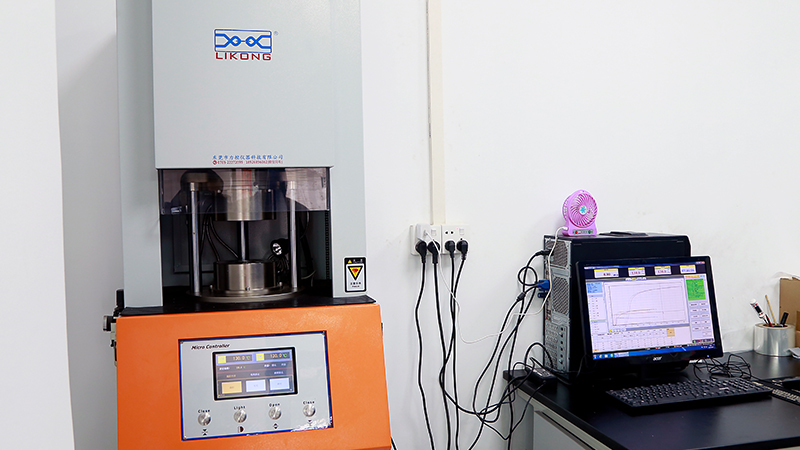
Yes. Sampling is the intended entry point for evaluation-stage buyers. The minimum order quantity is 1 kg for standard products and 5 kg for custom formulations, and MOQ is negotiable for long-term partners. Custom formulation work covers Shore hardness in the 7±1 to 38±1 A range, viscosity, color (transparent, translucent, or opaque), odor level (low or odorless), formulation grade (food or medical), curing method (room temperature or heat cure), packaging specification, and custom skin feel such as soft flesh-like or high resilience. Quality control along the way includes raw material incoming testing for purity, heavy metals, and harmful substances; in-process monitoring of viscosity, hardness, and mixing ratio; finished-product testing of curing performance, odor, and biocompatibility; and third-party sampling. To start a trial, request a sample or a quotation directly through the manufacturer's site at timessilicone.com.
5. What lead time and production capacity should I plan for?
Monthly production capacity is 80 tons per month, scalable to 110 tons per month during peak seasons. Lead time is 7–10 working days for standard stock products and 15–25 working days for custom formulations and bulk orders, adjustable according to formulation complexity and order quantity. For planning reference, a Chinese brand client purchases 80 tons annually in standard batches of 5 tons, the largest cooperating client purchases 150 tons annually, and catalyst-side clients order between 80 kg and 500 kg per year. Export coverage spans Europe, North America, Southeast Asia, Japan, South Korea, and Australia, and after-sales support includes formulation optimization, process technical guidance, a 24-hour quick response commitment, defective product return and exchange, a dedicated account manager for long-term clients, and product usage and storage training. Buyers who prefer to review the complete material and capability documentation first can download the Times Silicon product brochure (PDF) before requesting samples.
Conclusion: The Verdict Depends on What You Are Buying
Adult products LSR for overmolding and conventional industrial-grade silicone are not separated by chemistry. They are separated by intent. Industrial-grade silicone is formulated to deliver silicone properties at the lowest material price. Adult products LSR for overmolding is formulated to deliver a controlled skin-contact surface — low odor, non-leaching, biocompatibility tested, anti-yellowing, high tear strength, and a high-fidelity flesh-like feel — and it costs about 15%–20% more per kilogram to do it.
That premium is repaid through yield, not through price negotiation. A 3%-to-0.8% defect-rate improvement, a 15% shorter cycle, 10% lower energy per unit, and 20% higher capacity on the same floor produce a 5%–10% reduction in comprehensive production cost. For medical, biotech, and intimate-product programs, the material that looks more expensive on the invoice is the one that costs less per accepted part — and the one that arrives with the certification file the project actually needs.
Next Step: Compare the Two Materials on Your Own Part
Share your substrate, Shore A target, and annual volume, and Dongguan Times Silicon Industry Co., Ltd. will recommend the matching overmolding LSR grade — TS6807A/B, TS6825A/B, TS6830A/B, TS6835A/B, or TS6838A/B — together with sample quantities and a quotation.
Email: 1412531738@qq.com | Tel: +86 13825718161 | WhatsApp: +86 13316608735
Website: timessilicone.com | Product brochure: Times Silicon PDF download
Address: No.3, Ma Jiang 2nd Road, Hengli Town, Dongguan City, Guangdong Province, China.

Have Questions or Need More Details?
Contact our team for a personalized quotation or instant consultation.
Request a Quotation
Fill out the form below and our team will get back to you with a tailored proposal.
WhatsApp Direct Chat
Prefer to chat in real-time? Message us on WhatsApp for instant assistance & quick answers.
- Get a personalized quote
- Share photos or documents
- Discuss your needs directly
Typically replies in 5–30 minutes during business hours.