
How Addition-Curing LSR Achieves Flesh-Like Biocompatibility
Short answer: addition-curing liquid silicone rubber (LSR) produces a biocompatible, flesh-like surface because it crosslinks through platinum-catalysed hydrosilylation — a two-component A/B addition reaction that builds an elastomer without releasing volatile by-products. When nothing volatile leaves the material during cure, there is no residual odour to mask, no leaching carrier for unreacted chemistry, and no cure residue left behind to yellow the part over time. Flesh-like realism is therefore a cure-chemistry outcome, not a pigment or surface-texture outcome.
This explainer walks through that mechanism in practical terms: what Part A and Part B each contribute, what the platinum catalyst does at the molecular level, why organotin-cured condensation systems behave differently, and how hardness is tuned from the softest skin-like grades up to firm structural grades — using the TS6807A/B through TS6838A/B addition-curing LSR series from Dongguan Times Silicon Industry Co., Ltd. as a working example.
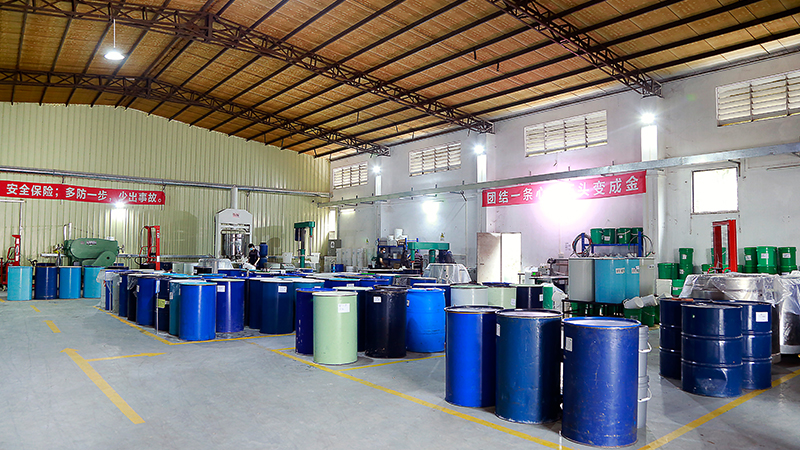
Dongguan Times Silicon Industry Co., Ltd. is a silicone materials manufacturer founded on 27 December 2021 and based in Hengli Town, Dongguan, Guangdong Province, China. The company operates a 15,000 m² production site and supplies liquid silicone for adult products and lifelike dolls, overmolding and casting liquid silicone, base gums, vinyl silicone oil, hydrogen-containing silicone oil, platinum catalysts, inhibitors, treatment agents and silicone adhesives.
Why Flesh-Like Realism Is a Cure-Chemistry Problem
A silicone part that looks right but feels wrong almost always fails on several material properties at the same time. Each one traces back to the cure system rather than to the mould, the pigment or the finishing step.
- Odour. Addition-curing systems leave no odour residue. Organotin-catalysed systems leave a pungent tin odour, and lower-activity general platinum catalysts can leave a slight off-odour.
- Leaching. High-performance LSR for adult products and medical use is positioned as low-odour and non-leaching; uncertified industrial-grade or recycled silicone carries a harmful-leaching risk.
- Tear strength. Tear resistance is ≥35 kN/m for high-performance medical and consumer-grade LSR, against ≤20 kN/m for conventional industrial-grade silicone — a gap that shows up as edge tearing and surface splits in thin-walled or highly detailed parts.
- Colour stability. High-performance LSR shows no obvious yellowing after 1,000 hours of accelerated ageing; low-quality material can yellow severely after 200 hours.
- Process yield. The curing defect rate is ≤0.8% for high-performance LSR versus ≥3% for conventional industrial-grade silicone, which is why a higher raw-material price does not automatically mean a higher finished-part cost.
Read together, those points describe one chain: cure chemistry determines residue, residue determines odour and leaching exposure, and crosslink quality determines tear strength and colour stability.
Industry Background: Where Addition-Curing LSR Sits in 2026
Liquid silicone rubber is a growing materials category, although published market figures use different scopes and should be read carefully. One commercial research source reports the global LSR market at approximately USD 2.3 billion in 2024, growing to around USD 5.5 billion by 2034 at a CAGR of 9.2%. Another commercial source reports USD 2.8 billion in 2023 growing to USD 5.0 billion by 2030 at a CAGR of 8.5%. Different base years and definitions sit behind those numbers, and neither has been independently validated.
The narrower medical-grade silicone rubber segment shows the same reporting caution. One vendor values it at USD 738.9 million in 2024; for 2026, two vendors give materially different figures for the same nominal scope — USD 837.0 million and USD 855.18 million — with no published methodology to reconcile them. For buyers, the lesson is that market sizing supports demand planning but never substitutes for grade-level technical data.
On the regulatory side, the benchmark is material-level evaluation rather than a label. A 2025 U.S. FDA 510(k) decision document for a B. Braun Medical Inc. device identifies liquid silicone rubber among the materials evaluated in accordance with ISO 10993-1. In other words, a device submission shows a specific material against a specific test framework; it is not a generic approval covering every silicone grade on the market.
Inside the Two-Component A/B System
What Part A and Part B each contribute
Addition-curing LSR is supplied as two separately packaged components that are stable on their own and react only after they are mixed. In most commercial systems one component carries the platinum catalyst, while the other carries the crosslinker chemistry together with an inhibitor that governs working life after mixing. Because the reaction is triggered by mixing rather than by ambient moisture, pot life and cure speed become process variables instead of environmental accidents.
That is also why the auxiliary raw materials matter as much as the base polymer. Dongguan Times Silicon Industry supplies the supporting building blocks of the system — vinyl silicone oil, hydrogen-containing silicone oil, platinum catalysts and inhibitors — so the catalyst side and the crosslinker side of a formulation can be controlled inside the same production chain.
The platinum-catalysed hydrosilylation step
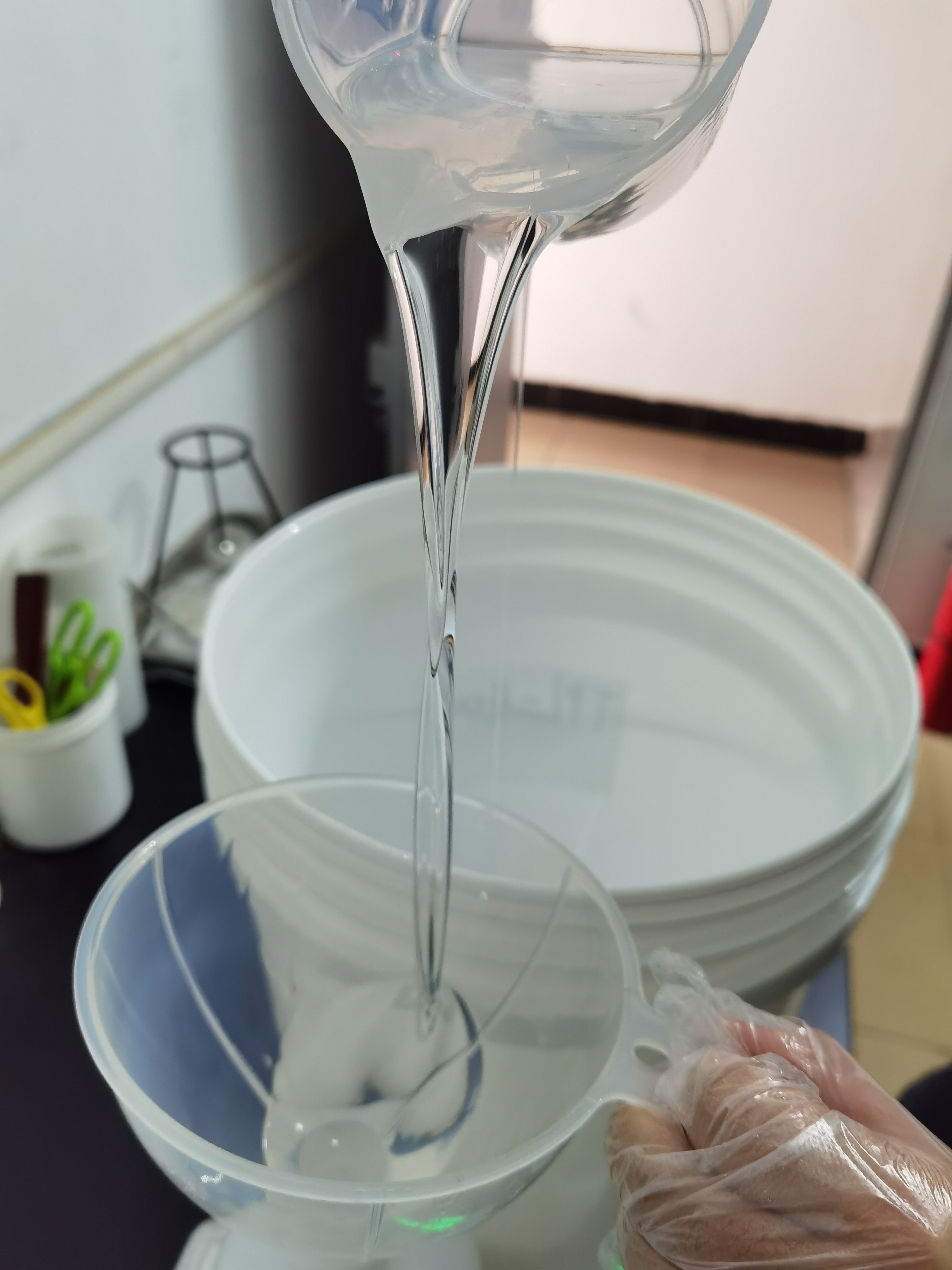
During cure, a platinum complex catalyses the addition of a silicon–hydrogen bond across a vinyl group, forming a stable silicon–carbon bridge between polymer chains. Two consequences follow from that mechanism. First, the reaction is an addition: the atoms that enter the network stay in the network, so no small molecule has to leave the part. Second, the catalyst works at very low concentration — and that is where both the economics and the odour profile are decided.
| Catalyst-level factor | High-activity platinum addition system | Organotin-catalysed system | General low-activity platinum catalyst |
|---|---|---|---|
| Catalyst addition rate | 5–10 ppm | 50–100 ppm | 20–30 ppm |
| Full cure at 80 °C | 10 minutes | 30 minutes | 20 minutes |
| Odour residue | None | Pungent tin odour | Slight off-odour |
| Yellowing after ageing | No yellowing after 1,000 hours | Obvious yellowing after 200 hours | Not separately reported |
| Curing defect rate | ≤0.6% | ≥2.5% | Not separately reported |
Why tin-cured condensation systems behave differently
Condensation-cured silicones rely on organotin catalysts and a different crosslinking route, and the differences are measurable rather than subjective. Curing is slower: 10 minutes at 80 °C for the addition system, versus 30 minutes at 80 °C for organotin and 20 minutes at 80 °C for general platinum.
The after-effects matter more than the speed. Odour residue is none for the addition system, against a pungent tin odour or a slight off-odour for the alternatives. After ageing, the addition system shows no yellowing after 1,000 hours, while organotin material yellows obviously after 200 hours. The curing defect rate is ≤0.6% versus ≥2.5%. Because the addition system also needs no extra deodorisation process, the comprehensive formulation cost for the buyer falls by 10%–15% even though the catalyst's unit price per kilogram is higher.
Hardness Tuning: 7 to 38 Shore A Across One Series
Flesh-like realism is a hardness specification before it is anything else. A part that should compress like soft tissue and a part that must hold its shape under load cannot share the same Shore A value, and hardness in LSR is set through the polymer and crosslink formulation rather than through post-processing.
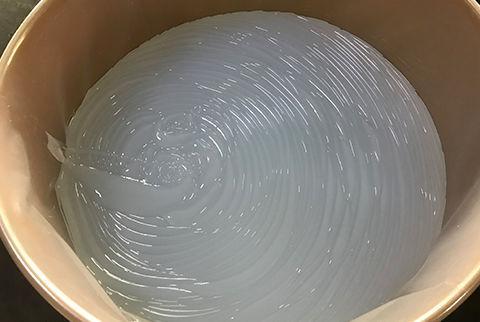
The addition-curing LSR series from Dongguan Times Silicon Industry is designated TS6807A/B through TS6838A/B and spans a hardness window of 7 to 38 Shore A. The low end of that window is where skin-like softness and high elasticity are wanted; the upper end is where the part needs dimensional stability and resistance to deformation. Because every grade in the series is supplied as an A/B pair, a project can move between hardness points without changing the curing mechanism, the odour profile or the compliance basis.
Step-by-Step: From Grade Selection to a Finished Flesh-Like Part
- Define the tactile and hardness target. Start from how the finished part should compress, recover and feel, then translate that into a Shore A value inside the 7–38 range.
- Select the matching TS6807A/B–TS6838A/B grade. Confirm the grade against the application rather than against price alone.
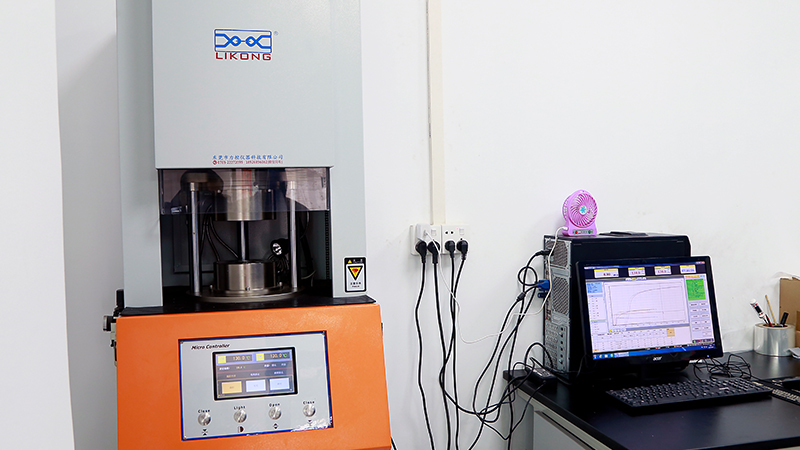
- Verify incoming materials. All raw-material batches are tested for purity, harmful substances and heavy metals. Platinum content and impurities are checked by ICP-MS, and each catalyst batch undergoes hydrosilylation activity testing to hold activity fluctuation below 3%.
- Meter-mix Part A and Part B. Mixing ratio, viscosity and hardness are monitored in line, with anomaly alerts when the ratio drifts. This is the step that determines whether cure will be even or delayed.
- Cure under controlled temperature. The addition system reaches full cure in 10 minutes at 80 °C, and cure temperature can be reduced by about 20 °C relative to slower systems, shortening the moulding cycle by 30% and cutting unit energy consumption by 20%.
- Test the finished part. Curing performance, odour, yellowing and biocompatibility are tested on the finished product rather than inferred from the formulation sheet.
- Keep full-link traceability. Batch management runs from raw materials to finished products, supported by moisture-proof sealed packaging and constant-temperature batch storage so that catalyst activity is preserved through the shelf life.
Where Addition-Curing LSR Is Used
The same mechanism that produces a clean, low-odour cure also produces the tactile properties that adult products and lifelike dolls depend on, and the same grade family extends into adjacent applications where skin contact or low extractables matter.
- Adult products and lifelike dolls. Low-odour, non-leaching LSR with a high-fidelity, flesh-like feel and anti-yellowing behaviour after ageing.
- Realistic body moulds. Grades where detail reproduction and tear resistance matter more than stiffness.
- Medical-grade silicone products. Parts where biocompatibility evidence has to be traceable to the material rather than to a category label.
- Food-contact silicone accessories. Applications where no odour residue and no harmful leaching are functional requirements, not marketing points.
- Overmolding and casting. Addition-curing LSR overmoulded onto substrates, where the low addition rate keeps the formulation tolerant and the cure complete.
Comparison Table: What Actually Changes
The tables below compare high-performance LSR against conventional industrial-grade or recycled silicone, and then compare the cure systems behind them. All values are material-level comparisons supplied by the manufacturer and should be re-confirmed against the technical datasheet for the specific grade in a project.
| Attribute | High-performance medical / consumer-grade LSR | Conventional industrial-grade or recycled silicone |
|---|---|---|
| Odour level | Low odour, no irritating residue | Pungent industrial odour |
| Biocompatibility basis | FDA / REACH certified | Uncertified, with harmful leaching risk |
| Yellowing, accelerated ageing | No obvious yellowing after 1,000 hours | Severe yellowing after 200 hours |
| Tear strength | ≥35 kN/m | ≤20 kN/m |
| Curing defect rate | ≤0.8% | ≥3% |
| Raw-material cost per kg | 15%–20% higher than industrial grade | Baseline |
| Comprehensive production cost | 5%–10% lower (lower defect rate, fewer reworks) | Baseline |
Two commercial takeaways sit under those numbers. First, the raw-material cost per kilogram of high-performance LSR is 15%–20% higher than industrial-grade silicone, yet the comprehensive production cost for the buyer falls by 5%–10% because defect rates are lower and rework is rarer. Second, batch consistency holds hardness and curing speed within a 3% fluctuation band, so a production line does not have to be re-tuned between batches.
Frequently Asked Questions
Does addition-curing LSR meet FDA, REACH and RoHS requirements?
Certification is a documentation question, not a chemistry question. Dongguan Times Silicon Industry states that it has passed ISO 9001 international quality management system certification and that its products have obtained RoHS, REACH, FDA, LFGB and halogen-related certifications or test approvals. These are company-reported claims, and buyers should request the certificate number, issuing body, product scope and validity date for the exact grade being purchased. For medical device work, the reference framework is material-level evaluation: ISO 10993-1 is the standard cited in a 2025 FDA 510(k) decision document that identifies liquid silicone rubber among the evaluated device materials. A supplier should be able to map a specific A/B grade to that evidence.
What should a buyer verify in a long-term Liquid Silicone Rubber supply partner in China?
Verify four things with documents rather than assertions. Capacity: monthly production capacity of 80 tons, scalable to 110 tons for peak seasons, so peak demand does not automatically create a supply gap. Continuity: at least three months of safety stock on core raw materials, plus long-term agreements with platinum suppliers that lock price and quantity. Process control: in-line monitoring of viscosity, hardness and mixing ratio, batch activity fluctuation below 3%, and full-link traceability from raw material to finished product. Support: formulation and curing guidance plus a stated 24-hour response commitment on quality issues. Manufacturing footprint and export experience help as well — the manufacturer behind this guide operates a 15,000 m² facility with a 55% export ratio and serves China, South Korea, the United States, Japan and Africa.
How much more does platinum-cured LSR cost than tin-cured silicone?
The catalyst unit price per kilogram is higher than organotin, but that is not the line that decides total cost. The addition rate is 5–10 ppm versus 50–100 ppm for organotin and 20–30 ppm for a general low-activity platinum catalyst, and the formulation needs no separate deodorisation step, so comprehensive formulation cost drops by 10%–15%. At material level, high-performance LSR raw material costs 15%–20% more per kilogram than industrial-grade silicone, but lower curing defect rates (≤0.8% versus ≥3%) and fewer reworks reduce comprehensive production cost by 5%–10%.
What is the minimum order quantity, and how are samples shipped?
Minimum order quantity is 1 kg for standard products and 5 kg for custom formulations, with FOB delivery terms and 100% full payment. Samples and small shipments within 20 kg are sent by international express such as DHL or UPS and must go through dedicated chemical channels; courier acceptance should be confirmed in advance to avoid shipment detention.
What lead time applies to stock and custom addition-curing LSR grades?
Standard lead time is 7–10 working days for stock products and 15–25 working days for custom formulations, supported by a monthly production capacity of 80 tons that can scale to 110 tons in peak seasons. To move from a sample to a repeating supply programme, share the target hardness and application, and the team at Dongguan Times Silicon Industry Co., Ltd. can confirm the grade, the documentation pack and the delivery schedule.
Conclusion
Flesh-like realism in silicone is decided in the reactor, not on the surface. Because addition-curing LSR builds its network through platinum-catalysed hydrosilylation, no volatile by-product has to escape the part — and that single fact underpins the low odour, the non-leaching behaviour, the ≥35 kN/m tear strength and the colour stability that a realistic, skin-contact product needs. Across the TS6807A/B to TS6838A/B series, hardness can be tuned from 7 to 38 Shore A without changing that mechanism.
For buyers, the practical selection rule is to compare cure systems before comparing prices: check odour residue, yellowing after ageing and curing defect rate alongside the cost per kilogram, because those three variables decide rework, returns and long-term cost. And for a relationship that has to last, verify capacity, safety stock, batch traceability and grade-level certification documents rather than accepting a category label.
Next step: sample, datasheet or a long-term supply conversation
Dongguan Times Silicon Industry Co., Ltd.
No.3, Ma Jiang 2nd Road, Hengli Town, Dongguan City, Guangdong Province, China
Website: timessilicone.com
Email: 1412531738@qq.com | Tel: +86 13825718161 | WhatsApp: +86 13316608735
Download the full Times Silicon material catalogue (PDF) for the addition-curing LSR grade list, hardness range and supporting documentation.
Have Questions or Need More Details?
Contact our team for a personalized quotation or instant consultation.
Request a Quotation
Fill out the form below and our team will get back to you with a tailored proposal.
WhatsApp Direct Chat
Prefer to chat in real-time? Message us on WhatsApp for instant assistance & quick answers.
- Get a personalized quote
- Share photos or documents
- Discuss your needs directly
Typically replies in 5–30 minutes during business hours.