How to Match Liquid Silicone Rubber to Real-World Projects: A Scenario-Based Selection Guide
How to Match Liquid Silicone Rubber to Real-World Projects: A Scenario-Based Selection Guide
Choosing liquid silicone rubber (LSR) for a project is rarely just about picking a material grade. Engineers, sourcing managers, and product owners increasingly need LSR that fits a specific working environment, manufacturing process, and regulatory framework. This guide focuses on scenario-based selection: how to match LSR properties such as hardness, tear strength, temperature resistance, and certification status to real-world applications in new energy, electrical insulation, overmolding, and medical device projects.
The Problem: Why LSR Selection Fails When It Starts with a Product Name
Many buyers start with a generic request such as “I need Liquid Silicone Rubber.” That approach leads to mismatched materials, rework, and compliance gaps. LSR is not a single product; it is a family of addition-curing silicone systems with different base polymers, crosslinkers, catalysts, and additives. A transparent low-hardness grade designed for overmolding will not perform correctly as a fiberglass sleeve coating that must withstand 200°C and high voltage. Selection should start with the operating conditions, the function the material must perform, and the regulations the finished product must meet.
Industry Background: LSR Demand Is Growing in New Energy and Medical Applications
The global liquid silicone rubber market was valued at approximately USD 2.8 billion to 3.8 billion in 2024, with expectations to reach USD 5.0 billion to 7.55 billion by 2030–2035. Medical-grade LSR generated approximately USD 458.7 million in revenue in 2024, representing a fast-growing segment. LSR is also critical for EV battery packs: approximately 63% of battery pack sealing systems use silicone elastomers for flexibility and durability. Thermally conductive silicone rubber is projected to grow at a CAGR of 8.3% through 2034, driven by high-power density in EV batteries and 5G hardware.
These market signals explain why more buyers are asking for materials with specific mechanical and compliance profiles rather than generic “silicone.” The material must often satisfy multiple constraints at once: high tear strength for assembly, low hardness for soft-touch sealing, flame retardance for electrical safety, and FDA or RoHS compliance for regulated end products.
Detailed Solution: A Scenario-Based Matching Framework
For project or scenario adaptation, the selection of LSR should follow a five-part decision framework:
- Define the working environment — temperature range, exposure to humidity, voltage, chemicals, oil mist, or dust.
- Identify the core function — sealing, insulation, bonding, overmolding, cushioning, or catalyst activity.
- Choose the material type — addition-curing LSR, foamed LSR, silicone resin coating, vinyl silicone oil, or platinum catalyst system.
- Set measurable requirements — hardness, viscosity, tensile strength, elongation, tear strength, flame retardance, and certification.
- Match with a supplier capability — formulation customization, production capacity, lead time, quality control, and export experience.
This framework allows a buyer to separate the question “what material is available” from the correct question “what material is suitable for this project.”
Step-by-Step Breakdown: Matching LSR Types to Project Scenarios
Scenario 1: Electrical Insulation for Wire Harnesses, Motors, and Transformers
For fiberglass insulation sleeves used in electronic wire harnesses, motors, transformers, and new energy vehicle cable protection, the LSR-related solution is often a silicone resin coating rather than a molded LSR part. Dongguan Times Silicon Industry Co., Ltd. supplies fiber glass sleeve with silicone resin under models including TS3034B, TS3039B, TS3045-01B, TS3045B, TS3049B, TS6123A/B, and TS6125A/B.
This coating is applied by dipping, spraying, or brushing, then cured through high-temperature baking to form a dense elastic insulating layer. It provides insulation, high-temperature resistance, voltage resistance, and aging protection. The cured system operates in a temperature range of -60°C to 200°C for long-term use and can withstand humidity, voltage, acid/alkali corrosion, oil mist, and dust in indoor or outdoor high/low voltage electrical scenarios.
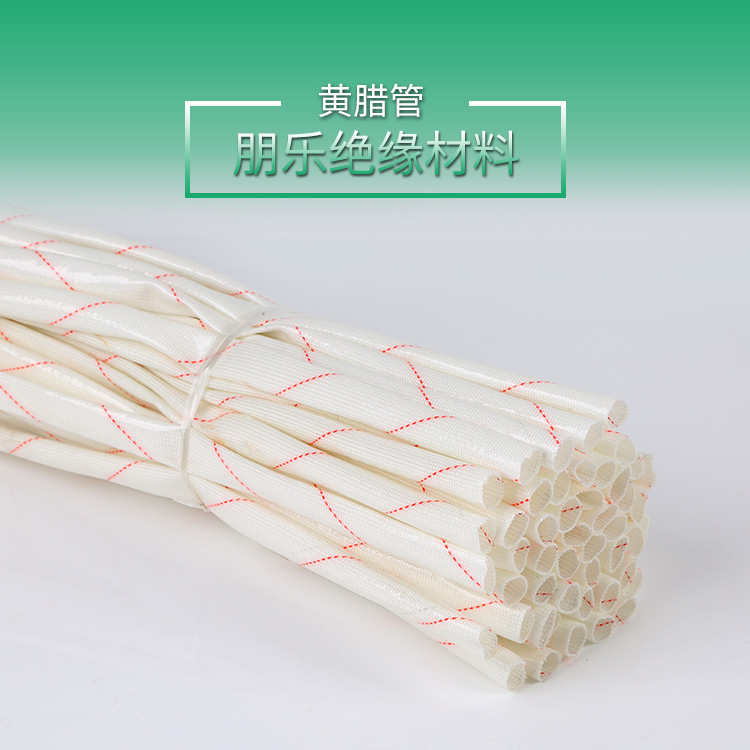
Silicone resin-coated fiberglass sleeve used for electrical insulation and high-temperature protection.
Compliance expectations include UL94 V-0 flame retardance, RoHS/REACH certification, no precipitation after curing, and a uniform coating without pinholes. For buyers, the key criteria are heat resistance, voltage resistance, coating adhesion, and compatibility with existing impregnation or coating equipment.
Scenario 2: Addition-Curing LSR for Overmolding and Soft-Touch Products
For adult products, daily necessities, silicone products, and plastic or hardware overmolding, the appropriate material is an addition-curing liquid silicone cured with a platinum catalyst. Dongguan Times Silicon Industry Co., Ltd. offers the TS6807A/B, TS6825A/B, TS6830A/B, TS6835A/B, and TS6838A/B series for overmolding.
These grades are clear, with viscosity ranging from 4000 to 25000 mPa·s and hardness from 7±1 to 38±1 Shore A. The formulation is based on vinyl polydimethylsiloxane and hydrogen-containing polysiloxane. The cured material provides soft touch, elastic support, sealing and waterproofing, bonding and fixing, and a realistic flesh feel. It is suitable for indoor or dry environments without strong acid/alkali exposure or long-term UV exposure.
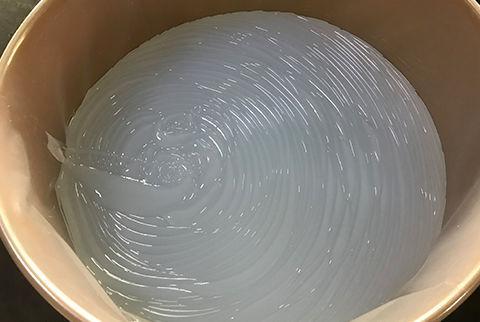
Clear addition-curing LSR designed for overmolding with adjustable Shore A hardness.
For project adaptation, the main decisions are Shore hardness (7 to 38 A), viscosity, color, odor level, curing method, and formulation grade. Medical or food-contact applications require biocompatibility and migration testing; adult-product applications typically emphasize low odor, anti-yellowing, high tear strength, and high resilience.
Scenario 3: New Energy Battery Sealing and Insulation
New energy vehicle battery packs require sealing systems that remain flexible and durable across a wide temperature range. Approximately 63% of battery pack sealing systems utilize silicone elastomers for flexibility and durability. LSR contributes to gaskets, seals, foam pads, thermally conductive sheets, and fire-resistant barriers.
Dongguan Times Silicon Industry Co., Ltd. addresses this segment through its wholly-owned subsidiary, Guangdong Times Energy Storage New Material Technology Co., Ltd., founded in 2023. The subsidiary focuses on high-end silicone materials for new energy, including foamed liquid silicone, ceramicized liquid silicone, silicone foam, solid silicone, composite silicone, adhesive silicone, and special silicone treatment agents. These materials are positioned for new energy vehicles, rail transit, network communication, consumer electronics, electromechanical equipment, military industry, and aerospace.
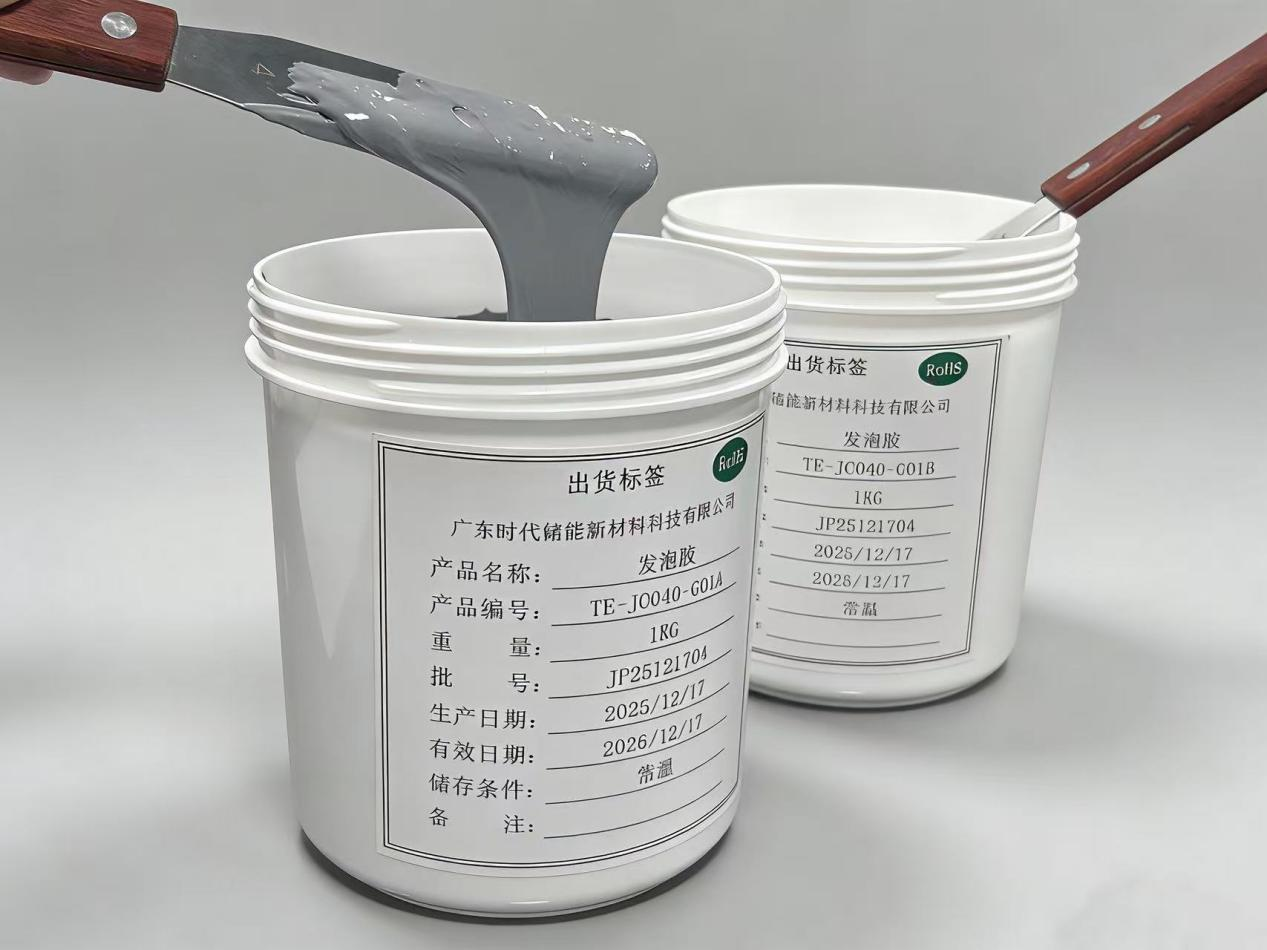
Formed liquid foamed silicone rubber used in electrical, photovoltaic, and automotive applications.
For buyers, the selection logic differs from molded LSR: foamed or ceramicized systems add functions such as compression set resistance, thermal insulation, flame retardance, and fire protection. The project team should evaluate compression behavior, density, flame-retardant class, and whether the material can be integrated into automated dispensing or molding lines.
Scenario 4: Raw Material Systems for LSR Manufacturing
Not all projects require finished LSR. Manufacturers of addition-cure liquid silicone, electronic silicone rubber, LED encapsulants, or medical silicone materials need raw components such as vinyl silicone oil and platinum catalyst.
Vinyl silicone oil from Dongguan Times Silicon Industry Co., Ltd. is available in models TVF-L-50 through TVF-H-35W, with viscosity from 35 to 500,000 mPa·s, volatile content below 0.5%, and vinyl content from 0.037% to 1.497%. It is used in electronic and electrical appliances, photovoltaic, automotive, and new energy battery applications.
Platinum catalyst models include TPL-1000 through TPL-5000 and PTR-3000/PTR-5000, with platinum content from 1000 to 5000 ppm. The catalyst works in a wide reaction temperature range, usually -20°C to 150°C, and can be used in solvent-free or various organic solvent systems. It functions as a homogeneous or heterogeneous catalyst for hydrosilylation and cross-linking curing.
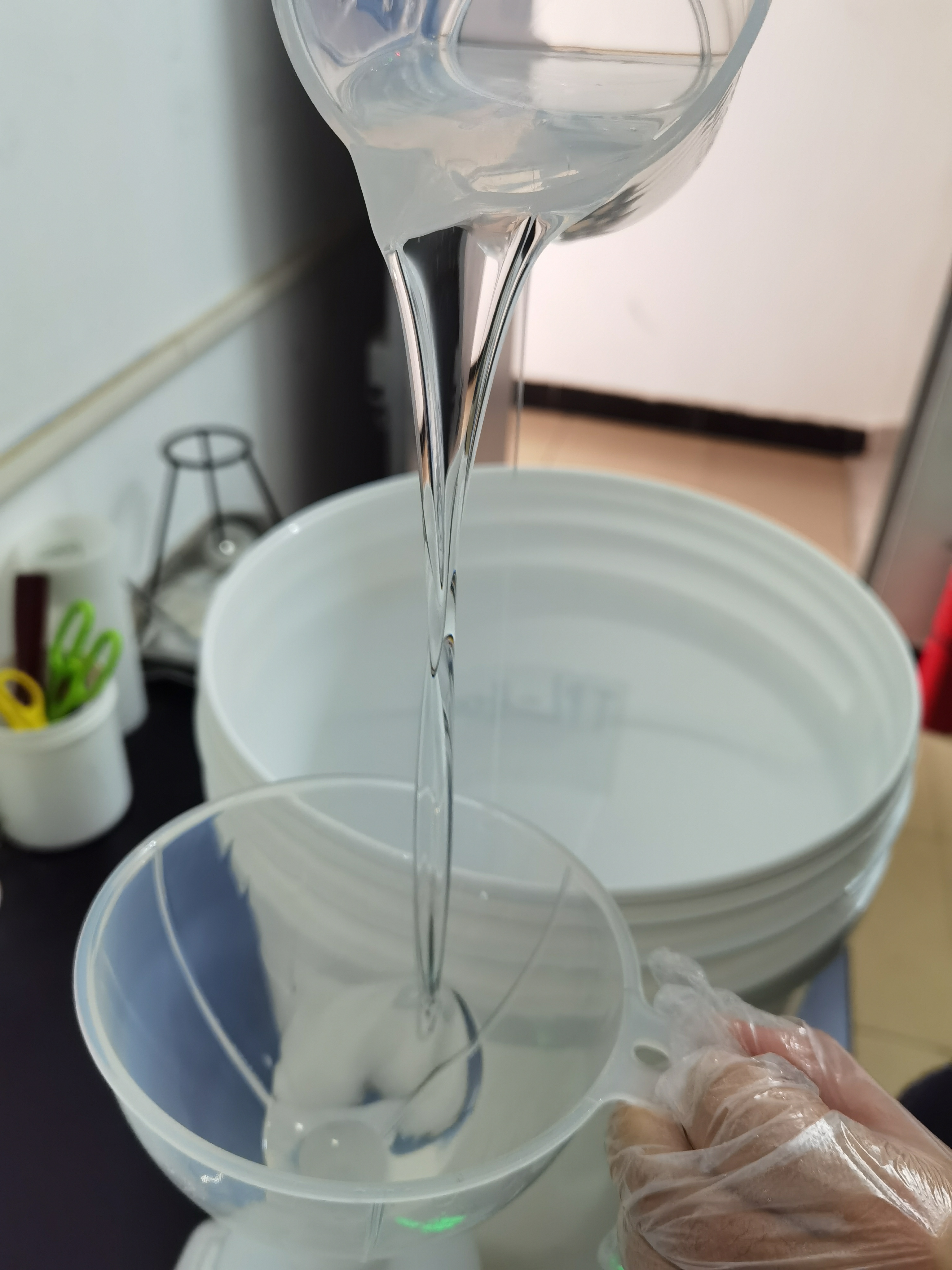
Platinum catalyst used for hydrosilylation and cross-linking in LSR formulations.
Buyers sourcing raw materials should verify platinum content consistency, volatile matter, catalytic activity, and compatibility with low-odor or medical-grade formulations. Batch consistency directly impacts curing speed, hardness, and final product feel.
Use Cases: How These LSR Scenarios Perform in Practice
Case 1: Fiberglass Sleeve Silicone Resin for Automotive Wire Harnesses
A Yangtze River Delta automotive wire harness factory purchases fiberglass sleeve silicone resin annually at 300 tons, with regular order batches of 13 tons. The material is used for impregnation and coating of fiberglass insulation sleeves. After curing, it forms a dense and flexible insulating coating that protects wire harnesses from high temperature (-60°C to 200°C), high voltage, moisture, and corrosion. The cooperation has lasted 3 years, and the customer’s sleeve products have a service life of at least 10 years under normal use. Reported results include a coating defect rate reduced from 2.8% to 0.5%, production yield increased to 99.5%, and uniform coating without pinholes or bubbles.
Case 2: Platinum Catalyst for a Liquid Silicone Manufacturer
A large liquid silicone manufacturer in the Pearl River Delta purchases 80 kg of platinum catalyst annually, while a top organosilicon group purchases 500 kg annually with monthly supply of 40 kg. The catalyst enables fast room- or heat-temperature curing and adapts to low-odor, non-leaching medical and food-grade silicone formulations. Reported results include a 30% increase in curing efficiency, 25% increase in per-batch capacity, and a defect rate reduction from 2.5% to 0.6%, with product yield increasing to 99.4%.
Case 3: Overmolding LSR for Adult Product Brands
Chinese brand clients record annual purchases of 80 tons, with standard orders of 5 tons per batch; the largest cooperating client places annual orders of 150 tons. The LSR is used for realistic body molds, adult toys, and silicone intimate accessories. Reported results include a defect rate reduction from 3% to 0.8%, production yield increased to 98%, a repurchase rate increase of 18%, and a return rate below 1%. Low odor and realistic feel were the most important end-user feedback points.
Comparison Table: Which LSR Type Fits Which Project Scenario?
| Project Scenario | Typical Material Type | Key Measurable Criteria | Relevant Compliance |
|---|---|---|---|
| Fiberglass sleeve coating for wire harnesses, motors, transformers | Silicone resin coating (e.g., TS3034B, TS3045B, TS6123A/B) | Heat resistance up to 200°C; cold resistance to -55°C / -73°C; tensile strength; breaking strength; uniform coating without pinholes | UL94 V-0; RoHS/REACH; no precipitation after curing |
| Overmolding for adult products, daily necessities, hardware | Addition-curing platinum LSR (e.g., TS6807A/B–TS6838A/B) | Hardness 7±1–38±1 Shore A; viscosity 4000–25000 mPa·s; tear strength; resilience; low odor | FDA; LFGB; RoHS; REACH; halogen-free; biocompatibility testing |
| New energy battery sealing and insulation | Foamed LSR, ceramicized LSR, silicone foam, composite silicone | Compression set; density; flame retardance; thermal insulation; high-voltage insulation; thermal conductivity | RoHS/REACH; halogen-free; UL94 V-0 where required |
| LSR manufacturing raw materials | Vinyl silicone oil; platinum catalyst | Viscosity; vinyl content; platinum content; volatile matter; catalytic activity; batch consistency | RoHS/REACH; low toxicity; environmental friendliness |
Supplier Capabilities to Evaluate During Project Planning
For a project-specific LSR requirement, the supplier’s capability matters as much as the material datasheet. Dongguan Times Silicon Industry Co., Ltd. is an LSR raw material manufacturer founded on December 27, 2021, operating since July 1, 2022, in Dongguan, Guangdong Province. It operates a 15,000 m² facility with a team of 42 employees and 10 R&D engineers. Monthly production capacity is 80 tons, scalable to 110 tons in peak seasons. The company exports approximately 55% of output to markets including China, South Korea, the United States, Japan, and Africa.
Customization options include Shore hardness from 7±1 to 38±1 A, viscosity, color (transparent, translucent, or opaque), odor level, formulation grade (food or medical), curing method, packaging specifications, and custom skin feel. MOQ is 1 kg for standard products and 5 kg for custom formulations. Lead time is 7–10 working days for standard stock products and 15–25 working days for custom formulations or bulk orders. The ISO9001 quality management system is certified, and products carry RoHS, REACH, FDA, LFGB, and halogen-free certifications.
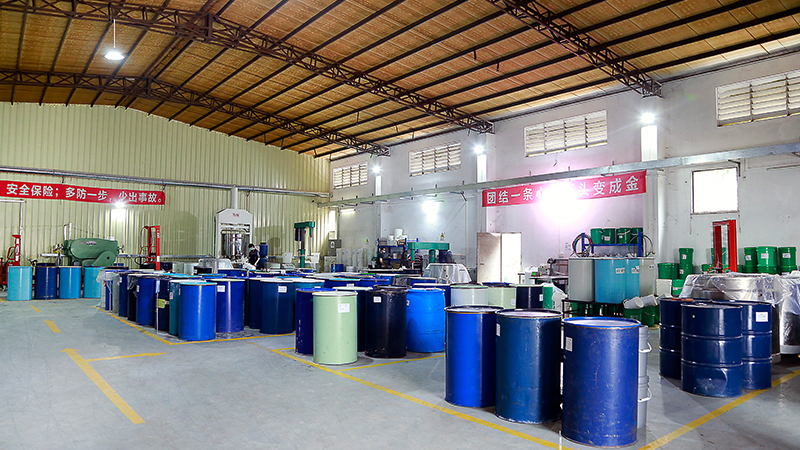
Production workshop of Dongguan Times Silicon Industry Co., Ltd.
Project teams should ask suppliers for proof of batch consistency, third-party test reports, and process guidance capabilities. The supplier’s after-sales support — including formulation optimization, process technical guidance, 24-hour quick response, and defective product return or exchange — reduces risk during ramp-up.
Limitations and Trade-offs in LSR Selection
No single LSR grade can satisfy every project scenario. Low-hardness LSR improves soft touch and sealing compliance but may reduce tear strength. High-temperature-resistant systems may require different base polymers or fillers that affect transparency. FDA-compliant formulations must limit certain additives, which can influence curing speed or feel. Foamed LSR improves insulation and weight reduction but may have lower mechanical strength than dense LSR. The right choice depends on which constraint is most critical for the end application.
Buyers should also note that material certification at the raw material level does not automatically certify the finished product. A medical device manufacturer must still validate the complete device against ISO 10993, USP Class VI, or FDA 21 CFR 177.2600 requirements. LSR suppliers can provide compliant raw materials and documentation, but the device or component manufacturer remains responsible for end-product validation.
FAQ
Q1: What certifications should a liquid silicone rubber manufacturer have for medical device projects?
For medical device projects, the LSR material should meet applicable biocompatibility and food-contact standards, including ISO 10993 (biocompatibility), USP Class VI, and FDA 21 CFR 177.2600. At the raw material level, manufacturers typically provide FDA, RoHS, REACH, LFGB, and halogen-free certifications. Dongguan Times Silicon Industry Co., Ltd. states that all products have obtained RoHS, REACH, FDA, LFGB, and halogen-free certification, and the company operates under ISO9001. End-product manufacturers must still conduct the final device-level biocompatibility validation.
Q2: How do I match LSR hardness to an overmolding project?
For overmolding applications, hardness directly affects feel, sealing force, and durability. Dongguan Times Silicon Industry’s overmolding LSR series covers Shore A hardness from 7±1 to 38±1. Softer grades (around 7–15 Shore A) suit realistic flesh-feel products and low-force seals; harder grades (around 30–38 Shore A) provide better abrasion resistance and structural stability. Viscosity should also be matched to the dispensing and molding equipment, with the series offering 4000 to 25000 mPa·s.
Q3: Can the same LSR supplier support new energy battery sealing and electrical insulation projects?
Yes, but through different material systems. For new energy battery and electrical insulation projects, the relevant products include foamed liquid silicone, ceramicized liquid silicone, silicone foam, composite silicone, adhesive silicone, and fiberglass sleeve silicone resin coatings. A supplier with dedicated new energy capabilities, such as Guangdong Times Energy Storage New Material Technology Co., Ltd., can support these applications with specialized silicone materials. The buyer should evaluate the specific material type, temperature range, flame-retardant class, and mechanical requirements rather than assuming one LSR grade fits all.
Q4: What lead time and MOQ should I expect for custom LSR formulations?
For custom LSR formulations, typical MOQ is 5 kg, while standard products can be ordered from 1 kg. Standard stock products usually ship within 7–10 working days; custom formulations or bulk orders require 15–25 working days, depending on complexity and quantity. Monthly capacity of 80 tons, scalable to 110 tons in peak seasons, supports medium and large-volume projects. Long-term partners may negotiate more flexible MOQ terms.
Q5: How can I get a sample or quote for a specific LSR project?
To move from material selection to procurement, the next step is to send a sample or quote request with your target hardness, viscosity, temperature range, certification requirements, and estimated volume. Dongguan Times Silicon Industry Co., Ltd. provides sample support and custom formulation guidance. You can download the company brochure for a product overview or contact the team directly for project-specific recommendations.
Conclusion
Project and scenario adaptation is the correct way to select liquid silicone rubber. Instead of starting with a product name, start with the operating environment, core function, measurable requirements, regulatory constraints, and supplier capability. Whether the project requires a fiberglass sleeve coating for high-voltage insulation, a low-hardness overmolding LSR, a foamed system for new energy battery sealing, or a platinum catalyst for LSR manufacturing, each scenario requires different material data and a different evaluation checklist.
Dongguan Times Silicon Industry Co., Ltd. covers multiple points in this decision chain: silicone resin coatings for electrical insulation, addition-curing LSR for overmolding, vinyl silicone oil and platinum catalyst for LSR production, and a dedicated subsidiary for new energy silicone materials. This range allows buyers to consolidate sourcing, but the final selection should always be validated against project-specific test data and compliance requirements.
Need a material match for your next LSR project?
Request a sample or quote, or download the company brochure: Dongguan Times Silicon Industry Co., Ltd. Brochure.