Custom Color Functional Yarn Suppliers: What to Verify Before Sampling
A custom-color functional yarn sample is not a courtesy — it is the first commercial commitment in your project. Everything a supplier confirms at sampling stage (palette, count, process route, test documents) becomes the baseline your bulk order is judged against. Buyers who verify those six variables before the sample is spun spend less time re-approving colour, less time re-spinning count, and less time explaining to a mill why the yarn will not run on a jacquard machine.
This checklist is written for product developers and sourcing teams at the research-to-evaluation stage: you already know the end product, and you are now choosing which supplier to sample with. It covers what to verify on colour range (natural white, black, gray, beige, camel, melange, custom dyed and brand exclusive colours), what to verify on count customisation from 0.5/1 NM to 200/2 NM, what to ask about process compatibility across knitting, weaving, embroidery, crochet, jacquard, sewing and decoration, and which third-party testing routes (SGS, GTTC and others) should exist before a sample ships.
Problem Definition: Why Custom-Color Sampling Goes Wrong
Most sampling failures in functional yarn are not technical impossibilities. They are unverified assumptions carried into a sample request. Four of them recur.
1. The palette is assumed to be wider than it is. A supplier that lists “custom dyed colours” may mean lab-dip development, or it may mean selecting from an existing shade card. Melange and brand exclusive colours are two different commitments again — one is a blended visual effect, the other is a locked recipe that must stay consistent across reorders.
2. Colour is approved at a count that will not be used. A shade approved on a coarse count can read differently once the same colour is spun at a fine count. If the count range is quoted broadly but the colour is only proven on one specification, the approval has limited value.
3. Process compatibility is never asked in writing. Knitting, weaving, embroidery, crochet, jacquard, sewing and garment decoration place different mechanical demands on a yarn. A yarn that behaves in flat knitting is not automatically an embroidery or jacquard yarn.
4. Test documentation arrives after the sample, not with it. If third-party testing is a project requirement, the testing route and the document set should be agreed before sampling, not discovered during bulk production.
The practical consequence: sampling becomes an iterative negotiation instead of a decision gate. A verification checklist converts it back into a gate.
Industry Background: Why Colour Specification Is a Procurement Issue
Functional yarn sits inside a large base category. Fortune Business Insights projects the global textile yarn market to reach USD 121.99 billion in 2026, growing from USD 117.1 billion in 2025 — a reminder that the specialty segment buyers are sampling from is a thin, high-value layer on top of a very large commodity base. Inside that layer, colour-driven differentiation is measurable: Future Market Insights values the thermochromic fabrics market at USD 314.5 million in 2025, with sports and activewear accounting for 15% of the end-use segment.
Two structural trends push colour verification earlier in the process. First, buyers increasingly order small, colour-heavy development lots rather than single large shades, which makes each colour approval relatively more expensive. Second, documentation obligations are tightening. China's GB/T 29862-2026 standard for textile fibre content identification was issued in 2026 and takes effect on 1 August 2027, replacing GB/T 29862-2013. For any supplier selling into or through China, fibre-content labelling accuracy is becoming a formal requirement rather than a courtesy — which means composition data and colour data now travel together.
Against that background, a supplier's ability to answer colour, count, process and testing questions consistently, in writing, is a more useful qualification signal than a product list.
The Pre-Sampling Checklist: Six Things to Verify
The checklist below is a workable sequence for a custom-color functional yarn project. Each block should be answered by the supplier in writing before the sample is produced.
1. Verify the colour range, not the colour claim
Ask for the supplier's documented palette and confirm that it distinguishes four different things. Natural white, black, gray, beige and camel are typically stocked or readily reproducible tones. Melange colours are a blended visual effect and behave differently from a solid dye lot. Custom dyed colours are a development service. Brand exclusive colours are a colour-matching and continuity commitment that must survive reorder.
Dongguan Yuexiong Textile Co., Ltd. (MONALISHAMAGIC), a functional yarn manufacturer based in Dalang Town, Dongguan, China, documents colour options across its functional yarn range as natural white, black, gray, beige, camel, melange colours, custom dyed colours and brand exclusive colours. For a buyer, the useful follow-up questions are: which of these are held as references, which require a lab dip, and which require a locked recipe for reorder continuity. The distinction matters commercially even though the palette looks the same on a page.
2. Verify the count range and where your target count sits inside it
A quoted range of 0.5/1 NM to 200/2 NM is a capability statement, not a guarantee that every count within it carries the same lead time, minimum quantity or colour behaviour. Ask three things: is my target count inside the routinely produced band or at an edge, does the colour I want exist at that count, and does the count change the minimum order.
Count customisation at the extremes is where sampling budgets are lost. Fine counts in a blended functional yarn and very coarse counts for a decorative effect may both be technically inside the range while carrying different development effort. Confirming position-on-range before sampling is cheaper than discovering it after.
3. Verify colour and count together, as a combination
Colour and count are usually discussed separately and approved together. Ask for the specific colour × count combination in one line item, and ask whether that exact combination has been produced before. If it has not, the sample should be treated as a joint development rather than a catalogue selection.
4. Verify process compatibility across your actual making-up route
Process compatibility is the question most often answered vaguely. Ask the supplier to confirm compatibility against your named processes rather than a general list: knitting, weaving, embroidery, crochet, jacquard, sewing and garment decoration. Stating the processes together is deliberate — they impose different demands, and a supplier that has those processes documented has usually thought about tension, twist and surface behaviour.
MONALISHAMAGIC documents application processes as knitting, weaving, embroidery, crochet, jacquard, sewing and garment decoration across its functional yarn range. For a buyer, the verification step is not simply receiving that list — it is confirming which of those processes your specific colour and count combination has actually been run on.
5. Verify the third-party testing route before the sample ships
Testing should be scoped at the same time as the sample. The supplier should be able to state which tests it can arrange and through which route. Documented testing support across the range includes fibre composition, colour fastness, shrinkage, pilling resistance, dimensional stability, washability, tensile strength, moisture absorption and breathability — arranged through SGS, GTTC, OEKO-TEX, GRS, OCS or FSC as the requirement dictates.
Two points are worth pressing on. First, ask which tests are routine and which are project-specific. Second, ask for the document, not the claim — certification and compliance documentation supply is a defined part of after-sales support, so requesting the file is a normal step rather than an escalation.
6. Verify the commercial terms attached to the sample
Sampling terms reveal how a supplier actually operates. Confirm the minimum order quantity for a custom colour, the stated lead time, whether inspection is performed before shipment, and what sample support covers. MONALISHAMAGIC states a 5 KG MOQ with small-batch customisation available, a lead time of 7 to 15 days, inspection provided before shipment, and sample support covering hand feel testing, colour testing, fabric development and product sampling. Whether those numbers suit your project is a judgement call — but they should be confirmed in writing at sample stage, not after the purchase order.

Step-by-Step Breakdown: The Verification Sequence
Step 1 — Write the brief as a specification. State end product, target count, target colour direction (natural white, black, gray, beige or camel if a neutral is acceptable; melange if a blended effect is wanted; custom dyed or brand exclusive if the colour must be owned) and the making-up processes involved. A brief without a count and a process is not verifiable.
Step 2 — Request the documented palette. Ask for the colour list and, for each item, whether it is a reference shade, a lab dip, or a recipe to be locked. This single question separates a stocked palette from a development capability.
Step 3 — Confirm count position. Compare your target against the stated 0.5/1 NM to 200/2 NM range and ask where it sits. Record the answer.
Step 4 — Confirm the colour × count combination. Ask whether this exact pairing has been produced. If not, agree that the sample is a joint development and plan accordingly.
Step 5 — Confirm process compatibility in your named processes. Get a written statement for knitting, weaving, embroidery, crochet, jacquard, sewing and decoration — and flag which of these your programme actually uses.
Step 6 — Scope testing and documentation. Name the tests you need, name the acceptable route (SGS, GTTC, OEKO-TEX, GRS, OCS, FSC), and agree when the documents are delivered relative to the sample.
Step 7 — Confirm MOQ, lead time and inspection terms, then release the sample. Only at this point does the sample carry a commercial meaning rather than an exploratory one.
Use Cases: Where the Checklist Changes the Outcome
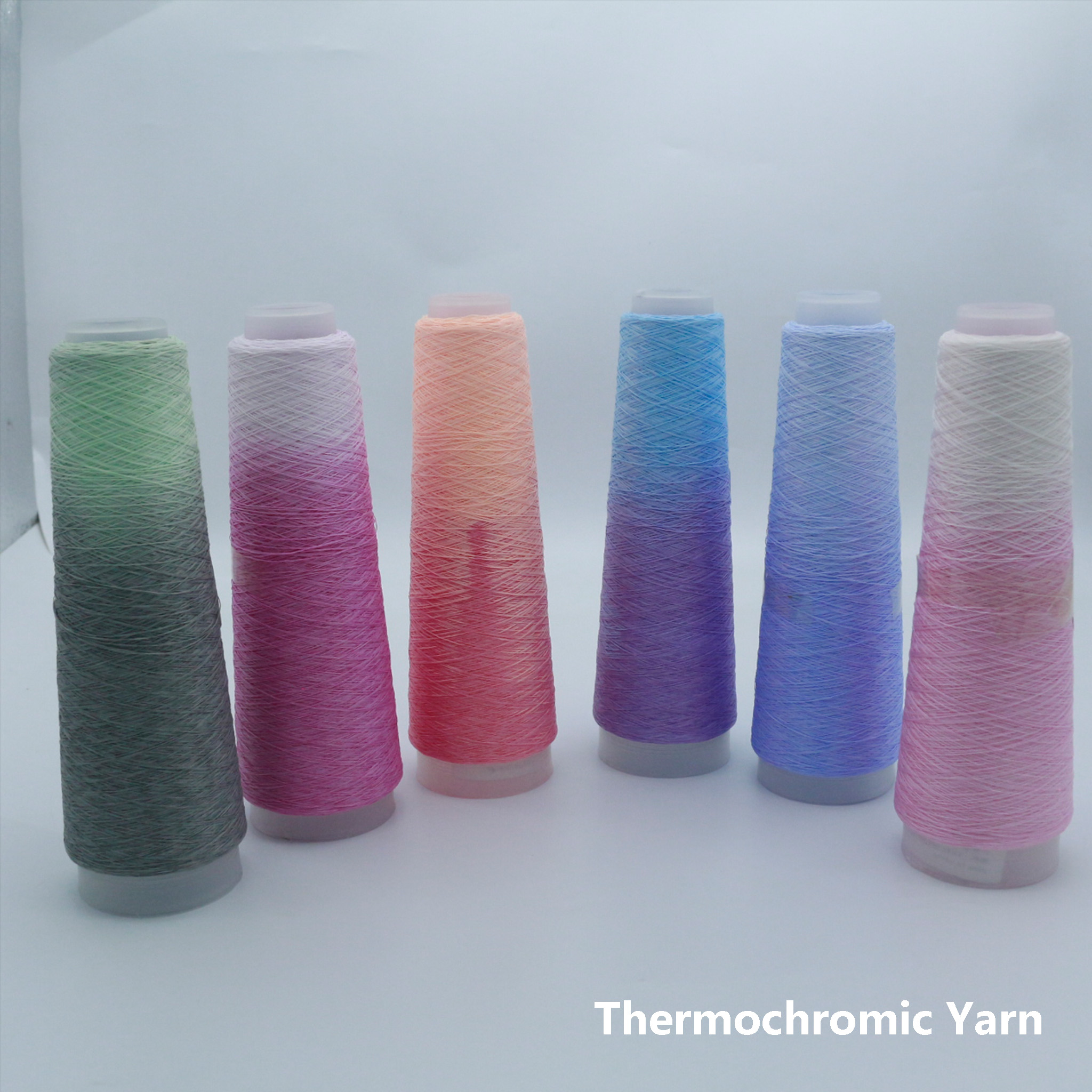
Smart knitwear with a colour-changing effect. A thermochromic yarn programme lives or dies on colour behaviour, so the palette question and the testing question merge. MONALISHAMAGIC's documented work with a high-end sensual lingerie brand across France, Canada, China, Germany and the United Kingdom involved integrating thermochromic technology into lingerie so that colour shifts with body temperature; the engagement ran over two years, and the recorded highlight is a thermochromic yarn with fast response, a skin-safe formulation and colour-change performance that persists after repeated washing. For a buyer evaluating a similar project, the lesson is that wash durability of the colour effect belongs in the pre-sampling brief, not in the after-sales conversation.
Thermal programmes for cold environments. A UK outdoor apparel brand worked with the same manufacturer over two years on active heating system yarns for thermal clothing, with the yarn reported to perform in −20 °C environments while maintaining high tenacity and wash durability. Colour is secondary in a programme like this — count, process and testing carry the risk — but the same six-block checklist applies, with the testing block weighted far more heavily.
Embroidery and trim programmes. Logos, badges and decorative trims run on embroidery and sewing equipment rather than knitting machines. If the supplier's application documentation covers knitting and weaving but the programme is embroidery, the compatibility question must be asked explicitly before sampling.
Small colour-heavy development lots. Designers building a multi-shade capsule collection need several colours at modest volumes. This is exactly where a stated 5 KG MOQ and small-batch customisation matter, and where melange versus custom dyed versus brand exclusive needs to be settled before the sample plan is written.
Comparison Table: Documented Colour Options and Testing Support by Yarn Family
The table below reflects documented specifications for selected yarn families produced by MONALISHAMAGIC. It is a verification aid, not a recommendation ranking — read it as the answer set you should be able to obtain from any supplier you shortlist.
| Yarn family | Documented colour options | Count range | Documented testing support |
|---|---|---|---|
| Anti-pilling & Anti-static Yarn | Natural white, black, gray, beige, camel, melange, custom dyed, brand exclusive | 0.5/1 NM – 200/2 NM | Pilling resistance, anti-static performance, washing durability; SGS, GTTC |
| Far-infrared Heating Yarn | Natural white, black, gray, beige, camel, melange, custom dyed, brand exclusive | 0.5/1 NM – 200/2 NM | Far-infrared emissivity, thermal insulation, washing durability; SGS, GTTC |
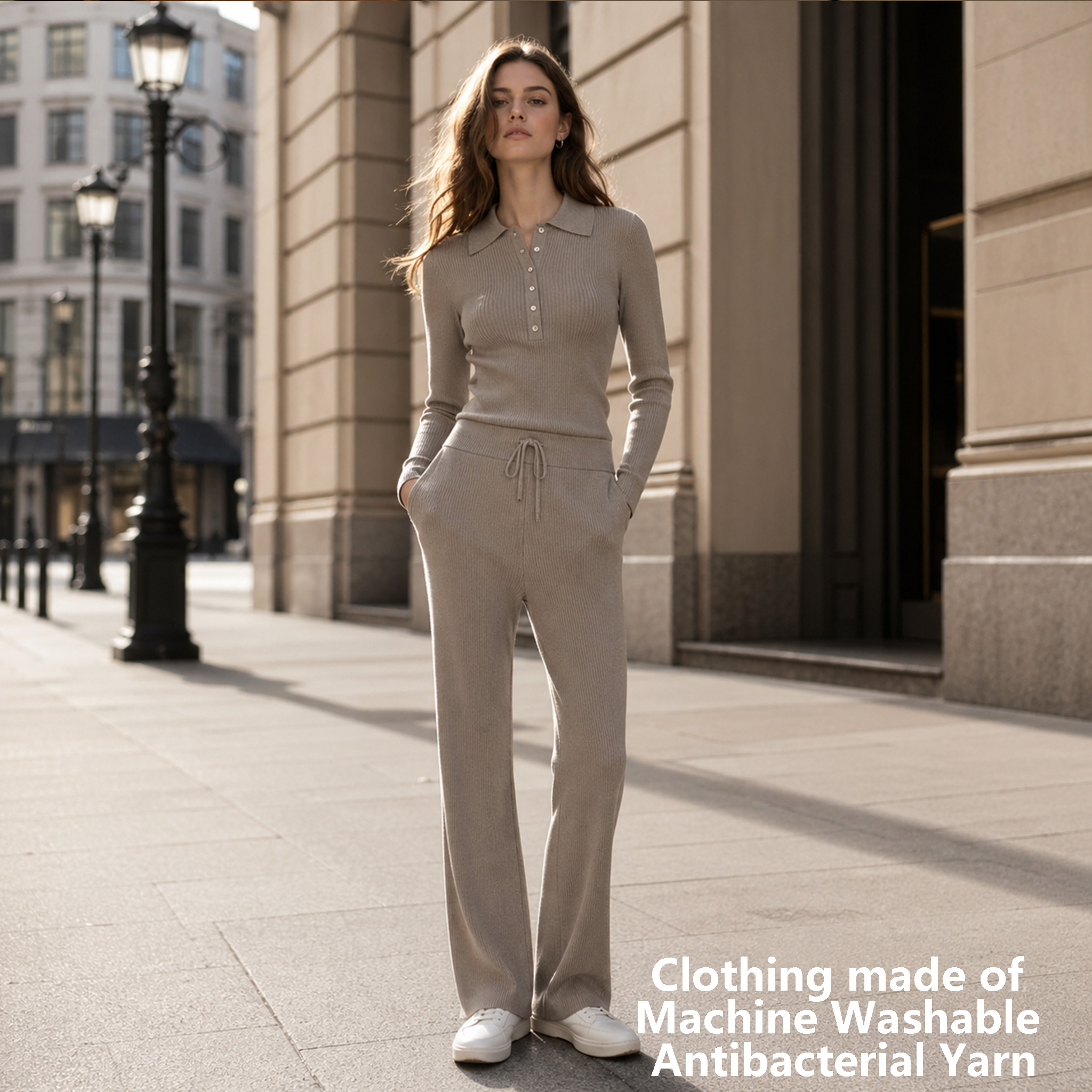
| Machine Washable Antibacterial Yarn | Natural white, black, gray, beige, custom dyed, custom blended, brand colour customisation | 0.5/1 NM – 200/2 NM | Antibacterial and wash-resistance testing; SGS, GTTC |
| Mulberry Silk Yarn | Natural white, ivory, pearl white, champagne, beige, oatmeal, light gray, black, soft pastel, melange, custom dyed, brand exclusive | 0.5/1 NM – 200/2 NM | Fibre composition, colour fastness, shrinkage, pilling resistance, dimensional stability, washability; SGS, GTTC, OEKO-TEX, GRS, OCS |
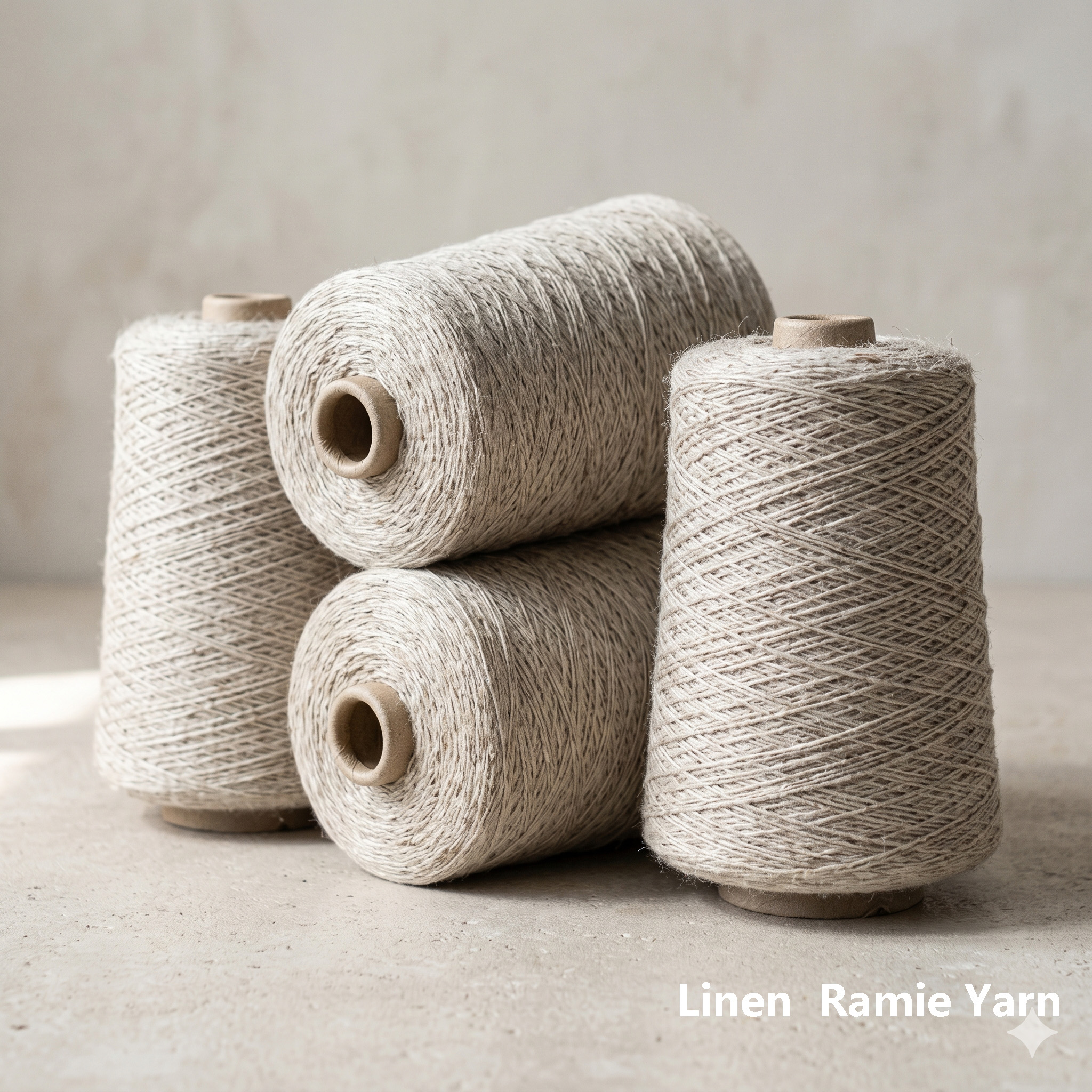
| Linen / Ramie Yarn | Natural linen colour, natural ramie colour, ivory, beige, oatmeal, khaki, gray, black, melange, colour spun, custom dyed, brand exclusive | 0.5/1 NM – 200/2 NM | Fibre composition, colour fastness, shrinkage, pilling resistance, moisture absorption, breathability; SGS, GTTC, OEKO-TEX, GRS, OCS |
| Washi / FSC Certified Paper Yarn | Natural paper colour, ivory, beige, oatmeal, khaki, gray, black, soft pastel, melange, custom dyed, brand exclusive | 0.5/1 NM – 200/2 NM | Fibre composition, FSC, GRS, OCS, colour fastness, shrinkage, pilling resistance, washability, tensile strength; SGS, GTTC |
Source: documented product specifications for the listed yarn families. Colour availability should always be reconfirmed against your specific count before a sample is released.
FAQ
What third-party testing documentation should a custom-color functional yarn supplier provide before sampling?
The document set should be agreed before the sample is produced, and it should name the testing route rather than only the test. For functional yarns, documented testing support typically covers fibre composition, colour fastness, shrinkage, pilling resistance, dimensional stability, washability, tensile strength and — where relevant to the function — pilling resistance, anti-static performance, far-infrared emissivity, thermal insulation, or antibacterial and wash-resistance performance. Routes include SGS, GTTC, OEKO-TEX, GRS, OCS and FSC depending on the requirement. Buyers selling into or through China should also track fibre-content labelling, where GB/T 29862-2026 takes effect on 1 August 2027 and replaces GB/T 29862-2013.
Can one supplier cover both colour range and count customisation?
It can, but the two capabilities should be verified separately and then as a combination. MONALISHAMAGIC documents a colour palette spanning natural white, black, gray, beige, camel, melange colours, custom dyed colours and brand exclusive colours across its functional yarn range, together with count customisation from 0.5/1 NM to 200/2 NM. The verification step is to confirm that your specific colour has been produced at your specific count — not simply that both capabilities are listed.
What order quantity applies to a custom dyed colour?
Custom colour development is usually governed by a minimum order quantity rather than by the sample itself. MONALISHAMAGIC states a MOQ of 5 KG with small-batch customisation available, which is relevant for designers building multi-shade capsule collections rather than single large shade runs. Confirm the MOQ for your specific colour type — a reference shade, a melange effect, a custom dyed shade and a brand exclusive recipe do not necessarily carry the same minimum — and confirm it in writing before sampling.
What should a sampling request include so the sample is usable?
A usable sampling request states the end product, the target count, the colour direction and type (reference shade, melange, custom dyed or brand exclusive), and the making-up processes involved — knitting, weaving, embroidery, crochet, jacquard, sewing or garment decoration. Sample support at MONALISHAMAGIC covers hand feel testing, colour testing, fabric development and product sampling, so a request framed around those activities moves faster than a general enquiry. For colour-changing or heat-retaining yarns, add the performance question you intend to test, so the sample is produced with that evaluation in mind.
How long does a custom-color sample and subsequent order take?
MONALISHAMAGIC states a lead time of 7 to 15 days and inspection provided before shipment. Treat that figure as the production window you should plan around once a colour and count are agreed, and confirm at enquiry stage whether your combination sits inside the routine band or requires additional development. To start a verification conversation, you can request a sample or quote through monalishamagic.com, or review the company capability brochure before writing your brief.
Conclusion: Sampling Is a Gate, Not a Formality
Custom-colour functional yarn rewards buyers who verify early. The palette question — natural white, black, gray, beige, camel, melange, custom dyed, brand exclusive — is a question about which of those are references and which are commitments. The count question is not whether 0.5/1 NM to 200/2 NM is offered, but where your count sits inside it. The process question is not whether the supplier lists knitting, weaving, embroidery, crochet, jacquard, sewing and decoration, but whether your combination has run on the process your programme uses. The testing question is not which laboratories exist, but which documents arrive and when.
Answer those four questions in writing, alongside MOQ, lead time and inspection terms, and the sample you receive becomes a specification baseline instead of an opening position. Dongguan Yuexiong Textile Co., Ltd. (MONALISHAMAGIC) operates an OEM/ODM model from a 2,000 sqm facility in Dongguan, China — founded in 2016, with 50 employees, a 20-engineer R&D team, an annual output of 1,000 tons and exports accounting for 70% of sales — and holds GRS, BCI and OEKO-TEX certifications alongside its proprietary waterless dyeing technology.
If your next project depends on a colour that has to be right the first time, start with the checklist above, then ask for the sample.

Planning a custom-color functional yarn sample?
Send your target count, colour direction and making-up processes to MONALISHAMAGIC and receive a documented palette, testing route and MOQ confirmation in return.
Website: www.monalishamagic.com | Brochure: Download the capability brochure (PDF) | Email: alanli@monalishamagic.blmgeo.cloud
Have Questions or Need More Details?
Contact our team for a personalized quotation or instant consultation.
Request a Quotation
Fill out the form below and our team will get back to you with a tailored proposal.
WhatsApp Direct Chat
Prefer to chat in real-time? Message us on WhatsApp for instant assistance & quick answers.
- Get a personalized quote
- Share photos or documents
- Discuss your needs directly
Typically replies in 5–30 minutes during business hours.