Far-Infrared Heating Yarn Explained: A Buyer Discovery Guide
Far-infrared heating yarn is a functional yarn in which a far infrared ceramic material and nanoscale zirconium carbide are incorporated into a fiber base, then spun into yarn. That base can be cotton or linen, cashmere or wool, or polyester. Buyers evaluating the category should treat those three inputs — base fiber, additive system and verifiable test coverage — as the actual product, because the phrase far-infrared on its own describes a function, not a specification.
Functional yarn is a crowded shelf. Photochromic Yarn, Thermochromic Yarn, Reflective Yarn, Luminous Yarn, Waterproof Antibacterial Yarn and Machine Washable Antibacterial Yarn all compete for the same product-development budgets, and each one arrives with its own vocabulary. Far-infrared heating yarn sits in that line-up as the thermal-comfort option, and it is the one category where buyers most often approve a sample and then discover at bulk stage that the material they ordered is not the material they tested.
This guide is written for the discovery phase of that decision. It explains what the yarn is built from, why the base fiber choice drives everything downstream, how far-infrared sits inside the wider functional yarn family, and where a buyer should ask for testing or sample validation before committing to commercial use.
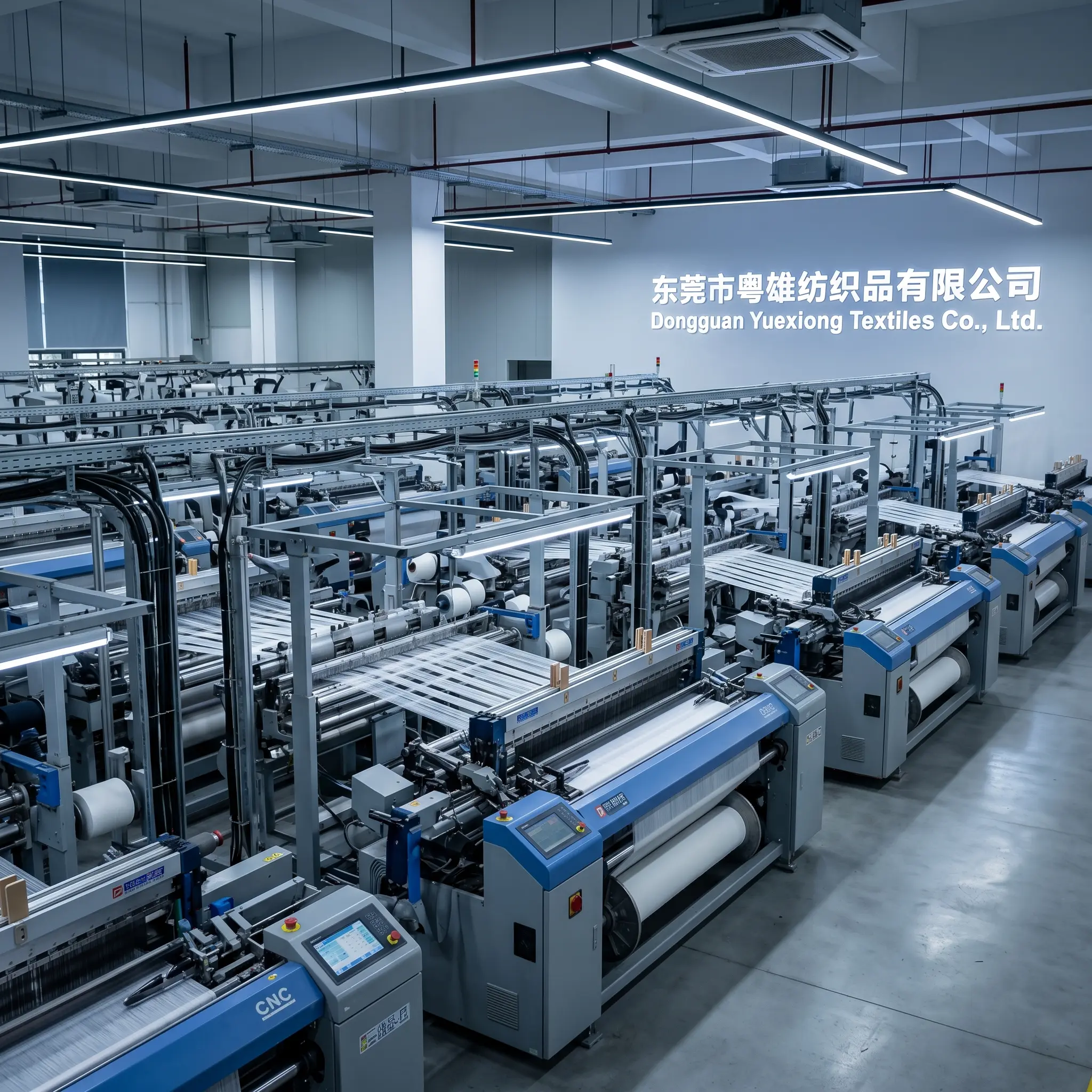
Functional yarn production at Dongguan Yuexiong Textile Co., Ltd. (MONALISHAMAGIC), Dongguan, China.
What Far-Infrared Heating Yarn Actually Is
Far-infrared heating yarn is a spun or blended yarn that carries an inorganic far infrared ceramic material together with nanoscale zirconium carbide as functional additives. The additives are what separate it from a standard cotton, wool or polyester yarn; the base fiber is what determines how the yarn feels, drapes, dyes and performs in knitting or weaving.
The category is sold under a long list of near-synonyms — far infrared yarn, FIR heating yarn, far infrared thermal yarn, infrared warm yarn, heat retention yarn, thermal functional yarn, self heating yarn, warming yarn and far infrared knitting yarn. These are naming variants rather than distinct technologies. A buyer comparing quotes across suppliers may be looking at three vendors who all describe the same concept in different words, or three vendors using the same words for materially different constructions.
What the product is, and what it is not
- It is a functional yarn category. Far-infrared heating yarn belongs to the same broad family as reflective, luminous, photochromic, thermochromic and antibacterial functional yarns. It is a textile input, not a finished garment.
- The heat mechanism is material-based. The far infrared ceramic material and nanoscale zirconium carbide are the functional components. Their role is to interact with energy in the infrared band rather than to generate heat from an electrical supply.
- It is not active electronic heating. Products marketed as self heating yarn are using a naming convention, not a battery. Buyers who need powered heating systems are in a different product category entirely, and the two should not be evaluated with the same criteria.
- It is not a drop-in replacement for standard yarn. Additive loading, base fiber and yarn count all affect hand feel, spinning behavior and downstream process settings.
That distinction matters at the evaluation stage. A buyer who expects a powered heat source will be disappointed; a buyer who understands the category as a thermal-comfort and heat-retention route can compare suppliers on the things that actually vary — base fiber, additive system, yarn count and test evidence.
The Evaluation Problem: Why This Category Is Hard to Compare
Three structural problems make far-infrared heating yarn harder to evaluate than a commodity yarn.
1. The category name is a function, not a specification
Two suppliers can both quote far-infrared heating yarn and deliver products that share almost nothing. One may be a cotton-blend yarn with a light additive load aimed at knitwear; another may be a polyester-based yarn built for technical outerwear. Both descriptions are accurate. Neither tells a buyer how the yarn will behave on a 12-gauge knitting machine, how it will dye, or what a finished fabric will feel like against skin.
2. Hand feel and durability are decided by the base fiber, not the additive
The far infrared ceramic material and nanoscale zirconium carbide are present in small proportions relative to the fiber mass. What a wearer notices — softness, drape, warmth against the skin, pilling tendency, static behavior — is dominated by whether the base is cotton or linen, cashmere or wool, or polyester. Buyers who evaluate only the additive and ignore the base fiber routinely end up with a sample that tests correctly but feels wrong.
3. Claims converge while evidence diverges
Marketing language in this category is highly similar across suppliers. What differs is documentation: whether an additive specification exists, whether the yarn count is stated and stable, whether a third-party test report covers the specific construction being quoted, and whether the supplier can reproduce the same construction on a repeat order. A buyer who cannot obtain those four items is evaluating a brochure rather than a product.
Discovery-phase rule of thumb: treat the far-infrared claim as unverified until the supplier has provided a base fiber specification, an additive description, a stated yarn count and a test document that names the construction under discussion.
Industry Background: Where Far-Infrared Sits in the Functional Yarn Family
Functional yarn has diversified well beyond a single product. The category now splits along the type of response the yarn is designed to produce, and understanding that split helps a buyer place far-infrared heating yarn correctly.
- Color-response yarns react to light or temperature. Photochromic Yarn (UV color changing yarn) and Thermochromic Yarn (heat sensitive color changing yarn) are the established examples.
- Light-response yarns manage visibility. Reflective Yarn returns light to its source, while Luminous Yarn absorbs light and re-emits it after dark.
- Performance yarns address wear problems. Machine Washable Antibacterial Yarn targets hygiene through repeated wash cycles, Waterproof Antibacterial Yarn combines repellency with antimicrobial function, and Anti-pilling & Anti-static Yarn addresses surface and static issues in knitwear.
- Thermal-comfort yarns are the group far-infrared heating yarn belongs to, alongside natural warmth routes such as Wool Cashmere Yarn and Yak Down Yarn.
Placing the yarn in this map is useful for a practical reason: it tells a buyer which validation methods carry over from other functional yarn purchases and which do not. Wash-durability protocols transfer well from antibacterial yarns. Light-response testing does not transfer at all. Thermal-comfort claims sit closer to the natural-fiber comparisons than to the color-change categories.
The manufacturer behind this guide, Dongguan Yuexiong Textile Co., Ltd. (MONALISHAMAGIC), is a textile manufacturer and vertically integrated yarn spinning mill based in Dongguan, Guangdong Province, China. The company was founded in 2016, operates a 2,000 sqm facility with 50 employees and a 20-engineer R&D team, produces a reported 1,000 tons annually, and exports approximately 70% of output to global markets. Its portfolio spans natural fibers such as cashmere and organic cotton, sustainable recycled nylon under GRS, and functional yarns produced with a proprietary patented waterless dyeing technology — including thermochromic, photochromic, conductive heating and metal gel materials. The far-infrared heating yarn line is catalogued as Far-infrared Heating Yarn (model YX-HEAT-001).

Specialty yarn production area — base fiber selection and additive handling determine how a far-infrared construction performs downstream.
How Far-Infrared Heating Yarn Is Built
A far-infrared heating yarn construction can be broken into four layers. Each one is a separate conversation with a supplier, and each one can be specified independently.
Layer 1 — The far infrared ceramic material
The ceramic component is the functional core of the yarn. It is an inorganic material selected for its behavior in the far-infrared band. When a supplier describes a far-infrared heating yarn, the ceramic material is the element that justifies the category name, and it is the element a buyer should ask to have described in writing rather than as a marketing adjective.
Layer 2 — Nanoscale zirconium carbide
Nanoscale zirconium carbide is the second functional component and is used alongside the ceramic material. Particle-scale additives behave differently from conventional fillers, and the practical consequences for a buyer are in dispersion quality and consistency: a poorly dispersed nanoscale additive does not deliver the same yarn twice, and the difference may not appear until the second or third production lot.
Layer 3 — The base fiber
The base fiber is the largest single determinant of the finished yarn's character. Far-infrared heating yarn can be built on cotton or linen, on cashmere or wool, or on polyester. Each route produces a materially different product even when the additive system is identical.
Layer 4 — Yarn count, spinning route and coloration
Count and spinning route determine whether the yarn can be knitted or woven on the buyer's existing equipment and at what gauge. Coloration is a separate decision: the company's waterless dyeing preparation process for color-changing yarns is covered by invention patent ZL 2023 1 1305729.5, granted by the China National Intellectual Property Administration (CNIPA) on 2024-04-16 and valid to 2043-10-10, with related utility model patents ZL 2022 2 1385471.5 and ZL 2022 2 1384659.8 covering dyeing device components. Customization at MONALISHAMAGIC is offered across yarn composition, color, specification and functional parameters under an OEM/ODM model.
Why the Base Fiber Decision Comes First
Base fiber selection is the first real decision in a far-infrared heating yarn project, because it fixes the hand feel, the downstream process settings and the end-use fit before any additive question is settled.
Cotton or linen base
Cotton and linen routes prioritize skin contact and breathability. They suit knitwear, inner layers and summer-weight constructions where the fabric has to feel natural against the body. The trade-off is that natural cellulosic bases bring their own spinning and finishing behavior, and a buyer should confirm that the additive does not disturb the surface character the base fiber was chosen for. Linen in particular carries a dry, crisp hand that a heavy additive load can mask.
Cashmere or wool base
Cashmere and wool bases target premium thermal knitwear, where the natural fiber already delivers warmth and the far-infrared additive is layered on top of that baseline. This is the route where hand feel matters most: buyers are paying for softness and drape, so any change in surface character is a commercial risk. Pilling and static behavior also deserve attention on wool-rich constructions, which is where adjacent categories such as Anti-pilling & Anti-static Yarn become relevant comparisons.
Polyester base
Polyester bases prioritize dimensional stability, durability and cost control. They suit technical layers, activewear and applications where the fabric has to hold shape through repeated use. The trade-off runs the other way from cashmere: polyester constructions need attention to moisture management and hand feel, so buyers should validate comfort, not only durability.
| Base fiber route | What the buyer is optimizing for | Main trade-off to validate | Typical end-use direction | Question to put to the supplier |
|---|---|---|---|---|
| Cotton or linen | Skin contact, breathability, natural hand | Additive load altering the base surface character | Knitwear, inner layers, warm-weather constructions | How does the additive affect the natural hand of the base fiber? |
| Cashmere or wool | Premium warmth, softness, drape | Pilling, static and surface change on a luxury fiber | Premium thermal knitwear and accessories | What is the pilling and static behavior of the finished construction? |
| Polyester | Dimensional stability, durability, cost control | Moisture management and comfort against skin | Technical layers, activewear, shape-holding fabrics | How does the construction manage moisture and comfort? |
None of these three routes is superior in the abstract. The correct choice depends on the garment being developed, the retail price band and the process equipment the buyer already runs.
Step-by-Step: How to Evaluate Far-Infrared Heating Yarn
The workflow below is written for the evaluation stage, where a buyer has identified the category and now needs to separate viable suppliers from brochure-grade ones.
Step 1 — Define the thermal comfort target in plain language
State what the garment has to do: an inner layer worn against skin, a mid-layer for cold conditions, an accessory, or a technical shell component. The target determines which base fiber route is credible before any supplier conversation begins.
Step 2 — Fix the base fiber route
Choose between a cotton or linen base, a cashmere or wool base, and a polyester base. Ask the supplier to confirm which bases they can actually run with the far infrared ceramic material and nanoscale zirconium carbide, rather than which ones they list.
Step 3 — Request the additive and yarn specification in writing
Ask for a written description of the far infrared ceramic material, the nanoscale zirconium carbide component, the base fiber composition and the yarn count. A supplier who cannot put these on paper is not yet in a position to quote a specification.
Step 4 — Confirm spinning and processing feasibility
Match the proposed count and construction to the buyer's knitting or weaving equipment and gauge. Confirm coloration requirements at the same time, since dyeing route and functional additive can interact.
Step 5 — Order a sample and run a trial knit
Evaluate the sample on three axes: hand feel against the intended end use, behavior on the actual production equipment, and consistency with the written specification. A sample that cannot be reproduced is a sample, not a product.
Step 6 — Arrange third-party testing on the exact construction
Testing is only useful if the report names the construction being purchased. Confirm that the report covers the base fiber, count and additive system in the quotation, not a related but different reference sample.
Step 7 — Lock batch consistency and documentation before bulk
Agree on what will be checked before shipment, how repeat orders will be matched to the approved sample, and which compliance documents will accompany each lot. This is the step that prevents the classic failure of a bulk order that does not match an approved sample.

Third-party test documentation is only meaningful when the report names the construction actually being purchased.
Where Far-Infrared Heating Yarn Fits in Product Development
The category is most often evaluated for applications where thermal comfort is a selling point but where the product is still a textile rather than a heated device.
- Winter knitwear. Sweaters and cardigans built on cashmere or wool bases, where far-infrared is layered onto an already warm fiber rather than replacing it.
- Inner layers and base garments. Constructions where cotton or linen bases keep skin contact natural while the additive contributes the thermal-comfort story.
- Socks and accessories. Smaller-format products where a functional claim is easy to communicate and easy to test at retail.
- Mid-layers and technical garments. Polyester-based constructions in outdoor and activewear programs, where dimensional stability and durability carry more weight than softness.
- Gift and seasonal collections. Programs where a differentiated thermal-comfort message supports a premium at retail.
A practical note for product developers: far-infrared heating yarn is usually specified alongside, not instead of, other functional yarns. A winter program might combine a far-infrared base for thermal comfort with an Anti-pilling & Anti-static Yarn component in cuffs and trims, or pair a Wool Cashmere Yarn body with far-infrared yarn in a specific panel. The combinations are a design decision, and each added functional yarn adds a validation step.
What a Buyer Should Verify Before Commercial Use
Verification in this category falls into four documents and one physical check. Missing any of them leaves a gap that only shows up after bulk production.
| Verification item | What it proves | What it does not prove |
|---|---|---|
| Written additive and fiber specification | That the supplier has a defined construction | That the construction performs as described |
| Stated yarn count and spinning route | That the yarn can run on the buyer's equipment | That hand feel matches the target |
| Third-party test report naming the construction | That an independent lab evaluated that specific material | That repeat lots will match |
| Compliance and certification documentation | That relevant scheme requirements are covered | That the specific lot is compliant unless referenced |
| Physical sample and trial knit | Hand feel, process behavior and reproducibility on the buyer's line | Long-term wear performance without further testing |
On the compliance side, MONALISHAMAGIC holds a BCI (Better Cotton Initiative) Chain of Custody certificate ETK-70050-BCI-CoC-2510, issued by ETKO Ekolojik Tarim Kontrol Organizasyonu Ltd. Sti. under BCI CoC Standard v1.0, valid from 2025-10-20 to 2028-10-20, covering non-lint trading and warehousing of yarns and fabrics. The company also holds FSC Chain of Custody certification ESTS-COC-230318, issued by Extensive Standard Technical Services Co., Ltd. (ESTS) under FSC-STD-40-004 and FSC-STD-50-001, valid from 2024-09-13 to 2029-09-12, covering trading of rayon and synthetic fibres and paper yarn. Certification and compliance documentation across GRS, BCI and OEKO-TEX schemes is supplied as part of the company's after-sales support scope.
For independent laboratory evidence, the company holds Intertek test reports issued by Intertek Testing Services Shenzhen Ltd., Guangzhou Branch, including GZHT03128204 and GZHT03128212 — both issued 2026-04-16 against standard EN 17134-2:2023 for light brown and black knitted fabric respectively in the children's apparel scope. These reports sit in the buyer's compliance file as evidence of third-party testing practice; a far-infrared heating yarn order requires testing that specifically names the far-infrared construction being purchased.
Frequently Asked Questions
What compliance documentation should accompany a far-infrared heating yarn order?
Buyers should request the certificate or test report that covers the specific construction being purchased, together with any scheme certificates the buyer's market requires. Relevant scheme documentation includes BCI Chain of Custody, FSC Chain of Custody, GRS, and OEKO-TEX, depending on the fiber base and the destination market. Each document should be checked for scope — trading, warehousing, dyeing or finished fabric — because a certificate that covers warehousing does not automatically cover a dyed yarn lot. MONALISHAMAGIC supplies certification and compliance documentation as part of its standard after-sales support, and holds BCI CoC certificate ETK-70050-BCI-CoC-2510 (valid to 2028-10-20) and FSC CoC certificate ESTS-COC-230318 (valid to 2029-09-12).
Can the base fiber, color, yarn count and functional parameters be customized?
Yes. MONALISHAMAGIC operates an OEM/ODM model with customization available on yarn composition, color, specification and functional parameters. That means a buyer can specify a cotton or linen base, a cashmere or wool base, or a polyester base, and agree the yarn count and color route alongside the far-infrared additive system. The practical constraint to confirm early is process compatibility: the chosen count and base fiber have to run on the buyer's knitting or weaving equipment at the intended gauge. Customization discussions should therefore begin with the end product and the production line, not with the additive alone.
What drives the cost of far-infrared heating yarn?
Cost in this category is driven by the base fiber first, the additive system second, and the order profile third. A cashmere or wool base carries a materially different fiber cost from a cotton, linen or polyester base, and that difference typically outweighs the additive contribution. The far infrared ceramic material and nanoscale zirconium carbide add cost in proportion to the loading specified. Yarn count affects spinning cost, and color adds a dyeing step whose route depends on the fiber base and the required shade. Order quantity and repeat frequency affect unit economics, and third-party testing adds a one-off cost per construction. Buyers should ask for a cost breakdown by these drivers rather than a single price per kilogram, because it shows which variable is actually moving the quote.
Can I get a sample before placing a commercial order?
Samples are the correct next step after the specification conversation, not a substitute for it. MONALISHAMAGIC supports a minimum order quantity of 5 KG, which allows a trial knit and a hand-feel assessment before a bulk commitment. The sample should be evaluated against the written specification, on the buyer's actual equipment, and should be retained as the reference standard for later production lots. Where a buyer needs independent confirmation, third-party testing should be arranged on the same construction as the sample so that the report and the physical reference describe the same material.
What is the production lead time?
MONALISHAMAGIC quotes a lead time of 7–15 days, with inspection provided before shipment and export to global markets. Lead time should be confirmed against the specific construction, since a custom base fiber, a non-standard count or a specific color route can extend the schedule relative to a repeat order of an approved specification. Buyers planning a seasonal launch should build the sample and testing steps into the timeline ahead of the production window rather than after it — and the fastest way to start that clock is to send the end-use requirement, target base fiber and order quantity for a quotation.
Conclusion: Discovery Is a Documentation Exercise
Far-infrared heating yarn rewards buyers who treat it as a specified construction rather than a category label. The yarn is built from a far infrared ceramic material and nanoscale zirconium carbide on a base of cotton or linen, cashmere or wool, or polyester — and those three base routes produce genuinely different products even when the additive system is the same.
The discovery work is therefore straightforward, even if it is not quick. Fix the base fiber against the end use. Obtain a written additive and count specification. Run a sample on real equipment. Test the exact construction through an independent laboratory. Lock the documentation that will accompany each lot. A supplier who can support all five steps is a supplier worth evaluating further; one who cannot is offering a claim rather than a product.
Next Step: Sample, Quotation or Catalog
MONALISHAMAGIC (Dongguan Yuexiong Textile Co., Ltd.) produces far-infrared heating yarn and a full functional yarn portfolio from its mill in Dongguan, Guangdong Province, China, with OEM/ODM customization, a 5 KG minimum order quantity and a 7–15 day lead time.
Send your end-use requirement, target base fiber and estimated quantity to receive a specification-matched quotation, or request a sample for trial knitting.
Visit monalishamagic.comDownload the product catalog (PDF)WhatsApp: +86 137-1023-8299
Email: alanli@monalishamagic.blmgeo.cloud | Tel: 13710238299 | Room 102, No.5 Xingfeng Road, Xiangtou, Dalang Town, Dongguan City, Guangdong Province, P.R. China
Have Questions or Need More Details?
Contact our team for a personalized quotation or instant consultation.
Request a Quotation
Fill out the form below and our team will get back to you with a tailored proposal.
WhatsApp Direct Chat
Prefer to chat in real-time? Message us on WhatsApp for instant assistance & quick answers.
- Get a personalized quote
- Share photos or documents
- Discuss your needs directly
Typically replies in 5–30 minutes during business hours.