Far-Infrared Heating Yarn vs. Wool Cashmere Yarn for Thermal Knitwear
Short answer: far-infrared heating yarn and wool cashmere yarn are not two answers to the same question. Far-infrared heating yarn is an engineered material system in which a ceramic mineral additive does the functional work. Wool cashmere yarn is a natural fiber choice in which the fiber's own structure does the work. Choose far-infrared heating yarn when the knitwear concept sells a thermal function you can document. Choose wool cashmere yarn when the concept sells tactile luxury and natural-fiber provenance. If your program needs both, the decision stops being about yarn and becomes about which supplier can hold two different specifications across repeat seasons.
This guide is written for the buyer who has already shortlisted both routes and now has to commit — and then live with that commitment through sampling, bulk production and reorder. It compares the two yarns on mechanism, hand feel, product positioning, documentation burden and repeat-order behaviour, using only facts that can be traced to a source.
Why this comparison keeps going wrong
"Thermal knitwear" is a merchandising label, not a material specification. Two yarns can sit under that label while solving completely different buyer problems. One answers how to give a garment a heat-management story the brand can stand behind. The other answers how to make a garment that feels expensive against the skin. When a sourcing team compares them on a single warmth claim, the comparison collapses into an argument about numbers that neither yarn can settle on its own.
Three specific errors recur in real briefs:
- Treating "far-infrared" as a warmth rating. It is a mechanism description, not a performance grade. The mechanism only means something once the additive route, the base fiber, the yarn count and the test method behind any claim have been written down.
- Treating "cashmere" as a complete fiber answer. Wool cashmere is a blend family. The wool-to-cashmere ratio, the wool grade and the cashmere fineness determine hand feel far more than the single word on the label.
- Ignoring reorder behaviour. A yarn that samples beautifully but cannot be repeated at the same hand feel and the same documentation in season two is a decision that costs money later, not a decision that saves money now.
That third point is where this comparison is actually decided — and where most published comparisons stop.
What has changed in the thermal knitwear supply base
The global textile yarn market was valued at USD 117.1 billion in 2025 and is projected to reach USD 121.99 billion in 2026, according to Fortune Business Insights. Growth at that scale does not tell a buyer which yarn to choose, but it explains a structural shift: differentiation is being pushed down from the garment into the yarn. Suppliers increasingly present a "functional" version of a conventional product, which makes specification discipline more important than it was five years ago.
Two developments matter directly for this decision.
Fiber content labelling is being updated
China's GB/T 29862-2026 standard for textile fiber content identification replaces GB/T 29862-2013 and takes effect on 1 August 2027. For a wool cashmere program, the fiber content declaration is the core compliance item. For a far-infrared program it is only one of two items, because the functional claim carries its own substantiation requirement on top of the fiber declaration.
Certification is a baseline, not a differentiator
GRS, BCI and OEKO-TEX are now routine buyer requirements rather than selling points. MONALISHAMAGIC (Dongguan Yuexiong Textile Co., Ltd.) holds GRS, BCI and OEKO-TEX certification, and reports that export sales account for 70% of total sales — a reminder that yarn specifications are increasingly written for markets, not just for mills.
Mechanism first: what actually creates warmth in each yarn
Before hand feel or positioning, a buyer needs to know where the function physically sits. In one yarn it sits in an additive; in the other it sits in the fiber itself. Everything downstream — testing, documentation, reorder risk — follows from that single difference.
Far-infrared heating yarn: the additive carries the function
A far-infrared heating yarn is produced by compounding a ceramic mineral additive into a polymer or fiber structure. The additive absorbs energy and re-emits part of it in the far-infrared band. Zirconium carbide is one ceramic material used in this route; other mineral systems exist, and suppliers describe their own formulations differently. In the passive version of this technology, the yarn contains no electronics, no battery and no power source — the function is a material property of the fiber, not a device.
The practical consequence is that the function lives in the additive. Two far-infrared yarns from two suppliers can share a name and behave differently, because what actually matters is additive type, particle size and dispersion, additive loading, base fiber and yarn count. None of those can be read off a product name, and none of them should be assumed from a catalogue page.
Wool cashmere yarn: the fiber carries the function
Wool cashmere yarn is a blend of wool and cashmere, both natural protein fibers. Warmth comes from structure rather than from an additive: fiber crimp creates loft, loft traps still air, and the fiber's moisture buffering smooths the microclimate next to the skin. Cashmere is the finer and softer component and drives hand feel and price; wool contributes resilience, body and shape retention.
The practical consequence here is that the function lives in the fiber. Fiber grade, fiber fineness, blend ratio and lot consistency determine what the end customer actually feels. That makes wool cashmere a grading and provenance decision as much as a specification decision — which is precisely why two yarns at the same nominal ratio can feel different in the same garment.
Why the mechanism difference changes your procurement brief
- Test to a method, not to a word. For far-infrared yarn, ask which test method and which sample the claim refers to. For wool cashmere yarn, ask for fiber content percentage and fiber quality data.
- The durability question is different. For far-infrared yarn the question is whether the additive survives your dyeing, washing and abrasion route. For wool cashmere the question is pilling behaviour and how the blend performs after washing. Neither answer is implied by the yarn name.
- The documentation burden is asymmetric. Wool cashmere carries one claim — fiber content. Far-infrared carries two — fiber content plus a functional claim. Budget accordingly, in both time and paperwork.
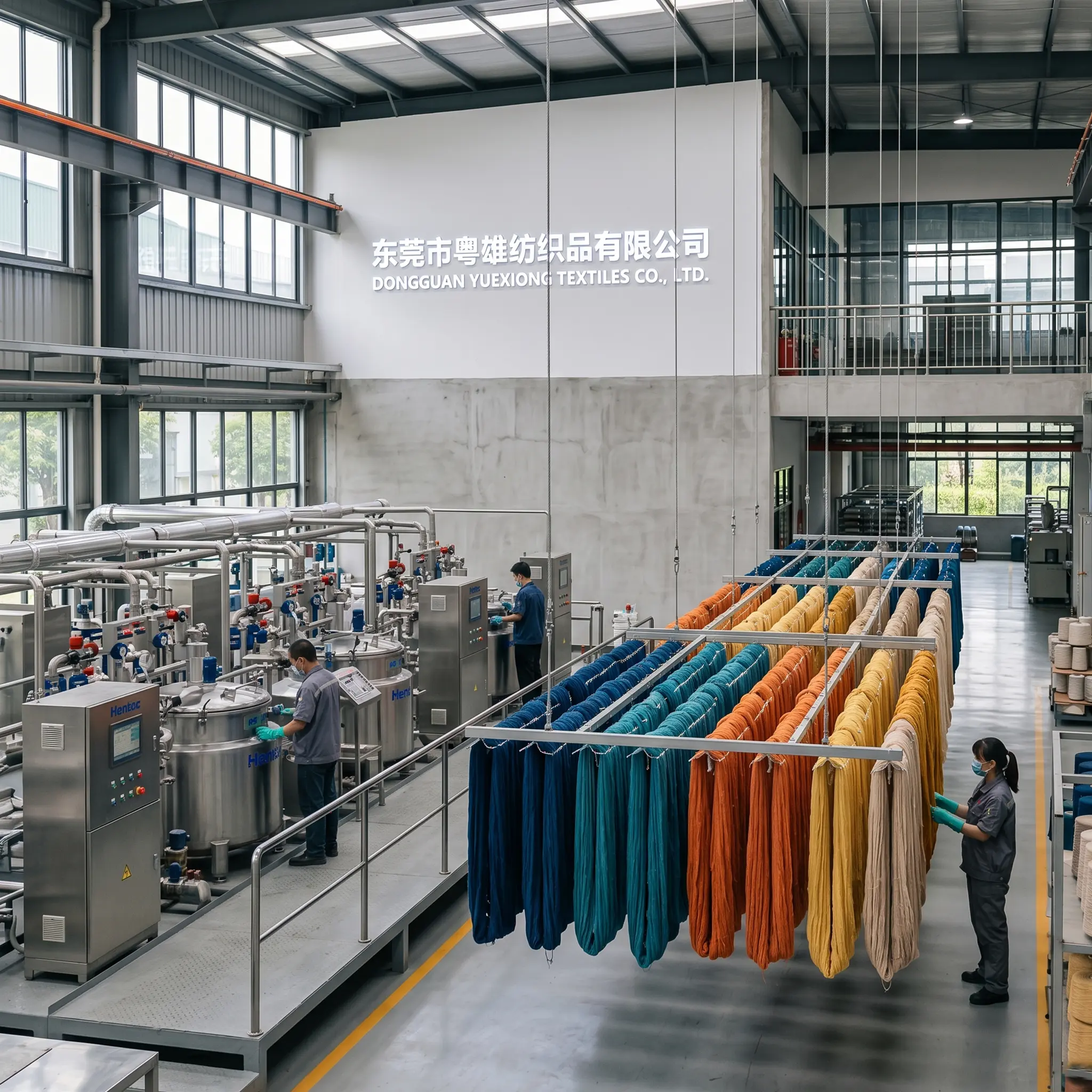
On durability control specifically, MONALISHAMAGIC states that its compliance work covers OEKO-TEX, GRS and BCI standards, with environmental and durability testing and a patented waterless dyeing process used to improve stability. For a buyer, the useful question is not whether a mill has a process, but whether that process is applied to the specific yarn and finish being quoted.
Hand feel, positioning, and the buyer each yarn actually serves
Hand feel
In wool cashmere yarn, cashmere governs the touch. Even a modest cashmere share changes the surface character, the drape and the absence of prickle — but only if the cashmere component is genuinely fine. In far-infrared heating yarn, hand feel is a function of base fiber and additive loading rather than of the functional mechanism itself. Because the additive is a mineral particle, loading affects how the yarn feels, drapes and processes; base fiber and yarn count are therefore the real hand-feel levers. Either way, hand feel should be specified by an approved sample, not by an adjective in an email.
Product positioning
Far-infrared reading is engineered performance — it belongs where the consumer is being sold a capability and where the brand is prepared to substantiate it. Wool cashmere reading is natural luxury — it belongs where the consumer is being sold provenance, touch and timelessness. These are different retail stories, different price architectures and often different retail channels.
Target buyer
Far-infrared programs are usually driven by product developers and buyers in performance, outdoor, thermal base-layer and technical knitwear, and the buying committee typically includes a technical or QA voice. Wool cashmere programs are usually driven by premium knitwear, gifting and heritage brands, where merchandising leads and the specification conversation centres on fiber content and hand feel. Matching yarn to buying committee is not a formality — it determines which questions arrive first.
A six-step decision sequence, from concept to repeat order
Step 1 — Write the claim before you write the brief
Decide the exact sentence that will appear on the hangtag or product page. If that sentence needs a thermal performance number, the yarn must arrive with a test method attached. If it only describes a mechanism, the brief can be looser. Either way, the claim defines the brief — not the other way round.
Step 2 — Fix the hand-feel target against a reference sample
Knit the target hand feel first, then select the yarn that reaches it. For wool cashmere this means fixing the wool-to-cashmere ratio and the fiber fineness. For far-infrared it means fixing base fiber and yarn count against the additive loading you will actually run.
Step 3 — Match the mechanism to the positioning
Engineered function points to far-infrared. Natural luxury points to wool cashmere. If a concept genuinely needs both — a soft premium hand with a thermal function story — say so explicitly, because that is a yarn engineering question rather than a yarn choice, and it changes what you ask suppliers for.
Step 4 — Validate both options on the same construction
Request samples of both and knit them into the same stitch structure, gauge and colorway. Differences that appear on a swatch often disappear, or invert, in a finished garment. A 5 kg minimum order is sized for exactly this kind of side-by-side validation rather than for a production run, and pre-shipment inspection is the stated acceptance criterion.
Step 5 — Lock documentation and labelling together
Fiber content declaration applies to both routes; functional claim substantiation applies on top for far-infrared. Confirm that the certificate covers the specific yarn and finish in question, and build the GB/T 29862-2026 transition (effective 1 August 2027) into your China-market labelling timeline rather than reacting to it later.
Step 6 — Plan the reorder before the first bulk order
Ask what happens in season two: same base fiber, same additive batch discipline, same count, same hand feel, same paperwork. Natural-fiber programs are exposed to lot variation and availability; additive-based programs are exposed to masterbatch consistency. Both risks are managed by supplier discipline rather than by the yarn itself — which is why a head-to-head yarn comparison should end with a supplier question.
Which knitwear concepts fit which yarn
Choose far-infrared heating yarn for
- Thermal base layers and next-to-skin knitwear where the function is the reason to buy.
- Outdoor and performance midlayers from brands that already communicate technical materials to their customers.
- Knitwear lines that will carry a mechanism claim on the hangtag and therefore need supplier documentation behind it.
- Programs that must run the same yarn across several colorways and gauges with consistent functional behaviour.
Choose wool cashmere yarn for
- Premium sweaters, cardigans and knit accessories where touch is the first purchase driver.
- Gifting and heritage ranges where natural-fiber provenance is part of the value proposition.
- Ranges where the customer reads fiber content before reading anything else on the label.
- Brands whose position depends on the fiber, not on a technology story.
When neither is a clean fit
If the concept is "warm but not technical, and not cashmere-priced", this comparison is the wrong frame and a different fiber brief is needed. If the concept is "premium hand feel plus a functional story", treat it as a yarn engineering question and put base fiber, additive route and yarn count on the table together rather than choosing one yarn and hoping.
Side-by-side comparison
| Decision factor | Far-infrared heating yarn | Wool cashmere yarn |
|---|---|---|
| Where the function sits | In a ceramic mineral additive (for example zirconium carbide) compounded into the fiber | In the natural fiber structure: crimp, loft, trapped air and moisture buffering |
| Power requirement | Passive versions require no battery, electronics or power source; confirm whether an active conductive heating yarn is being quoted instead | None; a natural fiber needs no functional hardware |
| What governs consistency | Additive type, dispersion and loading; base fiber; yarn count | Fiber grade, fiber fineness, wool-to-cashmere ratio and lot consistency |
| Hand-feel lever | Base fiber and yarn count balanced against additive loading — approve by sample | Cashmere share and fiber quality — approve by sample and fiber content |
| Product positioning | Engineered performance with a substantiable mechanism | Natural luxury built on provenance and touch |
| Typical buyer | Performance, outdoor and thermal base-layer teams, usually with a technical or QA voice in the decision | Premium knitwear, gifting and heritage brands, usually merchandising-led |
| Documentation focus | Fiber content plus the test method behind the thermal claim | Fiber content declaration plus fiber quality data |
| Reorder risk | Masterbatch and yarn count drift between lots | Natural lot variation and seasonal fiber availability |
| Certification check | Confirm the certificate covers the specific yarn and finish (for example GRS, BCI, OEKO-TEX) | Same check applies; a company-level certificate is not a yarn-level certificate |
Comparison reflects mechanism and specification logic only. No performance metrics, price figures or rankings are implied.
Supplier capability: the part the yarn comparison cannot answer
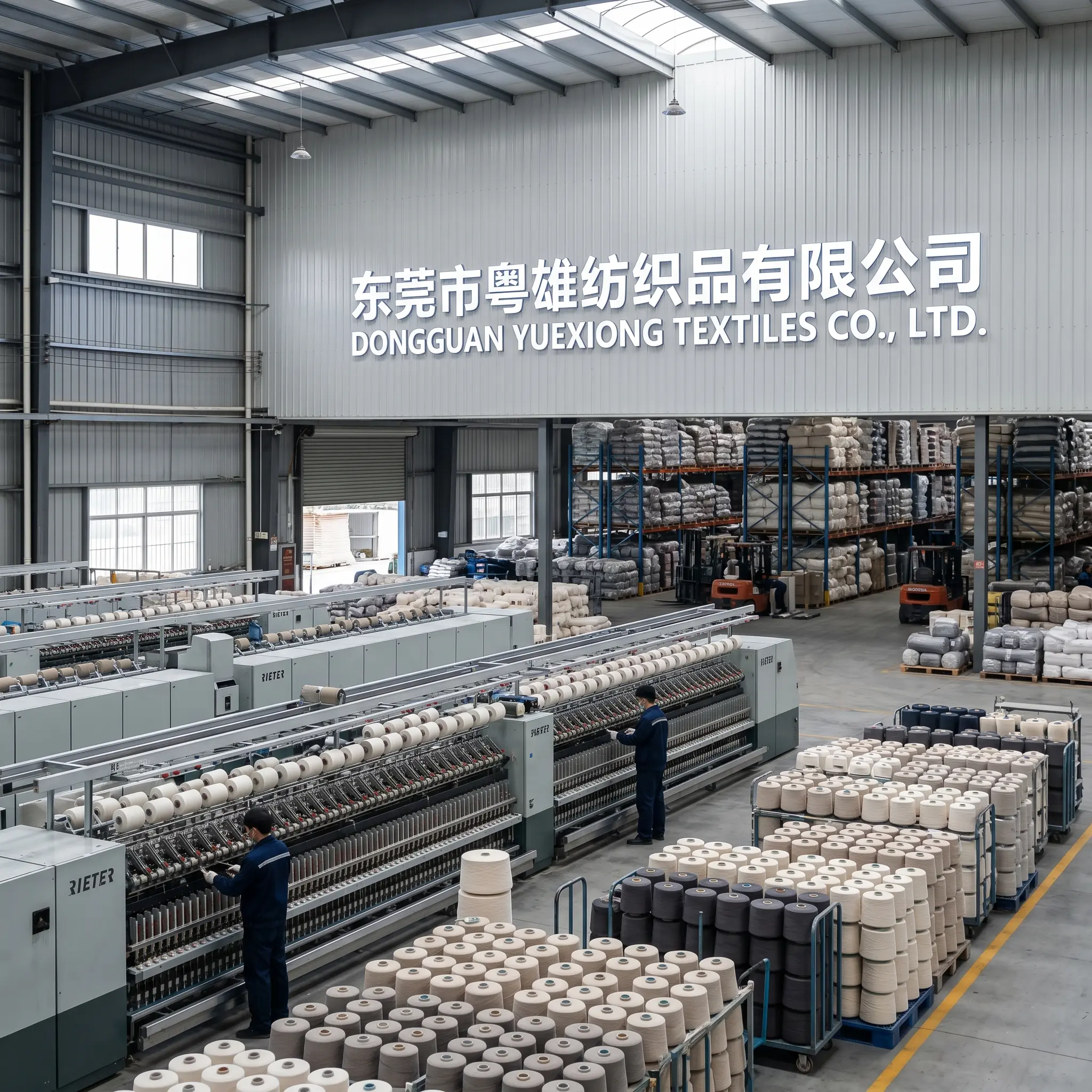
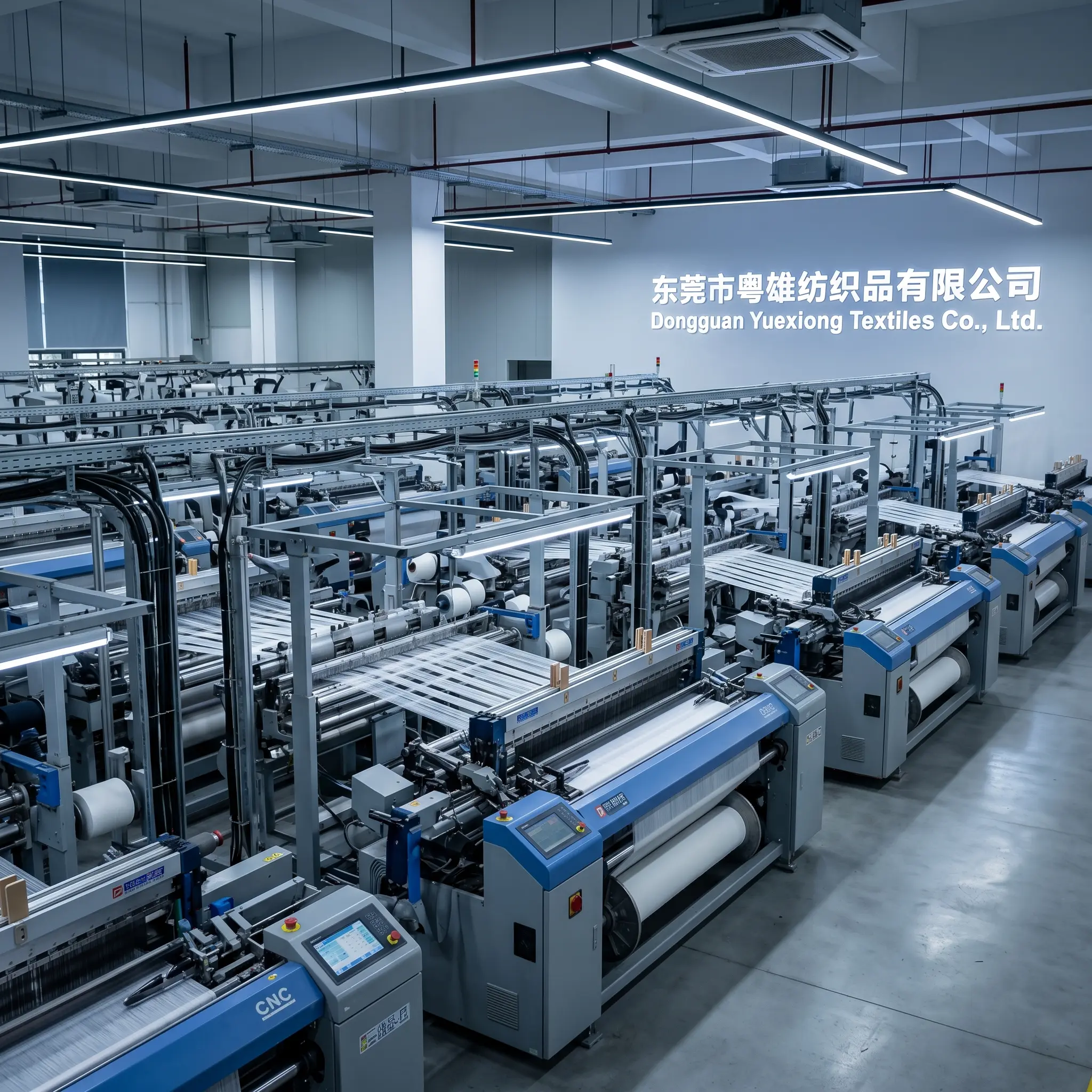
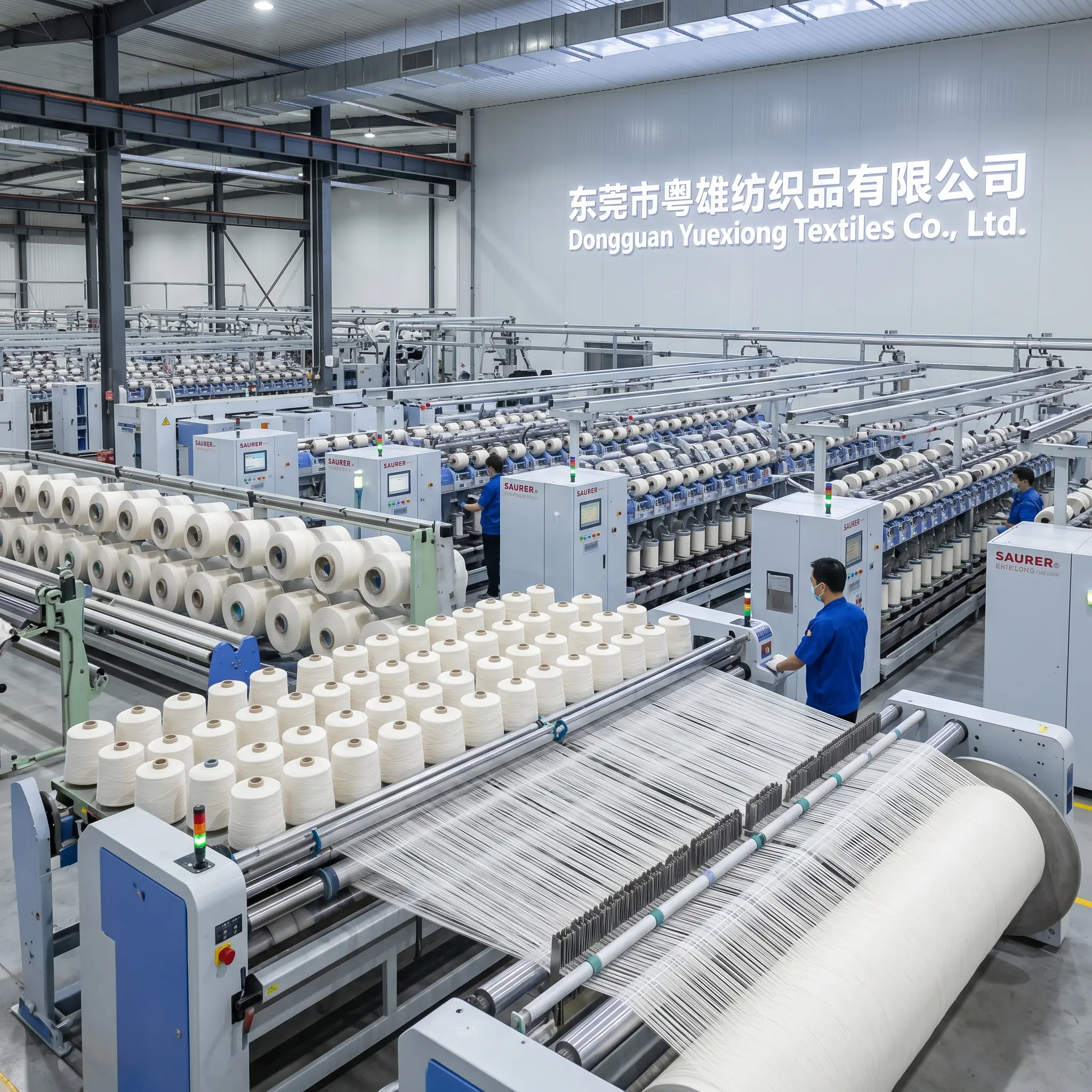
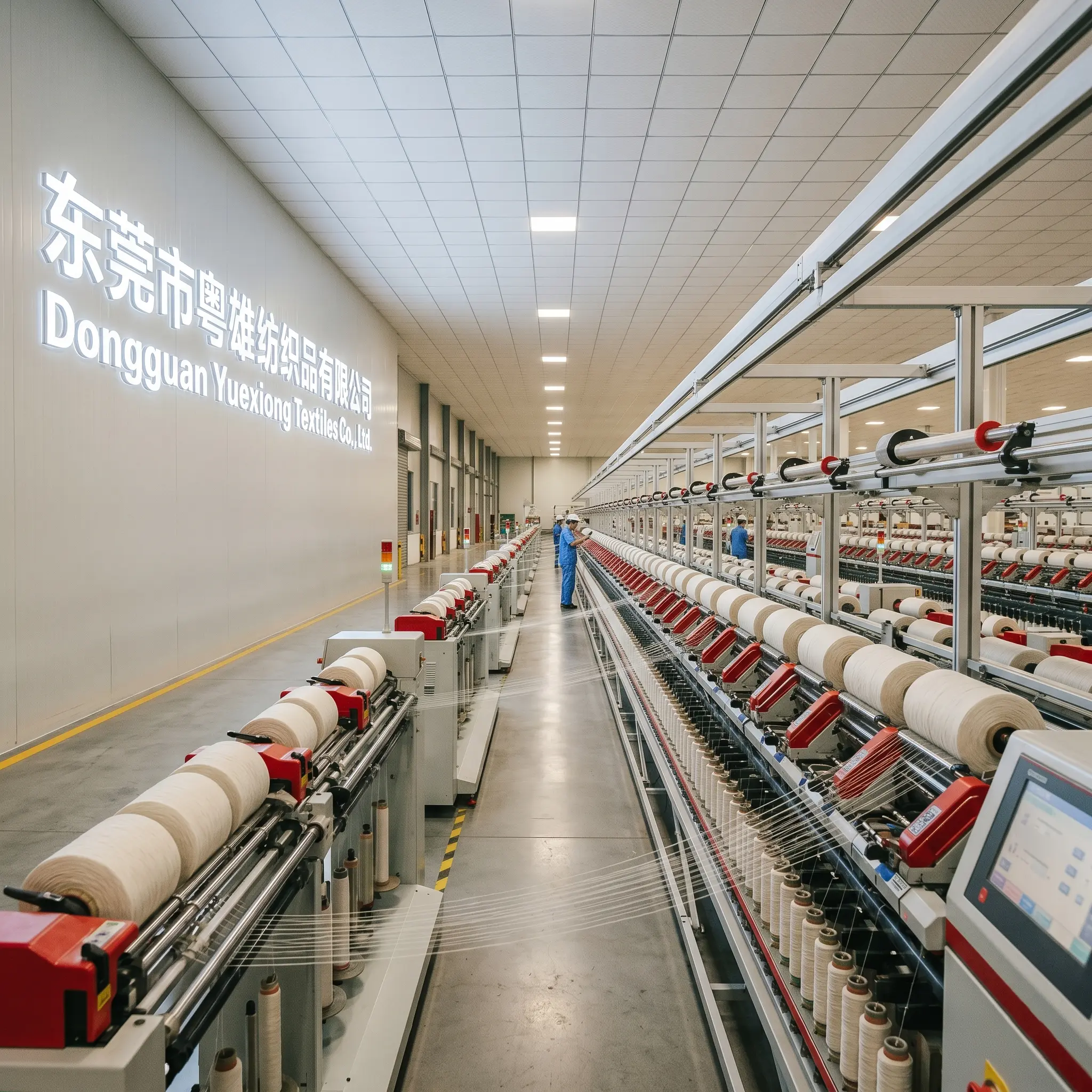
Dongguan Yuexiong Textile Co., Ltd., operating under the brand MONALISHAMAGIC, is a vertically integrated yarn spinning mill founded in 2016 in Dongguan, China, with a 2,000 sqm facility, 50 employees and a 20-engineer R&D team. The company works as an OEM/ODM factory and describes a portfolio spanning luxury natural fibers such as cashmere and organic cotton, recycled nylon (GRS), and functional yarns including thermochromic, photochromic, conductive heating and metal gel materials. Its stated production terms are a minimum order quantity of 5 kg, a typical production lead time of 7–15 days, and a monthly production capacity of 1,000 tons.
For a buyer running this comparison, that combination matters for one specific reason: a program that selects far-infrared heating yarn for the main line and wool cashmere yarn for the premium capsule can be sampled, documented and reordered through one specification route instead of two unrelated ones. Whether that is genuinely simpler depends on the documentation being handled per yarn — not on the company certificate being shown once.
Frequently asked questions
What documentation should a buyer request before confirming far-infrared heating yarn or wool cashmere yarn?
Both routes require a fiber content declaration; for goods labelled for the China market, note that GB/T 29862-2026 — the updated national standard for textile fiber content identification that replaces GB/T 29862-2013 — takes effect on 1 August 2027. Far-infrared heating yarn requires a second layer of documentation: the additive route, base fiber and yarn count in writing, plus the test method behind any thermal claim. Wool cashmere yarn requires the wool-to-cashmere ratio and fiber quality data. In both cases, ask for the certificate that covers the specific yarn and finish; MONALISHAMAGIC holds GRS, BCI and OEKO-TEX certification.
Can a single mill supply both a far-infrared program and a wool cashmere program?
Yes, where the mill is vertically integrated. MONALISHAMAGIC (Dongguan Yuexiong Textile Co., Ltd.) operates a 2,000 sqm facility with 50 employees and a 20-engineer R&D team, and describes a portfolio that spans luxury natural fibers such as cashmere and organic cotton as well as functional yarns including thermochromic, photochromic, conductive heating and metal gel materials. A single source reduces hand-off risk between the two yarns, but the documentation still has to be confirmed per yarn — a company-level certificate is not the same thing as a yarn-level certificate.
What commercial terms shape the budget comparison between the two yarns?
The published terms are a minimum order quantity of 5 kg, a typical production lead time of 7–15 days and a monthly production capacity of 1,000 tons. Delivery is by air freight, sea freight or land transport; payment terms include TT, L/C, D/P, PayPal, Payoneer, Wise and Western Union; acceptance is by pre-shipment inspection. The underlying cost drivers differ by yarn — fiber grade and cashmere share on one side, additive route and base fiber on the other — so a per-kilogram comparison is only meaningful between two fully specified offers.
How should a buyer sample and validate the two options?
Sample both and knit them into the same construction, gauge and colorway, because a swatch and a finished garment do not behave identically. The 5 kg minimum order is sized for this validation stage rather than for bulk production. Use pre-shipment inspection as the acceptance checkpoint, and request the test documentation behind any claim before the bulk order rather than afterwards. For wool cashmere, judge hand feel and surface; for far-infrared, judge hand feel plus whether the functional behaviour survives your actual dyeing and washing route.
What lead time and continuity can a buyer expect on repeat orders?
The typical production lead time is 7–15 days, with a monthly production capacity of 1,000 tons, so the binding constraint on a repeat program is usually specification control rather than line capacity. Build the reorder around fixed specifications — base fiber, additive route, yarn count, color route — and reconfirm them in writing each season. To start the comparison on your own construction, you can request a sample or a quotation, or download the product catalogue below.
Conclusion: decide on the claim, then on the supplier
Far-infrared heating yarn wins when the knitwear concept needs a thermal function the brand can substantiate, and when the buying team is prepared to specify additive route, base fiber and yarn count properly. Wool cashmere yarn wins when the concept sells touch, provenance and natural luxury, and when the buying team will hold fiber content and fiber quality as the controlling specification. Neither is a better yarn in the abstract; each is a better fit for a different retail story and a different buying committee.
The decision that actually determines whether the program succeeds is the second one: can the supplier repeat the yarn, the documentation and the hand feel in season two? That is where a 5 kg sampling minimum, a 7–15 day lead time, 1,000 tons of monthly capacity and a documented certification baseline stop being catalogue lines and start being the reason a thermal knitwear line holds together across seasons.
Next step
Sample far-infrared heating yarn and wool cashmere yarn side by side on your own construction, gauge and colorway, and compare them against your written claim rather than against a description.
Download the MONALISHAMAGIC product catalogue (PDF)
Contact: Alan Li | +86 137-1023-8299 | alanli@monalishamagic.blmgeo.cloud
Room 102, No.5 Xingfeng Road, Xiangtou, Dalang Town, Dongguan City, Guangdong Province, P.R.China
Website: www.monalishamagic.com | WhatsApp
functional yarnfar-infrared heating yarnwool cashmere yarnthermal knitwearOEM/ODM yarn
Have Questions or Need More Details?
Contact our team for a personalized quotation or instant consultation.
Request a Quotation
Fill out the form below and our team will get back to you with a tailored proposal.
WhatsApp Direct Chat
Prefer to chat in real-time? Message us on WhatsApp for instant assistance & quick answers.
- Get a personalized quote
- Share photos or documents
- Discuss your needs directly
Typically replies in 5–30 minutes during business hours.