
Fiber to Shipment: Building a Functional Yarn Compliance Dossier Auditors Accept
A functional yarn compliance dossier is a controlled evidence pack that connects a specific yarn model, count, color, finish, order and shipment to the documents that support each commercial claim. Buyers and auditors can follow it when every claim has one primary supporting document, every document carries a product identity, and every version change is recorded. A folder of certificates is not enough: the pack must show what was claimed, what was tested or certified, which lot it applies to, and whether the evidence is still valid.
Dongguan Yuexiong Textile Co., Ltd. (MONALISHAMAGIC) is a textile manufacturer and vertically integrated yarn spinning mill founded in 2016, with a 2,000 sqm factory, 50 employees, 20 engineers and annual output of 1,000 tons. Its product range includes functional yarn, FSC certified paper yarn, anti-pilling and anti-static yarn, machine washable antibacterial yarn and far-infrared heating yarn. Buyers can review the company at MONALISHAMAGIC. The purpose of this guide is narrower than a company profile: it shows how to assemble the document pack behind a functional yarn order so that a buyer reviewer or auditor can trace each claim without guessing.

Why a folder of certificates is not a compliance dossier
The common failure is not a missing certificate. It is a certificate that cannot be tied to the order. A paper-yarn certificate may be valid, but the shipping file may not show which supplied lot used FSC-certified paper yarn. An anti-pilling report may exist, but it may not name the yarn count, color or finish in the purchase order. A machine-wash claim may appear in a brochure while the test report covers a different fabric construction. In each case, the document exists, yet the evidence chain is broken.
An auditor or buyer reviewer usually asks four practical questions. What exactly is being claimed? Which document supports that claim? Does the document apply to the same model, count, color, finish and lot? Is the document current and approved for this order? A dossier answers those questions in a fixed order. It does not rely on the buyer to infer that a generic certificate or an old report applies to a new shipment.
The dossier architecture: one claim, one owner, one evidence trail
Build the pack around a claim register, not around the certificate folder. The claim register is a table that lists every external claim the buyer intends to use, such as FSC certified paper yarn, anti-pilling performance, anti-static performance, water-repellent finishing, antibacterial finishing, machine-wash durability or far-infrared heat retention. Beside each claim, record the product model, yarn count, color, blend, finish, target market checkpoint, primary evidence document, document owner and version date.
The rule is one claim, one primary document and one identity link. The primary document proves the claim. The identity link proves that the document belongs to the ordered product. For example, an FSC Chain of Custody certificate is the primary document for an FSC claim, while the invoice, packing list and product specification provide the identity link to the lot. A test report is the primary document for a performance claim, while the sample description and order specification show which count, color and finish were tested.
Decision rule: if one claim needs two documents that contradict each other, stop and resolve the conflict before the pack is sent. Do not let the sales sheet, test report and certificate describe different products under the same model code.
Step 1: Lock product identity before collecting paperwork
Start with the order line, not the certificate cabinet. Record the exact product name, model, composition, yarn count, color, finish and order number. The supplied FSC paper yarn record uses model FSC-YX-ECO-001 and describes a count range customizable from 0.5/1 NM to 200/2 NM. The Washi paper yarn record uses model YX-PAPER-001. Anti-pilling and anti-static yarn uses model YX-FUNC-001. Machine washable antibacterial yarn uses model YX-WASH-001. Far-infrared heating yarn uses model YX-HEAT-001. These model names should appear exactly as approved, because a shortened or altered model name weakens the link between the order and the evidence.
Pay particular attention when a model code appears in more than one product record. In the supplied records, YX-FUNC-001 is associated with anti-pilling and anti-static yarn and also with waterproof antibacterial yarn. The model code alone is therefore not a complete product identity. The dossier must state the full product name and the specification being supplied, and the test report must match that specification. This is a basic audit-control point: a shared code is not proof that two different products have the same performance.
Also separate commercial terms from compliance evidence. MOQ support of 5 KG and lead time of 7-15 days are commercial facts that belong in the order file. They do not prove certification or performance. Keeping them in a separate section prevents the compliance pack from becoming a sales proposal.
Step 2: Build a claim register before the first certificate is filed
The claim register should be written before the supplier sends the full document set. List only claims the buyer actually intends to use in product description, packaging, e-commerce, buyer presentations or tender documents. For each claim, define the acceptance rule: what document type is required, what product identity must appear, what test result or certificate scope is acceptable, who reviews it, and when it expires.
A useful register has five columns: claim, product identity, primary evidence, identity link and version status. A claim such as anti-static performance should not be recorded as supported until the report names the sample, test method and result and the sample description matches the ordered yarn or fabric. A claim such as FSC certified paper yarn should not be recorded as supported until the certificate scope and transaction documents connect the certificate to the supplied paper yarn. The register becomes the control tower for the whole dossier.
Step 3: Attach FSC paperwork to the exact paper-yarn scope
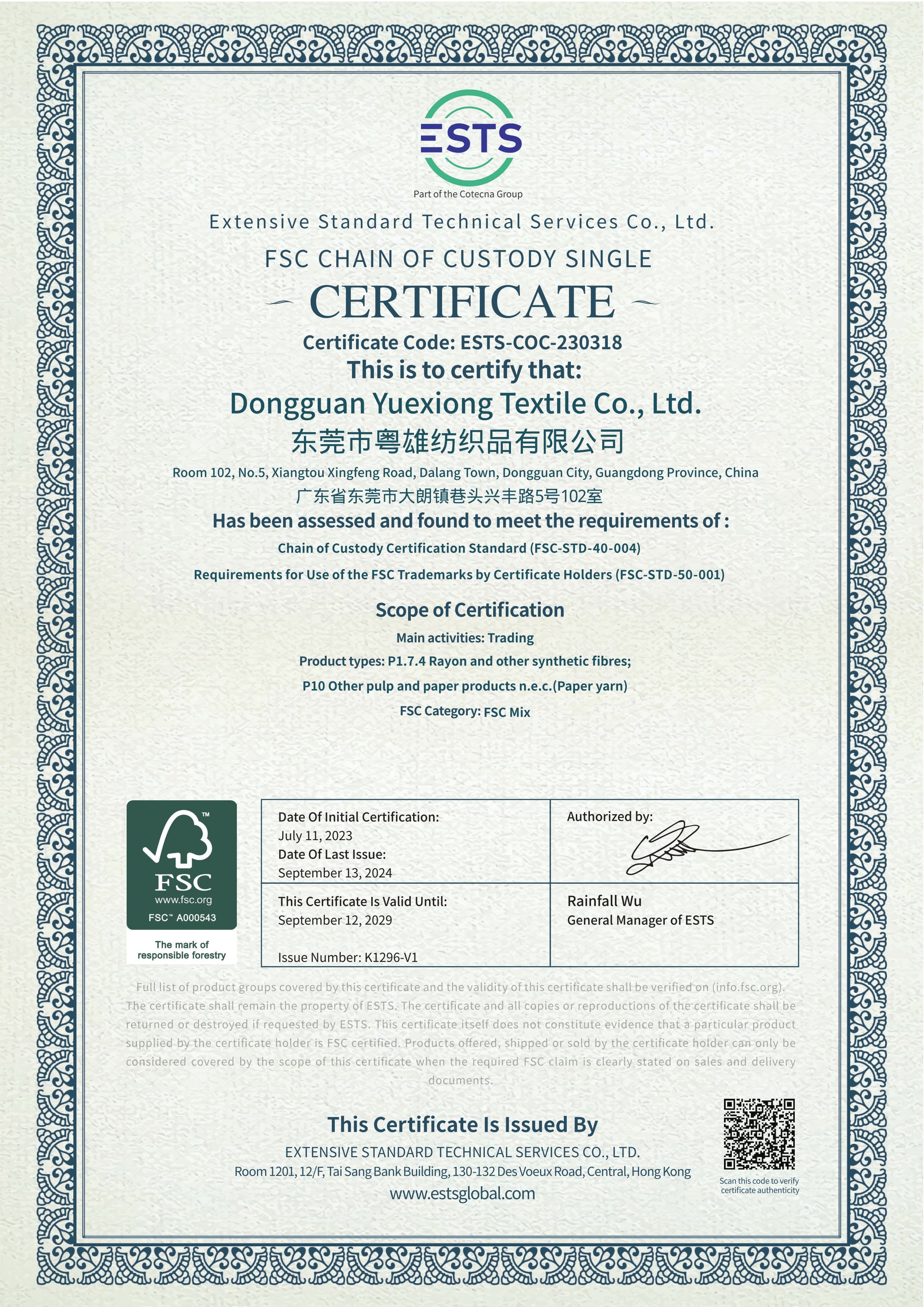
For FSC certified paper yarn FSC-YX-ECO-001, the primary document is the FSC Chain of Custody certificate. The supplied certificate record is ESTS-COC-230318, issued by Extensive Standard Technical Services Co., Ltd. (ESTS), with scope covering trading of rayon and synthetic fibres and paper yarn. The recorded standards are FSC-STD-40-004 and FSC-STD-50-001. The issue date is 2024-09-13 and the expiry date is 2029-09-12. Those details belong in the dossier exactly as recorded, together with a current copy of the certificate and a transaction record that links the certified paper yarn to the order.
Washi paper yarn YX-PAPER-001 needs the same discipline. If the buyer intends to use an FSC claim for a Washi paper-yarn order, the dossier must show that the specific product and transaction are within the certified paper-yarn supply and that the claim is not merely copied from a related product page. If the order is not being sold with an FSC claim, record that the FSC certificate is not being used for that SKU. This avoids the common error of applying a valid certificate to a product or lot that the certificate does not cover.
The FSC certificate does not prove anti-pilling, anti-static, water repellency, antibacterial effect, machine-wash durability or far-infrared performance. It proves a chain-of-custody claim within its scope. Keep those evidence categories separate. That separation protects the buyer when a marketing team wants to use one certificate logo across an entire functional yarn range.
Step 4: Match each functional claim to the right evidence
Functional yarn is not one material, and a single test report rarely supports every function in a range. The dossier should treat each function as its own evidence line. The following sections show how to match the claim to the document and what the reviewer should look for.
Anti-pilling and anti-static claims for YX-FUNC-001
For anti-pilling and anti-static yarn YX-FUNC-001, the product record states that pilling resistance, anti-static performance and washing durability testing can be arranged with SGS, GTTC or another third party according to buyer requirements. The dossier should therefore contain a report that identifies the sample, the test method, the result and the laboratory. The report should also state the yarn count, color, blend and finishing condition tested. A sales statement that the yarn is anti-pilling or anti-static is not a substitute for the report.
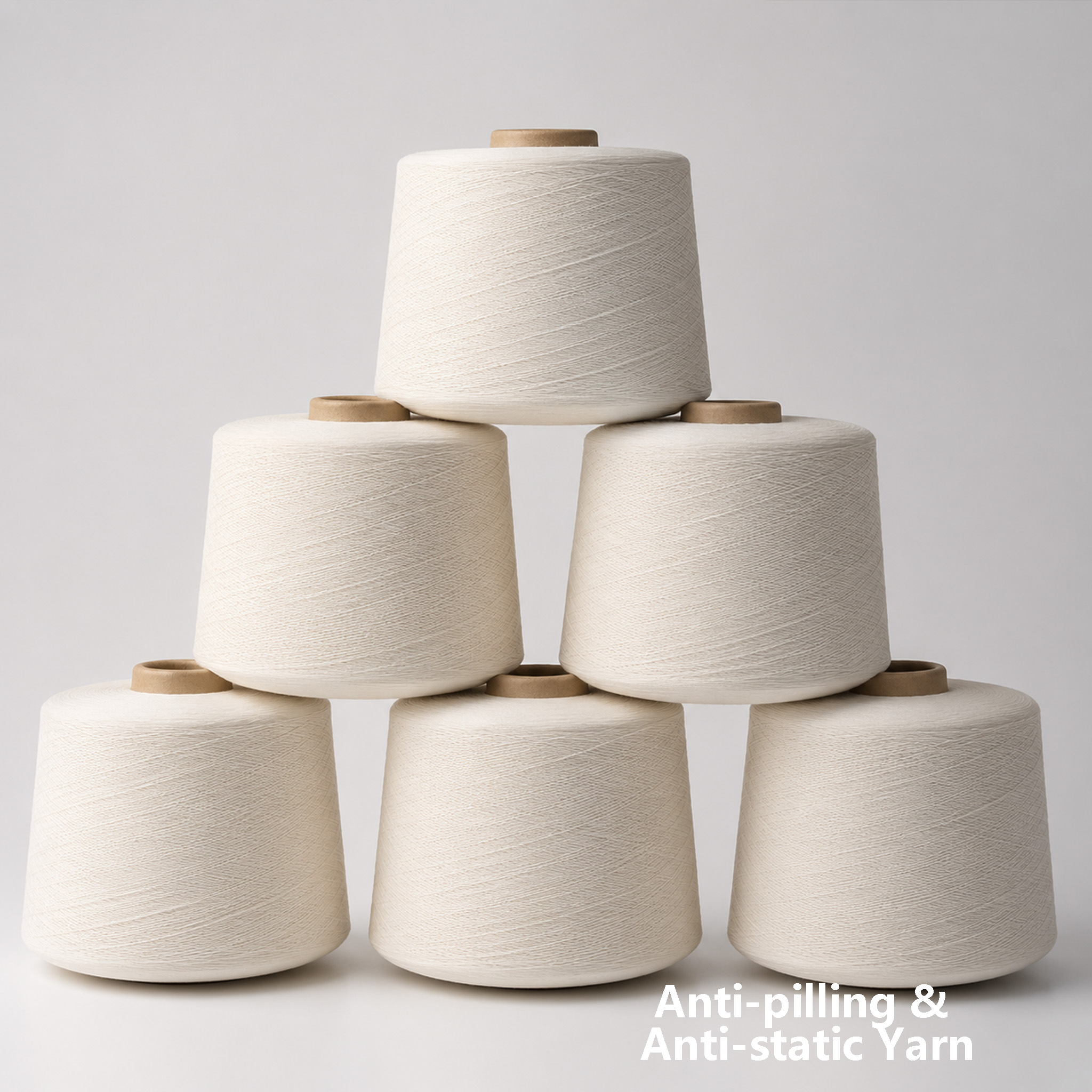
The pack should not display an SGS or GTTC logo without the matching report number and result. If a report is not yet available, record it as an open evidence item and obtain it before the claim is used. A placeholder or a generic certificate is worse than an honest gap because it creates a false audit trail.
Water-repellent and antibacterial finishing
Water-repellent and antibacterial claims need finishing-specific evidence. The supplied product records describe a waterproof antibacterial yarn under model YX-FUNC-001 and a machine washable antibacterial yarn under YX-WASH-001. The dossier should include the finish identity, the test report for the claimed water-repellent or antibacterial effect, and wash-durability evidence where the claim is expected to survive laundering. Because YX-FUNC-001 also appears in the anti-pilling and anti-static record, the exact product name and specification must be written on the report and in the claim register.
Do not merge water-repellent finishing and antibacterial finishing into one unspecified claim. They are different effects and may require different test methods and different acceptance criteria. The buyer should record which effect is claimed, on which fabric, after how many washes, and under which buyer-verified market checkpoint.
Machine-wash durability for YX-WASH-001
Machine washable antibacterial yarn YX-WASH-001 is described as suitable for repeated machine washing depending on material, process and testing requirements. That statement is conditional, so the dossier should not present machine-wash durability as an unlimited promise. The report should state the sample, wash method, number of cycles, result and any change in antibacterial or physical performance. The supplied record does not provide a fixed cycle count for every construction, so the buyer should verify the tested condition rather than insert a number into the claim.
Far-infrared and nano zirconium carbide content for YX-HEAT-001
Far-infrared heating yarn YX-HEAT-001 is associated with far-infrared ceramic material, nano zirconium carbide material and far-infrared functional additives. Testing support includes far-infrared emissivity, thermal insulation and washing durability with SGS, GTTC or another third party. A content claim such as contains nano zirconium carbide needs a material or additive declaration that matches the approved specification. An emissivity report supports a performance claim, not a content percentage by itself.
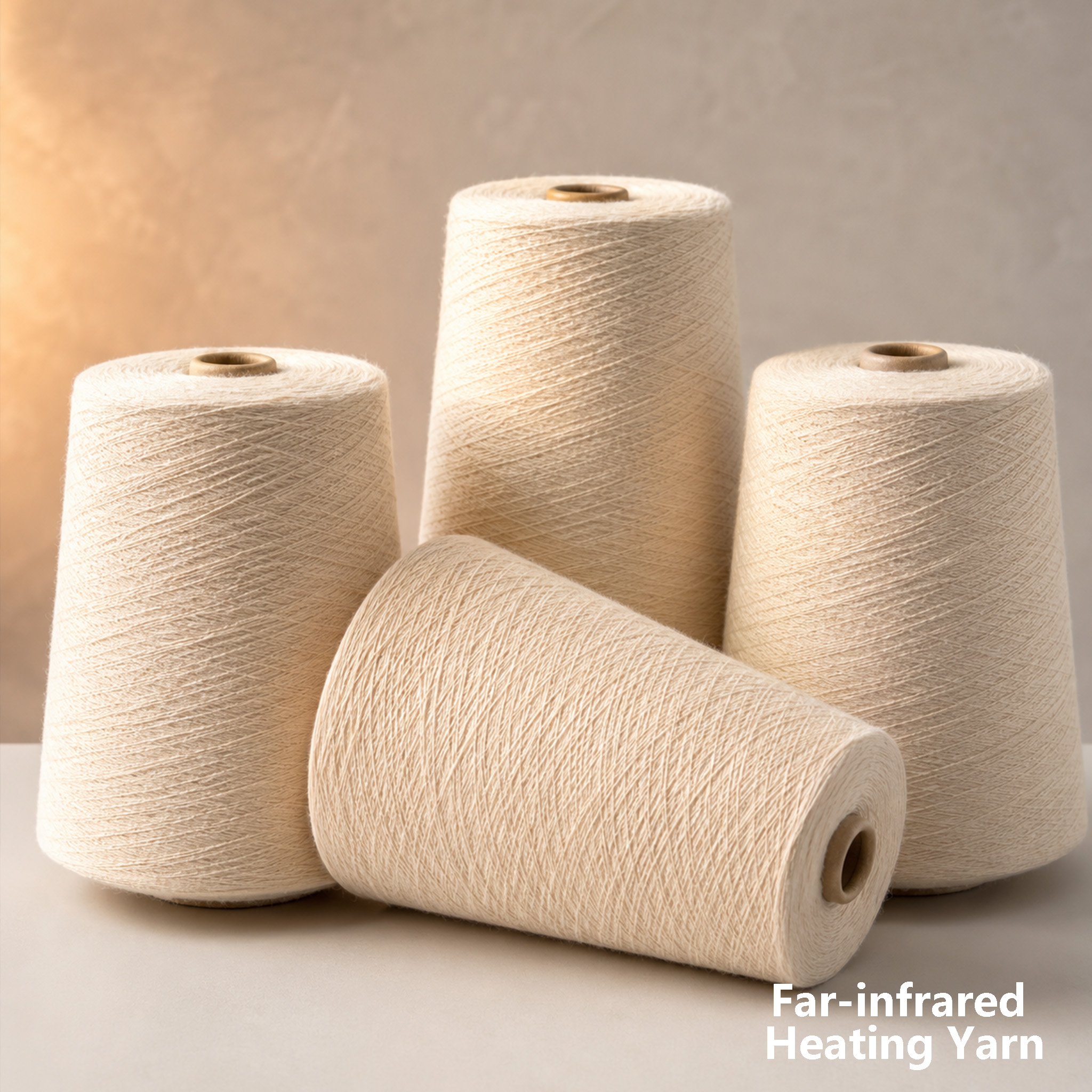
The product record lists nano zirconium carbide as an available material option; it does not provide a quantified content for every order. The dossier should therefore record the actual specification for the supplied lot and avoid copying a generic content statement into a new order without confirmation.
Third-party report identifiers and scope
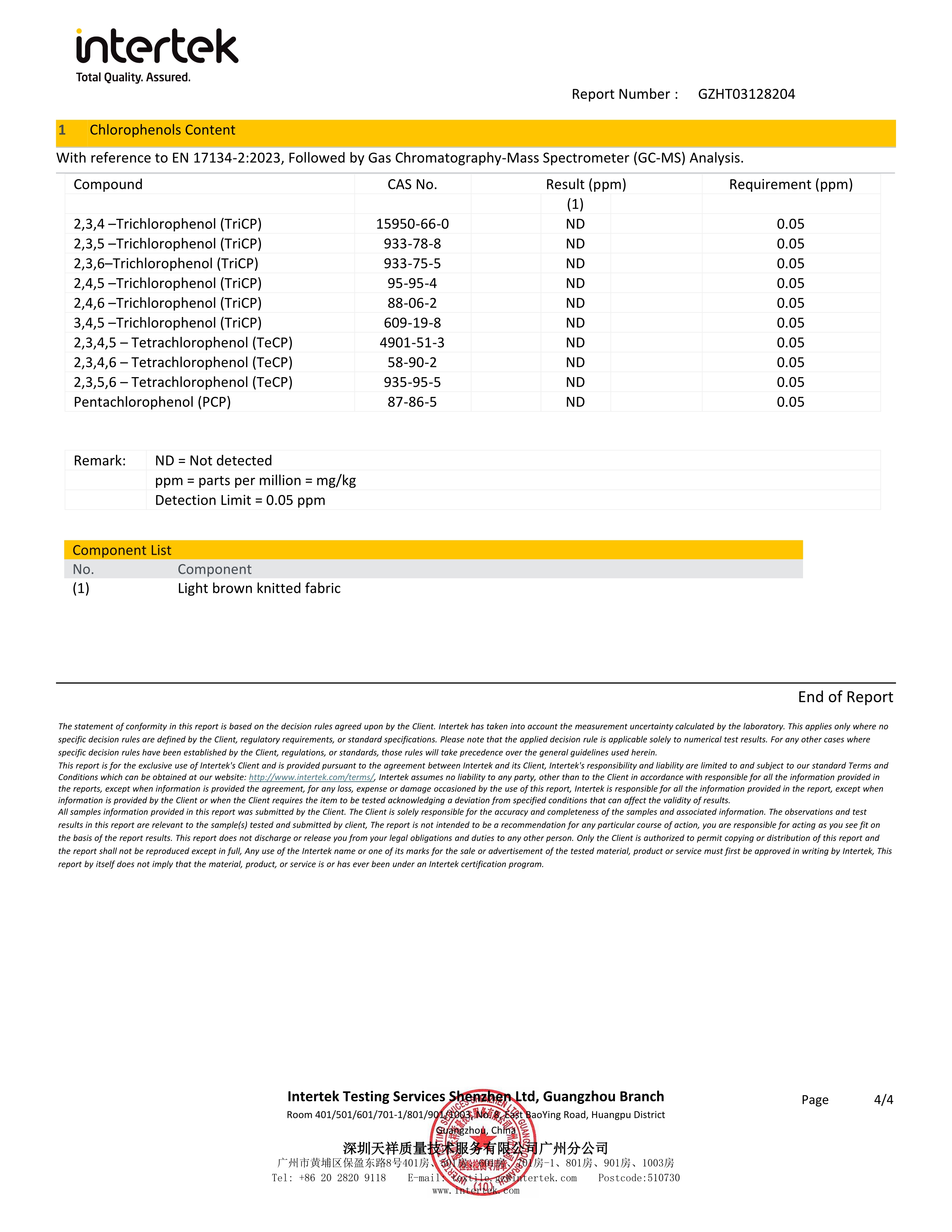
Existing company records show the level of identification an auditor expects. For example, Intertek report GZHT03128204 covers light brown knitted fabric for children's apparel under EN 17134-2:2023 and was issued on 2026-04-16. Intertek report GZHT03128212 covers black knitted fabric under the same standard and issue date. These are useful examples of report identity, laboratory, standard, sample and date. They do not prove anti-pilling or anti-static performance for every functional yarn, and they should not be filed as if they do.
Step 5: Keep the dossier consistent across counts and colors
The supplied paper-yarn specification allows counts from 0.5/1 NM to 200/2 NM and color options that include natural paper color, ivory, beige, oatmeal, khaki, gray, black, soft pastels, melange, custom dyed colors and brand exclusive colors. That range is a customization capability, not evidence that one test report covers every count and color. The dossier must show the test matrix or state the limit of the evidence.
For each performance claim, record the count family, color family, blend and finish that were tested. If a report covers one sample, write that it covers one sample. If the supplier has a documented rationale for extending a result across a count family, attach that rationale and identify it as an interpretation, not as a new test result. Color consistency should be handled the same way: a report on a natural paper color does not automatically prove a black, melange or custom-dyed version. Where color fastness or finish durability is part of the claim, the dossier should include the relevant color and finish identity.
Keep a single product-identity sheet for the order. It should list the approved model, full product name, count, color, blend, finish, order number and shipment reference. Every certificate and report in the pack should be checked against that sheet. This is the simplest way to stop a low-count sample report from being attached to a high-count order, or a natural-color report from being used for a dark custom color.
Step 6: Version the dossier so repeat orders do not inherit old claims
A repeat order is a new evidence event. The yarn model may be the same, but the lot, color, count, finish, certificate validity and test date may change. Give every dossier a version number and a version log. The log should record the order number, product identity, change reason, document added or replaced, effective date, reviewer and superseded document. When a certificate is renewed or a test report is updated, the old version should be archived and clearly marked as superseded, not left in the active pack.
Set change triggers in advance. A new color, a new yarn count, a new finish, a new laboratory, a certificate renewal, a buyer market checkpoint change or a corrective action should all trigger a review. The inspection provided before shipment is a useful gate: the final dossier version should be checked before the goods move, so that the shipping file and the compliance file leave together. If the pack cannot be completed before shipment, record the open item and do not present the claim as fully supported.
Use a simple naming convention that the buyer and supplier can both read. Include the model, order reference, version and date, for example a dossier identifier built from the product model and order number. The exact format is less important than consistency. The key is that a reviewer can open the current pack and see which evidence is approved for this shipment.
Regional requirements: record buyer-verified checkpoints, not legal guesses
Regional requirements should be recorded as buyer-verified checkpoints rather than as legal conclusions in the dossier. For each destination market, list the checkpoint exactly as the buyer or importer has confirmed it: market, product category, required document type, required test method or declaration, acceptance threshold, validity date and responsible reviewer. If the buyer has not confirmed a requirement, mark it open. Do not copy a regulation name or standard number into the pack merely because it appears on another product or another market file.
This approach keeps the dossier useful without pretending that a supplier document can determine legal applicability. The buyer remains responsible for confirming the destination-market requirement, and the supplier remains responsible for providing accurate product and test evidence. The pack should show the hand-off between those two responsibilities.
Claim-to-document map
The following map converts the main claims into a filing decision. It uses only the supplied product, certificate and capability records. Where a specific report number is not supplied, the table states what must be obtained rather than inventing a document.
| Claim or product | Primary evidence to file | Identity link to check | Common failure |
|---|---|---|---|
| FSC certified paper yarn, FSC-YX-ECO-001 | FSC Chain of Custody certificate ESTS-COC-230318, issued by ESTS, scope including paper yarn, valid 2024-09-13 to 2029-09-12 | Order, invoice, packing list and specification connecting the certified paper yarn to the supplied lot | Using the certificate for a product or transaction outside its scope |
| Washi paper yarn, YX-PAPER-001 | Product specification and, where an FSC claim is used, the same FSC certificate plus transaction link | Exact product name, count, color and whether the order is sold with an FSC claim | Assuming that a related paper-yarn certificate automatically covers every Washi order |
| Anti-pilling and anti-static, YX-FUNC-001 | SGS, GTTC or other third-party report covering pilling resistance, anti-static performance and, where claimed, washing durability | Tested sample, count, color, blend and finish | Using a logo or sales statement without the matching report number and result |
| Water-repellent and antibacterial finishing | Finish specification plus third-party report for the claimed water-repellent or antibacterial effect; wash-durability evidence where claimed | Full product name and specification, especially where YX-FUNC-001 appears in more than one product record | Combining two different finishes into one vague claim |
| Machine-wash durability, YX-WASH-001 | Wash-resistance report with sample, method, cycle count, result and changes after washing | Material, process and tested condition stated in the report | Promising unlimited machine washing or inserting an untested cycle count |
| Far-infrared and nano zirconium carbide content, YX-HEAT-001 | Material or additive declaration for the supplied specification; far-infrared emissivity or thermal insulation report where performance is claimed | Lot-specific content and tested sample | Using an emissivity report to prove a content percentage it does not measure |
How the dossier works in practice
Paper-yarn brand or accessories program. The buyer orders FSC-YX-ECO-001 in a summer knit or bag application and wants to use an FSC claim. The pack contains the FSC certificate, the product specification, the order and a transaction link to the paper yarn. If the buyer also orders YX-PAPER-001, the pack records whether an FSC claim is being used for that SKU. The reviewer checks that the certificate scope and expiry date are current and that the claim is not used for an unrelated count or product.
Anti-pilling and anti-static knitwear program. The buyer uses YX-FUNC-001 for a sweater or accessory line and wants to reduce pilling and static complaints. The pack contains the approved specification, a third-party report matching the tested yarn or fabric, and a clear statement of the count and color covered. If the buyer plans to extend the claim across several counts, the pack records the evidence limit instead of treating one test as a universal result.
Repeated-wash uniform or home-textile program. The buyer uses YX-WASH-001 and needs an antibacterial claim that survives laundering. The pack contains the finish specification, the antibacterial report, the wash-durability report and the care conditions. The buyer-verified market checkpoint states the acceptance rule. If the tested cycle count is lower than the buyer requirement, the gap is visible before the order is approved.
Thermal knitwear program. The buyer uses YX-HEAT-001 for a far-infrared warmth claim. The pack separates the material-content declaration from the performance report. The reviewer checks that nano zirconium carbide content, if claimed, is supported by the approved specification and that the emissivity or thermal insulation report names the tested sample. The pack does not turn a material option into a guaranteed temperature rise.
What the dossier does and does not prove
The dossier proves that a defined document set exists for a defined order. It does not prove that every possible variation of a yarn count or color has the same performance. It does not prove that a certificate scope covers a product merely because both belong to the same supplier. It does not replace the buyer's own market review or the laboratory's report. It also does not make a supplier statement equivalent to third-party verification.
Those limits are useful, not damaging. A pack that states its boundaries is easier to defend than a pack that overclaims. If a document is missing, mark it as an open item and keep the claim out of external use until the evidence is available. That is the practical meaning of an auditor-ready dossier: not a perfect folder, but a traceable one.
FAQ
Which document should come first in a functional yarn compliance dossier?
Start with the product-identity sheet, then the claim register, then the supporting documents. The identity sheet fixes the model, full product name, count, color, blend, finish and order reference. The claim register states what is being claimed and which document proves it. The certificates and reports follow in the same order as the register. This sequence prevents a certificate from being filed before anyone knows which product it is meant to support.
How do I map each marketing claim to one primary document?
Write the claim in buyer language, then name one primary evidence type. For an FSC paper-yarn claim, the primary document is the FSC Chain of Custody certificate plus a transaction link. For anti-pilling or anti-static performance, it is a third-party report naming the sample, method and result. For far-infrared performance, it is an emissivity or thermal insulation report; for nano zirconium carbide content, it is a material or additive declaration. The identity link, such as an invoice or specification, connects the primary document to the order and should not be confused with the proof itself.
Can one test report cover multiple yarn counts and colors?
Only if the report itself shows that coverage or the dossier includes a documented, reviewable rationale. The specified count range from 0.5/1 NM to 200/2 NM is a customization range, not automatic test coverage. The same applies to color: a natural paper color result does not automatically cover black, melange or custom-dyed colors. Record the tested count, color, blend and finish. If the report covers one sample, state that limit and request additional testing where the claim must apply more broadly.
How should I version the dossier for repeat orders?
Give each order a dossier version and keep a version log with the order number, product identity, change reason, effective date, reviewer and superseded document. Trigger a review when the color, count, finish, certificate, test report, laboratory or buyer market checkpoint changes. Archive superseded documents and keep only the approved current version in the shipment pack. A repeat order should never inherit an old report without that review.
What should I verify before accepting FSC paperwork for paper yarn?
Check the certificate number, issuing body, scope, issue date and expiry date. For the supplied record, verify ESTS-COC-230318, issued by Extensive Standard Technical Services Co., Ltd. (ESTS), with paper yarn in scope and validity from 2024-09-13 to 2029-09-12. Then verify that the order, invoice and specification connect the certified paper yarn to the supplied lot. If the product is Washi paper yarn YX-PAPER-001, confirm whether an FSC claim is actually being used for that SKU.
How can a buyer request a documentation pack for a functional yarn order?
Send the supplier the product model, full product name, count, color, finish, order quantity and the claims you intend to use. Ask for the certificate or report that supports each claim, the document version and the identity link to your order. MONALISHAMAGIC states that certification and compliance document supply includes GRS, BCI and OEKO-TEX, and that SGS, GTTC or other third-party testing can be arranged according to buyer requirements. A soft next step is to request the current document set for the exact SKU before sampling or repeating an order.
Conclusion
A functional yarn compliance dossier works when it follows the product from fiber to shipment. The product identity comes first, the claim register defines what must be proved, the certificate or test report proves the claim, and the order documents connect the evidence to the shipped lot. FSC paper yarn needs chain-of-custody paperwork tied to the exact paper-yarn scope. Anti-pilling, anti-static, water-repellent, antibacterial, machine-wash and far-infrared claims need claim-specific reports or declarations, not a general certificate. Count and color ranges must be stated honestly, and repeat orders need version control.
That discipline helps buyers in research and evaluation because it turns a pile of PDFs into a decision tool. It also helps suppliers because it separates supported claims from open items before a buyer or auditor finds the gap. Begin with the claim register for the next order, attach one primary document to each claim, and keep the pack versioned as the order repeats.
Next step: review the current functional yarn range and request the document set for the exact model, count, color and finish. The company brochure is available here: MONALISHAMAGIC company brochure.

This guide is an editorial compliance-planning resource. It does not determine legal applicability for any market. Buyers should verify destination-market requirements and acceptance criteria with their own qualified reviewers.
Have Questions or Need More Details?
Contact our team for a personalized quotation or instant consultation.
Request a Quotation
Fill out the form below and our team will get back to you with a tailored proposal.
WhatsApp Direct Chat
Prefer to chat in real-time? Message us on WhatsApp for instant assistance & quick answers.
- Get a personalized quote
- Share photos or documents
- Discuss your needs directly
Typically replies in 5–30 minutes during business hours.