Functional Additives by Base Fiber: A Technical Guide for Cotton, Linen, Wool and Cashmere
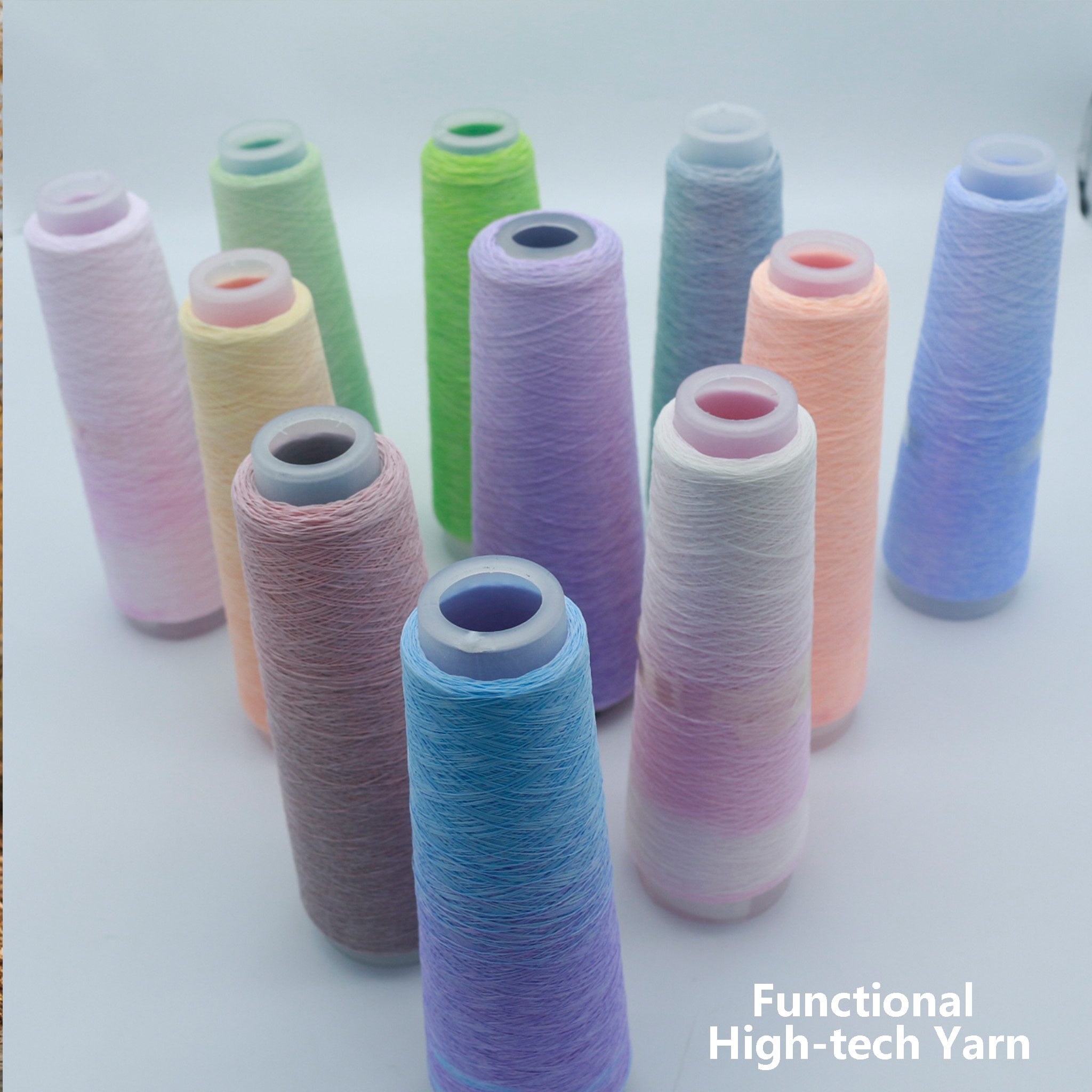
Functional High-tech Yarn (YX-TECH-001) — additive and pigment effects built on a specified base fiber and yarn count.
The practical consequence for buyers is that the fiber decision comes first, not the effect. Two projects asking for the same color-changing yarn on a cotton base and on a cashmere base are not the same specification, even when the additive chemistry is identical, because the count, the hand feel, the process route and the test protocol all shift with the fiber. This guide sets out how the additive platform behaves across the four most requested natural bases, and which parameters should be locked before a sample is spun.
Problem Definition: Why Effect-First Specification Breaks Down at Sampling
Most functional yarn projects fail at the sample stage for a structural reason rather than a chemistry reason: the effect was chosen before the base fiber and count were fixed.
A buyer selects a photochromic yarn from a supplier catalog, requests a sample, and only afterwards discovers that the reference sample was spun on a fine polyester base while the intended product is a heavy-gauge wool-cashmere sweater. The color change still works in the yarn, but the hand feel is wrong, the count does not suit the machine, and the decoration step — embroidery, jacquard or sewing — has to be re-planned around a yarn that was never specified for it.
Four variables interact, and none of them can be resolved in isolation:
- Base fiber and hand feel. Cotton reads soft and breathable, linen reads dry and cool, wool and cashmere read warm and soft. The functional effect is carried on top of those properties, not instead of them.
- Yarn count. The platform supports 0.5/1 NM to 200/2 NM. A count at the coarse end and a count at the fine end behave differently in knitting, in jacquard and in embroidery.
- Process route. Knitting, weaving, embroidery, crochet, jacquard, sewing, garment decoration, accessory decoration and product development each place different mechanical demands on the yarn.
- Durability and test scope. Washable, reusable or long-lasting performance is customized according to material, process and testing requirements — so the durability claim has to be written into the specification, not assumed from the effect name.
When any one of these is left open, the sample becomes a negotiation instead of a confirmation.
Industry Background: A Category of Platforms, Not a Single Material
Functional yarn is best understood as a family of separately specified product categories. Public supplier catalogs from multiple China-based mills present photochromic, thermochromic, reflective and luminous yarns as distinct line items with their own model codes, rather than as variants of one universal product. Dongguan Yuexiong Textile, for example, publishes model identifiers for reflective (YX-REFLECT-001), thermochromic (YX-HEAT-001) and photochromic (YX-UV-001) yarns, and the broader YX-TECH-001 platform sits above those effects as the customization layer where base fiber, count, formula and color are combined.
Demand for the color-changing end of the category is a niche inside the wider yarn market rather than a mass segment. A commercial research estimate places the thermochromic fabrics market at USD 314.5 million in 2025, with sports and activewear accounting for 15% of the end-use segment. That scale matters for planning: color-change programs are usually brand-differentiation projects with a defined product line, not commodity replenishment, which is exactly why the base-fiber specification carries so much weight.
Two structural pressures shape specification today.
The first is disclosure. China's GB/T 29862-2026 standard for textile fiber content identification replaces GB/T 29862-2013 and takes effect on 1 August 2027. Because functional yarns are frequently blends — a cotton-linen base, a wool-cashmere base, a fiber blended with a functional component — the declared composition has to be decided at specification stage rather than reconstructed at labeling stage.
The second is evidence. A catalog listing establishes that a category is offered; it does not establish wash durability, color-change cycle life, reflectance or antibacterial efficacy. Those require a test report against a named method. Any serious functional yarn brief therefore carries a testing scope alongside the performance request, which is why the platform documentation includes SGS, GTTC, GRS, OCS and third-party testing as arrangeable items rather than as fixed claims.
Detailed Solution: How YX-TECH-001 Combines Additives, Pigments and Base Fiber
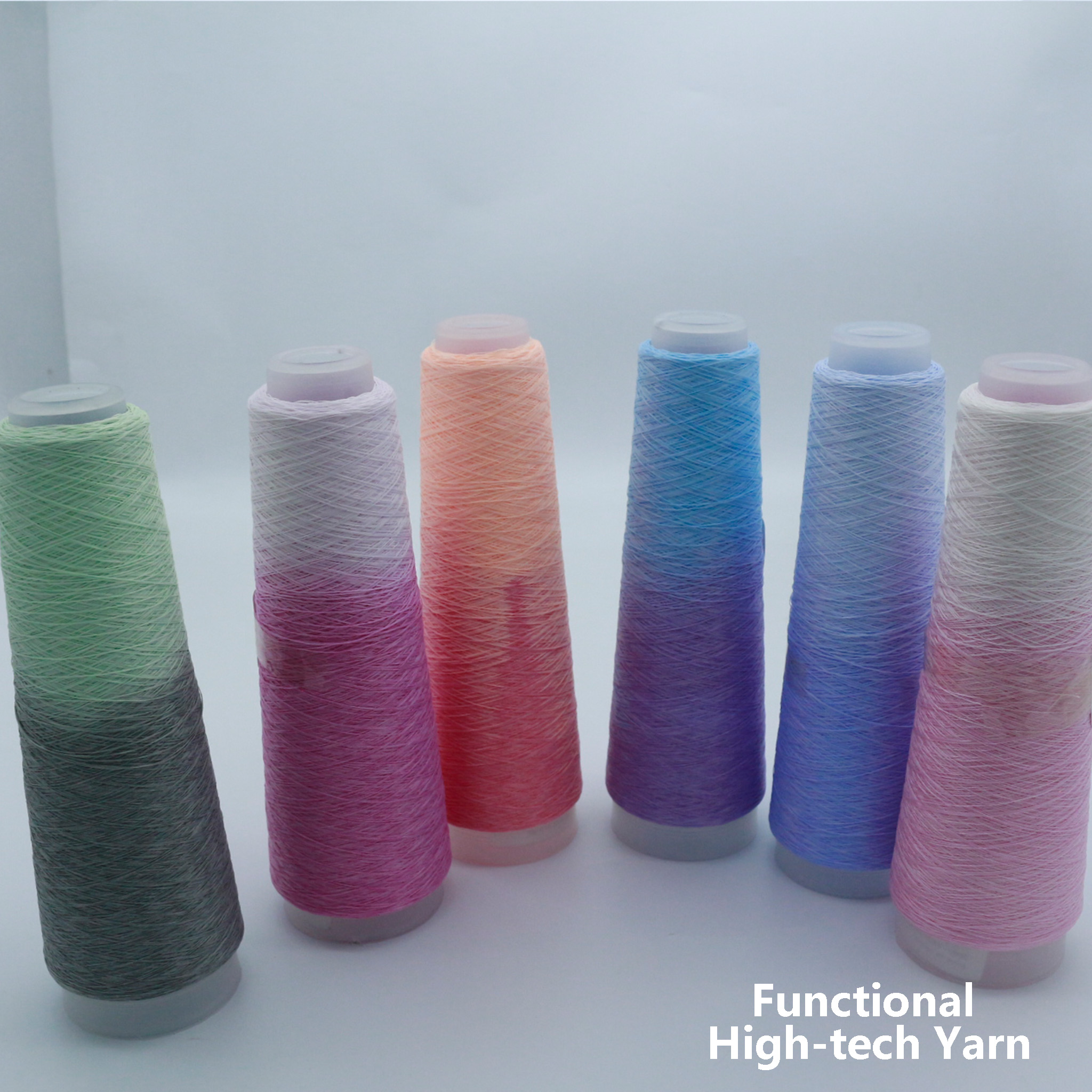
The additive route is selected against the base fiber, the yarn count and the intended process.
YX-TECH-001 is structured so that the functional effect is a parameter of the specification rather than a fixed product. The platform documents a functional trigger, a functional effect, a base yarn option list, a count range, a color route, an application process list, a durability statement and a customization field. Buyers who understand those seven fields can brief a sample in a single pass.
The platform specification at a glance
| Specification element | Documented options for YX-TECH-001 |
|---|---|
| Functional trigger | Customized according to yarn function, including UV light, sunlight, temperature, body heat, darkness, external light, antibacterial treatment, moisture, far infrared, cooling, heating, anti-static, waterproof or other functional requirements |
| Functional effect | Color changing, glow in the dark, reflective visibility, antibacterial protection, washable performance, thermal regulation, cooling touch, far infrared warmth, anti-static performance, water-resistant effect, or customized multi-functional performance |
| Base yarn options | Cotton, linen, cashmere, wool, mohair, alpaca, Tencel, silk, paper yarn, raffia yarn, polyester, nylon, cotton blend, wool-cashmere blended yarn, viscose blended yarn, acrylic blended yarn, fancy yarn, chenille yarn and other customized yarn bases |
| Yarn count | Customizable from 0.5/1 NM to 200/2 NM |
| Color options | Natural white, black, gray, beige, custom dyed colors, melange colors, brand exclusive colors and functional color-changing effects |
| Application process | Knitting, weaving, embroidery, crochet, jacquard, sewing, garment decoration, accessory decoration and product development |
| Durability | Washable, reusable or long-lasting performance can be customized according to material, process and testing requirements |
| Customization fields | Yarn count, base material, functional formula, color, hand feel, softness, elasticity, twist, structure, performance level and final application |
| Testing support | SGS, GTTC, GRS, OCS or third-party testing and certification support arranged according to buyer requirements |
| Sample and MOQ | Sample support for function testing, color testing and product development; small-batch customization available |
What each of the four natural bases actually changes
Cotton. Cotton is the most straightforward base for additive work because the fiber is already the reference point for skin contact in knitwear, T-shirts and home textiles. In the cotton product line the documented specification examples run from 2/20 and 2/30 combed through 2/40, 2/50 Pima to 2/100 long staple combed cotton, and the documented process list covers knitting, weaving, embroidery, crochet, jacquard, sewing, garment decoration, sweater development, T-shirt fabric development and home textiles. For a functional program, cotton's practical role is decoration-heavy work — embroidery and jacquard on a soft base — plus everyday wearable color-change and antibacterial effects where hand feel cannot be compromised.

Cotton base: documented examples include 2/20, 2/30 combed, 2/40, 2/50 Pima and 2/100 long staple combed specifications.
Linen. Linen brings a dry touch, moisture absorption and a cool wearing feel, which makes it the natural base for spring-summer and resort programs where a color-change or cooling effect is meant to be visible in daylight. Documented specification examples in the linen-ramie line include 2/30 NM 55% linen 45% cotton, 2/30 NM 55% linen 45% viscose, 2/36 NM 100% color spun linen and 2/11 NM 55% ramie 45% cotton. Linen's structural character — the slight irregularity buyers actually want — means the yarn count and the slub effect should be agreed together with the functional formula, not before it.
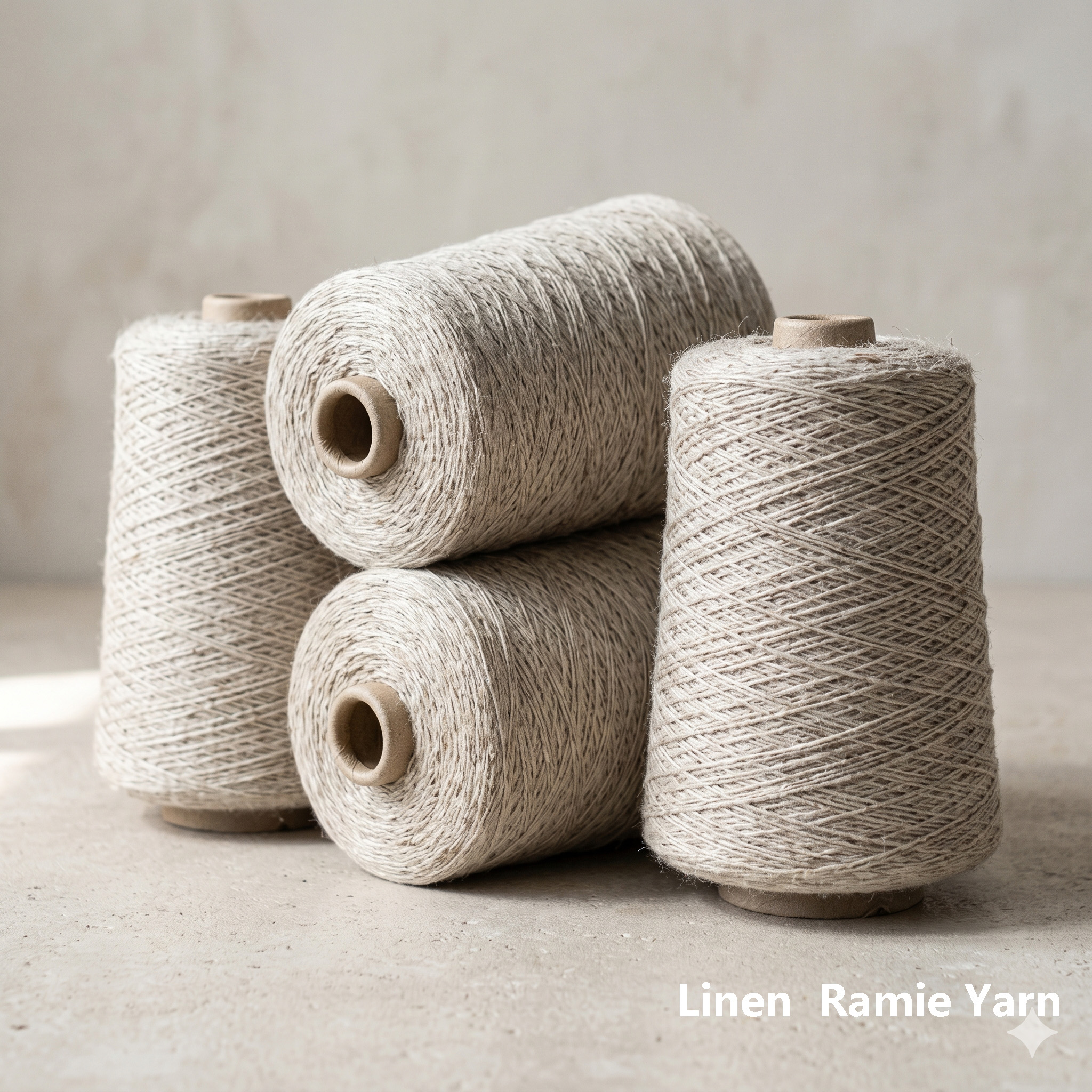
Linen and ramie base: documented examples include 2/30 NM and 2/36 NM specifications with cotton, viscose or 100% color spun linen composition.
Wool and cashmere. Wool and cashmere bases are specified where warmth retention and a high-end hand feel are the product's reason to exist, so the functional effect has to be subordinate to those properties. The wool-cashmere line documents examples such as 26/2 wool cashmere, 30% cashmere 70% wool, and 50/50 and 70/30 cotton-wool blends, with knitting, weaving, embroidery, crochet, jacquard, sewing, garment decoration and accessory development as the process list. In practice this base is paired with warmth-oriented and comfort-oriented effects — far-infrared warmth, anti-static, anti-pilling, thermal regulation — where the consumer buys the hand feel first and the function second.
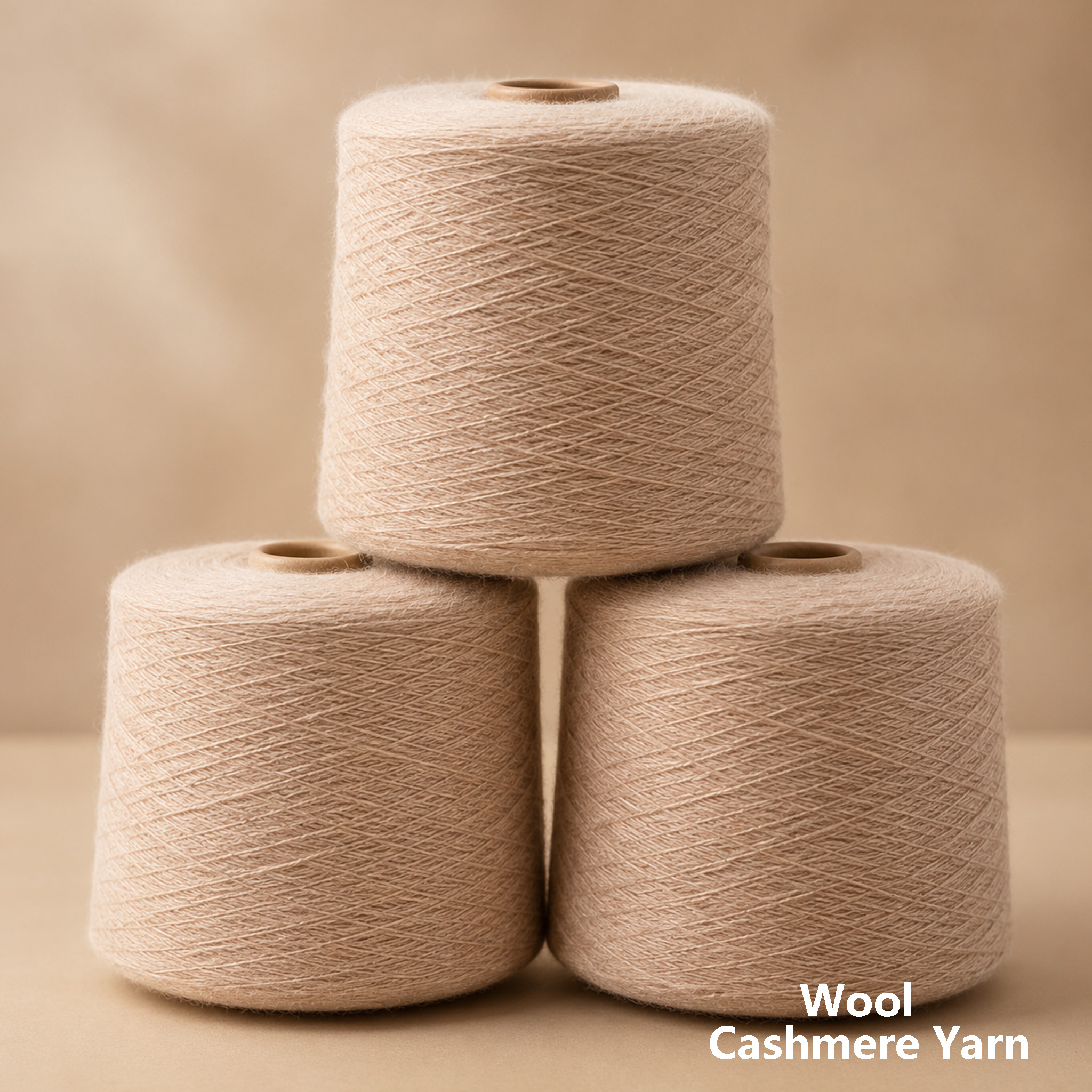
Wool-cashmere base: documented examples include 26/2 wool cashmere and 30% cashmere / 70% wool specifications.
The same platform logic extends to mohair, alpaca, Tencel, silk, paper yarn, raffia yarn, polyester, nylon, cotton blends, viscose blends, acrylic blends, fancy yarn and chenille yarn. The effect family stays constant; the specification is rebuilt each time.
Yarn count is a compatibility variable, not a size label
The 0.5/1 NM to 200/2 NM range is wide enough to cover heavy-gauge sweater yarns through fine decorative counts, but the range is a boundary, not a recommendation. Within it, three decisions follow each other:
- Match the count to the machine and the gauge. A count that suits flat knitting will not necessarily suit embroidery or jacquard at the same fabric weight.
- Match the count to the hand feel target. The documented example sets show how far apart cotton, linen and wool-cashmere specifications sit numerically even inside one mill's portfolio.
- Match the count to the effect. Decoration-oriented effects and body-oriented effects place different demands on the yarn surface, so the performance level field should be filled in together with the count.
Step-by-Step: From Base Fiber to Approved Sample
A functional yarn brief that follows this sequence usually reaches a usable sample in one round rather than three.
- Fix the end application and the process route. State whether the yarn will be knitted, woven, embroidered, crocheted, jacquard-woven, sewn, used in garment decoration, used in accessory decoration, or developed as a new product line. This single answer removes most incompatible options.
- Choose the base fiber against hand feel and wearer experience. Cotton for softness and breathability, linen for dry coolness, wool or cashmere for warmth and a premium hand feel, or a listed blend where the product needs both.
- Set the yarn count inside 0.5/1 NM to 200/2 NM. Reference the documented example specifications for the chosen fiber family and confirm the exact count with the mill rather than assuming a nearest match.
- Define the functional trigger and the target effect in testable terms. UV light, sunlight, temperature, body heat, darkness, external light, moisture, far infrared, antibacterial treatment, cooling, heating, anti-static or waterproof — the trigger must be named, and the effect described in a way a test method can address.
- Agree the color and pigment route. Natural white, black, gray, beige, custom dyed, melange, brand exclusive, or a functional color-changing effect. Note that photochromic and thermochromic effects are themselves color effects, so the base color and the activated color are two separate approvals.
- Write the durability and testing scope. State whether washable, reusable or long-lasting performance is required, and which of SGS, GTTC, GRS, OCS or third-party testing should be arranged.
- Approve the sample, then release production. Production lead time is 7–15 days, with inspection provided before shipment and small-batch customization available from 5 KG.
Use Cases: Where Base-Fiber Choice Decides the Project
Premium knitwear and sweater development. A wool-cashmere base carrying far-infrared warmth or anti-static performance is the typical cold-weather brief. The function supports the garment's existing value proposition instead of replacing it, and the process list — knitting, jacquard, sewing, garment decoration — is unchanged from the non-functional version.
Resort, summer and accessory programs. A linen or linen-cotton base carrying a photochromic or cooling effect suits daylight-dependent products: hats, bags, scarves and summer knitwear. Because the effect triggers on sunlight or UV exposure, the product's use environment is effectively part of the specification.
Decoration-heavy garment work. Cotton and cotton-blend bases are the practical choice for embroidered logos, jacquard panels and decorative trims, where the yarn is handled mechanically and the visible effect is a design feature rather than a performance claim.
Brand differentiation programs. A two-year thermochromic development for a high-end lingerie brand produced a body-temperature-responsive color change on a single product line, with the effect repeating after washing; the same body-heat trigger logic applies to apparel concepts where wearer interaction is the selling point. Separately, a two-year development program for an outdoor apparel brand produced an active heating yarn specified to perform in −20 °C environments while retaining strength and wash durability.
Multi-effect development. Where a product needs more than one property, the platform supports customized multi-functional performance, but each additional effect adds a test dimension. Two effects on one base fiber is a specification; five effects on one base fiber is a development project.
Comparison Table: Base Fiber Options for Functional Additive Yarn
| Base fiber | Documented natural character | Documented specification examples | Documented process compatibility | Documented testing support |
|---|---|---|---|---|
| Cotton | Soft touch, breathable comfort, skin-friendly wearing, smooth yarn surface, high-end cotton hand feel | 2/20 100% cotton; 2/30 100% combed cotton; 2/40 100% combed cotton; 2/50 100% Pima cotton; 2/100 long staple combed cotton | Knitting, weaving, embroidery, crochet, jacquard, sewing, garment decoration, sweater and T-shirt fabric development, home textiles | Fiber composition, yarn strength, evenness CV, neps, hairiness, color fastness, pilling resistance, shrinkage; BCI, OCS, GOTS, SGS, GTTC |
| Linen / ramie | Breathable comfort, dry touch, moisture absorption, natural plant fiber texture, cool wearing feel | 2/30 NM 55% linen 45% cotton; 2/30 NM 55% linen 45% viscose; 2/36 NM 100% color spun linen; 2/11 NM 55% ramie 45% cotton | Knitting, weaving, embroidery, crochet, jacquard, sewing, garment decoration, summer apparel, home textiles, accessories | Fiber composition, color fastness, shrinkage, pilling resistance, moisture absorption, breathability; SGS, GTTC, OEKO-TEX, GRS, OCS |
| Wool / cashmere | Soft touch, warmth retention, breathable comfort, natural fiber texture, high-end hand feel | 26/2 wool cashmere; 30% cashmere 70% wool; 50/50 and 70/30 cotton-wool blends | Knitting, weaving, embroidery, crochet, jacquard, sewing, garment decoration, accessory development | Fiber composition, color fastness, pilling resistance, dimensional stability; RWS, GRS, OCS, SGS, GTTC |
| Other listed bases | Mohair, alpaca, Tencel, silk, paper yarn, raffia yarn, polyester, nylon, cotton blends, wool-cashmere blends, viscose blends, acrylic blends, fancy yarn, chenille yarn — as listed in the YX-TECH-001 base yarn options | Customizable from 0.5/1 NM to 200/2 NM | Knitting, weaving, embroidery, crochet, jacquard, sewing, garment decoration, accessory decoration, product development | SGS, GTTC, GRS, OCS or third-party testing arranged according to buyer requirements |
Parameters Buyers Should Confirm Before Sampling
The following checklist follows the customization fields the platform actually documents. An enquiry that answers all eleven items can be costed and sampled without a second round of clarification.
| Parameter to confirm | What to state in the brief |
|---|---|
| Base fiber | One base from the listed options — cotton, linen, cashmere, wool, mohair, alpaca, Tencel, silk, paper yarn, raffia yarn, polyester, nylon or a named blend |
| Yarn count | Exact target count within 0.5/1 NM to 200/2 NM, with the reference specification if one exists |
| Functional trigger | The stimulus: UV light, sunlight, temperature, body heat, darkness, external light, moisture, antibacterial treatment, far infrared, cooling, heating, anti-static or waterproof |
| Functional effect | The visible or measurable result required, including whether the effect is single or multi-functional |
| Performance level | How strong the effect must be for the product to be sellable, expressed against a test method where possible |
| Durability target | Washable, reusable or long-lasting performance, and the number of wash cycles the claim must survive |
| Color and pigment route | Base color plus activated color where relevant; natural white, black, gray, beige, custom dyed, melange or brand exclusive |
| Hand feel and structure | Softness, elasticity, twist and structure requirements, since these are separately customizable fields |
| Process route | Knitting, weaving, embroidery, crochet, jacquard, sewing, garment decoration, accessory decoration or product development |
| Testing and certification scope | Which of SGS, GTTC, GRS, OCS or third-party testing must be arranged, and against which method |
| Order parameters | Sample quantity, target order volume against a 5 KG minimum, and the required delivery window against a 7–15 day production lead time |
Frequently Asked Questions
Which fiber-content rules apply when a functional additive is combined with a natural base fiber?
Fiber content identification applies to the declared composition of the yarn and of the finished textile. In China, GB/T 29862-2026 — the updated national standard for textile fiber content identification — replaces GB/T 29862-2013 and takes effect on 1 August 2027. For export programs, Dongguan Yuexiong Textile holds GRS, BCI and OEKO-TEX certification, and SGS, GTTC, GRS or OCS testing can be arranged according to buyer requirements. The declared composition of the base blend should therefore be settled at specification stage, before the sample is approved.
Can the same functional additive be applied across cotton, linen, wool and cashmere?
The effect family can be quoted on different bases, but the specification is rebuilt for each one. YX-TECH-001 documents cotton, linen, cashmere, wool, mohair, alpaca, Tencel, silk, paper yarn, raffia yarn, polyester, nylon and multiple blended bases as base yarn options, with the functional formula, yarn count, color, hand feel, softness, elasticity, twist, structure and performance level all listed as customizable. In practice this means a photochromic cotton brief and a photochromic cashmere brief share a trigger and an effect, but not a count, a hand feel or a process route.
What determines the minimum order and how is the quotation built?
Small-batch customization is available, with a minimum order quantity of 5 KG. Quotations are issued against a confirmed specification rather than against a catalog line, because the platform treats base material, yarn count, functional formula, color, hand feel, twist, structure and performance level as customizable fields. A brief that names the base fiber, target count, functional trigger, target effect, color route, durability target, process route and testing scope can be quoted directly; a brief that names only an effect cannot. Testing scope — SGS, GTTC, GRS, OCS or third-party — should be stated with the enquiry so it is included in the same response.
What does a sample cover, and what should I evaluate on it?
Samples are supported for function testing, color testing and product development. Because the platform's effects are trigger-based, a sample should be evaluated against the trigger named in the brief — UV or sunlight exposure for photochromic, temperature or body heat for thermochromic, darkness for luminous, direct light for reflective — and then against the base-fiber properties the product depends on: hand feel, softness, elasticity and structure. Color evaluation should separate the base color from the activated color, since these are two separate approvals on color-changing programs.
What lead time should be planned, and how is continuity handled after the first order?
Production lead time is 7–15 days, with inspection provided before shipment. Dongguan Yuexiong Textile operates a 2,000 sqm facility with 50 employees, a 20-engineer R&D team and an annual yarn output of 1,000 tons, exporting around 70% of output to global markets. After-sales support is handled remotely and covers after-sales consultation, product usage guidance, response to quality complaints and order follow-up, plus reorder assistance, sample reconfirmation and color matching so that a repeat order is matched against the approved reference rather than rebuilt from scratch. To start a specification, send the eleven parameters above to the mill and request a matched sample and quotation.
Conclusion: Specify the Fiber, Then the Effect
Functional additives work best when they are treated as one field in a specification rather than as the product itself. Cotton, linen, wool and cashmere each bring a documented natural character, a documented set of example counts and a documented process list, and the additive or pigment route is layered onto that foundation. YX-TECH-001 supports the full 0.5/1 NM to 200/2 NM count range across cotton, linen, cashmere, wool, mohair, alpaca, Tencel, silk, paper yarn, raffia yarn, polyester, nylon and blended bases, with trigger, effect, color, hand feel and durability all open to customization.
The discipline that separates a one-round sample from a three-round negotiation is simple: choose the base fiber against the wearer's experience, set the count against the machine and the process, define the trigger and effect in testable language, and agree the durability and testing scope before anything is spun. Everything else follows from those four decisions.
Request a base-fiber-matched sample
Send your base fiber, target yarn count, functional trigger and end application to MONALISHAMAGIC, and receive a matched sample and specification response for your knitwear, decoration or accessory program.
Visit monalishamagic.com Download the product catalog (PDF)Contact: alanli@monalishamagic.blmgeo.cloud · WhatsApp +86 137-1023-8299 · Room 102, No.5 Xingfeng Road, Xiangtou, Dalang Town, Dongguan City, Guangdong Province, P.R. China

Sampling support covers function testing, color testing and product development across the listed base fibers.
Have Questions or Need More Details?
Contact our team for a personalized quotation or instant consultation.
Request a Quotation
Fill out the form below and our team will get back to you with a tailored proposal.
WhatsApp Direct Chat
Prefer to chat in real-time? Message us on WhatsApp for instant assistance & quick answers.
- Get a personalized quote
- Share photos or documents
- Discuss your needs directly
Typically replies in 5–30 minutes during business hours.