Functional Yarn Reorder Readiness: An FAQ for Long-Term Supply Partners
A repeat order is not a copy of the first order. Reorder readiness is the state in which a buyer can release the second, third or fifth production run of the same functional yarn against a locked specification, accept it against written criteria and settle it against agreed terms — without reopening decisions that were already made once.
For buyers moving from research into evaluation, that readiness is usually the difference between a stable seasonal program and a run of small, avoidable mismatches. This FAQ answers the questions that actually come up at that stage: which purchasing terms to fix, which acceptance criteria to write down, how yarn count and color are re-confirmed, and which after-sales checkpoints keep a long-term supply partner aligned. Product examples refer to MONALISHAMAGIC (Dongguan Yuexiong Textile Co., Ltd.), a yarn manufacturer established in 2016 in Dongguan, China, operating a 2,000 sqm facility with 50 employees, 20 engineers, an annual output of 1,000 tons and an export ratio of 70%.
What Reorder Readiness Means in Practice
Reorder readiness is a documented state, not an impression of a supplier. A functional yarn program is ready to repeat when four conditions hold at the same time.
- The yarn identity is fixed. Yarn type, model code, base fiber and blend ratio are written in a form both parties can quote back to each other.
- The performance target is testable. The functional effect is tied to a stated check, not to a photograph of a sample garment.
- The commercial frame is agreed. Minimum order quantity, lead time, inspection point and document set are settled before the repeat order is placed.
- The after-sales route is named. Responsibility for sample reconfirmation, color matching and complaint response is assigned while the program is still calm.
When one of these is missing, the gap usually appears in the second order rather than the first, because a new project attracts a level of attention that a routine repeat does not.
Why Repeat Orders Drift
Drift is rarely a single failure. It is usually one of four documentation gaps that only becomes visible once the people who handled the first order stop handling the repeat.
- The hand-feel agreement was verbal. A buyer approved a swatch by touch; six months later the internal note says "soft" and the supplier's interpretation of soft has moved.
- Color was approved by eye on a screen. No physical standard was retained, so the second run is matched against memory instead of a reference.
- The functional effect was judged in the finished garment. If the acceptance check lives in a sewn product rather than in a yarn-level or fabric-level test, the supplier cannot reproduce the result deliberately.
- Commercial terms were renegotiated from zero. Quantity, lead time and document scope restart as a fresh conversation, which resets the timeline as well.
Each gap is closed by writing something down, which is why the specification file matters more than the sample box.
Industry Background: Why Functional Yarn Is Harder to Repeat Than a Commodity Yarn
A commodity yarn is repeatable because the specification is the product. A functional yarn carries a base fiber plus a functional route — an antibacterial finish, a reflective structure, a photoluminescent additive, a temperature-reactive pigment — and the repeat has to reproduce both. Supplier-reported product pages from several China-based manufacturers, including Dongguan Yuexiong Textile and Hefei Higreater Industrial, present photochromic, thermochromic, reflective and luminous yarns as separate commercial categories rather than variations of one item. That listing behaviour is useful for supplier mapping and RFQ design; it does not by itself verify performance, capacity or availability, which is why the acceptance criteria below stay close to test arrangements rather than to catalogue claims.
One regulatory date belongs in any repeat program that touches fiber content labeling. China's GB/T 29862-2026 standard for textile fiber content identification was issued by the Standardization Administration of China, replaces GB/T 29862-2013, and takes effect on 1 August 2027. A program that runs across that date should decide in advance how labels and fiber-content declarations will be handled, rather than discovering the change during a shipment.
The Reorder-Ready Specification File
Before the first bulk order is placed, build a single document that a new account manager could use without asking a question. Nine fields are enough.
| Field | What to write | Why it matters at reorder |
|---|---|---|
| Yarn identity | Yarn type and published model code | Prevents substitution under a generic description |
| Base fiber and blend | Fiber type and blend ratio, including any recycled component | Hand-feel and performance follow the blend, not the trade name |
| Yarn count | Exact count within the 0.5/1NM–200/2NM customizable range | A count change alters gauge, drape and fabric weight |
| Color | Physical retained standard plus the color family requested | Removes eye-matching and screen-matching disputes |
| Functional parameter | The effect required and the check used to accept it | Makes the effect reproducible instead of descriptive |
| Application process | Knitting, weaving, embroidery, crochet, jacquard or sewing route | Process affects how the yarn must be finished and packed |
| Test arrangement | Which party tests, on what, and which report is issued | Turns acceptance into an event with a date |
| Packing and labeling | Carton format, label content, destination-market wording | Avoids reworking goods that are already correct |
| Commercial terms | MOQ, lead time, inspection point, document set | Keeps the repeat on the same footing as the first order |
Seven Checkpoints Before You Release a Repeat Order
The sequence below follows the order in which mismatches usually surface, so each checkpoint closes a gap before the next one opens.
1. Re-freeze the yarn identity
Quote the yarn type and model code exactly as they appeared on the first order. MONALISHAMAGIC publishes model identifiers across its functional ranges — YX-WASH-001 for machine washable antibacterial yarn, YX-REFLECT-001 for reflective yarn, YX-GLOW-001 for luminous yarn and YX-UV-001 for photochromic yarn. A reorder that describes the yarn as "the glow one" gives both sides room to interpret, and interpretation is where substitution begins.
2. Re-confirm count and blend
Yarn count is customizable from 0.5/1NM to 200/2NM across the functional and natural-fiber ranges, and the count is only meaningful together with the blend. Cotton ranges, for example, are commonly quoted at 2/20, 2/30, 2/40, 2/50 and 2/100 in 100% cotton, combed cotton and Pima cotton builds; linen and ramie ranges are quoted at constructions such as 2/30NM 55% linen 45% cotton. Holding the count constant while the blend moves does not reproduce the first order — it produces a different yarn at the same gauge.
3. Re-confirm color against a retained standard
Color options are specific to each yarn type, which is why a retained physical standard beats a written color name. The functional ranges offer natural white, black, gray and beige alongside custom dyed and brand-exclusive colors. Luminous yarn is specified by glow color — green, blue, yellow-green or aqua — as well as by its base color. Denim-style yarn runs on indigo, dark indigo, light denim blue, washed blue and vintage blue. Natural-fiber ranges such as linen, ramie and paper yarn use natural, ivory, beige, oatmeal and khaki tones plus melange and color-spun options. None of these families can be re-matched reliably from a name alone.
4. Re-confirm the functional target and its test route
Ask which check will be used to accept the effect, and confirm that the same check will run on the repeat. Testing support is arranged according to buyer requirements: SGS, GTTC or third-party antibacterial and wash-resistance testing for machine washable antibacterial yarn; pilling resistance and anti-static performance testing for anti-pilling and anti-static yarn; fiber composition, color fastness, shrinkage, pilling resistance and tensile strength for the natural-fiber ranges; and glow-effect or reflective-effect testing for the corresponding functional yarns.
5. Re-run a pre-production sample
Sample reconfirmation is a normal part of reorder support rather than a sign that the relationship has restarted. Sampling is available for hand-feel and fabric development, for antibacterial effect testing, for glow-effect testing and for reflective-effect testing, depending on the yarn. The purpose at reorder is narrower than at first approval: confirm that today's production matches the retained standard, not that the yarn is acceptable in principle.

6. Confirm the commercial frame and capacity slot
The documented terms are a minimum order quantity of 5 KG with small-batch customization available, a lead time of 7–15 days, a monthly capacity of 1,000 tons and an annual output of 1,000 tons under an OEM/ODM model. Confirm those terms again for the repeat rather than assuming the first quotation still governs, especially where the quantity, color set or packing format has changed.
7. Write acceptance and after-sales checkpoints into the order
Inspection is provided before shipment. Put that inspection point, the document set and the named after-sales route into the order confirmation, so acceptance is a scheduled step rather than an argument after arrival.
Specifying Each Yarn Type for a Repeat Program
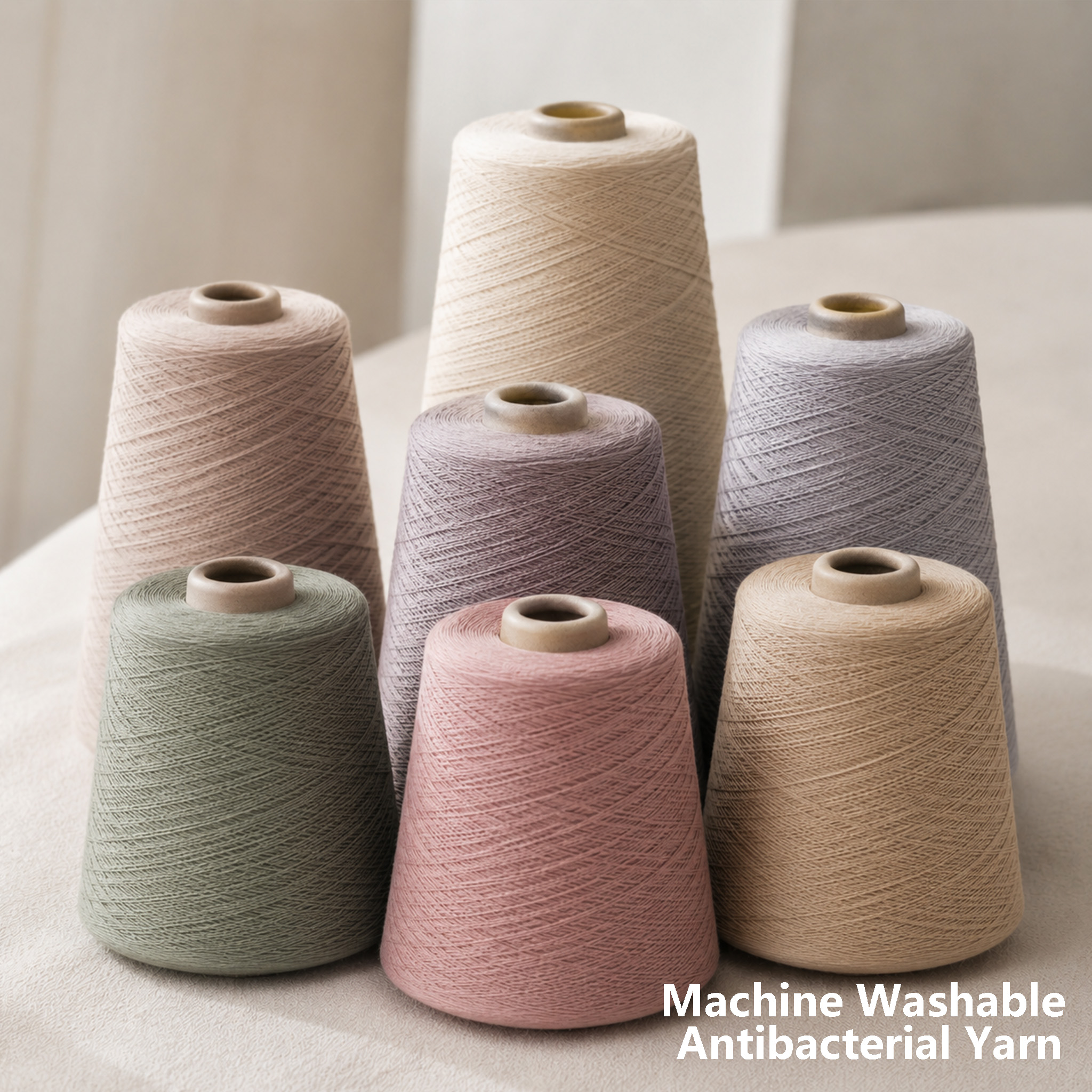
Machine Washable Antibacterial Yarn (YX-WASH-001)
This yarn combines an antibacterial finishing route with a construction intended for machine washable textile applications. The distinction that matters at reorder is between "designed for machine washable applications" and a guaranteed number of wash cycles: wash durability depends on the base material, the process and the testing requirements agreed for the order. Specify the base fiber, the intended wash regime and the acceptance test, then let the test result — not the catalogue description — define the repeat standard.
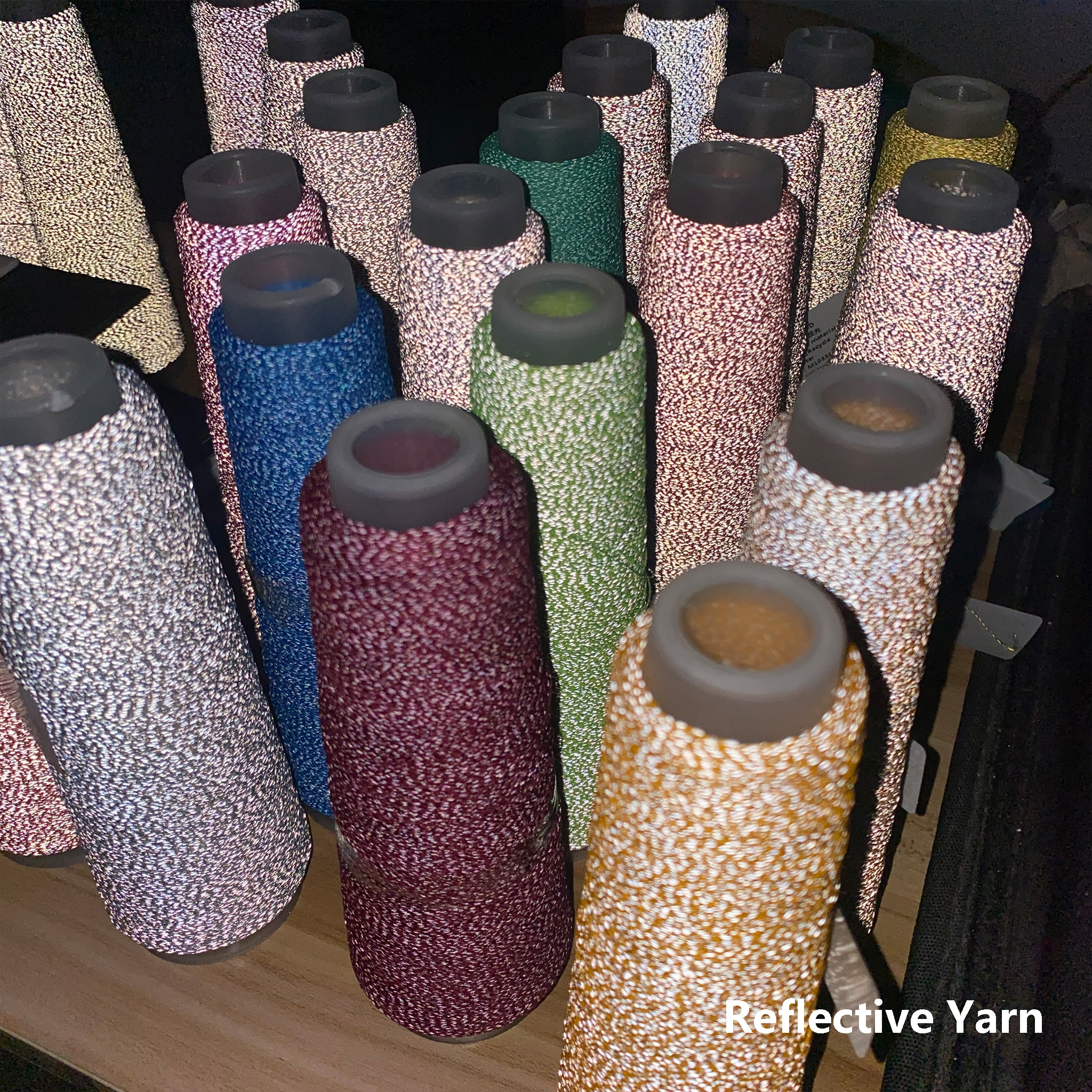
Reflective Yarn (YX-REFLECT-001)
Reflective yarn returns light in dark or low-light conditions when exposed to a light source such as vehicle headlights or a flashlight. Because the construction can take several forms — reflective film yarn, reflective coated yarn, reflective covered yarn, reflective embroidery thread, reflective sewing thread or recycled reflective polyester yarn — the structure must be part of the reorder specification. Available specifications include fine denier reflective yarn, 2/30D, 2/70D, 2/150D high-strength reflective yarn and 1/14.5NM recycled reflective polyester yarn. Two orders for "reflective yarn" in different structures will not look or perform the same in the finished trim.
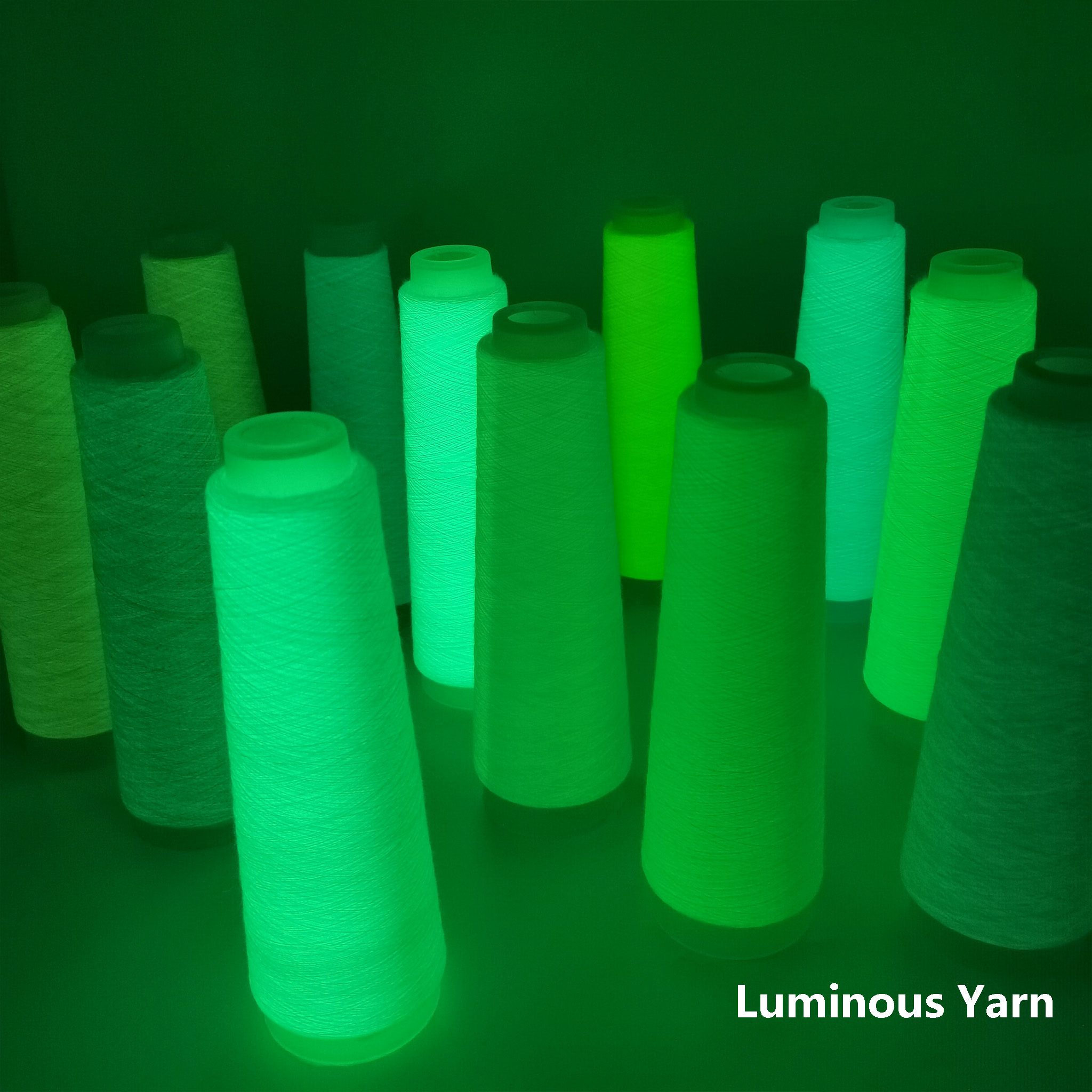
Luminous Yarn (YX-GLOW-001)
Luminous yarn absorbs light under daylight, artificial light or UV exposure and then glows in dark or low-light conditions, with a reusable absorption-and-glow cycle that needs no electricity. For a repeat program, the two parameters to lock are glow color and the intended charging environment, because both are part of what the buyer approved. Current application guidance also notes that functional products may be affected by high temperatures and prolonged sun exposure, so storage and end-use conditions belong in the specification rather than in a general disclaimer.
Thermochromic and Photochromic Yarn
Thermochromic yarn responds to temperature and photochromic yarn responds to light, and the two are presented as distinct commercial categories by suppliers in this segment. Photochromic yarn carries the model identifier YX-UV-001. For either type, a repeat program should record the trigger condition the buyer actually cares about — body heat, ambient temperature, sunlight or UV — and accept the effect against a retained reference rather than a description. Longer programs are also where effect durability is tested: a two-year thermochromic application for a high-end lingerie brand is recorded as depending on color-change performance that survives repeated washing, which is exactly the property a reorder must re-verify.
Base Fiber Choice Across the Natural-Fiber Ranges
Functional routes sit on top of a base yarn, and the base is often what a buyer's customer actually feels. The wider portfolio spans cotton, combed cotton, Pima cotton, linen and ramie, mulberry silk, acetate, yak down, paper and washi yarn, denim-style indigo yarn and wool cashmere blends, with documented count examples in each range. If the base fiber changes between seasons, the program is a new development rather than a repeat, and the acceptance criteria should be rewritten accordingly.
Comparing Reorder Risk by Yarn Type
The table below maps what each functional type usually locks at first approval against what most often needs re-confirmation before a repeat ships.
| Yarn type and model | What the first order typically fixes | What to re-confirm before each repeat | Where drift commonly appears |
|---|---|---|---|
| Machine Washable Antibacterial Yarn (YX-WASH-001) | Base fiber, count, antibacterial route | Wash regime, acceptance test, base material | Test method changes while the claim stays the same |
| Reflective Yarn (YX-REFLECT-001) | Reflective structure and specification | Structure type, denier or count, trim position | Same category, different construction |
| Luminous Yarn (YX-GLOW-001) | Glow color and base color | Glow color, charging environment, storage conditions | Glow color matched by name only |
| Photochromic Yarn (YX-UV-001) | Light trigger and color pair | Trigger condition, color pair, retained reference | Effect judged outdoors only, never against a standard |
| Thermochromic yarn | Temperature trigger and color pair | Trigger range, color pair, wash durability check | Effect accepted once and never re-tested |
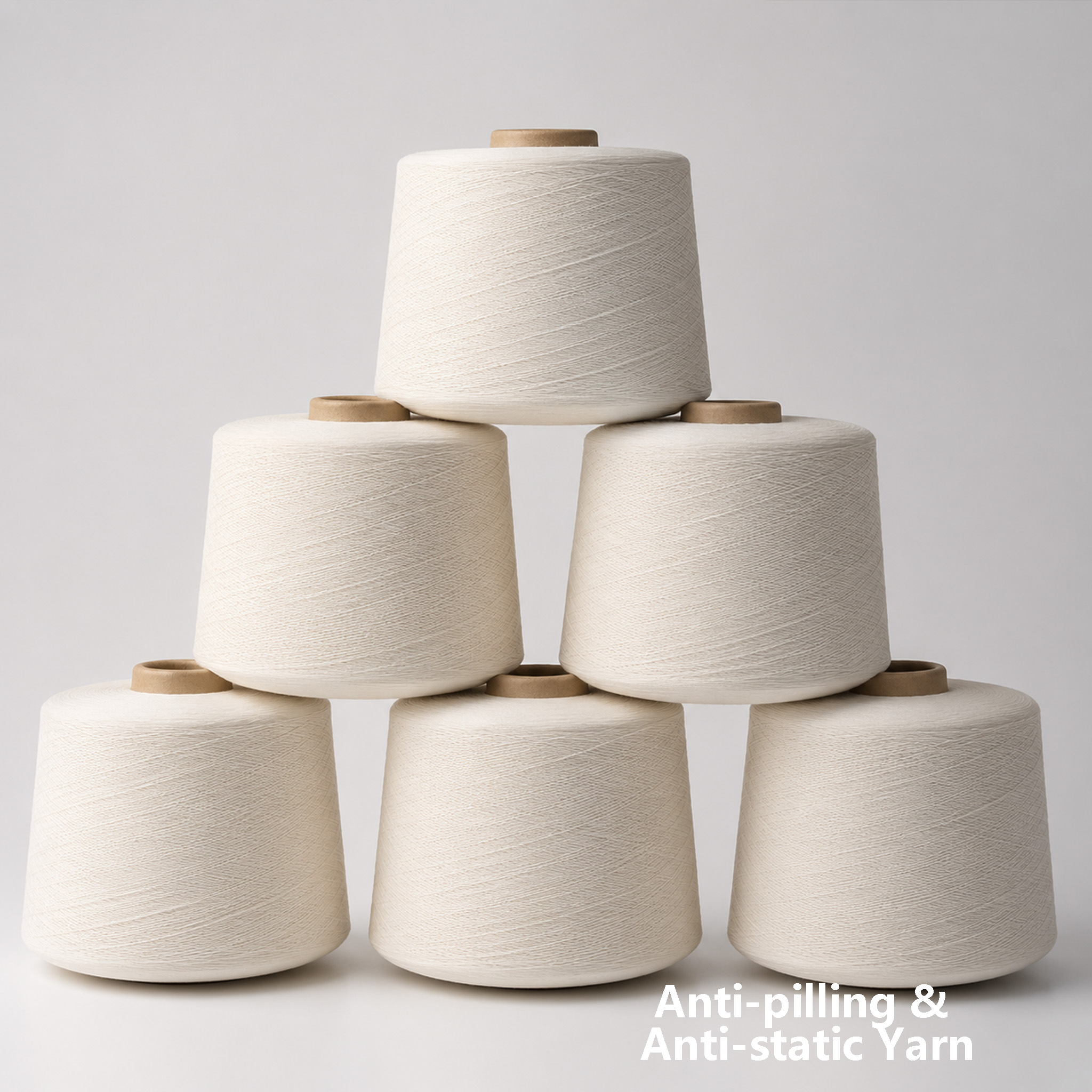
| Anti-pilling and anti-static yarn (YX-FUNC-001) | Base material and finishing route | Pilling and static acceptance tests | Surface appearance judged by photograph |
Acceptance Criteria: What to Put in Writing
Acceptance criteria convert an expectation into a decision rule. For a functional yarn repeat order, seven items cover most disputes.
- Composition and count. Fiber content by percentage and the exact yarn count, stated in the same notation used on the first order.
- Color reference. A retained physical standard, plus the lighting condition under which the match is judged.
- Functional target. The effect required and the agreed check — for example an antibacterial and wash-resistance test arranged through SGS or GTTC, or a pilling-resistance test for an anti-pilling construction.
- Sample status. Which sample, from which production period, was approved and is now the reference.
- Inspection point. Inspection provided before shipment, with the party responsible for releasing the goods.
- Document set. Certification and compliance documents to be supplied with the shipment — GRS, BCI or OEKO-TEX documentation as applicable to the program, plus scheme documentation such as FSC, GRS or OCS for paper-based yarns.
- Labeling and destination wording. Fiber-content declarations prepared for the destination market, with the China GB/T 29862-2026 transition date of 1 August 2027 considered in advance where relevant.
A boundary worth stating plainly: certification and testing documents are supplied for the program agreed with the buyer and are arranged according to the buyer's requirements. They are not a blanket guarantee of performance in an unstated application, and they do not replace the acceptance criteria written into the order.
After-Sales Checkpoints That Keep a Repeat Program Stable
After-sales support is where a long-term supply relationship is either maintained or quietly eroded. The documented support scope for repeat buyers includes remote support and product usage guidance, timely response to quality complaints and order follow-up, reorder assistance, sample reconfirmation and color matching support, logistics and transportation tracking with risk control consultation, supply of certification and compliance documents such as GRS, BCI and OEKO-TEX, and consultation on functional yarn performance and durability.
Turn that list into a calendar rather than a promise. Reorder assistance belongs four to six weeks before the production slot; sample reconfirmation belongs before the bulk release; color matching belongs with the retained standard, not with a screen; logistics tracking belongs at dispatch; and the performance consultation belongs whenever the end-use or wash regime changes. A program that uses these checkpoints in sequence accumulates a documented history, and that history is what makes the fifth order easier than the second.
FAQ: Reorder Questions from Long-Term Supply Partners
Which purchasing terms should be fixed before the first bulk order so a reorder stays predictable?
Fix six terms: minimum order quantity, lead time, inspection point, document set, pricing basis and customization scope. The documented terms for MONALISHAMAGIC are a 5 KG MOQ with small-batch customization available, a 7–15 day lead time, inspection provided before shipment, OEM/ODM customization of yarn composition, color, specification and functional parameters, and certification and compliance document supply. Fixing them at first order means the repeat is a scheduling task instead of a negotiation.
What acceptance criteria belong in a functional yarn repeat order?
Composition and count, a retained physical color standard, the functional target with its agreed test method, the approved sample reference, the pre-shipment inspection point, the document set and destination labeling. Criteria work when each item can be answered yes or no by someone who did not attend the original sampling meeting.
How do we keep yarn count and color consistent across reorders?
State the count in the same notation as the first order within the customizable 0.5/1NM to 200/2NM range, and hold the blend ratio beside it. For color, retain a physical standard and use the supplier's color-matching support at reorder rather than re-describing the shade. Families differ by yarn type — natural white, black, gray and beige plus custom and brand-exclusive colors on the functional ranges; green, blue, yellow-green and aqua glow colors on luminous yarn; indigo and washed blues on denim-style yarn.
Can machine washable antibacterial yarn be specified for a multi-season repeat program?
Yes, with the right qualifiers. Machine Washable Antibacterial Yarn (YX-WASH-001) uses an antibacterial finishing route and is designed for machine washable textile applications, with antibacterial and wash-resistance testing arranged through SGS, GTTC or a third party according to buyer requirements. Because wash durability depends on the base material, the process and the agreed testing, the repeat specification should name the base fiber, the wash regime and the acceptance test rather than assuming a fixed cycle count.
How should reflective, luminous and thermochromic yarns be re-specified so the effect stays the same?
Re-specify the parameter that creates the effect, not the category. For reflective yarn, that means the structure — film, coated, covered, embroidery thread, sewing thread or recycled reflective polyester — plus the denier or count. For luminous yarn, it means the glow color and the charging environment. For thermochromic and photochromic yarn, it means the trigger condition and the approved color pair, checked against a retained reference. Note also that functional products may be affected by high temperatures and prolonged sun exposure, so storage and end use belong in the specification.
What MOQ and lead time apply to a repeat order?
The documented position is a 5 KG minimum order quantity with small-batch customization available and a 7–15 day lead time, supported by a monthly capacity of 1,000 tons and an annual output of 1,000 tons. Confirm both figures against the specific repeat, since color set, packing format and quantity can change the scheduling picture even when the yarn itself does not change.
Which documents support acceptance and customs clearance on a repeat shipment?
The document set follows the program. Compliance documents such as GRS, BCI and OEKO-TEX are supplied as applicable, paper-based yarns can be supported with FSC scheme documentation, and third-party test reports from SGS or GTTC can be arranged for functional performance and wash resistance. For fiber content labeling, China's GB/T 29862-2026 standard takes effect on 1 August 2027 and replaces GB/T 29862-2013, so programs crossing that date should agree label wording in advance.
What after-sales support applies once a program becomes a repeat program?
The documented after-sales scope covers remote support and product usage guidance, timely response to quality complaints and order follow-up, reorder assistance with sample reconfirmation and color matching support, logistics and transportation tracking with risk control consultation, certification and compliance document supply, and consultation on functional yarn performance and durability. If you are preparing a repeat order and want the specification reviewed before release, you can request a sample reconfirmation or download the MONALISHAMAGIC product brochure and compare it against your retained standard.
Conclusion: Build the Repeat Before You Need It
Reorder readiness is decided in the quiet period between the first shipment and the second purchase order. The work is unglamorous — one specification file, one retained color standard, one agreed test method, one written acceptance list and one named after-sales route — but it is what allows a functional yarn program to keep the performance that was approved rather than approximating it.
For buyers evaluating long-term supply partners, the useful question is not whether a supplier can produce a striking sample. It is whether the supplier can document the same yarn, the same terms and the same checks a year later. MONALISHAMAGIC publishes its functional ranges with model identifiers, count ranges, color families, application processes and testing arrangements, which gives a repeat program something concrete to reference; the company website lists the full portfolio. Combine that with an acceptance list of your own, and the second order stops being a risk and becomes a routine.
Next step for a repeat program
Send the yarn type, model code, count, retained color standard and intended application process, and request a reorder sample for reconfirmation. The product brochure can be downloaded for internal reference.
Have Questions or Need More Details?
Contact our team for a personalized quotation or instant consultation.
Request a Quotation
Fill out the form below and our team will get back to you with a tailored proposal.
WhatsApp Direct Chat
Prefer to chat in real-time? Message us on WhatsApp for instant assistance & quick answers.
- Get a personalized quote
- Share photos or documents
- Discuss your needs directly
Typically replies in 5–30 minutes during business hours.