Functional Yarn for Repeat-Wash Uniform and Home Textile Programs: An Application Guide
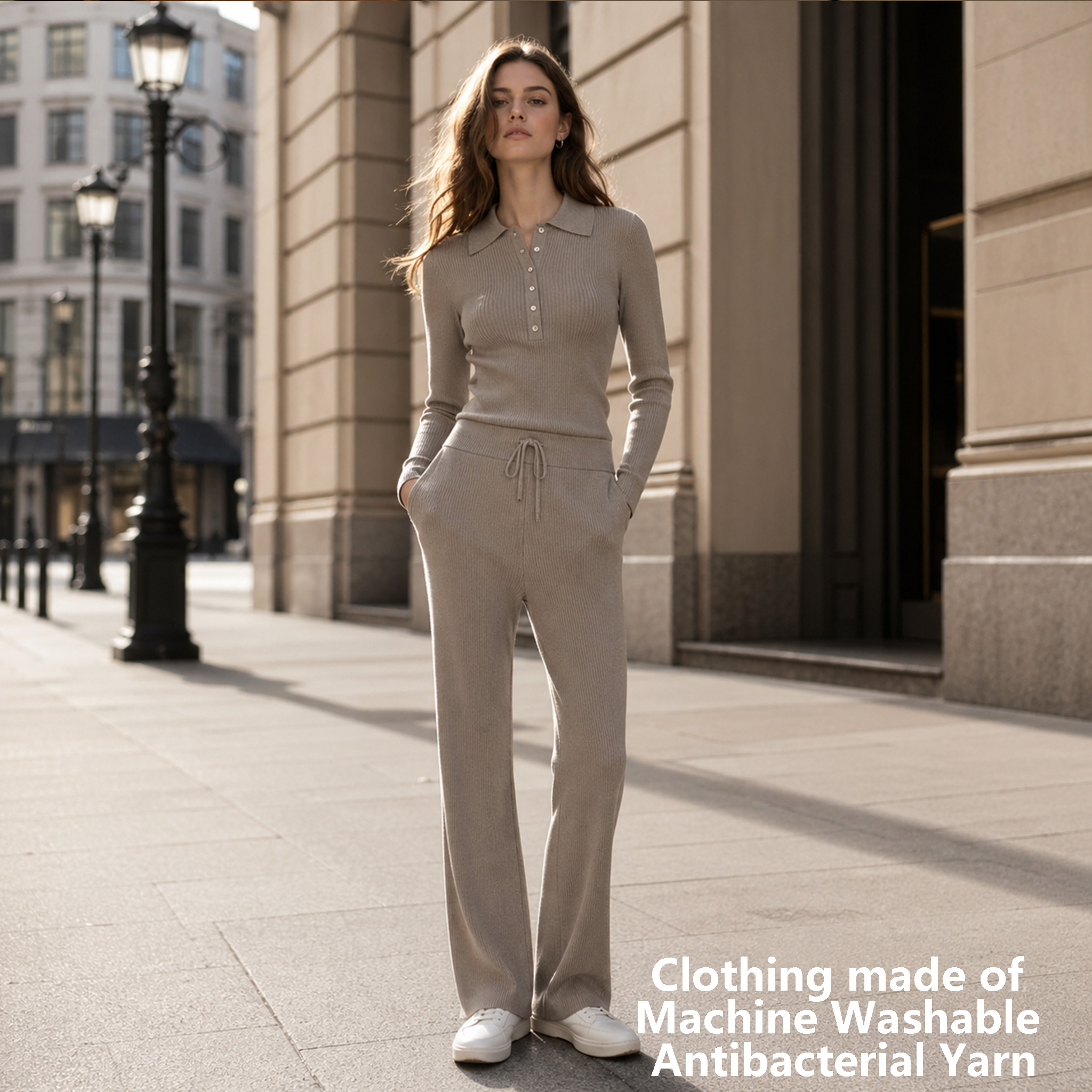
For a uniform programme or a home textile range that will be laundered many times over its service life, the yarn decision is a wash-durability decision before it is a feature decision. Three yarn roles cover most repeat-wash projects at MONALISHAMAGIC: machine washable antibacterial yarn YX-WASH-001, chosen where soft hand feel and wearable comfort have to hold up under repeated machine washing; waterproof antibacterial yarn YX-FUNC-001, chosen where surface wetting and hygiene drive the brief; and anti-pilling and anti-static yarn attributes, chosen where the complaint is fuzzing, pills or static cling.
Each of those roles is a starting point, not a guarantee. The wash performance of a finished article depends on the washing machine and cycle actually used, the base material, the spinning and finishing process, and the testing requirements agreed for the order. This guide shows how to match the yarn to the programme, how to set count and colour, and how to build a pilling and static test plan that a buyer, a laundry manager or a brand quality team can actually use.
What a repeat-wash programme really asks of a yarn
A uniform or a hotel bedding set is not judged at delivery. It is judged after twenty washes, when the collar has started to fuzz, the sheet has gone thin, the colour has drifted, or the fabric clings when it is folded. That is the moment the yarn specification is really tested, and it is the moment at which most programmes discover whether their functional claim was attached to the right material.
Repeat-wash programmes usually fail at one of three points:
- The functional role was never defined by failure mode. A buyer asks for “antibacterial yarn” when the real complaint is odour retention in synthetic-rich knits, or asks for “waterproof yarn” when the real complaint is a damp hem on an outdoor jacket. The yarn type and the failure mode have to match.
- The base fibre and the functional finish were treated as one decision. Antibacterial finishing, water-repellent finishing and anti-static performance are applied to a base yarn, and the base yarn determines hand feel, pilling behaviour and how the finished article drapes. The base is a separate choice.
- The wash route was never written down. A yarn qualified on a gentle domestic cycle is not automatically qualified on an industrial laundry line, and the reverse is also true. The yarn brief has to state the wash route it is being qualified against.
Industry background: documented yarn is becoming the procurement baseline
Uniform and home textile buyers are being pushed toward yarn-level documentation from two directions at once: market scale and labelling discipline.
On scale, Fortune Business Insights reports the global textile yarn market at USD 117.1 billion in 2025 and projects USD 121.99 billion in 2026, rising to USD 170.32 billion by 2034. That figure covers natural, synthetic and blended textile yarn as a whole; it is not a functional-yarn-only number, and it should be read as broad category context rather than as a measure of the functional segment.
On labelling, the Standardization Administration of China issued GB/T 29862-2026 for textile fibre content identification, which replaces GB/T 29862-2013 and takes effect on 1 August 2027, as reported by SGS. For any programme sold into the Chinese market, fibre-content declarations on the finished article have to be traceable back to what was actually spun into the yarn — blended programmes are the ones most exposed, because a blended base makes a blended declaration.
The practical consequence for buyers is simple: the yarn supplier now has to supply composition, count, colour and test documentation as part of the commercial offer, not as a favour after the purchase order. MONALISHAMAGIC works with GRS, BCI and OEKO-TEX certification and offers SGS, GTTC or third-party testing arranged according to buyer requirements, which is the level of documentation a repeat-wash programme needs to assemble a compliance file.
Matching the yarn to the part of the programme it has to protect
Repeat-wash programmes are rarely one article. A uniform programme typically contains a shirt or polo, a trouser or skirt, and often a knit layer; a home textile range typically contains bedding, towels and throws. Different articles in the same programme fail differently, so a single yarn across the whole range is usually the wrong answer.
YX-WASH-001: machine washable antibacterial yarn for skin-contact, frequently laundered articles
Machine washable antibacterial yarn YX-WASH-001 is the default choice where the article touches skin, is laundered most often, and has to stay comfortable. Its antibacterial finishing inhibits bacterial growth and helps keep textile products cleaner and fresher, while the response effect is described as antibacterial protection with a soft hand feel and wearable comfort — the combination that matters when a polo shirt or a bedsheet is judged on how it feels rather than on how it tests.
The yarn is built on a wide base-fibre menu: cotton, linen, cashmere, wool, mohair, alpaca, Tencel, silk, paper yarn, raffia yarn, polyester, nylon and blended bases such as cotton blends, wool-cashmere blends, viscose blends and acrylic blends. That range matters for repeat-wash work because the base fibre sets the hand feel and the pilling tendency, and the antibacterial treatment is then carried on top of a base chosen for the article.
Documented applications include uniforms, workwear, bedding, towels and home textiles, alongside knitwear, children’s clothing, underwear and socks. Testing support covers SGS, GTTC or third-party antibacterial and wash-resistance testing arranged according to buyer requirements.
YX-FUNC-001: waterproof antibacterial yarn for surface-wetting and hygiene briefs
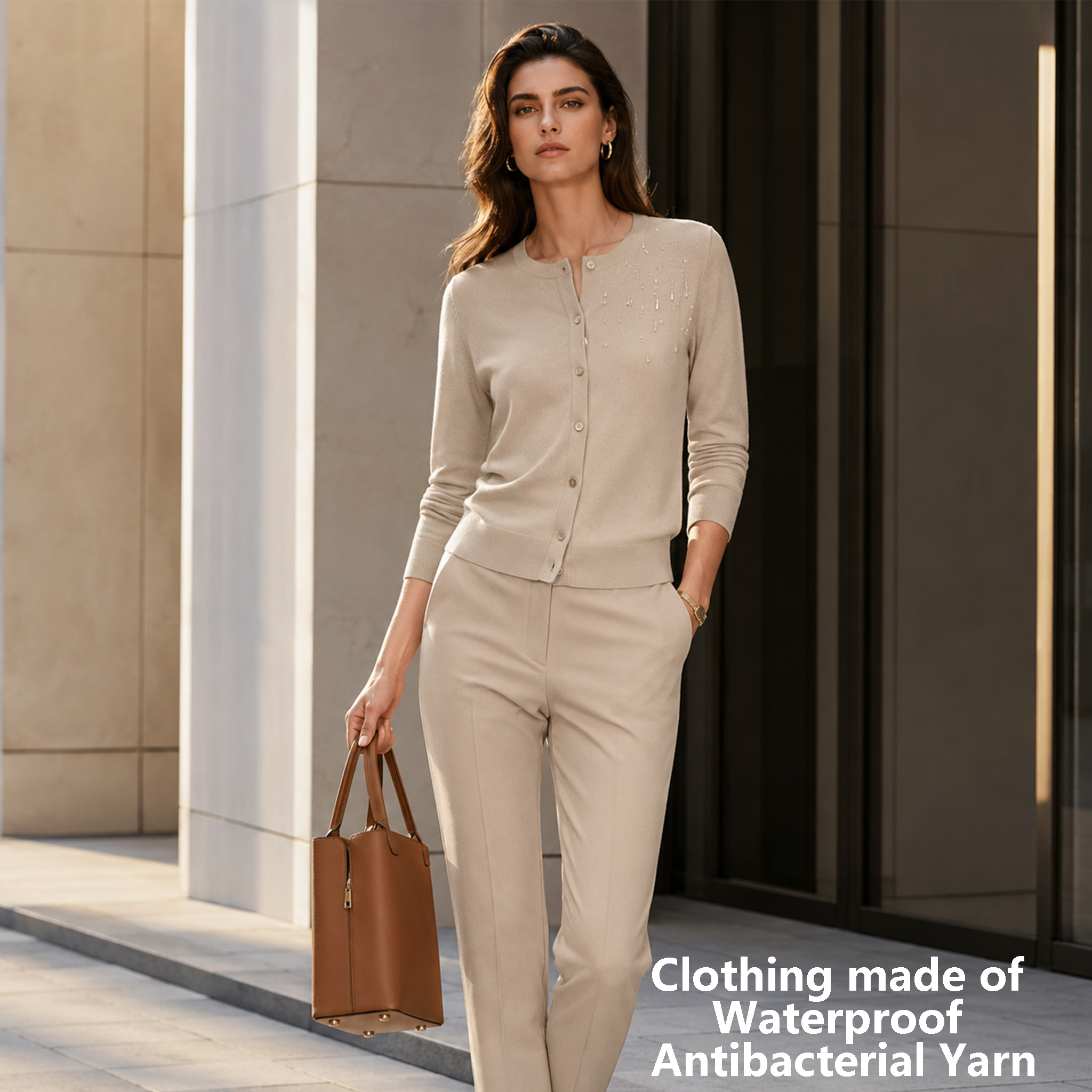
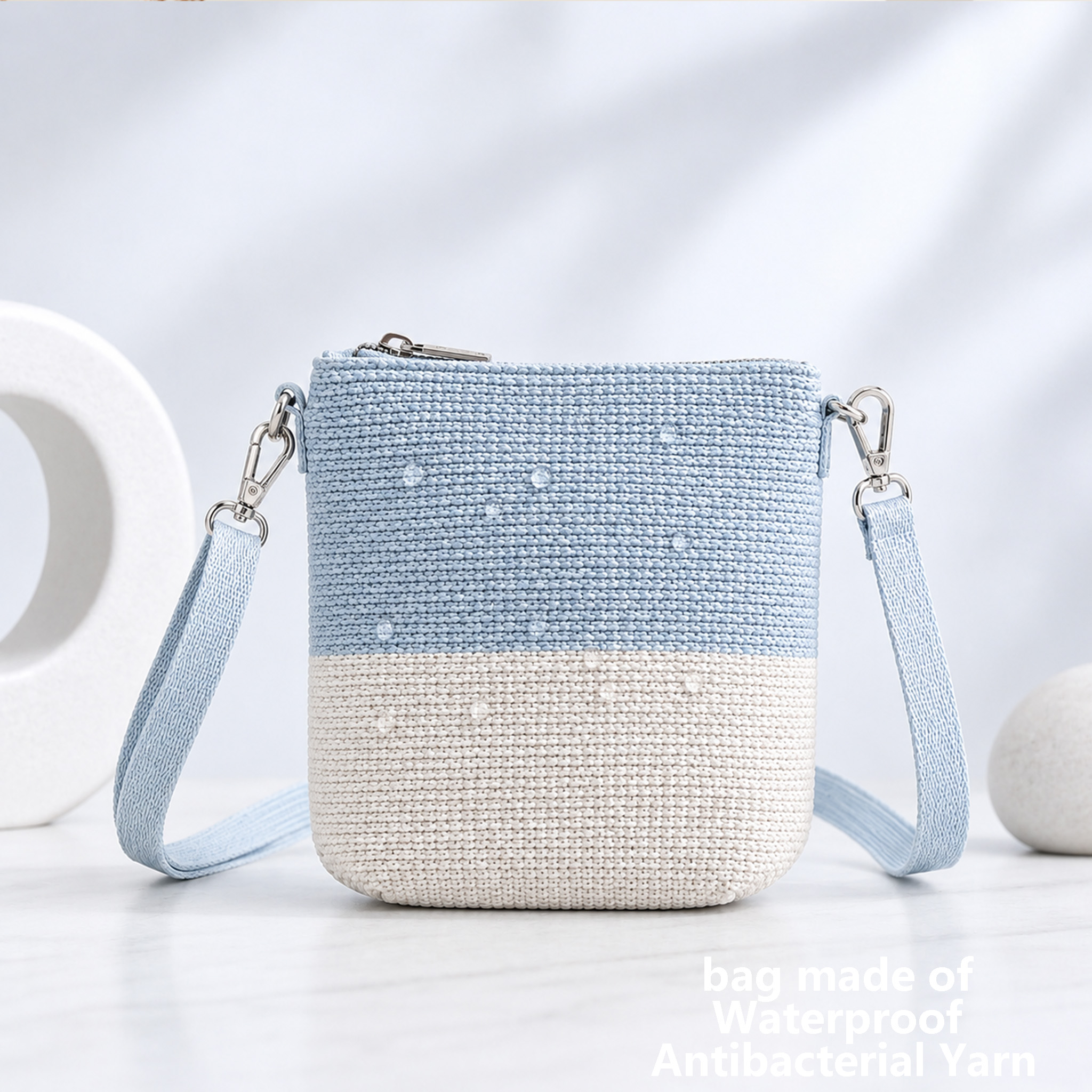
Waterproof antibacterial yarn YX-FUNC-001 answers a different question. It combines water-repellent finishing with antibacterial finishing, and it is positioned to help reduce water absorption and surface wetting in light rain, splashes and daily outdoor environments while inhibiting bacterial growth. It is not a replacement for the washable antibacterial yarn in a light knit; it is the right candidate when the article has to shed a splash.
Hand feel is still part of the brief — the response effect is described as a water-repellent surface effect with antibacterial protection, soft hand feel and wearable comfort — but the surface behaviour is the priority. Typical applications include workwear, uniforms, outdoor clothing, rainwear, travel apparel and home textiles. Durability is described as washable, with long-lasting performance customizable according to material, process and testing requirements, and testing support covers water repellency, antibacterial performance and washing durability through SGS, GTTC, AATCC, GB/T or third-party testing.
Anti-pilling and anti-static attributes: the complaint-driven choice
Pilling and static are the two complaints that make a laundered article look older than it is. Anti-pilling and anti-static yarn attributes address exactly that: reducing the surface fuzz and pills that form as loose fibres work free during washing and wear, and limiting the static build-up that makes a knitted uniform cling and crackle in dry conditions.
These are described as customizable attributes rather than fixed values — anti-pilling, anti-static and easy-care performance can be customized according to material, spinning process and testing requirements. That framing is important for specification: a buyer cannot simply order “anti-static” and expect a number. The buyer has to state the test method, the acceptance level and the wash stage at which the result will be checked, and the yarn specification is then built to that target.
A step-by-step matching process for uniform and home textile programmes
The following sequence is the workable order of decisions. It puts the wash route first and the functional claim last, which is the reverse of how most briefs arrive.
Step 1 — Write the wash route down before choosing anything
Record the machine type, the cycle, the load composition and the drying method that the finished article will actually see. A corporate uniform laundered in a shared industrial line and a retail bedding set laundered at home are two different qualifications, even if the fabric is identical. Because repeated machine washing depends on material, process and testing requirements, this step defines what “repeat-wash” means for this specific order, and it becomes the reference point for every later test.
Step 2 — Assign the functional role by failure mode, article by article
Map each article in the range to the failure it must resist. Hygiene and freshness on skin-contact articles point to YX-WASH-001. Surface wetting and hygiene on outer or splash-exposed articles point to YX-FUNC-001. Fuzzing, pilling and cling across either category point to anti-pilling and anti-static attributes. If one article carries two failure modes, decide which one governs the purchase and treat the second as a secondary requirement — otherwise the specification drifts and the testing plan cannot be closed.
Step 3 — Choose the base fibre and count against the end article
Base fibre selection is where hand feel, drape and pilling tendency are actually fixed. Cotton and cotton blends suit skin-contact shirting and bedding; linen and linen blends suit warm-weather uniforms and table linen; wool, cashmere, yak down and silk bases suit premium knit layers and throws; polyester and nylon bases suit strength-led articles and outdoor-linked pieces. Once the base is chosen, set the count.
Step 4 — Lock count and colour customization
Count is customizable from 0.5/1NM to 200/2NM, and colour is customizable across natural white, black, grey, beige, custom dyed colours, custom blended colours and brand colour matching for YX-WASH-001, with camel and melange options available on YX-FUNC-001. Lock these two variables before sampling, because a late count change reopens both the hand feel and the test plan.
Step 5 — Define the pilling and static test plan in writing
Agree the test method, the sample stage (greige yarn, finished fabric or washed garment), the number of wash cycles after which the result is measured, and the acceptance level. Pilling resistance and anti-static testing can be arranged through SGS, GTTC or a third-party laboratory according to buyer requirements. Put the same table into the purchase order and into the compliance file so that a later reorder is checked against the same criteria.
Step 6 — Pilot, wash, re-test, then scale
Build a pilot in the actual base fibre and colour, put it through the wash route recorded in Step 1, and re-test pilling, static, hand feel and colour after washing. Only then move to bulk. The reorder stage should reuse the approved sample as the reference, with colour matching and sample reconfirmation confirmed against it.
Count and colour: what is actually customizable
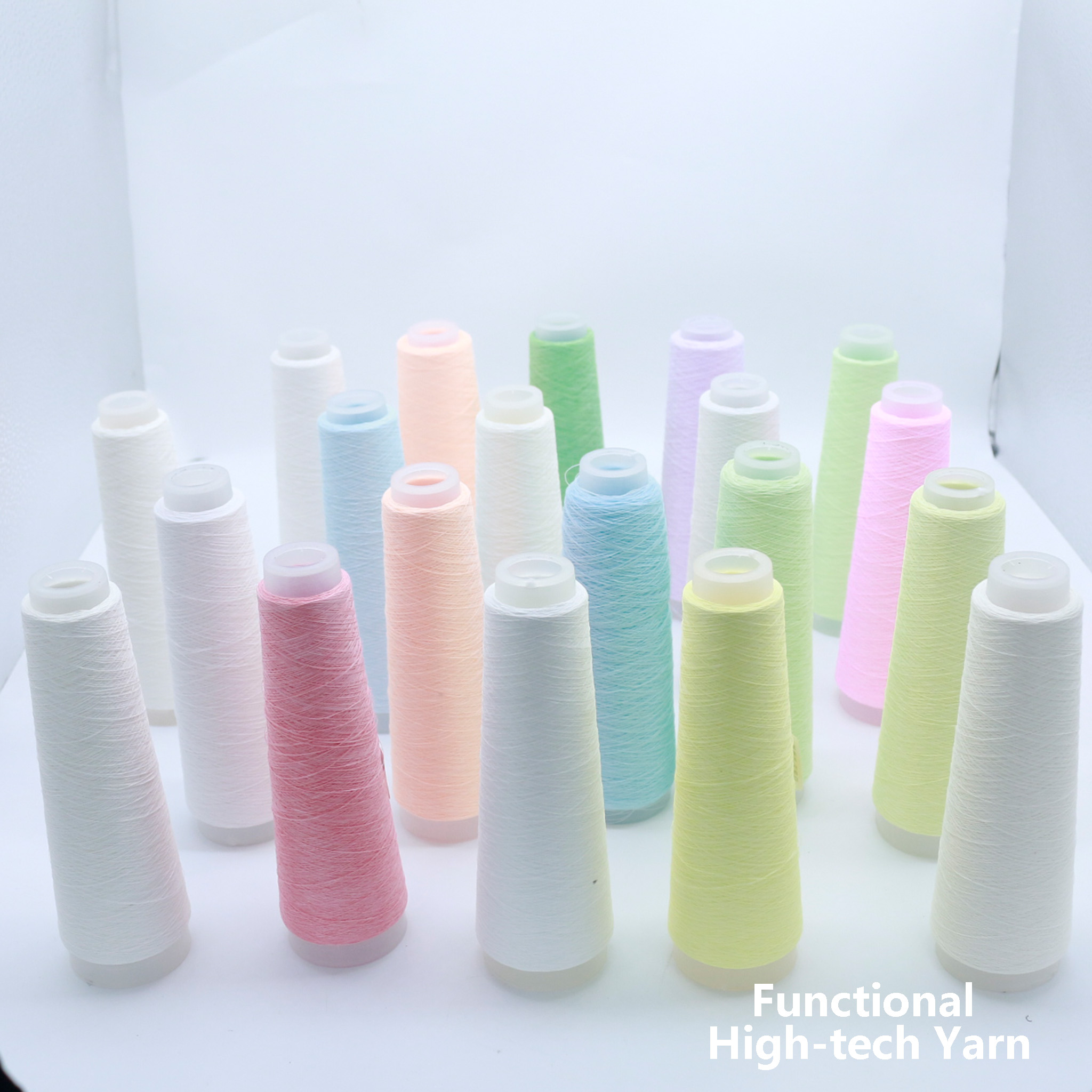
Count is customizable from 0.5/1NM to 200/2NM across the functional yarn range. In practice, a higher NM number denotes a finer yarn and a lower NM number a coarser one, so the two ends of that range serve different articles: fine counts for lightweight knit tops and sheeting, coarser counts for throws, blankets and heavier knit structures. The count also interacts with pilling — a loose, low-twist structure pills more readily than a tightly spun one — which is why count and pilling testing belong in the same conversation.
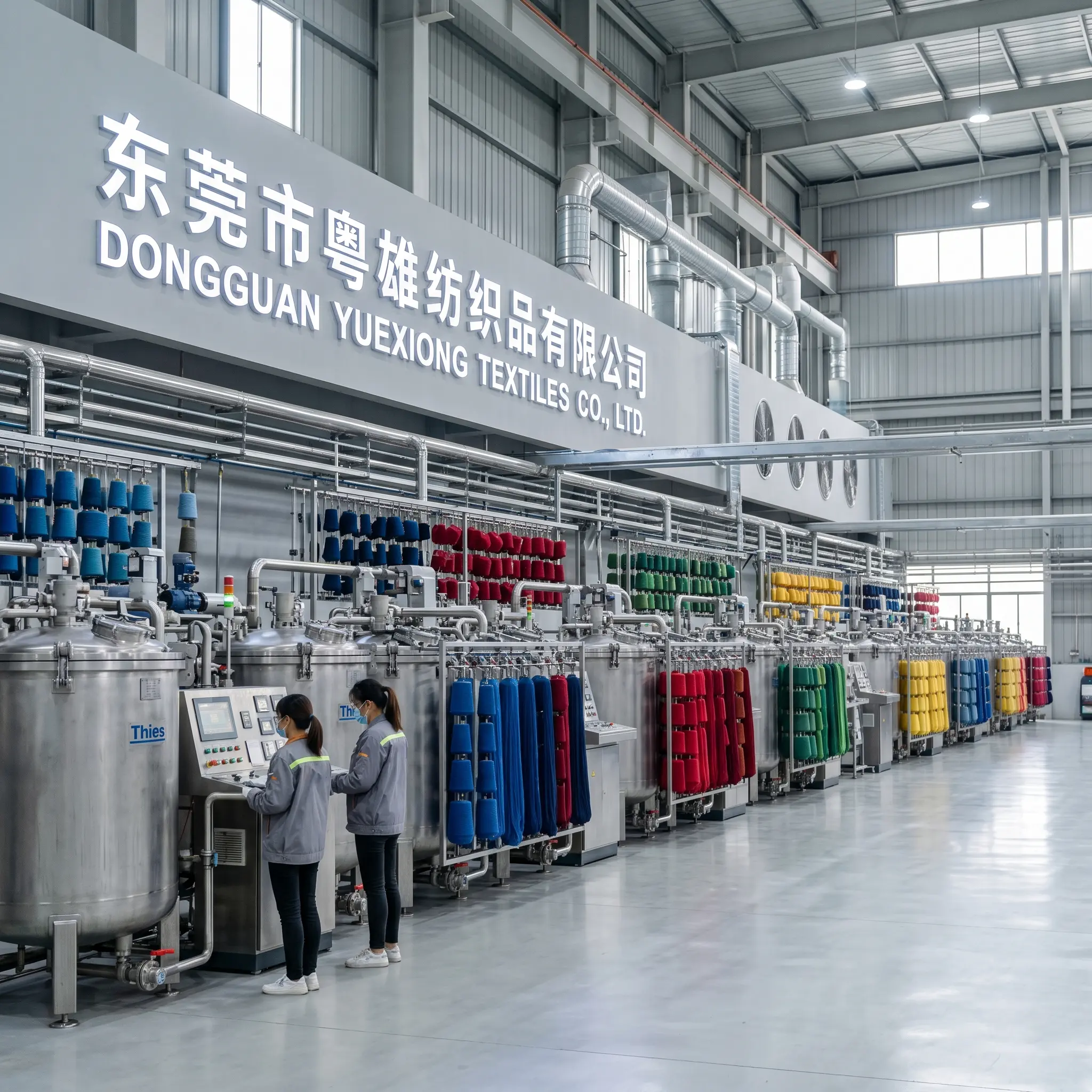
Colour options are equally broad. Machine washable antibacterial yarn YX-WASH-001 is offered in natural white, black, grey and beige, with custom dyed colours, custom blended colours and brand colour customization. Waterproof antibacterial yarn YX-FUNC-001 adds camel and melange to that menu, with custom dyed and brand exclusive colours. Because the company operates a proprietary patented waterless dyeing technology alongside its spinning capability, colour development and functional finishing can be handled within one supply chain rather than split across a spinner and a separate dyehouse.
Testing and documentation: pilling, static and wash resistance
Testing is the part of a repeat-wash programme that buyers most often leave until after the order is placed, and it is the part that most often causes a renegotiation. Three test groups matter here.
- Pilling resistance. Relevant to every knitted or woven article that will be laundered repeatedly, and especially to wool, cashmere, yak and plush-adjacent bases. The test method and the wash stage at which pilling is assessed should be agreed in advance.
- Anti-static performance. Relevant where the article is worn in dry indoor conditions or layered over other synthetics. Anti-static performance is a customizable attribute, so the acceptance level has to be written into the brief rather than assumed.
- Antibacterial and wash-resistance performance. YX-WASH-001 is supported by SGS, GTTC or third-party antibacterial and wash-resistance testing arranged according to buyer requirements; YX-FUNC-001 is supported by water repellency, antibacterial performance and washing durability testing through SGS, GTTC, AATCC, GB/T or a third party.
Alongside those, colour fastness and fibre composition documentation complete the file. Composition matters beyond quality control: with GB/T 29862-2026 taking effect on 1 August 2027 for fibre content identification in China, the declaration on the finished label needs to be reconstructable from the yarn specification — which is far easier when the composition is documented at the yarn order stage.
Where these programmes run: use cases
Corporate and service uniforms. Shirts, polos and knit layers that are laundered on a fixed schedule benefit from YX-WASH-001 where freshness and hand feel are the visible quality signals, and from anti-pilling and anti-static attributes where fuzzing and cling are the recurring complaints. Outer layers exposed to weather move to YX-FUNC-001.
Home textiles: bedding and towels. Sheeting, pillowcases, duvet covers and towels are laundered more often than almost any other textile article in the home. The machine washable antibacterial yarn is documented for bedding and towels, and its base-fibre menu allows a cotton-rich or cotton-blend construction to be specified for the hand feel a bedding buyer expects.
Throws, blankets and homewear. Here the base fibre carries warmth and softness while anti-pilling and anti-static attributes protect appearance after washing. Wool, cashmere, yak down, silk and plush-adjacent bases are all available in the wider portfolio when the programme is premium rather than utility.
Workwear and outdoor-linked uniforms. Where a garment has to shed a splash as well as support hygiene positioning, YX-FUNC-001 is the relevant yarn, with wash durability customized according to material, process and testing requirements.
Comparison: the three yarn roles side by side
The table below sets out the documented characteristics of each role. It is a selection aid, not a ranking: the correct choice depends on which failure mode governs the article.
| Decision dimension | YX-WASH-001 Machine Washable Antibacterial Yarn | YX-FUNC-001 Waterproof Antibacterial Yarn | Anti-pilling & anti-static yarn attributes |
|---|---|---|---|
| Functional role | Antibacterial finishing designed for machine washable textile applications | Water-repellent finishing combined with antibacterial finishing | Customizable anti-pilling and anti-static performance built into the yarn |
| Failure mode it addresses | Hygiene and freshness alongside soft hand feel in frequently laundered, skin-contact articles | Surface wetting and water absorption in light rain, splashes and daily outdoor environments, plus hygiene positioning | Surface fuzz, pills and static cling that make a laundered article look worn |
| Response effect | Antibacterial protection with soft hand feel and wearable comfort | Water-repellent surface effect with antibacterial protection, soft hand feel and wearable comfort | Performance customized according to material, spinning process and testing requirements |
| Wash positioning | Suitable for repeated machine washing depending on material, process and testing requirements | Washable; long-lasting performance customizable according to material, process and testing requirements | Washable performance customizable according to material, process and testing requirements |
| Count range | 0.5/1NM to 200/2NM | 0.5/1NM to 200/2NM | Set by base yarn and order specification |
| Colour route | Natural white, black, grey, beige, custom dyed, custom blended, brand colour customization | Natural white, black, grey, beige, camel, melange, custom dyed, brand exclusive colours | Set by base yarn and order specification |
| Testing support | SGS, GTTC or third-party antibacterial and wash-resistance testing | Water repellency, antibacterial performance and washing durability; SGS, GTTC, AATCC, GB/T or third party | Pilling resistance and anti-static testing where applicable, through SGS, GTTC or third party |
| Typical programmes | Uniforms, workwear, bedding, towels, home textiles, knitwear | Workwear, uniforms, outdoor clothing, rainwear, travel apparel, home textiles | Knitwear, uniforms and home textiles where pills and static are the complaint |
Frequently asked questions
What testing documentation should a repeat-wash uniform programme request for pilling and static?
Request three things in writing: the test method used for pilling resistance and for anti-static performance, the point in the process at which the sample is taken (greige yarn, finished fabric or after a defined number of washes), and the acceptance level. Pilling resistance and anti-static testing can be arranged through SGS, GTTC or a third-party laboratory according to buyer requirements. For the functional claim itself, machine washable antibacterial yarn YX-WASH-001 is supported by SGS, GTTC or third-party antibacterial and wash-resistance testing. Keep the agreed test table inside the purchase order so that a reorder is checked against the same criteria rather than a new set.
Can yarn count and colour be customized for a specific uniform or bedding programme?
Yes. Count is customizable from 0.5/1NM to 200/2NM. Machine washable antibacterial yarn YX-WASH-001 is offered in natural white, black, grey and beige, plus custom dyed colours, custom blended colours and brand colour customization. Waterproof antibacterial yarn YX-FUNC-001 offers natural white, black, grey, beige and camel, with melange, custom dyed and brand exclusive colours. Both are produced under OEM/ODM arrangements, so the specification can be built around the article rather than chosen from a fixed catalogue.
What is the minimum order quantity and how is a programme budgeted?
Small-batch customization is available, with a minimum order quantity of 5 KG. That threshold matters for repeat-wash programmes because it allows a pilot to be built in the exact base fibre, count and colour before a bulk commitment, and it allows a colour to be proved before a full range is placed. Budget planning should also cover the testing line items — antibacterial and wash-resistance testing, pilling resistance, anti-static performance and water repellency where relevant — because those are quoted per programme rather than assumed.
Can I test repeated washing on a sample before placing a bulk order?
Yes. Sample support is available for antibacterial effect testing, function testing and product development, and samples can be supplied for hand feel and fabric development work. The recommended sequence is to confirm the wash route first, then request a sample in the intended base fibre and colour, put it through that wash route, and re-check pilling, static, hand feel and colour before scaling. Because repeated machine washing depends on material, process and testing requirements, the sample result is only meaningful when the wash conditions match the ones the finished article will meet.
What lead time applies to a repeat-wash yarn order, and what happens at reorder?
Lead time is 7–15 days. Production runs at an annual output of 1,000 tons from a 2,000 sqm facility with a 20-engineer R&D team, with inspection provided before shipment. At reorder, the approved sample becomes the reference: reorder assistance, sample reconfirmation and colour matching support are part of the after-sales scope, alongside certification and compliance document supply for GRS, BCI and OEKO-TEX, and consultation on functional yarn performance and durability. To start a programme, download the MONALISHAMAGIC product brochure or send the wash route and article list for a sample discussion.
Conclusion: specify the wash route, then the yarn
Repeat-wash uniform and home textile programmes are won or lost on matching, not on the strength of a single functional claim. Machine washable antibacterial yarn YX-WASH-001 covers the skin-contact, high-laundry-frequency articles where soft hand feel and wearable comfort have to hold; waterproof antibacterial yarn YX-FUNC-001 covers the splash-exposed and outdoor-linked articles where surface wetting and hygiene drive the brief; and anti-pilling and anti-static yarn attributes cover the complaint that surfaces after a few washes, when fuzz, pills and cling begin to show.
The sequence that keeps a programme on track is consistent: record the wash route, assign the functional role article by article, fix the base fibre and count, lock colour and count customization, agree the pilling and static test plan in writing, and pilot before scaling. MONALISHAMAGIC, the brand of Dongguan Yuexiong Textile Co., Ltd., produces these yarns with GRS, BCI and OEKO-TEX certification, SGS, GTTC and third-party testing arranged to buyer requirements, OEM/ODM customization from 0.5/1NM to 200/2NM, and small-batch sampling from 5 KG — the combination a repeat-wash programme needs from the first pilot to the tenth reorder. Full product information is available at monalishamagic.com.
Next step for your programme. Send your article list, target base fibre, count and wash route, and request a machine washable antibacterial yarn or waterproof antibacterial yarn sample together with the pilling and static test plan that matches your laundry conditions.
Download the MONALISHAMAGIC product brochure (PDF)
Have Questions or Need More Details?
Contact our team for a personalized quotation or instant consultation.
Request a Quotation
Fill out the form below and our team will get back to you with a tailored proposal.
WhatsApp Direct Chat
Prefer to chat in real-time? Message us on WhatsApp for instant assistance & quick answers.
- Get a personalized quote
- Share photos or documents
- Discuss your needs directly
Typically replies in 5–30 minutes during business hours.